

Light Tower Heat Stress Planning: Crew Exposure, Recovery and Stop Decisions
Plan worker heat exposure around light tower setup, checks and retrieval, with practical recovery arrangements, supervision and clear stop decisions.
Light tower heat stress planning should decide when crews can work, where they can recover, how changing conditions will be monitored, and who can stop the job. Providing illumination does not control the heat absorbed by workers. A task moved after sunset can still involve warm surfaces, humid air, heavy exertion and protective clothing. Plan deployment, adjustment and retrieval as separate activities, because their demands differ. The aim is a workable heat-control arrangement for the people around the tower, supported by the site assessment and occupational-health advice, rather than a temperature rating inferred from a product photograph.
Separate worker heat exposure from equipment temperature
A lighting tower has its own operating limits, cooling requirements and service instructions. Those limits answer a machine question. They do not establish how long a person can safely carry equipment, inspect a setup or work in the illuminated area. Likewise, a worker heat assessment cannot authorize the engine or electrical equipment to operate beyond its documented limits. Keep the two decisions connected through the work plan but recorded separately.
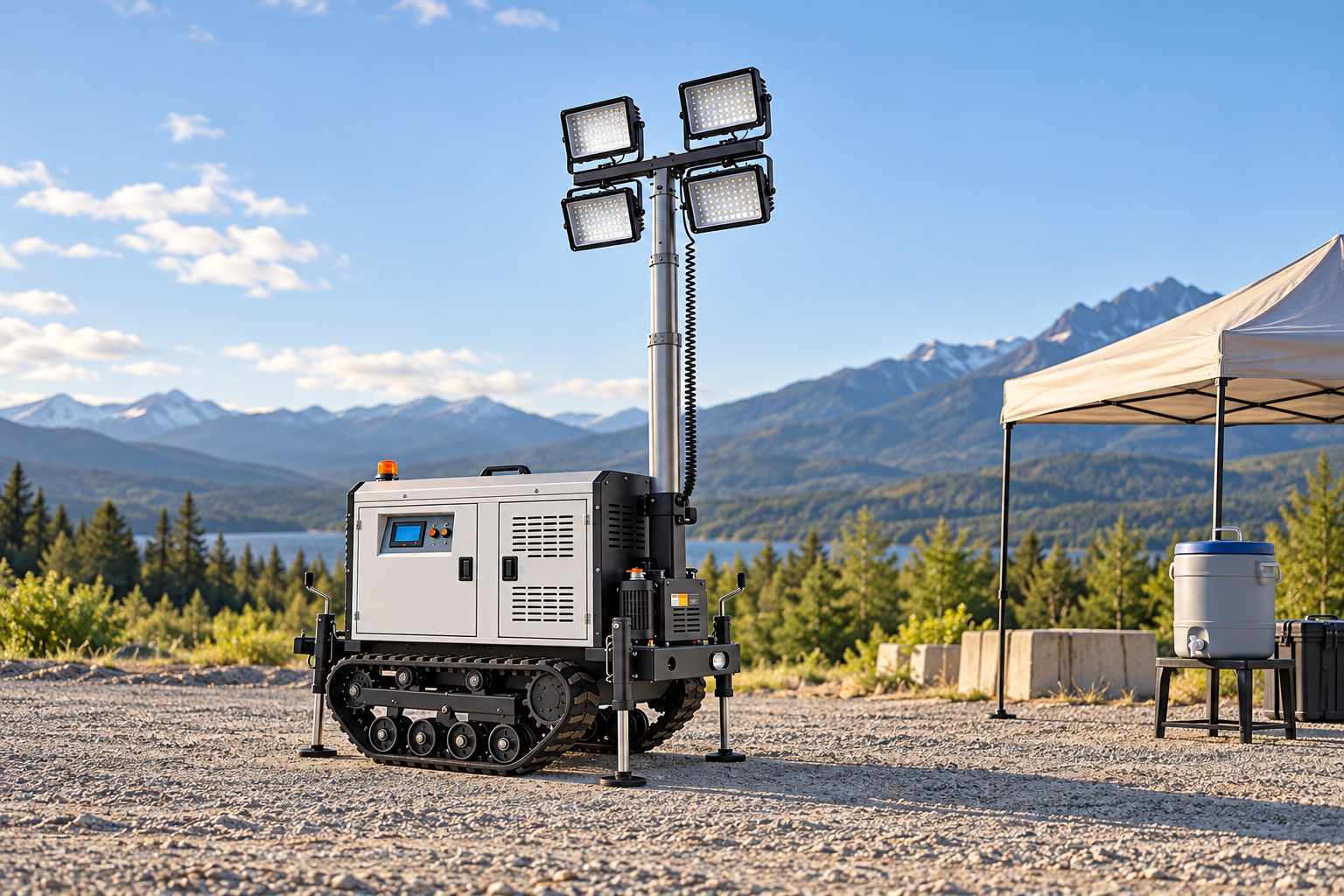
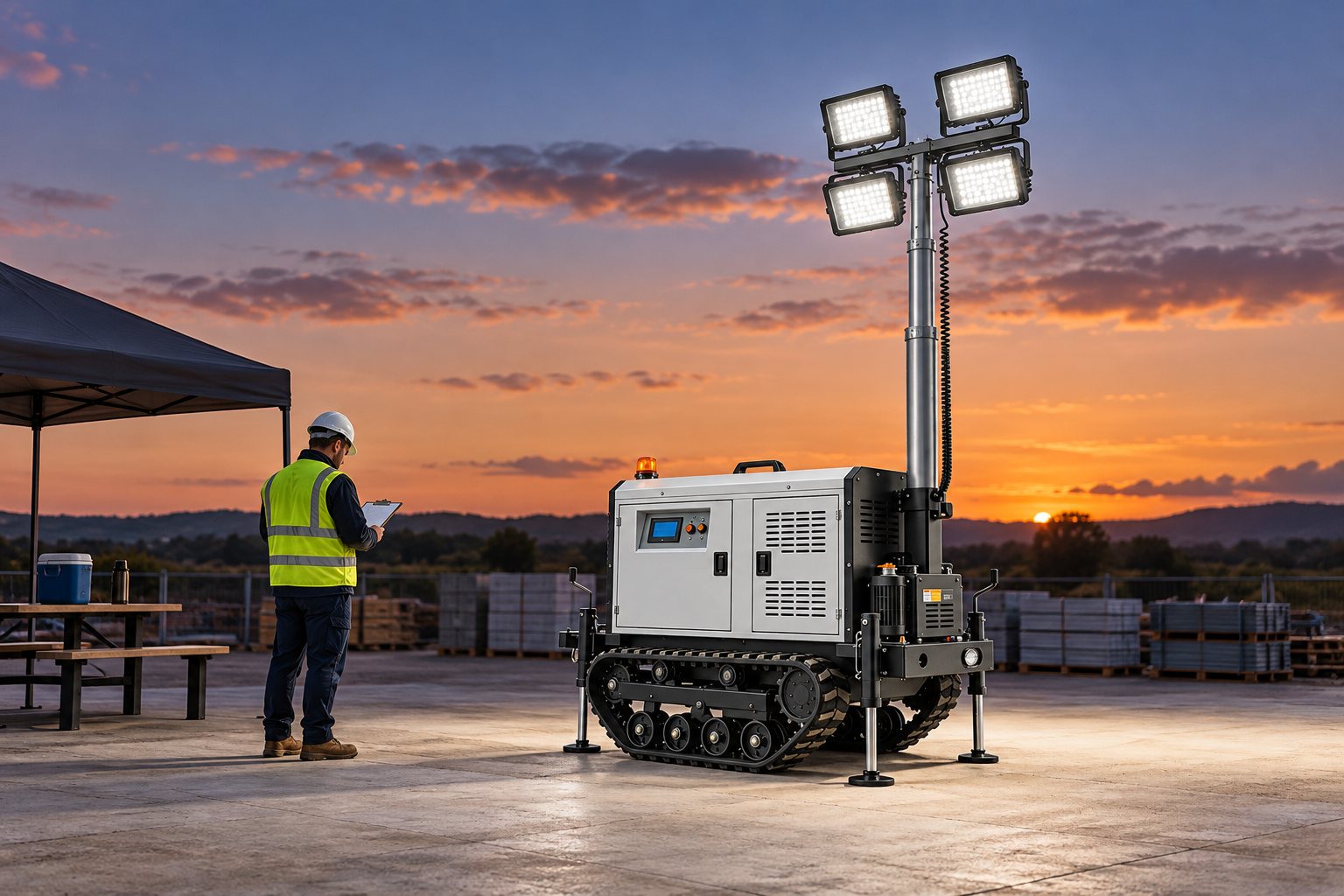
The Keyyou tracked lifting light tower shown in this article provides a physical reference for the equipment being coordinated. Its silver cabinet, crawler undercarriage, stabilizers, telescopic mast and four lamp heads do not demonstrate an approved ambient-temperature limit or any heat-protection accessory. Obtain the delivered machine documentation before assigning operating limits. Treat shade, drinking water, recovery arrangements and trained supervision as site provisions; do not assume they are supplied with the tower.
Break the lighting job into exposure periods
Map the actual work sequence. A driver waiting in a suitable cab, a crew preparing the pad, and a person making repeated walking inspections may have different exposures even during the same shift. Include the walk from the vehicle, unloading supporting equipment, placing barriers, making permitted adjustments and collecting materials at the end. Short activities become significant when repeated across several locations without recovery.
For each period, record physical effort, expected duration, direct sun, nearby hot surfaces, airflow and clothing. Ask the workers which part is hardest and where delays usually occur. A plan based only on the scheduled switch-on time misses the afternoon setup and morning retrieval. If another contractor changes the sequence, review those periods before accepting a longer task window. The work description should let the supervisor recognize when the assessment no longer matches reality.
Planning basis: Temperature in the workplace: Heat stress – HSE, Temperature in the workplace: Managing workplace temperatures – HSE, Workplace Recommendations | Heat Stress | CDC. The table organizes qualitative site decisions; it does not establish numerical exposure limits or machine approvals.
| Observed condition | Decision | Evidence or responsibility |
|---|---|---|
| Afternoon setup includes repeated handling | Review effort and timing before assigning the task | Supervisor records the work sequence and available assistance |
| Recovery area is distant or obstructed | Provide a suitable reachable alternative before exposed work | Site contact confirms route, shade and water availability |
| New or returning worker joins the crew | Apply the appropriate acclimatization and supervision arrangements | Employer obtains competent occupational-health advice where needed |
| Conditions change during the shift | Reassess work and recovery or pause the task | Named supervisor communicates the accepted decision |
| A worker reports suspected heat illness | Stop the activity and follow the site emergency plan | Trained responders coordinate care; equipment activity must not delay help |
Use environmental information to trigger decisions
HSE heat-stress guidance identifies work rate, humidity and clothing alongside air temperature. Therefore, a weather-app reading alone cannot represent every work position. Consider sun on the equipment pad, reflected heat from hard surfaces, sheltered areas with little air movement and the conditions at the recovery point. If a specialist assessment or instrument is needed, specify who selects the method and interprets the result. Do not convert a general forecast into a machine-specific safe working time.
Decide what will happen when conditions deteriorate. Possible actions include postponing setup, moving a demanding activity to a cooler period, adding assistance or suspending the task. Select these actions through the site assessment rather than publishing a universal temperature cutoff. Record the decision owner and the communication route. A monitoring entry is useful only when someone can act on it and the crew understands which instruction now applies.
Provide a recovery location that crews can actually reach
A rest provision needs a suitable location, access and continuing availability. Locate it away from vehicle routes, exhaust, dust-producing work and other hazards identified in the site assessment. Confirm that workers can leave the task safely and reach the recovery point without a long exposed walk. A canopy visible on a site drawing is not enough if the path is blocked or the area is later used for storage.
Make drinking water accessible and arrange replenishment before the work begins. Decide who checks the supplies and how the crew reports a problem. Use occupational-health guidance for individual fluid or medical needs rather than imposing a generic drinking target on everyone. Recovery time must be achievable within the work sequence; a person should not have to choose between a planned break and leaving an uncontrolled equipment activity behind.
Plan work and recovery together
Reduce unnecessary effort before trying to compensate with shorter breaks. Prepare the access route, stage the permitted tools and arrange suitable assistance for handling tasks. Avoid requiring someone to carry materials repeatedly across the site because the support vehicle was parked inconveniently. These are planning improvements, not permission to bypass manufacturer procedures or use an unapproved lifting point on the tower.
CDC NIOSH recommends adjusting work and rest arrangements to heat, workload, clothing and worker acclimatization. Apply those principles with the competent site team. Record the tasks that can be delayed, the tasks that require additional people and the conditions that stop the activity. Do not promise a fixed productivity rate regardless of conditions. The person supervising the lighting work needs authority to change the sequence when the planned controls cannot be maintained.
Account for new and returning workers
A person familiar with the tower may still be unaccustomed to the current hot conditions. Consider new starters, people returning after time away and workers reassigned from cooler environments. Their technical competence and their current heat tolerance are separate matters. Use an appropriate acclimatization approach with qualified advice and the applicable guidance, rather than treating past experience as proof that no adjustment is needed.
Discuss individual concerns privately through the employer's occupational-health process. The work plan should communicate the agreed task restrictions and support arrangements without circulating medical details. A supervisor needs to know whether an extra review or different assignment is required, not the worker's entire medical history. Make reporting practical and free from pressure to hide discomfort simply because a small team is behind schedule.
Include protective clothing and competing hazards
Lighting crews may share a site with dusty work, noise, moving plant or electrical activities. Protective clothing and other required equipment can affect heat exposure, but removing essential protection without reassessment creates another risk. If the combined controls make the proposed task impractical, alter the task, timing or location with the relevant specialists. Do not ask a worker to solve the conflict by informally loosening or discarding protective equipment.
Coordinate changes with the contractors creating those hazards. For example, moving a lighting inspection to a cooler hour may place it beside a different vehicle movement or a dust-producing activity. Recheck the complete route and work area after rescheduling. The accepted arrangement should identify both the heat-control measures and the other controls that must remain effective. A cooler time is an option to assess, not automatic evidence of a safe shift.
Make observation and emergency response explicit
Brief workers on recognizing and immediately reporting suspected heat illness in themselves or colleagues. Use a trained first-aid and emergency response plan appropriate to the site; this article is not a diagnostic or treatment protocol. Ensure the team knows how to summon help and communicate the actual location. Do not leave an unwell person alone or direct them to finish an equipment task before seeking assistance.
Assign someone to check that workers remain able to communicate, take recovery breaks and use the support arrangements. These checks are especially important when people separate across a large site. Where conditions or symptoms create concern, stop the activity and follow the emergency plan. Restoring the lighting service must not delay care. Any equipment shutdown or isolation needed to make the area safe should be handled by authorized personnel within their competence.
Review at handover and before retrieval
A heat plan can fail late in the shift when the original supervisor leaves and the recovery facilities are removed. Hand over the current conditions, controls, outstanding concerns and permitted task changes. Confirm who owns the decision for retrieval, particularly when a different crew returns in daylight. Keep the support provisions available until the exposed work has ended, rather than removing them when the main construction activity finishes.
Use a brief closeout review to improve the next deployment. Record whether workers could reach shade, whether water remained available and which tasks took longer than expected. Keep observations separate from assumptions about why a person became unwell. Update the next work plan using the actual sequence and professional advice where required. The useful outcome is a better-supported crew and a clear stop decision, not simply a completed weather log.
Questions to settle before hiring or mobilizing
Ask the site contact who provides recovery facilities, how the lighting crew is included in heat briefings and whether the equipment delivery slot can move when conditions change. Confirm communication coverage, access for emergency assistance and responsibility for any specialist assessment. These details belong in the coordination package alongside the equipment identity and the task scope. They help prevent a supplier and contractor from each assuming the other has arranged worker welfare.
For procurement, request the current machine manual and documented environmental limits separately. Do not accept a photograph, a general product category or a statement about engine cooling as proof of worker protection. Where information is missing, hold the affected decision and obtain a competent review. A complete arrangement explains both what equipment may do and how people will be protected while carrying out the planned work around it.
Equipment and related guidance
Use the Keyyou tracked lifting light tower product reference to identify the product context; obtain the actual delivered unit documentation for operational decisions. Continue with Light Tower Safety and Operation, plus fatigue management for lighting crews, reviewing the task risk assessment.
Further learning: Working in heat: physically demanding work
Safe Work Australia presents construction workers discussing heat controls during physically demanding work. The examples support a crew planning discussion; they do not specify operating limits for this tower or replace a site heat assessment.
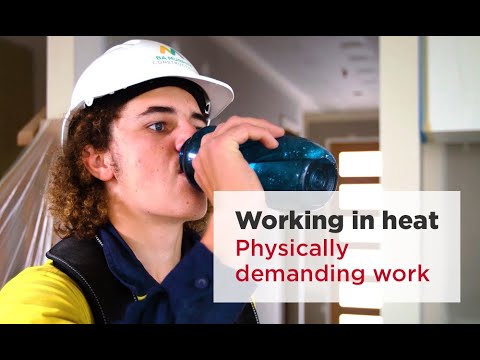
Watch the educational video on YouTube.
Frequently asked questions
Does a light tower ambient-temperature rating protect workers from heat stress?
No. A machine limit concerns equipment operation. Worker heat exposure depends on the task, environment, clothing and individual factors and needs its own assessment.
Is night work automatically safe in hot weather?
No. Warm surfaces, humidity, effort and required protective clothing can remain relevant after sunset. Review the actual work conditions and the whole deployment sequence.
Who should provide shade and drinking water?
The site coordination package should name the responsible party and confirm access and replenishment. Do not assume the lighting supplier or another contractor has provided them.
Should a worker finish adjusting the tower before reporting illness?
No. Report suspected heat illness immediately and follow the site emergency plan. Care must not be delayed for a routine equipment task.
Sources and scope
These authorities provide general principles within their respective jurisdictions. Apply the current destination rules and manufacturer instructions; these sources do not certify the pictured tower or establish machine-specific operating limits.


