

Light Tower Nesting Bird Deployment Checks: Site Review and Handover
Coordinate nesting bird checks before light tower access, setup and operation, using competent ecological advice, controlled boundaries and clear stop-work contacts.
Light tower nesting bird deployment checks should establish whether the proposed access, setup, servicing and illumination could affect birds or nesting habitat before equipment enters the work area. Use competent ecological advice and the applicable site controls; an operator's quick look is not a substitute for a required survey. Keep the tower in a released location, direct operational changes through the site lead, and stop the affected activity if a new concern appears. There is no universal calendar window or stand-off distance that makes every deployment acceptable.
This article focuses on site coordination for a tracked temporary lighting unit, distinct from general migration lighting or choosing lamp colour. Natural England's guidance applies to England. The official references provide background for competent local review, not worldwide permission, equipment certification or a method for handling birds and nests.
Define the activity the ecological review needs to consider
A lighting request often states only the area to illuminate and the hours of use. For ecological coordination, add how the machine will arrive, where it will turn, where its supports will contact the ground and how it will be serviced. Include the removal activity and any proposed relocation as the job progresses. Habitat can be affected by access as well as light.
Show nearby vegetation, buildings, banks and other features identified by the ecological team on the controlled site drawing. Do not label a feature “clear” merely because it appears empty in a photograph. Ground-nesting birds and birds using structures can be overlooked when the review concentrates only on trees. Give the specialist enough information to decide what checks are appropriate.
The proposed lamp direction and operating period also belong in the brief. Describe the task requiring illumination and whether the work can change location or timing. This allows the project to explore avoidance before it becomes committed to a delivery slot. Do not promise that turning lamps down will resolve an issue that also involves vehicle access or disturbance.
Understand the limits of records and previous surveys
Natural England explains that a lack of records does not establish absence of birds. For a project team, this means an old desktop search should not be treated as a permanent release for all later work. Ask the ecologist or environmental lead whether the existing information covers the actual work area and remains suitable for the intended activity.
A survey report may contain conditions, limitations and recommendations that matter more than its front-page conclusion. Record the version used and the person who confirmed how it applies to the lighting deployment. If the programme, footprint or surrounding habitat changes, return the question to the competent adviser rather than assuming that the earlier review still covers it.
Do not prescribe a fixed validity period for every check. Nor should an article set a single nesting season and imply that work outside those dates needs no consideration. Bird activity and legal protections are not reduced to a universal contractor calendar. The responsible specialist should explain the site-specific timing and repeat-check requirements in the deployment brief.
Keep legal background separate from equipment release
Natural England's standing advice describes protections for wild birds, nests in use or being built, and additional protections for certain species. It also explains that there is no wild-bird development licence that simply authorizes construction. Use the current official guidance and competent advice for the actual circumstances; do not assume that a planning permission or a lighting hire contract overrides wildlife protection.
The equipment release should therefore refer to the project's applicable ecological controls rather than claim that the tower itself is “bird safe.” A lamp specification, colour setting or supplier brochure cannot establish the absence of nests or approve an activity near them. Likewise, a machine's ability to travel on tracks does not establish permission to cross sensitive habitat.
If the ecological team requires a restricted area, provide a clear drawing and an operating instruction for the affected personnel. Keep sensitive wildlife information appropriately controlled while still giving the delivery team usable boundaries. The operator needs to know where they may go and whom to contact, without being asked to identify species or interpret legal exceptions.
Turn specialist advice into a deployment checklist
Use the following qualitative checklist to connect the review with delivery and operation. It is an editorial workflow, not a prescribed ecological method. It contains no minimum distance or species-specific threshold. The competent ecological team and applicable authority requirements determine the actual restrictions, monitoring and release conditions.
| Condition | Review or action | Evidence or responsibility |
|---|---|---|
| Review does not cover new bay | Hold entry and ask whether further assessment is needed | Competent ecological adviser |
| Restricted area identified | Brief the actual route and setup boundary | Environmental lead and site supervisor |
| Hours or lamp direction changes | Refer the changed activity for review | Authorized project decision owner |
| Possible nest observed | Stop affected activity and report without investigating | Operator and nominated supervisor |
| Collection route changed | Review access before dispatch | Site logistics and ecological leads |
This qualitative coordination checklist supports the workflow discussed here; apply the jurisdiction and scope of the Natural England: wild birds and planning decisions. It provides no universal numeric acceptance limit.
A useful record separates completed observations from decisions. “No concern reported” does not mean a survey was conducted. “Advice received” does not show that the approved location was briefed to the driver. Record the relevant document, the person responsible and the point at which the activity was released, with any limitations still in force.
Choose a position that supports avoidance
Where the project review allows it, consider an existing hardstanding location and established access route that avoid sensitive features. Evaluate the complete equipment footprint and required task lighting, rather than selecting the nearest convenient bay. A position that avoids vegetation during setup may still create a problem if routine servicing requires repeated movement through the restricted area.
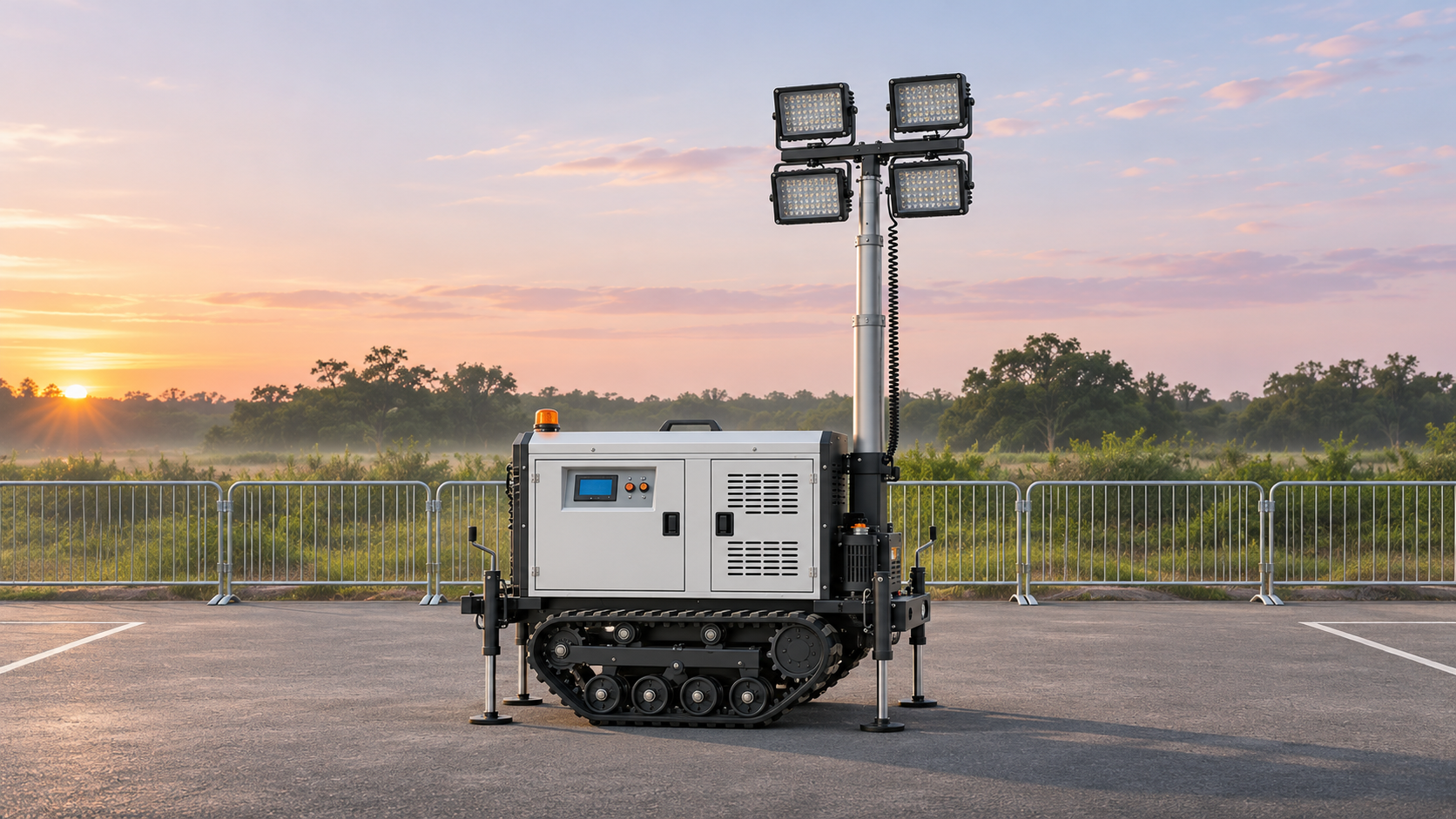
Ask for the supplied machine's dimensions, support arrangement and operating instructions. The illustrations here retain the silver cabinet, black crawler tracks, mast and four rectangular lamp heads of the referenced Keyyou product. They show equipment context only. They do not demonstrate an ecological stand-off, an acceptable illumination level at a nest or approval for the depicted location.
Do not alter lamp housings, attach improvised shields or modify supports simply to make a site plan work. Any proposed equipment change needs the appropriate manufacturer and competent review. If the task cannot be performed within the released arrangement, consider another location, method or programme with the project team before authorizing deployment.
Brief the people who will actually move and operate the tower
The ecological plan should reach the driver, operator, maintenance team and shift supervisor in a practical form. Identify the permitted route, setup bay, operating limitations and stop-work contact. Explain which changes require a renewed review: moving the tower, extending working hours, changing lamp direction or gaining access through a different gate can each affect the assessed activity.
Use the RSPB video below to explain why nests may be overlooked at ground level. It is public awareness education rather than a construction survey method. The project-specific briefing must still tell workers how to report a concern without approaching, investigating or disturbing a suspected nest. Do not encourage staff to search for eggs or chicks themselves.
At handover, verify that barriers and signs required by the site plan remain in position. Record the actual tower location and relevant operating settings in the project's chosen format. Avoid publishing detailed nest locations in general equipment documents or public photographs. Share the information needed for safe coordination through the responsible environmental lead.

Respond to a new observation through the agreed escalation route
If workers notice birds repeatedly entering a feature, a suspected nest or unexpected activity near the work area, stop the affected activity and inform the nominated supervisor under the site procedure. Do not move a nest, block an entrance, use deterrents or attempt a closer inspection to establish whether it is active. Those actions can worsen the problem and require specialist assessment.
Record what was observed, when and where, without guessing the species or declaring that the activity caused no harm. The environmental lead should obtain the appropriate competent advice and determine the next steps. A restart decision should identify the released activity and any revised limitations; it should not consist of an informal message that the schedule is too urgent to wait.
Equipment recovery also needs planning. If a new restriction affects the tower's position, do not assume that immediate removal is automatically the least disruptive option. Follow the competent site decision about timing and method. Keep personnel safety, ecological protection and equipment handling within the same coordinated response rather than letting individual contractors improvise.
Review the arrangement through servicing and collection
Temporary equipment can remain on site long enough for conditions to change. A quiet storage edge can become an active nesting area, or the construction programme can change which access route is used. Include ecological review triggers in the equipment hire extension and relocation process instead of treating the original delivery acceptance as permanent.
Before collection, confirm that the planned approach and loading activity remain released. Tell the collection team about restrictions and a holding location if access is unavailable. After removal, close the equipment record and pass any observations to the environmental lead. A collection signature confirms custody; it does not prove that every ecological obligation has been discharged.
For an effective supplier enquiry, describe the intended task and request the actual machine information needed for the site assessment. Ask the client to confirm who owns ecological decisions and how changes will be approved. Clear responsibilities make it possible to choose suitable equipment without turning a product photograph or a sales statement into an unsupported environmental assurance.
Equipment and related guidance
Identify the equipment context using the Keyyou tracked lifting light tower product page. Request documentation for the actual supplied configuration. Read the Light Tower Safety and Operation and related guidance on migratory bird lighting considerations, bat-sensitive site lighting coordination.
Further learning: Watch your step – birds nesting on the ground!
RSPB explains that birds can nest on the ground and why people should take care. This awareness film supports the site briefing; it is not a construction survey, nest-handling method or ecological clearance.
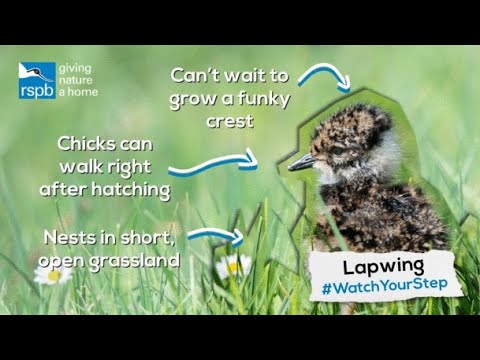
Watch the educational video on YouTube.
Frequently asked questions
Can an operator conduct the required nesting bird survey?
An operator should report observations and follow the briefing. A required ecological survey must be undertaken by a suitably competent person under the applicable requirements.
Is working outside a fixed nesting season automatically acceptable?
No. Do not rely on a universal calendar window. The actual birds, activity, location and applicable protections require competent consideration.
Does a bird-friendly lamp specification approve the site?
No. A lamp specification does not establish absence of nests or authorize access, disturbance or illumination at the proposed location.
What should workers do if a possible nest appears?
Stop the affected activity, follow the site procedure and inform the nominated supervisor. Do not investigate, move the nest or use deterrents without appropriate competent direction.
Sources and scope
These sources support the specific background principles discussed above. Their jurisdictions and subjects differ; they do not certify the pictured equipment or approve an individual shipment or installation.