
LED Light Tower Photobiological Safety: Test Evidence for Buyers
An LED light tower photobiological safety review should connect the proposed lamp assembly to relevant test evidence and its stated conditions of use.
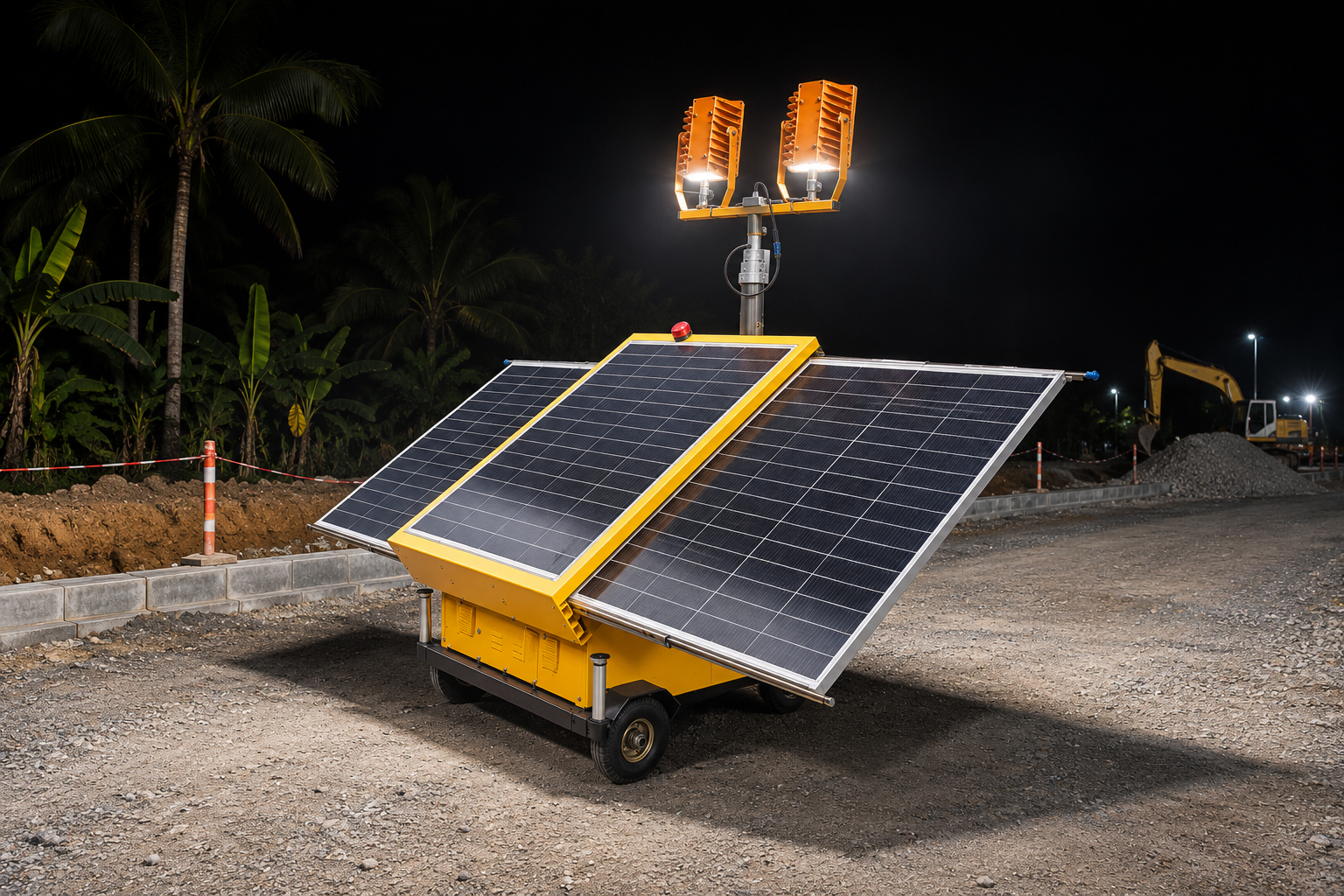
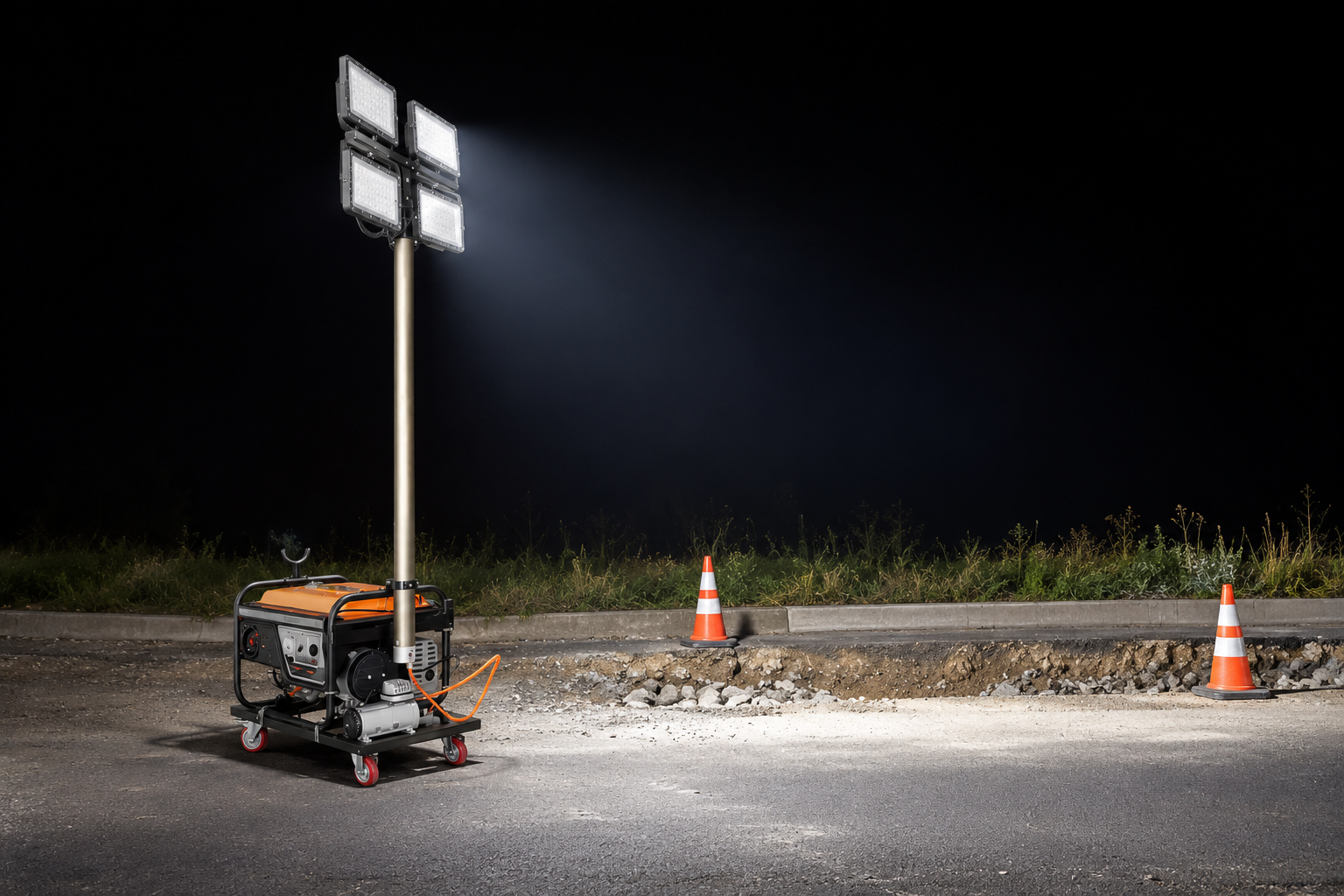
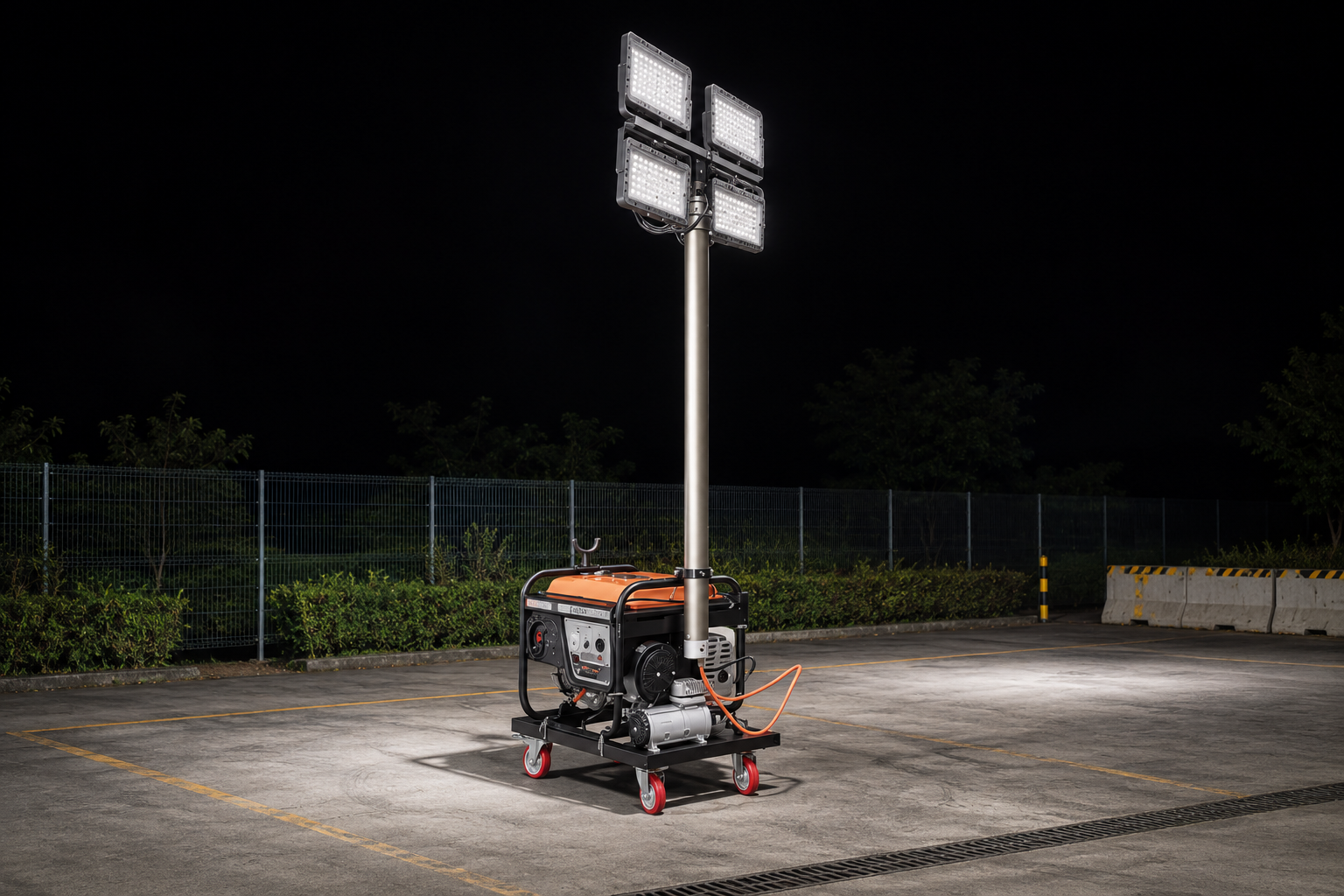
An LED light tower photobiological safety review should connect the proposed lamp assembly to relevant test evidence and its stated conditions of use. Ask which lighting configuration was assessed, which report applies and what limitations the assessment gives. Brightness, a weather-protection rating and a photograph of illuminated lamps do not answer those questions. Buyers specifying temporary night-work lighting should also review glare and the actual viewing arrangement as separate issues. The pneumatic-rod tower pictured here is an equipment example, not a test result or a claim that a particular risk group has been established for that machine.
Specify the lamp assembly before requesting the report
A supplier may offer different lamp modules, quantities, drivers or dimming arrangements on one tower platform. Record the exact proposed configuration before asking for optical-radiation evidence. A report for an LED chip or another luminaire should not automatically be treated as a report for the complete supplied assembly. Ask the supplier to explain the relationship between the test item and the order. Identify any operating modes that matter to the intended task and obtain the applicable conditions from the report or a qualified reviewer. The objective is a clear purchasing question about the lamps you will receive, not a request for a folder of unrelated certificates. Keep any unresolved mismatch visible before approving a substitution.
| Item to compare | Information to request | Practical purchasing check |
|---|---|---|
| Assessed product | Lamp, driver and relevant configuration | Matches the actual order |
| Report basis | Relevant standard, conditions and limitations | Reviewed by a competent person when needed |
| Site use | Viewing arrangement, aiming and glare | Considered separately from a certificate |
| Substitution | Changes to lamps or controls | Applicability checked before acceptance |
Combine document review with a useful night-lighting brief
Describe where the lamps will be used, the intended workface and how people might approach or look toward the tower. A road-repair installation has different sightlines from a stationary lighting test. The equipment should provide useful illumination without encouraging people to stare into high-intensity sources. Ask a competent lighting or product-safety specialist to interpret the assessment where required. Do not infer a viewing distance or exposure limit from another model. Separately review glare, aiming and lighting quality for the job: a product document does not decide the best tower position. A buyer can request both the relevant evidence and a practical demonstration while keeping their purposes distinct.
Check that the production lamps match the accepted sample
When the order is confirmed, identify the accepted lamp, driver and control arrangement in the configuration record. If the factory proposes another LED module, ask whether the existing assessment still applies and what review is needed. A replacement that fits the bracket or uses the same nominal wattage can have different optical characteristics. At receiving, compare the visible lamp arrangement and component identity with the agreed specification, using the manufacturer's information rather than dismantling live equipment. Keep the applicable report with the operating instructions and purchase documents. This connects the technical review to a real batch order and prevents a generic safety statement from becoming an unsupported claim about every light tower the supplier sells.
Separate optical-radiation assessment from visual comfort
Buyers often combine glare, colour quality, flicker and photobiological safety in one question. They concern different aspects of lighting and require different evidence. A light can be uncomfortable to look at without that observation determining its photobiological classification. Equally, a pleasant-looking beam does not establish the exposure assessment for every viewing situation.
Use precise questions in the enquiry. If the concern is optical-radiation safety, ask for the relevant assessment or supporting documentation and the conditions it covers. If the concern is task visibility, glare or temporal light modulation, request those separate inputs. Keeping the questions distinct helps the supplier identify the appropriate evidence rather than sending a single general lighting brochure.
Explain how the tower will be used and who may be exposed in normal operation, setup and maintenance. A worksite operator viewing the illuminated task has a different situation from a person working close to a lamp assembly. The competent assessor should determine which situations and conditions need consideration. This article does not define a safe viewing distance or duration.
Identify the relevant standards without assuming equivalence
IEC 62471 addresses photobiological safety of lamps and lamp systems. IEC 62471-7 concerns light sources and luminaires primarily emitting visible radiation. Use the current applicable standard, adoption and edition determined for the actual product and market. Do not assume that every report bearing one familiar standard number answers the same scope question.
Ask the supplier or competent assessor to explain the basis used for the supplied luminaire. Record the exact reference from the report, including edition and any relevant qualifications. A standard’s title in a catalogue is evidence that the document exists, not evidence that a particular lamp has been tested or that an old report remains suitable for a changed product.
Where only a public abstract is available, use it to identify the subject and request the necessary detailed evidence. Do not invent requirements, test distances, numerical limits or classification rules from the abstract. The purchasing record should distinguish information that has been obtained from information still awaiting the relevant standard or assessor’s explanation.
Match the report to the supplied lighting configuration
Start with the report’s product identification. Compare model names, luminaire variants and other identifiers with the proposed supply documents. Ask how the report maps to the actual lamp head, optical arrangement and operating configuration. Similar appearance alone cannot establish that the tested and supplied products are the same.
If the report covers a family of products, request a clear explanation of which variants are included and how the supplied configuration is covered. Do not infer family coverage from a shared cabinet or tower model name. The tower manufacturer may assemble lamp heads and controls into a complete machine, so the document trail needs to make the relevant configuration understandable.
Record any unresolved difference in the procurement review. A changed light source, optic, control setting or operating condition may require competent consideration rather than a simple administrative substitution. The reviewer should decide what additional evidence is needed, and the purchasing team should avoid approving the affected claim until that question is resolved.
Review conditions and limitations before recording acceptance
The following table is a qualitative document checklist. It is not an optical-radiation test protocol, and its entries do not establish a risk group. Use it to organize the information a competent reviewer needs, then retain the actual report and the interpretation applicable to the supplied product and intended use.
This qualitative coordination checklist supports the workflow discussed here; apply the jurisdiction and scope of the IEC: public abstract for IEC 62471-7:2023. It provides no universal numeric acceptance limit.
An acceptance note should explain its scope. “Report received” confirms receipt only. “Reviewed for this configuration” should identify the reviewer and documents. If use instructions or restrictions form part of the assessment outcome, connect them to the operating handover so they do not remain buried in a laboratory appendix that users never see.
Ask what the assessment says about intended use
Have the competent reviewer explain how the assessed conditions relate to the proposed deployment. The purchasing team can supply information about normal operation, access and maintenance, but should not create its own exposure interpretation from isolated tables. If the intended use falls outside the report’s conditions, refer it for additional assessment or clarification.
Do not translate a report result into a universal marketing statement such as “safe at any distance.” Keep any external claim within the evidence and applicable instructions. A report for one configuration does not necessarily cover another installation, modification or way of using the lamps. The exact wording of a purchasing requirement matters because it determines what the supplier must actually demonstrate.
Where the documentation includes warnings, markings or user information, confirm how those will accompany the supplied equipment. Ask for the relevant manual version and language needed by the operating team. The goal is to preserve the practical implications of the assessment through delivery rather than treating the report as an item collected only for a tender file.
Product reference and related buying guides
For a model-specific enquiry, start with the Mobile lifting lighting tower (pneumatic rod). Describe your actual task and ask for the offered configuration, applicable instructions and relevant support information.
- How to Choose a Light Tower
- Light Tower Glare Control for Equipment Operators
- How Should Teams Compare Light Tower Lumens and Lux Coverage?
- Light Tower Tender Compliance Matrix: Trace Requirements to Evidence
Further learning
IEA 4E SSLC Platform: Health Webinar 3A of 3 Photobiological Safety and Glare. This educational resource explains background concepts; it does not establish the performance or certification of the pictured machine.
Frequently asked questions
Does IP protection establish photobiological safety?
No. Ingress protection and optical-radiation assessment concern different properties and require appropriate evidence.
Can a report for an LED component cover every assembled tower?
Do not assume so. Ask how the assessed item relates to the complete offered lamp arrangement and have applicability reviewed where necessary.
Can the night-work pictures establish a risk group?
No. They show equipment context, not a laboratory measurement, classification or product certification.
Sources
Use the applicable machine instructions for product-specific decisions. The following sources support general principles within their stated scope.