

Light Tower UK Export VAT Evidence of Departure: Connect the Supply and Movement
Prepare a light tower UK export VAT evidence pack linking the invoice, identified goods, transport trail and actual departure records.
Light tower UK export VAT evidence of departure should link the commercial supply to records showing that the identified goods actually left the UK. A collection note, export booking or draft declaration does not by itself establish the complete evidence chain. For a business exporting a tracked lighting tower, the practical priority is to agree who obtains transport and departure records before the unit is collected. This guide explains a UK-focused evidence handover for procurement, logistics and finance. It does not decide VAT treatment, prescribe a universal deadline or establish that a particular sale qualifies for zero rating.
Identify the supply before collecting movement evidence
Begin with the actual seller, buyer, invoice and goods supplied. A tower may be sold directly, transferred between related businesses, hired or sent for service, and these facts can change the questions that finance needs to resolve. Do not apply a sales workflow automatically to every outward movement. Ask the responsible VAT adviser to identify the transaction being reviewed and the scope of the evidence required. Keep the commercial description tied to the actual arrangement rather than a convenient shipping label.
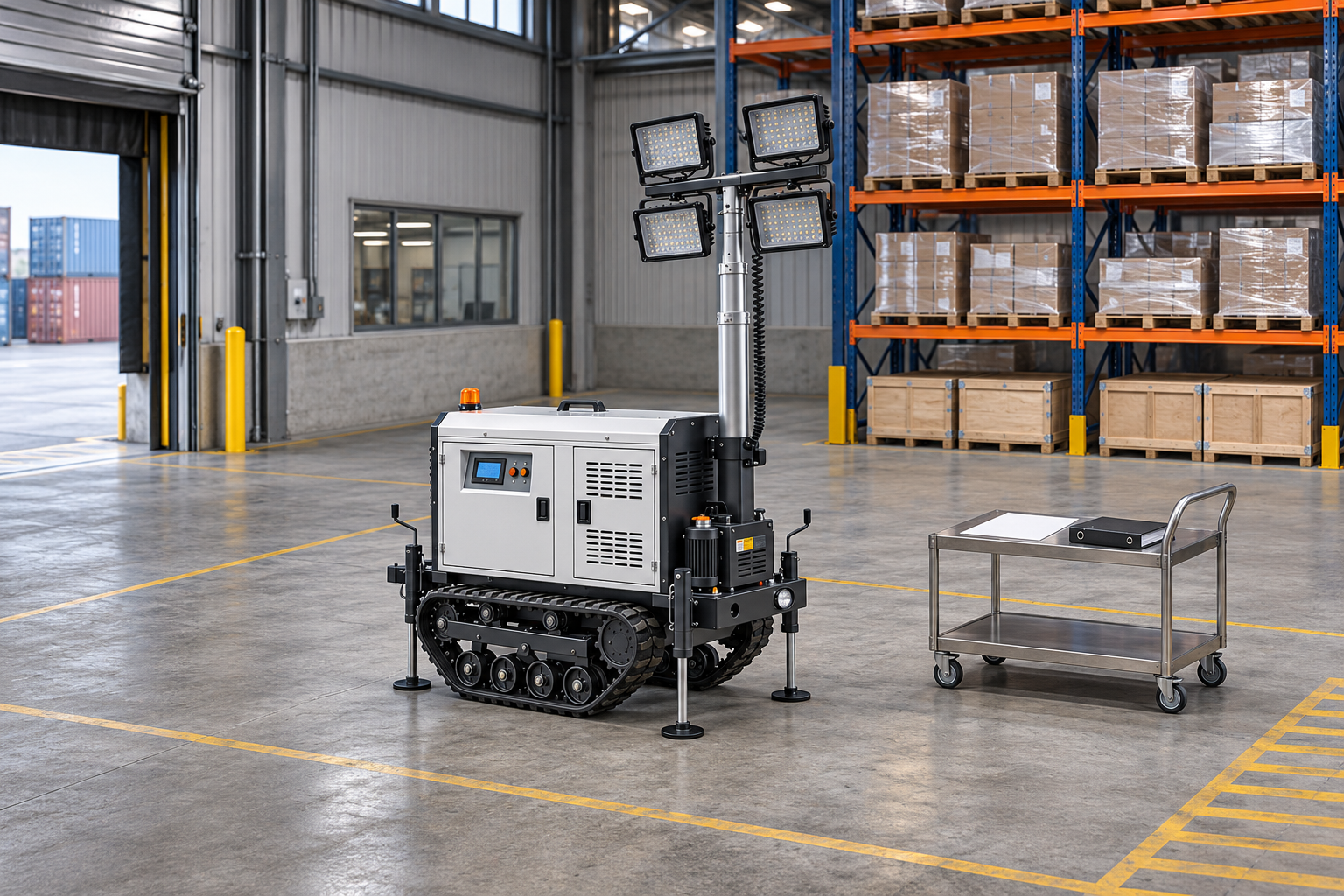
Use the purchase order, sales invoice, packing list and available unit records to identify the equipment. Show the complete tracked tower separately from any loose spare parts or accessories. If the order includes several units, explain which units are included in each consignment. A product photograph helps a reader understand the type of equipment but cannot prove the identity of a particular exported unit. Request supplied identifiers and package records rather than inventing details that are absent from the transaction documents.
Separate collection from departure from the UK
Collection proves that goods were handed to a carrier at a particular point, if the record is reliable and sufficiently detailed. It does not necessarily prove that they left the UK. A tower could remain in a consolidation warehouse, miss a sailing or be returned before export. Your internal tracker should therefore distinguish collection, departure and overseas delivery. Give each event a source document and date instead of treating a single transport status as evidence for the entire movement.
HMRC guidance recognises official or commercial export evidence supported by documents establishing the supply. Finance should assess the combined pack against the actual circumstances. Do not insist that only one kind of official message can ever support every case, and do not assume that any carrier document is sufficient. The useful purchasing question is what the carrier, freight forwarder and customs intermediary will provide for this route, and how those records will identify the same tower shown on the invoice.
Agree the evidence responsibility before dispatch
Ask the forwarder who controls the transport document, who handles the export declaration and who will return the relevant final evidence. If the buyer arranges collection, the exporter may have less direct access to those organisations. Address that issue before releasing the equipment by agreeing a practical evidence request with the buyer and responsible adviser. Commercial terms should be reviewed by the appropriate people; an operational checklist should not invent a contractual right to withhold goods or retain money.
Record a named role for each evidence item and an agreed follow-up date. Avoid relying on a salesperson's personal inbox or a driver's mobile photograph as the only storage location. The logistics coordinator should know how to retrieve a replacement record if an attachment is unreadable. Finance should know which items are still missing before completing its review. This responsibility map is especially useful when the carrier, exporter and customs declarant are three different businesses with different document systems.
| Condition | Review or action | Evidence or responsibility |
|---|---|---|
| Supply identity | Connect seller buyer invoice and actual transaction | Finance confirms the arrangement being assessed |
| Goods identity | Reconcile units packages and loose accessories | Supplier and warehouse provide actual records |
| Movement evidence | Obtain applicable official or commercial export evidence | Carrier forwarder or declarant supplies authentic records |
| Partial shipment | Map each consignment to its evidence | Coordinator shows outstanding goods and documents |
| Tax review | Assess sufficiency conditions and applicable timing | Responsible VAT adviser records decision |
This qualitative coordination checklist supports the workflow discussed here; apply the jurisdiction and scope of the VEXP30400 – Conditions for zero rating: Evidence of export – HMRC internal manual – GOV.UK. It provides no universal numeric acceptance limit.
Build a pack that connects transaction and transport
Start the pack with a short index showing the sales invoice, goods description, package count, available unit identifiers and relevant transport references. Add the commercial evidence of the supply and the official or commercial movement evidence selected for review. Keep each document's issuer and purpose visible. If a house transport reference connects to a master reference, retain the connection rather than expecting a later reviewer to infer it from similar dates or destinations.
HMRC's commercial-evidence guidance explains why a document showing pickup alone may be incomplete. Check whether the version received contains the relevant completion or authentication information for that document and route. Ask the issuer to resolve an incomplete record; do not add signatures, stamps or departure details yourself. Where the shipment is consolidated, request evidence that connects the tower consignment to the consolidated movement. A generic vessel schedule or an unrelated container movement should not be attached simply because it matches the planned week.
Reconcile the equipment description without rewriting history
Descriptions can differ between an invoice, packing list and transport record. One may say tracked lifting light tower while another uses a shortened equipment description. Investigate whether those descriptions identify the same goods and retain a clear reconciliation where needed. Avoid silently changing originals to make the wording identical. The goal is a reliable link between documents, supported by issuer clarification where necessary, rather than visual uniformity across a folder of edited copies.
Partial shipments need particular care. If two towers are invoiced together but depart separately, show which goods belong to each movement and what evidence supports each part. Record loose accessories that travel later. A single complete tick against the whole invoice can hide a missing evidence chain for the second consignment. Ask finance how it will handle the actual facts, and keep that decision separate from the warehouse team's record that all goods have eventually left its building.
Review exceptions before making the VAT decision
Common exceptions include a cancelled sailing, an incorrect destination, a missing final transport document or an invoice that was replaced after dispatch. Each needs a specific question and owner. A note saying awaiting export proof does not explain whether the goods have moved or which record is missing. Keep a concise exception log with the affected invoice and consignment, the evidence already held, the requested replacement and the role responsible for the tax decision.
Check current Notice 703 for the applicable conditions and time limits rather than copying a generic period into every shipment checklist. Different arrangements can have different considerations, and this article does not select a deadline for an individual transaction. If the expected evidence is delayed or cannot be obtained, refer the position to the responsible VAT adviser promptly. Procurement should disclose the facts and preserve correspondence; it should not backdate a record or describe an unverified departure as confirmed to close a month-end task.

Handle buyer-arranged collection with a clear request
When an overseas buyer appoints the carrier, ask the buyer for the forwarder's evidence contact before collection. Explain the information needed to connect the goods supplied with their movement. Agree how the buyer will help obtain completed transport records and any other evidence the adviser requires. A buyer's statement that the tower arrived can be useful supporting correspondence, but it should be evaluated within the whole pack rather than automatically replacing the appropriate movement documentation.
The equipment handover should remain safe and accurate. Warehouse staff should identify the tower and packages using available records and accessible markings. They should follow competent lifting, loading and site instructions. Customs or VAT urgency does not justify an unsafe demonstration, a raised mast during unsuitable handling or improvised electrical operation. A document photograph can show an equipment identity context without implying that the unit is technically approved, certified for the destination or ready to operate on arrival.
Keep declaration status and VAT evidence connected but distinct
A declaration record and its related messages may form part of the evidence pack, but the existence of an export reference alone is not the same as a completed evidence review. Ask the declarant which status and supporting records relate to the actual movement. Keep those records alongside the invoice and transport trail. If a customs record is amended, retain the relationship between the earlier and final versions so that finance can understand which one it reviewed.
Equally, avoid claiming that a single missing official message means there can never be acceptable commercial evidence. HMRC's evidence guidance describes both categories. The competent reviewer must assess sufficiency for the actual supply and route. The coordinator's job is to obtain authentic records and make the relationships clear. It is not to manufacture a universal rule from one previous shipment, substitute a delivery note for every required document or promise a tax outcome before the evidence has been assessed.
Retain the decision and the evidence behind it
Store the reviewed pack in the business's controlled record system with the invoice and consignment references. Record the reviewer, review date, decision and any conditions or outstanding questions. Access should be appropriate to commercial and personal information in the documents. If the evidence is later corrected, keep the correction trail and ask finance whether the previous decision needs review. An audit file should explain what was known at the time rather than presenting a later replacement as the only record that ever existed.
Before the next export, review which evidence items caused delays and improve the handover request. A clearer request to the forwarder or an earlier connection between sales and finance often prevents avoidable chasing. Keep the process proportionate: one indexed, traceable pack is more useful than repeated copies scattered across departments. Every new tower consignment still needs its own evidence. A previous customer's successful transaction cannot establish departure, the nature of supply or the VAT outcome for another shipment.
Equipment and related guidance
Identify the equipment context using the Keyyou tracked lifting light tower product page. Request documentation for the actual supplied configuration. Read the Light Tower Commercial Invoice Shipment Reconciliation: Dispatch Checks and related guidance on export transaction record retention, import VAT evidence handover.
Further learning: Getting someone to deal with customs for you – how freight forwarders can help
This HMRC video explains how freight forwarders can help with customs. It supports the section on agreeing document responsibilities before collection; it does not determine VAT treatment or prove that any tower has departed.

Watch the educational video on YouTube.
Frequently asked questions
Does carrier collection establish that goods left the UK?
No. Collection is one event. Obtain evidence connecting the supplied goods to the actual export movement.
Must every case use exactly one official departure message?
HMRC guidance recognises official or commercial evidence supported by the supply documents. A competent reviewer must assess the actual case.
Can the exporter complete a missing signature on a carrier document?
No. Ask the issuer for an authentic completed or corrected record and retain the correction trail.
Can one invoice cover separate departures without separate tracking?
Keep each consignment and its evidence identifiable, and ask finance to assess the actual partial-shipment facts.
Sources and scope
These sources support the specific background principles discussed above. Their jurisdictions and subjects differ; they do not certify the pictured equipment or approve an individual shipment or installation.


