

Light Tower Rejected Import Relief Evidence: Prepare the Review File
Organise UK light tower rejected import evidence connecting the original entry, contract concerns, equipment identity and documented treatment.
Light tower rejected import relief evidence should connect the original import declaration, the actual equipment, the contractual problem and the subsequent treatment of the goods. Start by preserving factual records and asking a competent customs adviser which route applies. A supplier agreeing to a return does not establish entitlement to a customs repayment, and a warranty complaint does not determine import VAT treatment. This guide helps a UK equipment buyer prepare an organised review file. It does not promise a refund, decide eligibility or authorise use, repair, export or disposal of the tower.
Separate the product complaint from the customs question
A light tower purchase can generate several different questions after arrival. The buyer may want a replacement lamp assembly, the supplier may offer a commercial credit, and the importer may ask whether customs charges can be repaid or remitted. These are connected commercial events, but each requires its own evidence and responsible decision maker. State which question the file is intended to answer before collecting documents indiscriminately.
Write a short factual problem statement: what was ordered, what was received, what discrepancy was observed and when it was found. Avoid calling a tower defective solely because it differs from a marketing image or because an operator has not yet learned its controls. Have competent technical personnel assess technical concerns using the supplied documentation. Preserve the distinction between an observation, a test result and a conclusion about contractual nonconformity.
Reconstruct the identity chain from order to import
Begin with the purchase order, agreed specification, invoice, packing list and original import references. Map those records to the supplied-unit identifiers and packages. Where an invoice covers more than one machine, make the affected unit or units clear. If accessories arrived separately, show their relationship to the order rather than assuming a reference to the main machine includes every associated package and entry.
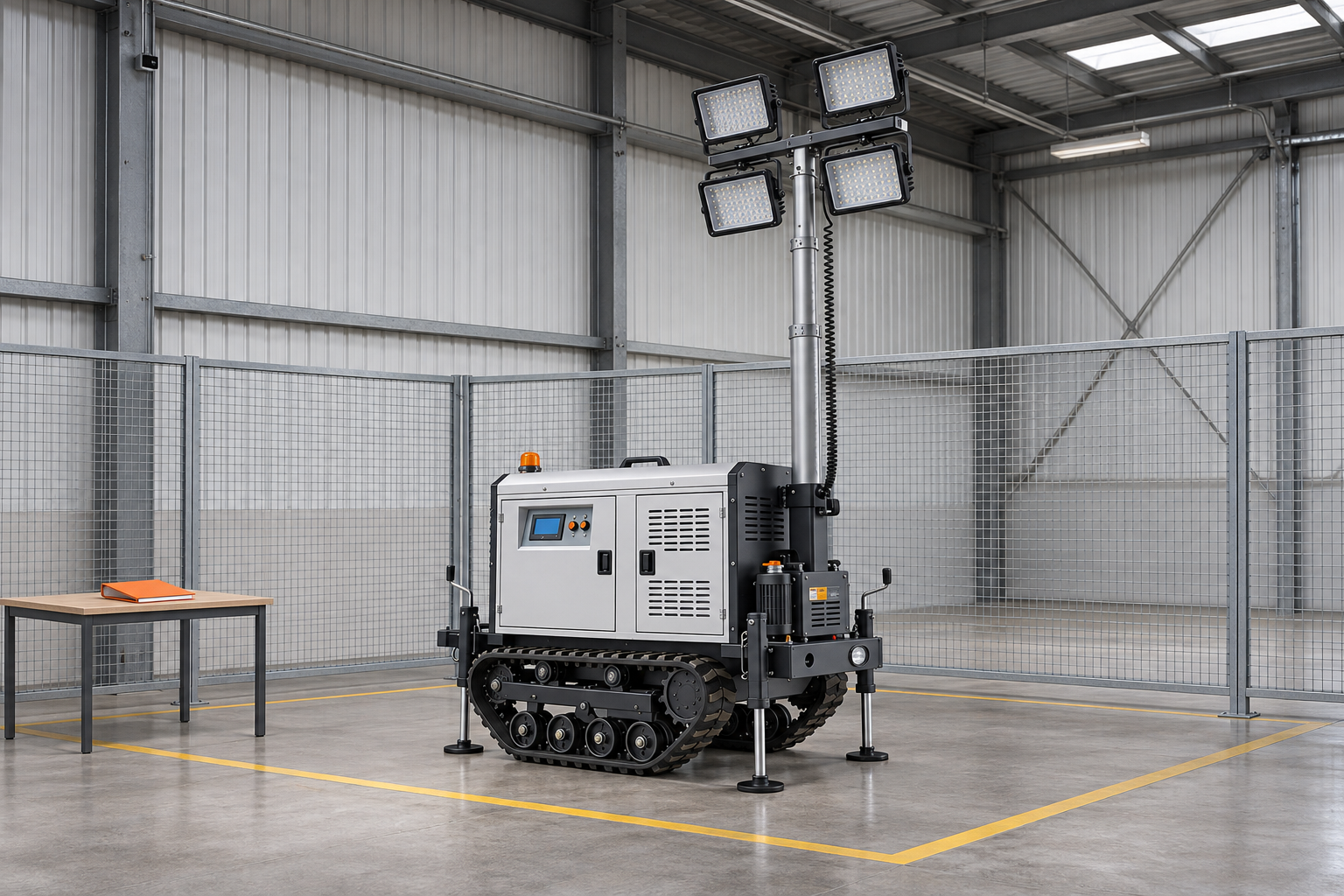
The pictured Keyyou crawler light tower is equipment context only. Its silver cabinet, tracked chassis, stabilisers and four rectangular lamp heads help explain the receiving situation; the generated image is not damage evidence. Use genuine dated shipment and inspection photographs in the actual case file. Record who made each image and what it shows, and preserve the originals without adding simulated damage or altering identifiers.

Preserve contract evidence before debating the remedy
Collect the terms that actually governed the order, including agreed configuration, accepted changes and any relevant inspection or acceptance arrangements. Keep quotations and later order confirmations distinguishable so the reviewer can see what was finally agreed. A salesperson's general product statement may provide context but should not be silently promoted into a binding specification. Ask the commercial owner to identify the controlling documents and explain any inconsistency.
Record the supplier's response accurately. A credit note, repair offer or return authorisation may matter commercially, but it does not by itself prove the customs conditions are satisfied. Keep correspondence that explains why goods are being rejected, and distinguish a negotiated convenience return from a documented concern about condition or conformity. Let the adviser assess what those facts mean for the available customs route.
Build an evidence matrix with explicit open questions
Use a matrix to connect each question to a source record and an owner. It should reveal missing information rather than conceal it behind a single status marked complete. If the technical report is pending, state that plainly. If the importer cannot yet connect a unit to the original declaration, make identity reconciliation an action instead of substituting an invoice number that merely looks similar.
| Condition | Review or action | Evidence or responsibility |
|---|---|---|
| Import identity | Connect affected unit to original declaration and invoice | Importer and representative validate the link |
| Commercial concern | Preserve agreed terms and factual complaint | Commercial owner identifies controlling contract |
| Condition history | Record observations tests and actual use honestly | Competent technical lead supplies factual report |
| Treatment | Separate proposed action from completed movement | Adviser confirms route and relevant permissions |
| Amounts | Explain affected scope and underlying financial evidence | Finance and adviser assess duty and VAT separately |
This qualitative coordination checklist supports the workflow discussed here; apply the jurisdiction and scope of the Claim a repayment or remission of charges on rejected imports – GOV.UK. It provides no universal numeric acceptance limit.
Record condition and use without making unsupported claims
Create a chronology of arrival, unpacking, observations, any permitted checks and subsequent storage. Describe actual use factually, including who operated the equipment and for what purpose where that is known. Do not remove inconvenient facts from the chronology because they might complicate a claim. The adviser needs the true sequence to assess the route, and the technical team needs it to distinguish transport damage from another cause.
If further testing is proposed, ask both the technical lead and customs adviser what is appropriate before proceeding. This article is not a test protocol. Do not energise the lights, raise the mast, dismantle the cabinet or perform repairs to manufacture a more persuasive claim file. Any activity must be justified by the actual circumstances, applicable permissions and competent technical instructions, with observations recorded without exaggeration.
Keep proposed disposal and actual disposal distinct
A buyer may plan to return a tower overseas, retain it pending a supplier decision or consider another treatment. Describe the proposal and ask the adviser what steps or permissions are required before acting. A transport booking is not proof that goods have left, and an internal instruction to scrap equipment is not evidence of lawful destruction. Preserve the decision trail and wait for the relevant authorised instructions.
After the agreed action occurs, collect genuine evidence from the responsible issuer. Connect transport or treatment documents to the affected equipment and packages, and record discrepancies while they can still be investigated. Do not backfill an event date from the date an email was received. Where an event remains unconfirmed, keep it open in the chronology and identify who is obtaining the supporting record.
Reconcile amounts without inventing an allocation
Prepare the original duty and import payment evidence requested by the adviser. If only part of a consignment is affected, explain the scope and provide the underlying commercial breakdown rather than choosing an arbitrary proportion. A commercial credit and the amount potentially recoverable through a customs route are different figures. Record their sources separately and leave the legal and accounting assessment to the responsible reviewers.
Import VAT may require a different handling route from customs duty, depending on the facts and the business's position. Have finance confirm the relevant treatment using current official guidance and professional advice. Do not submit the same amount through multiple routes merely because two forms seem available. An organised file should show which person controls each assessment and what has actually been submitted, accepted or paid.
Make the submission pack readable to a new reviewer
Arrange the file in a practical order: a short issue summary, identity map, contract evidence, condition chronology, proposed or completed treatment and financial reconciliation. Include an index that points to the original records. Use descriptive filenames based on real events, such as invoice, receiving photograph or supplier response, rather than labelling every attachment final. Keep drafts out of the evidential sequence unless their status is explained.
When a reviewer requests more information, retain the question and your response together. Identify any corrected or supplementary evidence as such. Never alter an existing third-party record to answer a question more neatly. If the issuer corrects a document, keep both versions and the reason for the correction. This is particularly useful when a case changes hands between procurement, finance, an agent and the supplier.
Work through a partial-consignment example
Imagine an order containing two towers, with a documented concern affecting only one. The receiving file must identify the affected unit and its connection to the declaration, while keeping the second unit's position separate. A broad statement that the shipment was rejected would obscure that distinction. Ask the technical and commercial owners to state the concern precisely and provide their supporting records before the adviser assesses the possible claim.
If the supplier offers a replacement before deciding what happens to the original unit, track the two movements separately. A new shipment does not automatically establish the treatment of the first import. Keep any replacement order, credit arrangement and proposed return cross-referenced but distinct. The reviewer should be able to follow each actual unit and transaction without interpreting a chain of informal messages or assuming one action closes another.
Improve the next equipment purchase and receiving process
Use the case to identify information gaps that can be addressed before the next order. Clarify how agreed specifications are recorded, which supplied-unit identifiers appear in documents, and how receiving observations are reported to the supplier. Establish a competent inspection process suitable for the equipment and location. These steps support accurate commercial decisions even where no customs repayment route is available.
A successful evidence handover is one in which the authorised reviewer can understand the facts, see the original supporting material and identify unresolved questions. It is not a guarantee that the claim will succeed. Keep customs, contractual, transport and technical decisions under their respective responsible parties, and maintain an honest chronology from import through the final documented outcome.
Equipment and related guidance
Identify the equipment context using the Keyyou tracked lifting light tower product page. Request documentation for the actual supplied configuration. Read the Light Tower Customs Debt Liability Evidence: UK Buyer File and related guidance on import declaration amendment handover, outward processing repair evidence.
Further learning: How to use the secure file upload service on the Customs Declaration Service
This HMRC tutorial explains the secure file upload service on CDS. It supports evidence submission and document handover only; it does not decide eligibility, authorise storage removal or confirm account payment.
Watch the educational video on YouTube.
Frequently asked questions
Does a supplier return approval guarantee customs repayment?
No. Commercial approval does not establish customs eligibility; a competent adviser must assess the facts.
Can a generated product picture prove damage?
No. Use genuine dated inspection and shipment records for the actual equipment.
Should a buyer repair or dispose of the tower before review?
Refer the proposed action to the appropriate customs and technical reviewers before proceeding.
How should a partly affected order be documented?
Identify the affected units, packages and amounts specifically while preserving the position of the remaining goods.
Sources and scope
These sources support the specific background principles discussed above. Their jurisdictions and subjects differ; they do not certify the pictured equipment or approve an individual shipment or installation.