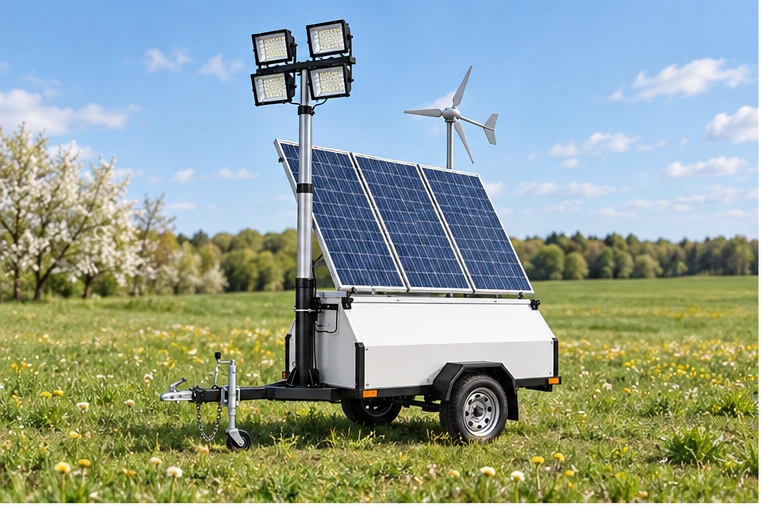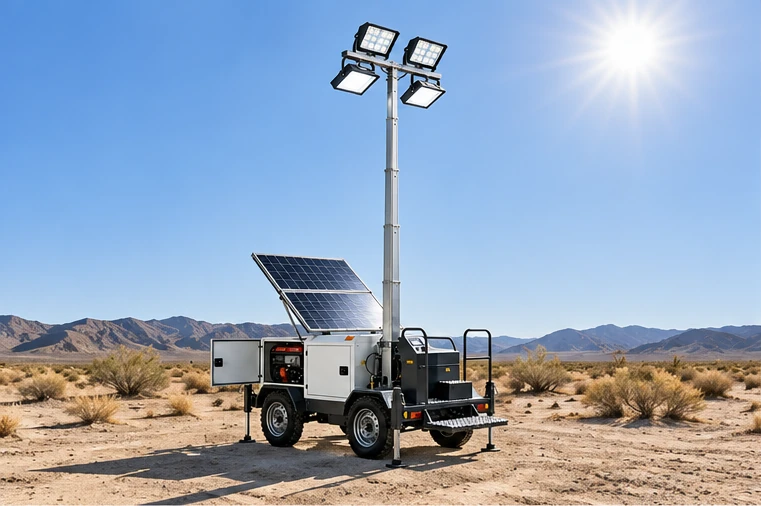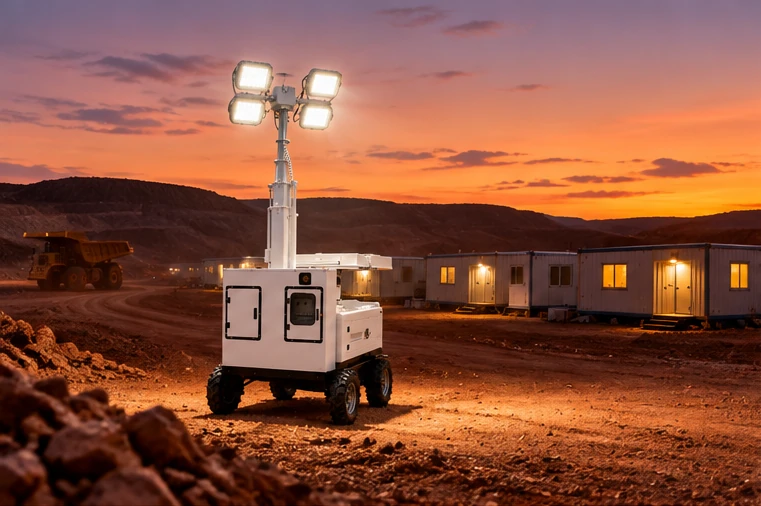

كيف ينبغي للفريق اختيار ارتفاع ساري برج الإضاءة لمنطقة العمل؟
Select light tower mast height from the work area’s task lighting needs, geometry, obstruction notes, and the approved coverage evidence for the offered configuration—not from a catalog height alone. Height selection shortlists a working elevation band; it does not replace placement planning or a model manual.
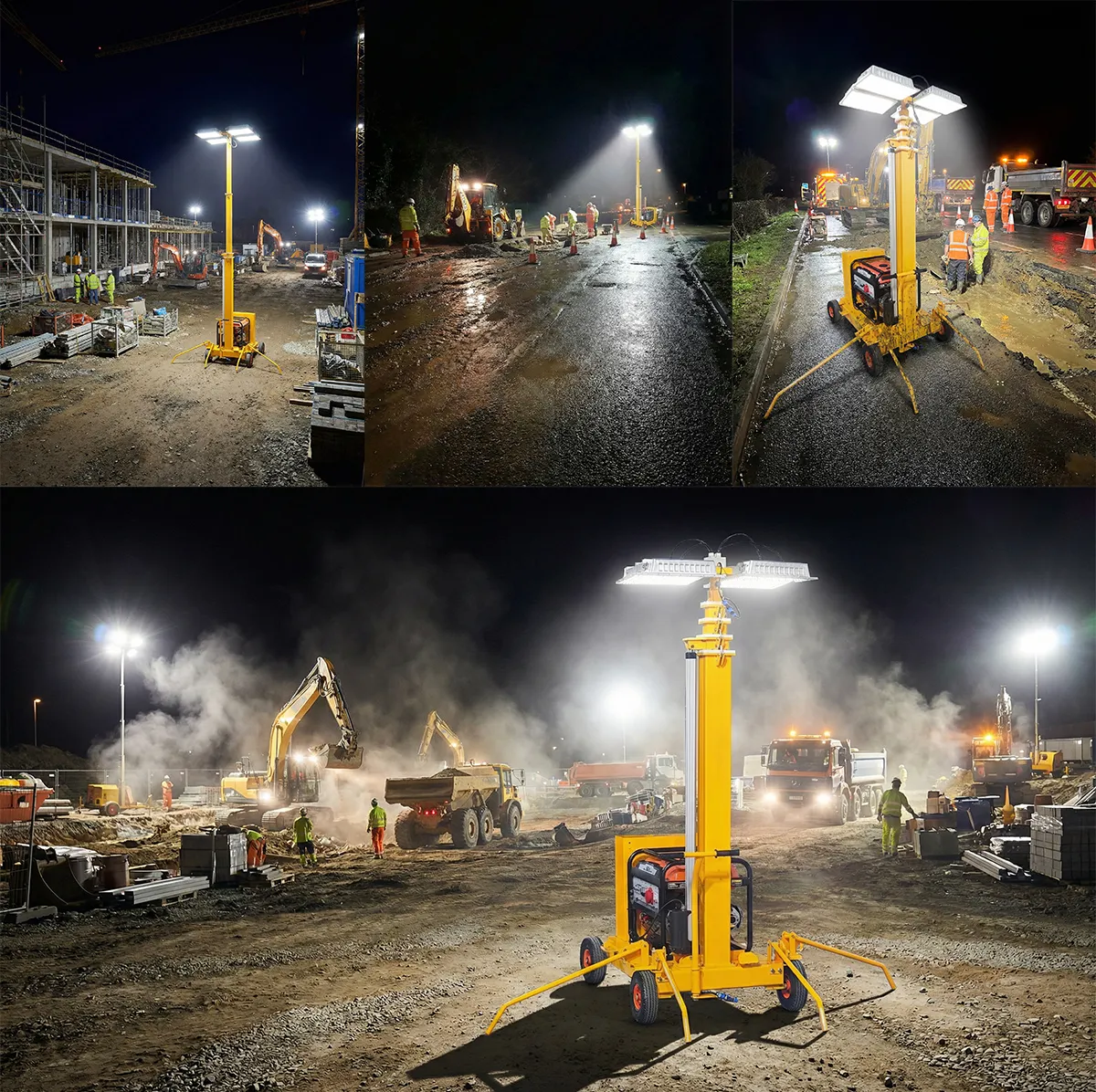
Part 1. What decision does mast-height selection actually resolve?
It resolves which mast elevation band can serve the defined work area under the lighting target the site must meet. It does not choose mast-drive type, complete first deployment, or create a photometric design package.
| قرار | Belongs here | Belongs elsewhere |
|---|---|---|
| Working elevation band for the task area | Yes | — |
| Pneumatic vs hydraulic drive | لا | Pneumatic vs hydraulic mast comparison |
| Hand-crank vs electric drive | لا | Hand-crank vs electric mast comparison |
| First-deployment positioning | لا | Trailer setup checklist |
| Shift-start readiness after setup | لا | Pre-operation inspection checklist |
Part 2. Which work-area inputs must be collected first?
Collect the task zones, required lighting intent, work-area dimensions, travel paths, and any local illumination rule the project must follow. OSHA 1926.56 publishes example construction minimums in foot-candles; treat them only as a reference table and apply the jurisdiction that actually governs the site.
| Input | لماذا يُعد ذلك مهمًا | سجل |
|---|---|---|
| Task zones and priority faces | Different tasks need different light levels | Zone map / notes |
| Work-area length and width | Sets the coverage problem | Measured sketch |
| Travel / pedestrian paths | Shadows and glare affect safety | Path overlays |
| Governing illumination target | Defines the acceptance intent | Rule reference used |
| Available tower count | One tall mast is not always enough | Planned unit count |
Part 3. How do height, coverage, and intensity trade off?
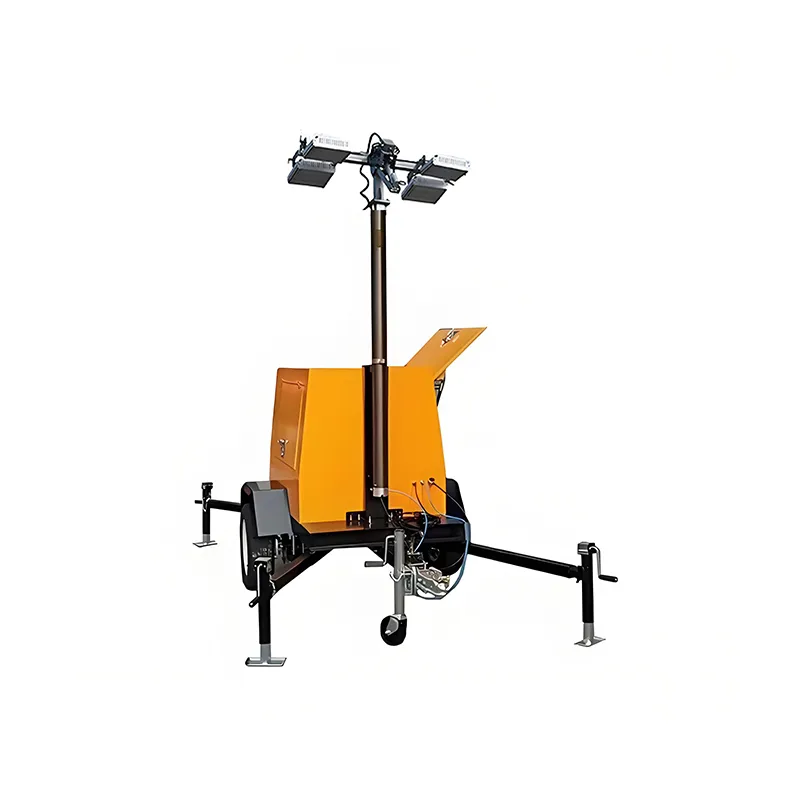
Coverage articles commonly note that mast height, fixture output, and terrain together shape the usable light footprint. Raising fixtures can widen the area reached, but intensity at a given point still depends on distance and aiming. A taller shortlist is not automatically better if the task needs higher intensity in a small zone or if stability limits remain unconfirmed.
| Shortlist tendency | Typical planning prompt | Still confirm |
|---|---|---|
| Higher elevation band | Wider open-area coverage and reduced near-ground pooling | Model documents and aiming plan |
| Lower elevation band | Stronger local intensity or constrained overhead space | Task-level adequacy |
| Multi-unit plan | Overlap control and shadow fill | Unit count and spacing rules |
مهم: Do not convert another brand’s coverage table into a Keyyou award. Source: selected configuration documents; coverage planning language.
Part 4. Which obstruction, glare, and access limits change the choice?
Check overhead lines, scaffolds, crane paths, adjacent structures, and reflective surfaces that can create glare or block the mast path. OSHA aerial-lift guidance reinforces solid support and work-zone awareness around elevated equipment.
Also record access for towing or repositioning. A height that looks ideal on paper fails if the unit cannot be placed where the beam must land.
Part 5. How should teams validate a shortlisted height?
- Compare the shortlist with the offered model’s approved height and aiming documents.
- Confirm the lighting target and acceptance method for the site.
- Review obstruction and support constraints for the planned parking position.
- Request photometric or coverage evidence when the project requires it.
- Stop if the supplier cannot produce the documents for the exact configuration.
Atlas Copco’s selection guidance ties mast choice to application. Use the same rule: application first, catalog claim second.
Part 6. Which RFQ inputs belong with a height request?
Ask for work-area sketch, task lighting intent, obstruction notes, preferred elevation band, unit count, aiming constraints, and the approved documents for the offered mast.
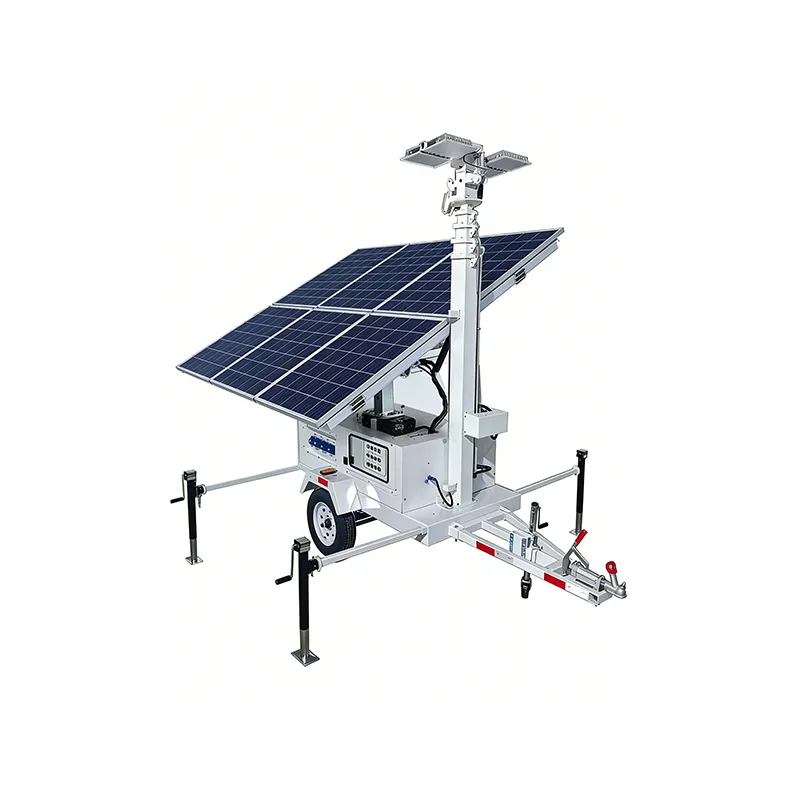
Product recommendation: use the listed trailer hydraulic-pole configuration as a document-review starting point when a trailer hydraulic mast is on the shortlist. It does not prove a height, lux map, or site approval. Related options are listed under the مجموعة أبراج الإضاءة المتنقلة على شكل مقطورة.
Fit Boundary
This guide is suitable for height shortlisting. It is not suitable as a photometric design, wind calculator, placement plan, or Keyyou performance commitment. For a configuration discussion, send the work-area inputs.
Part 7. When is height selection not enough?
Stop at height shortlisting when documents are missing, the lighting target is undefined, obstruction risk is unresolved, or the team still needs drive-type, setup, or shift-start inspection decisions. A correct elevation band still fails if the unit is unsafe to operate.
الأسئلة الشائعة
كيف يؤثر ارتفاع الساري على تغطية برج الإضاءة؟
قد تؤدي الارتفاعات الأكبر إلى توسيع نطاق التغطية، إلا أن التغطية الفعلية القابلة للاستخدام لا تزال تعتمد على قوة وحدة الإضاءة، وتوجيهها، وتضاريس المكان، ومستوى الإضاءة المطلوب.
هل الصاري الأطول أفضل دائمًا؟
لا. بعض المهام تتطلب كثافة أعلى في نطاق أصغر، وقد تؤدي قيود الارتفاع أو الثبات إلى استبعاد حزام أطول.
ما هي مدخلات الموقع المطلوبة قبل اختيار ارتفاع الصاري؟
مناطق المهام، الغرض من الإضاءة، هندسة منطقة العمل، ملاحظات العوائق، مرجع القاعدة الحاكمة، والعدد المخطط للوحدات.
هل يمكن لارتفاع الكتالوج أن يحل محل فحص إضاءة الموقع؟
لا. ارتفاع الكتالوج هو مجرد ادعاء أولي؛ يجب تأكيد المستندات وطريقة قبول الموقع.
How does this differ from placement planning?
Height selects an elevation band. Placement decides where units stand to reduce dark zones after height is known.
What should stop a height decision?
Missing manuals, undefined lighting targets, unresolved obstructions, or unsupported coverage claims.
What belongs in an RFQ for mast height?
Work-area sketch, task lighting intent, obstruction notes, preferred elevation band, unit count, and requested mast documents.