

فحص تحميل ونقل برج الضوء القابل للسحب: فحص التحميل والتثبيت
يبدأ تثبيت حمولة برج الضوء مع الجهاز المحدد، وكتلته الفعلية للنقل ونقاط التثبيت المعتمدة من قبل الشركة المصنعة.
Light tower load securement starts with the exact machine, its actual transport mass and the manufacturer's approved restraint points. The carrier then chooses a suitable vehicle, a loading position and a rated restraint arrangement under the rules applicable to the journey. Do not tie a tower down through its mast, lamps or support legs because they look convenient. Keep dispatch on hold whenever the attachment-point information, restraint ratings or vehicle load distribution cannot be demonstrated.
This guide concerns a light tower carried as cargo on a truck or trailer. It does not prescribe a universal chain count, calculate a complete lashing design or authorize towing a tracked machine. The useful output is a transport evidence package that a competent carrier can accept before loading begins.
Define carriage before choosing restraints
A tower carried on a vehicle has two separate systems to check: the machine's own transport configuration and the vehicle's cargo restraint arrangement. A transport lock may hold the mast within the tower, while tie-downs restrain the complete tower relative to the deck. Neither function automatically performs the other. Ask the manufacturer to identify both in the documentation.
Confirm the full journey, including collection, intermediate depots, road transport and unloading. An acceptable arrangement for one carrier or vehicle does not automatically transfer to another. Record jurisdiction, deck type, available anchors, route restrictions and who has authority to release the load. If the tower is travelling on its own road wheels instead, redirect the task to the towing procedure.
Freeze the actual loaded configuration
Identify the serial number and configuration before obtaining a mass value. Retained fuel, removable accessories, spare equipment and shipping frames can alter the load. Use a reliable machine record or weighing process accepted by the carrier. Do not use a rounded catalogue weight from a different model to approve payload or restraint capacity.
List everything that travels with the tower. Tools, manuals, removable controls and loose accessories need an appropriate storage or separate restraint method. A closed cabinet is not a universal container for unrelated items. Check whether the manufacturer requires fluids, batteries or other components to be prepared in a particular way, and have the responsible transport specialist address any additional requirements.
The centre of gravity also matters to the loading position and stability review. Request the relevant drawing rather than estimating from cabinet dimensions. A compact tracked base can conceal a substantial upper assembly. Changed lamp brackets, an accessory rack or an added frame should trigger a document review before the carrier repeats an older loading plan.
Identify transport points without guessing
A lifting point, recovery point, support-leg bracket and tie-down point can serve different purposes. Ask for a drawing that identifies which points may be used for cargo restraint, their permitted directions and any stated limitations. If a feature is unmarked or unclear, obtain written clarification. A photograph cannot establish the strength or intended use of a welded bracket.
Keep the restraints away from vulnerable components unless the approved method specifically addresses contact. A chain crossing a cabinet panel may damage it before the load appears to move. A restraint around the mast can load an assembly that was never designed as a chassis attachment. Protecting paint does not make an unsuitable attachment structurally acceptable.
Match the carrier and loading position
The carrier should verify payload, axle distribution, deck capacity, anchor ratings, clearances and access for the proposed load. A truck with sufficient total payload can still have an unsuitable loading position or local deck loading. Do not move the tower further forward or backward simply to simplify chain routing without returning the arrangement to the carrier's review.
Plan loading and unloading as separate controlled activities. Check the chosen handling method against the manufacturer's instructions and the equipment used. Keep people clear of moving machinery and suspended loads. A load that can be placed on the deck is not necessarily suitable for carriage; the final position must also support the approved restraint system and a safe unloading sequence.
Choose a complete restraint system
Capacity belongs to the whole arrangement, including attachments, anchors, connectors, restraints and any edge protection. A high rating on one chain does not establish the capacity of the remaining components. Ask the carrier to record the restraint type, rating basis, condition, routing and connection method used for the approved plan.
The applicable rules may distinguish direct restraints, over-the-top restraints, blocking and particular commodity classes. Do not import a calculation from a different method. This article deliberately avoids assigning a universal number of chains or a working-load-limit formula to an unidentified tower. The carrier must select and document the relevant method for the actual cargo and journey.
Use compatible connectors and inspect for damage, distortion, corrosion, wear and identification problems under the relevant instructions. Do not improvise extensions or join components of uncertain capacity. Any restraint subject to abrasion or cutting needs suitable protection within the accepted arrangement. Keep all required evidence available to the driver rather than leaving it only in a purchasing email.
Use a dispatch hold-point table
The following qualitative table turns common uncertainties into decisions. Its basis is the documented load-control approach in the official Oregon DOT, DVSA and Texas guidance linked below. It does not replace the carrier's engineering, regulatory or equipment-specific assessment.
| الشرط أو الدليل | القرار المطلوب | السجل أو القيد |
|---|---|---|
| Unknown loaded mass | Obtain the actual configured mass, including retained fuel and accessories. | Mass record accepted by the carrier |
| Unidentified chassis feature | Do not use a convenient opening as a restraint attachment. | Manufacturer-approved tie-down drawing |
| Damaged or unreadable restraint | Remove it from the proposed arrangement for assessment. | Verified rating and serviceable condition |
| Changed loading position | Recheck vehicle distribution, restraint geometry and clearance. | Revised carrier approval before departure |
Assign an owner to every hold. The equipment supplier resolves attachment-point uncertainty; the carrier approves vehicle and restraint suitability; the loading team verifies that the actual arrangement matches the plan. These roles may be held by different organizations. A single signature without supporting information should not hide unresolved questions between them.
تحقق من الحالة الداخلية للنقل الخاصة بالآلة
Follow the actual tower manual for lowering, lamp positioning, restraints, supports and any electrical or fuel preparation. Verify that each required lock is engaged and that loose parts are secured. Do not assume that operating stabilizers may remain in the same position for carriage, or use a support foot as an improvised deck fixing.
Look at the complete upper envelope after preparation. Lamp frames, handles and cables can project beyond the cabinet. Check that the transport arrangement will not damage them through contact or vibration. If the supplied configuration differs from the drawing, stop and obtain the corrected instruction. Do not bend brackets or remove protective equipment merely to fit a transport space.
Record the actual arrangement before release
Capture clear photographs from positions that show the machine identity, deck location, attachment points, connections and overall envelope. Record restraint identification where practicable and retain the accepted plan with the consignment. Photographs support the record; they cannot prove hidden anchor capacity or the suitability of a connection that was never approved.
The driver should receive the loading record, inspection instructions, known restrictions and the procedure for reporting a changed or damaged arrangement. Establish how in-transit checks will be performed under the applicable rules and company process. Do not create an arbitrary interval in a generic article, and do not allow a check to require entering an unsafe roadside position.
cURL Too many subrequests by single Worker invocation. To configure this limit, refer to https://developers.cloudflare.com/workers/wrangler/configuration/#limits
cURL Too many subrequests by single Worker invocation. To configure this limit, refer to https://developers.cloudflare.com/workers/wrangler/configuration/#limits.
cURL Too many subrequests by single Worker invocation. To configure this limit, refer to https://developers.cloudflare.com/workers/wrangler/configuration/#limits.
cURL Too many subrequests by single Worker invocation. To configure this limit, refer to https://developers.cloudflare.com/workers/wrangler/configuration/#limits
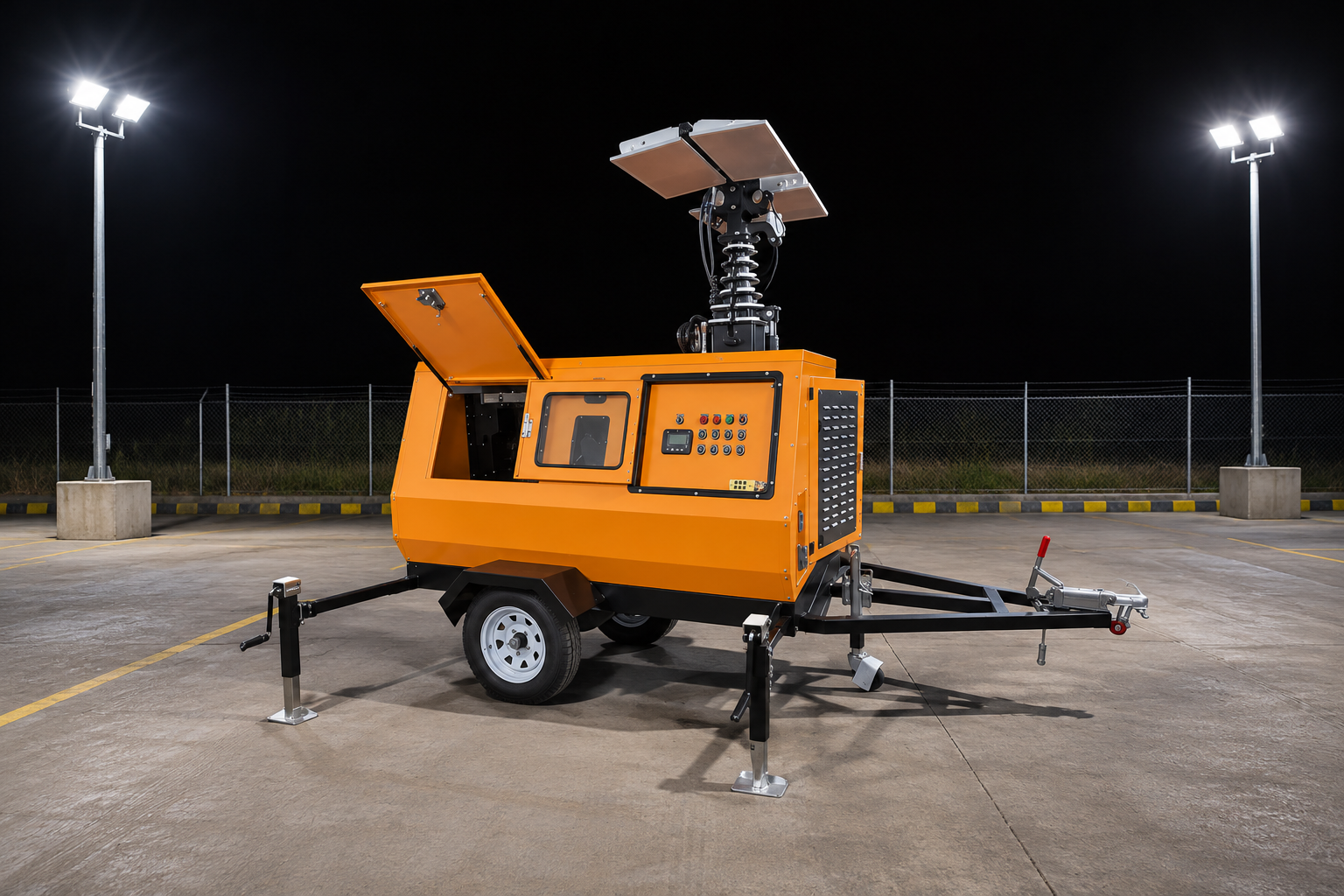
يوفر نوع المقطورة برج إضاءة متنقل (عمود هيدروليكي) سياق المعدات المرئي لهذا الدليل؛ تحقق من التكوين الفعلي المقدم مقابل التعليمات المعمول بها. اطلب الدليل الدقيق، سجل الكتلة، معلومات مركز الثقل، تكوين النقل المسموح به، ورسم نقطة التثبيت للوحدة الموردة.
cURL Too many subrequests by single Worker invocation. To configure this limit, refer to https://developers.cloudflare.com/workers/wrangler/configuration/#limits.
المعدات والتخطيط التكميلي
يوفر نوع المقطورة برج إضاءة متنقل (عمود هيدروليكي) سياق المعدات المرئي لهذا الدليل؛ تحقق من التكوين الفعلي المقدم مقابل التعليمات المعمول بها. استمر في دليل المقطورة وبرج الإضاءة القابل للسحب، بالإضافة إلى فحوصات قفل نقل العمود، وتخطيط وزن برج الإضاءة.
التوعية المحايدة بالسلامة
cURL Too many subrequests by single Worker invocation. To configure this limit, refer to https://developers.cloudflare.com/workers/wrangler/configuration/#limits.

Watch the educational video on YouTube.
تكوين المنتج ودليل الشراء ذات الصلة
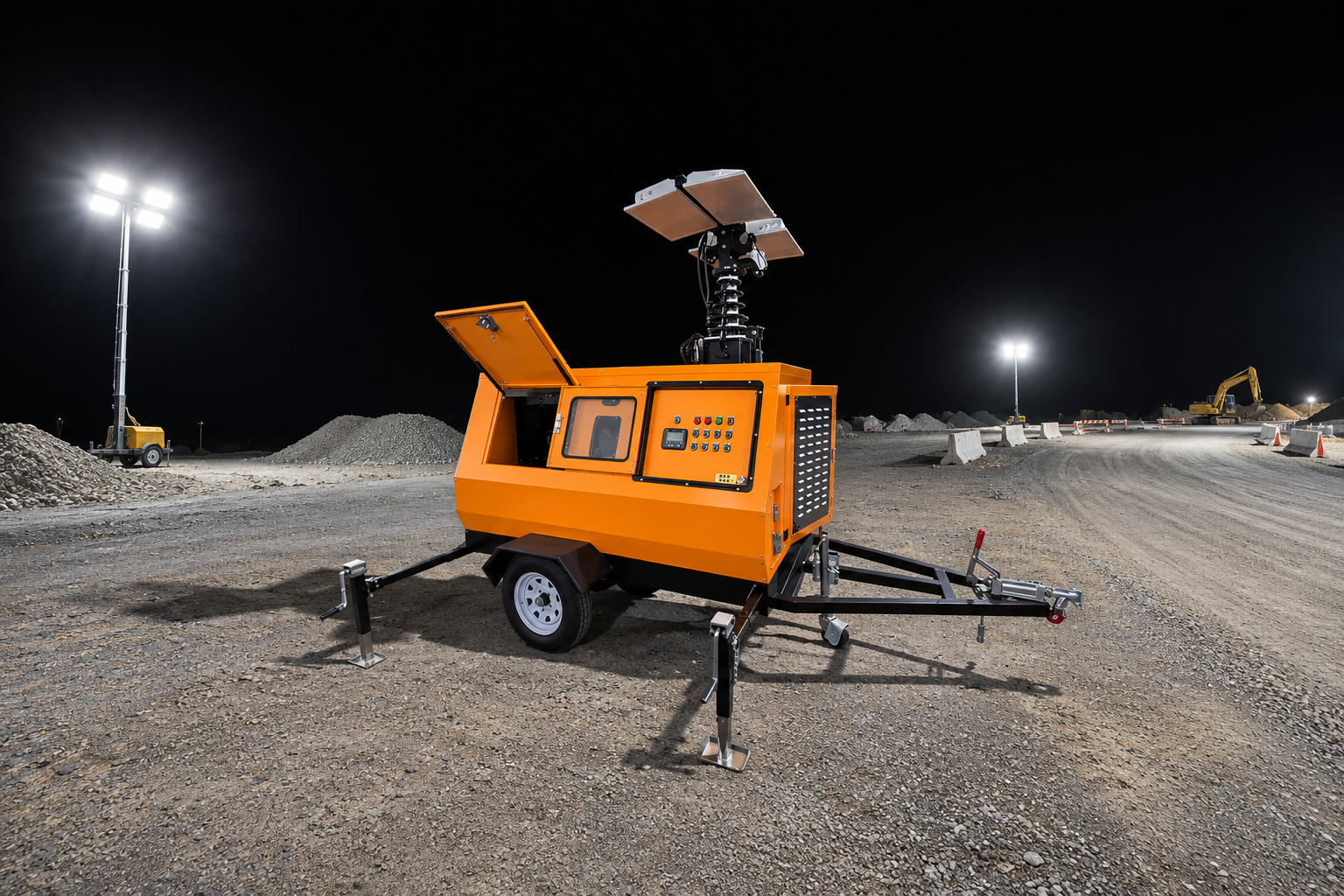
نوع المقطورة برج إضاءة متنقل (عمود هيدروليكي) هو المرجع الحقيقي للمنتج المستخدم في صور الليل الخارجية لهذا الدليل. يوفر التكوين المرئي، بما في ذلك خزانة المقطورة البرتقالية، وترتيب الدعم، والعمود الهيدروليكي، سياق معدات ملموس لفحص تكوين النقل. أكد التكوين المحمل، ونقاط التثبيت المعتمدة ومتطلبات الناقل مقابل التكوين المقدم قبل اتخاذ قرار تشغيلي أو شرائي.
إرشادات الشراء والخدمة ذات الصلة: برج إضاءة قابل للسحب. استخدم هذا الدليل الأوسع جنبًا إلى جنب مع الفحوصات المحددة في هذا المقال. للاستعلام عن نموذج معين، راجع برج إضاءة متنقل نوع مقطورة (عمود هيدروليكي) واسأل عن التكوين والخيارات الموثقة المشمولة. يحدد صورة المنتج سياق المعدات المرئي؛ لكنه لا يحدد تصنيفًا مقاسًا، أو فحصًا ناجحًا، أو وظيفة اختيارية مدعومة.
انظر أيضًا كيفية اختيار برج الإضاءة و صيانة برج الإضاءة.
الأسئلة الشائعة
Can chains be attached to the light tower mast?
استخدم فقط نقاط التثبيت التي تعتمدها الشركة المصنّعة لتأمين الحمولة أثناء النقل. فمجرد سهولة الوصول إلى الصاري أو إطار المصابيح أو أرجل الدعم لا يجعل أيًّا منها نقطة ربط معتمدة.
هل يحل فرامل الانتظار محل الربط؟
لا. يجب على الناقل توفير نظام تقييد وتثبيت كامل ومتوافق مع المتطلبات. ولا تُعد أدوات التحكم في ركن الآلة دليلًا على تأمينها ضد قوى النقل.
هل تحتاج جميع أبراج الإضاءة إلى أربع سلاسل؟
No universal chain count can be assigned from a product category. Applicable rules, machine mass, approved points, restraint ratings and the carrier plan determine the arrangement.
هل هذا مماثل لقطر برج إضاءة مقطور؟
No. This guide concerns a tower carried as cargo on another vehicle. A tower travelling on its own road trailer needs a separate towing and roadworthiness review.
المصادر والنطاق
The sources below provide general principles. Apply the actual manufacturer instructions, workplace assessment and rules for the destination; these references do not certify this light tower.


