

Light Tower Customs Temporary Storage Handover: Track Goods, Status and Release
Prepare a UK light tower temporary storage handover linking actual equipment, inventory references, responsible parties and release evidence.
A light tower customs temporary storage handover should connect the arriving equipment, its inventory reference, the authorised storage location and the person responsible for the next customs step. Before promising delivery to a construction site, obtain a clear status update from the facility operator and customs representative. A transport booking or photograph of a tower does not authorise removal. This guide concerns document coordination for UK imports; it does not grant customs permission or provide instructions for operating a storage facility. Use the actual movement records and the current rules applicable to the shipment.
Start with the storage status, not the site delivery date
The practical problem often begins when a project team sees that its equipment has reached a warehouse. Procurement assumes that the tower can now be collected, while the warehouse treats it as goods still under customs control. Neither a purchase order nor a driver assignment resolves that difference. Ask the operator to identify the status in its controlled record and the evidence needed before collection can proceed. Record who supplied that answer and when it was checked.
Temporary storage should also be distinguished from customs warehousing and ordinary commercial storage. Similar buildings can support different arrangements, but the records and permissions are not interchangeable. Do not copy the discharge checklist from another shipment simply because both towers are standing indoors. Establish which arrangement covers these specific goods, then let the authorised parties determine the applicable process. Your coordination file should make that decision easy to trace without pretending to replace it.
Identify the tower and every accompanying package
Use the supplier's actual supplied-unit information, commercial invoice, packing list and transport references to build a receiving map. A tracked lighting tower may be accompanied by accessories or separately packed items, but their presence must come from the order and packing records. Do not infer an accessory inventory from a catalogue photograph. Record the number of units and packages exactly as supplied, and preserve any difference between the expected list and the operator's receiving report.
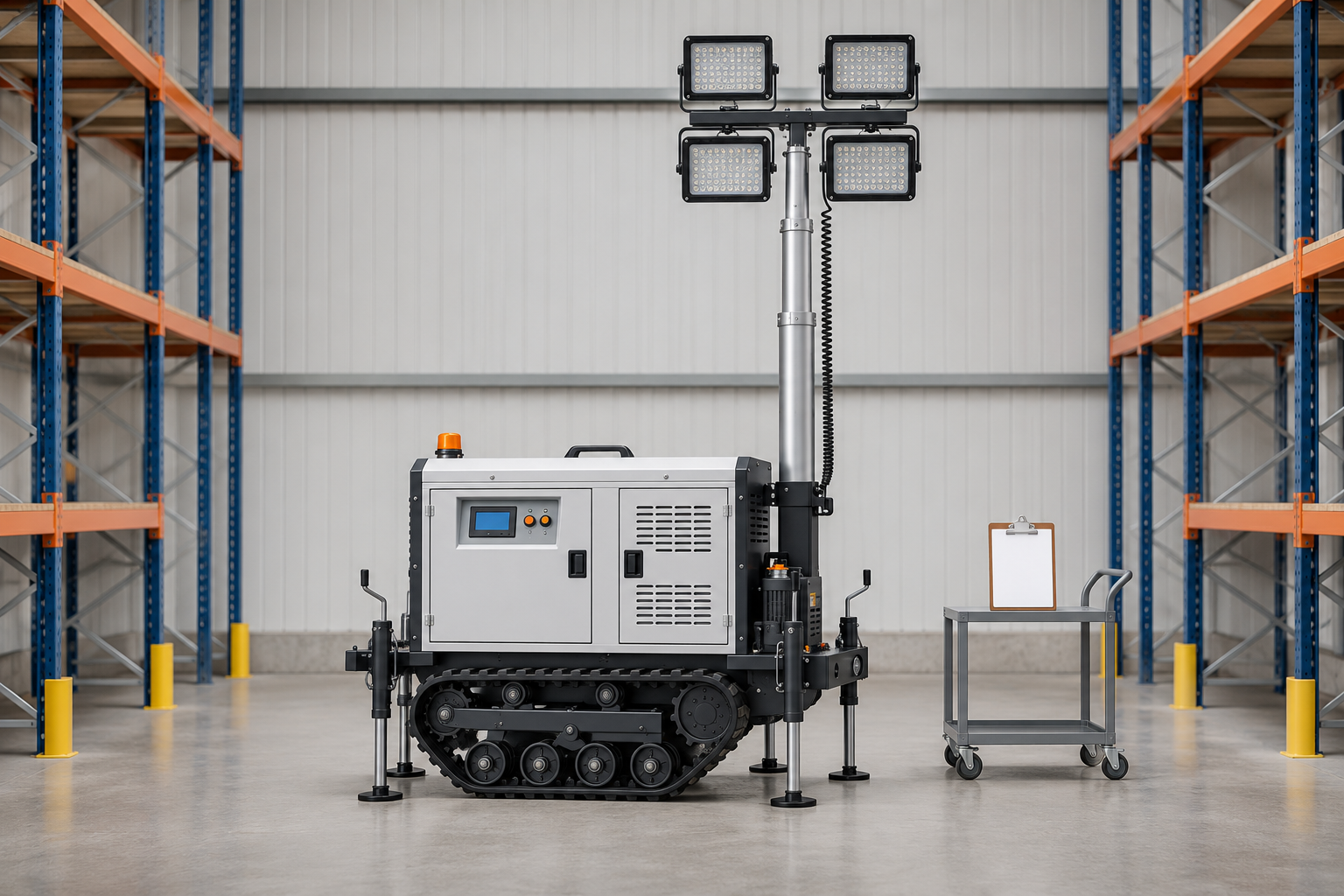
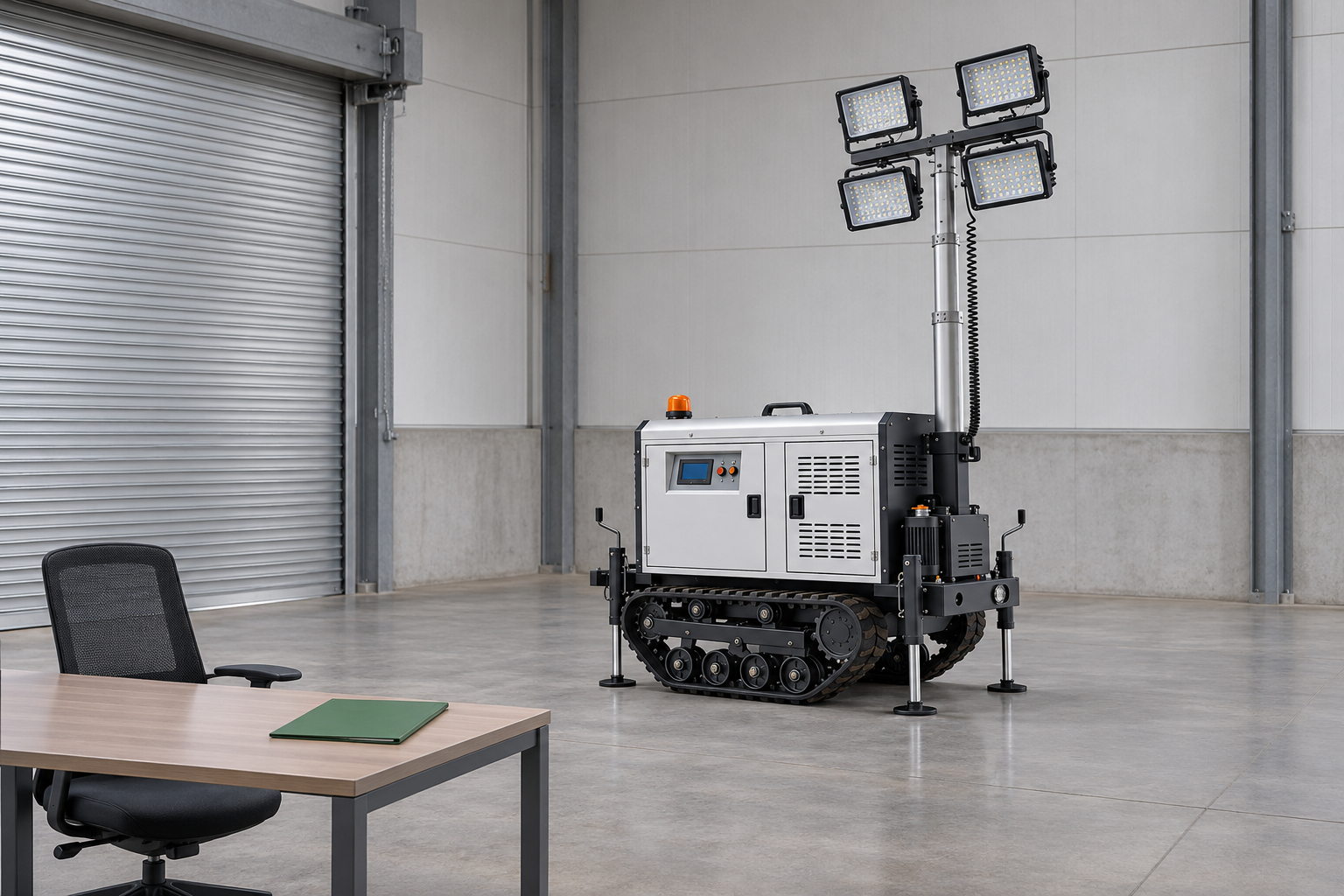
The Keyyou product photograph provides visual context for the silver cabinet, crawler chassis, stabilisers and four rectangular lamp heads. It cannot prove the identity, declared value or condition of a particular consignment. Where an identifier is not visible without unpacking, describe the limitation and ask the operator how it can be verified lawfully. A coordinator should not tell warehouse staff to open a package merely to complete an internal spreadsheet.
Agree a handover record before the equipment arrives
Create one entry per consignment with the expected arrival event, the receiving facility, the representative and the inventory reference once issued. Include the purchase order and supplier contact as supporting references, rather than using them as substitutes for the facility's own record. Ask the receiving operator which document naming and package mapping will help it match the goods. Keep instructions in a shared written record so a late change of driver does not erase the agreed destination.
The following qualitative table is a coordination aid. It proposes questions and owners rather than legal acceptance criteria. The operator and representative remain responsible for confirming what the actual arrangement requires. If a field is unknown, keep it visibly open and give it an owner; an empty cell should never silently become an assumption that all goods are released.
| Condition | Review or action | Evidence or responsibility |
|---|---|---|
| Arrival identity | Match supplied units and packages to actual receiving record | Supplier and operator reconcile discrepancies |
| Storage status | Ask which arrangement covers these goods | Operator confirms controlling inventory reference |
| Next step | Record proposed procedure or movement and open questions | Representative confirms applicable instructions |
| Condition check | Describe the proposed activity before unpacking or testing | Operator and competent technical lead approve scope |
| Collection | Obtain release basis and actual collection trail | Operator controls removal and inventory update |
This qualitative coordination checklist supports the workflow discussed here; apply the jurisdiction and scope of the How to put goods into a temporary storage facility – GOV.UK. It provides no universal numeric acceptance limit.
Keep time and movement information together
Ask the operator to confirm the relevant starting event, outstanding time and next required action for the goods in its records. Keep the original evidence behind those dates. Do not reset an internal countdown because the goods were moved to another bay or because a different project manager took over the order. Where a movement between facilities is proposed, refer it to the operator and representative before issuing a collection instruction to the carrier.
A useful tracking sheet separates planned events from observed events. For example, proposed transfer, vehicle booking, actual departure and receiving confirmation belong in different fields. If a planned transfer is cancelled, preserve that fact and update the next action. Otherwise a coordinator joining midway may read a booking email as evidence that the transfer occurred and start arranging delivery from the wrong location.
Treat condition checks as a separate controlled activity
The project team may want to see whether the lamp heads, cabinet or tracks arrived intact. That is a reasonable commercial question, but it does not automatically authorise unpacking, testing or modification while the goods remain under customs control. Describe the proposed check to the facility operator and obtain appropriate instructions. Keep technical work under competent personnel and the equipment manufacturer's documentation; customs coordination is not a commissioning procedure.
Photographs should identify the date, viewpoint and scope of what was actually visible. Record that a photograph shows an exterior view rather than asserting that it proves all components are undamaged. If packaging damage is observed, retain factual images and notify the relevant parties without inventing a cause. A scuffed crate is an observation; a conclusion about transport liability or product failure requires separate assessment and supporting evidence.
Obtain the removal basis before booking final collection
Ask the operator what evidence it must hold before allowing the tower to leave. Connect the applicable release or removal authority to the identified goods and the actual collection instruction. A carrier's willingness to collect is not that evidence. Keep the destination and collecting party consistent across the approved instruction, vehicle booking and warehouse handover. Resolve a changed destination through the responsible parties instead of assuming the original authorisation covers it.
When the tower leaves, retain the factual collection trail, including the identified goods and any acknowledged discrepancy. Ask who will update the inventory and who will provide the closing confirmation. Do not close your procurement action solely because the driver has signed for a package. Physical collection and the operator's completion of the required records are related events that should both be traceable in the file.
Work through a late-project-delivery example
Suppose a lighting tower is needed for a weekend construction shift, but the importer has only a warehouse arrival email. The site asks the carrier to collect immediately. The coordinator should first ask the operator and representative for the goods' actual status and outstanding actions. If release evidence is still pending, communicate that specific uncertainty to the site and keep the transport booking conditional rather than claiming a firm delivery time.
If the paperwork then identifies an accessory package missing from the receiving report, keep the mismatch separate from the release question. Ask whether it is a separate package, an omitted entry or a genuine shortage. Record the answer and supporting document. This prevents two common errors: delaying an otherwise clear action because an unrelated question is poorly described, or declaring the entire order complete when only the main machine has been accounted for.
Prepare a receiving team handover that survives staff changes
Give the next coordinator a compact index rather than an unexplained archive of email attachments. List the controlling inventory reference, equipment and package map, operator contact, representative contact, current status and next action. Link each status statement to the document or message supporting it. Include the time of the last check so a colleague can distinguish a current instruction from an older proposal.
Keep the original records alongside later corrections. A revised packing list should show which version superseded the earlier one, and an amended instruction should identify its issuer. Do not edit a carrier document to make it agree with an internal receiving sheet. Ask its issuer to correct it and retain the correspondence. The goal is an understandable trail of genuine events, not a visually tidy folder with missing history.
Questions to settle before the next purchase order
Before another tower shipment, ask the representative and intended facility what information they need from the supplier and how early they need it. Confirm how changes in arrival time, package count or carrier will be communicated. Ask who tells the project team that collection can be arranged, and who supplies the final handover evidence. These questions turn an urgent warehouse telephone call into a planned workflow.
Keep the commercial and technical enquiry equally specific. Request the documentation for the actual light tower configuration, its transport preparation and competent receiving checks. Do not treat the equipment photograph in this article as proof of customs status or a loading instruction. A reliable handover combines authentic shipment evidence with clear responsibility, while leaving customs decisions to the authorised parties and equipment handling to the appropriate technical process.
Equipment and related guidance
Identify the equipment context using the Keyyou tracked lifting light tower product page. Request documentation for the actual supplied configuration. Read the Light Tower Customs Debt Liability Evidence: UK Buyer File and related guidance on customs warehouse discharge records, common transit closure evidence.
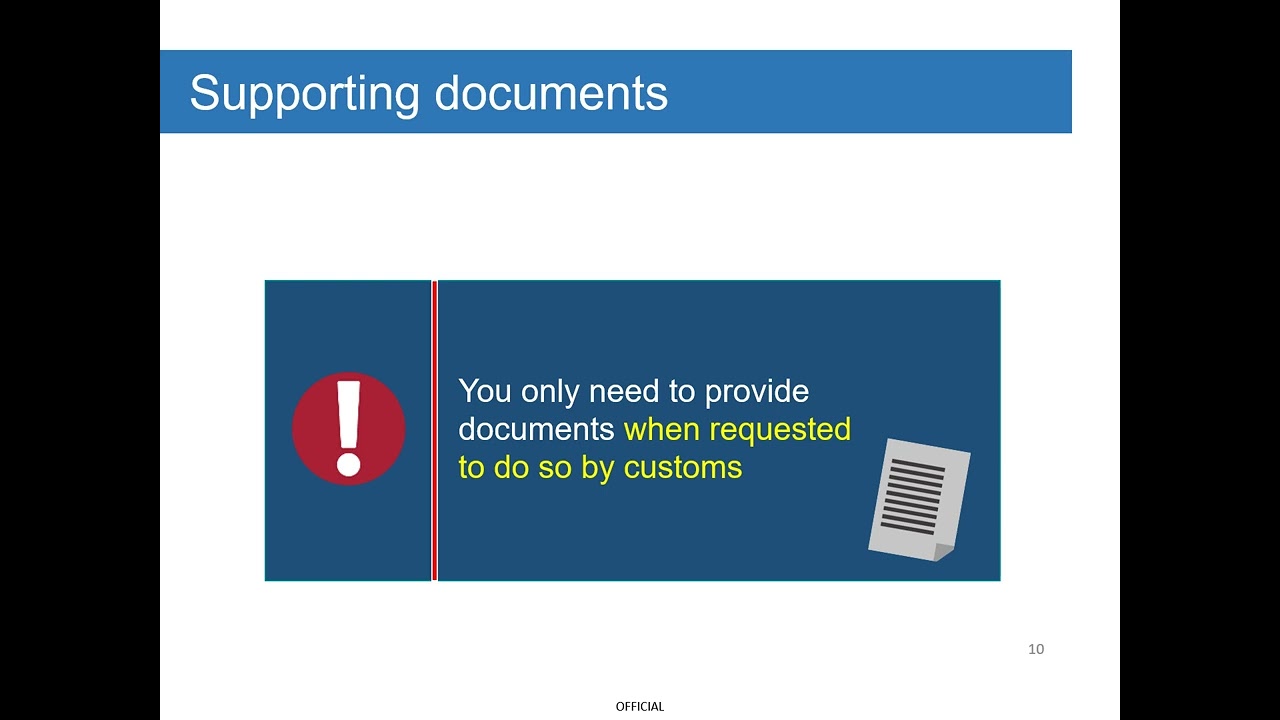
Further learning: How to use the secure file upload service on the Customs Declaration Service
This HMRC tutorial explains the secure file upload service on CDS. It supports evidence submission and document handover only; it does not decide eligibility, authorise storage removal or confirm account payment.
Watch the educational video on YouTube.
Frequently asked questions
Does warehouse arrival mean a tower is ready for site delivery?
No. Ask the facility operator and representative to confirm the actual goods status and removal requirements.
Can a product image establish the identity of imported goods?
No. Use actual supplied-unit identifiers and shipment documents; the image provides equipment context.
Should procurement order unpacking to check an identifier?
Refer the proposed check to the operator first. Do not assume permission to unpack or alter goods under customs control.
What should the next coordinator receive?
An indexed file showing equipment, inventory reference, current evidence, responsible contacts and clearly assigned open actions.
Sources and scope
These sources support the specific background principles discussed above. Their jurisdictions and subjects differ; they do not certify the pictured equipment or approve an individual shipment or installation.


