
Desspower Australien Bergbauprojekte: Generator- und Lichtmast-Leitfaden
Ein praktischer Due-Diligence-Leitfaden für australische Bergwerke zur Überprüfung von Leistungsangaben, Konfigurationen, Sicherheitsnachweisen und dem Lebenszyklus-Support von Desspower-Generatoren und -Lichtmasten.
Für Käufer, die zu Bergbauprojekten, Generatoren und Lichtmasten von Desspower Australia recherchieren, besteht die praktische Antwort darin, die vorgeschlagene Ausrüstung anhand eines realen Minenbetriebsprofils zu qualifizieren – nicht anhand einer Markenphrase. Definieren Sie den Arbeitsbereich, die erforderliche Beleuchtung, die Schichtlänge, die Umsetzhäufigkeit, Staub, Hitze, Wind, die Zugänglichkeit, die Treibstofflogistik und die Reaktionszeit des Service, bevor Sie Angebote vergleichen. Öffentlich indexierte australische Ergebnisse für diese genaue Anfrage werden eher von lokalen Projekt- und Lieferantenseiten als von unabhängig verifizierten Desspower-Minenreferenzen dominiert. Betrachten Sie jede beanspruchte Projektgeschichte als zu überprüfende Beweise: Fordern Sie konfigurationsspezifische Zeichnungen, photometrische Daten, Prüfprotokolle, australische Support-Details und genannte Referenzen an, die der Käufer kontaktieren kann.

Was die australischen Suchergebnisse tatsächlich zeigen
Unsere auf Australien ausgerichtete Google-Recherche ergab 20 organische Ergebnisse für die projektbezogene Suchanfrage. Die wiederkehrenden Themen waren für den Bergbau spezifizierte Ausführungen, Solar- und Diesel-Beleuchtungsoptionen, die Vermietung von Mobilfunkmasten, Umweltleistung und Lieferantenkompetenz. Die Lücke war ebenso wichtig: Die Ergebnisse boten selten ein vollständiges, vergleichbares Nachweispaket, das Beleuchtungslayout, Standfestigkeit, Transport, Betriebsdauer, Wartung und lokale Reaktionsfähigkeit an einem Ort abdeckt. Dieser Leitfaden schließt diese Lücke, ohne ein Suchergebnis, eine Broschüre oder ein Logo als Beweis für die Eignung für den Bergbau zu betrachten.
Ein Lieferant kann vertrauenswürdig sein und eine Maschine dennoch für eine bestimmte Grube, einen Aufgabebunker, einen Stillstandsbereich oder eine Transportstraßenkreuzung ungeeignet sein. Der Einkauf sollte daher drei Fragen trennen: Kann die vorgeschlagene Konfiguration die Aufgabe erfüllen; kann sie unter den Standortkontrollen sicher eingesetzt werden; und kann der Lieferant das Asset während der gesamten Vertragslaufzeit unterstützen?
Erstellen Sie ein Minenbetriebsprofil, bevor Sie ein Angebot anfordern
Beginnen Sie mit einem einseitigen Aufgabenprofil, das jedem Bieter zur Verfügung gestellt wird. Halten Sie fest, ob der Turm für die Interaktion mit mobilen Maschinen, Wartung, feste Verarbeitungsbereiche, Notfalleinsätze oder temporäre Bauarbeiten genutzt wird. Markieren Sie die Arbeitsebene und die Grenzen in einer Skizze. Geben Sie die Betriebsstunden pro Schicht, Tage pro Jahr, erwartete Bewegungen, Schleppflächen, maximale Steigungen, den voraussichtlichen Temperaturbereich, Staub- und Wasserbelastung, Betankungsbeschränkungen, Kommunikationsanforderungen und die in jeder Schicht verfügbare Kompetenz an.
| Entscheidungsbereich | Anzufordernde Beweismittel | Abnahmekontrolle |
|---|---|---|
| Beleuchtung | Photometrische Datei oder Lichtberechnung für die Komplettleuchte und vorgeschlagene Montagehöhe | Messen Sie repräsentative Aufgaben-, Kanten-, Übergangs- und Schattenpunkte |
| Laufzeit und Leistung | Kraftstoff- oder Batteriedaten bei der angebotenen Beleuchtungslast und Betriebsart | Führen Sie einen schichtrepräsentativen Test durch, einschließlich Start und Herunterfahren |
| Stabilität | Aufstellfläche, Nivellierungsmethode, Windgrenzen und Aufbauanleitung | Auf repräsentativem Boden mit der freigegebenen Konfiguration verifizieren |
| Mobilität | Transportabmessungen, Masse, Anhängelast, Bremsen, Reifen und Zurrpunkte | Überprüfen Sie die geplante Route, das Zugfahrzeug und den Ladevorgang. |
| Support | Servicestandorte, Stückliste, Reaktionszeiten, Gewährleistungsprozess und Schulungsumfang | Eskalationskontakte testen und Verfügbarkeit von Kritischen Ersatzteilen bestätigen |
Beleuchtungsleistung ist mehr als nur ein Lumen-Wert
Gesamtlumen beschreiben weder, wo das Licht auftrifft, noch wie gleichmäßig es verteilt ist oder ob Blendung Gefahren verbirgt. Fragen Sie nach Leuchtenhersteller, -modell, Leistung, Optik und photometrischer Datei. Eine nützliche Planung nennt Montagehöhe, Neigung, Ausrichtung, Oberflächenreflexion, Berechnungsraster und Wartungsannahmen. Sie sollte hell dunkle Bereiche, dunkle Ränder und Übergänge ausweisen – nicht nur einen Durchschnittswert.
Die Feldabnahme muss die vom Projekt geforderte Messebene und das genehmigte Messverfahren verwenden. Beobachten Sie die Szene aus den Augenpositionen von Bedienern und Fahrern. Ein Turm, der direkt unter dem Mast einen starken Messwert liefert, kann dennoch Blendung, harte Schatten oder schlechte Sicht entlang eines Fahrweges erzeugen. Der aktuelle Minenplan, die Gefährdungsbeurteilung des Standorts und die Anweisungen des Herstellers bleiben maßgebliche Dokumente.

Generator- und Energiesystemfragen
Wenn der Vorschlag die Stromerzeugung durch Diesel umfasst, ist die kontinuierliche elektrische Last zu bestätigen, anstatt sich allein auf Motor- oder Generator-Typenschilder zu verlassen. Fordern Sie die Beleuchtungslast, die Pauschale für Hilfssteckdosen, die Frequenz- und Spannungsregelung, die Schutzvorrichtung, das Anlaufverhalten und eventuelle Leistungsreduzierungsannahmen an. Angaben zur Laufzeit müssen Tankkapazität, getestete Last und Umgebungsbedingungen ausweisen. Der bei einem leichten Lastspiel gemessene Kraftstoffverbrauch ist nicht mit dem Verbrauch bei der vorgeschlagenen Standortlast vergleichbar.
Geben Sie bei Batterie-, Hybrid- oder solarunterstützten Optionen den erforderlichen Wartungsaufwand während Schlechtwetterperioden und saisonaler Bedingungen an. Fragen Sie nach nutzbarer Batterieenergie, Ladebegrenzungen, Wärmemanagement, Batteriegarantiebedingungen und der Steuerlogik, die die Hilfsstromerzeugung startet oder stoppt. Vergleichen Sie die Systeme anhand eines einheitlichen jährlichen Lastprofils, anstatt Diesel-, Hybrid- und Solaroptionen pauschal als überlegen oder unterlegen darzustellen.
Minenverlegung und Änderungsmanagement
Inspektieren Sie Überlandleitungen, Böschungen, Wasser, instabile Kanten, Sprengzonen, Verkehrswege und die Gefährdung durch Fahrzeuganprall, bevor Sie einen Lichtmast aufstellen. Stabilisieren und heben Sie den Mast nur gemäß den aktuellen Anweisungen des Herstellers. Änderungen an Reifen, Mast, Abstützungen, Leuchten, Batterien, Motor, Anhänger, Bedienelementen oder Zubehör können Gewicht, Stabilität, elektrische Leistung und Dokumentation beeinflussen; sie erfordern eine schriftliche Genehmigung und die Wiederholung der betroffenen Prüfungen.
Das Leitfaden zur elektrischen Sicherheit von Safe Work Australia bietet einen nützlichen nationalen Ausgangspunkt, während die Betreiber von Bergwerken auch die geltenden Vorschriften der staatlichen oder territorialen Bergbaubehörde sowie die Verfahren vor Ort befolgen müssen. Für den Betrieb in Queensland konsultieren Sie Resources Safety & Health Queensland. Diese Quellen ersetzen keine ingenieurtechnische Prüfung oder Standortgenehmigung.
Wie man eine Desspower-Projektforderung verifiziert
- Fragen Sie nach dem gelieferten Modell, dem Seriennummernbereich, der Konfiguration und dem Datum – nicht nach einem generischen Projektnamen.
- Ich bitte um die Erlaubnis, den Grubenbesitzer, den Hauptauftragnehmer oder den Flottenbetreiber zu kontaktieren.
- Bestätigen Sie, was der Lieferant tatsächlich geliefert hat: Turm, Generator, Steuerung, Service, Installation oder nur eine Komponente.
- Vergleichen Sie die Referenzbedingungen mit Ihrem Anforderungsprofil, einschließlich Staub, Hitze, Wind, Schichtlänge und Bewegungshäufigkeit.
- Überprüfen Sie Ausfälle, Modifikationen, Teilevorlaufzeiten und den Service-Support, nicht nur die Fotos der Inbetriebnahme.
Wenn Vertraulichkeit eine Offenlegung verhindert, fordern Sie anonymisierte Abnahmeprotokolle und Nachweise einer unabhängigen Inspektion an. Ein Foto kann die Anwesenheit belegen; es kann jedoch weder die Betriebsdauer, die Einhaltung der Beleuchtungsvorschriften, die Zuverlässigkeit noch den Lebenszyklus-Support nachweisen.

Vergleichswerte Produktkonfigurationen
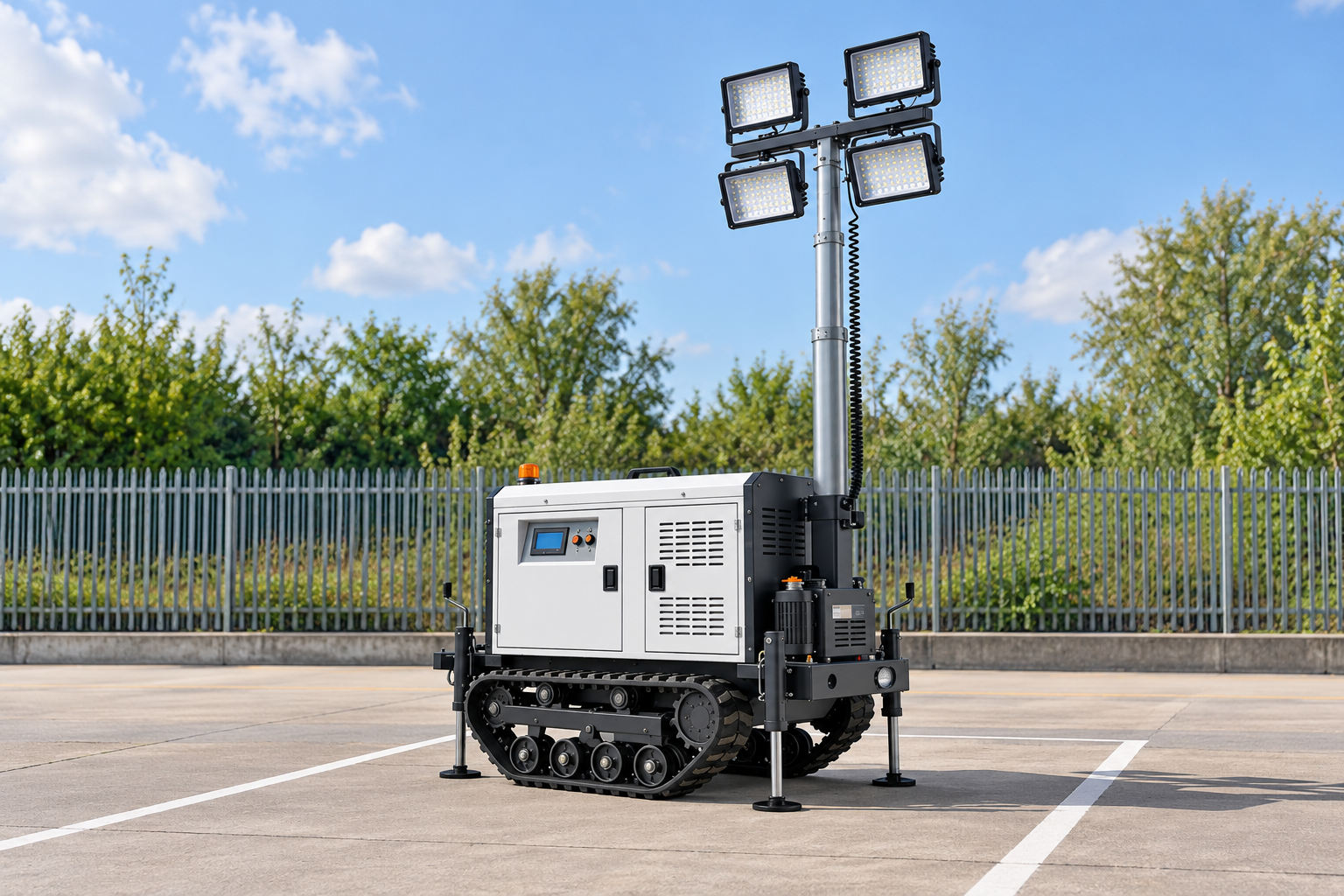
Keyyou’s raupenmobiler Hub-Lichtmast ist relevant, wo Geländegängigkeit und Eigenmobilität zum Anforderungsprofil gehören. Ein Hydraulischer Mastrohdruckanhänger passt zu einem anderen Transport- und Setup-Workflow. Vergleichen Sie sie als komplette Konfigurationen und bestätigen Sie die Endspezifikation direkt; die Produktseite ist ein Ausgangspunkt, kein Ersatz für ein bergwerkspezifisches Angebot.
Für eine breitere Auswahllogik siehe die Leitfaden für mobile Flutlichtmasten im Bergbau, Leitfaden für mobile Lichtmasten und Leitfaden für Lichtmastgeneratoren. Käufer, die ein konfigurationsspezifisches Nachweispaket benötigen, können Kontaktieren Sie Keyyou with their duty profile.
A practical bid scorecard
Use pass/fail gates for safety, destination compliance and mandatory site interfaces. Score only bids that pass those gates. A balanced scorecard can then weight verified lighting performance, deployment fit, energy cost, maintainability, local support, training and commercial terms. Record every assumption and deviation beside the score. The lowest purchase price should not win if the offer excludes commissioning, lacks critical spares or relies on an operating mode that cannot sustain the shift.
Documents to retain after commissioning
Keep the approved quotation, bill of materials, drawings, manuals, training record, risk review, inspection sheets, lighting measurements, fuel or runtime test, defects register and final acceptance together under the asset serial number. The record should identify firmware and controller versions where relevant. When a tower is relocated between pits or contractors, this package allows the receiving team to understand the configuration and limits instead of relying on memory.
Review the evidence after incidents, severe weather, major service, luminaire replacement, structural repair or a changed work phase. Trend start failures, lamp faults, fuel consumption, unplanned downtime, parts delays and relocation damage. Those facts improve the next procurement and reveal whether a claimed lifecycle advantage is occurring in the fleet. They also provide a more useful supplier-performance discussion than anecdotal comments.
Verwandtes Bildungsvideo
Dieses neutrale Video vermittelt zusätzliche Hintergrundinformationen, die für den Evaluierungsprozess relevant sind; die Projektregeln und die Anweisungen des Herstellers bleiben weiterhin maßgeblich.

Häufig gestellte Fragen
Beweist ein Suchergebnis von Desspower die Nutzung in australischen Bergwerken?
Nein. Eine Ergebnis- oder Marketingseite ist ein Anhaltspunkt für die Due Diligence. Überprüfen Sie die genaue gelieferte Konfiguration, Kundenreferenz, den Abnahmenachweis und die Support-Historie.
Sollte ein Bergwerk Diesel-, Solar- oder Hybrid-Lichtmasten wählen?
Entscheiden Sie sich gegen das Betriebsprofil. Schichtlänge, Verlagerung, Wetter, Kraftstoffzugang, Lademöglichkeit, Wartungskapazität und erforderliche Resilienz bestimmen das geeignete Energiesystem.
Welche Daten werden benötigt, um Bergwerks-Lichtmasten zu vergleichen?
Fordern Sie einen konfigurationsspezifischen Beleuchtungsplan, Laufzeit- oder Kraftstofftest, Abmessungen, Masse, Stabilitätsanweisungen, Umweltgrenzwerte, den Wartungsplan, die Ersatzteilunterstützung und das Abnahmeverfahren an.
Kann eine generische Produktbescheinigung den Einsatz einer Mine genehmigen?
Nicht von allein. Bestätigen Sie den Geltungsbereich des Zertifikats und die Zielanforderungen, und schließen Sie dann die Risikobeurteilung des Grubenbetreibers, die technische Prüfung und das Anlagenabnahmeverfahren ab.
Review the decision after 90 operating days
Set a post-deployment review date before the purchase is closed. Compare actual fuel or energy use, measured light levels, relocation time, defects, service calls and operator feedback with the bid assumptions. Investigate differences by configuration and operating condition rather than averaging the entire fleet. Confirm that corrective actions are closed and that manuals, spares and training remain current. A 90-day review gives procurement, operations and maintenance a shared factual record, identifies changes needed for later units and tests whether the selected supplier is delivering the promised support.
Wichtigste Erkenntnisse
For Desspower Australia mining projects, generators and lighting towers, trace every important claim from the proposed configuration to test evidence and a site acceptance check. Define the work first, verify project references, compare lifecycle support and keep configuration changes controlled. That process is far more reliable than choosing from a brand phrase, a single performance number or an attractive project photograph.