
Hurricane Response Lighting for Staging Areas
Plan hurricane relief staging lighting around receiving lanes, unloading shadows, approved ground, generator safety, power continuity, and shift handover.
Hurricane response lighting should make an approved staging area usable for receiving supplies, checking equipment, organizing crews, and moving safely after dark. Start with the site’s functions and access restrictions, then select tower positions and power arrangements for those functions. A mobile tower does not establish that a flooded building, damaged utility, or road is safe to enter. The incident organization must first accept the location and working boundaries. This guide considers temporary outdoor logistics lighting after conditions allow deployment; it does not specify rescue lighting inside unstable structures or authorize equipment operation during dangerous winds.
Separate staging work from the affected area
A staging area is an organized place for resources, not simply an open patch beside the incident. Confirm who controls access, where vehicles report, which lanes remain open, and where personnel wait. Lighting should reinforce those arrangements. A lamp aimed across every available space can illuminate an unapproved approach and make the operational boundary harder to understand.
Write down the tasks that continue after sunset: unloading, inspecting returned equipment, checking manifests, issuing supplies, or receiving relief crews. Locate those tasks on the accepted site plan. Include the direction people face while working and the routes they use to reach the task. The delivery driver, a person reading a label, and someone collecting a tool need different views. A single bright center does not prove that the entire sequence is usable.
Select ground before selecting mast height
Inspect the intended equipment footprint with the responsible site team. Recent rain, runoff, covered drains, pavement edges, and buried damage can affect a position that looks convenient from a vehicle. The equipment instructions and competent site assessment determine support requirements. Tracks do not demonstrate bearing capacity, permission to cross a damaged surface, or suitability for deployment on a slope.
Keep the tower outside accepted traffic paths and provide room for its complete support envelope. Request the delivered configuration’s drawings and operating instructions. If the staging area changes from an empty parking lot to a busy logistics compound, review the footprint again with vehicles, barriers, and stored material in their actual positions. Do not rely on a product photograph to establish clearances or stability.
Design around unloading shadows
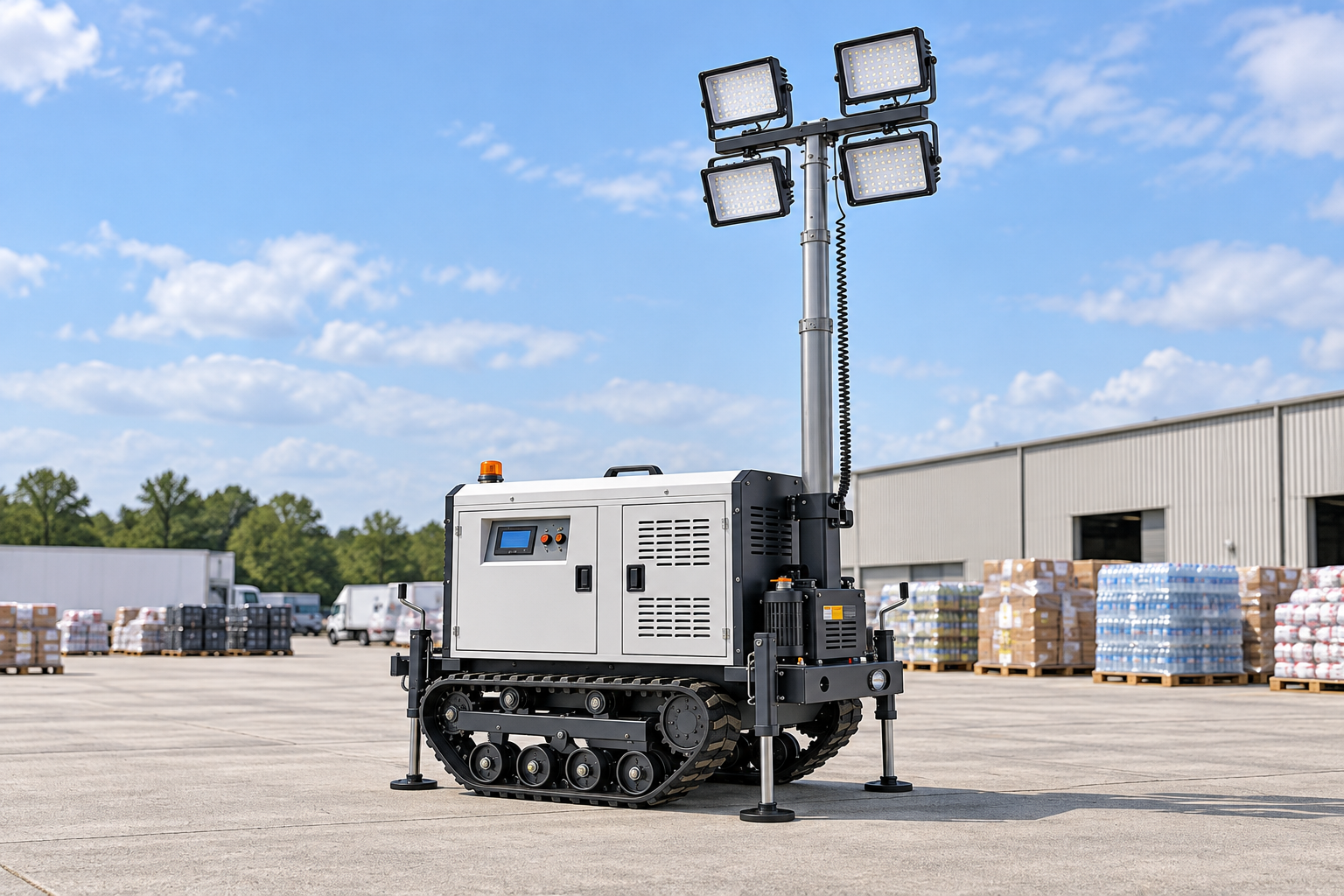
A delivery vehicle can block an otherwise useful beam. Assess loading and unloading with the expected vehicle orientation, tail lift or ramp, and handling equipment. Observe both the vehicle approach and the work at ground level. People need to distinguish changes in level and objects near the working route without facing an uncomfortably bright source every time they turn.
Where a body or stack obscures the task, change an approved tower position or arrange suitable local task lighting. Increasing output may brighten the exposed surfaces while leaving the hidden point dark. Agree who can reposition equipment, because an informal adjustment during one delivery may affect a neighboring lane. Recheck the arrangement when larger vehicles or a different unloading method arrive.
Protect the receiving and dispatch lanes
Mark the intended vehicle routes within the site’s traffic arrangements before deciding where light should fall. Check driver views on entry, at the reporting point, and on departure. Reflective signs and wet pavement can appear very different at night. Observe the arrangement from actual approach directions rather than judging it while standing beside the tower.
Keep support legs, service activity, and power connections within the accepted equipment area. Routing a cable across a busy lane requires an approved electrical and traffic solution; a visible cable is still an obstruction. Tower illumination supplements the site’s controls. It should not be presented as a replacement for those controls or as proof that a driver can enter any illuminated area.
Match the lighting decision to each function
The following qualitative table is a planning aid. It does not set illumination levels, electrical ratings, storm operating limits, or emergency-response certification. The site authority supplies the acceptance criteria for the actual task.
| Staging function | Specific issue to inspect | Record for the next shift |
|---|---|---|
| Receiving supplies | Vehicle-body shadows at the unloading point | Accepted vehicle orientation and task-light arrangement |
| Crew reporting | Glare on faces, forms, and entrance signs | Approach directions and reporting-point lamp settings |
| Equipment inspection | Small defects obscured by cases or stacked tools | Inspection position and approved local lighting |
| Dispatch | Turning paths and departure views | Traffic boundaries and changes requiring reassessment |
| Equipment service | Access to fuel, controls, and connection points | Service window, responsible operator, and backup function |
Plan power without assuming utility availability
Treat available power as a verified site input. An intact-looking outlet does not establish that the supply is suitable or safe after storm damage. The responsible electrical team determines the connection, protection, cable route, and equipment compatibility. Document the accepted arrangement so incoming crews do not substitute an unreviewed connection when a generator needs service.
For self-powered equipment, ask for runtime evidence at the intended lighting setting and conditions. Include the time for setup, delayed deliveries, and recovery rather than counting only the planned distribution hours. Decide how fuel or charging support reaches the equipment without interrupting receiving lanes. Compare the required duty with the actual support available; neither a nominal tank size nor a general all-night claim resolves that comparison.
Keep generator exhaust away from occupied spaces
A relief compound may contain enclosed trailers, tents, loading bays, or partially opened buildings. These are not interchangeable with open outdoor space. Use the manufacturer’s instructions and applicable generator-safety guidance to plan exhaust exposure and operating location. Carbon monoxide cannot be assessed from visible smoke, smell, or whether an engine seems to be running normally.
The CDC generator-safety guidance supports keeping portable generators outdoors and away from openings. Apply the relevant guidance to the actual installation, with competent review of any integrated generating equipment and nearby occupancy. Do not put a running unit inside a warehouse for convenient lighting. If conditions or the accepted layout cannot support the proposed engine-powered position, review another power arrangement instead of improvising ventilation.
Prepare for weather changes during the shift
Agree what information operators use to decide whether deployment may continue. Follow the exact equipment instructions and the incident’s operating restrictions. A weather change can require shutdown or recovery even if the staging area remains busy. The accepted plan should identify who makes that decision and how the affected functions receive a safe interruption notice.
Specify a recovery sequence before raising the mast. People still need visibility to collect equipment, secure loads, and leave the working area. Reconsider the lighting arrangement after standing water, barriers, vehicle routes, or weather exposure change. Do not use a generic wind statement as permission to operate through a hurricane, and do not suggest that a tracked chassis removes the need to observe the manufacturer’s limitations.
Check performance where the work occurs
After dark, inspect the accepted routes and task positions with the people using them. Record the actual mast setting, lamp aiming, power mode, and surrounding layout. Where measurements are required, the responsible team determines the instrument, measurement plane, locations, and criteria. A photograph of bright pavement cannot substitute for that assessment.
Write findings in terms an incoming crew can act on: the rear loading corner is obscured by the vehicle, the reporting sign reflects into the entry view, or a service route passes behind stored cases. Correct the specific issue and check again. If the current arrangement covers only receiving and reporting, state that boundary rather than calling the entire compound adequately lit.
Purchase against a documented deployment scope
Provide a supplier with the site functions, expected duty, accepted footprint constraints, available supply, and service arrangements. Ask for configuration-specific drawings, instructions, photometric information where applicable, and documentation needed by the responsible team. Distinguish information supplied for evaluation from a promise that the unit has been accepted for a particular emergency operation.
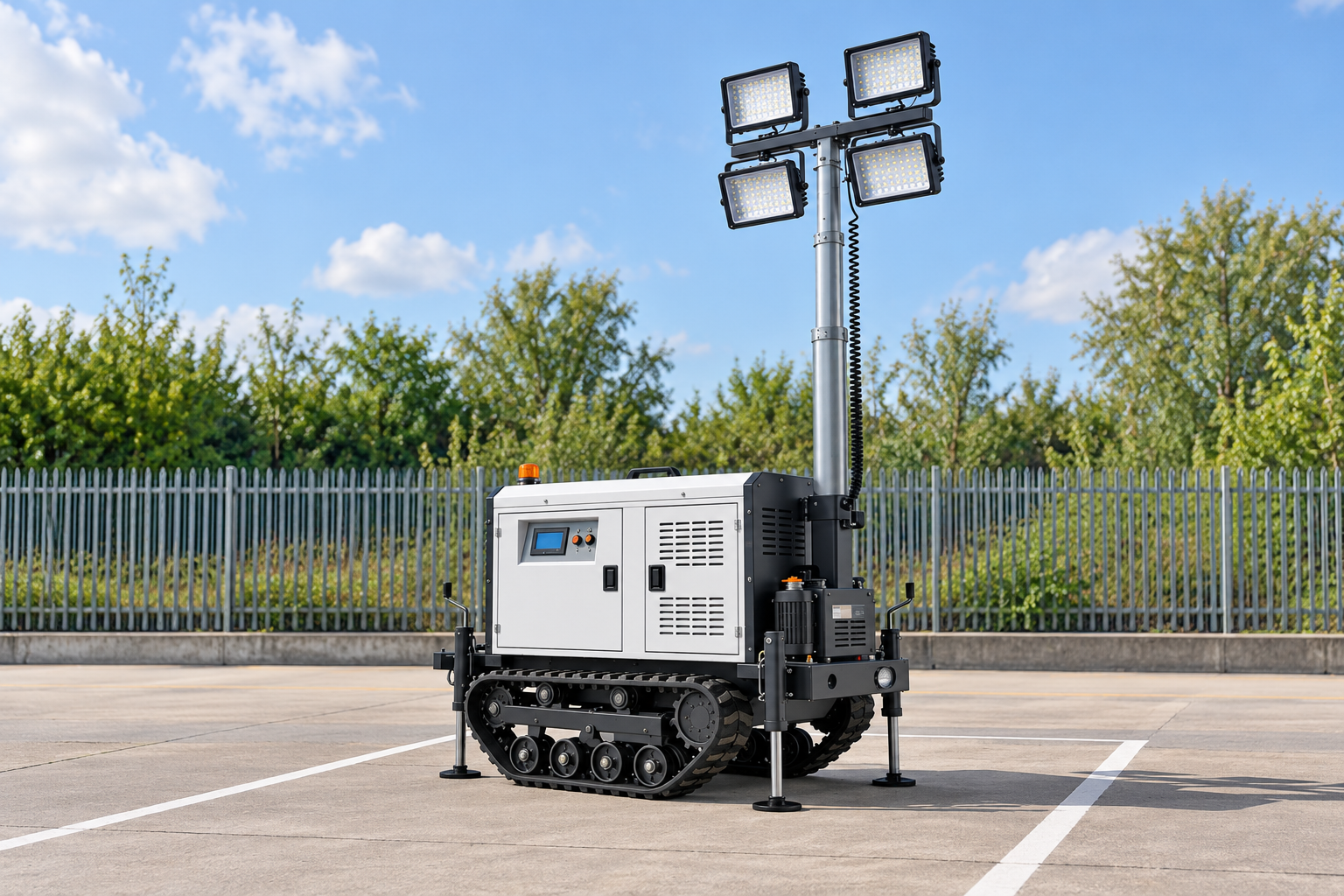
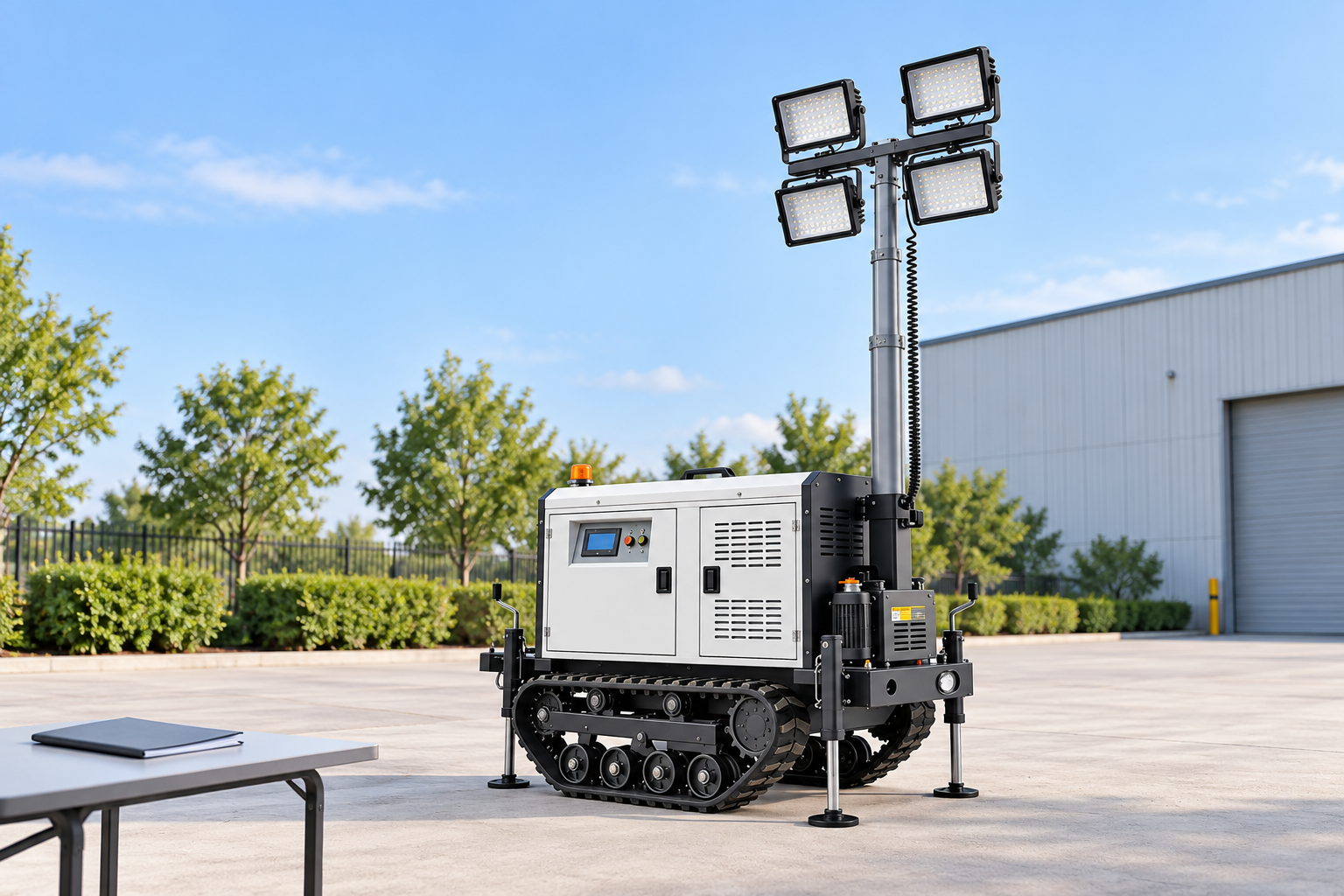
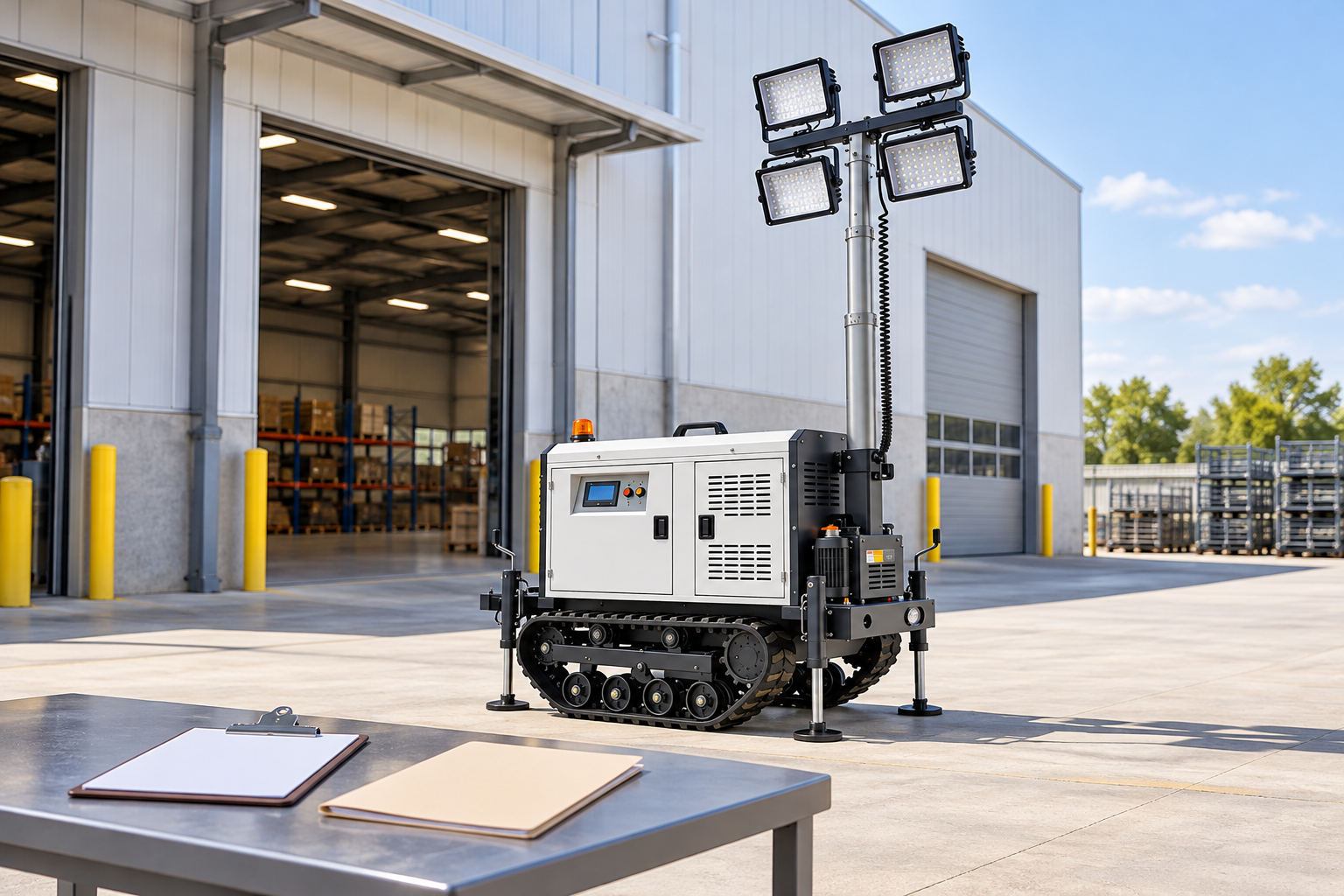
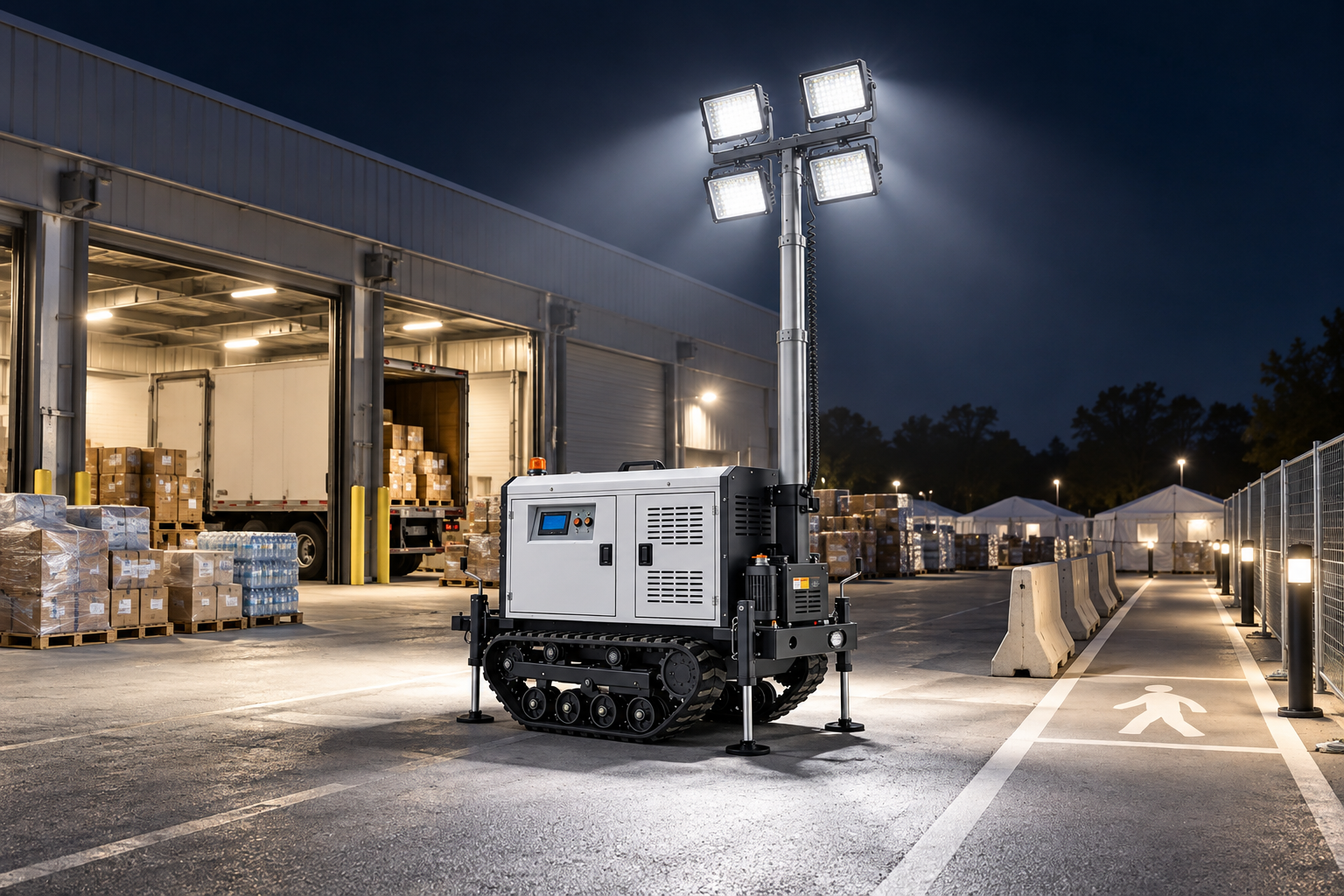
The Keyyou tracked mobile tower product page can help identify an equipment format for discussion. Confirm the offered unit’s lamp configuration, deployment envelope, maintenance access, and operating limits directly. Do not infer output, runtime, storm suitability, or certifications from the reference-based illustrations in this article. Selection should follow the documented site need and the exact delivered specification.
Handover a layout that can survive changes
A staging area can expand quickly as resources arrive. Record which positions and settings have been accepted, who may change them, and which events trigger another inspection. Larger vehicles, new storage, a relocated reporting point, or a changed service schedule can invalidate a useful earlier arrangement. Keep the lighting record alongside the current operational layout.
At the end of use, coordinate removal with the site’s recovery sequence. Equipment collection and vehicle departure may still require illumination after distribution closes. Assign responsibility for clearing connections, recovering the mast and supports, and confirming the equipment area is released. The next shift should inherit a usable plan with explicit boundaries, rather than an unexplained tower left running at its previous settings.
Further equipment planning
Discuss the delivered configuration with the Keyyou beaufsichtigt das Produktteam für Mobilfunkmasten. For equipment context use the Leitfaden für mobile Lichtmasten; for complementary tasks read Regelung der Blendung durch Lichtmasten und Leuchtturmwartung.
Generator-safety education
The U.S. Department of Labor video explains carbon-monoxide hazards from portable gas-powered equipment. It supports the combustion-equipment planning above; its examples do not certify the tower, establish its power specification, or approve the proposed installation. Review generating equipment and occupied openings with the responsible team and follow the exact operating instructions.

Watch U.S. Department of Labor: Portable gas-powered equipment and carbon monoxide.
Häufig gestellte Fragen
Can a tracked tower operate during a hurricane?
Do not treat tracks as permission to operate in hurricane conditions. Deployment must follow the exact manufacturer instructions and the incident restrictions. This guide addresses an accepted relief staging area after conditions allow work. Identify shutdown and recovery responsibilities before use, and reassess when weather or ground conditions change.
Can a tower power the relief facility as well as its lamps?
Only an explicitly documented and accepted supply arrangement can support additional loads. Confirm whether the delivered unit provides the required output and protection; appearance does not establish that capability. The electrical team reviews loads, connections, and routes. Keep the lighting duty separate from any unverified promise about powering buildings or equipment.
What should be checked when another delivery arrives?
Review the vehicle approach, the unloading task, and nearby pedestrian routes with the vehicle in its actual position. New truck bodies and stacked supplies can create shadows or obstruct the tower service space. Where the accepted arrangement changes, record the new configuration and check it with the responsible site team before treating the earlier assessment as sufficient.
Reference sources and boundaries
The incident-management and hurricane resources establish organizational and preparedness context. They do not specify a light-tower rating or approve the illustrated installation. The generator source addresses carbon-monoxide precautions. The qualitative planning table above contains original task observations, with acceptance criteria supplied by the responsible site authority.