
Wie sollten Flottenbetreiber Ersatzteile für Lichtmasten planen?
Fleet operators can plan light tower spare parts more reliably by starting each review with the unit identifier, the current document reference, a structured parts enquiry, and a buyer-owned replenishment trigger. This process organizes information; it does not identify a correct replacement part, approve repair work, or confirm stock for any supplier.
- FAQ
Part 1. Plan Records Before Planning Stock
Start with controlled records, not a generic list of items. A fleet cannot compare a part description or a supplier response reliably when the unit, document revision, and request history are missing.
NIST supply-chain guidance describes the value of documented requirements and verification activities when controlling supplier information. For fleet procurement, use that principle to keep identification and enquiry records together; it is not a repair procedure or a service instruction.
Part 2. Give Every Fleet Unit a Clear Identity Record
Give each unit one record that follows it through inspection, enquiry, and commercial review. Keep the record neutral: it captures what the fleet knows without guessing at a part number or compatibility.
| Fleet record | Buyer question | Warum es wichtig ist |
|---|---|---|
| Unit reference | Which fleet unit is being discussed? | Prevents a response being applied to the wrong unit |
| Model or configuration reference | What identifier is available on the unit or its documents? | Connects the enquiry to source material |
| Document title and revision | Which current manual or parts document is held? | Makes document differences visible |
| Service history reference | Which prior record relates to the question? | Preserves context without diagnosing a fault |
| Enquiry owner | Who can supply missing unit information? | Gives the review a responsible contact |
Part 3. Build a Parts-Enquiry Record Instead of a Guess List
Create a request record for each item that needs clarification. Describe the unit, the document reference, the part location or description as recorded, and the reason the buyer is asking. Do not submit an image or a generic product name as the only identifier.
| Enquiry field | Buyer input | Source-specific response to request |
|---|---|---|
| Fleet unit reference | Internal asset or unit reference | Confirm the unit record received |
| Model/document reference | Available model and current document title | Identify whether more information is required |
| Item location or description | Buyer-recorded location or wording | Return the matching source-specific record, if available |
| Requested action | Information, quote, or document request | State the response scope and open questions |
| Evidence attachment | Label photo or document excerpt when available | Confirm the attachment reviewed |
Use these fields in an RFQ or parts-information enquiry so the responder can identify the unit, documents, and open questions without relying on a generic product name.
Das Generac light tower manuals page illustrates why model-specific operator and parts documents matter for lookup. It is a third-party resource and does not show that a Keyyou document or part is available.
Part 4. Sort Planning Items by Operational Consequence
Prioritize planning questions by the consequence of not having enough information, not by a universal spare-parts list. The fleet can group requests that stop a planned handover, requests that need a document check before a purchase decision, and requests that can wait for the next review cycle.
| Planning group | Buyer-defined question | Record to retain |
|---|---|---|
| Immediate information review | Does the fleet need a document answer before the unit can be planned? | Open enquiry and responsible owner |
| Commercial comparison | Does the buyer need a written response before placing an order? | Quote or source response revision |
| Planned review | Can the question be reviewed with the next document update? | Review date and reason |
| Unknown fit | Is the item description too vague to request? | Missing-information list |
Wichtig: A product page, an old photograph, or a generic item name cannot establish a correct replacement part for a specific fleet unit. NIST SP 800-161 Rev. 1 supports using documented requirements and verification activities to manage supplier-information risk; it is not evidence of compatibility or parts support for another supplier.
Part 5. Set Buyer-Owned Replenishment Review Triggers
Set triggers that tell the fleet when to review records, not a fixed quantity that every fleet must purchase. A trigger can be an upcoming deployment review, a change to a unit record, a document revision, or an unresolved enquiry that affects a commercial decision.
| Trigger | Buyer action | Boundary |
|---|---|---|
| Unit record changes | Recheck the model and document reference | Do not infer part compatibility |
| New document arrives | Compare its revision with the recorded one | Do not treat an attachment as approval |
| Planned deployment review | Confirm open information questions | Do not provide a repair instruction |
| Quote request | Send the complete enquiry record | Do not assume stock or delivery |
This keeps the fleet’s planning cycle evidence-led. A supplier response still needs to be reviewed against the named unit and the source-specific information returned.
Part 6. Use Product Routes to Frame a Document Request
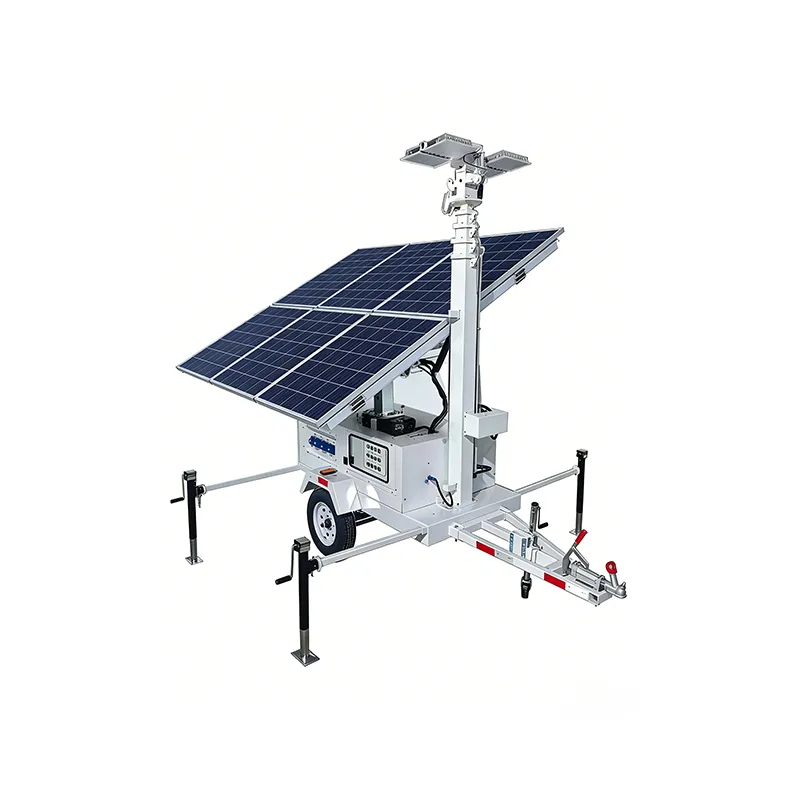
Use the mobile lighting tower range to identify a family for discussion. The mobile lifting lunar lamp can be placed in a request when it helps identify the product route.

Neither page confirms a part number, stock position, interchangeability, repair action, price, delivery, or warranty. For related records, use the handover checklist, hydraulic inspection guide, und manufacturer evaluation checklist.
Part 7. Send a Focused Parts Information Enquiry
Send the unit reference, available model/document details, item description, attachments, and the question to be answered. Ask the respondent to state what information was reviewed, what further identification is needed, and the written scope of any response.
The enquiry does not establish a replacement part, repair method, stock, price, delivery, warranty, certification, or model suitability. Contact Keyyou with the completed record when information is required for a specific unit.
FAQ
Was bedeutet Ersatzteilplanung für Lichtmasten?
Es bedeutet, Bestandsdatensätze, Dokumentenverweise, Anfrage-Details, Prüfungsprioritäten und Wiederbeschaffungsauslöser zu organisieren, bevor nach quellenspezifischen Teiledaten gefragt wird.
Wie soll eine Flotte das korrekte Teil identifizieren?
Beginnen Sie mit der Flotteneinheitsreferenz, den verfügbaren Modellinformationen und der aktuellen Dokumentenreferenz. Fordern Sie eine schriftliche quellspezifische Bestätigung an, anstatt anhand eines Bildes zu raten.
Sollte ein Ersatzteilkatalog an eine bestimmte Einheit gebunden sein?
Ja. Erfassen Sie den Dokumenttitel und die Revision bei der entsprechenden Einheit, damit eine spätere Antwort anhand desselben Quellmaterials überprüft werden kann.
Was gehört in einen Ersatzteilanfrage-Datensatz?
Fügen Sie die Einheitenreferenz, das verfügbare Modell und die Dokumentdetails, den Artikelstandort oder die Beschreibung, den Zweck der Anfrage, Anhänge und einen benannten Käuferkontakt bei.
Wie sollten Planelemente priorisiert werden?
Priorisieren Sie nach der vom Käufer definierten Konsequenz einer ungelösten Frage, wie etwa einer bevorstehenden Bereitstellungsüberprüfung oder einer kommerziellen Entscheidung, anstelle einer universellen Teileliste.
Can a product page confirm a replacement part?
No. A product page can identify a discussion route, but it cannot confirm a part number, compatibility, stock, or repair approval for a particular unit.
When should a fleet contact Keyyou?
Contact Keyyou after preparing the unit reference, available document details, item description, attachments, and written questions for the specific unit.