
Excavation Lighting for Trenches and Utility Work
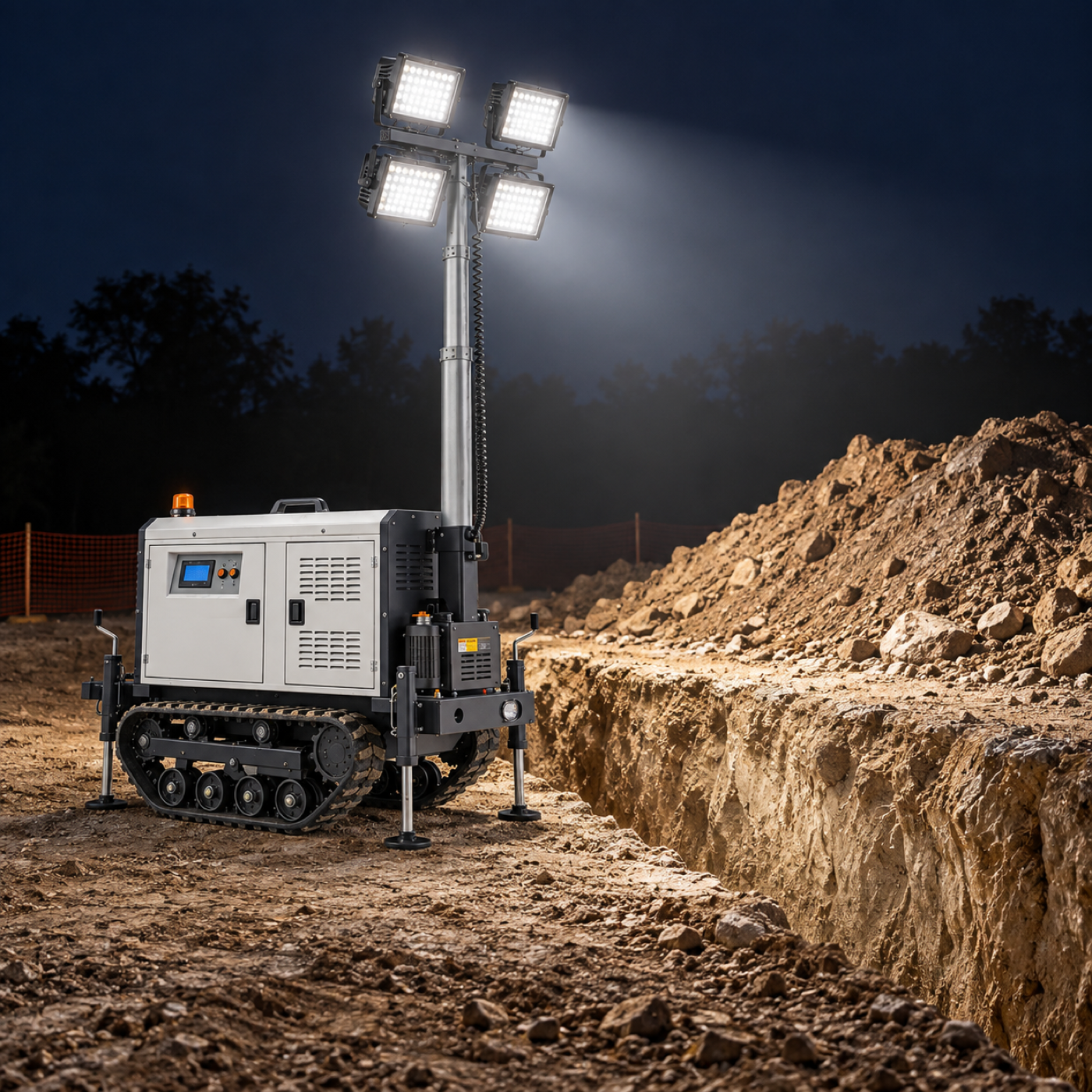
Plan excavation lighting for trenches and utility work with attention to trench edges, access points, work faces, spoil piles, machine movement, and shadows.
Excavation lighting should reveal the required task, approved access, and excavation boundaries without placing towers or cables in unsafe locations. The responsible excavation and electrical teams should approve the arrangement, including supplementary task lighting where area illumination cannot reveal the necessary detail.
Distinguish trench access from the excavation work face
Excavation lighting should identify the trench edge, approved access points, working face, spoil area, and equipment routes as separate visibility needs. A light tower on one side may leave the opposite face or an access point behind machinery in shadow. Review the view from the permitted work position and access route with the excavation supervisor. Lighting does not remove the need for the excavation’s approved protective system and competent-person assessment.
A proposed tower position needs review for ground condition, excavation restrictions, buried services, mast clearance, supports, and traffic separation. Avoid placing a unit close to the trench solely to improve apparent brightness. The safe location comes from the responsible site team and the exact equipment requirements. Keep cables out of access routes where the approved arrangement permits, and coordinate protected crossings when they are unavoidable.
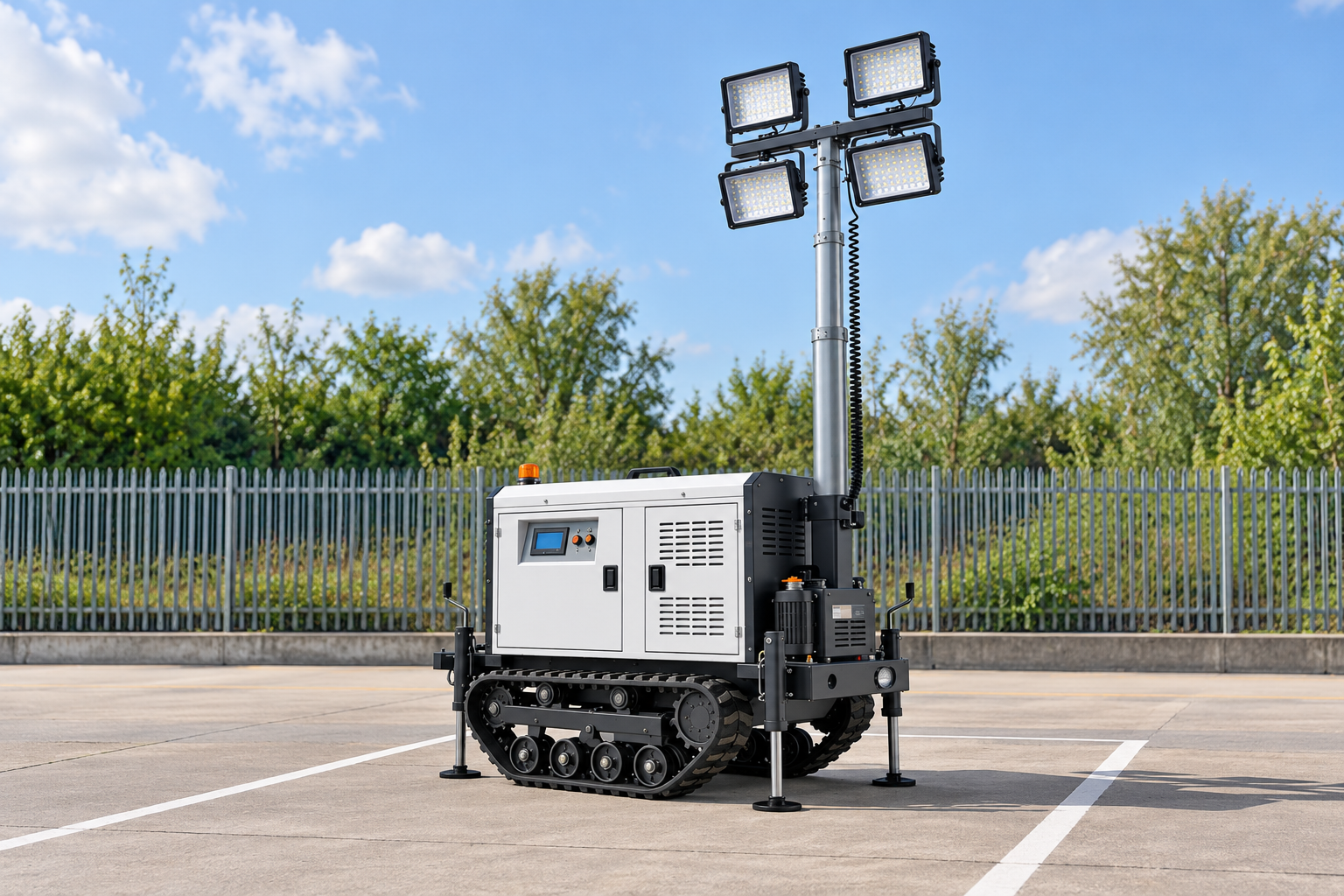
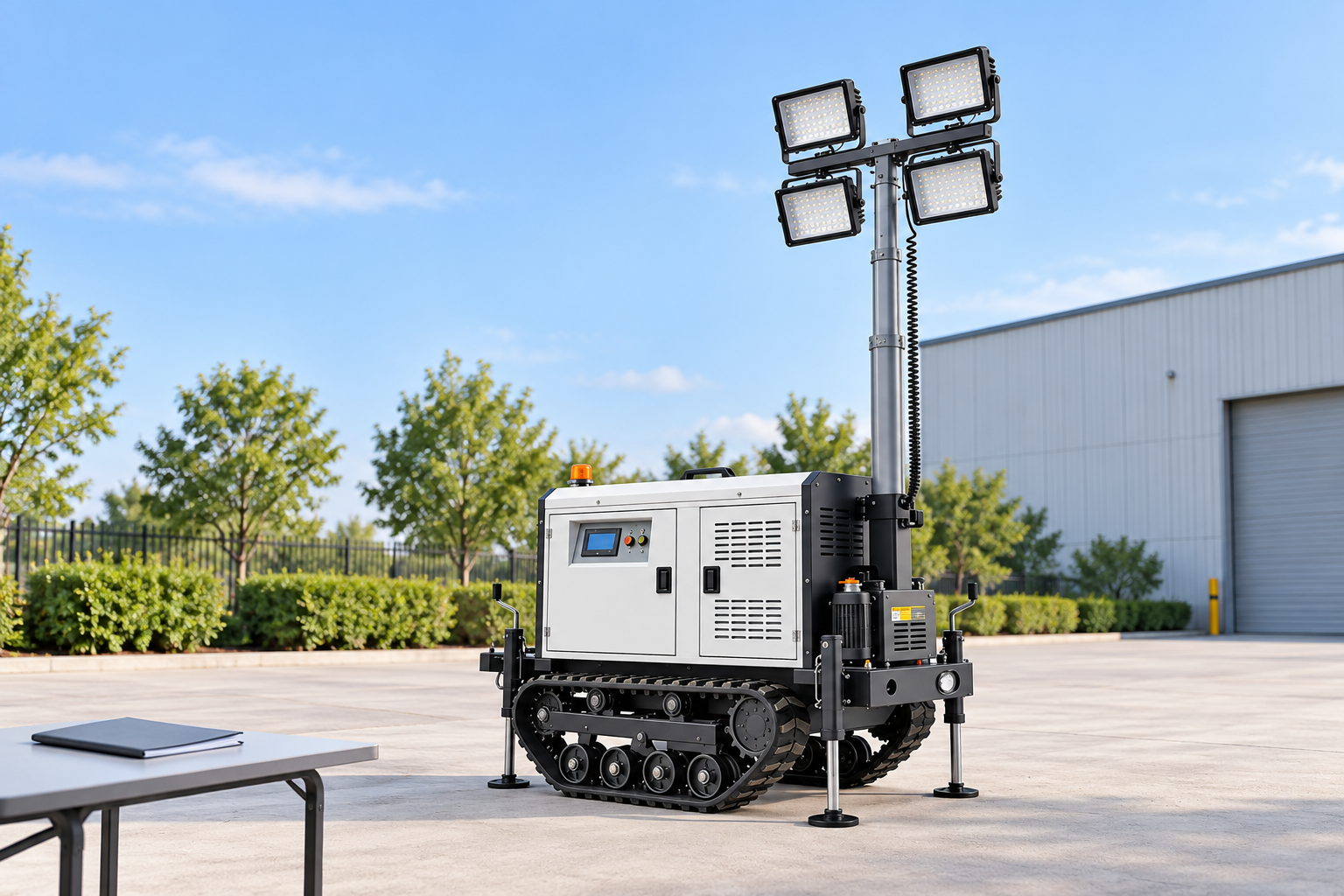
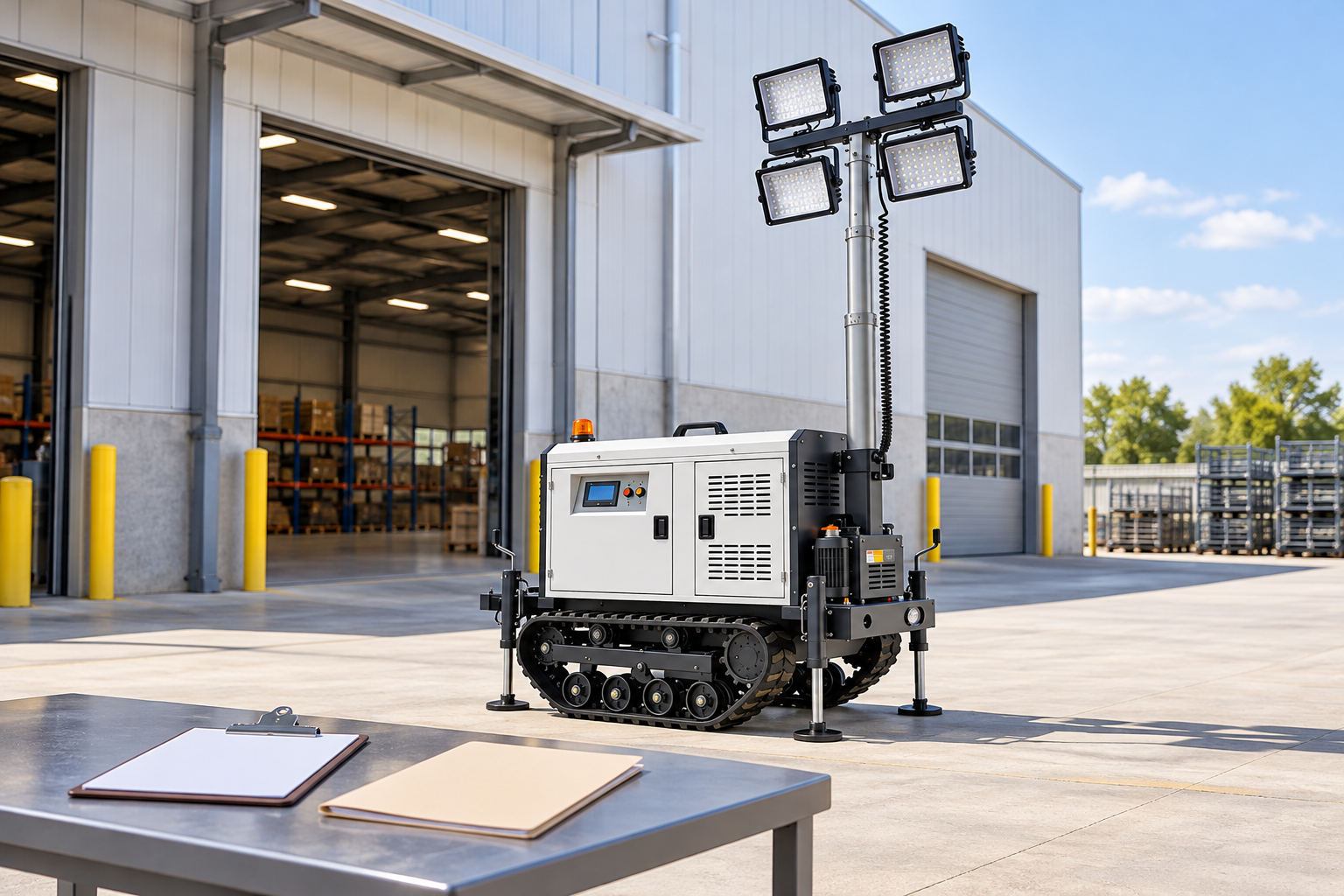
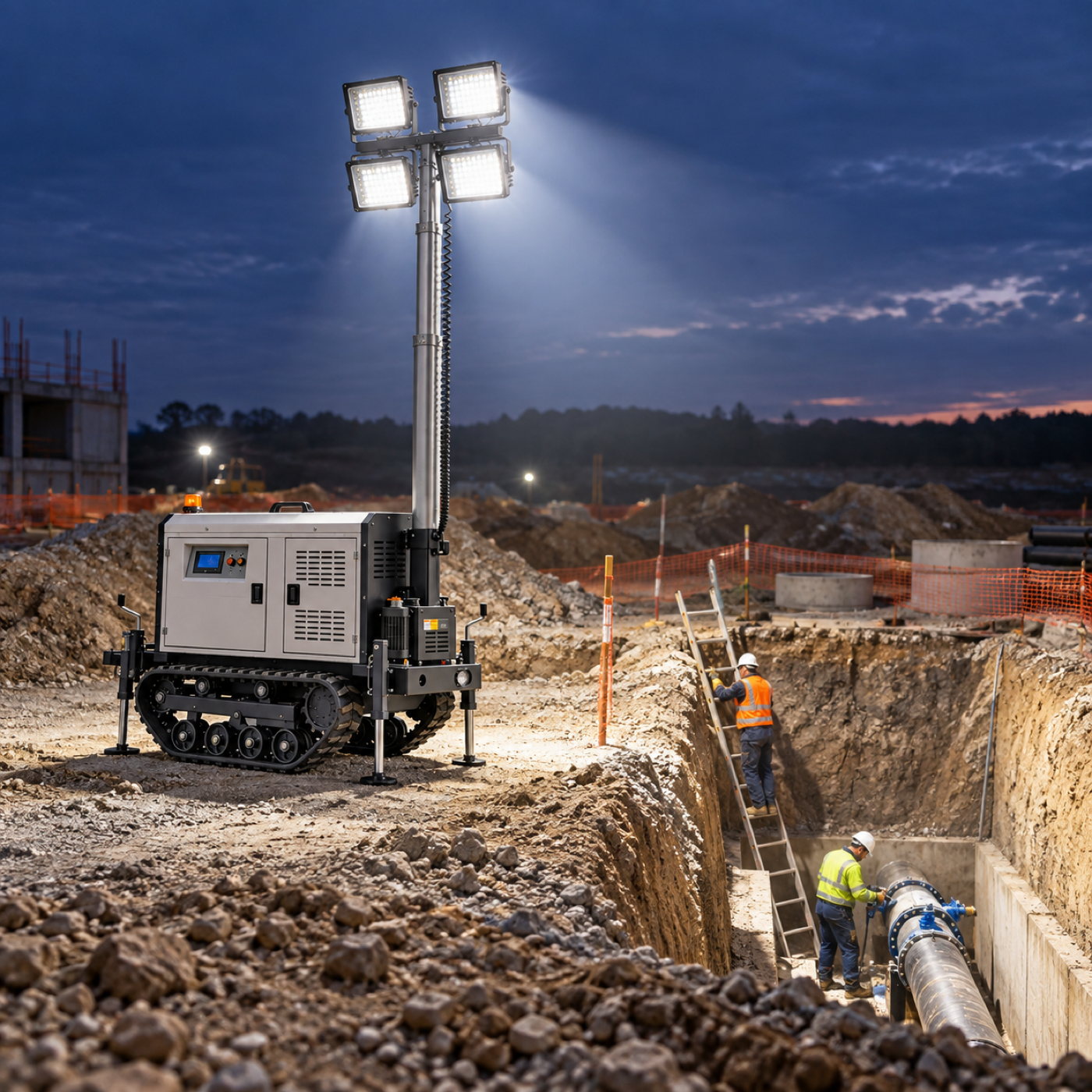
Check coverage after excavation progress, spoil placement, pipe installation, or machine movement changes the scene. Where a particular inspection task remains obstructed, obtain an appropriate approved task light rather than assuming a higher mast or brighter lamp will solve it. Include access and safe shutdown visibility in the outage response. Document relocation and aiming changes before the next crew enters the affected area. The article’s product illustration shows the referenced equipment family, not a permissible excavation setback, ground-loading value, wind limit, or universal lighting level.
Die fünf Probleme, die die Entscheidung bestimmen
| Entscheidungsbereich | Was zu überprüfen ist |
|---|---|
| Trench edges | Identify the excavation boundaries and work positions that the responsible excavation team needs to see. |
| Spoil piles | Include spoil, materials, and parked equipment in the lighting drawing because they can block views and change access. |
| Access ladders | Check the approved access and exit points from the positions people actually use. |
| Shadow control | Inspect shadowed areas created by trench geometry, shoring where applicable, plant, and materials. |
| Verifizierung | Record the accepted lighting arrangement for the current excavation stage, including approved observer positions, equipment layout, tower configuration, aiming, and required measurements. |
1. Trench edges
Identify the excavation boundaries and work positions that the responsible excavation team needs to see. Area light should reveal approved access and the relevant edges without requiring the tower or its supports to stand too close to the excavation. The competent person’s excavation assessment controls placement and access. Do not infer an acceptable setback from a lighting illustration or from another site’s drawing. Review the proposed position and ground conditions with the excavation team before deployment, including servicing and the route used to move the unit.
2. Spoil piles
Include spoil, materials, and parked equipment in the lighting drawing because they can block views and change access. A pile moved after setup can obscure a trench edge or cast a shadow over an approved walking route. Check representative site arrangements under a controlled inspection and record which positions were present during acceptance. Lighting does not determine safe spoil placement or excavation stability. Those decisions remain with the responsible excavation process; the lighting layout must adapt to the approved arrangement rather than dictate it.
3. Access ladders
Check the approved access and exit points from the positions people actually use. The observer may need to distinguish a walking surface, ladder approach, or change in level that a general ground-level reading does not describe. Coordinate any close lighting with the excavation and electrical teams. Do not mount an improvised light on access equipment or run a temporary lead through an exit route. If the view remains obstructed from a permitted tower position, obtain an authorized task-light arrangement that preserves the access requirements.
4. Shadow control
Inspect shadowed areas created by trench geometry, shoring where applicable, plant, and materials. A lamp illuminating the top of an excavation may not reveal the particular detail inside it that the crew needs to inspect. Conduct observations only through the authorized access and work procedure. Ask the responsible team to review light distribution and any supplementary fixtures. Moving the tower nearer a trench edge is not an automatic remedy; the revised base location and full deployment footprint need the excavation team’s approval.
5. Verifizierung
Record the accepted lighting arrangement for the current excavation stage, including approved observer positions, equipment layout, tower configuration, aiming, and required measurements. Establish the light-failure response for affected work and who authorizes changes. Recheck when the excavation progresses, access changes, spoil or equipment moves, ground conditions alter, or the tower is replaced or adjusted. The lighting record should describe those limitations explicitly. Acceptance of visibility does not certify excavation stability, protective systems, atmospheric conditions, or any other control outside the lighting assessment.
Define the excavation observations separately
Prepare the lighting brief with the responsible excavation team. Identify the work detail, approved access and exit points, relevant boundaries, equipment positions, and materials present at the current stage. A general proposal to illuminate a trench is insufficient when the actual observation is a connection in a recess or an access point behind a spoil pile. Ask which tasks need area light and which may need approved supplementary illumination.
Give the supplier the locations available for equipment rather than asking it to choose a setback without the excavation assessment. The competent person and relevant project procedures control ground and edge restrictions. Request the exact offered tower’s support, mast, ground, movement, and service documentation. A tracked product structure cannot establish that the adjacent ground can support the proposed installation.
For an external supply, have the electrical team review the installation and cable route in relation to work and access. Keep the offered fixture and operating configuration identifiable and request the distribution information needed by the responsible lighting specialist. Do not assume that an advertised coverage area describes the trench’s depth, protective-system geometry, or the required view inside it.
Install without compromising access or other controls
Review deployment, adjustment, maintenance access, and removal with the excavation team before raising a mast or placing supports. Follow the exact equipment instructions and site authorization. A final operating position may be permissible while the travel or service route is not. Include those stages in the review rather than considering only the footprint of an already deployed tower.
Arrange observations through the authorized work and access procedure. Do not enter an excavation to obtain a better lighting photograph or measurement outside that procedure. Review the required views with representative materials and equipment present, because an excavator, spoil pile, or stored pipe can change shadows. The acceptance record should identify the inspected stage and the relevant obstructions.
Where area light cannot reveal a close task, have the responsible teams review a suitable task fixture and its supply. Assess its mounting, electrical suitability, effect on access, and glare rather than treating additional light as an isolated purchase. An improved view does not authorize a change to excavation protection, access, or other controls. Those requirements remain independently applicable.
Specify duty and service around the changing workface
Include preparation, work, inspection, handover, and any permitted later activity in the required lighting period. Ask how the proposed power source and lamp mode support that window. A battery runtime or solar-energy estimate must identify its operating assumptions; neither establishes that charging will be available beside the current excavation.
Reserve an approved route for service personnel and any fuel, charging, or replacement equipment. Coordinate the service window with excavation and vehicle controls. A tower’s ability to run for many hours does not compensate for an installation that obstructs an exit or can only be serviced through a restricted area. Resolve those operational dependencies before accepting a quotation.
Compare proposals using the same work stage, observations, allowed positions, and duty assumptions. Include setup and relocation labor, inspection needs, service access, and the response to a defect. Ask which support arrangements and spare components apply to the actual delivered configuration. If a substitute tower changes the footprint or fixture distribution, review and accept the affected arrangement before work relies on it.
Keep the lighting record within its scope
Record the tower location, support setup, mast arrangement, aiming, operating mode, required observations, and measurements under the project’s criteria. Retain the stage drawing and acceptance with the excavation work information. State explicitly which changes require review, such as extended excavation boundaries, moved access points, altered spoil, new equipment positions, or ground changes.
Agree on the light-failure response and who authorizes a revised arrangement. A replacement or adjustment requires the affected views to be checked again; matching the previous tower’s nominal wattage does not establish matching distribution. The responsible work procedure determines how the task is controlled during the interruption.
The lighting record confirms the observations and installation that were assessed. It is not an approval of excavation stability, protective systems, atmospheric conditions, utility identification, or entry. Keeping that scope clear helps the next crew use the record correctly and prevents an acceptable lighting measurement from being mistaken for authorization of the entire excavation operation.
Verwandte Anleitungen für Lichttürme
- Pflanzenlicht-Ratgeber
- light tower selection guide
- Lichtmast-Spezifikationen
- light tower safety guide
Die relevante Keyyou-Referenz lautet: the referenced Keyyou mobile light tower product. Die Fotografie identifiziert die Produktfamilie; die endgültigen Maße und Grenzen müssen aus der bereitgestellten Konfiguration stammen.
Generator exhaust and the power arrangement
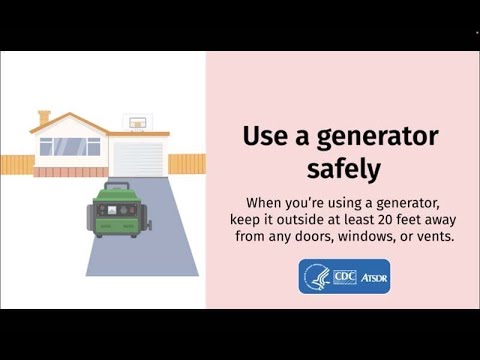
Where the lighting arrangement uses generator power, review exhaust, servicing, fuel handling, and the full operating window with the responsible site team. Keep exhaust from entering occupied spaces and follow the exact equipment instructions. The CDC video below explains carbon-monoxide precautions; its household examples do not specify this project installation. It does not demonstrate the construction or mining task, teach stored-energy isolation, or replace the relevant work procedure. If the offered tower uses another power source, obtain the appropriate charging or electrical-supply documentation instead of assuming that the generator example applies.
Häufig gestellte Fragen
Who approves a tower location beside an excavation?
Identify the excavation boundaries and work positions that the responsible excavation team needs to see. Area light should reveal approved access and the relevant edges without requiring the tower or its supports to stand too close to the excavation. The competent person’s excavation assessment controls placement and access.
Can spoil piles change the lighting result?
Include spoil, materials, and parked equipment in the lighting drawing because they can block views and change access. A pile moved after setup can obscure a trench edge or cast a shadow over an approved walking route. Check representative site arrangements under a controlled inspection and record which positions were present during acceptance.
Can a temporary lamp be attached to access equipment without review?
Check the approved access and exit points from the positions people actually use. The observer may need to distinguish a walking surface, ladder approach, or change in level that a general ground-level reading does not describe. Coordinate any close lighting with the excavation and electrical teams.
Does visibility acceptance certify excavation safety?
Record the accepted lighting arrangement for the current excavation stage, including approved observer positions, equipment layout, tower configuration, aiming, and required measurements. Establish the light-failure response for affected work and who authorizes changes. Recheck when the excavation progresses, access changes, spoil or equipment moves, ground conditions alter, or the tower is replaced or adjusted.