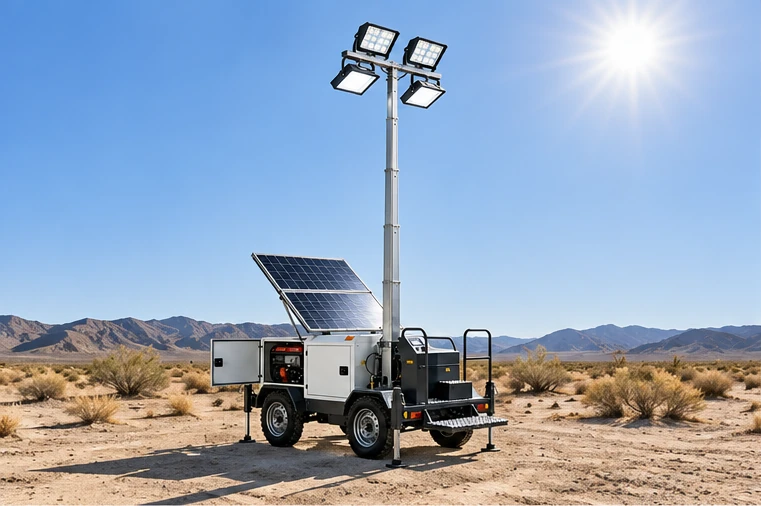

Was sollte ein kommunaler Notbeleuchtungsplan vor einer Untersuchung aufzeichnen?
A municipal emergency lighting plan is most useful when it records the public task, stated boundary, access context, decision owners, documents, changing conditions, and open actions before an enquiry is issued. The plan creates a common record for review without treating a generic product image as public-area approval.

- FAQ
Part 1. Define the Public Task and Stated Boundary
State the activity that needs temporary light, then describe the public area being considered. A short boundary note can distinguish the current work area from nearby movement, facilities, or other activity that may need separate review.
| Planning field | Question to record | Eigentümer |
|---|---|---|
| Public task | What response activity is being supported? | Request owner |
| Stated boundary | Which area is currently described? | Site-information owner |
| Review trigger | What event calls for a new review? | Responsible authority |
| Current information | Which details are confirmed today? | Assigned reviewer |
Preparedness resources support clear roles and communication. They do not establish a local emergency procedure.
Part 2. Record Access and Public-Area Context
Capture the context known when the record is made: available approach, location constraints, nearby activity, and the condition of the area as described by the responsible team. Anything that remains uncertain belongs in the open-action list.
| Context item | Current record | Follow-up trigger |
|---|---|---|
| Access note | Known approach and restrictions | The approach changes |
| Area boundary | Current activity and adjacent space | The boundary moves |
| Coordination point | Other work or public interface named | Another party needs review |
| Information gap | Missing note, drawing, or confirmation | A decision depends on it |

Wichtig: OSHA and HSE materials treat changing work conditions and intended use as matters requiring appropriate attention and control. This record can identify a review need; it cannot authorize a public-area arrangement. Read OSHA flood resources
Part 3. Set Ownership Before the Request Leaves
Name the people who own the task description, current boundary, supplier questions, and final decision. A request becomes easier to clarify when the recipient knows which party can answer each open item.
| Entscheidungsbereich | Named role | Record to retain |
|---|---|---|
| Task objective | Request owner | Current objective statement |
| Area information | Site-information owner | Boundary and change note |
| Supplier clarification | Enquiry contact | Question and response record |
| Final decision | Responsible authority | Decision reference |
Use the public task, access note, current condition, available documents, and named contact as RFQ input for each respondent.
Part 4. Attach the Evidence Available Today
Attach the records that explain the request as they exist today. Version labels and owners make it possible to see whether a later response refers to the same information.
| Available record | Why attach it | Buyer check |
|---|---|---|
| Area note or drawing | Shows the stated boundary | Identify revision and owner |
| Access note | Records known constraints | Mark unresolved points |
| Requirement list | Sets the requested response fields | Issue the same list to all respondents |
| Open-action log | Preserves unknowns | Assign an owner for every line |
Das Checkliste für Lichtmasten-Standortdaten provides related enquiry fields. It does not decide whether the local record is complete.
Part 5. Log Changes and Open Decisions
Leave uncertainty visible rather than converting it to an assumption. Give each item a status, a person responsible for clarification, and a review point that keeps the decision trail current.
| Open line | Status | Next step |
|---|---|---|
| Updated access condition | Open | Obtain a current note from the responsible team |
| Boundary question | Open | Confirm the stated area |
| Required evidence | Pending | Identify the record owner |
| Offer question | Supplier clarification needed | Tie the answer to the enquiry revision |
NIST guidance supports traceable requirements and verification activity; it does not determine emergency readiness.
Part 6. Use the Record for an Offer-Specific Enquiry
Das mobile lighting tower range can frame a product-family discussion. The self-loading mobile lifting lighting tower can be included when a municipality asks for a response against the current record.

Neither page establishes municipal approval, delivery, certification, performance, availability, or site suitability. Contact Keyyou with the completed record for an offer-specific discussion.
FAQ
Was ist ein kommunaler Notbeleuchtungsplan?
Es ist ein gemeindliches Verzeichnis über die öffentliche Aufgabe, den festgelegten Grenzverlauf, den Zugangskontext, die Eigentümer, Dokumente, veränderte Bedingungen und offene Maßnahmen vor einer Anfrage.
Wer soll die Anfrage besitzen?
Nennen Sie den Anforderungsverweißer, den Verantwortlichen für die Standortinformationen, den Ansprechpartner für die Anfrage und die für eine Entscheidung zuständige Instanz.
Welche Details zum öffentlichen Bereich gehören in den Datensatz?
Erfassen Sie die aktuelle Grenze, bekannte Zugangsbeschränkungen, Aktivitäten in der Nähe, Koordinationspunkte und Informationslücken, die noch überprüft werden müssen.
Welche Dokumente sollten beigefügt werden?
Fügen Sie die Notiz oder Zeichnung zum verfügbaren Bereich, die Zugangsnotiz, die Anforderungsliste und das Protokoll der offenen Maßnahmen mit dem jeweiligen aktuellen Verantwortlichen und der Revisionsnummer, sofern bekannt, bei.
Wie sollen Änderungen erfasst werden?
Keep each change in the same record, state its status, assign a clarification owner, and identify the next review point.
Does a product page approve deployment?
No. A public product page can support an enquiry, while an actual deployment decision needs current conditions, the offered configuration, and responsible review.