
Light Tower Grounding and Bonding: Define the Actual Supply Arrangement
Assess generator light tower grounding from supplied diagrams, bonding, connected loads, qualified installation review, required checks, and documented scope.
Light tower grounding must be assessed for the exact generator, supplied bonding arrangement, connected loads, and site installation. Do not assume that every mobile tower needs the same ground rod, or that a metal frame, track, or stabilizer touching the ground automatically completes the electrical protection. Obtain the supplied electrical documents and have the responsible qualified person determine the applicable arrangement before connections are made. This guide explains the evidence a buyer or site manager should request; it does not provide a wiring procedure, electrode design, or permission to change a neutral connection. The intended lighting and any auxiliary power service must be described separately.
Identify what the tower is supplying
Start with the actual offer and the intended circuit arrangement. Is the tower supplying only its own lamps, separately approved loads from its supplied outlets, or an external installation? Identify the connected equipment, connection points, and responsibility for the installation. A tower's lighting rating does not independently establish permission to supply an unrelated building or every load that can physically fit an outlet.
Keep the electrical diagram and supplied instructions attached to that description. Record the generator or power-system configuration and any accessories actually fitted. Do not determine the grounding arrangement from a product photograph or a generic label such as portable generator. The same broad equipment family can be supplied with different electrical features and intended applications that require different decisions.
Distinguish grounding from bonding
Grounding and bonding have related but distinct roles in an assessed electrical arrangement. Use the supplied diagram and qualified assessment to identify the relevant connections and protective function. A visible conductor or a metal enclosure does not establish that the required path, connection, or protection is present. Likewise, installing an electrode cannot substitute for every other electrical requirement.
The cited 2025 edition of the U.S. construction regulation discusses conditions associated with portable-generator frame arrangements and different supply applications. It is a useful U.S. workplace reference, not a universal wiring instruction for every country or tower. Have the responsible person apply the current requirements and actual equipment documents to the installation. This article deliberately gives no conductor size, electrode length, resistance target, or bonding modification.
Understand why a blanket rod instruction is incomplete
The cited construction regulation distinguishes certain portable-generator uses involving generator-mounted receptacles and the specified bonding conditions from applications supplying another installation. Read the cited edition with its conditions intact and have the responsible person verify the currently applicable requirements. Neither always fit a rod nor never fit a rod is a complete decision for all mobile light towers. The correct question describes the generator, bonding, connected loads, and applicable installation requirements together.
For procurement, ask which arrangement the supplier has provided and what site work remains necessary. Request the diagram, declared intended use, and applicable instructions rather than an informal reassurance. Where the answer depends on the site's external circuit, coordinate that information with the responsible installer. Keep an unresolved electrical question visible before dispatch or connection instead of assigning an arbitrary rod to close a checklist.
Do not change the supplied neutral arrangement casually
Record the supplied neutral and bonding arrangement through its electrical documents. Any proposed change must be assessed by the responsible qualified person for the actual generator, connected equipment, protection, and installation. A connection that is appropriate in one arrangement may not be appropriate in another. Nominal voltage or an outlet shape does not establish compatibility.
This guide does not instruct an operator to add or remove a neutral-frame bond. Do not copy a modification from another tower or a general demonstration video. Obtain approval for the complete arrangement, required verification, and updated documentation. The next operator and technician should be able to determine what was actually supplied or changed, rather than relying on a verbal account that the generator was made safe.
Keep auxiliary supply within the actual offer
If external loads are required, ask the supplier to confirm the permitted use, electrical capacity, connection arrangement, and protective devices for the quoted configuration. Review the site installation with the responsible electrical person. Do not use a lamp rating, engine rating, or general generator description as proof that an external distribution system is included or approved.
Document which parts are supplied with the tower and which belong to the site. Extension arrangements, distribution equipment, transfer equipment, and connected loads must be reviewed where applicable. This article does not give a connection method for a building or utility system. An unapproved connection can introduce hazards beyond the lighting task, so the installation must remain within the assessed and authorized scope.
Include inspection and protection in the decision
Grounding and bonding are not the only electrical questions. Ask what inspections, protective functions, equipment condition checks, and verification the applicable arrangement requires. Record who performs them and what evidence is retained. A statement that a ground rod is present should not automatically mark damaged equipment, an unresolved fault, or an unverified circuit ready for operation.
Use the supplied instructions and applicable site process when an abnormal condition is reported. Withdraw or restrict the equipment as the responsible decision requires and arrange authorized assessment. Do not bypass a protective device or repeatedly reconnect a load to make a trip disappear. Keep the observed condition separate from the confirmed diagnosis and the eventual release decision.
Grounding and bonding evidence table
| Required decision | Information to obtain | Unsupported shortcut |
|---|---|---|
| Supply scope | Tower lamps, approved outlet loads, or assessed external installation | Assuming any physically connectable load is permitted |
| Power configuration | Exact generator or power system and electrical diagram | Using a photograph to determine electrical bonding |
| Supplied arrangement | Documented frame, neutral, and protective connections | Changing a bond based on another model's video |
| Site requirement | Applicable rules and qualified installation assessment | Always or never fit a rod without the conditions |
| Verifizierung | Required inspection, tests, and responsible performer | Treating an electrode as proof every protection works |
| Change control | Approved modification and updated documents | Keeping an undocumented field alteration |
| Veröffentlichung | Resolved findings and responsible acceptance | Dispatching despite an open electrical question |
This original qualitative register organizes the assessment. It provides no wiring steps or numerical installation values. The cited 2025 construction regulation supplies conditional workplace background; the actual tower documents, applicable jurisdiction, and responsible electrical assessment determine the installation requirements.
Preserve safe access for electrical work
Distinguish an operator's permitted external observation from tasks requiring access to electrical components. Plan the authorized work under the applicable isolation and electrical-safety procedure, accounting for the actual energy sources and installation. A control switch in an off position is not a universal substitute for the required safe-work verification.
OSHA's work-practice material explains why deenergized equipment that has not been controlled through the required process must not simply be treated as safe to access. Use that principle through the responsible electrical team rather than attempting a test based on this article. Do not open energized covers, touch a suspected connection, or add a conductor while investigating a grounding question. Keep the work scope and performer explicitly authorized.
Do not treat electrical grounding as lightning shelter
An electrical grounding decision does not establish that staff can remain beside a mast during a thunderstorm. Keep the personnel weather plan and any assessed lightning-protection arrangement separate. A metal machine, track, wheel, or stabilizer is not a refuge. Use the applicable site weather process and appropriate shelter rather than an assumption that a grounded tower makes outdoor work safe.
Include the weather interruption decision in the handover where relevant. The installer may need information about the site arrangement, but the operator should not improvise a lightning conductor or undertake exposed mast handling during threatening conditions. Separate those responsibilities and records. This avoids turning an electrical connection statement into an unsupported promise of protection from a different hazard.
Keep exhaust safety in running verification
If the supplied configuration uses a combustion engine and a running check is authorized, arrange it with appropriate exhaust and site controls. Carbon-monoxide safety remains a separate requirement even when the electrical arrangement is correct. The CDC educational video below explains the generator-exhaust hazard; it does not decide the grounding design for a lighting tower.
Do not perform a running check inside an occupied or enclosed service area merely because the doors are open. Obtain the supplied operating instructions and responsible assessment for the exact location. The grounding review and the running test should each have an identified purpose, performer, and acceptance record. Passing one aspect does not independently establish every other condition of safe service.
Request an installation-ready information package
Provide the supplier and responsible installer with the intended lighting duty, any external load requirement, site jurisdiction, and connection scope. Ask for the exact configuration, electrical diagram, supplied protective features, operating instructions, and required verification. Clarify which decisions remain with the site's electrical team before equipment is offered as ready for use.
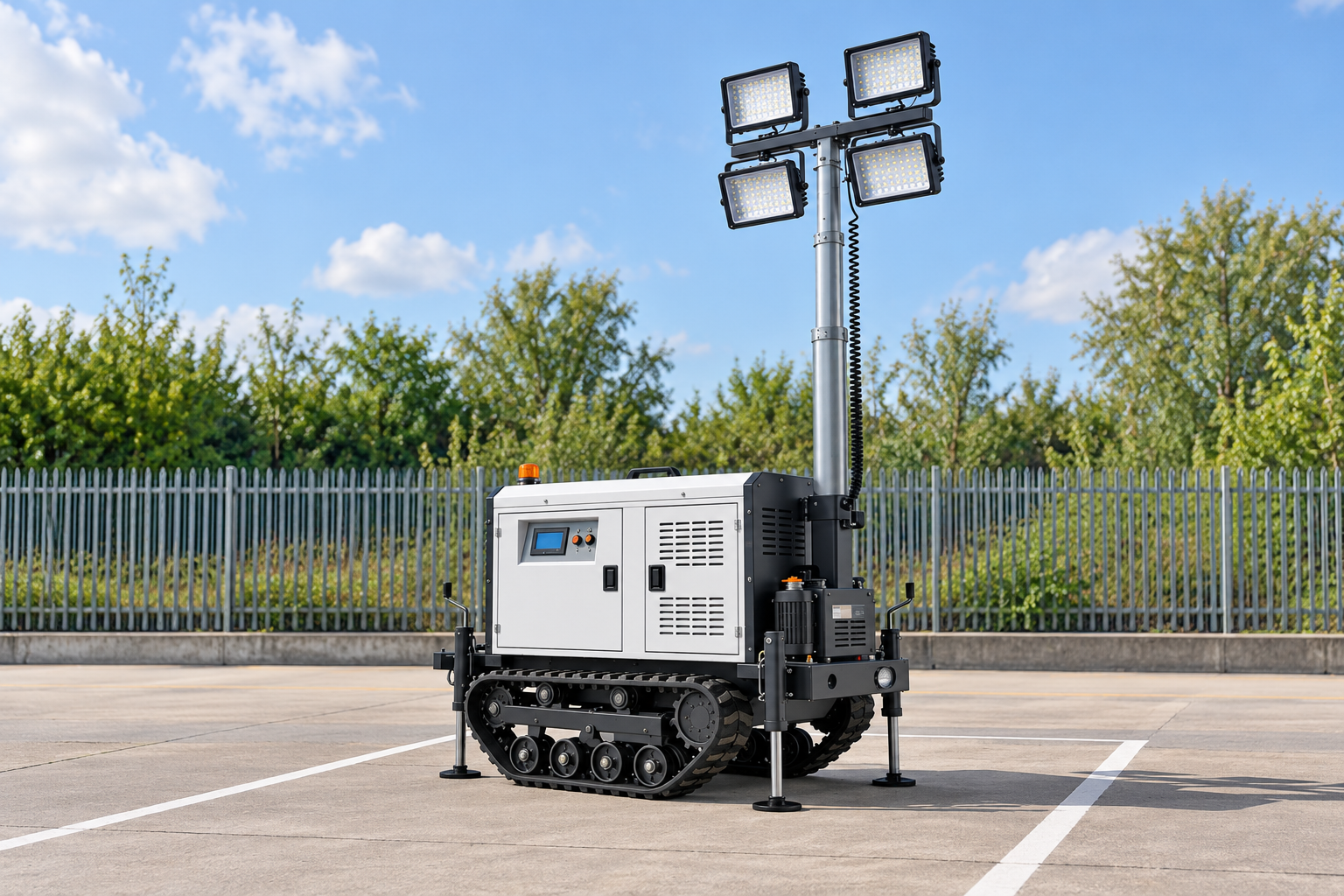
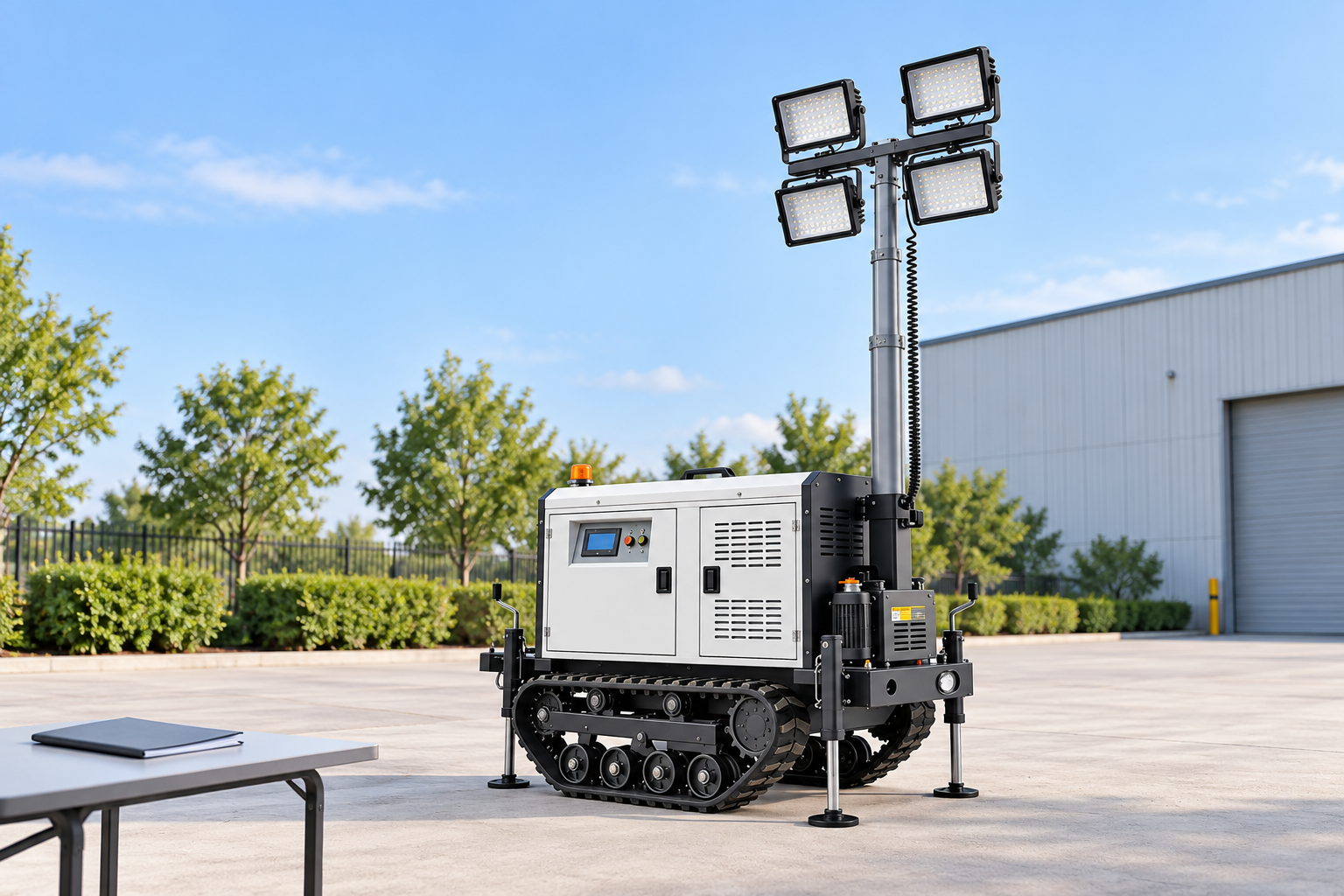
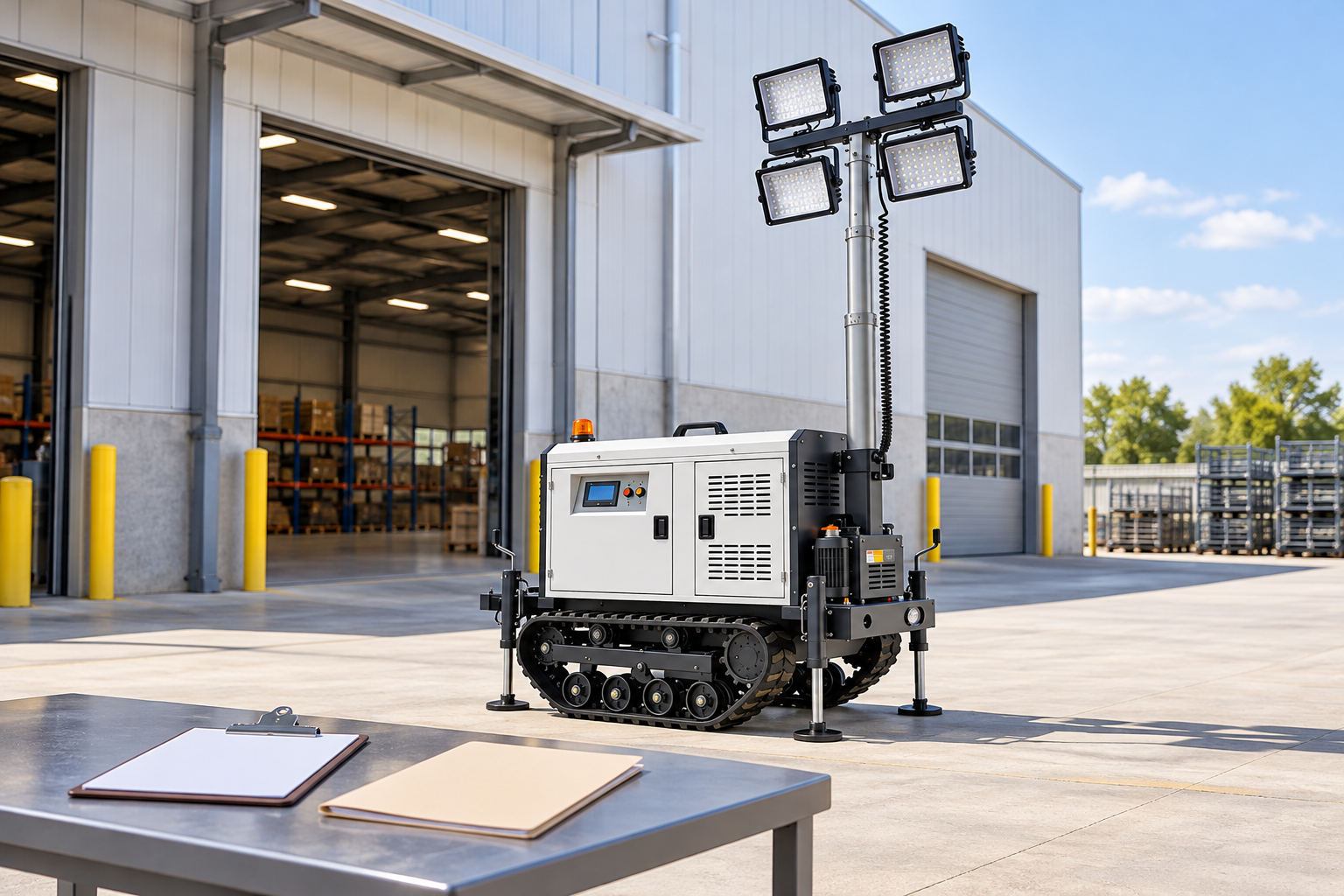
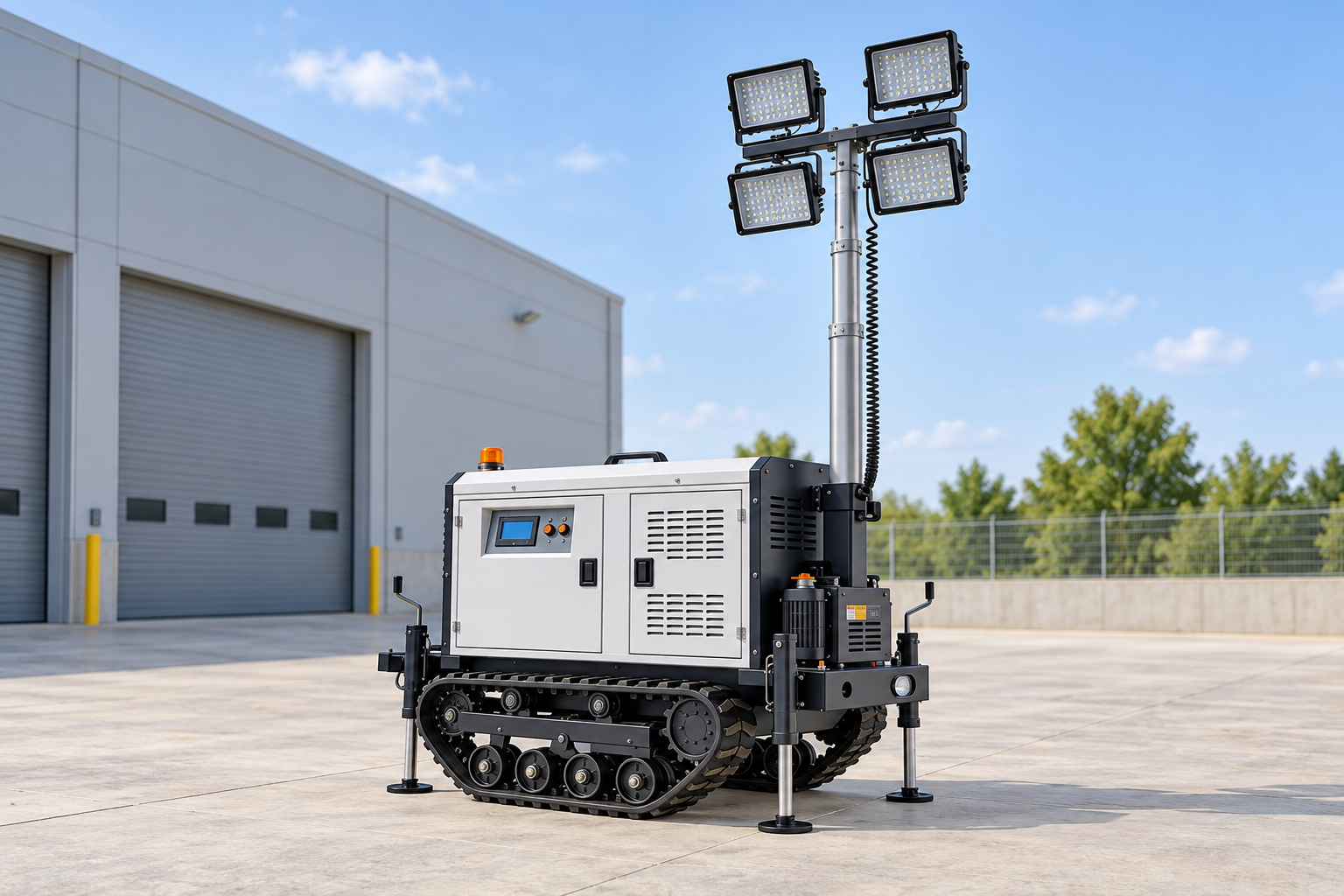
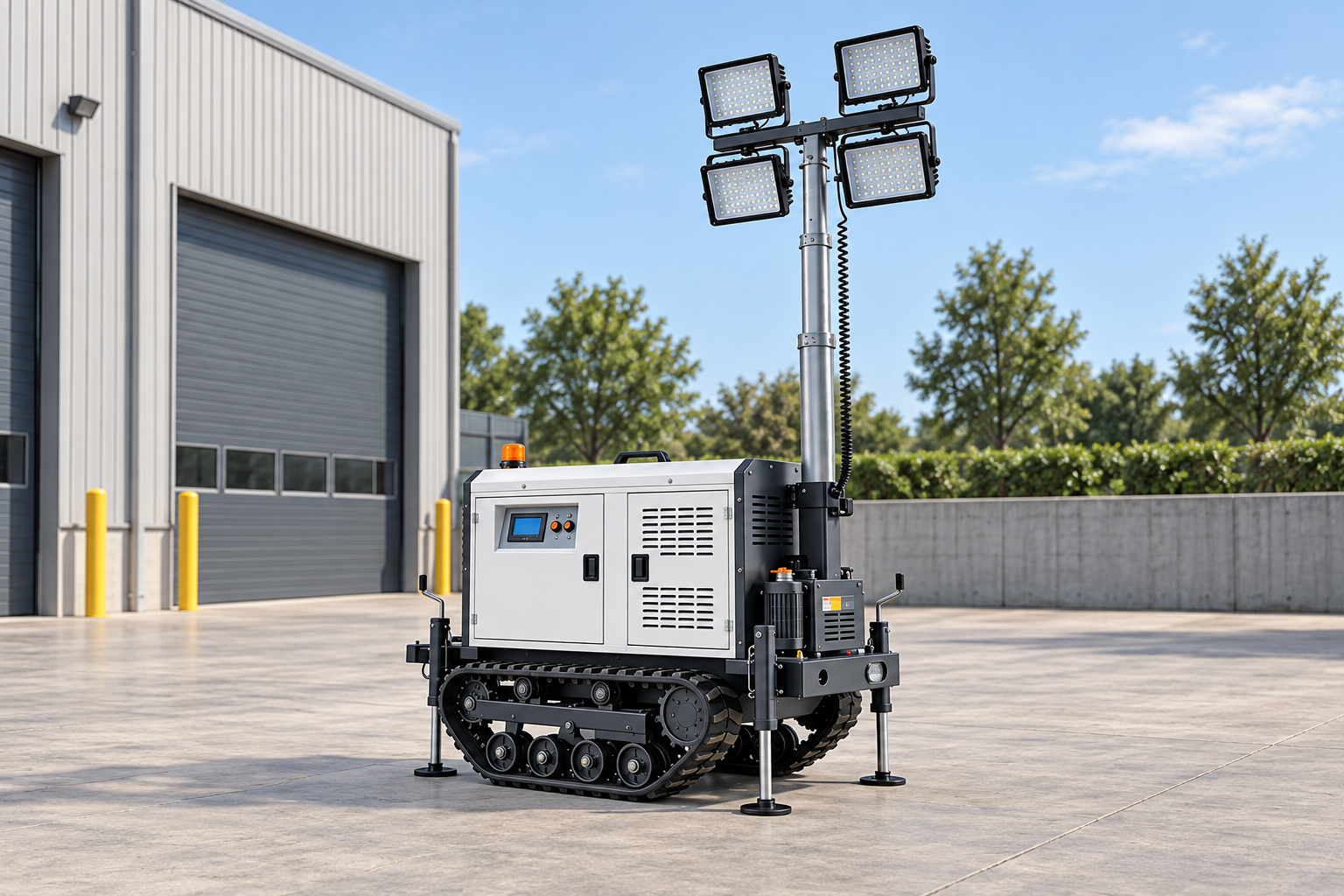
The illustrations show the current Keyyou tracked lighting tower with its real enclosure, crawler chassis, four square lamps, and support arrangement, with all covers closed. No electrode, added wire, or modified bond is depicted. The pictures identify the product family for the procurement discussion and are not wiring evidence. Use the actual offered configuration's documents to resolve the installation before making connections.
Ausstattung und ergänzende Planung
Bestätigen Sie die angebotene Konfiguration auf dem Keyyou-Produktseite für Beleuchtungsstärken und verwenden Sie die Handbuch zur Planung mobiler Leuchtmasten für einen umfassenderen Auswahlrahmen. Überprüfen Sie ergänzende Themen in Kann ein Lichtmast als Generator genutzt werden? und light tower condition and maintenance.
Abgassicherheit bei autorisierten Fahrtests
Das CDC-Video „Verwendung eines Generators sicher“ erläutert die Kohlenmonoxidgefahr im Zusammenhang mit dem Betrieb eines Verbrennungsgenerators. Es unterstützt die separate Diskussion über die Sicherheit des Abgases während einer autorisierten Funktionsprüfung; es legt keine Serviceintervalle, Pflegemaßnahmen oder die Erdungsvorrichtung fest. Verwenden Sie es nur bei einer mit Verbrennungsmitteln betriebenen Konfiguration.
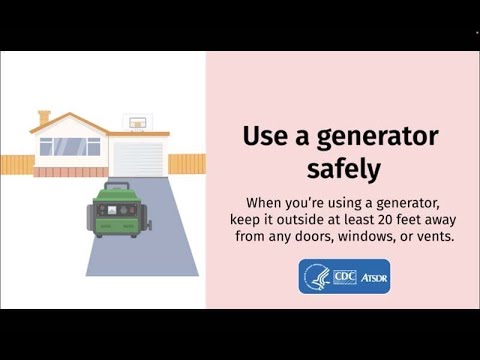
Ansehen: „Verwenden Sie einen Generator sicher“.
Häufig gestellte Fragen
Does every mobile tower require the same ground rod?
Do not use a blanket instruction. The exact generator, bonding arrangement, connected loads, applicable rules, and installation determine the decision. Obtain the supplied documents and responsible qualified assessment before connections are made.
Can an operator change a neutral-frame bond?
This guide provides no permission to do so. A proposed change must be assessed and authorized for the complete electrical arrangement, required protection, and connected installation, with updated documentation and verification.
Does a metal stabilizer touching the ground prove electrical protection?
No. Its visible contact does not establish the required electrical paths, connections, or protective function. Assess the actual configuration and retain the required inspection and verification evidence rather than treating a photograph as an electrical test.
Quellen und Umfang
Das zitierten Primärmaterial unterstützt die besprochenen spezifischen Planungs- und Sicherheitsprinzipien. Die jährliche CFR-Veröffentlichung bezieht sich ausdrücklich auf die Ausgabe von 2025; das verantwortliche Team muss die aktuellen geltenden Anforderungen überprüfen. Die Entscheidungstabelle ist original und enthält keine erfundenen Gerätebegrenzungen. Die genaue angebotene Konfiguration und die bereitgestellten Anweisungen regeln die Gerätefunktionen.