
Temporary Helipad Lighting for Emergency Operations
Separate helipad aviation lighting from mobile ground-support lighting. Review staging areas, transfer routes, mast positions, power, and controls.
Temporary helipad lighting requires a clear distinction between aviation visual guidance and ground support illumination. A mobile work light may help an approved equipment staging or patient-transfer area, but it is not automatically a compliant heliport lighting system. Start with the aviation authority and helicopter operator, identify the accepted landing area and approach arrangements, and review every proposed light and raised structure. This guide explains how to scope ground-support lighting without implying that a portable tower can create or approve a helicopter landing facility.
Define which lighting function is required
An emergency site can contain a landing area, vehicle staging, equipment storage, a transfer route, and spaces occupied by responders. Each has a different purpose. Record exactly which of those functions the mobile equipment will support. If the request is for aviation visual aids, route it to the competent aviation team rather than substituting an area-lighting tower because it is easy to transport.
FAA’s Heliport Design advisory circular provides a United States reference for planning, design, and construction of heliports. The applicable process depends on the site, operation, and jurisdiction. The authority and operator must determine the requirements for a temporary emergency arrangement. A supplier image, a bright ground patch, or a tower’s rated output does not establish the design or operational suitability of a landing area.
Obtain the accepted site geometry
Ask the aviation team for the current site plan, including relevant landing surfaces, safety areas, approach and departure paths, access, and equipment restrictions. Do not estimate a safe tower location by measuring an arbitrary distance from an informal landing marker. The mast, lamp array, supports, and any associated equipment have to be considered within the approved arrangement.
The landing area can be constrained by surrounding buildings, trees, terrain, wires, or other obstacles. A light tower adds its own physical envelope and optical effect. The aviation team must assess both; keeping the crawler tracks outside a painted shape does not prove that the elevated mast is acceptable. Show the full deployment and removal sequence so temporary equipment does not arrive or move at an unreviewed stage of the operation.
Separate staging from approach guidance
Ground personnel may need to see equipment, vehicle doors, packaging, and the approved transfer route. Aim support lighting towards those specific tasks in the accepted staging area. Do not point beams along an approach direction or arrange towers in a pattern that could be mistaken for aviation guidance. Lighting the ground more intensely does not by itself help the pilot identify the intended landing arrangement.
Ask the operator which views and operating modes require assessment. Some missions have special operational considerations that an ordinary work-light specification cannot address. Record those decisions explicitly. If a different aircraft or operator will use the site, review whether the accepted arrangement still applies. A general product claim about emergency lighting is not a substitute for this operational coordination.
Review mast height and downwash effects
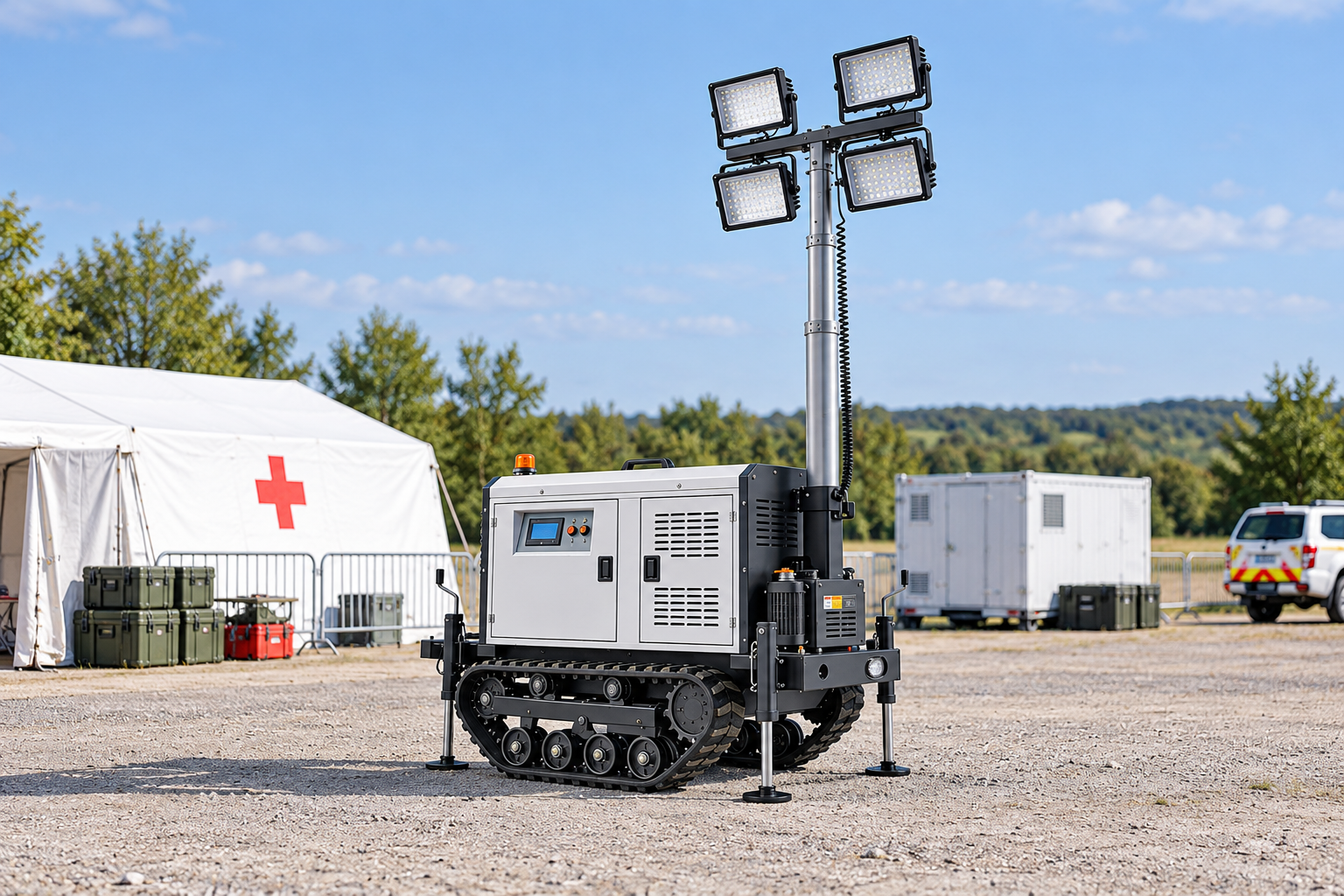
Provide the exact unit’s deployed dimensions, support footprint, mass information, and documented operating limits. The aviation team determines where the equipment may be installed and whether the proposed configuration is acceptable. Do not equate the manufacturer’s wind rating with approval under aircraft downwash. The physical loading, surrounding objects, and operation need their own competent assessment.
Avoid loose material, improvised lamp covers, unsecured accessories, or exposed temporary items near the operation. The site’s foreign-object and housekeeping arrangements should cover the lighting installation and associated power equipment. The tower must be stable under its instructions and remain accessible for authorized service. If suitability cannot be established, select another approved arrangement rather than relying on a heavier chassis as a presumed solution.
Assess patient and responder routes
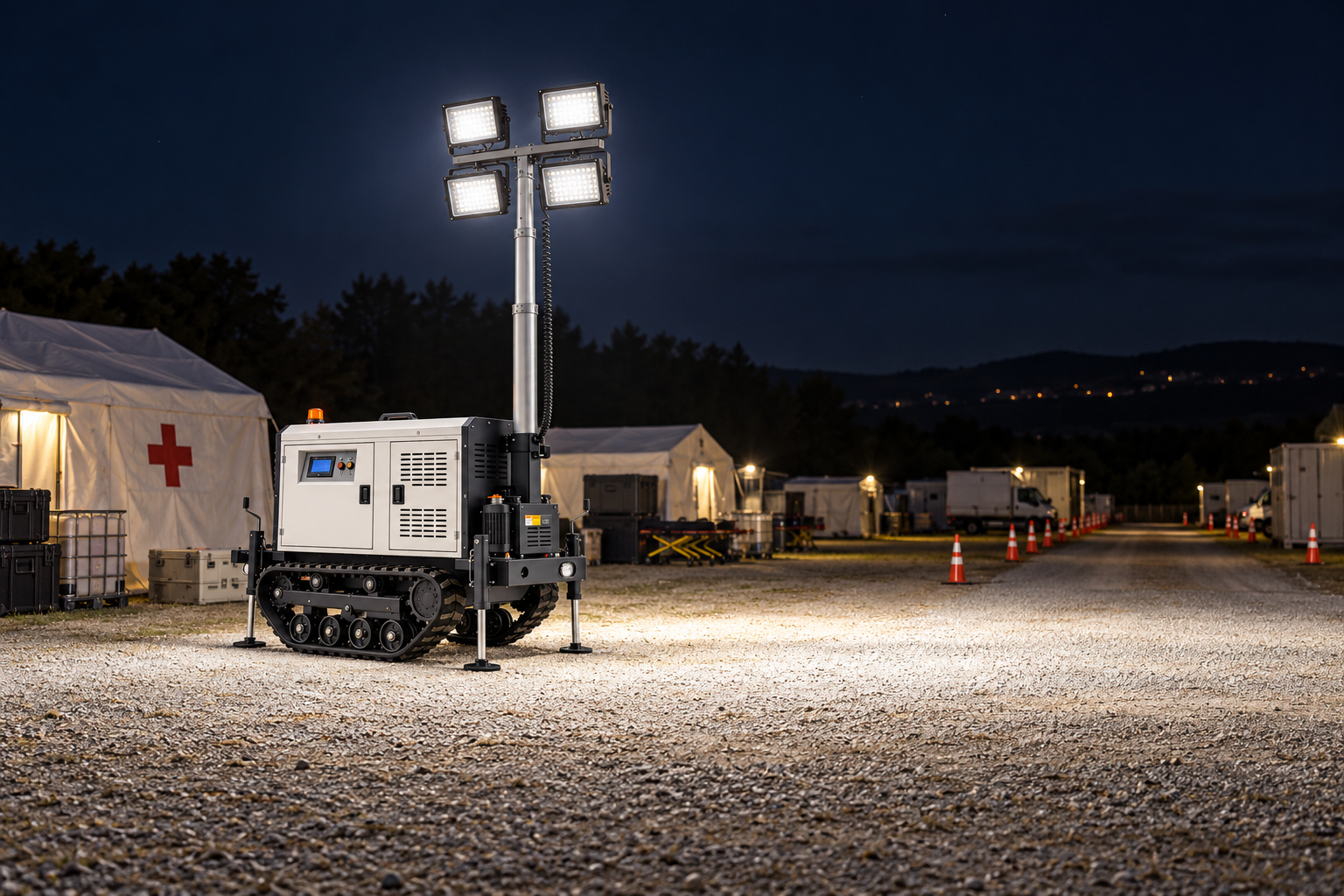
Once the aviation team has accepted the support area, walk the relevant ground routes with the response team. Identify changes in level, transitions between surfaces, vehicle approach points, and locations where people handle equipment or a stretcher. Check both the route and the task; a bright staging compound may still leave a doorway or turn in shadow.
The clinical or response team determines the detail needed for its work. Area illumination may need to be supplemented by approved task lighting at a vehicle or treatment position. Avoid creating glare into the eyes of personnel using a transfer route. Any fixture, cable, or support added to address a dark spot must stay within the accepted site arrangement and must not create a new obstruction.
A ground-support scope table
This table distinguishes decisions rather than prescribing heliport dimensions or lighting specifications. The competent aviation authority and operator determine the applicable design and operating criteria.
| Proposed function | Key question | Required decision |
|---|---|---|
| Aviation visual guidance | Is an approved landing-lighting system required? | Aviation design and operator acceptance |
| Equipment staging | Can responders see the relevant tools and supplies? | Accepted support location and task review |
| Transfer route | Are turns, doors and level changes recognizable? | Ground-route check with the response team |
| Raised equipment | Is the complete mast envelope acceptable? | Aviation obstacle and operating review |
| Operational change | Has aircraft, operator or site geometry changed? | Review of the accepted arrangement |
Choose power for the operational scenario
Specify the complete period that ground support illumination must remain available, including delayed arrival, transfer, recovery, and any continued response activity. Ask for endurance at the proposed lamp setting and conditions. Record how the lighting can be serviced without interrupting its essential function or bringing vehicles into a restricted area at the wrong time.
For combustion equipment, review exhaust near vehicles, tents, rooms, and other occupied spaces. The CDC’s generator guidance explains the carbon-monoxide hazard; its examples are not a heliport installation approval. Battery equipment avoids local combustion while operating on stored energy, but it still needs an adequate charging or replacement plan. An external source needs a reviewed connection and cable route. Select the whole support system rather than assuming the lowest-noise option has sufficient runtime.
Agree on controls and failure response
Identify who may switch or adjust the lights and how changes are communicated. A ground responder should not alter the accepted optical arrangement simply because one task looks dim. The change may affect another observer or an aviation requirement. Establish the review and communication process in advance, including any instructed light settings during aircraft operations.
Plan what happens if a light or supply fails. The aviation operator controls decisions relating to the flight and landing operation. The ground team controls its own task response within that arrangement. Backup illumination needs an accepted function and location. A spare tower cannot automatically be placed beside the landing area in response to failure, especially if its height or beam pattern differs from the approved installation.
Document acceptance and keep the scope narrow
Record the exact configuration, accepted position, lamp direction, output setting, and relevant operation. Include the ground tasks assessed and the limitations that remain. If measurement or observation criteria are specified, preserve the results and methods. Illustrations can explain a support concept but should never be presented as evidence that a landing facility is compliant.
Revisit the record when site geometry, aircraft operation, equipment, weather, or response routes change. Maintain a clear distinction in procurement: request mobile lighting for the accepted ground-support task, while separately obtaining the approved aviation lighting arrangement where needed. This prevents a convenient work light from becoming an unsupported promise about helicopter operations.
Equipment documentation for this application
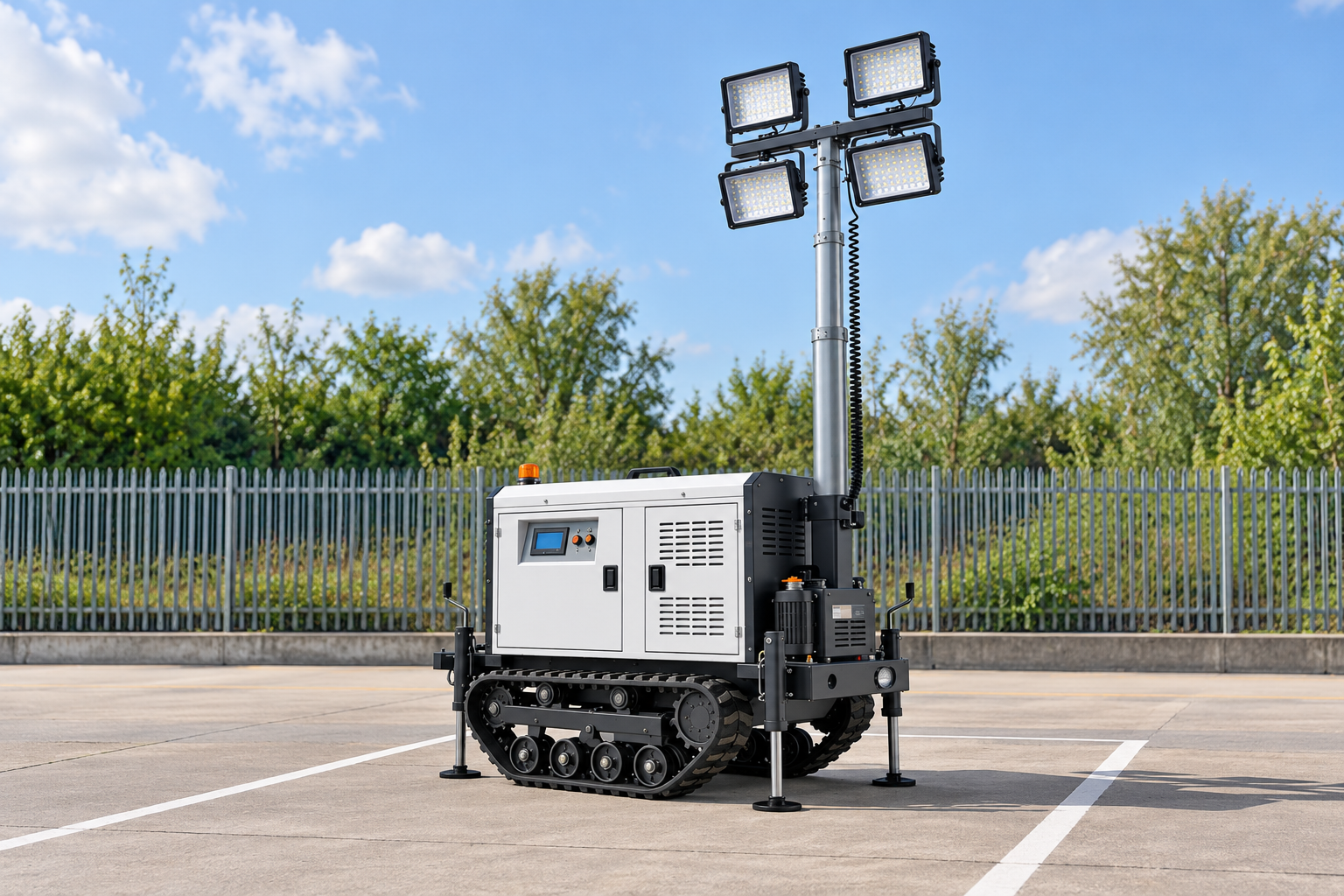
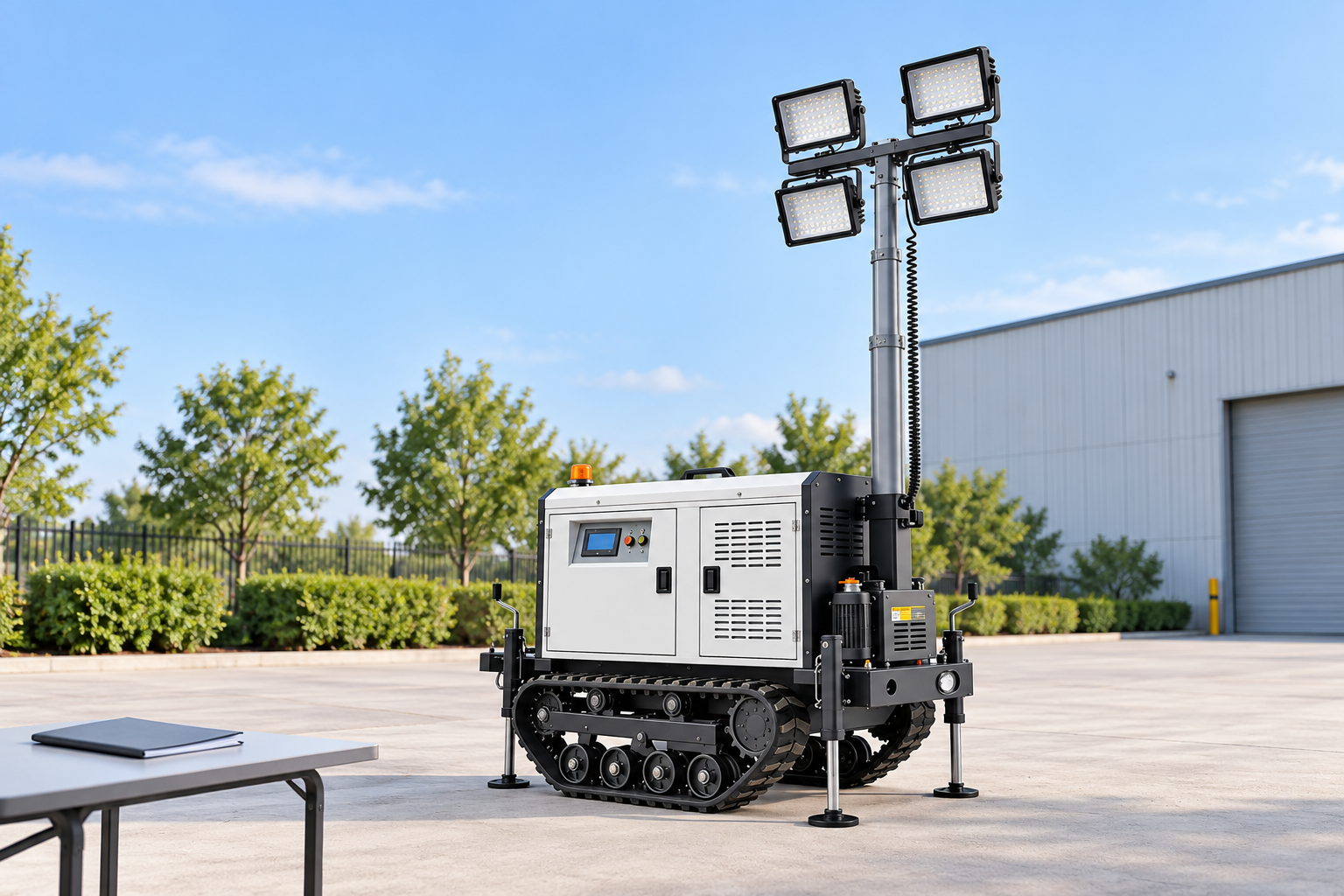
The pictured Keyyou tracked lifting light tower identifies the product category discussed here. Its appearance is not evidence of runtime, environmental certification, or suitability for every proposed work location. Request the current configuration-specific documents and compare them with the accepted task, deployed envelope, power arrangement, and service plan. If those records do not establish a match, resolve the configuration with the responsible team before relying on the installation.
For broader equipment planning, read the Leitfaden für mobile Lichtmasten. Use the separate glare-control guide when reviewing observer views, and the maintenance and troubleshooting guide when arranging inspection and service. These resources support their own tasks; they do not replace acceptance of the current site layout.
Generator safety education and reference scope
Where the selected power arrangement includes an engine, the CDC video below explains carbon-monoxide precautions. Its household examples provide introductory education, not a site installation approval. The responsible team must review the exact equipment, exhaust location, occupied spaces, fuel handling, and electrical arrangement. Battery-only operation has a different power scope, and hybrid engine-start conditions still require review.
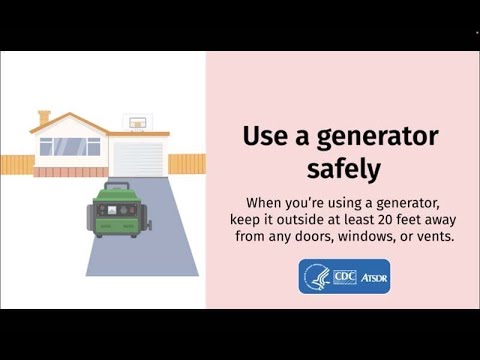
Watch Use a Generator Safely from the CDC.
Häufig gestellte Fragen
Is a mobile work tower a heliport lighting system?
A general work tower is not automatically an approved aviation visual-aid system. Define its intended ground-support function and obtain the competent aviation team acceptance of position, height, and optical arrangement. Requirements for landing guidance must be resolved separately. A product picture or illuminated patch of ground cannot establish the suitability of a helicopter landing facility.
Can wind ratings demonstrate downwash suitability?
Not by themselves. Provide the exact equipment documents and deployment envelope for competent review of the actual aviation operation. Aircraft effects, nearby objects, and site geometry require assessment within the accepted arrangement. Do not assume that a heavy tracked chassis resolves these questions or that a manufacturer wind limit is an aviation approval.
Who may adjust support lighting during operations?
Identify the change authority and communication process with the aviation operator and response team before use. An adjustment for ground convenience may affect another operational view. Keep accepted settings in the site record, follow any instructed operating modes, and review changes rather than allowing individual responders to relocate or re-aim equipment independently.