

Verificaciones de despliegue de aves anidantes en torres de luz: Revisión del sitio y entrega
Coordinar las verificaciones de aves anidantes antes del acceso, montaje y operación de la torre de luz, utilizando asesoramiento ecológico competente, límites controlados y contactos claros para detener el trabajo.
Light tower nesting bird deployment checks should establish whether the proposed access, setup, servicing and illumination could affect birds or nesting habitat before equipment enters the work area. Use competent ecological advice and the applicable site controls; an operator's quick look is not a substitute for a required survey. Keep the tower in a released location, direct operational changes through the site lead, and stop the affected activity if a new concern appears. There is no universal calendar window or stand-off distance that makes every deployment acceptable.
This article focuses on site coordination for a tracked temporary lighting unit, distinct from general migration lighting or choosing lamp colour. Natural England's guidance applies to England. The official references provide background for competent local review, not worldwide permission, equipment certification or a method for handling birds and nests.
Define the activity the ecological review needs to consider
A lighting request often states only the area to illuminate and the hours of use. For ecological coordination, add how the machine will arrive, where it will turn, where its supports will contact the ground and how it will be serviced. Include the removal activity and any proposed relocation as the job progresses. Habitat can be affected by access as well as light.
Show nearby vegetation, buildings, banks and other features identified by the ecological team on the controlled site drawing. Do not label a feature “clear” merely because it appears empty in a photograph. Ground-nesting birds and birds using structures can be overlooked when the review concentrates only on trees. Give the specialist enough information to decide what checks are appropriate.
The proposed lamp direction and operating period also belong in the brief. Describe the task requiring illumination and whether the work can change location or timing. This allows the project to explore avoidance before it becomes committed to a delivery slot. Do not promise that turning lamps down will resolve an issue that also involves vehicle access or disturbance.
Understand the limits of records and previous surveys
Natural England explains that a lack of records does not establish absence of birds. For a project team, this means an old desktop search should not be treated as a permanent release for all later work. Ask the ecologist or environmental lead whether the existing information covers the actual work area and remains suitable for the intended activity.
A survey report may contain conditions, limitations and recommendations that matter more than its front-page conclusion. Record the version used and the person who confirmed how it applies to the lighting deployment. If the programme, footprint or surrounding habitat changes, return the question to the competent adviser rather than assuming that the earlier review still covers it.
Do not prescribe a fixed validity period for every check. Nor should an article set a single nesting season and imply that work outside those dates needs no consideration. Bird activity and legal protections are not reduced to a universal contractor calendar. The responsible specialist should explain the site-specific timing and repeat-check requirements in the deployment brief.
Keep legal background separate from equipment release
Natural England's standing advice describes protections for wild birds, nests in use or being built, and additional protections for certain species. It also explains that there is no wild-bird development licence that simply authorizes construction. Use the current official guidance and competent advice for the actual circumstances; do not assume that a planning permission or a lighting hire contract overrides wildlife protection.
The equipment release should therefore refer to the project's applicable ecological controls rather than claim that the tower itself is “bird safe.” A lamp specification, colour setting or supplier brochure cannot establish the absence of nests or approve an activity near them. Likewise, a machine's ability to travel on tracks does not establish permission to cross sensitive habitat.
If the ecological team requires a restricted area, provide a clear drawing and an operating instruction for the affected personnel. Keep sensitive wildlife information appropriately controlled while still giving the delivery team usable boundaries. The operator needs to know where they may go and whom to contact, without being asked to identify species or interpret legal exceptions.
Turn specialist advice into a deployment checklist
Use the following qualitative checklist to connect the review with delivery and operation. It is an editorial workflow, not a prescribed ecological method. It contains no minimum distance or species-specific threshold. The competent ecological team and applicable authority requirements determine the actual restrictions, monitoring and release conditions.
| Condición | Revisión o acción | Evidence or responsibility |
|---|---|---|
| Review does not cover new bay | Hold entry and ask whether further assessment is needed | Competent ecological adviser |
| Restricted area identified | Brief the actual route and setup boundary | Environmental lead and site supervisor |
| Hours or lamp direction changes | Refer the changed activity for review | Authorized project decision owner |
| Possible nest observed | Stop affected activity and report without investigating | Operator and nominated supervisor |
| Collection route changed | Review access before dispatch | Site logistics and ecological leads |
Esta lista de verificación de coordinación cualitativa respalda el flujo de trabajo discutido aquí; aplique la jurisdicción y el alcance de la Natural England: wild birds and planning decisions. No proporciona un límite de aceptación numérico universal.
A useful record separates completed observations from decisions. “No concern reported” does not mean a survey was conducted. “Advice received” does not show that the approved location was briefed to the driver. Record the relevant document, the person responsible and the point at which the activity was released, with any limitations still in force.
Choose a position that supports avoidance
Where the project review allows it, consider an existing hardstanding location and established access route that avoid sensitive features. Evaluate the complete equipment footprint and required task lighting, rather than selecting the nearest convenient bay. A position that avoids vegetation during setup may still create a problem if routine servicing requires repeated movement through the restricted area.
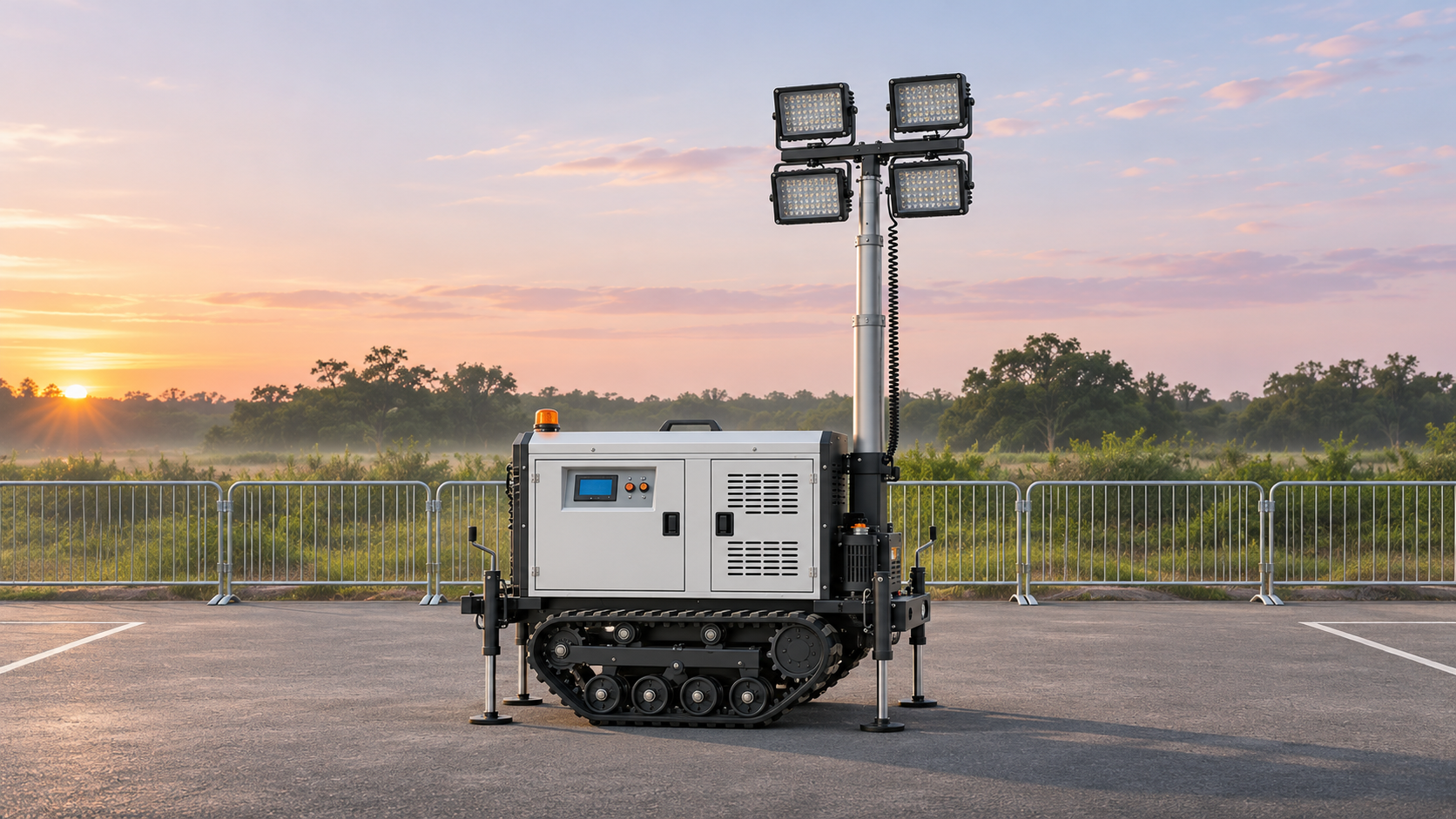
Ask for the supplied machine's dimensions, support arrangement and operating instructions. The illustrations here retain the silver cabinet, black crawler tracks, mast and four rectangular lamp heads of the referenced Keyyou product. They show equipment context only. They do not demonstrate an ecological stand-off, an acceptable illumination level at a nest or approval for the depicted location.
Do not alter lamp housings, attach improvised shields or modify supports simply to make a site plan work. Any proposed equipment change needs the appropriate manufacturer and competent review. If the task cannot be performed within the released arrangement, consider another location, method or programme with the project team before authorizing deployment.
Brief the people who will actually move and operate the tower
The ecological plan should reach the driver, operator, maintenance team and shift supervisor in a practical form. Identify the permitted route, setup bay, operating limitations and stop-work contact. Explain which changes require a renewed review: moving the tower, extending working hours, changing lamp direction or gaining access through a different gate can each affect the assessed activity.
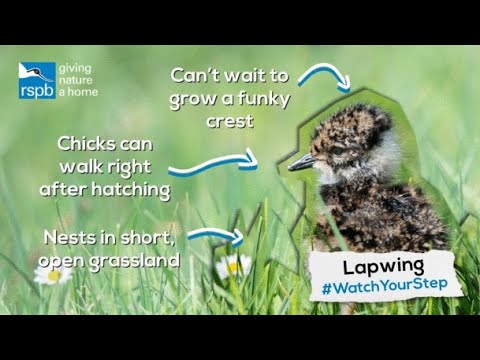
Use the RSPB video below to explain why nests may be overlooked at ground level. It is public awareness education rather than a construction survey method. The project-specific briefing must still tell workers how to report a concern without approaching, investigating or disturbing a suspected nest. Do not encourage staff to search for eggs or chicks themselves.
cURL Too many subrequests by single Worker invocation. To configure this limit, refer to https://developers.cloudflare.com/workers/wrangler/configuration/#limits.

cURL Too many subrequests by single Worker invocation. To configure this limit, refer to https://developers.cloudflare.com/workers/wrangler/configuration/#limits
cURL Too many subrequests by single Worker invocation. To configure this limit, refer to https://developers.cloudflare.com/workers/wrangler/configuration/#limits.
cURL Too many subrequests by single Worker invocation. To configure this limit, refer to https://developers.cloudflare.com/workers/wrangler/configuration/#limits.
cURL Too many subrequests by single Worker invocation. To configure this limit, refer to https://developers.cloudflare.com/workers/wrangler/configuration/#limits.
cURL Too many subrequests by single Worker invocation. To configure this limit, refer to https://developers.cloudflare.com/workers/wrangler/configuration/#limits
cURL Too many subrequests by single Worker invocation. To configure this limit, refer to https://developers.cloudflare.com/workers/wrangler/configuration/#limits.
cURL Too many subrequests by single Worker invocation. To configure this limit, refer to https://developers.cloudflare.com/workers/wrangler/configuration/#limits.
Para una consulta efectiva con el proveedor, describe la tarea prevista y solicita la información real de la máquina necesaria para la evaluación del sitio. Pide al cliente que confirme quién toma las decisiones ecológicas y cómo se aprobarán los cambios. Las responsabilidades claras hacen posible elegir el equipo adecuado sin convertir una fotografía del producto o una declaración de ventas en una garantía ambiental no respaldada.
Equipment and related guidance
Identifique el contexto del equipo usando el Página del producto de la torre de elevación ligera de Keyyou rastreada. Solicite documentación de la configuración suministrada en realidad. Lea el Seguridad y funcionamiento de la torre de iluminación y la orientación relacionada sobre consideraciones de iluminación para aves migratorias, coordinación de iluminación en sitios sensibles a murciélagos.
Aprendizaje adicional: ¡Cuidado con el paso – aves anidando en el suelo!
RSPB explica que las aves pueden anidar en el suelo y por qué las personas deben tener cuidado. Este filme de concienciación apoya la información del sitio; no es una encuesta de construcción, método de manejo de nidos o autorización ecológica.
Watch the educational video on YouTube.
Preguntas frecuentes
¿Puede un operador realizar la encuesta de aves anidantes requerida?
Un operador debe reportar las observaciones y seguir la sesión informativa. Una encuesta ecológica requerida debe ser realizada por una persona competente y adecuada según los requisitos aplicables.
Is working outside a fixed nesting season automatically acceptable?
No. No confíe en una ventana de calendario universal. Las aves reales, la actividad, la ubicación y las protecciones aplicables requieren una consideración competente.
Does a bird-friendly lamp specification approve the site?
No. Una especificación de lámpara no establece la ausencia de nidos ni autoriza el acceso, la perturbación o la iluminación en la ubicación propuesta.
What should workers do if a possible nest appears?
Detener la actividad afectada, seguir el procedimiento del sitio e informar al supervisor designado. No investigar, mover el nido ni usar disuasivos sin la dirección competente adecuada.
Sources and scope
Estas fuentes respaldan los principios de fondo específicos discutidos anteriormente. Sus jurisdicciones y temas difieren; no certifican el equipo ilustrado ni aprueban un envío o instalación individual.


