

Ubicación de Torres de Luz en Alrededor de Rutas Peatonales y Vehiculares
La ubicación de las torres de luz en torno a rutas peatonales y vehiculares debe tener en cuenta toda la máquina desplegada, incluyendo las patas de soporte y cualquier ruta de cable autorizada.
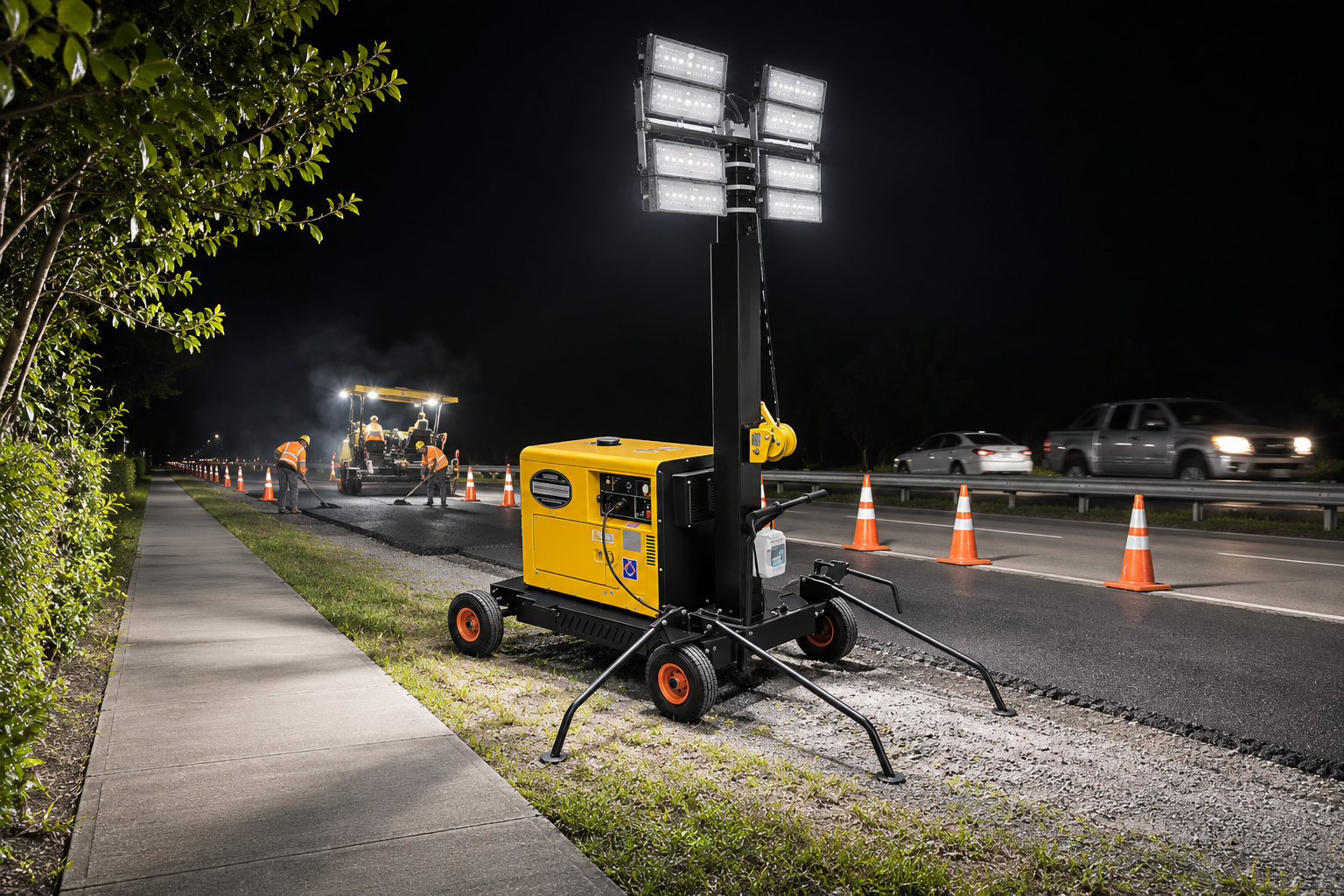
La colocación de torres de iluminación alrededor de rutas peatonales y vehiculares debe tener en cuenta toda la máquina desplegada, incluyendo las patas de soporte y cualquier ruta de cable autorizada. Posicione el equipo de iluminación fuera del espacio libre para caminar y conducir, y luego apunte las lámparas hacia la tarea sin dirigir deslumbramiento hacia el tráfico que se acerca. Un carrito compacto con manivela puede ser adecuado para una zona de trabajo restringida, pero aún necesita una superficie adecuada, espacio de soporte y acceso seguro. El carrito con neumáticos de aire ilustrado aquí proporciona un ejemplo concreto de equipo. Esta guía se centra en la disposición práctica para trabajos nocturnos; la protección de rutas y las dimensiones deben provenir del plan del sitio real y las instrucciones de la máquina.
Compare la huella de trabajo en lugar del ancho de transporte
Un carrito puede parecer pequeño en un catálogo mientras que requiere mucho más espacio cuando sus soportes están desplegados. Solicite las dimensiones de transporte, la disposición de soporte de trabajo y las instrucciones de montaje del fabricante. Para un remolque, incluya su conexión de remolque y necesidades de acceso; para un carrito, incluya su mango y ruta de movimiento. No seleccione un producto porque su armario cerrado encaja en un espacio entre barreras. Verifique si la posición de soporte, el mástil y el conjunto de lámpara pueden operar allí como se pretende. Coloque el equipo en una superficie adecuada con los espacios libres requeridos por sus instrucciones y el sitio. Si el espacio disponible es insuficiente, elija otra ubicación o una configuración de producto adecuada en lugar de plegar un soporte para que la torre encaje.
| Artículo para comparar | Información para solicitar | Revisión práctica de compra |
|---|---|---|
| Espacio para el equipo | Huella completa del soporte desplegado | Mantener fuera de las rutas marcadas |
| Acceso del operador | Acercamiento para control y servicio | Evitar cruzar tráfico activo |
| Dirección de la luz | Líneas de visión de la cara de trabajo y del conductor | Verificar la luz útil y el deslumbramiento |
| Disposición del sitio modificada | Entregas, barreras y materiales | Verifique nuevamente la ruta libre real |
Mantener la ruta peatonal utilizable durante toda la noche
Observe cómo las personas ingresan al área de trabajo, caminan hacia las instalaciones y salen durante una interrupción. La torre no debe obligarlos a rodear una pata hacia un carril de vehículos. Mantenga el acceso operativo en el lado adecuado de la barrera para que un usuario autorizado no necesite cruzar tráfico activo para llegar a los controles. Cuando un modelo requiera energía externa, tenga planificada y protegida su disposición de cable para la ruta real; una configuración de batería o generador no es permiso para ignorar otros servicios. Verifique la disposición después de entregas, movimientos de barreras o cambios en la cara de trabajo. Una pasarela que esté despejada antes del turno puede quedar obstruida por almacenamiento de materiales incluso cuando la máquina de iluminación no se haya movido.
Utilice la elección del producto para simplificar una disposición de reparación de carretera corta
Para una reparación nocturna localizada, compare un carrito genuino empujado a mano con un remolque remolcado en la misma área de trabajo y condiciones del suelo. El carrito puede ofrecer un paquete de transporte más pequeño y un método de movimiento diferente, mientras que el remolque puede ofrecer otra configuración de potencia o mástil. Confirme los detalles reales en la oferta. Muestre al proveedor la plataforma de equipo propuesta, la ruta de acceso y la ubicación de las barreras para que la recomendación pueda abordar el sitio en lugar de una etiqueta de aplicación genérica. Una vez instalado, verifique que las lámparas sirvan a la zona de trabajo, que el operador pueda alcanzar los controles y que los soportes permanezcan dentro de la zona del equipo. Reubicar una máquina requiere el procedimiento de apagado y movimiento prescrito, no un movimiento improvisado con su mástil elevado.
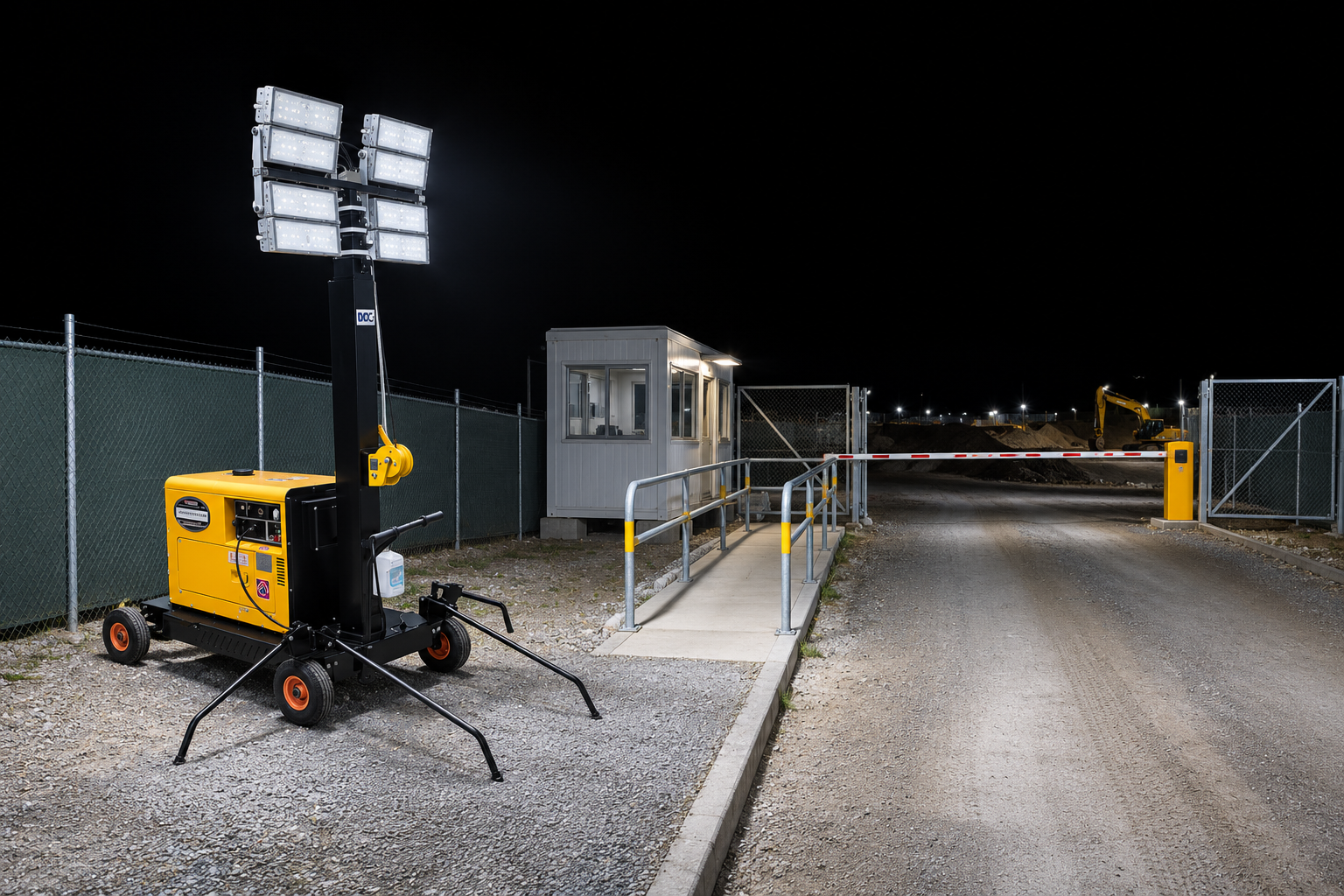
Define the equipment area before drawing the walkway
Begin with the actual delivered machine and the site traffic arrangement. A tracked light tower has a different ground footprint from a trailer unit, and the working footprint changes when supports are deployed. Obtain the applicable instructions and dimensions rather than scaling a brochure image. Include space needed for authorized inspection, access to controls and the planned movement into or out of the bay. The boundary should describe the complete activity area, not merely the rectangle occupied by the cabinet.
Record the destination of the pedestrian route as well as its alignment. A walkway serving a welfare cabin may experience a concentrated flow during breaks; a route to a stores entrance may include visitors carrying equipment. These patterns affect the crossings and access points that require review. Do not let a convenient tower position determine a route that people cannot realistically follow. Ask the route owner and people who use the area to inspect the proposed arrangement together.
Keep product capability and site control separate. The Keyyou tracked product provides a real equipment context for this discussion, but its appearance does not establish a safe separation distance, vehicle impact resistance or permission to operate beside a particular path. Those decisions require the actual machine information and the competent site’s assessment. If the available space cannot accommodate the necessary arrangements, review the equipment position or the work sequence before placing the tower.
Follow the whole pedestrian journey
Walk the route from the point where a person enters the work area to the final destination, under the site’s controlled inspection arrangements. Look for doors opening into a vehicle lane, corners hidden by stored materials and places where the route appears to end at a support leg. A route can look clear on a drawing while its entrance encourages people to approach the wrong side of the equipment. Mark these interfaces for the planner instead of accepting a series of disconnected clear sections.
HSE’s workplace transport guidance emphasizes separation and the visibility of crossings. Its walkway guidance also considers changes in pedestrian flows. Applied to a tower bay, these principles mean reviewing the route during normal shifts, service visits and planned layout changes. They do not supply a universal offset around every machine. The route should retain its intended accessibility and should not direct users into a different uncontrolled hazard merely to avoid the tower.
Consider what a pedestrian sees before reaching a decision point. A tower cabinet, barrier mesh, parked delivery vehicle or stack of materials may interrupt the view of an approaching machine. A sign at the final conflict point provides little opportunity to choose another route. The traffic planner should determine the approach and crossing arrangement. Do not move a protective barrier casually to improve visibility; its location may be part of a wider protective system.
Distinguish route guidance from protective barriers
Different devices perform different jobs. A line on the ground communicates a route. A pedestrian guardrail can guide access. A vehicle restraint system must be selected and installed for its intended protective function. Do not describe these as interchangeable simply because all create a visible boundary. Record the purpose of each device in the layout and obtain the required specification from the responsible planner. An illustration cannot prove that a pictured rail will resist an impact.
Check how the selected arrangement interacts with the tower. Stabilizers must not be trapped against a barrier or positioned across the approved walkway. Access gates should not open into support legs or compel workers to stand in the vehicle lane. Where a vehicle restraint system requires space behind it, the planner must preserve that space; the tower cannot be parked there just because the area is not used as a walking route. Apply the actual design requirements rather than an assumed clearance.
For projects affecting public routes, obtain the applicable authority’s approval and current traffic-control requirements. Caltrans guidance addresses temporary pedestrian access within its jurisdiction, including avoiding conflicts with work equipment. It is a useful example of how route continuity and accessibility are considered together, not a rulebook automatically applicable to every overseas yard. A private site traffic plan also does not authorize changes to a public sidewalk or road.
Plan service traffic before the first visit
Identify which vehicles will approach the tower, where they will stop and whether the service task requires access across the walking route. Include the less frequent visits, such as inspection, collection or a breakdown call. An arrangement that works during normal illumination may fail when a service vehicle parks across the route. Give contractors the current access instructions before arrival and identify the person responsible for coordinating the visit.
Where an unavoidable crossing is permitted by the approved arrangement, establish how pedestrians and equipment are kept separated during the movement. Define who can close the route, what alternative is available and what evidence allows reopening. The details should come from the site’s competent traffic planning process. Do not turn a generic article into instructions for a worker to stand in front of a moving vehicle or direct traffic without the required competence and authority.
Account for the service task after the vehicle has stopped. Doors, hoses, tools and work materials may occupy a different area from the vehicle itself. The pedestrian route should not become a convenient temporary storage strip. If the authorized task cannot fit within the planned service area, stop and coordinate a revised arrangement. Leaving a narrow gap through active servicing creates uncertainty about whether pedestrians are expected to enter the work area.
Planning table: apply the qualitative principles in HSE: separating pedestrians and vehicles; HSE: pedestrian walkways and cycleways; Caltrans: traffic and temporary pedestrian arrangements. No universal numerical acceptance limits are implied.
Check cables, lighting and changing conditions together
A tower can remain outside the walkway while its connections still create an obstruction. Coordinate cable routing with the electrical responsible person and the route owner. An approved protection arrangement should accommodate the actual route users, surface and equipment. Do not improvise a covering or route a cable through a barrier in a way that compromises the protective arrangement. Record the connection path on the same site sketch used for the tower bay.
cURL Too many subrequests by single Worker invocation. To configure this limit, refer to https://developers.cloudflare.com/workers/wrangler/configuration/#limits.
cURL Too many subrequests by single Worker invocation. To configure this limit, refer to https://developers.cloudflare.com/workers/wrangler/configuration/#limits.
Referencia del producto y guías de compra relacionadas
Para una consulta específica del modelo, comience con el Torre de iluminación móvil con elevación mediante manivela manual y remolque (neumáticos). Describa su tarea actual y solicite la configuración ofrecida, instrucciones aplicables y soporte relevante.
- Cómo elegir una torre de iluminación
- ¿Cómo deben planificar los equipos la ubicación de las torres de iluminación en una zona de trabajo?
- Huella de los estabilizadores de las torres de iluminación: planificación del espacio y montaje
- Control del deslumbramiento de las torres de iluminación para operadores de maquinaria
Aprendizaje adicional
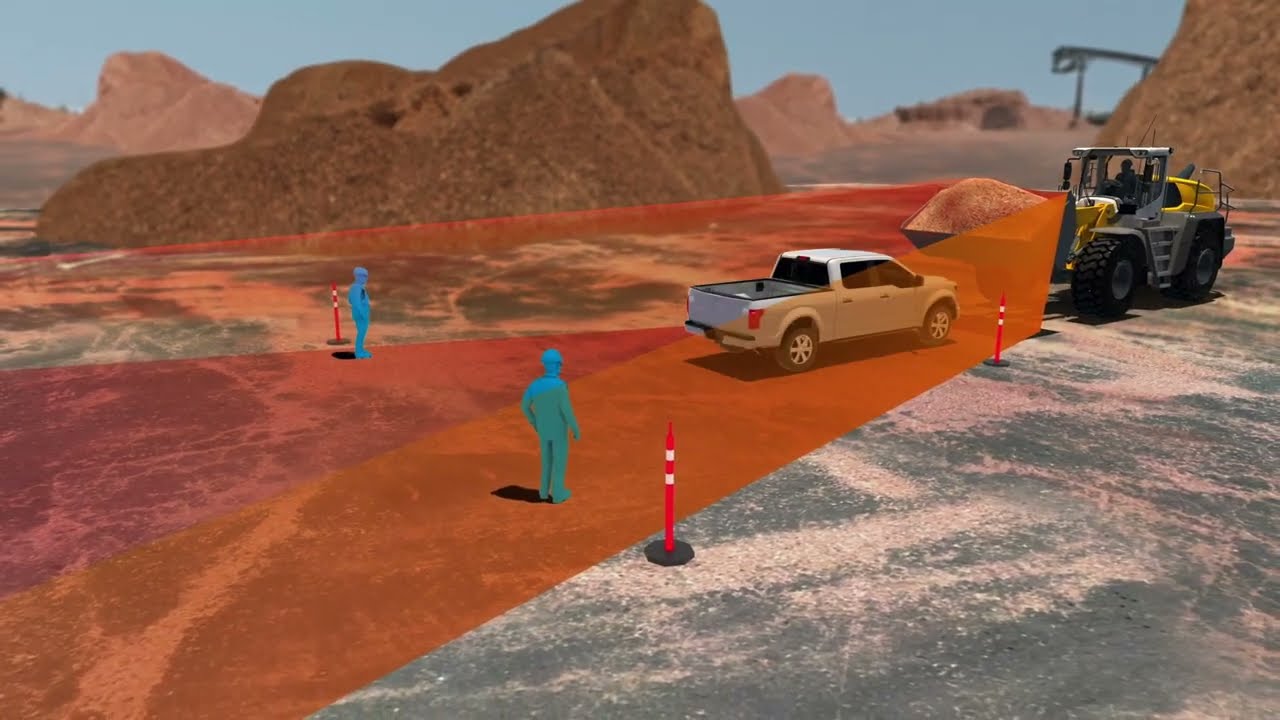
WorkSafeBC: Operación de equipos móviles: Lo que no puedes ver | WorkSafeBC. Este recurso educativo explica conceptos de fondo; no establece el rendimiento o la certificación de la máquina mostrada.
Preguntas frecuentes
¿Puede un carrito compacto mantenerse en un pasillo estrecho?
Utilice únicamente una ubicación que permita el despliegue completo aprobado y mantenga despejadas las rutas requeridas. El ancho del armario por sí solo no determina la idoneidad.
¿Se pueden plegar las patas de soporte para mantener abierta una ruta?
No se debe apartar del arreglo de soporte requerido para que una ubicación encaje. Elija una ubicación adecuada u otra disposición del producto soportado.
¿Cuándo debe verificarse nuevamente el diseño?
Verifique nuevamente después de la reubicación, cambios en las barreras, entregas u otros cambios que afecten las rutas reales y el área de trabajo, siguiendo los requisitos del sitio y de la máquina.
Fuentes
Utilice las instrucciones de la máquina aplicables para decisiones específicas del producto. Las siguientes fuentes apoyan principios generales dentro de su alcance declarado.


