
Éclairage des cliniques de terrain pour les services d'accès et de soutien en extérieur
Divisez l’éclairage clinique des activités de soutien dans les cliniques extérieures. Examinez les itinéraires d’arrivée, la réception des fournitures, la gêne lumineuse, les dimensions des équipements, la sécurité des générateurs et les interruptions.
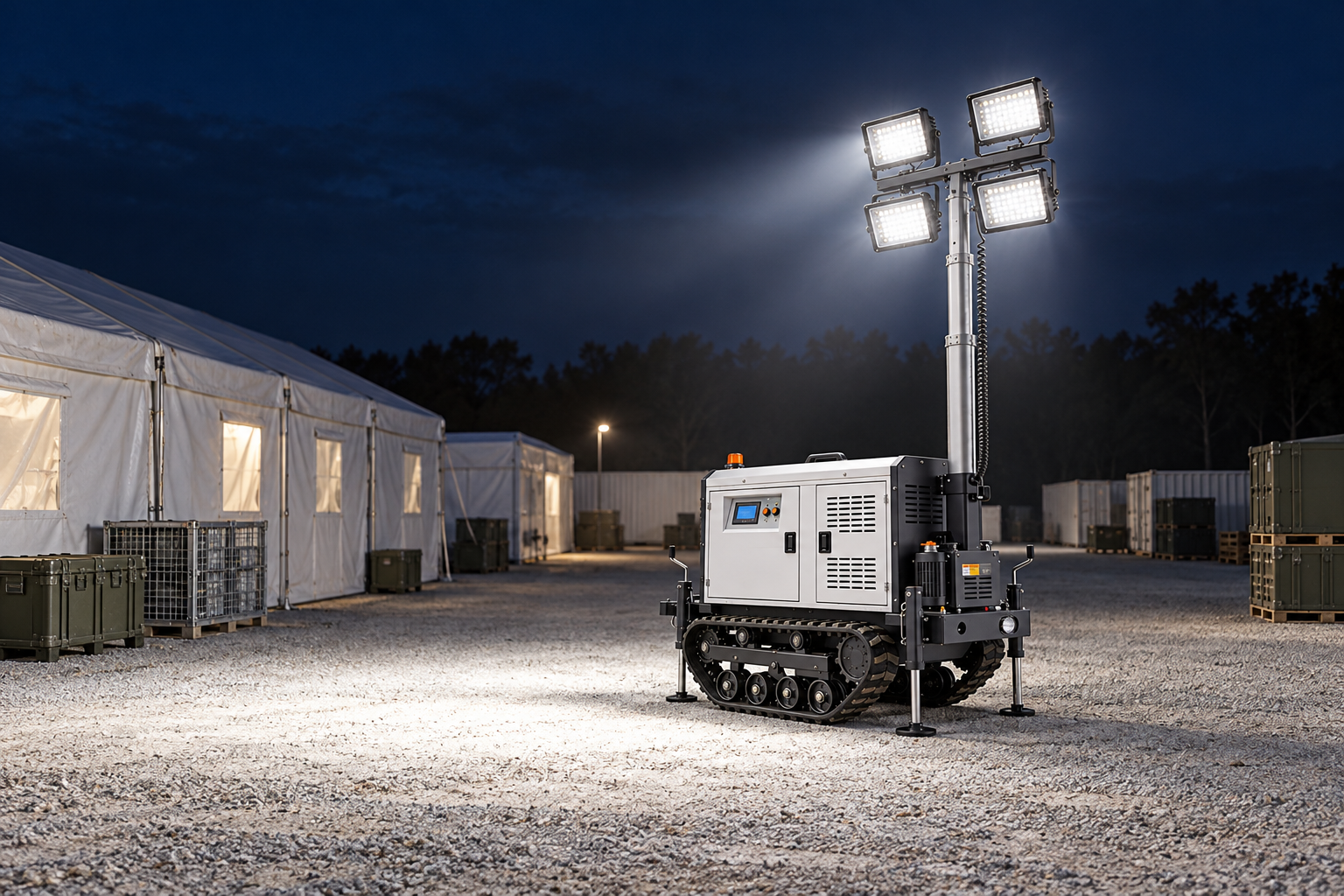
Field clinic lighting needs separate plans for clinical work, outdoor access, and support services. A mobile area-lighting tower may help with an accepted exterior route, supply receiving point, or equipment service area. It does not automatically meet the requirements of examination, surgery, diagnosis, or emergency medical equipment. Begin with the clinic team's layout and declared operating scope, then assess visibility, glare, power, and interruptions for the exterior functions. This guide addresses outdoor logistics around a temporary medical site, with clinical lighting and medical decisions retained by the responsible healthcare team.
Establish the boundary between exterior and clinical lighting
Ask the clinic lead to identify which areas are public access, staff-only service, supply receiving, and clinical care. The arrangement must remain understandable after dark. An exterior tower illuminating a doorway should not be described as a substitute for the equipment and lighting accepted inside that space. The people responsible for care determine clinical requirements independently.
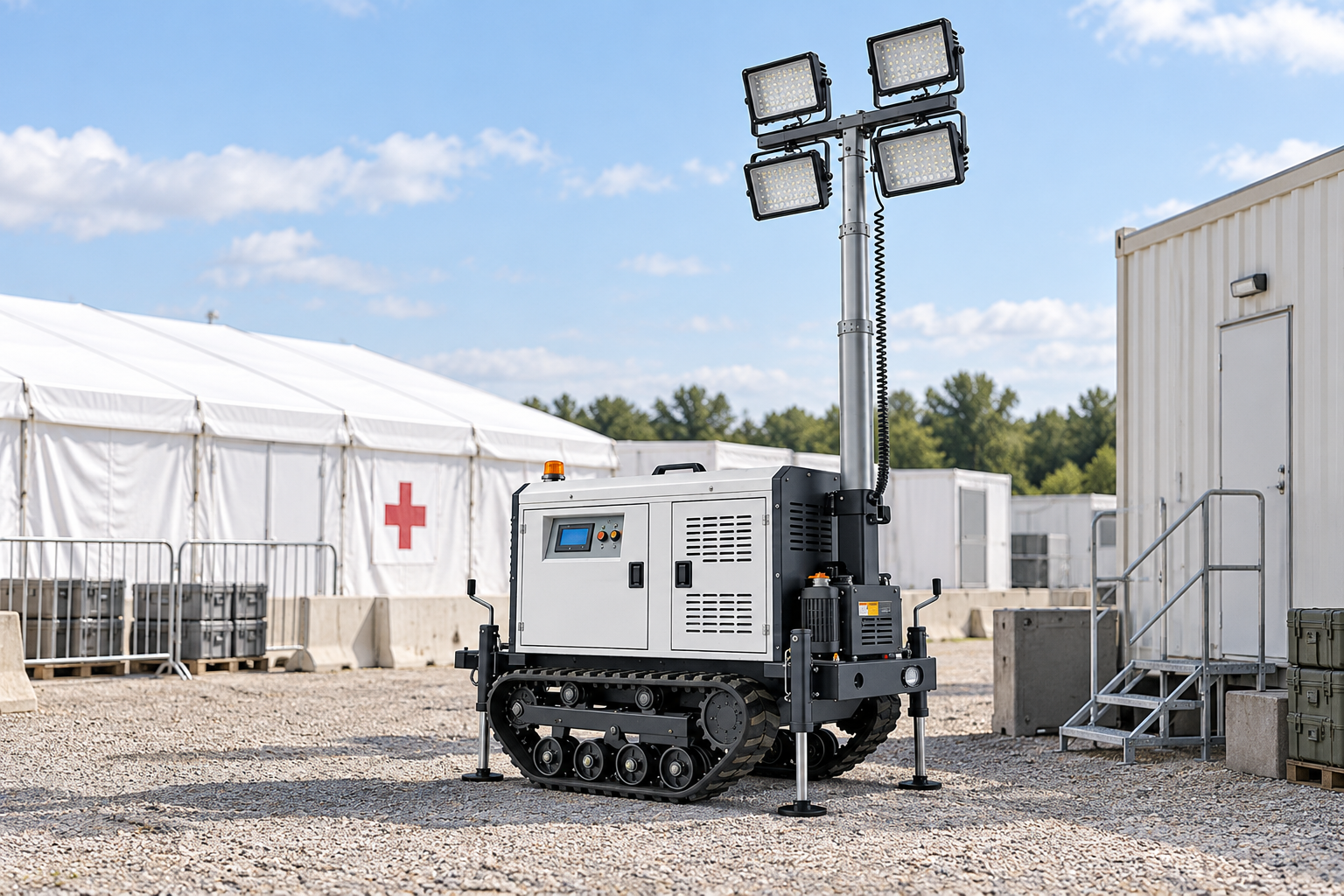
WHO's emergency medical team resources provide the organizational context for declared capabilities and coordinated deployment. They do not endorse the tower pictured here. Use that distinction when writing the supplier brief: the requested equipment supports specific exterior tasks, while the medical team defines the spaces, service conditions, and separate lighting necessary for its own work. This prevents a broad claim about hospital lighting from entering a temporary-site procurement document.
Trace the arrival route from the actual drop-off point
Start with the accepted vehicle drop-off and the route to the entrance designated by the clinic. Check changes in level, turns, barriers, and signs under the developed site arrangement. Consider people approaching slowly, being accompanied, or using the access provisions specified by the site team. Lighting should support that accepted route without introducing support legs or connections into it.
Observe the route from the user's direction of travel rather than only from beside the tower. A brightly lit entrance can coexist with an obscured approach behind a parked vehicle. Identify where the next decision point becomes recognizable and where a person faces a lamp directly. Any accessibility assessment belongs with the responsible site team; more light alone does not establish that a route meets the required access provisions.
Keep supply handling separate from public movement
Deliveries may include boxed equipment, consumables, and service materials. Confirm the receiving point and the way supplies move from it to the clinic. Evaluate lighting while a representative delivery vehicle and handling arrangement are present. The vehicle body or open door can obscure a task that appeared clear during an empty-site demonstration.
Avoid extending the handling space into the accepted public route for the sake of a brighter working position. Review tower placement with the clinic's logistics team and keep the service envelope clear. A late delivery should not require moving the tower without approval. Record the accepted vehicle orientation and any local task lighting so the incoming shift can reproduce the arrangement without improvising around arriving patients or visitors.
Evaluate labels and checking tasks at the receiving point
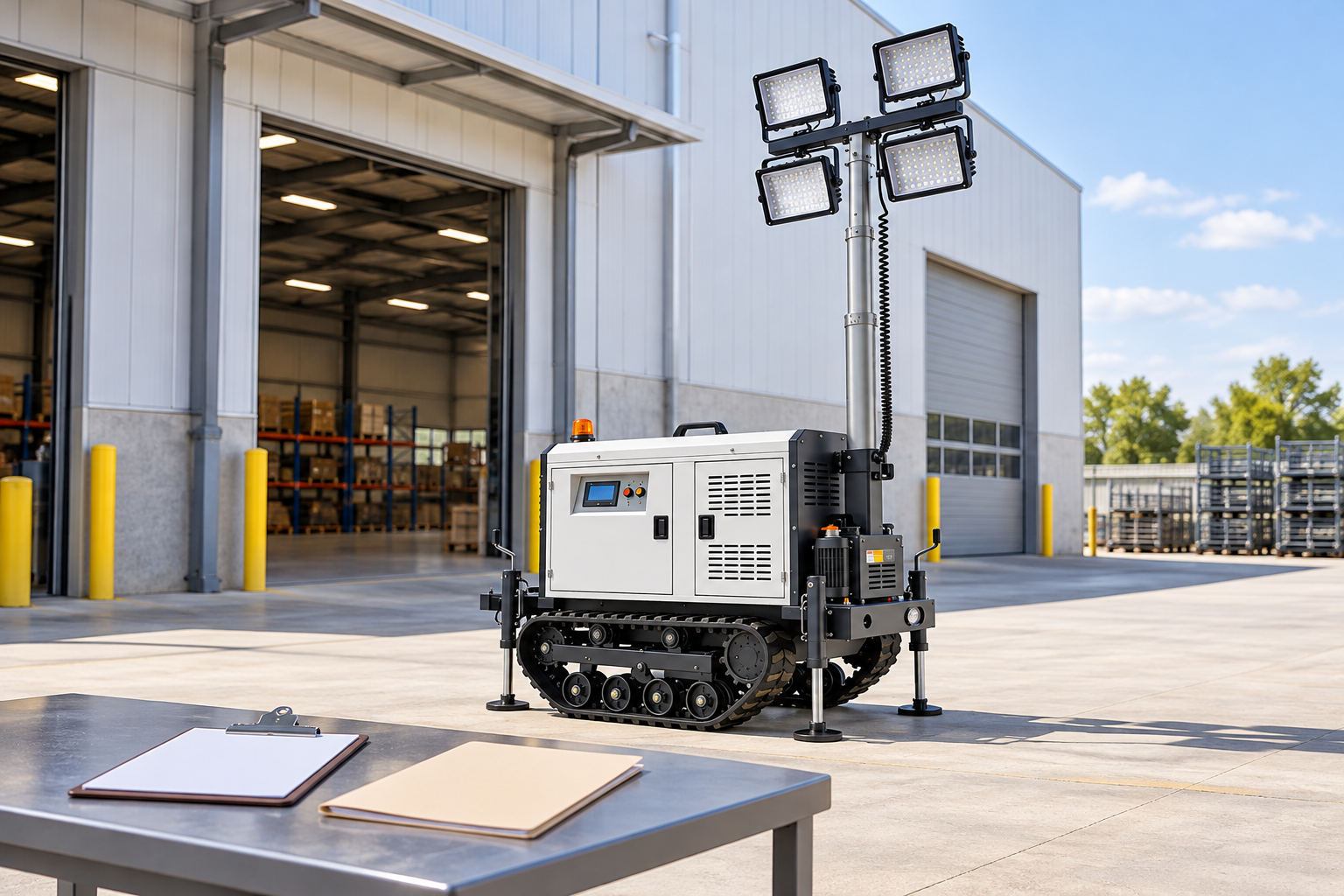
Staff checking deliveries need to see the information relevant to their own acceptance process. Describe the location, orientation, and working position of those checks in the lighting brief. A general floodlight arrangement may create shadows from boxes, case lids, or people. Check whether the actual work can be performed at the accepted position rather than relying on a photograph of illuminated storage.
Clinical identification, color assessment, and medical procedures require separate healthcare review. Do not infer suitability for those tasks from a tower's LED description or a nominal color temperature. For exterior logistics, document what the receiving check includes and what remains outside the scope. Where the task is not adequately supported, use an accepted task-light arrangement or adjust the layout with the responsible team.
Protect entrances from glare and reflected light
Observe an entrance while staff work inside and people approach from outside. A beam aimed toward an opening can cause reflections on glazing, signs, or equipment and can enter an occupied space. Review lamp direction with clinic personnel, including the views from waiting and reporting positions. Exterior output should support the intended task without creating avoidable disturbance at a neighboring function.
Recheck after tents, partitions, or parked vehicles change position. The material and orientation of those surfaces affect what people see, even when the tower remains in the same place. Record the accepted aiming rather than leaving the lights at an unexplained setting. This makes a service visit or a later repositioning easier to review and prevents the next shift from assuming that every visible bright area was part of the original scope.
Select an equipment position that remains serviceable
Review ground, approach, full support footprint, and service access before raising the mast. The competent site assessment and the exact operating instructions determine whether the proposed position can be accepted. A tracked chassis does not demonstrate bearing capacity or permission to use a surface near drainage, pavement damage, or buried services.
Keep equipment recovery and maintenance outside patient access and clinical working areas. The operator needs space to reach controls and connections without passing through restricted functions. Consider how the site will look once deliveries, waste collection, and staff vehicles are present. A maintenance plan that depends on clearing a critical access route during each service visit is a layout problem that should be resolved before procurement or deployment.
Record acceptance by exterior function
This original qualitative table separates exterior tasks from clinical approval. WHO's emergency medical team guidance provides coordination context, and ADA emergency-planning material provides access context. Neither source assigns the pictured tower a clinical rating or supplies illumination values for these tasks.
| Fonction extérieure | Check with the responsible team | Documented boundary |
|---|---|---|
| Arrival and reporting | Approach signs and faces without direct glare | Accepted entrance and public route |
| Supply receiving | Vehicle shadows and information-checking position | Exterior logistics tasks only |
| Staff service access | Equipment footprint and connection routes | Staff-only service area |
| Overnight access | Transitions between entrance and drop-off | Functions maintained during interruptions |
| Equipment recovery | Visibility during lowering and removal | Sequence coordinated with clinic operations |
Keep power for lighting distinct from medical supply
The electrical and clinical teams must determine how medical systems receive power. An available tower connection or a generator outlet is not proof that the source is suitable for medical equipment. Document the loads and functions accepted on the lighting supply, and prevent an incoming crew from adding another load simply because an outlet is accessible.
For the exterior lighting duty, request runtime evidence at the intended setting and conditions. Include waiting periods, delayed receiving, service, and controlled recovery in the operating profile. Identify charging or fuel support and the route used to provide it. The plan should state which functions are retained during an interruption. Generic all-night claims do not establish a continuity arrangement for a temporary healthcare site.
Assess exhaust and occupied openings independently
If portable generators are used, apply CDC generator-safety guidance together with the exact equipment instructions and competent site review. Tents, trailers, temporary rooms, and partly enclosed service bays create occupied-space questions that must be assessed independently of the lighting performance. Carbon monoxide cannot be evaluated by smell or by whether the lamps remain bright.
Keep running portable generators outside occupied enclosures and review nearby openings through the responsible installation process. Do not treat a product illustration as evidence that the depicted spacing is an accepted exhaust arrangement. Integrated generating equipment needs review for its own configuration as well. Where a proposed engine-powered position is unsuitable, change the power plan rather than assuming that an open tent door provides adequate protection.
Plan interruption notices before the first overnight shift
Agree how clinic personnel will learn that exterior lighting is about to stop, be serviced, or be relocated. An operator should not make an unannounced adjustment that changes the entrance approach or receiving space. Document the contact, the permitted service window, and the function that remains supported while the main arrangement is unavailable.
Changes to the clinic layout also require lighting review. A different entrance, an extended waiting area, new parking, or another supply route can invalidate earlier observations. Keep the lighting record with the current site plan. The aim is a controlled exterior service that remains understandable across shifts, with explicit limits, rather than a tower left running while the healthcare site evolves around it.
Verify after dark with representative activity
Inspect the accepted public and staff routes, the receiving point, and the equipment service area in their operating condition. Include expected vehicles and stored material. Ask the responsible users to identify glare, obscured signs, or shadows at actual tasks. Where measurements are required, the site team defines the instrument, plane, locations, and criteria; this article does not prescribe a clinical or exterior illumination threshold.
Correct each issue and repeat the affected check. Record the mast setting, aiming, power mode, surrounding layout, and functions assessed. Note any area that remains outside the approval. A photograph of bright pavement cannot prove that a sign, label, or route is usable from the relevant direction. The final record should help the incoming staff recognize a changed condition without relying on the previous operator's memory.
Specify exterior support equipment accurately
Provide suppliers with the outdoor functions, operating profile, accepted footprint, access restrictions, and service arrangements. Request configuration-specific drawings, instructions, maintenance details, and photometric information where relevant. Keep clinical lighting specifications and medical equipment power requirements under their own review. The supplier should know exactly what its proposed tower is being evaluated to support.
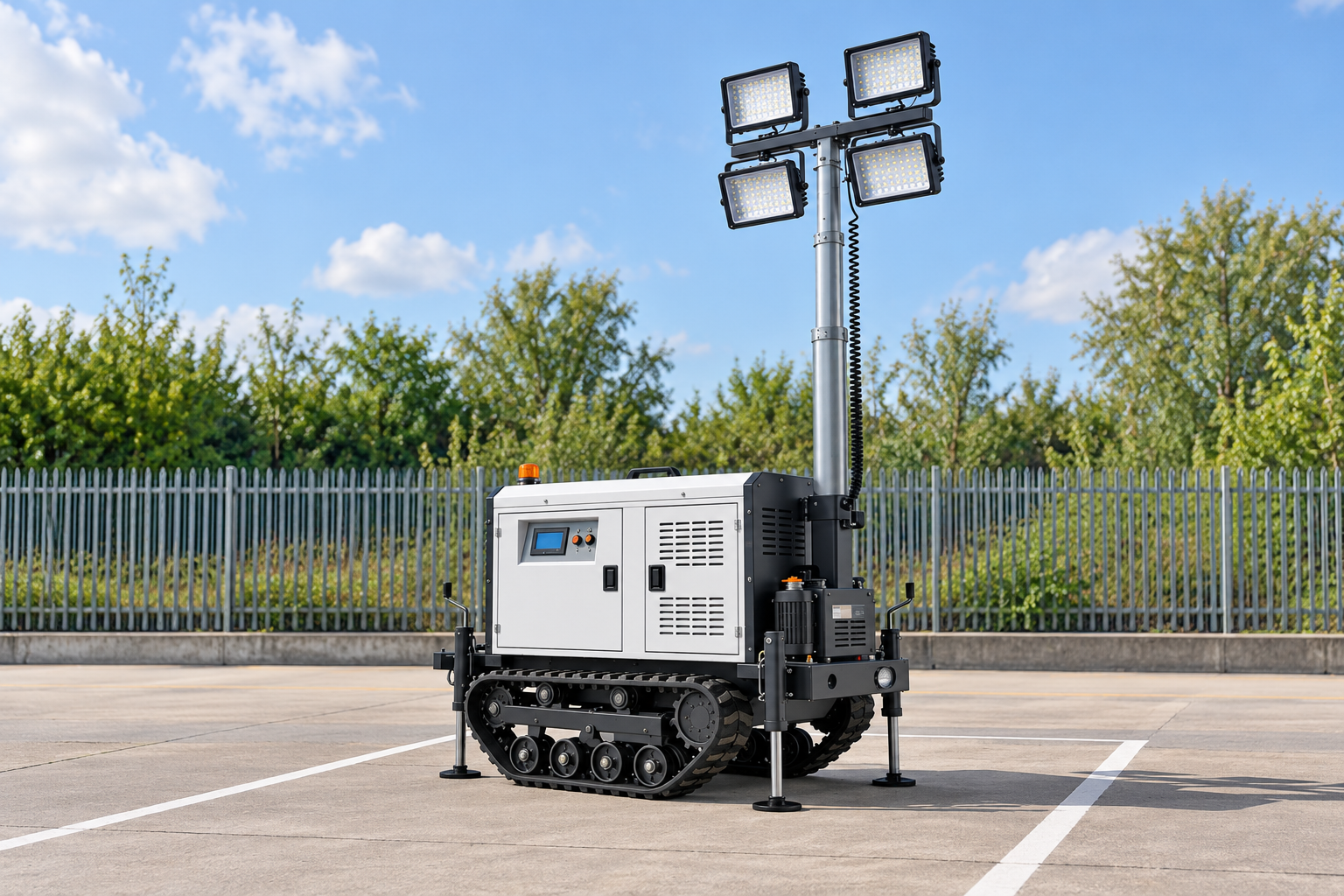
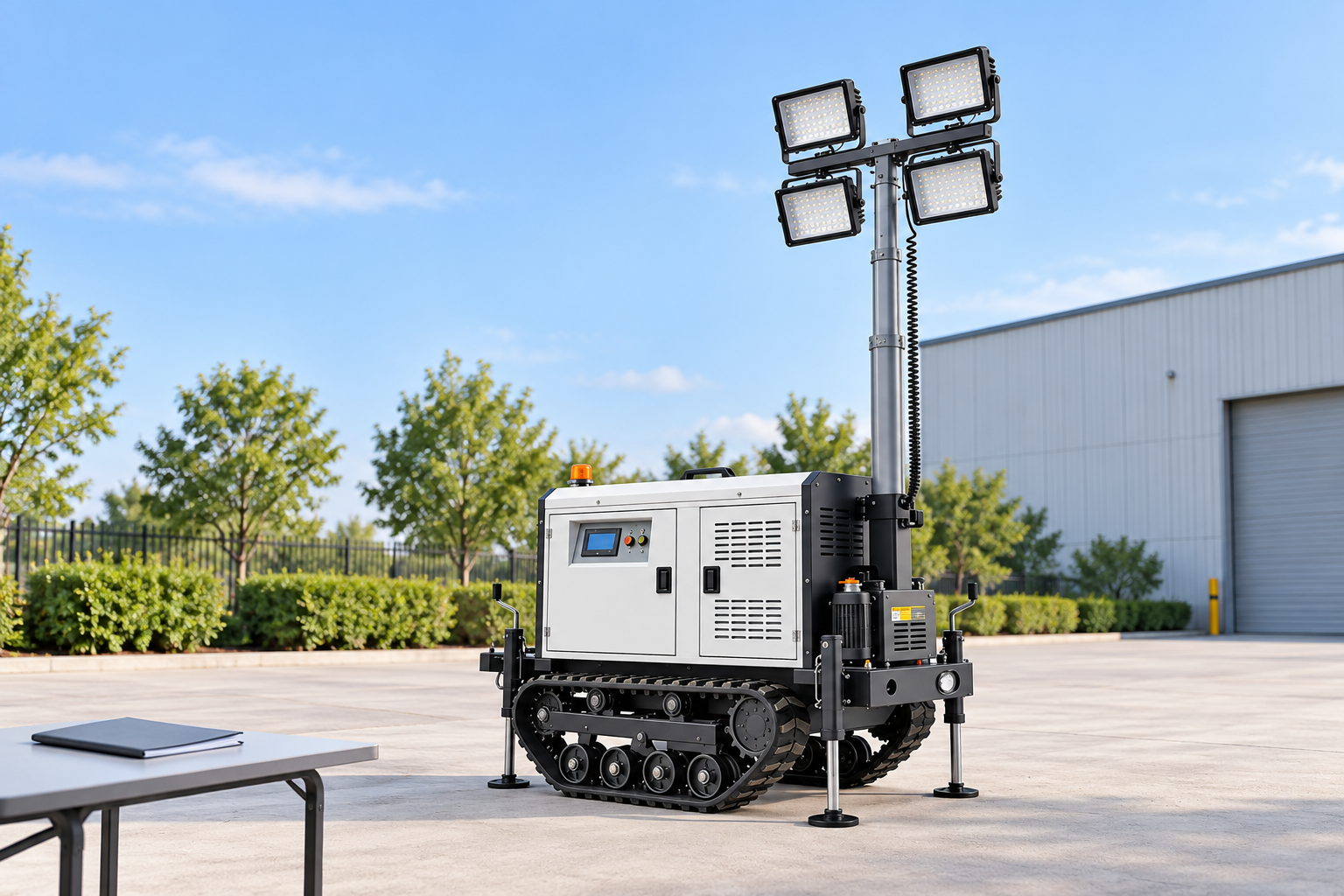
The Keyyou tracked tower page identifies the visible equipment format for discussion. Confirm the offered model's lamp arrangement, power system, support envelope, and limitations directly. The illustrations are product-reference-based views, not evidence of clinical acceptance, certified healthcare performance, or a particular runtime. Use documentation and the responsible site's acceptance process to connect the purchase with a clearly bounded exterior role.
Planification des équipements et guides supplémentaires
Discutez de la configuration exacte proposée avec le Keyyou a recruté une équipe de produits pour les tours mobiles. Utilisez le guide pour tour de lumière mobile Pour le contexte plus large de l’équipement, consultez alors Planification de la suppression des reflets et maintenance de tour d'éclairage pour des décisions complémentaires.
Éducation à la sécurité des générateurs
Cette vidéo du CDC explique les précautions à prendre contre l’oxyde de carbone pour les générateurs portables. Elle s’inscrit dans le cadre de la discussion sur la planification de l’alimentation électrique évoquée ci-dessus et ne certifie pas la tour illustrée, ne définit pas ses caractéristiques techniques ni n’approuve l’installation proposée. Suivez les instructions exactes concernant le matériel et la vérification sur place nécessaires pour tout système de production intégré.
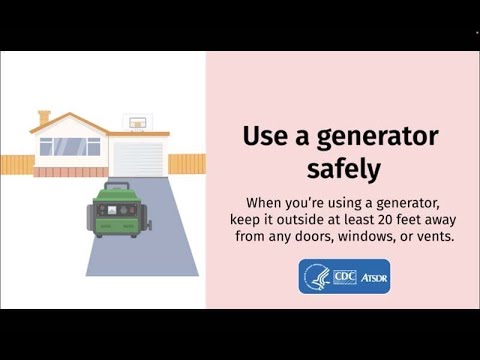
Consultez le CDC : utiliser un générateur de manière sécurisée.
Foire aux questions
Can a tower replace examination or surgical lighting?
Do not assume that it can. The healthcare team determines the lighting needed for clinical work and the accepted equipment for that scope. This article discusses outdoor access and logistics support. An LED description or a brightly illuminated entrance does not establish clinical suitability.
May medical equipment use the exterior lighting supply?
Only a separately documented and accepted arrangement can authorize additional loads. The responsible electrical and healthcare teams determine medical supply requirements. Keep the exterior lighting scope explicit, and do not infer compatibility from an accessible outlet or an unverified claim about the tower’s power capability.
Which clinic changes require another exterior check?
Review lighting when entrances, public routes, receiving points, tent layouts, or parked vehicles change. Recheck glare, shadows, access, and tower service space in the developed layout. Notify the clinic before service or relocation and record the exterior functions retained during an interruption.
Sources de référence et portée
Ces références appuient le contexte organisationnel, des tâches, de l’accès ou de la sécurité du générateur décrit ci-dessus. Elles ne soutiennent pas l’équipement Keyyou ni n’établissent ses performances, sa durée de vie, sa certification ou son acceptation sur site. Le tableau de décision est un outil de planification qualitative original ; les critères exacts doivent être fournis par l’équipe responsable.