
Coût total d'exploitation d'une tour de lumière : calculer les coûts et tester les hypothèses
Calculez le coût total d'exploitation de la tour de lumière en utilisant des données documentées concernant l'acquisition, les coûts énergétiques, les services, le déploiement, les temps d'arrêt et la valeur résiduelle, avec des contrôles de sensibilité.
Light tower total cost of ownership is the cost of obtaining, deploying, operating, maintaining, and eventually disposing of a tower over a defined service period, after allowing for its expected residual value. A purchase price comparison alone misses energy, transport, labor, repairs, and the cost of equipment being unavailable when it is needed. Build the calculation around an actual duty schedule and configuration, keep recurring costs separate from one time costs, and test the assumptions. The result should be a transparent decision model, not a promised saving based on an undocumented fuel rate or a supplier headline.
Define an equivalent service before comparing options
Start with the lighting task: work locations, task periods, required coverage, expected moves, and operating constraints. The responsible project team must establish the lighting and deployment requirements. Two towers are not equivalent merely because both have several LED lamps. Different supplied configurations may serve different layouts, depend on different energy sources, or require different deployment and support arrangements.
Choose a comparison period and explain why it fits the decision. A short project, a rental fleet, and a permanent support operation may use different horizons. State whether the model uses nominal spending or discounted cash flows and use one consistent method throughout. Do not compare a discounted purchase option with an undiscounted rental total. If financial assumptions such as discount rate or tax treatment affect the decision, obtain the appropriate project basis rather than inventing a universal rate.
Build the model from identifiable cost categories
A simple undiscounted model is total ownership cost equals acquisition and setup plus energy plus routine service plus repairs plus deployment and administration plus defined interruption cost, minus residual value. Use a consistent currency and include costs over the same period. This is an accounting structure for the comparison; it is not a product performance formula or an assurance that each category can be forecast precisely.
Separate fixed costs from costs that depend on hours, moves, events, or calendar time. A transport charge may occur once per deployment, while a service activity may have an hour based or calendar based trigger. Do not multiply every cost by operating hours. Record the calculation rule beside each item so another reviewer can reconstruct the total and identify a duplicated or missing charge.
Match acquisition scope to the offered configuration
Use the actual quotation and included scope. List the tower, required accessories, delivery, setup services, documentation, training, and any separately purchased installation. Compare like for like contractual scope before calculating a lifetime difference. An apparently lower equipment price may simply exclude delivery or a required accessory, while a higher offer may include a service that the other option prices separately.
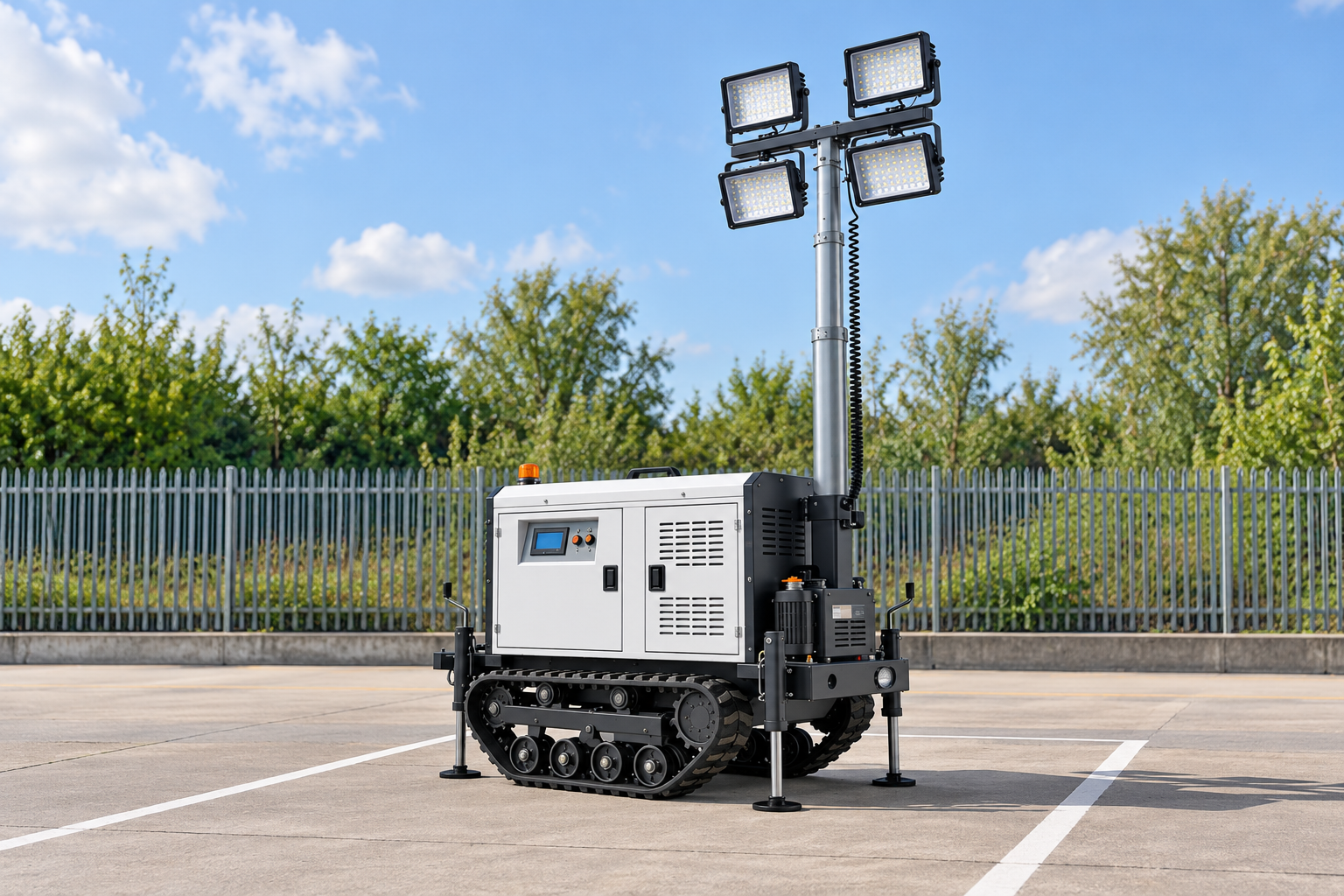
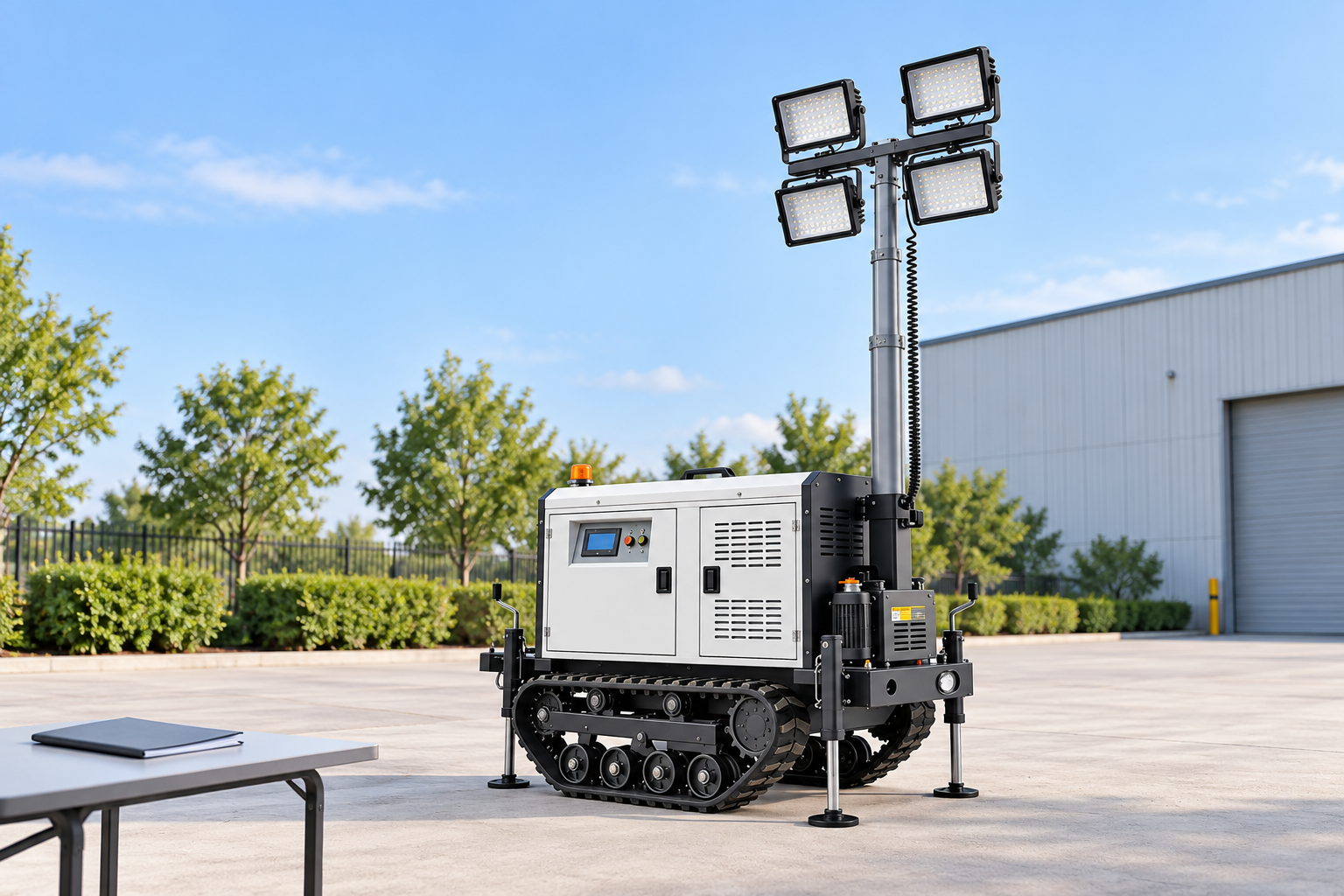
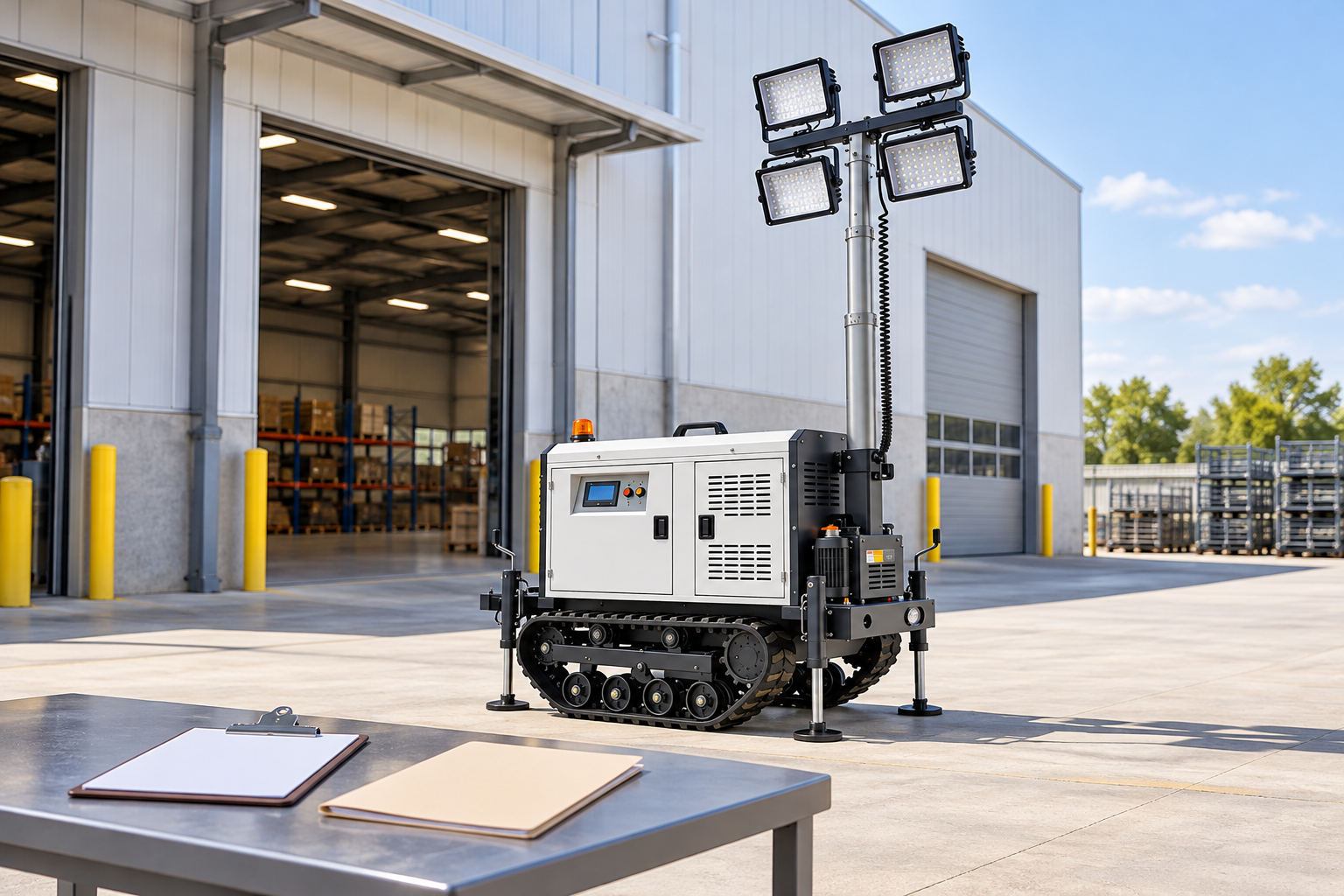
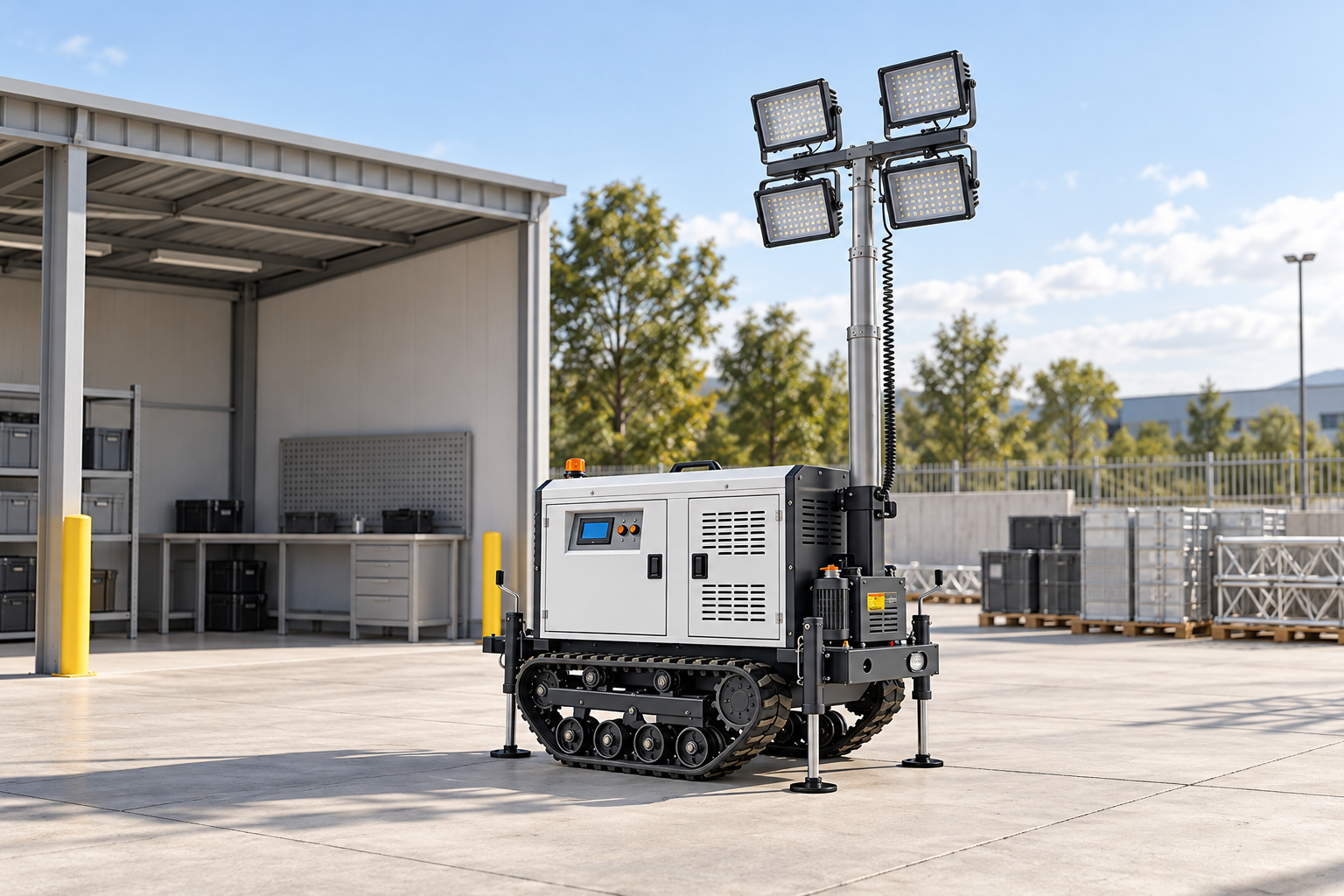
The illustrated Keyyou tracked product has a white enclosure, crawler chassis, four square lamps, a silver mast, and support legs. The photograph helps identify the product family, but it does not establish the engine, battery, source, warranty, service interval, or transport cost for an offered unit. Obtain configuration specific pricing and documents. Do not assign hidden product features or a presumed fuel saving to the reference image.
Estimate energy with a documented duty schedule
For a combustion powered arrangement, a basic fuel cost estimate is operating hours multiplied by a verified average fuel rate for the defined operating condition and by unit fuel price. Hours are in hours, rate is in liters per hour or gallons per hour, and price must use the matching unit. The result has the currency unit of the price input. Do not mix liters with a price per gallon or assume lamp wattage alone determines generator consumption.
For a documented electrical charging arrangement, a simple purchased energy estimate is grid energy in kilowatt hours multiplied by the applicable unit energy charge, plus any separately relevant charges. Establish where that energy is measured and which losses or other loads it includes. A battery capacity label does not directly establish grid energy purchased for a shift. Solar availability, storage operation, and any backup generation require configuration and site specific evidence; avoid assuming all nightly demand is free solar energy.
Use an example that exposes assumptions
Consider an illustrative calculation with 800 operating hours, an assumed consumption of 0.6 liters per hour, and an assumed fuel price of 1.20 currency units per liter. Fuel volume is 800 multiplied by 0.6, or 480 liters. Fuel cost is 480 multiplied by 1.20, or 576 currency units. These numbers are arbitrary arithmetic inputs, not Keyyou specifications, measured consumption, market prices, or a recommended duty schedule.
If the illustrative rate changes to 0.9 liters per hour while the other inputs stay fixed, the calculation becomes 720 liters and 864 currency units. The increase is 288 currency units under these assumptions. That difference demonstrates sensitivity to an input; it does not demonstrate a product saving. Replace every assumed value with appropriate evidence, retain the measurement conditions, and distinguish uncertainty in the fuel rate from uncertainty in future operating hours and price.
Add maintenance without duplicating repair allowances
Use the supplied maintenance documents and actual service arrangements to identify routine tasks, triggers, parts, consumables, and labor. Explain whether a quoted service package covers those items. A calendar inspection and an hour triggered service may both apply; the responsible maintenance plan must determine the actual rule. This article does not supply a universal interval or claim that the illustrated tower has a particular component schedule.
Keep foreseeable routine service separate from corrective repairs and uncertainty allowances. If a service contract includes a particular repair scope, do not charge the same item again as an independent allowance. Equally, do not assume that a warranty covers transport, replacement equipment, consumables, or every interruption. Read the actual terms and describe exclusions that materially affect the comparison. DOE operations and maintenance material supports disciplined records and planning rather than an invented failure rate.
Include deployment and safe work costs
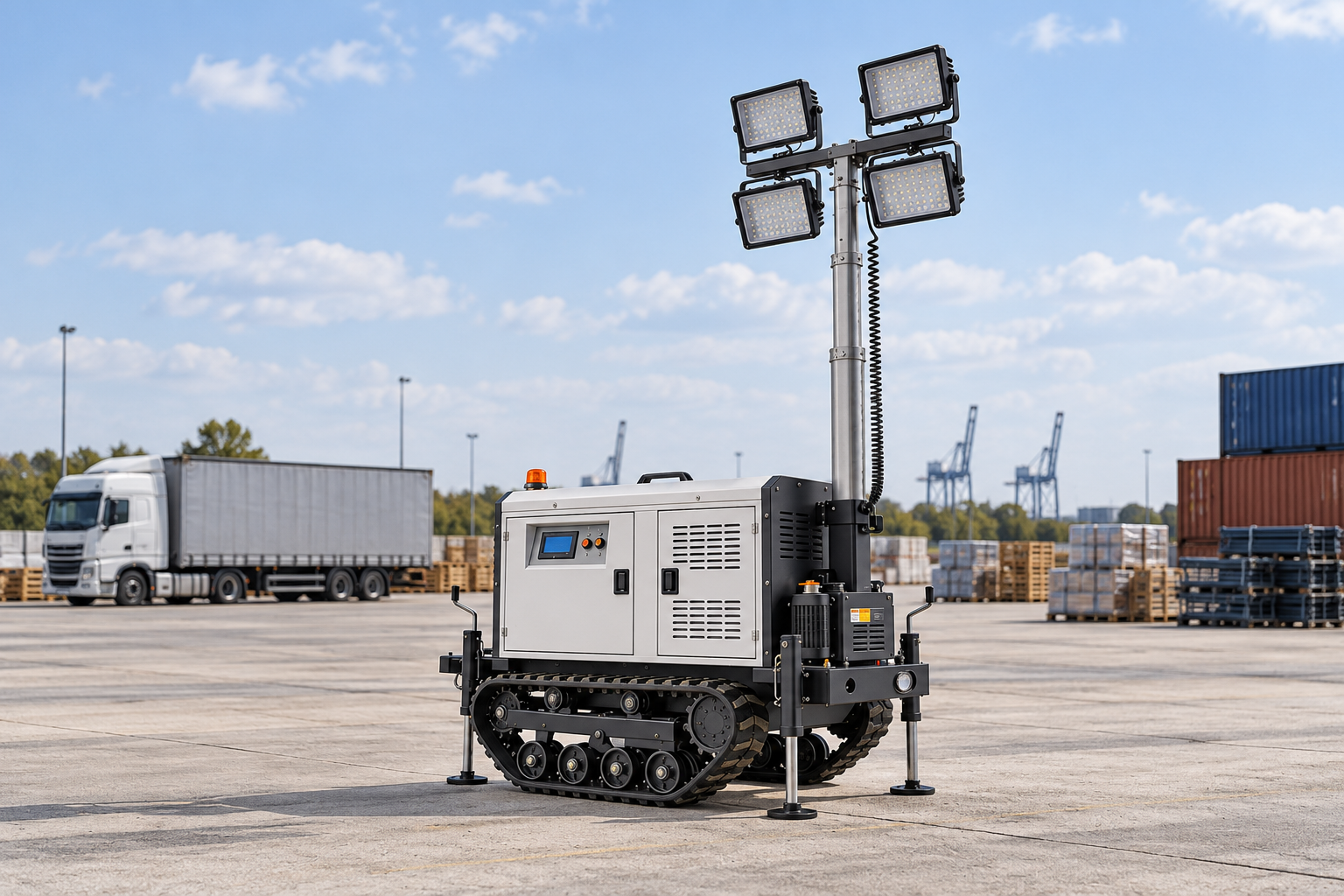
Record transport, handling, bay preparation, relocation, inspections, and the personnel required for the actual deployment method. The tower chassis shown in a product image does not establish a permitted handling method, vehicle requirement, or movement cost. Use the supplied procedures and responsible logistics assessment. A model that assumes every move is free may be unsuitable for a project with frequently changing work locations.
Where an authorized running activity involves a combustion generator, include the operational arrangements needed to manage exhaust exposure. CDC guidance identifies carbon monoxide hazards; it does not establish a cost per deployment or approve a location. Include necessary planning and work costs using the actual operating scope. A cheaper model cannot justify omitting a required inspection, qualified work activity, or safe deployment arrangement.
Keep availability cost separate from utilization
Utilization describes how the asset is used under a defined measure. Availability describes whether it can be used when required. Define both before adding a downtime cost. A tower parked without a scheduled task is not necessarily failed, and an operating hour counter does not reveal whether the lighting service was adequate. Use records that distinguish idle time, scheduled service, faults, and lack of an accepted deployment area.
Only add an interruption cost when the project has a defensible consequence and calculation basis. Examples may include documented replacement rental or an agreed standby arrangement. Do not insert a speculative production loss simply to make a preferred option look attractive. Check whether the same replacement cost already appears in another budget line. Present uncertain consequences as scenarios rather than as guaranteed losses.
Organize inputs in a reviewable cost table
This original qualitative table identifies the evidence required for a cost model. It contains no supplier performance guarantee or market price. Primary references below support energy and maintenance context; use quotations, supplied instructions, invoices, and project records for the actual financial inputs. Retain a source and date for each important assumption.
| Cost item | Input and unit | Evidence and main uncertainty |
|---|---|---|
| Acquisition and setup | Currency per complete offered scope | Quotation, included items and separately required services |
| Combustion energy | Hours, volume per hour, currency per volume | Configuration specific rate, duty and future price |
| Électricité achetée | Kilowatt hours and applicable charges | Meter boundary, tariff and documented charging arrangement |
| Routine service | Events, labor and consumables | Supplied triggers, service scope and actual rates |
| Corrective repair | Defined scenarios or documented allowance | Coverage, historical relevance and excluded costs |
| Déploiement | Moves and cost per approved movement | Routes, equipment, personnel and accepted handling method |
| Interruption | Defined event consequence in currency | Actual replacement requirement and double counting check |
| Residual value | Currency at the end of the model period | Condition, market assumption and disposal or sale costs |
Test the decision rather than a single total
Calculate a base case and plausible alternative cases for the inputs that drive the outcome. Change operating hours, energy price, maintenance scope, transport frequency, and residual value using documented ranges or explicitly labeled assumptions. Keep the comparison service equivalent. A lower operating cost option may still require an upfront cost that is difficult to recover during a short project; the model should show that relationship openly.
For a simple undiscounted incremental break even calculation, divide an additional upfront cost by the annual recurring saving, using matching currency units and a consistent service basis. The result is in years. If the saving is zero or negative, that formula does not produce a useful positive recovery period. It also ignores timing, financing, tax effects, changing duties, and residual differences. Use a more complete project model where those effects matter, and never turn an assumed break even result into a guaranteed payback promise.
Ask for the evidence needed to update the model
Before requesting a quotation, provide the expected lighting service, operating schedule, movement pattern, environment, and intended model period. Ask for the offered configuration, included scope, relevant energy evidence and conditions, supplied maintenance documents, service terms, and transport information. Distinguish a supplier estimate from a measured record and preserve each input's stated limitations.
After deployment, compare invoices and operating records with the original assumptions. Update the model when duty, layout, configuration, prices, or service arrangements change. The practical value of total cost of ownership is its traceable calculation and the questions it exposes. A transparent model can show where evidence is missing and when an option fits the project. A precise looking total assembled from undocumented rates cannot establish which tower is the better purchase.
Equipement et planification complémentaire
Utilisez le Page produit de Keyyou dédiée aux tour de lumière to identify the relevant product family and the Guide de planification pour tour de lumière mobile to define service needs. Compare commercial scope with quotation comparison and build service inputs with maintenance interval documentation.
Sécurité des échappements lors des contrôles d’utilisation autorisés
The CDC video explains carbon-monoxide hazards associated with combustion generators. It supports the exhaust-safety planning included in deployment and safe-work costs, only for a supplied combustion configuration. It does not provide fuel consumption, maintenance prices or a payback calculation.
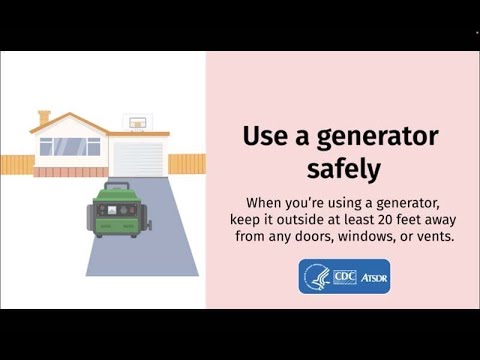
Regardez l'utilisation d'un générateur de manière sécurisée.
Foire aux questions
Does the fuel example describe Keyyou consumption?
No. Every numerical input in the example is hypothetical and demonstrates units and arithmetic only. Replace it with verified configuration-specific evidence and the actual project duty and energy price.
Can battery capacity be used directly as purchased charging energy?
No. Establish the measurement boundary, charging arrangement, losses and included loads. Battery capacity alone does not determine the electricity purchased for a lighting shift.
What if a projected recurring saving is zero or negative?
The simple additional-cost divided by annual-saving formula does not produce a useful positive recovery period. Review the equivalent service and complete project costs instead of presenting a guaranteed payback.
Sources et portée
DOE material supports maintenance and operational planning; CDC material supports the separate combustion exhaust-safety discussion. Neither establishes a Keyyou operating cost or performance guarantee. Formulas and tables are original accounting and arithmetic examples. All numerical example inputs are explicitly hypothetical, not product specifications, measured consumption or current prices; use the actual quote, supplied documents and project evidence.