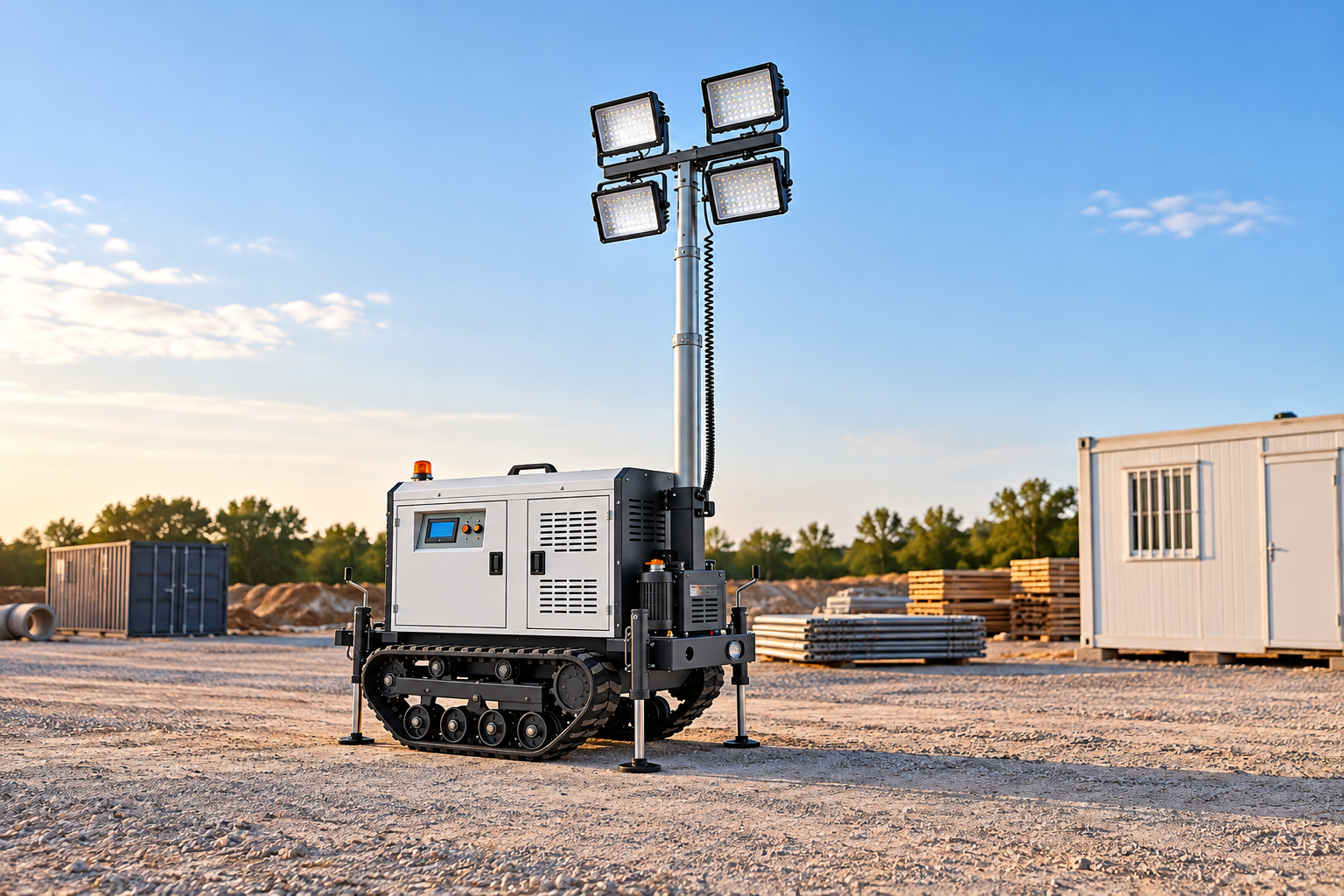

Light Tower Night Shift Handover: Transfer Conditions, Holds and Ownership
Create a usable light tower shift handover covering actual operating conditions, lighting checks, unresolved defects and named responsibility.
A light tower night shift handover should transfer the equipment’s actual condition, approved location, lighting coverage, energy position and unresolved restrictions to a named incoming person. A signature or a photograph of illuminated lamps is not enough. The incoming crew needs to know what changed during the previous shift, which conditions remain acceptable and when work must stop for reassessment. This guide focuses on continuity between operating crews, rather than initial equipment delivery or off-hire return. Use it with the site lighting plan, machine manual and local safety arrangements, adapting responsibilities to the people authorized to operate and maintain the supplied tower.
Give the handover a time, place and responsible people
Schedule the exchange so that outgoing and incoming personnel can communicate before responsibility changes. Identify the equipment by asset or serial number and confirm the work area it serves. The handover should identify the person accepting operational responsibility and the supervisor who resolves unresolved issues. A group message with no named recipient can leave everyone assuming somebody else has checked the equipment.
Arrange the discussion at a safe location where people can hear and consult the record. If conditions prevent a joint walkaround, define how observations will be checked before the incoming crew relies on them. Do not require someone to stand inside a vehicle route or beside moving equipment to complete the form. HSE guidance supports structured communication at shift change; the practical tower record below applies that principle to temporary lighting without claiming a universal legal format.
Transfer the approved position and current site layout
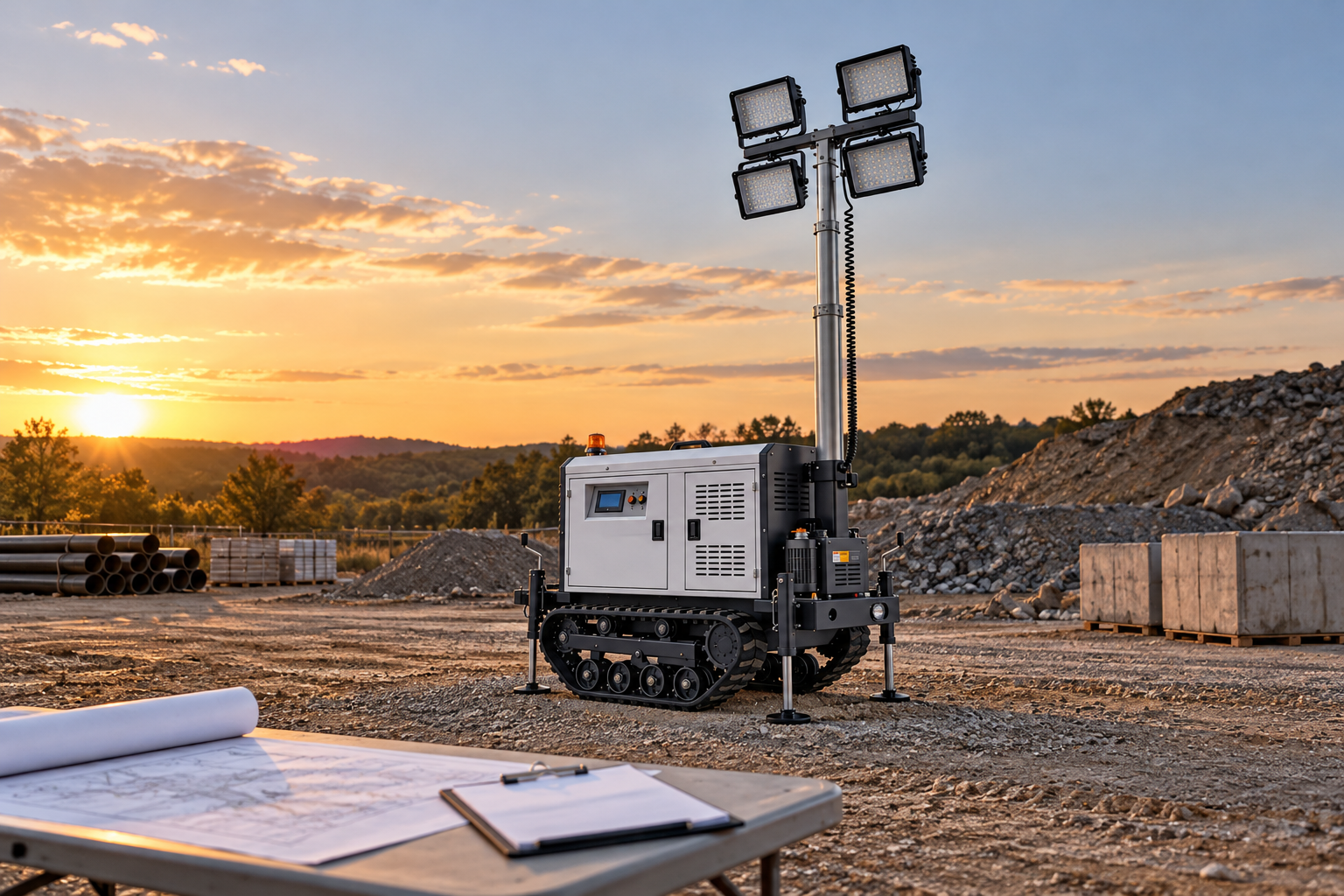
Confirm that the tower still occupies its approved position and that the surrounding area matches the lighting and setup plan. Identify changes in ground condition, barriers, nearby excavation, temporary buildings or access routes. Record whether any request to move the unit remains open. A tracked chassis can make relocation possible, but it does not remove the need to approve the new position and follow the machine’s movement instructions.
Use a current sketch or reference photograph to show the position, workface and critical routes. Mark which tower serves each area when several units are present, using asset numbers rather than vague descriptions such as the one near the gate. The first body image illustrates a position-recording task, not approval of a particular site geometry. If the position cannot be verified against the current plan, the incoming person should escalate the uncertainty before accepting unrestricted operation.
Check lighting where people actually work and walk
Look at the current tasks, pedestrian routes, access points and places where equipment movements occur. Record any dark area, shadow or glare complaint and what action was taken. A tower can have all lamps illuminated while a newly moved workface remains poorly lit. The incoming crew should understand which areas have been checked and which are waiting for a competent lighting assessment.
Do not substitute a phone photograph for a required illumination measurement. Where the lighting plan calls for readings, transfer the measurement locations, method, instrument and relevant results so they remain meaningful. A changed lamp angle can improve one task while creating glare elsewhere. Record authorized adjustments and the need for another check. If the outgoing crew could not complete the verification, retain the restriction explicitly rather than describing the lighting as satisfactory because the lamps appear bright.

State the energy position and next planned intervention
Record the observed fuel or battery indication, the time it was read and the operating mode actually in use. Distinguish a dashboard indication from a verified remaining runtime. Loads, control settings and conditions can change during the next shift. Do not promise that the tower will run until morning unless an appropriate assessment supports that claim and the necessary monitoring arrangements remain in place.
Identify who will check the energy state next and who is authorized to refuel, recharge or change a configuration. If a planned intervention could interrupt critical lighting, transfer the alternative-lighting arrangement and communication sequence. Keep refueling and charging work within their own approved procedures. A handover entry saying fuel checked should not hide an unresolved leak, an uncertain gauge or a missing charging connection. Record these as separate conditions with their own action owners.
Carry defects forward with their actual restrictions
List new faults, abnormal sounds, leaks, damaged cables, warning indications and control problems observed during the outgoing shift. Reference the original defect record or maintenance work order so the incoming crew can find the evidence. State the current restriction in plain language: out of service, awaiting assessment, or permitted only under a specific approved arrangement. Avoid vague phrases such as use carefully.
A fault should remain open until the authorized person records its disposition. Do not remove it from the handover because it did not reappear during the last hour. Similarly, do not ask the next operator to reproduce a dangerous condition for confirmation. Record what was observed, when it occurred, what immediate action was taken and who has been notified. The incoming person should repeat back the important hold conditions so both crews agree on what operation is prohibited.
Transfer isolation status without weakening protection
If maintenance or isolation is in progress, identify the work authority, equipment state and the people coordinating the job. The operating handover must not interfere with personal locks, tags or the maintenance team’s energy-control arrangements. A note in the log cannot substitute for the employer’s approved isolation transfer process. Do not accept the phrase switched off as proof that maintenance access is safe.
The lockout training video below provides background for understanding why hazardous-energy controls must survive changes of personnel. Its relevance here is the isolation-status discussion, not a demonstration of the exact tower. Before any return to service, confirm that the responsible maintenance authority has released the equipment through the required process. An incoming operator should not remove another worker’s protection or restart the machine to see whether the repair is finished. Keep the operational and maintenance responsibilities explicit.
Agree change triggers and communication routes
Identify the conditions that require a pause or a new assessment during the next shift. Examples include changed wind or weather, an altered work area, unstable ground, an exhausted energy reserve, a new defect or loss of required lighting. Use the actual limits and actions from the approved site plan and machine manual. Do not invent a wind-speed or fuel threshold to make a handover form look complete.
Record how the operator contacts the supervisor, maintenance support and the emergency response channel. Verify that the method works in the work area and that a replacement contact exists when the usual person is unavailable. The incoming crew should know who can authorize relocation, repairs and restart. This prevents informal instructions from several different supervisors creating conflicting equipment states. Include any work permit or access restriction that affects who may approach or operate the unit.
| Observed condition | Required record or check | Decision boundary |
|---|---|---|
| Unverified lighting after layout change | Name the affected route and required check | Incoming supervisor keeps restriction open |
| Open defect or warning | Link defect record, restriction and owner | Do not silently clear at shift change |
| Maintenance isolation active | Identify authorized coordinator and transfer process | Preserve protection until formal release |
| Energy intervention due | Name person, time and alternative lighting plan | Confirm communication before interruption |
This qualitative decision table is a planning aid, interpreted with the official guidance below and the applicable site procedure; it contains no equipment-specific limits.
Use a short decision record and a closed-loop acceptance
Keep the record focused on changes, current conditions and required action. The decision table below can be adapted into a shift log, but the entries must contain observations rather than prefilled approvals. For an unresolved issue, include the asset, restriction, action owner and next review point. Place urgent holds where the incoming crew will see them before the routine operating readings.
For example, a lamp angle adjusted to illuminate a delivery area may leave the pedestrian route awaiting verification. The handover should name the route, state the remaining check and record what use is restricted until that check is complete. The incoming person then confirms their understanding and accepts responsibility for the allowed operating state. If the two crews disagree, the supervisor resolves it while the safer restriction remains in place. A signature should document that exchange rather than replace it.
Review handover quality against actual overnight events
After the shift, compare incidents, unplanned stops and repeated questions with the previous handover. Look for missing information: an unexplained alarm, a moved barrier, an unassigned fuel check or an isolation hold omitted from the log. Improve the record where it failed to support a decision. Do not increase form length automatically; remove redundant entries and make critical changes easier to identify.
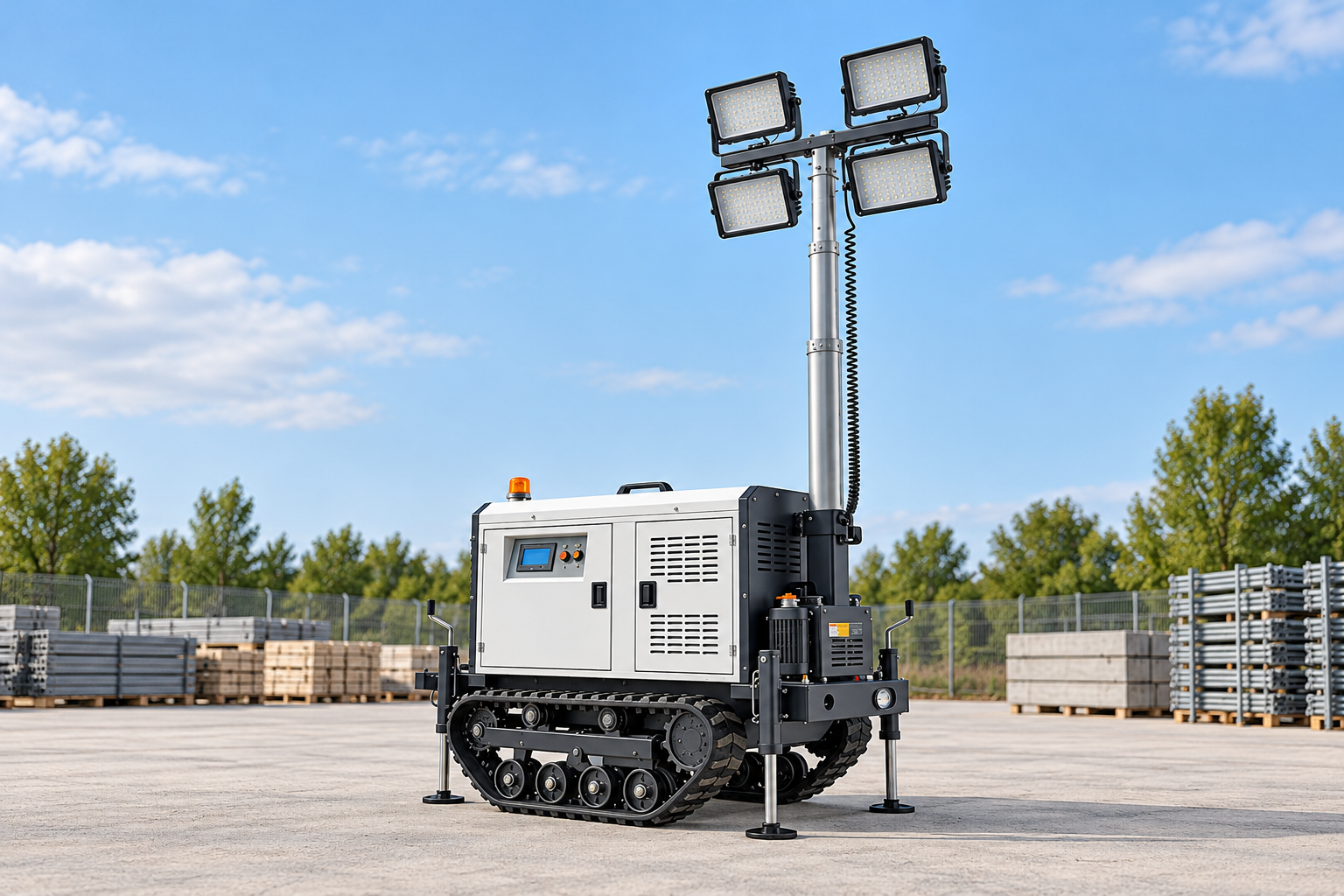
Le Keyyou tracked lifting lighting tower is an example of the visible equipment to which an asset-based handover can apply; confirm its supplied controls and limits from the actual documentation. The general operating safety, inspection checklist, controlled refueling procedure support complementary operating checks. A first customer handover establishes initial responsibilities, while the night shift exchange maintains them as work changes. Keep both records linked to the same equipment identity and preserve the latest approved condition so the next team starts from reliable evidence.
Watch the educational video on YouTube.
Questions before the next operation
How is a night shift handover different from equipment delivery?
Delivery establishes the initial supplied condition, documents and responsibilities. A shift handover transfers current operating conditions, changes, defects and action owners between crews already using the equipment. Both should identify the same asset but answer different questions.
Can an incoming operator accept a handover remotely?
Use the employer’s arrangements and verify the observations needed before relying on the tower. If a joint walkaround is impossible, define who will check the current condition. A message alone should not erase an unresolved restriction or replace required inspection.
Should an isolated tower be restarted during handover?
No restart should occur until the responsible maintenance authority completes the approved release process. The handover must preserve isolation protection and identify the coordinator. An operator should not remove another worker’s lock or treat a log signature as technical clearance.
What belongs at the top of the record?
Put urgent holds, changed conditions and actions that affect safe operation first. Then record equipment identity, responsible people and the relevant operating observations. Every unresolved item needs an owner and a next decision point so it is not lost between shifts.
Official guidance and application limits
The linked sources explain the underlying hazards and management principles. Apply the rules relevant to the jurisdiction, equipment and task; this article does not establish certification, legal compliance or technical approval.