
Light Tower Flood Damage Inspection: Quarantine Before Any Restart
Keep a water-exposed light tower out of service, document the exposure, obtain qualified assessment and require a written repair or replacement disposition.
A light tower flood damage inspection starts by keeping the machine out of service, not by trying to start it. Secure the area, prevent unauthorized operation and collect the exposure history from a safe location. A qualified assessment must decide what needs replacement, what may be reconditioned and what checks are required before release. A dry enclosure or a successful engine start cannot establish that water-exposed equipment is safe.
This guide covers the decision process for a tower that may have encountered floodwater, storm runoff or water entering vulnerable assemblies. It is not a repair procedure or permission to open, test or energize equipment. The exact tower manufacturer, qualified electrical and mechanical personnel, and applicable local authorities determine the required work for the actual exposure.
Establish safe access before touching the tower
A flooded work area can contain electrical hazards, unstable ground, contaminated water and damaged infrastructure. Do not enter standing water to retrieve keys, operate a disconnect or photograph a label. Have the site authority establish safe access and deal with any electrical supply hazards first. A lighting shortage does not justify entering an unsafe recovery area.
Once access is controlled, identify who owns the quarantine decision. The rental desk, site supervisor and service provider should all know that the unit is unavailable for use. Prevent remote, automatic and local start according to the approved isolation method and the equipment instructions. Do not assume that removing one key controls every possible source of energy.
Arrange replacement lighting independently of the damaged unit’s diagnosis. If the recovery team needs light, place suitable equipment in a separate approved location. That removes pressure to perform a quick trial start merely because darkness is approaching. Keep the replacement tower’s cables and access route outside the affected area as well.
Record the exposure before evidence disappears
Create a timeline containing the last known normal operation, the reported start and end of exposure, and the time someone found the machine. Record whether the tower was running, plugged into another supply, charging or left in an automatic mode. Keep uncertain information separate from facts; do not turn an estimated water level into a confirmed measurement.
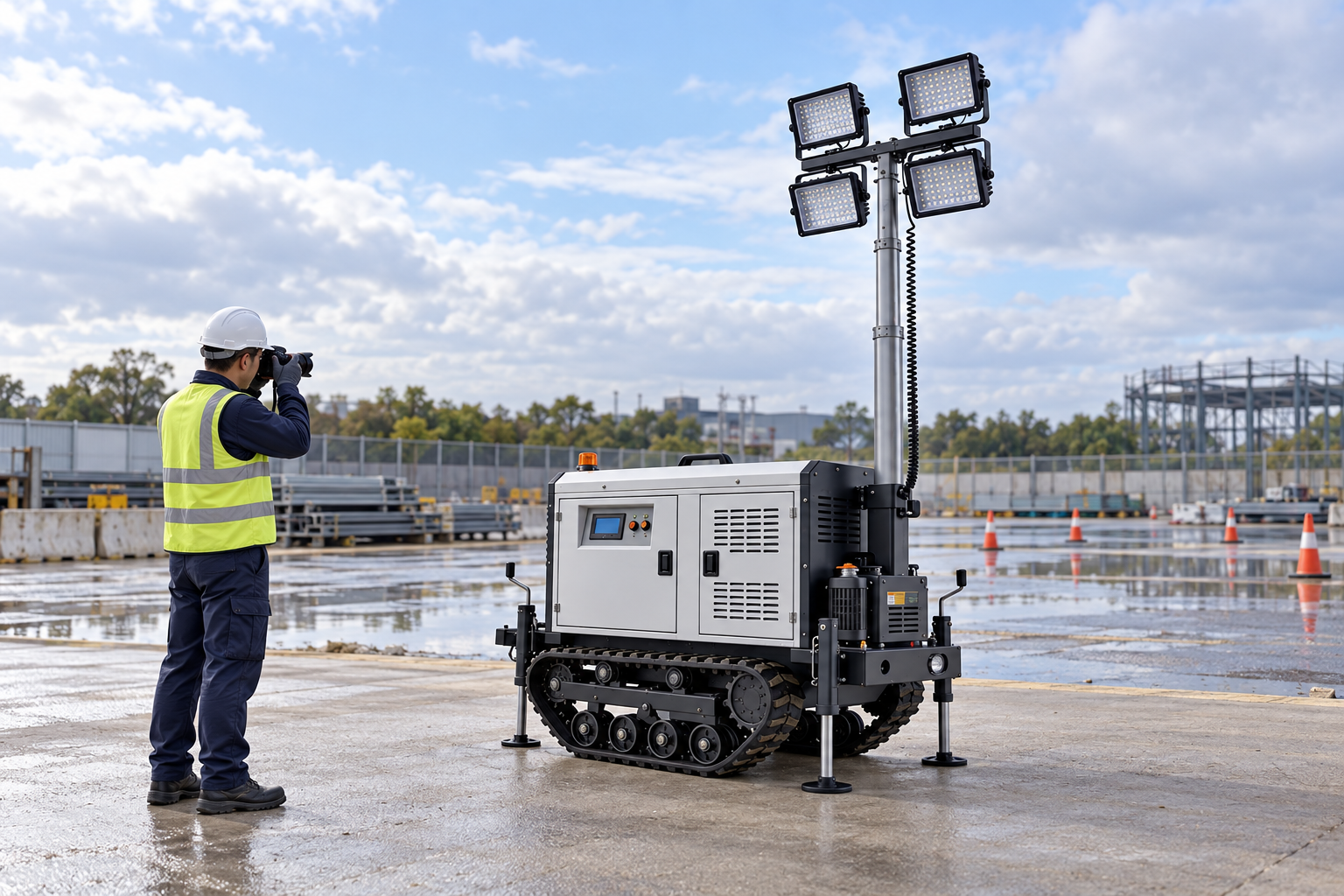
Photographs from a safe dry position can preserve visible water marks, deposits, the surrounding ground and the equipment identifier. Include wide views before close details so a service provider can understand the context. Do not open a cabinet or remove a cover simply to improve the photo set. Internal inspection belongs within the approved service process.
Record the likely water source, including salt water or possible chemical contamination if known. Preserve relevant reports from the site rather than guessing from the appearance of dried residue. Note any cleaning already performed. The person evaluating the machine needs to know which observations may have been altered before they received the equipment.
Understand why drying is not a release criterion
Texas workplace safety guidance explains that moisture and contaminants can leave electrical equipment hazardous after visible water has disappeared. Its recovery process calls for qualified evaluation and manufacturer consultation. Minnesota’s recommendations likewise distinguish ordinary submerged equipment from equipment specifically suitable for submersion. Neither source supports returning a light tower to service solely because its exterior looks clean.
Those principles matter for a tower because different assemblies occupy different heights and enclosures. Water at the tracks does not prove that the control compartment was flooded, but a clean upper compartment does not prove that lower components escaped exposure. The assessment needs evidence for each affected assembly rather than a single conclusion based on the lamp heads.
Avoid informal tests such as switching on the lamps to see whether they still work. Operation may conceal damage or create new hazards without producing useful acceptance evidence. Similarly, cleaning a connector or blowing warm air into an enclosure is not a documented reconditioning method. The manufacturer and qualified service provider must determine the proper next step.
Assign a disposition to each affected assembly
Use a component list for the exact machine. Electrical protection, control devices, lamp drivers, cables, batteries, generator equipment and other fitted assemblies may require different decisions. Their presence must be confirmed from the supplied configuration; do not assume that every tracked light tower contains the same energy system.
For each item, record exposure evidence, the applicable manufacturer instruction and the person authorized to decide its disposition. Use clear outcomes such as replacement required, specialist assessment pending or approved reconditioning with stated conditions. Avoid a single label reading cleaned and tested that hides which components were considered and which remain unresolved.
The table below is a workflow aid based on the linked Texas and Minnesota guidance. It is not a replacement-versus-reconditioning approval list. Apply the actual component requirements and the local authority’s instructions; a repair contractor’s general statement should not overrule a manufacturer’s prohibition on reuse after damaging water exposure.
| Decision stage | Required action or information | Evidence or stop condition |
|---|---|---|
| Exposure reported; extent unknown | Prevent operation and preserve the exposure record. | Named quarantine owner and equipment identification |
| Water reached electrical components | Qualified assessment determines replacement requirements and any permitted reconditioning. | Component-specific written disposition |
| Water exposure may affect engine or hydraulics | Manufacturer-directed mechanical assessment; no trial start. | Service instructions and findings for the exact assembly |
| Repair or replacement completed | Perform the approved checks before returning the unit to work. | Traceable parts, test records and authorized release |
Source basis: Texas Department of Insurance: water-damaged electrical equipment; Minnesota DLI: flood-damaged electrical equipment recommendations. Apply each source only within its stated scope.
Keep mechanical assessment separate from electrical clearance
An engine, hydraulic assembly or moving mechanism can require attention even if its control wiring is replaced. Do not crank an engine to investigate suspected water entry or actuate a mast to check whether it moves freely. Ask the manufacturer’s service organization what information it needs and which checks must occur before any controlled operation.
Mechanical evidence may include water marks, contaminated fluids observed during authorized work, damaged seals or abnormal corrosion. The service report should state what was inspected and the basis for the decision. This article does not supply fluid specifications, flushing instructions, electrical test voltages or torque settings because those must match the exact equipment and repair procedure.
Preserve the relationship between electrical and mechanical findings. A repaired control may enable a movement that another unresolved fault makes unsafe. Establish which person coordinates the final whole-machine review rather than allowing separate contractors to assume that the other trade has cleared the unit. Close every hold point before issuing a service release.
Do not treat ingress ratings as flood certification
A published enclosure rating has a defined scope and test basis. It does not automatically describe every joint, connector or compartment on the complete installed tower. Even where a particular enclosure has a relevant water test, that does not by itself establish suitability for contaminated floodwater, the actual exposure duration or seals altered by age and maintenance.
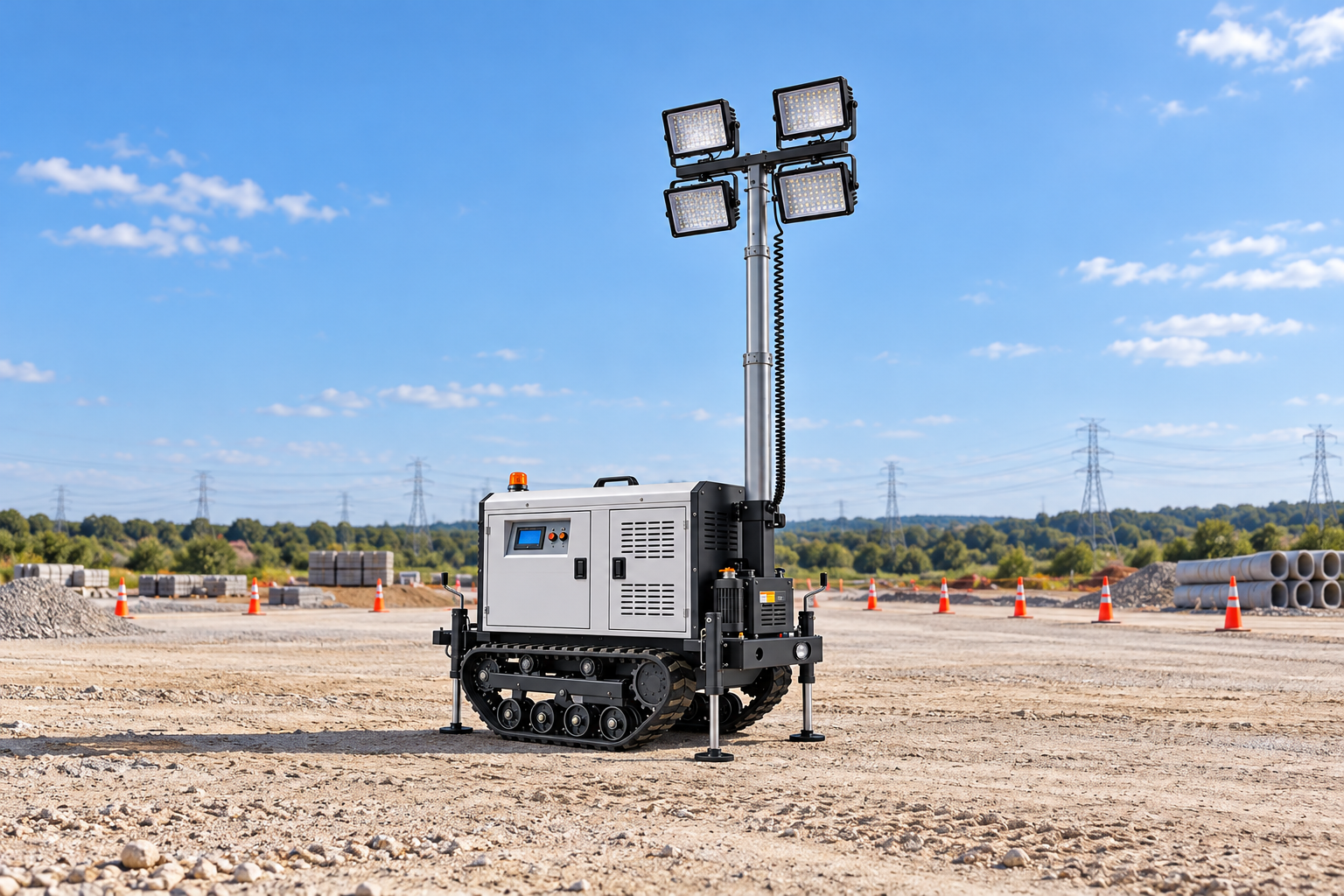
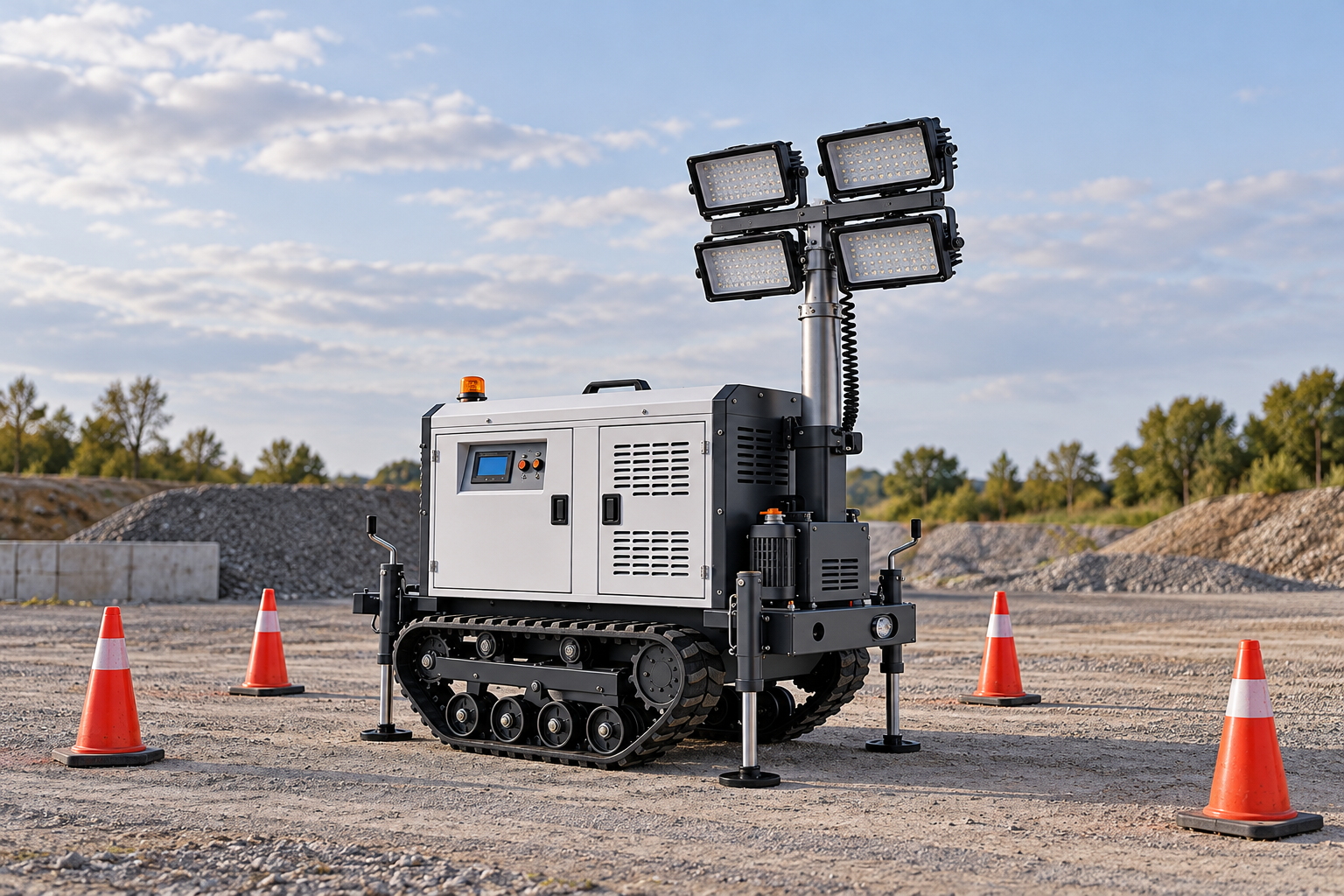
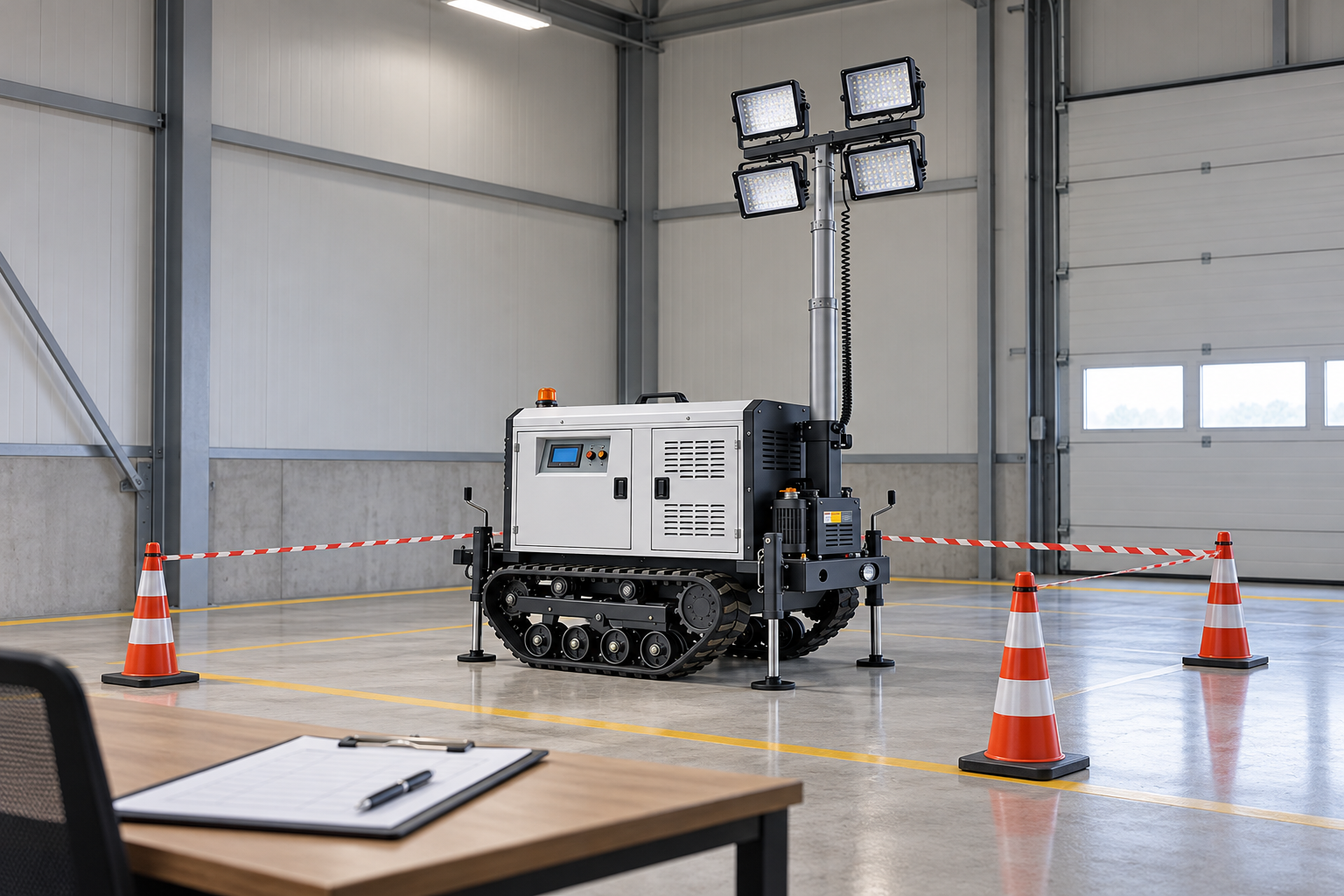
For the tracked four-lamp product linked here, the photograph is a reference for the equipment category and its visible arrangement. It does not establish submersion capability or identify internal components. Request the supplied machine’s documentation and any applicable ingress ratings directly. Do not transfer a rating from a lamp module to the generator or control enclosure.
The procurement question should therefore be specific: which assembly is rated, under what conditions, and what inspection is required following suspected water entry? Keep the response with the service file. If a proposed replacement part changes a seal, connector or enclosure arrangement, require confirmation that the completed assembly remains suitable for its intended environment.
Build a traceable repair and replacement package
Before work begins, obtain a written scope identifying affected assemblies, the required parts and the decision basis. Keep removed parts available for any agreed investigation or claim process where safe and lawful. Do not sacrifice essential exposure evidence simply to make the tower appear presentable for collection.
For replacement components, retain the part numbers, source, installation record and any required acceptance evidence. For permitted specialist reconditioning, record the procedure used and who authorized it. Ask for findings that describe the actual machine rather than a generic certificate with no serial reference or component list. Missing identity makes later maintenance and warranty decisions harder.
Set out who pays for assessment separately from who decides safety. Commercial responsibility can remain disputed while the tower stays quarantined. A hire extension, insurance notification or replacement-machine booking is not a service release. Make this distinction clear in communications so that an administrative closure cannot accidentally be interpreted as permission to restart.
Require a written release before the next deployment
The release package should identify the machine, exposure event, completed work, unresolved limitations and the checks performed under the approved instructions. Include the name and role of the person accepting the equipment for service. A statement that the lamps illuminated is only one observation; it does not describe the condition of the full machine or its protective functions.
Return the unit through the normal site acceptance and setup process once the service hold is properly closed. Review the next location for drainage, weather exposure, ground condition and safe access. Improve the site arrangement where possible, while avoiding unsupported claims that the recovered unit is now waterproof or suitable for a future flood.
Finally, keep the exposure and repair history with the asset record so future technicians do not mistake old marks for a new incident or miss a recurring problem. Record any follow-up inspection required by the service provider. The useful outcome is a documented, component-specific decision and a controlled return to work, rather than a visually clean machine with an uncertain history.
Equipment and related planning
Revoir tracked lifting light tower product reference et le light tower maintenance overview. For adjacent decisions, read IP-rating boundaries et hazardous-energy isolation planning. Confirm the actual supplied configuration before applying any procedure.
Further learning from the Electrical Safety Foundation International
This independent electrical-safety resource explains the hazard discussed above. It is educational context, not a light tower repair, operating or approval procedure.
Watch the educational video on YouTube.
Foire aux questions
Can a light tower be restarted when it has dried out?
Drying alone does not demonstrate electrical or mechanical safety. Keep the unit out of service until qualified people complete the manufacturer-directed assessment and the required repair, replacement and release checks.
Does an IP rating prove a light tower survives a flood?
No. An ingress rating describes specified test conditions for the rated enclosure. It does not automatically cover contaminated floodwater, every component or the condition of seals on the installed machine.
Should every water-exposed component be reconditioned?
No. Some component types require replacement after damaging water exposure. Others may only be eligible for specialist reconditioning under manufacturer and applicable authority requirements. Obtain a component-specific written decision.
What evidence should the rental company receive first?
Provide the machine identification, exposure timeline, water source if known, observed water level, whether the unit was operating, photographs taken safely and the current quarantine status. Keep unknown details marked as unknown.