

Éclairage des travaux de marquage routier : visibilité des tâches et rétroréflexion
Éclairez la zone d’application et l’itinéraire environnant, puis inspectez le marquage terminé selon la méthode spécifiée. L’éclairage de travail ne constitue pas une mesure de la rétroréflexion.
Road marking work lighting must let the crew see the layout, application edge and surrounding work area without confusing or dazzling road users. A bright-looking white line under a light tower does not establish its retroreflective performance. Select the tower from the working width, permitted setup positions, marking machine movement and required viewing directions, then verify the actual arrangement after dark. A diffuse lunar lamp can be considered for a compact working bay, while a long moving operation may need coordinated area lighting and task lights. Neither arrangement replaces the approved traffic-control plan or the marking acceptance method.
Separate application visibility from marking acceptance
The person placing a line needs to identify the setting-out reference and the edge of the material being applied. A driver approaching the finished line has a different viewing geometry. The lighting plan should describe both observations without pretending that one proves the other. FHWA’s pavement-marking resources treat retroreflectivity as its own maintenance and assessment subject. Use the project’s specified method for that assessment rather than approving a marking from a photograph taken under construction floodlights.
Place this task-specific plan within the wider roadwork lighting plan, while keeping the views and sequence described here explicit.
A purchasing team should therefore ask two separate questions. Can this proposed lighting arrangement support the application task? How will the completed markings be checked under the applicable specification? The first question concerns lamp distribution, shadows, movement and the work bay. The second belongs to the marking inspection process. Keeping the questions distinct prevents a supplier from answering an acceptance requirement with only a lamp wattage or a promotional coverage-area figure.
Map the striping operation as a sequence of working positions
Mark the initial setup, refill position, line starts and stops, intersections and the end-of-shift cleanup area on the work drawing. Identify where the marking machine or hand-operated cart will stand at each stage. A stationary tower may give useful light at the beginning of the run and leave the next section poorly served. Define the planned working section for each arrangement before requesting a quote. This gives the supplier a task to evaluate instead of an unexplained length of road.
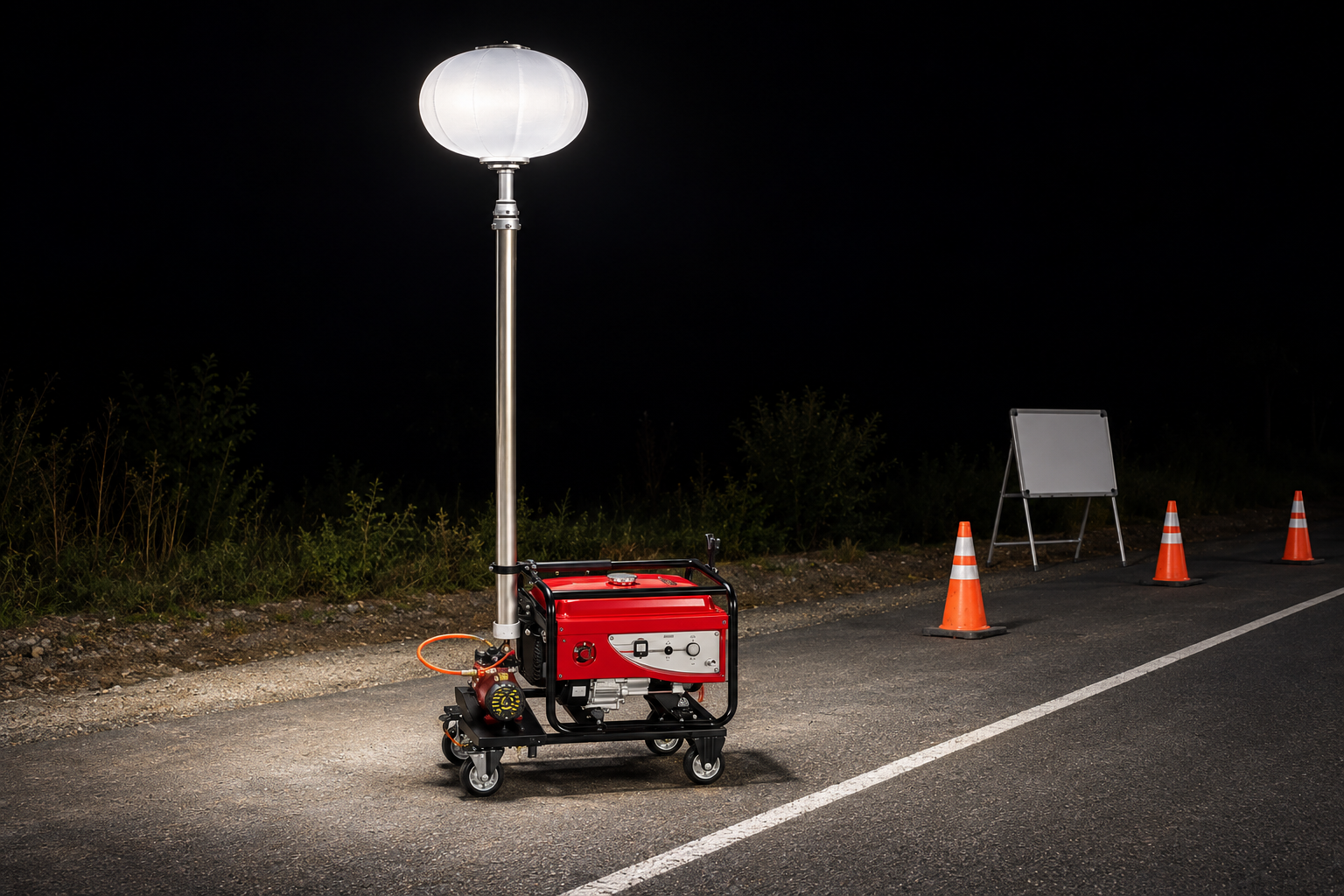
Also identify the permitted tower pads. The compact machine shown here has a wheeled frame, but the complete working space still includes the base, operator access and the mast envelope. A narrow shoulder is not automatically an acceptable setup location. Ask the site team to confirm a suitable level pad and authorised equipment route. If the supplier’s proposed location falls inside the marking machine’s turning or refill path, revise the layout before the crew arrives.
Compare diffuse and directional light for the actual line task
A single spherical diffuser spreads light differently from a group of individually aimed floodlights. The Keyyou lunar lamp provides a real product configuration to discuss with the supplier; its rounded appearance does not prove zero glare, a particular light level or suitability for every wind condition. Request the applicable lamp and operating information for the offered unit. The selection question is whether the distribution supports the working section from an available location, not whether the lamp looks soft in a catalogue photograph.
Directional heads can be useful where a crew needs to place light along a defined strip, but the proposed aiming can create bright patches or shadows beyond the machine. A diffuse source may provide a more forgiving viewing field around a compact task while sending unwanted light in other directions. Ask for the actual layout and evaluate its consequences. Do not compare the technologies by nominal watts alone, because the useful distribution and the constraints on the setup pad can dominate the decision.
| Décision | Check for this task | Selection boundary |
|---|---|---|
| Application edge | View the reference from the operator position | Cart and operator may block the light |
| Long run | Define the section served before each planned move | One pad may not serve the whole operation |
| Driver approach | Coordinate source view and temporary route | Crew comfort does not prove driver visibility |
| Finished marking | Use the applicable assessment method | A bright line under a tower proves no retroreflectivity result |
This comparison supports a lighting enquiry, not a universal equipment ranking. Include the approved task criteria and the site drawing with the request. Where the supplier cannot substantiate a distribution claim, keep it unresolved and arrange a demonstration or other suitable verification. A photograph with an exposed light source and a bright road is not equivalent to a measured work-plane result. The project’s responsible lighting and traffic personnel should determine whether the proposal is acceptable.
Check shadows at starts, stops and around the application cart
Observe the intended working line from the operator’s normal position with the cart, containers and other equipment where they will actually be used. The machine can block light from the tower even when the surrounding pavement appears bright. Check the short areas where a line begins or terminates, because the operator may change posture there. If a task light is needed, it should be compatible with the site arrangement and should not create another glare problem for nearby people.
Keep the tower outside the movement and material-handling paths. Do not solve a shadow by asking someone to stand in the equipment route or by placing a cable across a walking line without the required protection. HSE’s site-lighting guidance highlights the importance of obscured hazards and supplementary light where shadows interfere. Apply that principle to the actual cart and work position rather than promising that a taller mast will remove every shadow. Recheck the result after a material cart or vehicle changes position.
Preserve the driver’s view of the temporary route
The striping task does not remove the need for a clear road-user path. Ask the traffic-control team to check the lighting from the relevant approaches using an authorised observation method. A lamp that appears acceptable from behind the marking machine can be uncomfortable or confusing from an approaching vehicle. Include lane transitions and the end of the working section in this review. Do not treat an empty road during initial setup as evidence that the arrangement will remain suitable when traffic conditions change.
Keep temporary signs, channelising devices and the marking plan legible. A bright new line inside a closed work bay should not suggest that drivers should enter that bay. The responsible traffic team decides how the route is presented; the lighting supplier should understand that arrangement. If the lighting is repositioned, repeat the relevant observations before work resumes. The useful deliverable is a coordinated task-and-route layout rather than a maximum-brightness setting selected in isolation.
Plan relocations without turning a light tower into moving task lighting
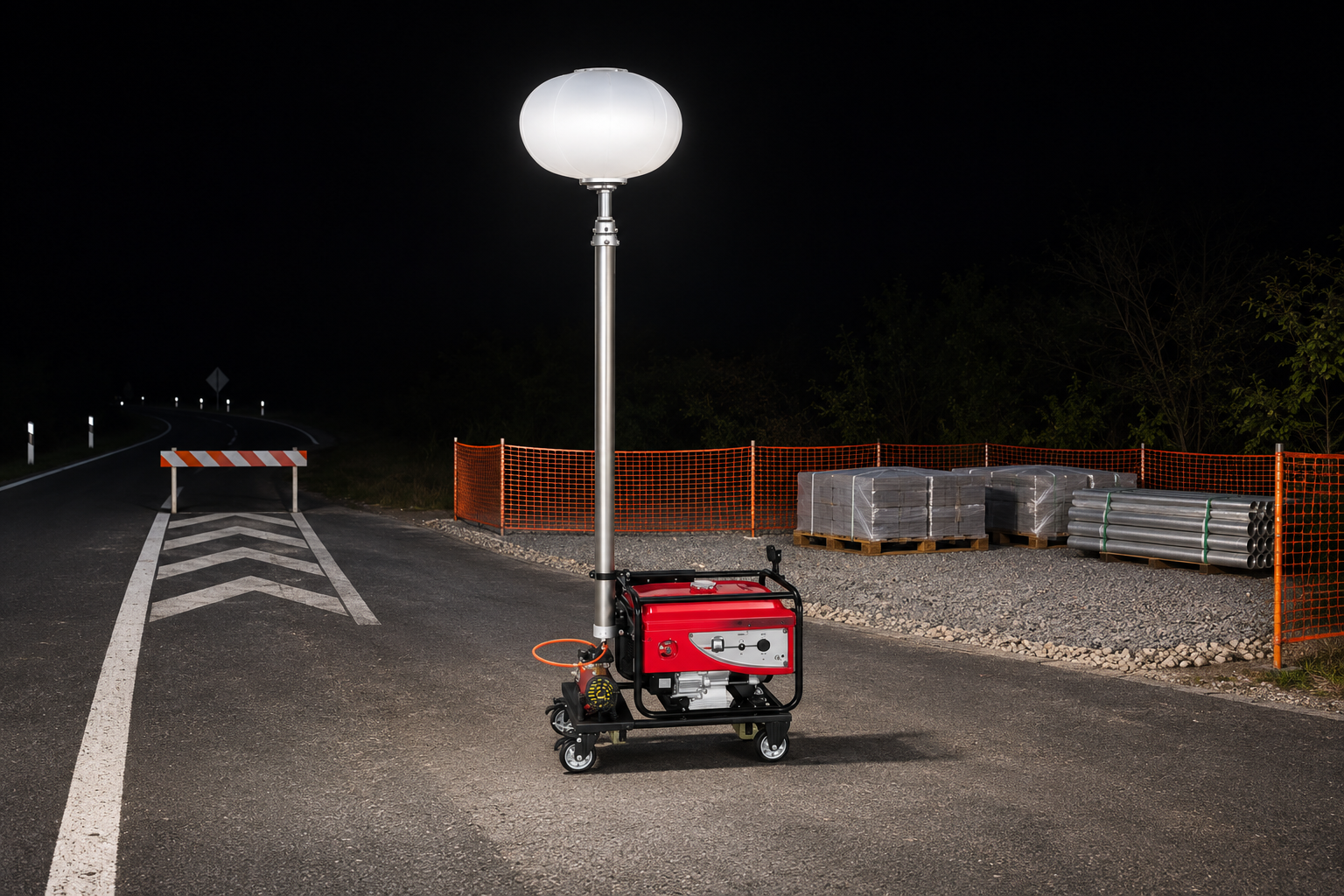
A wheel-equipped base does not establish that the unit may travel with its mast raised or while the lamp is operating. Follow the supplied instructions and the site’s movement procedure. Agree how far the marking operation can progress before the lighting needs a planned change. Then identify a suitable next pad, the person authorised to move the equipment and how the work area will remain controlled during the interruption. Do not improvise the next setup after the crew has already entered a dark section.
For longer runs, compare the practical cost of repeated moves with a coordinated arrangement using additional approved lighting positions. More units increase the equipment and servicing burden, but an unsuitable single-unit layout can interrupt the marking sequence repeatedly. Ask suppliers to explain the duty assumption behind their proposal. Include preparation, checking, refilling and cleanup rather than counting only the minutes during which marking material is applied. No runtime figure should be accepted without the offered lamp load and power configuration.
Give the supplier a marking-specific enquiry
Provide the working width and length of each planned section, available pads, required views, movement sequence and operating period. State whether the task involves a hand-operated cart or a larger application vehicle. Identify any adjacent open traffic, property or sensitive area that constrains the light direction. Ask for the exact product, lamp configuration, setup envelope, operating limits and service access. This information allows a meaningful comparison between the lunar lamp and another tower configuration without assuming that either will suit every section.
The quote should distinguish supplied equipment from project responsibilities. If supplementary task lighting is needed, ask whether it is included and how it is powered. If the supplier uses a calculated layout, retain the lamp identity and assumptions. Use the separate guidance on IES files for photometric identity and on flagging stations for traffic-controller visibility; neither should be replaced by this marking-specific discussion. The goal is to make the application and inspection boundaries understandable before the order is placed.
Verify the complete section after dark
Before accepting the setup, walk the permitted crew routes and observe the task positions with the relevant equipment present. Record any dark working edges, obstruction shadows and uncomfortable source views. Resolve defects through the approved arrangement and repeat the affected checks. Keep the observation method and applicable criteria in the project record. A supplier demonstration should use the configuration being ordered rather than a different lamp or a conveniently smaller working section.
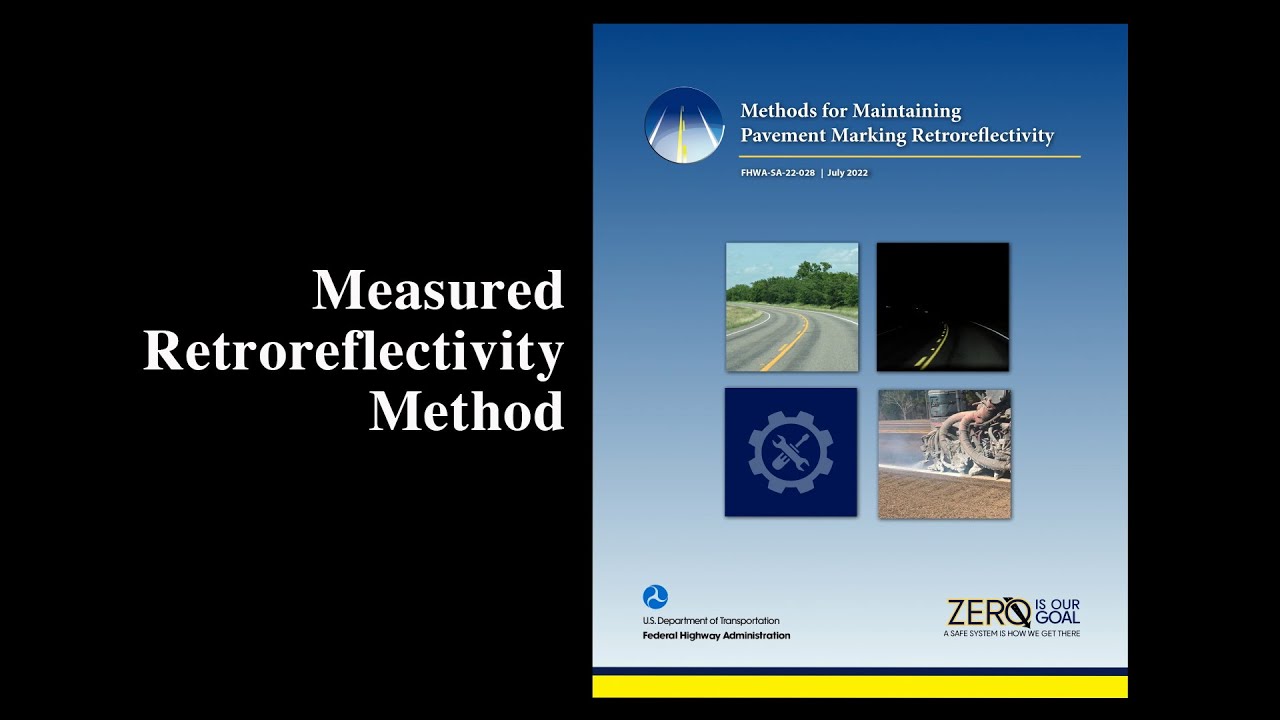
At the end of the section, retain the separate marking inspection results and the light-tower acceptance note. They answer different questions and may be produced by different people. If a line looks unusually bright under the tower, do not infer its retroreflective compliance from that appearance. The official FHWA film below explains a measurement method and is useful for this distinction. Use its current supporting guidance and the project specification when deciding which inspection method applies.
Apprentissage supplémentaire
Federal Highway Administration USDOTFHWA explains Measurement Method – Minimum Pavement Marking Retroreflectivity. This supports the task context discussed above and does not replace the project’s equipment assessment or work method.
Watch the educational video on YouTube.
Foire aux questions
Un luxmètre peut-il confirmer la rétroréflexion du marquage routier ?
A lux reading describes incident illumination at the measurement position. Retroreflectivity requires its own appropriate assessment method.
Une lampe lunaire ronde élimine-t-elle l’éblouissement ?
No. Evaluate the supplied lamp from the relevant task and road-user positions.
Can the illustrated wheeled unit follow the cart with its mast raised?
Do not infer that capability from wheels. Follow the supplied movement instructions and the site procedure.
What should a quote identify?
The served work section, actual lamp and power configuration, permitted pad, duty and any supplementary lighting.
Références
Choose the supplied arrangement
Give the supplier the actual task views, permitted equipment locations and complete night duty. Resolve missing evidence before ordering, and verify the supplied configuration against the project criteria after installation. Illustrations show product context, not a measured site design or a completed customer project.


