
Comment les acheteurs doivent-ils effectuer le calcul de la zone de couverture d'un mât d'éclairage ?
A light tower coverage area calculation converts task-area lux targets, fixture photometry, mast height, aiming, and overlap rules into a documented lighting plan; it is not a single brochure lux figure copied across unlike sites. Use it to force geometry and task targets into the RFQ before unit counts are locked. It is a checklist for project buyers and site teams — not sizing or approval for light-tower-coverage-area-calculation.
Part 1. What Does a Coverage Calculation Decide?
It decides how many units, which mast heights, and which aiming plan can meet the task lux target with stated overlap. Buyers should separate task zones from travel paths before counting towers.
Readers searching for calcul de la zone de couverture du mât d'éclairage usually need a project checklist, not a catalog slogan.
Part 2. Which Site Inputs Belong in the Spreadsheet?
Record work-zone dimensions, minimum lux by task, glare-sensitive boundaries, ground slope notes, and any exclusion zones. Without those inputs, a coverage claim is only a marketing number.
| Input | What to record | Pourquoi c'est important |
|---|---|---|
| Task lux target | Minimum by zone | Sets acceptance bar |
| Zone geometry | Length, width, obstacles | Sets unit count |
| Mast height options | Working heights allowed | Changes footprint |
| Glare boundaries | Roads, neighbors, cameras | Limits aiming |
Part 3. How Do Mast Height and Beam Shape Change Area?
Higher mounting can enlarge footprints but also change uniformity and glare. Beam distribution and aiming must be read with mast height, not after the order is placed.
Important : A coverage area claim without mast height, optic notes, and zone geometry is not usable for procurement. (Source: IES recommended practice language / project lighting plan.)
Part 4. How Should Overlap and Uniformity Be Checked?
Overlap prevents dark seams between towers. Ask for the uniformity rule the plan uses and where measurements will be taken during acceptance.
Part 5. What Evidence Should Suppliers Attach?
Request photometric files or distribution notes for the offered fixtures, a sketched layout, and assumptions for reflectance and aiming. Missing files mean the plan cannot be audited.
Part 6. Which Keyyou Routes Fit a Coverage Package?
When the coverage inputs are attached, discuss trailer-mounted routes that can carry the stated mast and optic package. Selection still depends on verified project data.
| Project signal | Keyyou route | Send with inquiry |
|---|---|---|
| Documented coverage plan | Trailer pneumatic-pole tower | Lux targets, layout sketch, optic notes |
| Fleet discussion | Trailer-style light tower range | Unit count, duty windows, transport limits |
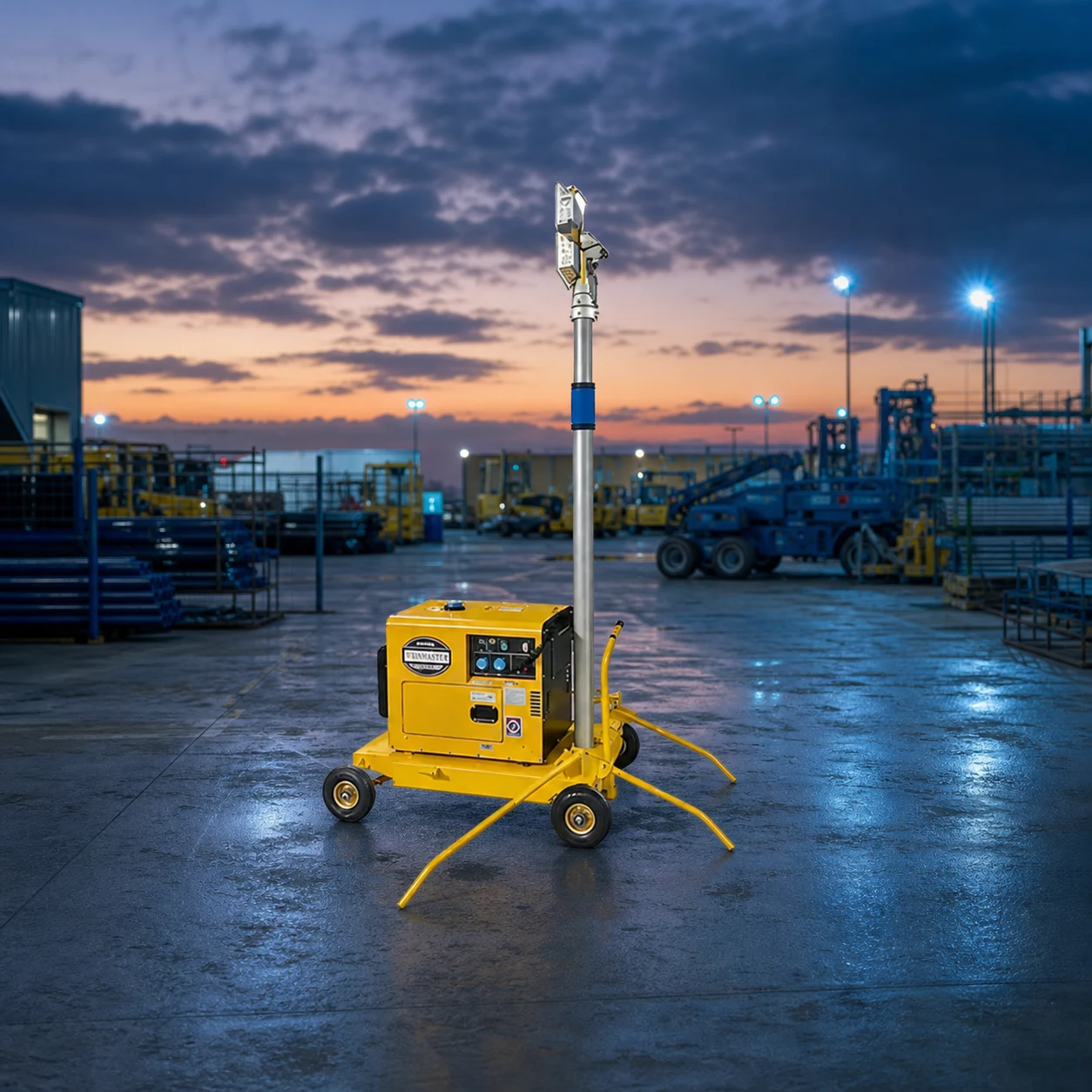
- Trailer-Type Mobile Lighting Tower (Pneumatic Pole) — trailer route when coverage inputs are complete.
Related articles: – planification de l'emplacement des tours d'éclairage – sélection de la hauteur du mât de la tour d'éclairage – LED light tower optical configuration
Attach the coverage inputs when discussing the Keyyou trailer-style mobile light tower range, or contact Keyyou with the layout sketch.
Why not: Do not treat a catalog lux slogan as a finished coverage plan for a different geometry.
Part 7. What Are the Fit Boundaries?
This guide explains calculation inputs. It does not certify a lux map, invent candela tables, or approve a site lighting design.
FAQ
Qu'est-ce qu'un calcul de la zone de couverture d'un mât d'éclairage ?
Il convertit les objectifs en lux, la photométrie, la hauteur des mâts et les règles de chevauchement en un plan documenté indiquant le nombre de tours nécessaires pour un site.
Puis-je dimensionner la couverture à partir d'un numéro de lux de brochure ?
Non. Les chiffres des brochures omettent la géométrie de votre zone, le pointage et la méthode d'acceptation.
Quels sont les paramètres qui déterminent le nombre de tours ?
Éclairement requis, taille de la zone, hauteur du mât, forme du faisceau, recouvrement et limites d'éblouissement.
Pourquoi la hauteur du mât a-t-elle tant d'importance ?
It changes footprint and uniformity; the same fixture can cover differently at two heights.
What files should a supplier provide?
Photometric or distribution notes, layout sketch, aiming assumptions, and acceptance check points.
Does overlap always mean more towers?
Overlap can raise unit count, but it also prevents dark seams that fail task work.
Does this article certify my lighting plan?
No. Final design authority stays with the project lighting responsible party.