
Choisir un mât d'éclairage mobile
Mobile Light Tower Defined
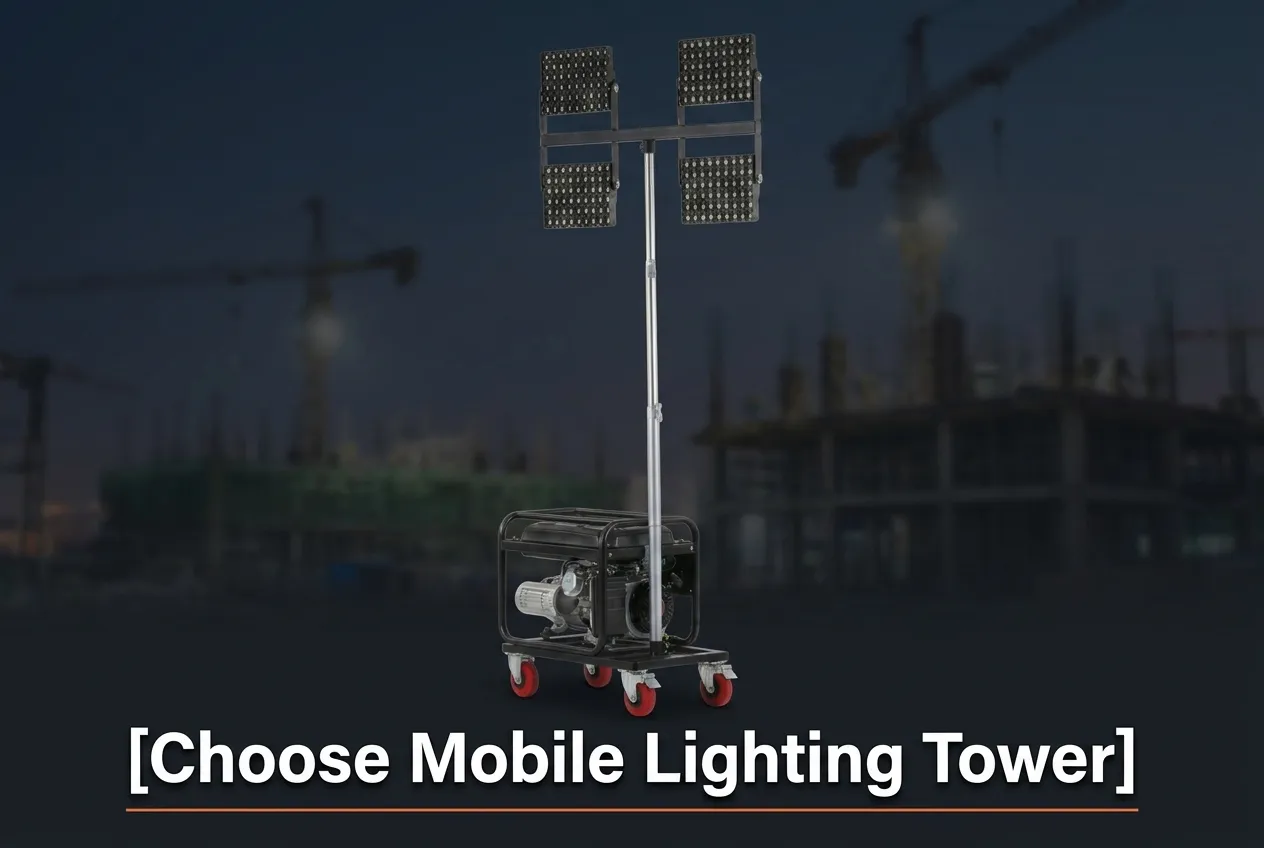
A mobile light tower is a mobile, portable lighting solution with high-intensity light sources typically mounted on a telescoping mast. They are used to illuminate large outdoor areas and are usually powered by diesel, solar, electric, or hybrid energy sources. Mobile light towers are widely utilized in construction project settings at night, outdoor event lighting, and providing needed illumination for emergency service organizations and their operations where accurate and dependable lighting are key components of each project.Elements to Consider When Selecting Mobile Light Tower
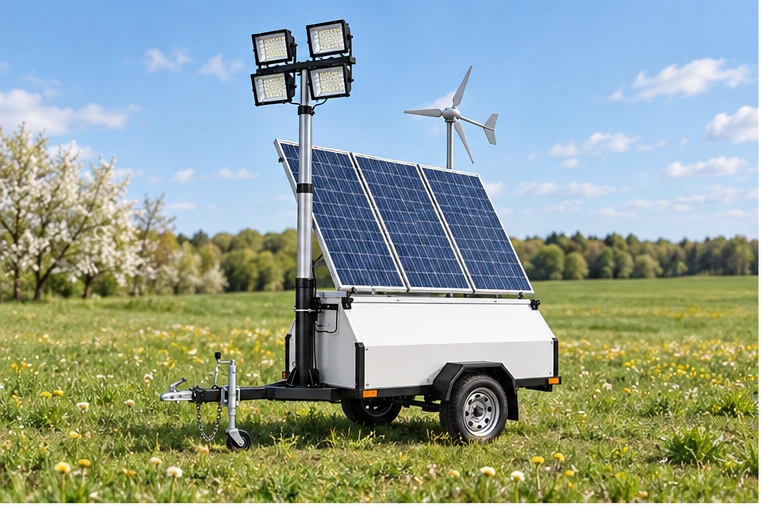
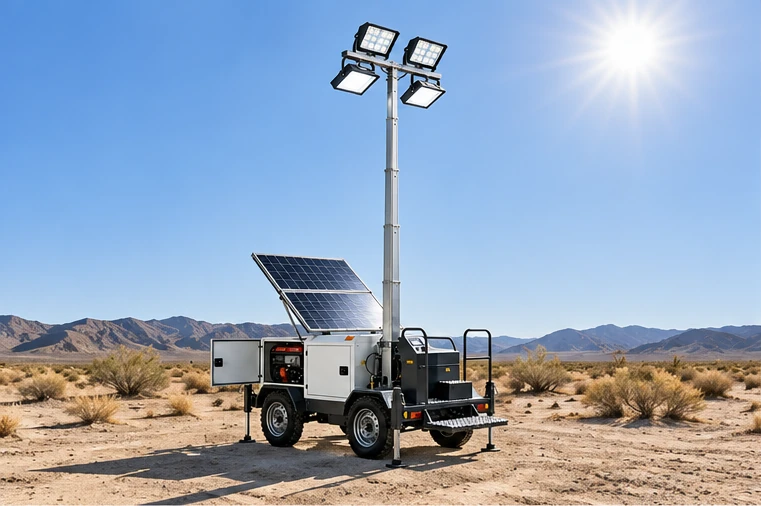
Before selecting the right mobile light to meet your needs, the following critical elements should be considered: 1. Power Sources Available: There are many different kinds of towers that can be powered by various kinds of power sources, including: – Diesel Light Towers: Diesel-powered towers are known to be durable and have long runtimes; therefore, they are considered to have high reliability ratings for remote sites. – Hybrid Light Towers: These towers use diesel and a battery source for power, which minimizes emission levels while providing environmentally friendly operation. – Solar Light Towers: Solar-powered light towers are perfect for sustainable energy and are also budget-friendly with low maintenance. – Electric Light Towers: Electric-powered light towers should be used indoors or where there is a reliable electrical source. 2. Portable Lights: If your project will require frequent moves, purchase a light tower with an attached generator so that it’s easy to transport and set up. 3. Lumen Capacity: Make sure the lumens output from the tower will meet your desired brightness requirements for each application. 4. Mast Height/Coverage: Use an adjustable telescoping mast; if you use a mast too tall it may be hard to maneuver or may not give you good coverage. Verify that the height of the mast is adequate for your project. 5. Required Maintenance: Consider the type of tower and review the operational and maintenance requirements for each type of tower. Generally speaking, hybrid and solar-powered lighting towers require significantly less maintenance than those powered by diesel fuel.Advantages of Mobile Lighting Towers
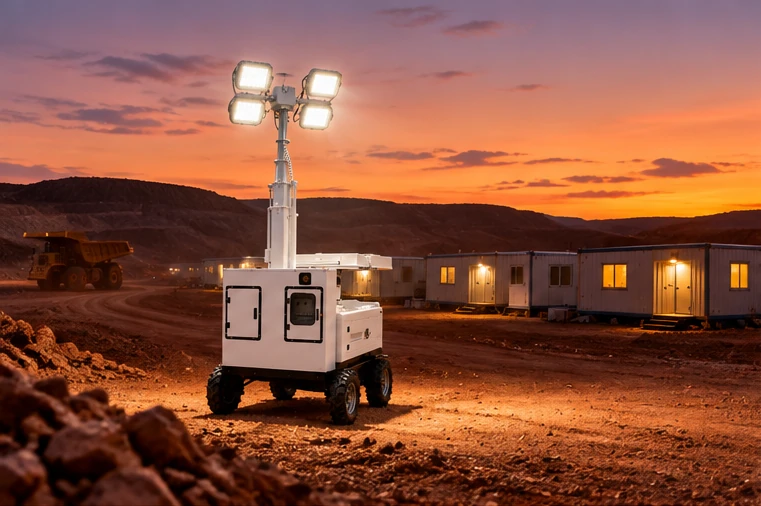
– Versatile Applications: Mobile Lighting Towers have a wide range of uses, from construction, mining, and special events to emergency situations. – Mobility: These units are also small in size, lightweight, easy to tow, and have low operating costs. – High-Quality Lighting: The presence of LED and metal halide lamps allows for high-quality light output, which is uniform over a larger area. – Built Tough: These units are built to withstand severe weather and harsh environments. – Energy Efficient: New technology products, including solar- and hybrid-powered lighting towers, provide environmentally friendly and cost-effective solutions.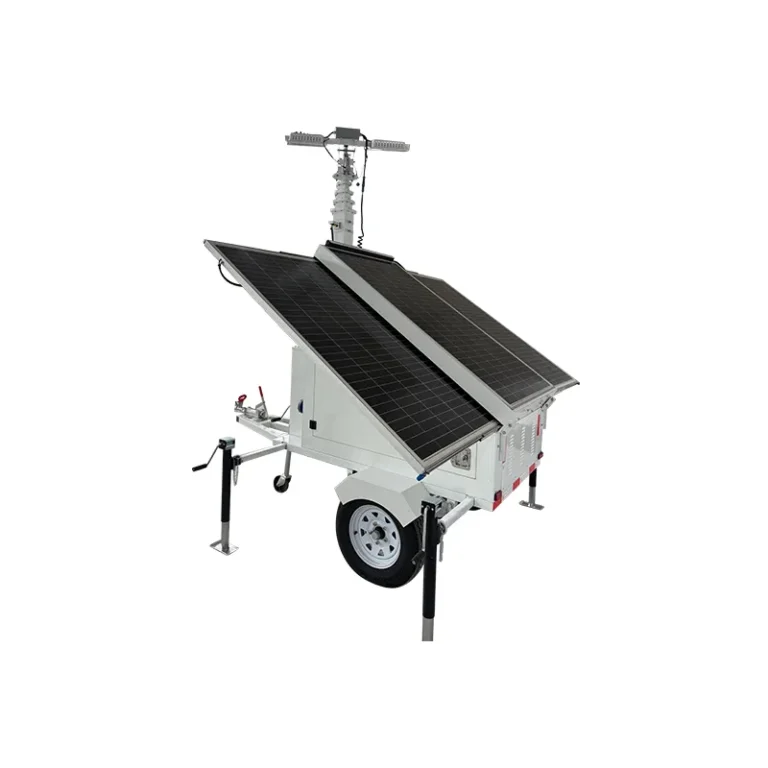
Mobile Lighting Tower FAQs for Buyers
Quel type de mât d'éclairage mobile est le mieux adapté aux sites isolés ?
Les tours d'éclairage diesel constituent généralement le meilleur choix pour les sites isolés car elles offrent une longue autonomie sans dépendre de sources d'alimentation externes. Les unités hybrides peuvent réduire la consommation de carburant sur ces types de sites.
Comment les tours d'éclairage solaires fonctionnent-elles lorsqu'il y a peu de soleil ?
De nombreuses tours d'éclairage solaires utilisent des batteries pour stocker l'énergie nécessaire pour alimenter les lampes lorsque l'énergie solaire produite est faible, ce qui permet aux lampes de continuer à fonctionner.
Est-il facile de déplacer ou de transporter des tours d'éclairage portables équipées d'un générateur ?
Oui, la majorité des tours d'éclairage portables équipées de générateurs sont dotées de roues et présentent des conceptions compactes, ce qui permet de les déplacer facilement et de les installer rapidement une fois sur site.
Quelle est la durée de vie d'un mât d'éclairage mobile ?
La durée de vie d'un mât d'éclairage mobile dépend de plusieurs facteurs différents, notamment du type spécifique de mât d'éclairage mobile et de la qualité de son entretien. Les mâts d'éclairage diesel ont tendance à être parmi les plus durables, tandis que les mâts d'éclairage solaires sont généralement équipés de la technologie LED avec des durées de vie opérationnelles très longues.
How can I ensure my lighting tower is energy efficient?
Consider using hybrid- or solar-powered lighting towers to produce less energy and thereby lower the operational costs associated with producing energy while also producing a reduced amount of environmental impact compared to other sources.
Choosing the appropriate mobile lighting tower will help provide safety, efficiency, and effectiveness in outdoor operations. The means of providing electrical power to the lighting tower, mobility, the amount of light output produced by the lighting tower, and the overall environmental impact will determine which type of lighting tower is most appropriate for the particular application. Each mobile lighting tower, whether it is diesel-powered, hybrid-powered, or solar-powered, has specific advantages that are ideal for certain applications. Be sure to speak with lighting professionals for additional assistance in comparing the specifications of all building products before purchasing your lighting towers so you can make the best-informed decision possible. A properly chosen mobile lighting tower can be the key to the success of your work.
Ressources associées aux tours d'éclairage
- Portable tower lights
- Compact light tower guide
- Gamme de mâts d'éclairage
- Comment choisir un mât d'éclairage
Cadre de comparaison des acheteurs
| Zone de décision | Question à poser | Éléments de preuve à conserver |
|---|---|---|
| Application mobile de fitness | La configuration correspond-elle à la zone de travail et au facteur de marche ? | Cahier des charges et mise en page |
| Performance | Les revendications concernant l'éclairage, l'alimentation et l'autonomie sont-elles spécifiques à la configuration ? | Fiche technique et base d'essai |
| Déploiement | L'unité peut-elle être transportée et installée sous le contrôle du site ? | Dessin, manuel et démonstration |
| Support | Qui fournit les pièces, la formation et l'intervention en cas de panne ? | Garantie et contrat d'entretien |
| Coût total | Quels sont les coûts qui se poursuivent après la livraison ? | Feuille de calcul des coûts du cycle de vie commun |