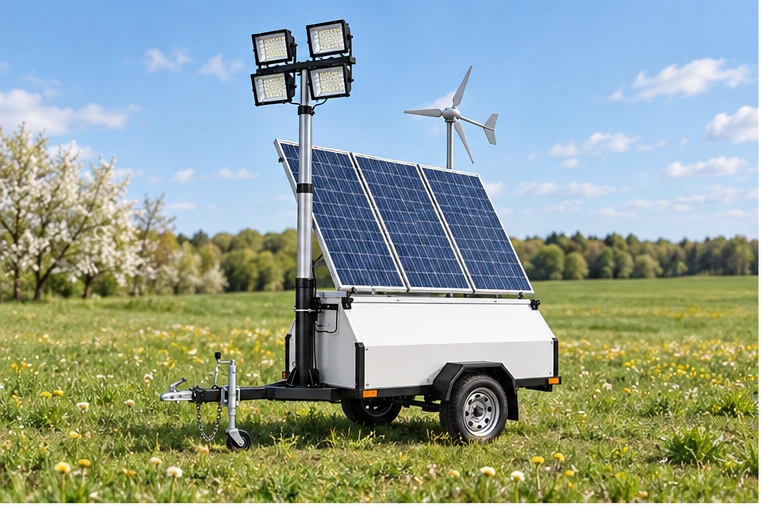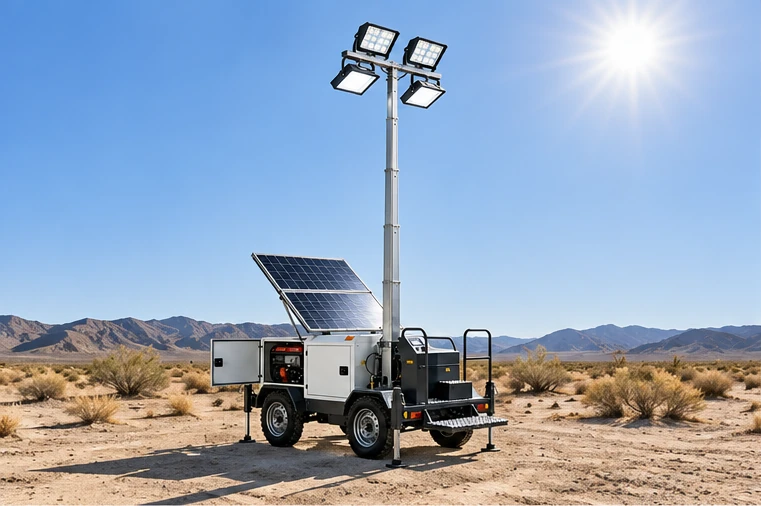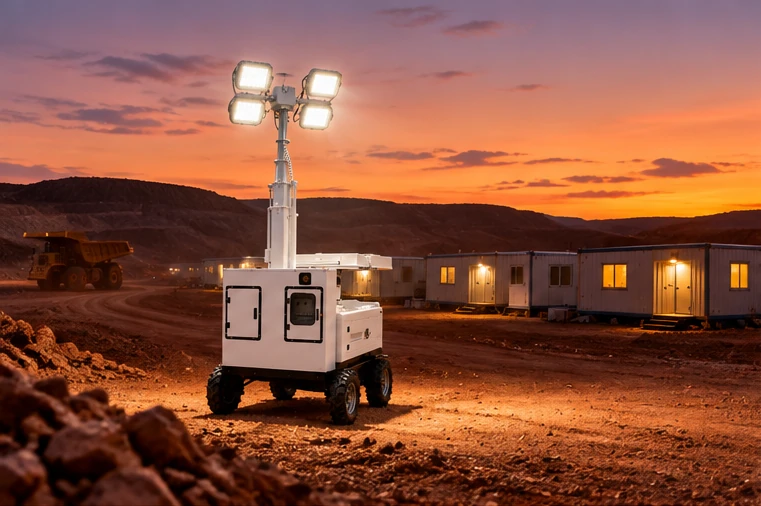

Comment les équipes doivent-elles lire la plaque signalétique d'un groupe électrogène par rapport à la charge d'éclairage ?
Size a mobile light tower generator by comparing the documented nameplate ratings of the offered configuration with a written lighting load list—fixture demand, accessory loads, and site derating questions—not by matching lamp wattage alone. A nameplate line answers nothing until the site load is written down. This guide assembles the sizing inputs a buyer should collect before any quotation.
Part 1. What decision does generator load sizing support?
It supports one decision: whether the generator package offered with a mobile light tower can carry the site’s written load with a defensible margin. It does not choose the fuel type, complete the purchase, or replace an electrical design.
Buyers who need the full purchase walkthrough should read the diesel generator light tower buying guide instead. This article stays on the sizing inputs that make any quotation meaningful.
Part 2. Which nameplate values matter for lighting duty?
Ask for the nameplate document, not a summary line. Atlas Copco’s selection guidance ties equipment choice to the application, and the same rule applies here: the application defines which nameplate values matter.
| Nameplate item | Pourquoi c'est important | What to record |
|---|---|---|
| Rated output and rating class | Ratings differ by duty definition | Exact figure and class wording |
| Rated voltage and frequency | Fixtures and accessories must match | Values from the plate |
| Power factor basis | Apparent vs usable power differ | Basis stated by the maker |
| Ambient reference conditions | Ratings assume test conditions | Reference temperature and altitude |
| Auxiliary output circuits | Extra sockets share the same engine | Circuit count and ratings |
Different manufacturers publish ratings against different duty definitions. Record the wording exactly and let the supplier confirm the applicable class for the offered configuration.
Part 3. How should teams build the lighting load list?
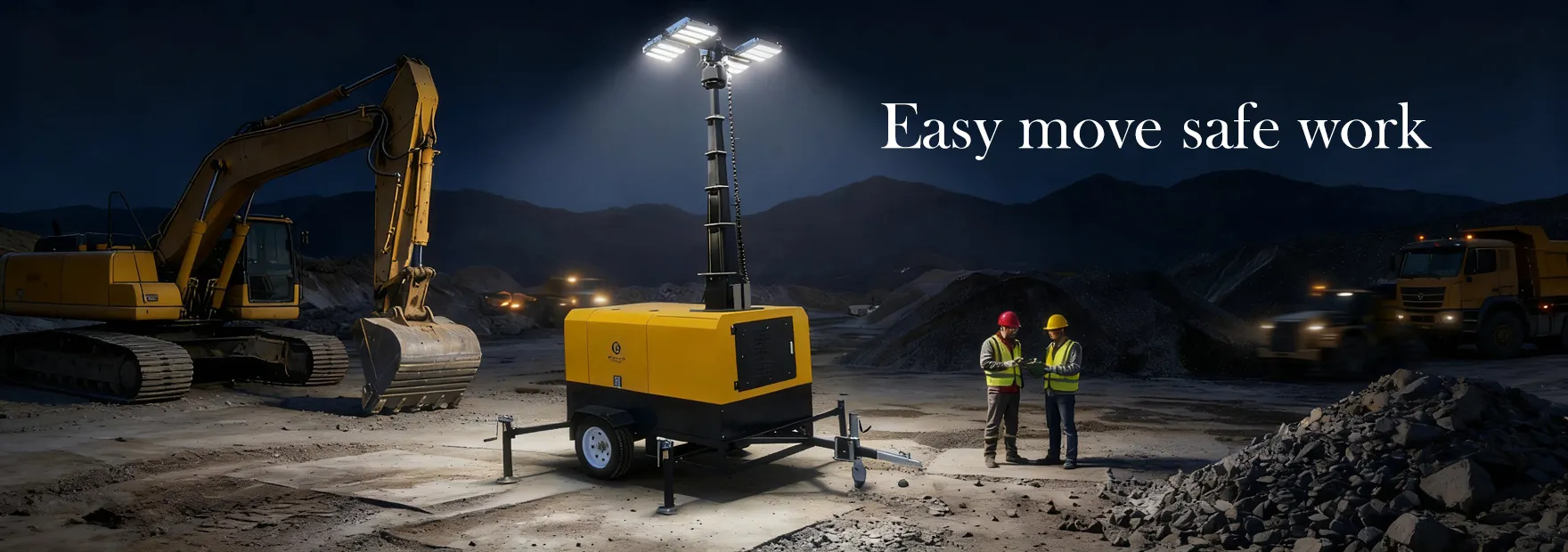
Write every load down before comparing anything. Coverage articles such as JC Davis’s generator overview note that the onboard generator often feeds more than the lamps—chargers, small tools, and control gear ride on the same engine.
| Load entry | Typical source | Enregistrer |
|---|---|---|
| Fixture demand | Lamp count and fixture rating | Total fixture load |
| Control and mast systems | Model documents | Standing auxiliary demand |
| Accessory sockets | Planned tools and chargers | Peak accessory load |
| Lighting target driving fixture count | Governing illumination rule | Rule reference used |
| Shift profile | Operations plan | Hours and duty pattern |
The lighting target matters because it fixes the fixture count. Example construction illumination minima exist in OSHA 1926.56; treat them as reference language and apply the jurisdiction that actually governs the site. A structured method for the site side sits in the off-grid lighting load estimation guide.
Part 4. Which derating and site questions change the margin?
Altitude, ambient temperature, and dust exposure all reduce usable output on many engine-driven packages. Do not assume sea-level performance on a high site; ask the supplier how the offered package derates under the recorded conditions.
Also note the electrical environment. Temporary power rules such as OSHA 1926.404 show the kind of wiring and protection questions an inspector may raise; the governing local rule defines the actual requirement.
Important : Never convert a catalog output line into a site capacity promise; derating and duty class change the usable figure. Source: Atlas Copco selection guidance.
Part 5. How do teams compare nameplate data with the load list?
- Put the written load list and the nameplate document side by side.
- Confirm the rating class wording with the supplier for the offered unit.
- Ask how the package derates for the recorded altitude and temperature.
- Check accessory circuits against the planned accessory load.
- Ask the supplier to state the margin in writing for the exact configuration.
A margin claimed verbally is not an input. If the supplier cannot state it against your written list, the sizing work is not finished.
Part 6. Which RFQ inputs belong with a load sizing request?
Send the load list, shift profile, site altitude and temperature notes, governing rule reference, accessory plans, and a request for the nameplate and manual pages of the offered package.

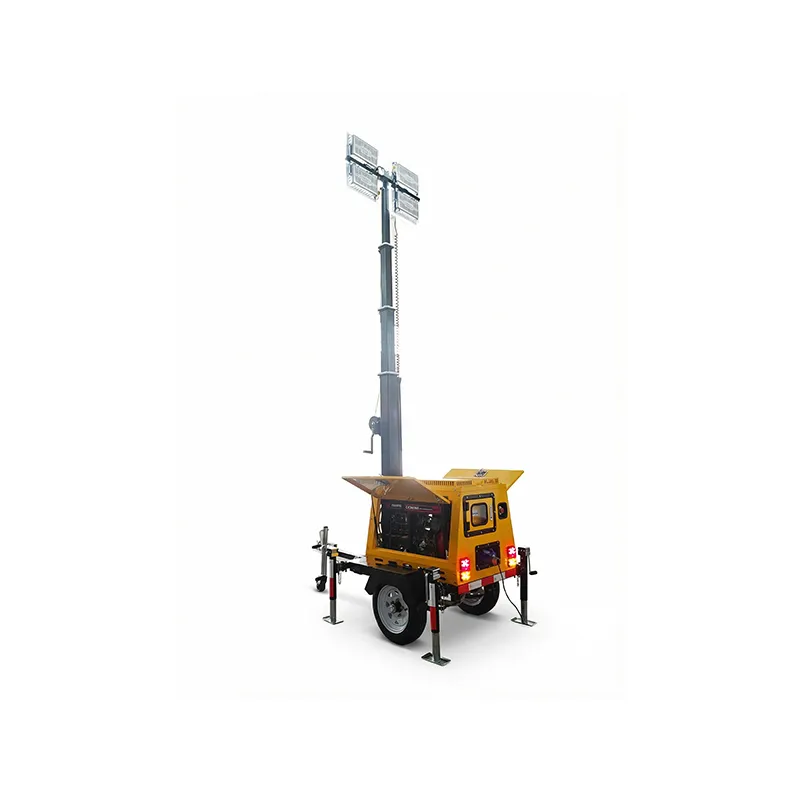
Product recommendation: use the listed trailer hydraulic-pole configuration as a document-review starting point when a trailer unit is on the shortlist. The page names a configuration; it does not state a verified output for your load list. Related options are listed under the gamme de mât d'éclairage mobile sur remorque.
Fit Boundary
This guide is suitable for assembling sizing inputs and an RFQ. It is not suitable as an electrical design, a fuel plan, a runtime promise, or a Keyyou performance commitment. For a configuration review, send the load list and site notes.
Part 7. When is load sizing not enough?
Stop at sizing when the load list is still unwritten, the nameplate document is unavailable, or the site conditions remain unrecorded. Readiness on the day also matters: a correctly sized package still fails a shift if it skips the pre-operation inspection checklist. Escalate to an electrical professional when the site involves distribution beyond the tower’s own circuits.
FAQ
Pourquoi la plaque signalétique d'un générateur indique-t-elle plus d'une valeur nominale ?
Les notations sont publiées pour différentes définitions de service. Enregistrez les termes exacts et demandez au fournisseur quelle classe s'applique à la configuration proposée.
Pourquoi la puissance totale des lampes ne représente-t-elle pas la charge d'éclairage totale ?
L'appareillage de commande, les systèmes de mâts et les prises d'accessoires sont alimentés par le même moteur. Une liste de charges qui s'arrête à la puissance des lampes sous-estime la demande réelle.
Quelles sont les conditions du site qui réduisent la puissance utile du générateur ?
L'altitude, une température ambiante élevée et une forte exposition à la poussière réduisent généralement la puissance utile. Demandez comment le groupe proposé subit un déclassement dans les conditions enregistrées.
Un acheteur peut-il dimensionner un groupe électrogène de tour d'éclairage à partir de la seule puissance des lampes ?
Non. Le dimensionnement nécessite la liste complète des charges, la formulation de la classe de régime et les réponses concernant le déclassement pour le site.
What belongs in an RFQ for generator load sizing?
Load list, shift profile, altitude and temperature notes, governing rule reference, accessory plans, and a request for nameplate and manual pages.
How does this differ from a diesel generator buying guide?
A buying guide walks through the purchase decision. This checklist only assembles the sizing inputs that make a quotation reviewable.
What should stop a load sizing decision?
An unwritten load list, a missing nameplate document, unrecorded site conditions, or a supplier unable to state the margin in writing.