
Shipyard Temporary Lighting for Night Work
Plan shipyard temporary lighting for landside work, vessel access, hull shadows, crane routes, marine exposure, and continuity during night shifts.
Shipyard temporary lighting should reveal the current work, access routes, and changing vessel geometry while preserving escape and emergency arrangements. Begin by separating outdoor area lighting from lighting inside a vessel, confined space, or hazardous work location. A mobile tower may support an approved landside work area, but its presence does not establish that an internal compartment is illuminated or that the equipment is suitable for a classified atmosphere. Review the complete task with the shipyard, electrical team, and relevant work authority before choosing the installation.
Map the shipyard task and its boundaries
Identify whether the job is assembly beside a hull section, exterior maintenance, equipment staging, or movement between buildings and the vessel. Record which adjacent activities remain active: crane lifts, vehicle deliveries, hot work, painting, cleaning, and vessel access. These operations can alter both visibility and the locations where a tower or power cable may be permitted. The lighting plan should fit the current job stage rather than cover every possible operation with one generic drawing.
OSHA’s shipyard lighting standard is a useful United States reference for distinguishing work areas and temporary arrangements. The shipyard should determine the governing rules and required illumination for its jurisdiction and task. This article does not assign a universal lighting value. A loading route, a precision inspection, and an unoccupied storage area have different demands. Define the evidence needed for each assessed location before discussing lamp output or the number of towers.
Treat vessel interiors as a separate lighting system
A tower on the quayside may illuminate an exterior hull while leaving ladders, access openings, and internal compartments in shadow. Identify the point where outdoor lighting stops being useful. Interior fixtures, cables, and supplies need a separate review for the environment and work. The competent team must decide how lighting is installed, protected, supported, isolated, and recovered without creating new hazards.
Do not use a mobile tower illustration to imply approval for confined-space entry. Lighting is only one part of a permit and work arrangement. Ventilation, atmosphere assessment, communication, isolation, rescue, and access are determined under the relevant process. OSHA’s shipyard educational material also addresses portable emergency illumination when temporary lighting supplied from outside a vessel is the sole illumination. Review that scenario explicitly rather than assuming an area tower supplies an escape function inside steel compartments.
Inspect shadows around hull sections
Large steel assemblies create sharp shadows and changing reflected light. Evaluate the actual tool position and the worker’s sightline, including the side of a component facing away from the mast. A high source may help with general movement but fail to reveal a weld preparation surface, fastener, or label inside a recess. Where detail cannot be seen, ask for an approved task light appropriate to the work.
Consider how the assembly will move. A hull block on supports today may be lifted or rotated tomorrow, changing both the shadow and the installation restrictions. Describe which configuration was accepted. If the work proceeds through several orientations, make those stages part of the review. Do not allow an old illumination record to become the justification for work after the steel geometry has changed substantially.
Keep lifting and transport spaces clear
Include the tower’s deployed supports, mast, and service space on the site plan. Identify crane travel, suspended-load areas, transporter routes, and the paths used for equipment delivery. A location that is clear before a lift can become unavailable during the planned sequence. The lifting and logistics authorities should approve the proposed position, including how the unit arrives and leaves.
Power cables also need a route. Avoid relying on an informal assumption that drivers will see or avoid a cable in a busy yard. The electrical and traffic arrangements must identify permitted crossings and protection. Keep access to the tower’s controls and emergency response arrangements available. If no acceptable position serves both lighting and logistics, change the layout or use another approved type of lighting rather than placing the tower in the middle of the conflict.
Review wet surfaces and marine exposure
Check glare from wet pavement, hull plating, and water from the positions of workers and vehicle operators. A light aimed towards the work can reflect into an approach route. Repeat relevant observations after weather changes or when the work area is washed down. A protected optical arrangement must remain within the equipment’s instructions; improvised covers can affect heat, electrical protection, or wind loading.
Request evidence for the exact enclosure, connectors, corrosion protection, and permitted environmental conditions. An outdoor product photograph does not establish suitability for salt exposure, washdown, or every shipyard atmosphere. Explain the intended location to the supplier, including whether the equipment stays landside and what cleaning or airborne contaminants are expected. An ingress rating and a corrosion specification describe different issues and should not be treated as interchangeable approvals.
A shipyard lighting review table
Use the table to divide responsibilities before deployment. It describes decisions to record rather than equipment certification or universal legal limits.
| Work situation | Lighting question | Required review |
|---|---|---|
| Landside assembly | Can workers see the current surface and access? | Task views, hull shadows and approved tower location |
| Vessel interior | Where does outdoor coverage end? | Separate approved fixtures, supplies and access arrangements |
| Crane or transporter movement | Will equipment displace or strike the installation? | Full support footprint and staged logistics plan |
| Wet marine setting | Does reflected light obstruct another observer? | Nighttime views and exact environmental documentation |
| Loss of supply | How can personnel pause or leave safely? | Work-specific backup and emergency arrangements |
Choose power without introducing exhaust indoors
An engine-powered tower must operate in a location accepted for exhaust, service, fuel handling, and the work environment. Do not place combustion equipment inside a vessel or partly enclosed assembly area to keep it closer to the job. Exhaust can reach occupied spaces through openings and ventilation paths. The responsible team needs to review the location independently of whether the light reaches the steel surface.
External supplies need a reviewed connection and protective arrangement. Battery equipment may help where local combustion is unacceptable, but the charging or replacement system still has to support the full work window. Record the proposed lamp setting and runtime evidence, including any reduced-output conditions. A supplier’s general endurance headline is not a substitute for evidence at the configuration that the yard intends to deploy.
Evaluate the actual installation after dark
Check access routes and task positions with representative steel sections, machinery, and barriers in place. Observe from both the worker position and the approaches used by drivers or crane personnel. Where measurement is required, document the positions, measurement plane, instrument, and operating conditions. Record lamp aiming and mast configuration so the accepted arrangement can be reproduced.
Treat remaining problems as specific actions. For example, a recess may require a separate task light, a vehicle approach may require different aiming, or a cable crossing may require a changed supply route. Avoid recording only a broad statement such as adequate lighting. The acceptance record should say which tasks and routes were assessed and what limitations still apply. It should also identify who can authorize an adjustment.
Coordinate shift changes and emergency lighting
The crew coming onto a new shift needs to know what was accepted, which work areas are outside coverage, and when the primary system will be serviced. Include the source of backup illumination and its intended use. If a task depends on a separate interior light, handover must mention it; a bright outdoor tower should not hide the fact that the interior system has its own power and failure arrangements.
Reinspect when steel assemblies move, work methods change, the vessel access route changes, or a lamp or supply is replaced. Maintenance can also affect aiming, output, and cable routing. Keep installation drawings and service records together so changes do not drift apart. A sound shipyard lighting arrangement remains connected to the current work stage, access controls, and electrical decisions throughout the night.
Equipment documentation for this application
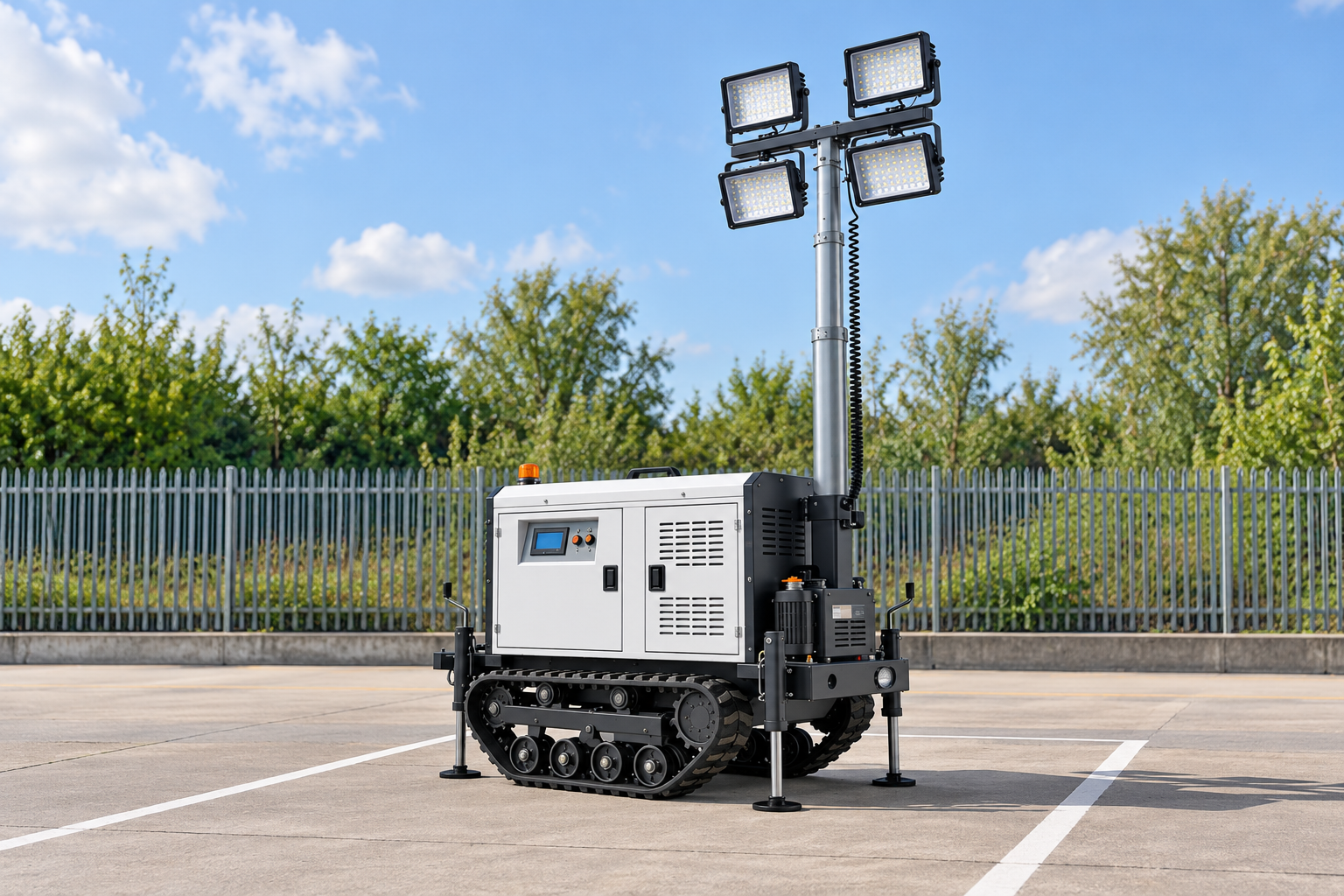
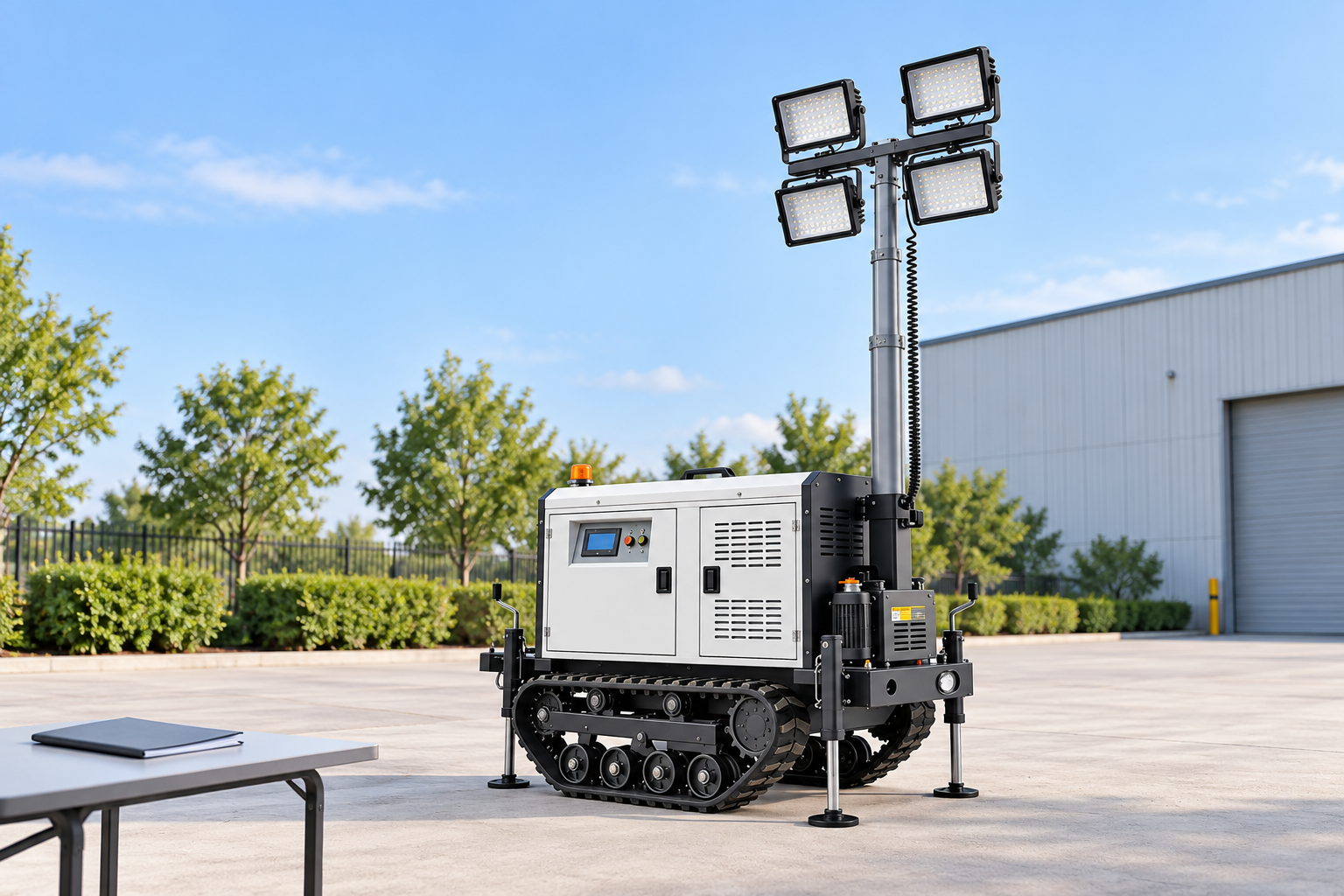
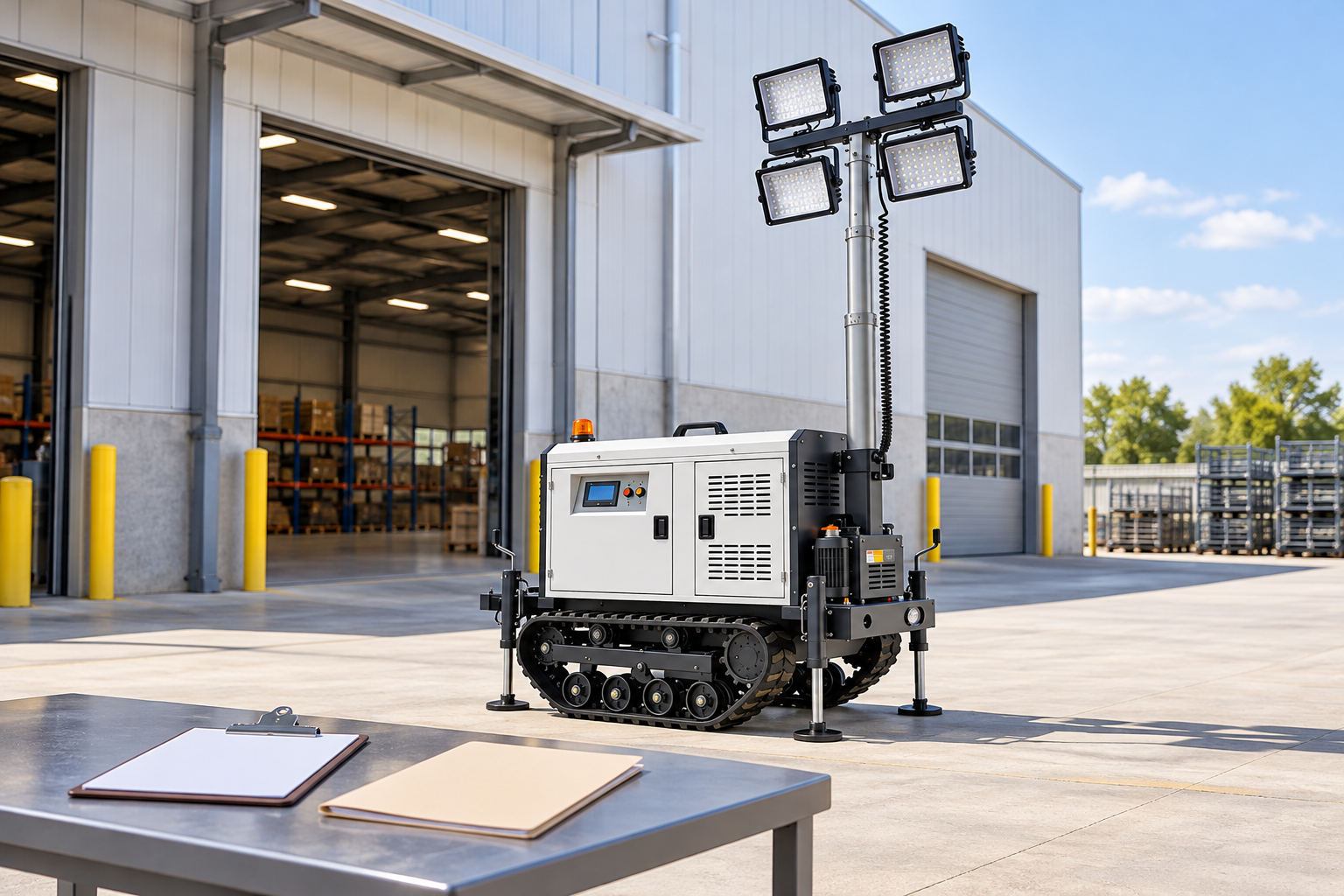
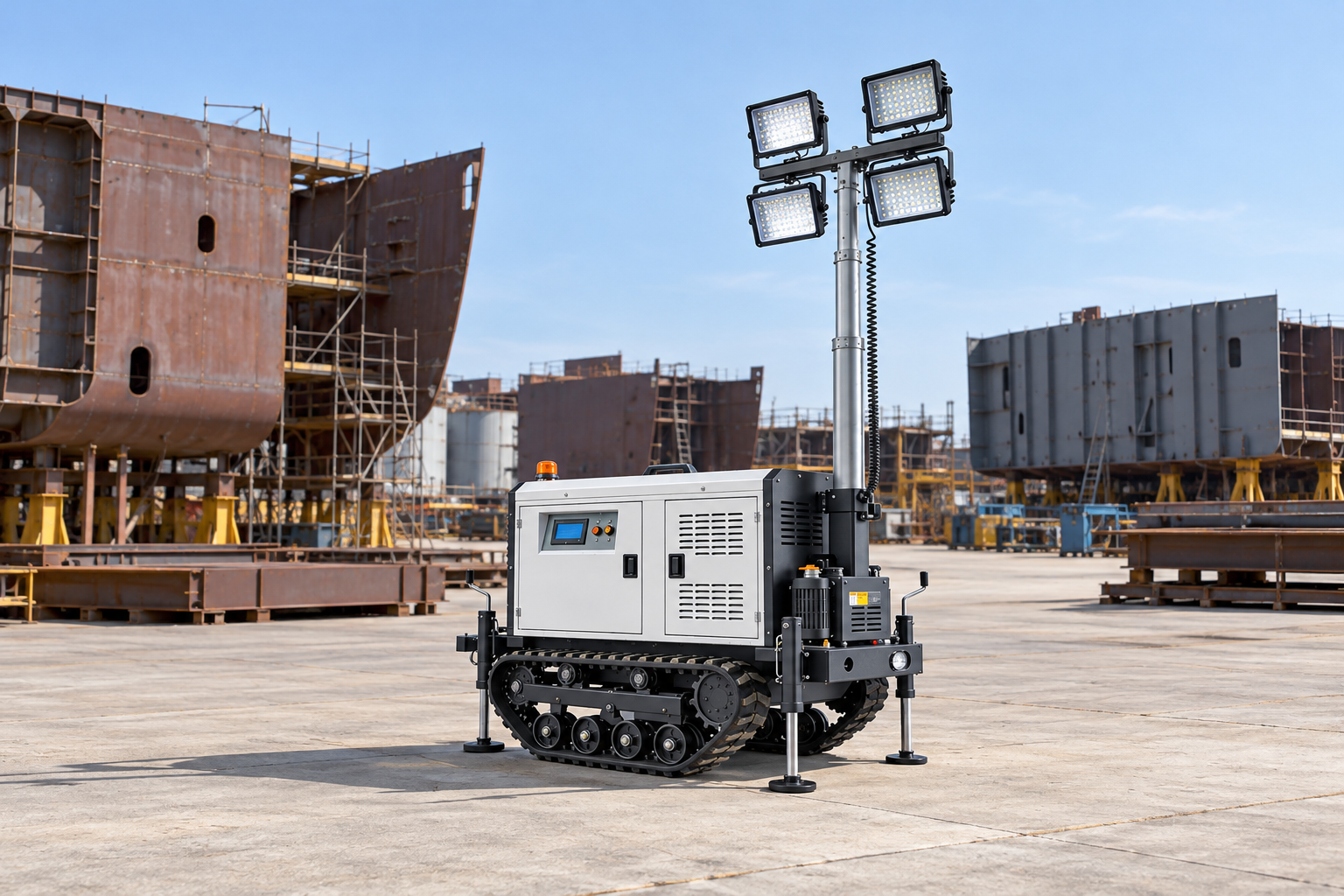
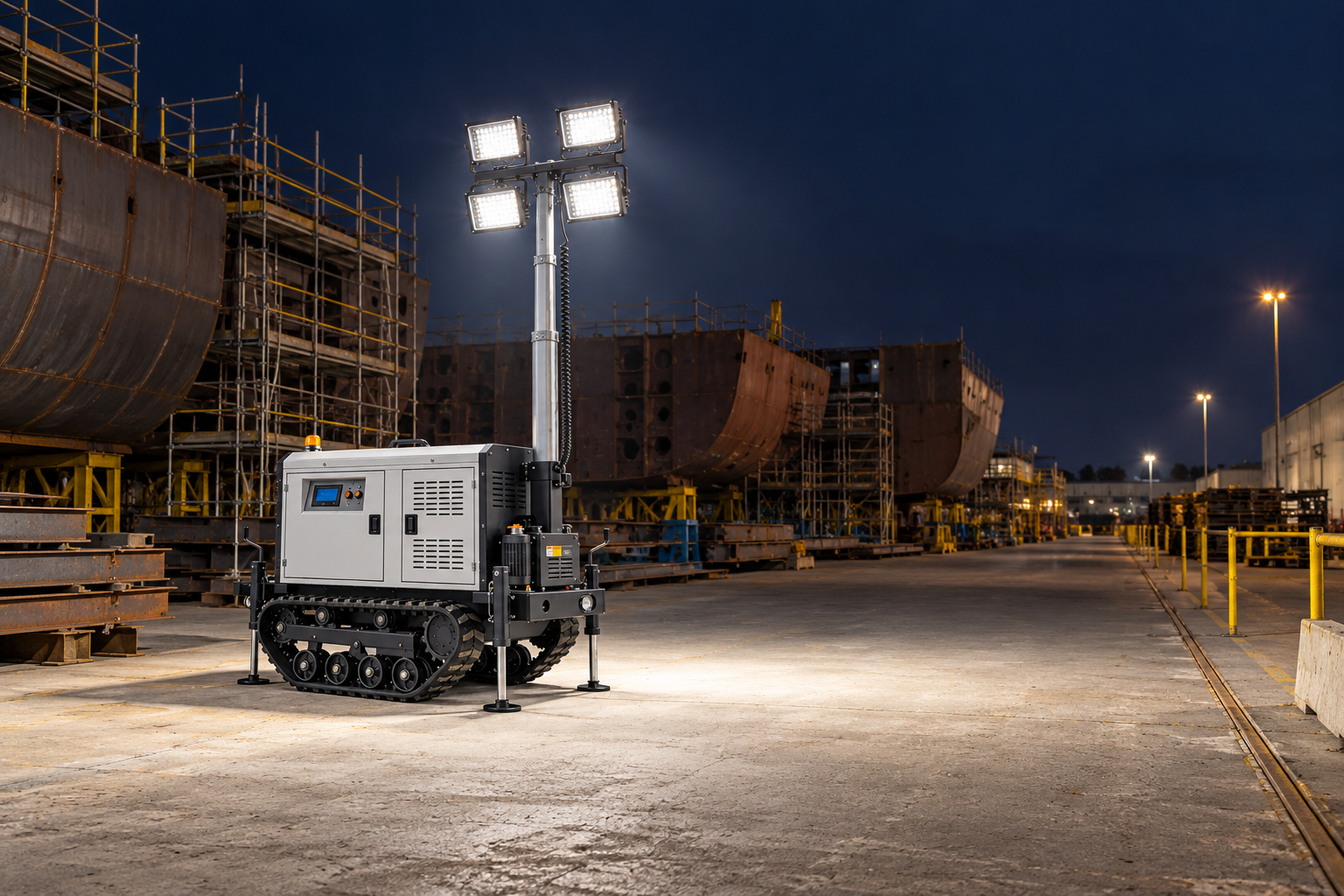
The pictured Keyyou tracked lifting light tower identifies the product category discussed here. Its appearance is not evidence of runtime, environmental certification, or suitability for every proposed work location. Request the current configuration-specific documents and compare them with the accepted task, deployed envelope, power arrangement, and service plan. If those records do not establish a match, resolve the configuration with the responsible team before relying on the installation.
For broader equipment planning, read the guide pour tour de lumière mobile. Use the separate glare-control guide when reviewing observer views, and the maintenance and troubleshooting guide when arranging inspection and service. These resources support their own tasks; they do not replace acceptance of the current site layout.
Generator safety education and reference scope
Where the selected power arrangement includes an engine, the CDC video below explains carbon-monoxide precautions. Its household examples provide introductory education, not a site installation approval. The responsible team must review the exact equipment, exhaust location, occupied spaces, fuel handling, and electrical arrangement. Battery-only operation has a different power scope, and hybrid engine-start conditions still require review.
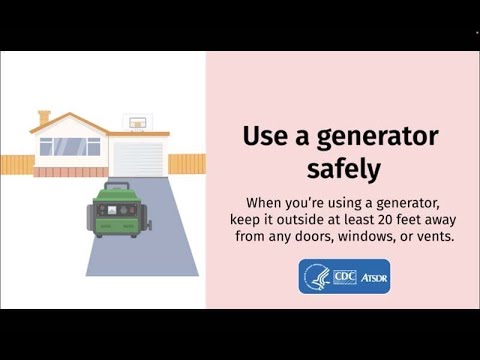
Watch Use a Generator Safely from the CDC.
Foire aux questions
Can a landside tower replace vessel interior lighting?
A landside source may illuminate exterior work while leaving interior access and compartments dark. The internal arrangement needs a separate competent review of fixtures, supply, protection, and emergency provisions. Keep that scope distinct from outdoor coverage. Neither a tower photograph nor a bright hull surface establishes acceptable lighting for personnel inside the vessel.
Does an outdoor enclosure prove suitability for every shipyard task?
No. Describe the actual moisture, salt, cleaning, dust, and atmosphere conditions to the supplier and responsible electrical team. Request documentation for the delivered configuration. Environmental protection, corrosion resistance, and hazardous-location suitability are different decisions; one general outdoor claim should not be used to imply that all of them have been resolved.
What changes need a new visibility assessment?
Movement or rotation of a hull section, different machinery, changed access, revised cable routing, and altered lamp settings can affect the accepted task views. Record the configuration inspected and assign an owner for reassessment. The incoming shift should know which work stage was accepted and which internal or exterior areas remain outside that record.