

Light Tower Returned Goods Relief Evidence: Reimport File
Build an equipment identity trail, movement history and condition record for a competent review of a returning light tower shipment.
Light tower returned goods relief evidence should connect the returning unit to its earlier export, explain its condition and support the responsible adviser's assessment of the actual claim. Begin with equipment identity, outward movement records, return shipment details and a factual account of use or work carried out abroad. A warranty label or a supplier's willingness to accept a return does not establish customs eligibility. This guide explains how a procurement team can organize the reimport file for a tracked tower without promising relief, choosing declaration codes or treating duty and import VAT as the same question.
Identify the movement before naming a procedure
A tower may return after a demonstration, an overseas hire, a cancelled delivery or a service dispute. It may also travel to the original supplier for repair, which is a different movement from returning to the country from which it was previously exported. Write down the actual history before selecting a customs label. The commercial reason for a return and the customs treatment need separate consideration.
Record the countries involved, the legal entities participating and the earlier export reference if available. If the tower was originally imported before being exported again, preserve that earlier history for the adviser. Do not assume that sending equipment back to the seller is automatically a qualifying reimport. The relevant rules depend on the real movement and prior status of the goods.
Establish the identity of the exact tower
Start with the equipment's genuine serial or other reliable identifying information and connect it to dispatch documents. Use the supplier's confirmed equipment description and preserve photographs that show recognizable features. If records are inconsistent, ask the technical and logistics contacts to reconcile them before the return arrives. A model name alone may not distinguish several otherwise similar towers.
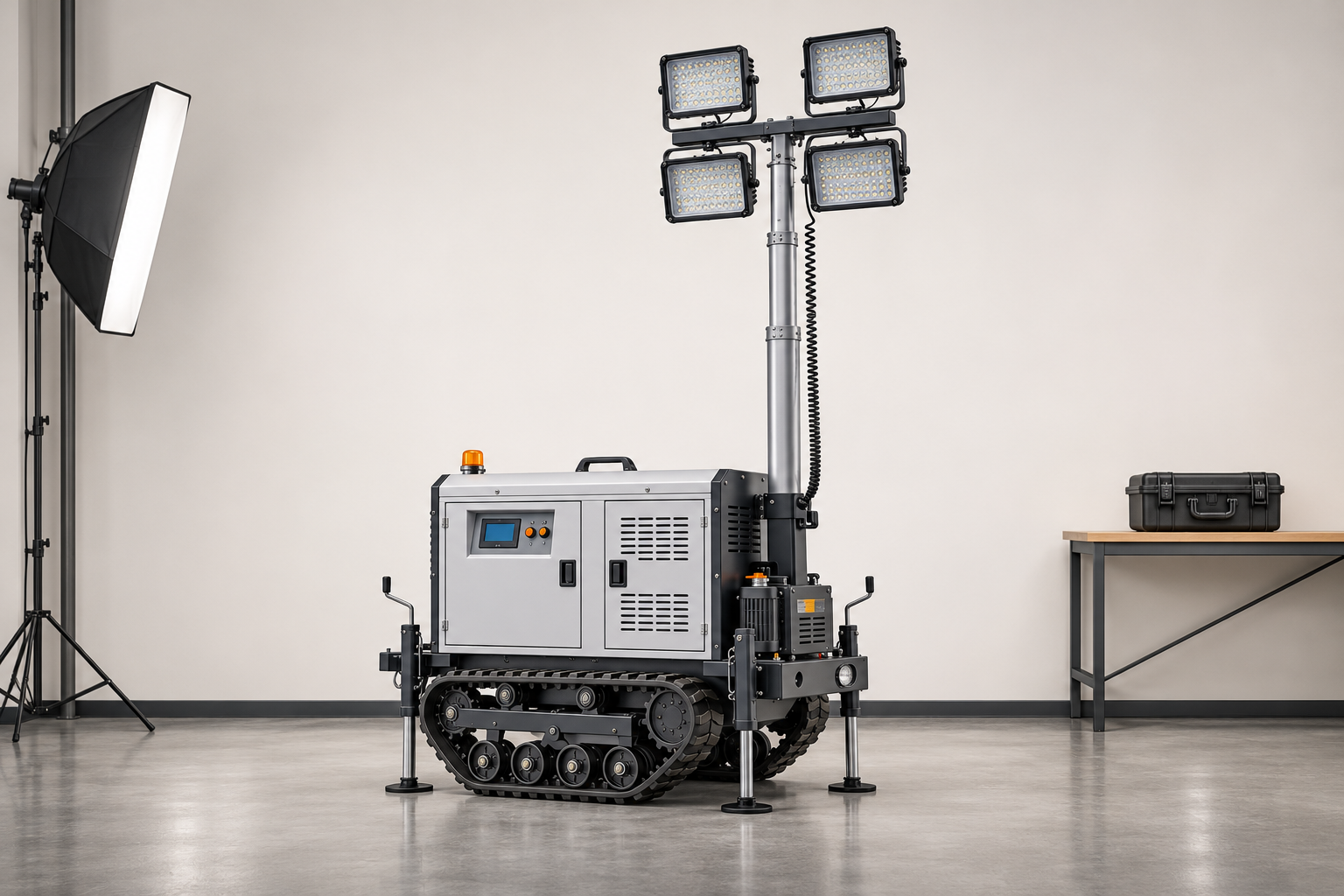
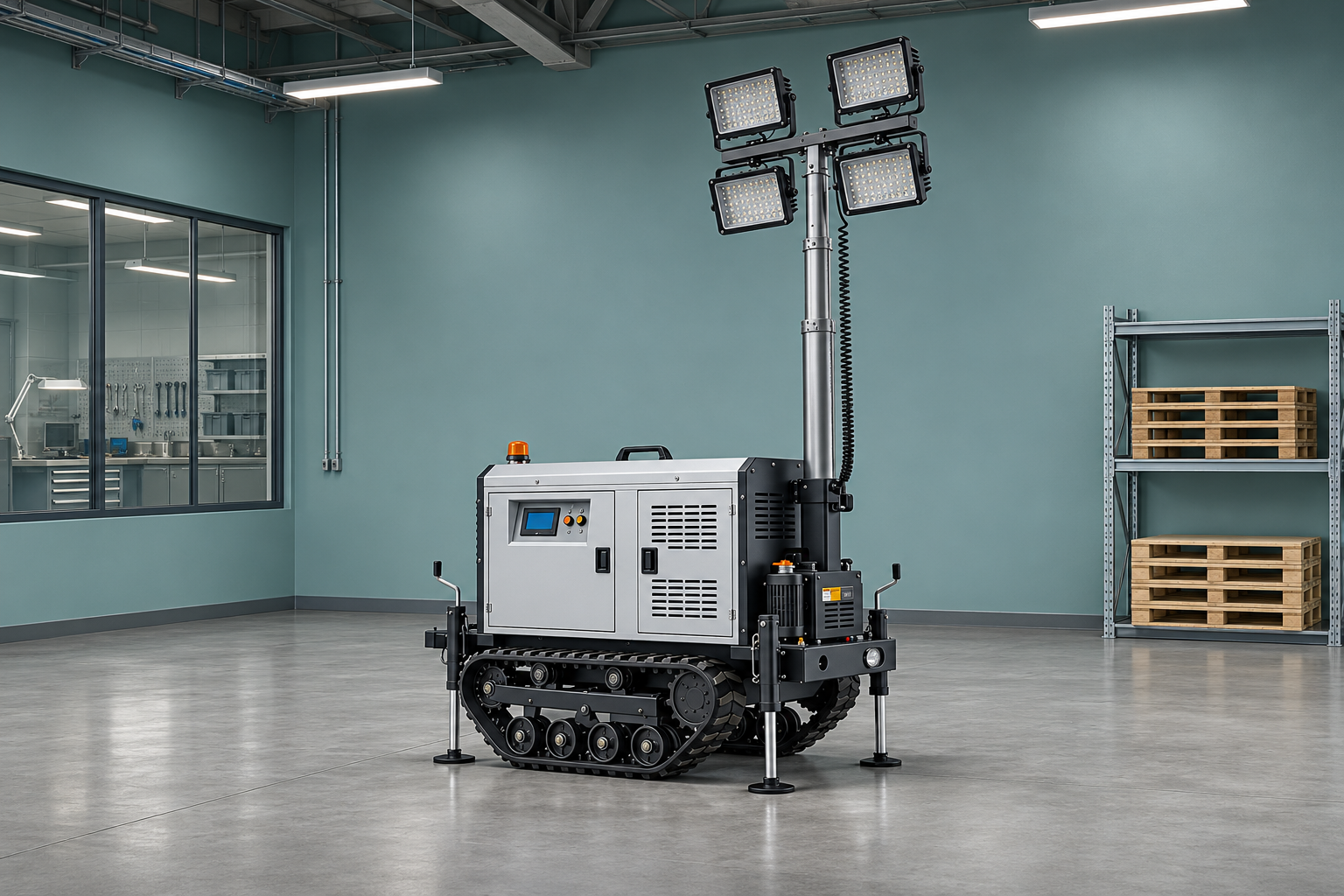
The Keyyou tracked light tower pictured here has a cabinet, crawler chassis, stabilizers, telescopic mast and four rectangular lighting heads. These features give a recognizable product context. The generated illustrations are not evidence of an actual exported unit, its serial number or its condition. Use original transaction photographs and records for any real customs submission, and label illustrative material accordingly.
Link the earlier export to the return file
Collect the original export and transport records relevant to the actual unit. Ask the exporter or its representative for references that connect the tower to the outward consignment. If several towers travelled together, identify which one is returning and which original line or supporting record covers it. A clear cross-reference is more useful than an unexplained folder of freight documents.
Where an original record is missing, describe the gap honestly and ask the adviser what alternative evidence can be considered. Official UK guidance discusses evidence in the context of the applicable claim. It does not mean that any photograph or invoice will always be accepted. The responsible person should assess whether the available material establishes the necessary facts for this transaction.
Explain what happened while the tower was abroad
Prepare a chronological account of use, storage, maintenance, repair or alterations. Obtain the actual service records where work occurred and distinguish work carried out from work merely quoted. The adviser needs the facts rather than a broad statement that the tower is “unchanged.” Procurement should ask the recipient to explain any replacement assemblies or other differences from the exported configuration.
A commercial warranty approval should be retained as context, but it does not settle the customs treatment. For example, a supplier may agree to accept an equipment return even though parts were replaced overseas. Record the replacement and provide the relevant documents. Let the adviser determine its significance under the applicable procedure instead of deleting the detail to simplify the claim.
Review the UK guidance within the correct scope
HMRC's returned goods relief guidance describes conditions concerning prior export, status and the state of the returning goods. It also treats import VAT requirements separately. Use that official guidance when assessing an actual UK reimport, together with competent advice for the particular facts. Do not extend its conclusions to a return into another country or promise relief simply because the equipment is commercial machinery.
Time limits and exceptions also need the responsible adviser's attention. Record the actual outward and return dates and flag any uncertainty early. Avoid calculating an entitlement from an approximate delivery month or assuming an exception applies. The coordinator's useful contribution is a verified movement timeline and complete evidence, leaving the eligibility conclusion to the appropriate decision process.
| Condizione | Revisione o azione | Prove o responsabilità |
|---|---|---|
| Identità | Match individual tower and included assemblies | Serial and dispatch evidence |
| Movement history | Connect outward and return shipment | Transport and declaration records |
| Earlier status | Document relevant customs history | Importer or broker file |
| Condition change | Describe actual use, repairs or alterations | Service and receiving records |
| Claim scope | Separate duty and import VAT questions | Competent eligibility assessment |
| Unresolved evidence | Obtain clarification before reliance | Dated exception and response |
Questa checklist di coordinamento qualitativo supporta il flusso di lavoro discusso qui; applica la giurisdizione e l'ambito di HMRC: returned goods relief conditions and evidence. Non fornisce un limite di accettazione numerico universale.
Keep duty and import VAT questions separate
Ask the adviser to identify which part of the proposed treatment concerns customs duty and which concerns import VAT. The evidence needed may overlap, but the conditions should not be assumed identical. Keep the legal entities involved in the export and reimport clear so the adviser can evaluate the relevant requirements without relying on an ambiguous group-company description.
If ownership or the party controlling the goods changed during the overseas period, disclose that fact and provide the supporting commercial record. A tower moving between related businesses is still a transaction with actual parties. Do not replace those names with the group's brand name to make the file appear simpler. Accurate entity information helps avoid a conclusion based on the wrong assumptions.
Reconcile partial returns and accessories
Where one tower returns from a multi-unit shipment, prepare a reconciliation showing the exported units and the specific returning unit. Include accessories only when they are genuinely part of the return. Explain any items that remain abroad or have been replaced, rather than copying the full original packing list into the new shipment documents.
Separately supplied spare parts need their own factual description. They should not disappear within a general phrase such as “used tower return” if that obscures what is actually in the consignment. Ask the declaration owner how it needs the information presented. Procurement can supply the accurate item breakdown while avoiding unsupported decisions about codes, values or relief treatment.
cURL Too many subrequests by single Worker invocation. To configure this limit, refer to https://developers.cloudflare.com/workers/wrangler/configuration/#limits
cURL Too many subrequests by single Worker invocation. To configure this limit, refer to https://developers.cloudflare.com/workers/wrangler/configuration/#limits.
cURL Too many subrequests by single Worker invocation. To configure this limit, refer to https://developers.cloudflare.com/workers/wrangler/configuration/#limits.
cURL Too many subrequests by single Worker invocation. To configure this limit, refer to https://developers.cloudflare.com/workers/wrangler/configuration/#limits
cURL Too many subrequests by single Worker invocation. To configure this limit, refer to https://developers.cloudflare.com/workers/wrangler/configuration/#limits.
cURL Too many subrequests by single Worker invocation. To configure this limit, refer to https://developers.cloudflare.com/workers/wrangler/configuration/#limits.
cURL Too many subrequests by single Worker invocation. To configure this limit, refer to https://developers.cloudflare.com/workers/wrangler/configuration/#limits
cURL Too many subrequests by single Worker invocation. To configure this limit, refer to https://developers.cloudflare.com/workers/wrangler/configuration/#limits.
Likewise, a zero-price replacement arrangement should not cause the team to assume that no customs information is needed. Describe the actual commercial arrangement accurately and ask the responsible adviser about the required treatment. Procurement should avoid inventing a nominal value or reusing an earlier invoice without confirming that it describes the current movement correctly.
Handle gaps before the shipment becomes urgent
Start collecting the outward evidence when the return is first discussed. The original exporter, carrier or broker may need time to retrieve records. Identify a named person for each missing item and keep the outstanding questions visible. This allows the logistics team to understand which documentary decisions remain open before committing to a time-sensitive collection.
If a record cannot be found, do not create a replacement that looks like an original customs document. Preserve available evidence and request advice on alternatives. A transparent gap gives the reviewer a real problem to assess; a reconstructed document with no clear origin creates additional uncertainty. Continue unrelated receiving preparations while the responsible owner resolves the claim-specific questions.
Close the file after the actual decision
Retain the final declaration information, relevant decision records and the evidence on which the responsible person relied. Link any later correction to the original return file so another employee can understand what changed. Apply the retention requirements relevant to the actual jurisdiction and process rather than treating this article as a universal retention schedule.
For a Keyyou equipment return, discuss the technical and commercial arrangements with the supplier while separately coordinating customs treatment with the responsible adviser. The useful outcome is an identifiable tower, an explainable movement history and a factual condition record. That file supports a properly scoped review without promising that every return will receive the same treatment.
Attrezzature e linee guida correlate
Identificare il contesto dell'attrezzatura utilizzando il Keyyou tracked lifting light tower product page. Richiedere la documentazione per la configurazione effettivamente fornita. Leggere il Torre faro in vendita: guida pratica all'acquisto e le relative linee guida su shipment invoice evidence, packaging and receiving records.
Further learning: Customs procedures: Returned goods relief and temporary admission
The Chartered Institute of Export & International Trade explains returned goods relief and temporary admission in an educational webinar with Customs4trade. It supports understanding the distinction between procedures; current official instructions and transaction-specific advice govern any claim.
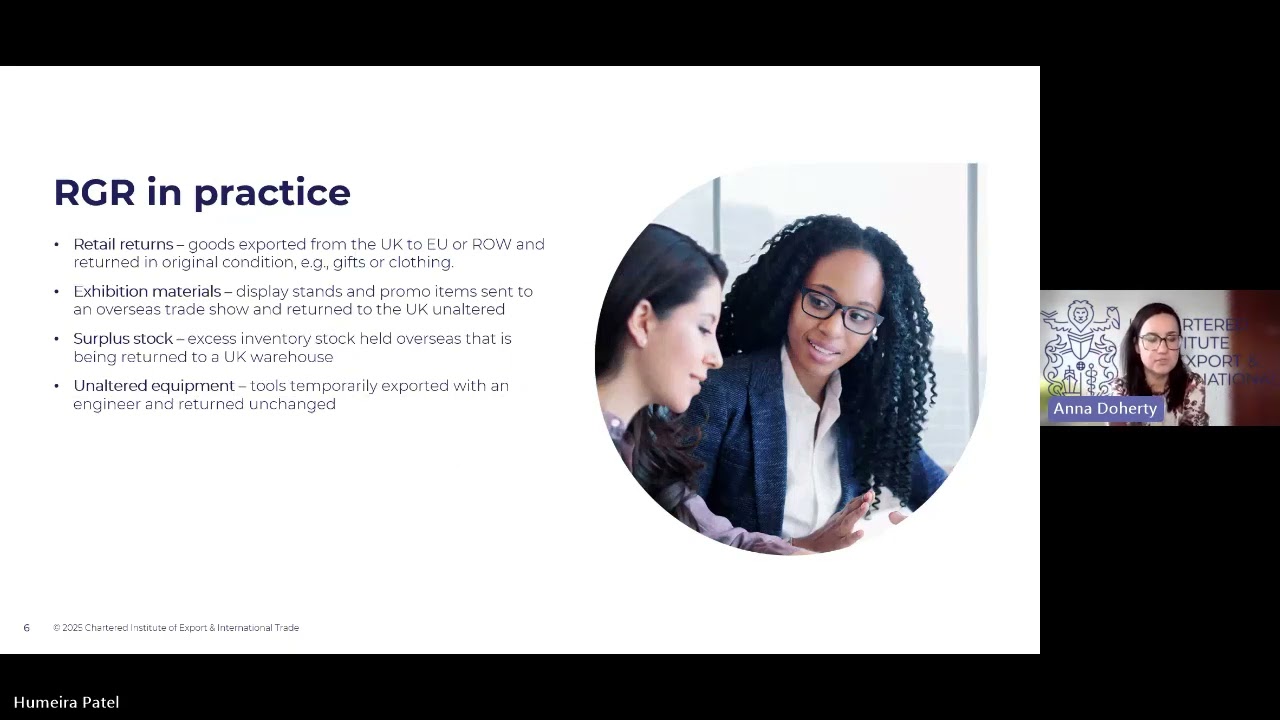
Watch the educational video on YouTube.
Domande frequenti
Does a warranty return automatically qualify for relief?
No. The actual movement, prior status, condition and applicable requirements need review.
Can photographs replace all customs documents?
No. They can support identity but do not establish every condition for relief.
Are import duty and import VAT conditions identical?
Do not assume so. Ask the responsible adviser to assess each part separately.
What if only one of several exported towers returns?
Identify the exact unit and reconcile it to the original movement so the reviewer can assess the actual partial return.
Sources and scope
Queste fonti supportano i principi di background specifici discussi sopra. Le loro giurisdizioni e soggetti differiscono; non certificano le attrezzature illustrate né approvano una singola spedizione o installazione.