
Concrete Saw Cutting Lighting: Cut Lines, Shadows and Wet Surfaces
Verifique a linha de corte a partir da posição habitual do operador da serra. Utilize a iluminação ambiente e uma iluminação de trabalho adequada, conforme necessário; uma maior luminosidade do pavimento, por si só, não resolve uma visão obstruída da zona de corte.
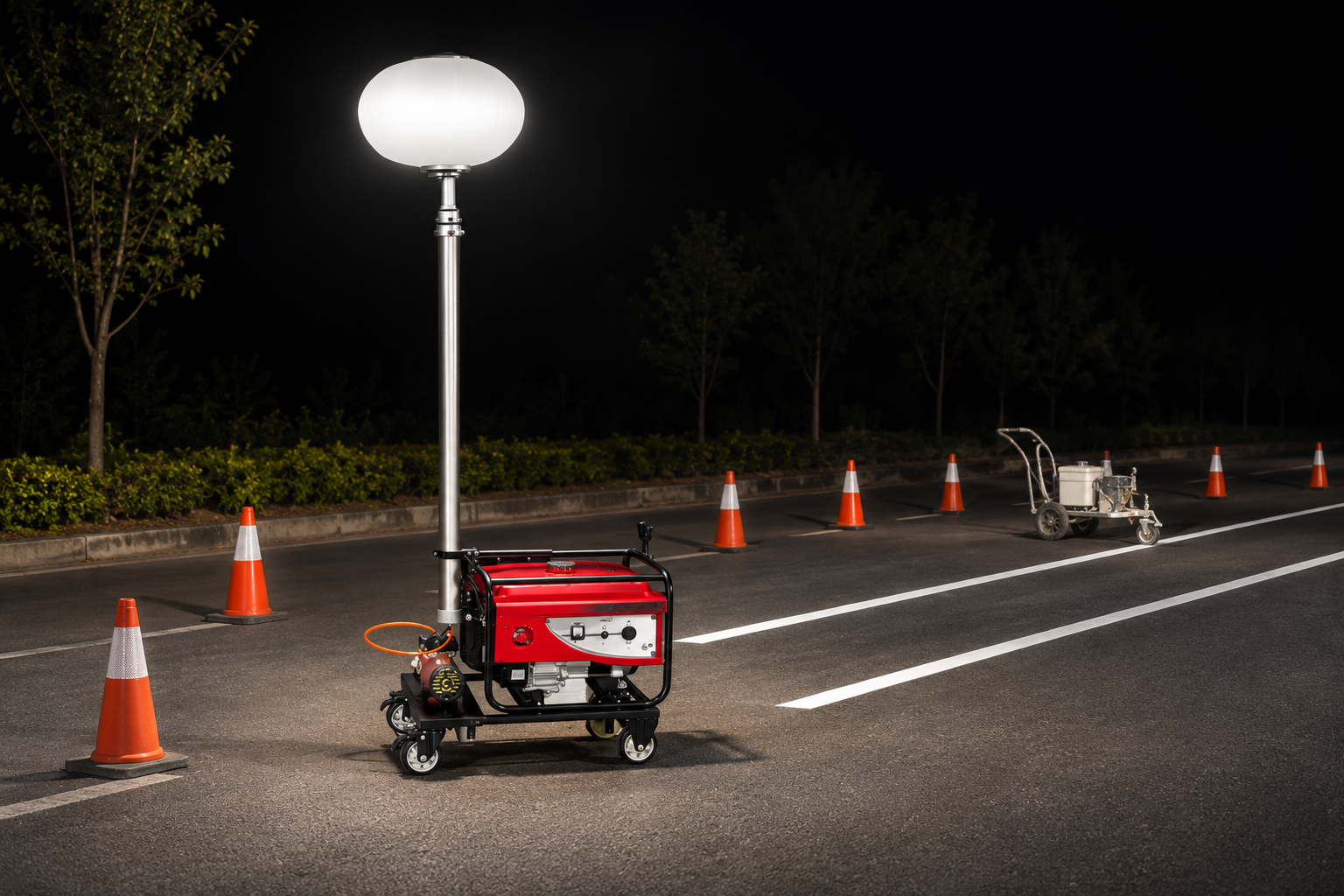
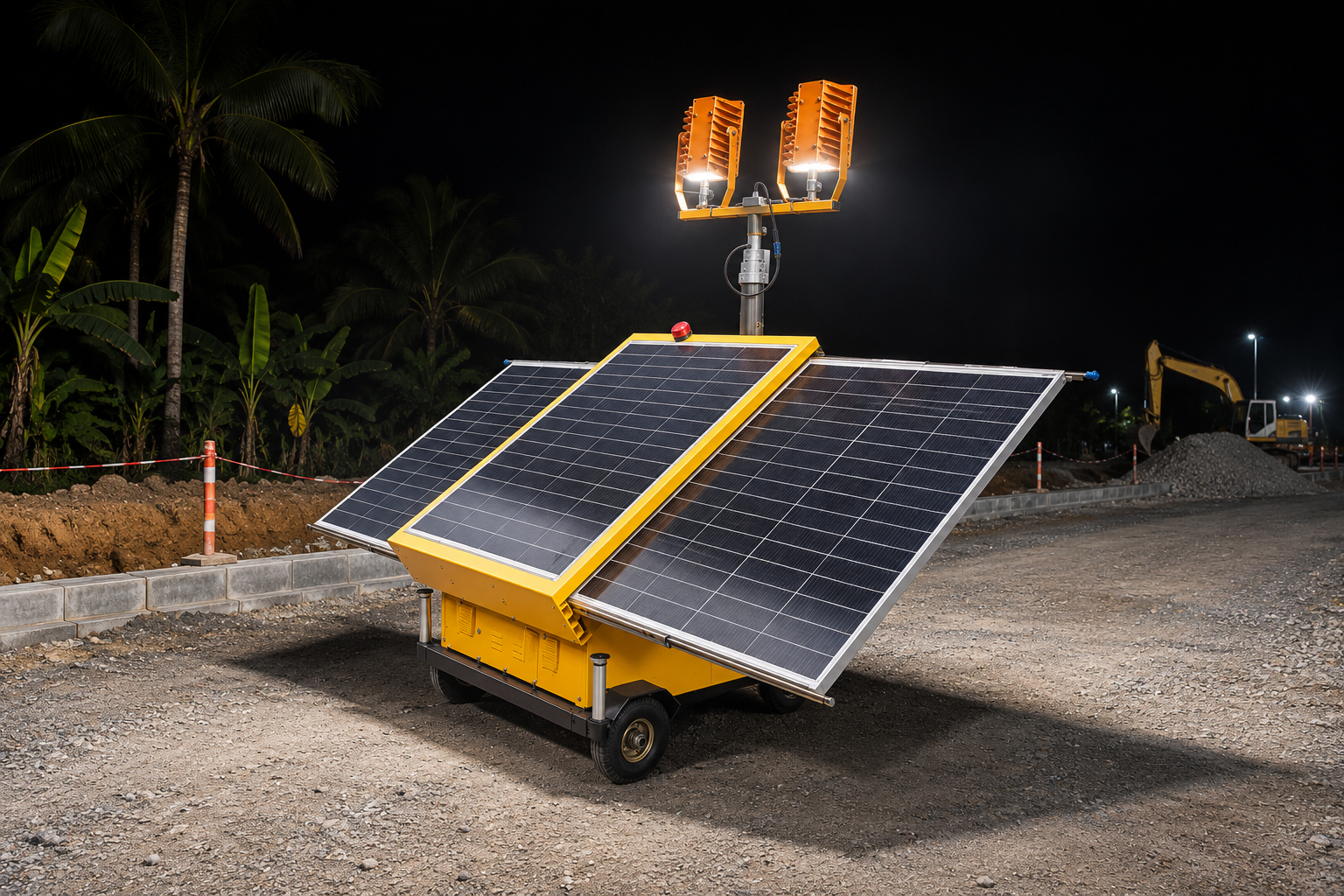
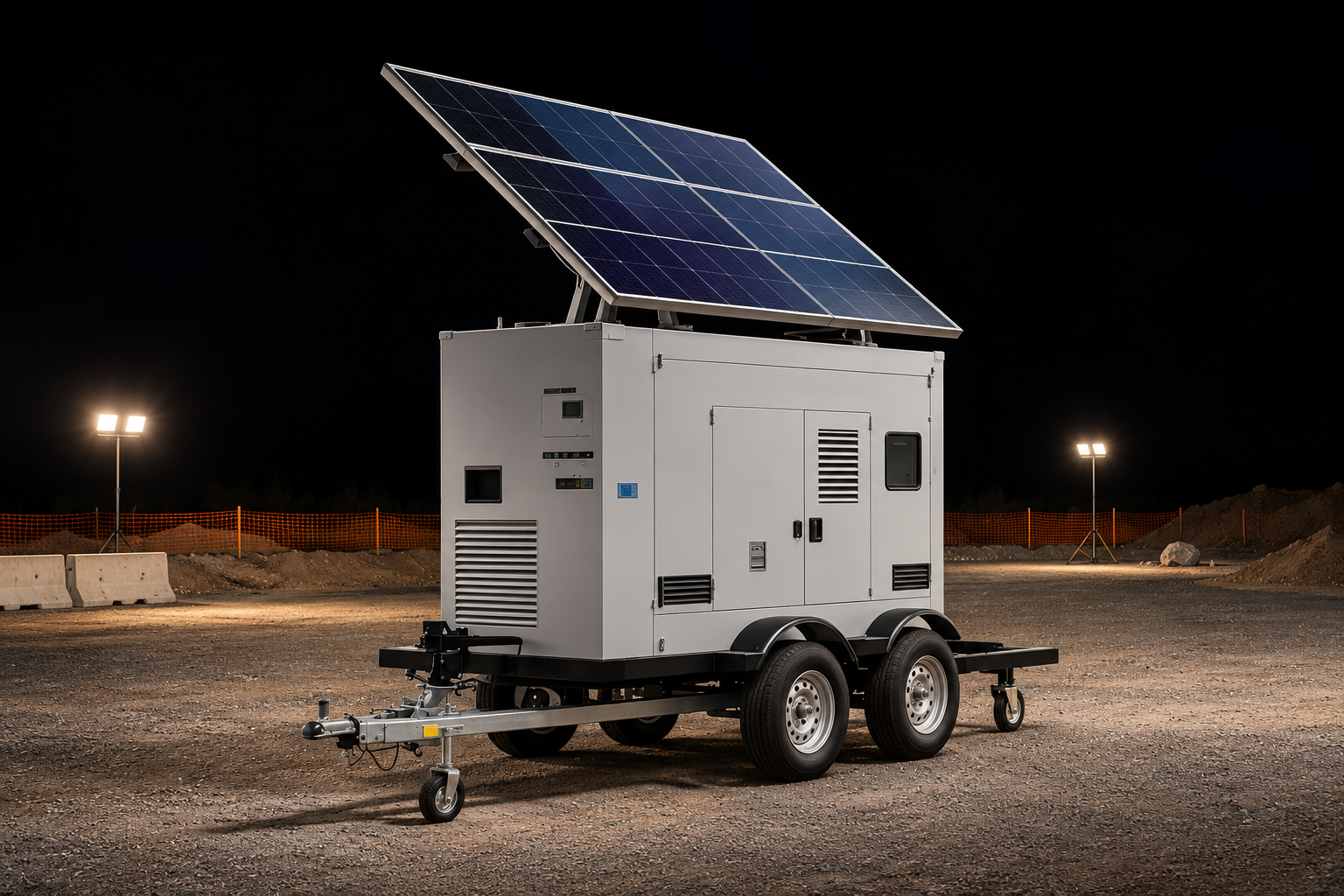
Concrete saw cutting lighting should reveal the marked cut, the operator’s working area and the nearby access route while controlling shadows from the saw and the operator. A light tower can provide surrounding illumination, but it may need compatible local task lighting where the machine blocks the beam. Choose the arrangement from the actual saw position, pavement surface, water-control method and permitted tower pads. Brightness alone cannot establish cutting safety. The cutting plan, guarding, dust controls, underground-service checks and electrical arrangements remain separate requirements for the competent people directing the work.
Begin with the cut line and the operator’s actual view
Show the proposed cut line and the normal operating position on the lighting enquiry. Identify whether the work follows a long straight line, a patch perimeter or several short starts and stops. These tasks produce different sightlines. A tower placed well for one edge of a repair can leave another edge in the operator’s shadow. Ask the supplier to address the sequence rather than quote a general illuminated area larger than the work bay. Coverage beyond the task does not compensate for an obscured cutting reference.
Place this task-specific plan within the wider construction light tower selection, while keeping the views and sequence described here explicit.
Use an inactive, safely parked saw to review the proposed view before cutting begins. The site team should determine how the check is carried out and who may enter the area. Observe whether the saw housing, handles or operator position blocks the light. A second viewing direction or a suitable local source may improve the task, but its position must suit the equipment and controls. Do not attach an improvised lamp to a saw or remove a guard to obtain a clearer view.
Distinguish surrounding light from local task light
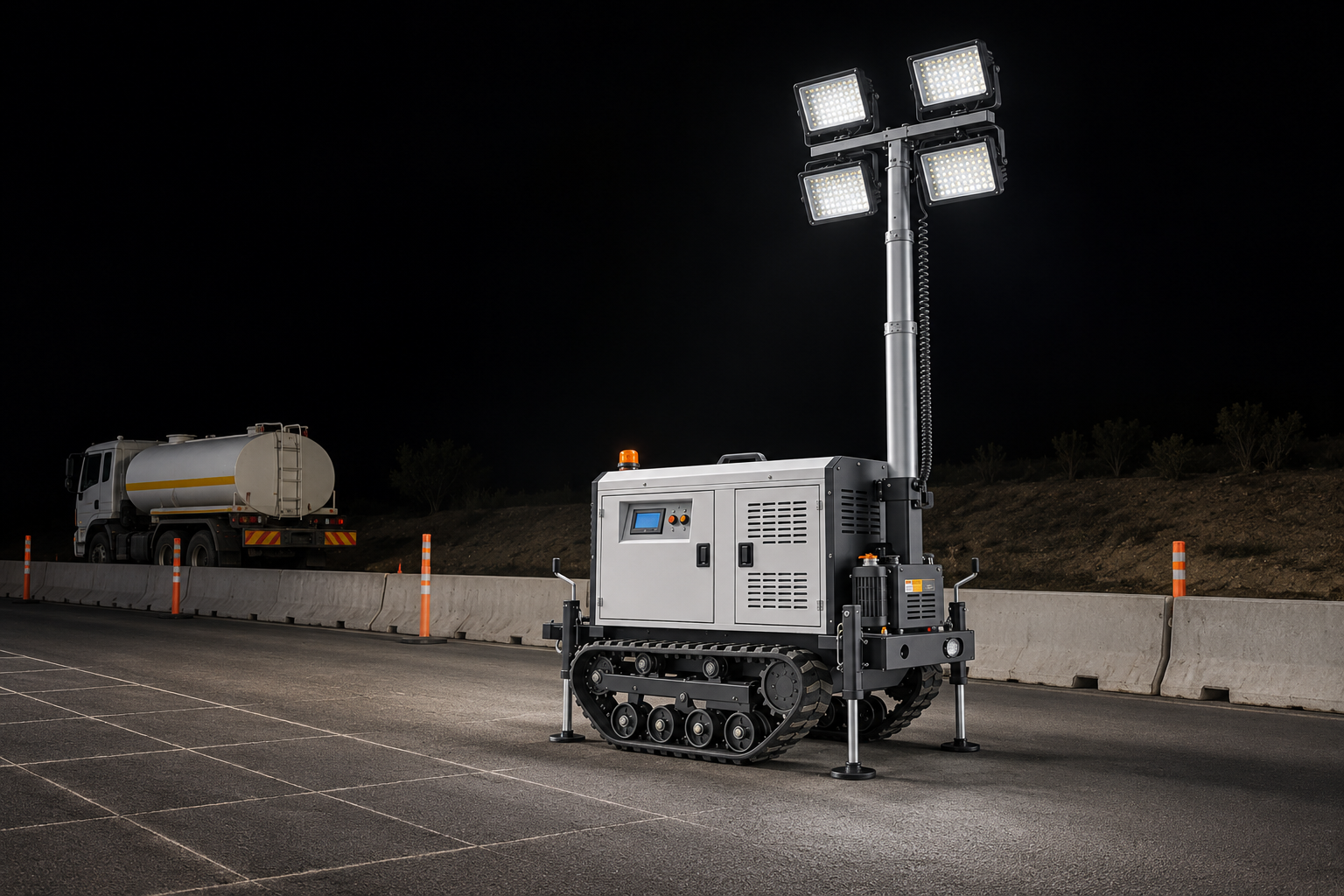
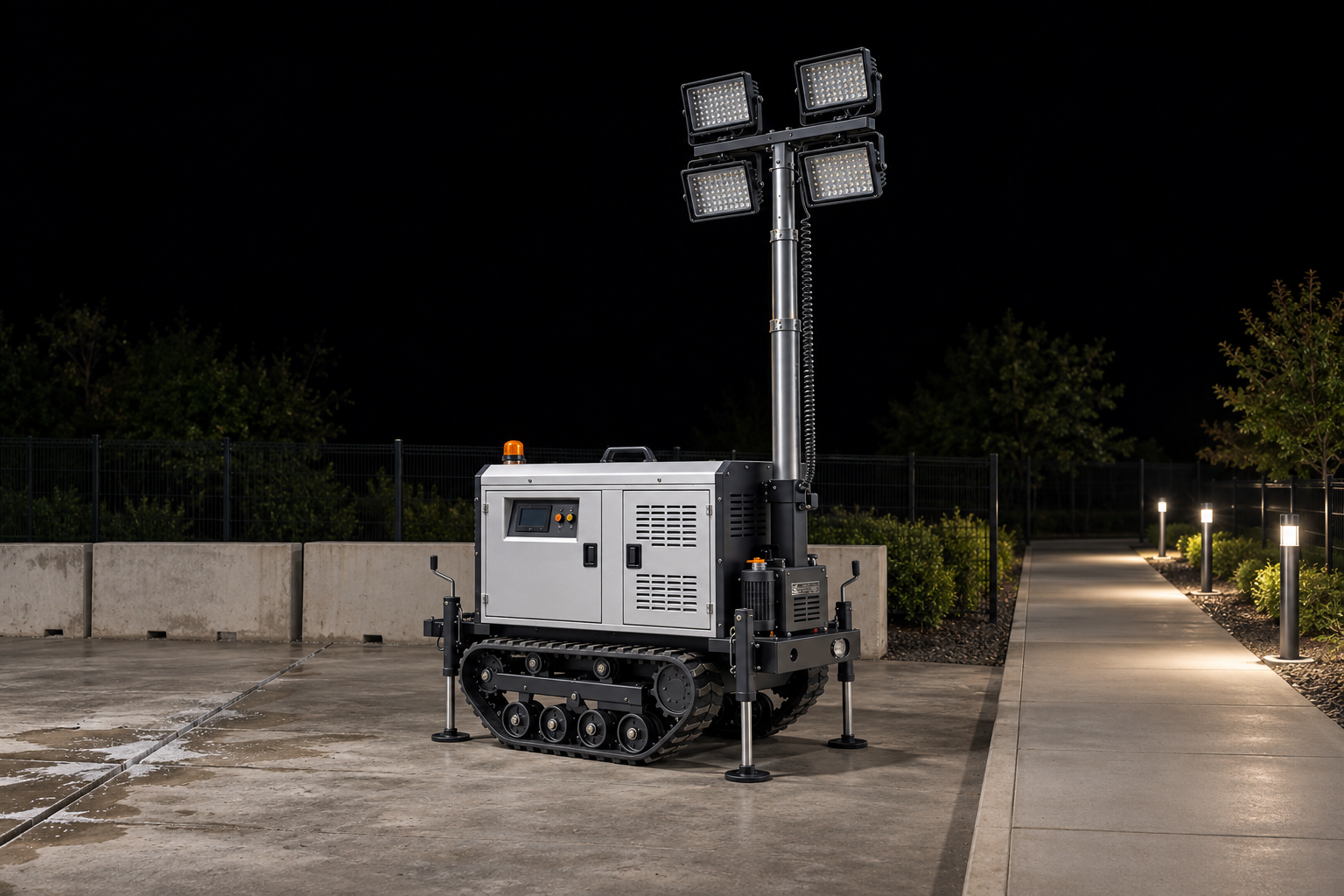
A tracked four-head tower can be considered where a suitable outdoor pad and access route exist. It provides an equipment configuration for the proposal, not evidence that every cut will receive the required illumination. Ask how the individual heads will be aimed and what working section they are intended to serve. Retain the actual lamp identity and operating setting. If the offered product differs from the illustrated machine, evaluate the supplied configuration rather than transferring assumptions from the image.
The local task view may need attention even when the bay is well illuminated. The blade housing and the operator’s body create occlusions close to the cutting location. HSE’s lighting guidance specifically recognises that shadows can hide cutting-related hazards. Review the actual shadow instead of assuming it disappears when the mast is raised. A tower and a task light have complementary roles; the electrical and physical compatibility of any supplementary equipment should be confirmed through the site’s authorised process.
Treat wet surfaces and slurry as changing viewing conditions
Where the approved cutting method uses water, ask how the surface appearance will change during the job. A dry setup inspection may not reveal reflection or visibility problems that appear later. The lighting review should consider the relevant wet working condition without creating an unnecessary live-cutting demonstration. Coordinate with the cutting supervisor to establish a suitable check. Keep the tower, connections and any ancillary equipment in the locations approved for the electrical and environmental conditions.
Do not position the tower merely where the reflected light looks brightest. A bright reflection can make the actual line harder to distinguish from the operator’s angle. Compare the relevant viewpoints and adjust through the approved setup. The lighting decision does not authorise discharge of slurry or determine the saw’s water-control arrangement. Those controls should already be defined. The procurement question is whether the proposed light and equipment placement remain useful within that defined method.
Review a cutting-bay comparison rather than a wattage list
Ask suppliers to explain how their proposal treats the specific work positions. A lamp’s nominal power does not describe shadows, reflections, operating access or the interruption caused by moving the tower. Request a clear drawing or other suitable proposal identifying the active bay and the machine position. Where a supplier offers multiple power modes, ask which mode supports the stated task. A reduced setting that looks adequate at the centre may leave the ends of the cutting section poorly served.
| Decisão | Check for this task | Selection boundary |
|---|---|---|
| Cut-line view | Check from the normal operator position | Saw body and operator can obscure the beam |
| Surface condition | Review the relevant dry or wet viewing condition | Reflections can hide detail despite brightness |
| Tower position | Use an assessed pad outside the work routes | Tracks do not establish support suitability |
| Power duty | Include checks and cleanup in the load period | Unassessed tool loads can compromise lighting |
Use the checklist with the cutting contractor’s method and the applicable project criteria. It does not specify blade operation, a universal light level or a safe electrical design. The useful comparison is between proposals addressing the same bay and conditions. If a quote excludes task lighting or protected electrical distribution, make that exclusion visible before comparing the price. Otherwise the apparent saving may represent a missing part of the work arrangement rather than a more suitable machine.
Reserve a tower pad outside the saw and vehicle movements
Define the tower location before the cutting bay becomes crowded with water supply, collection equipment and material handling. Include the deployed supports and service access, not just the cabinet footprint. The site team must assess the ground and any nearby excavation or edge. Tracks do not remove the need for a suitable setup location. A tracked tower’s ability to reach a pad is separate from its suitability for operation there with the mast raised.
Keep the intended pedestrian route distinct from the saw movement and any equipment collection route. If the lighting position creates a blind corner around the cabinet, revise the arrangement. NIOSH’s internal traffic-control guidance addresses coordination of people and construction vehicles inside work areas. Apply that planning principle to the complete bay rather than treating the light tower as a small item that can be parked wherever space remains. Lighting is part of the work layout and should be included in its review.
Plan for interruption before the saw needs the light
Agree what happens if the working light is lost or its output becomes inadequate. The cutting supervisor should define the response within the task procedure. The lighting package should support that response and a suitable way to leave the area. Do not count the generator’s continued running as confirmation that the lamps still provide the intended view. A failed lamp, changed aim or blocked beam can create a task problem even while the main power unit operates normally.
Include preparation and cleanup in the lighting duty. The crew may still need to inspect the cut, handle equipment and clear the route after the last cutting pass. Ask for runtime evidence for the actual supplied load and service conditions. If another tool is to use a tower outlet, obtain the relevant electrical review rather than assuming an available socket proves capacity and compatibility. The lighting supply should not be made unreliable by an unassessed additional load.
Keep the saw safety review independent
WorkSafe Western Australia’s quick-cut-saw guidance concerns risks associated with the tool and its use. The IHSA film below likewise covers saw-specific precautions. These sources are relevant because improved visibility supports a task that still needs its own safety controls. A well-lit blade area does not establish that the selected blade, material, guarding or work method is suitable. Have the responsible people resolve those matters separately instead of describing the lighting order as approval of the cutting operation.
For the buyer, this boundary makes the enquiry more useful. Ask the contractor which parts of the task must be clearly seen, what equipment occupies the bay and what conditions limit lamp placement. Give those facts to the lighting supplier. Do not ask the supplier to infer a complete cutting method from a road photograph. A task-specific drawing can identify the important lighting inputs while the contractor retains responsibility for the specialist work and the project’s required checks.
Accept the supplied arrangement from the working positions
Check the installed lights after dark with the relevant safely positioned equipment present. Verify the marked line from the intended operating position, the nearby walking route and the ends of the permitted work section. Record the lamp settings, aiming and any supplementary lighting. If a view is inadequate, change the approved arrangement and repeat the affected observation. Keep measured results where the project requires them; a bright photograph is not a replacement for the specified acceptance method.
Before ordering the next bay’s equipment, retain the lessons about the actual saw and work sequence. A useful result identifies which setup worked, the conditions under which it was checked and when it must be reviewed again. It should not become a universal spacing claim for every site. Connect the enquiry to the existing shadow-control e lux-testing guidance for those broader questions, while keeping this article focused on the moving saw, close-range occlusions and changing pavement condition.
Aprendizagem adicional
IHSA.ca – Work Safe for Life explains How to use a concrete saw safely. This supports the task context discussed above and does not replace the project’s equipment assessment or work method.

Watch the educational video on YouTube.
Perguntas frequentes
Uma maior potência da lâmpada melhora sempre a visibilidade da linha de corte?
No. A physical obstruction or reflection may require a different approved light direction or task-light arrangement.
Does the tower approval cover the cutting method?
No. The responsible team must separately address the saw, material, guarding, dust and other work controls.
Can a convenient outlet supply the saw?
Only after the appropriate electrical capacity and compatibility review; an available socket is not proof.
When should lighting be checked again?
When the saw position, work section, surface condition or equipment arrangement changes enough to affect the required view.
Referências
- Site lighting – HSE
- Information sheet – Known hazards when using hand-held quick cut saws – WorkSafe – LGIRS
- Using Internal Traffic Control Plans to Prevent Construction Worker Injuries and Fatalities in Work Zones | NIOSH Science Bulletin | CDC
Choose the supplied arrangement
Give the supplier the actual task views, permitted equipment locations and complete night duty. Resolve missing evidence before ordering, and verify the supplied configuration against the project criteria after installation. Illustrations show product context, not a measured site design or a completed customer project.