

Light Tower Model and Nameplate Checks for Buyers
Checking a light tower model and nameplate helps a buyer confirm that the machine delivered is the machine ordered.
Checking a light tower model and nameplate helps a buyer confirm that the machine delivered is the machine ordered. Match the manufacturer's model and serial number to the order, then check the actual chassis, lifting system, lamp arrangement and power configuration. A fleet sticker is useful for your own records, but it cannot replace the manufacturer's identification. This guide explains a practical receiving check for contractors and equipment distributors, using a real hand-cranked trailer tower as the product example. Carry out identification checks with the machine safely parked and follow its instructions before any functional test.
Match the ordered light tower to its visible configuration
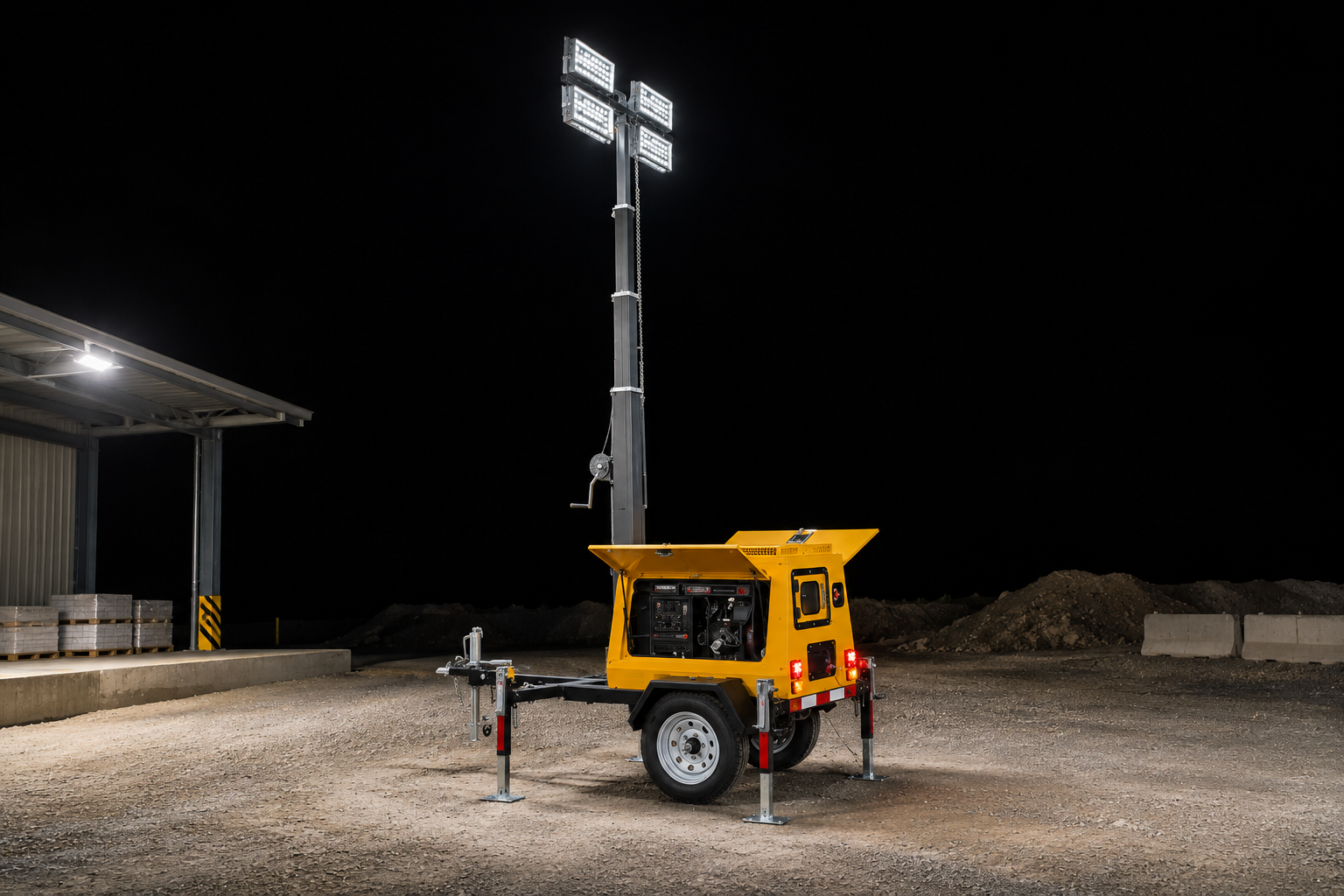
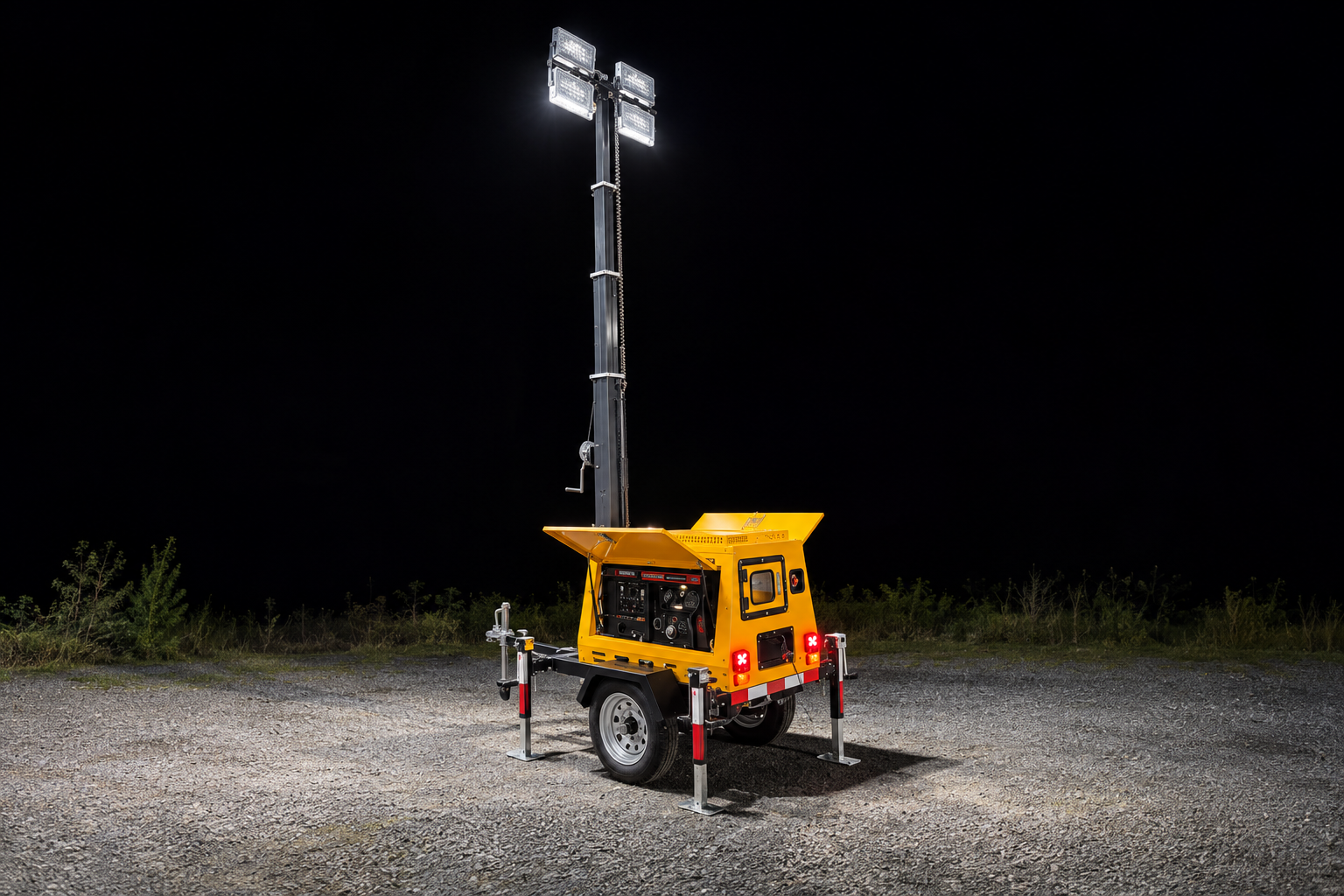
Read the purchase description before looking at the cabinet colour. Record whether you ordered a trailer, tracked machine or hand-pushed cart; then compare the delivered wheel arrangement, towing connection, stabilisers and lifting system. The hand-cranked trailer illustrated here is a different product from a hydraulic trailer or solar-powered cart. Similar yellow paint does not establish the model. Check lamp quantity and visible mounting geometry against the accepted configuration. Where a component has its own identification plate, connect it to the machine records without assuming every assembly uses the same serial number. If the visible equipment and paperwork disagree, ask the supplier to resolve the difference before accepting a substituted configuration or starting normal use.
| Item to compare | Information to request | Practical purchasing check |
|---|---|---|
| Machine identity | Manufacturer model and serial number | Matches order and delivery documents |
| Chassis and movement | Trailer, track or cart arrangement | Matches purchased product type |
| Lighting and lift | Lamp arrangement and mast mechanism | Matches the accepted configuration |
| Documents and options | Instructions, options and model references | Refer to the actual delivered unit |
Use a receiving checklist that purchasing and maintenance can share
Photograph the overall unit, manufacturer identification and the parts relevant to the order, without covering warnings or opening unsafe equipment. Compare the model description, serial number and purchased options on the delivery documents. Check that operating instructions and any model-specific reports refer to the delivered equipment rather than another series. Record which differences are shipping damage, missing items or specification questions; each may need a different response from the supplier. Keep the original nameplate readable after adding an internal asset label. A distributor handling several towers should verify every unit rather than assuming the first machine represents the whole shipment. This makes later parts enquiries, warranty discussions and customer handovers much more precise.
Resolve a model mismatch before the tower reaches the night shift
For example, a contractor orders a hand-cranked trailer for a site where mains-independent lighting and easy towing are required. The receiving team finds a different mast arrangement from the accepted quotation. The right question is whether the change was approved and whether the delivered instructions and configuration match it. Renaming the item in the stock system does not establish acceptance. Ask for the exact configuration comparison and a documented resolution. Once the unit is accepted, retain its identification with service and spare-parts information. When selling or transferring it, provide the same model-specific records. A clear receiving check is useful throughout the equipment's working life, especially when several visually similar towers are used on different sites.
Separate manufacturer identity from fleet convenience
A manufacturer serial number identifies equipment within the manufacturer’s system. A fleet code is an operator’s convenient reference for bookings, movement and administration. Keep both fields and record who verified their relationship. Do not overwrite the serial field with a rental number simply because the fleet number is easier to remember. A supplier resolving a service question may need the manufacturer identity and configuration as well as your internal reference.
Give each physical tower a unique active fleet record. If a business acquires another rental fleet, check for overlapping numbering schemes before importing the records. Two records named LT-101 may represent different machines, while a renamed record can accidentally look like an additional asset. Preserve the previous identifier as an alias with dates rather than silently destroying the connection to earlier inspections.
A digital code should lead to a record that also displays a human-readable identity. Connectivity and camera quality vary, and a worker may need to report a defect by radio. Choose an identifier that the organization can distinguish accurately in that setting. This is an administrative design choice, not a substitute for manufacturer markings or a universal numbering standard.
Establish the physical-to-record match at receiving
Compare the manufacturer’s marking, delivery documentation and selected manual through the supplier’s accepted receiving process. Record what was actually observed, including any uncertain characters. If permitted by site and privacy rules, retain a clear photograph that shows the identity in context. A close photograph of an isolated number without enough context can later be associated with the wrong unit.
Capture the machine’s model designation and delivered configuration without guessing from a catalog picture. A visually similar cabinet may house a different energy system or control arrangement. Record separately any manufacturer-supported variant information needed to select instructions and service parts. Ask the supplier to resolve contradictions between documents instead of choosing whichever document seems most complete.
The receiver should verify the record after it is created. Opening the new fleet entry from the physical tag is a useful check against transcription and linking errors. Confirm that the resulting entry displays the observed manufacturer identity and current status. Where responsibility is transferred to a site team, name the person accepting that verified relationship so later discrepancies have a clear escalation route.
Link documents through applicability rather than filenames
Store the manufacturer manual reference, issue and applicability information with the fleet entry. A document named light-tower-manual.pdf is not sufficient evidence of a match. Confirm the stated model and relevant configuration with the supplier, and keep any written clarification. A document update should identify which equipment it affects instead of replacing every machine’s manual automatically.
Connect inspection and maintenance records to the physical machine and the work performed. HSE’s work-equipment guidance explains the importance of maintenance and inspection within its UK context. The practical identity lesson is that a record must be traceable to the equipment it is intended to cover. This article does not prescribe a universal inspection interval or imply that every inspection record proves current fitness for use.
Avoid placing all information behind a restricted office login that the responsible field team cannot access. Establish which documents workers need locally and how they receive current versions. Where a tag opens a public or shared page, consider whether personal details, commercial terms or security information should be exposed. Publish only the information appropriate to the audience while preserving access to necessary safety instructions.
This qualitative decision aid applies general principles discussed in Provision and Use of Work Equipment Regulations 1998 (PUWER) – overview – HSE. It provides no machine-specific limit or universal legal rule.
Resolve unreadable, missing and duplicate identifiers
Treat an unreadable manufacturer marking as a supplier clarification task. Retain the uncertain observation and supporting documents, and ask the manufacturer or authorized provider how identity can be established. Do not stamp a guessed serial number onto the chassis or copy the number from a nearby machine. An apparently tidy correction can destroy evidence of the original discrepancy.
For a damaged supplementary fleet label, confirm the manufacturer-to-record match before issuing a replacement. Record the date, reason and authorizing person. Retire the previous tag in the administration system so a loose recovered label cannot later be assigned to another tower. If labels carry scan codes, test the replacement against the correct record before returning the machine to normal dispatch.
When two units show the same fleet code, distinguish them physically using an approved temporary arrangement and investigate the records together. Check bookings, service orders and inspection attachments for cross-association. Correcting one displayed number does not repair past records that were attached to the wrong asset. Keep affected decisions open until the responsible team establishes which evidence belongs to each machine.
Preserve identity when assemblies or ownership change
A lamp-head assembly, control panel or engine can have its own identity without becoming the identity of the complete tower. Record component references in separate fields and document approved changes. Do not transfer the complete-machine inspection history to a replacement assembly merely because a technician entered a component serial into the main asset field. Applicability still depends on the work and configuration covered by each record.
If a cabinet or chassis replacement affects original markings, obtain the manufacturer’s instructions and any required documentation before changing the register. The fleet administrator should not decide that a major replacement is simply the same machine with a new sticker. Technical and destination requirements can affect how the resulting equipment must be described and supported.
On sale, long-term transfer or return to a hire provider, reconcile the physical unit, retained records and any locally issued identifiers. Remove or retire only the organization’s supplementary labels through its agreed process; preserve original markings. Define which documents and history are transferred and which records remain in the former owner’s archive, with appropriate privacy and commercial controls.
Product reference and related buying guides
For a model-specific enquiry, start with the Trailer Type Hand-Cranked Mobile Lighting Tower. Describe your actual task and ask for the offered configuration, applicable instructions and relevant support information.
- How to Choose a Light Tower
- Light Tower Site Acceptance Test: Verify the Delivered Unit and Deployment
- Light Tower Specs
- How Should Fleet Operators Plan Light Tower Spare Parts?
Further learning
WorkSafeBC: The Supervisor | WorkSafeBC. This educational resource explains background concepts; it does not establish the performance or certification of the pictured machine.

Frequently asked questions
Is a fleet label enough to identify a tower?
No. Preserve the manufacturer identification and connect the internal asset record to it. An internal label should not hide warnings or the original nameplate.
What if the delivered machine differs from the quotation?
Record the specific difference and request a supplier resolution before acceptance or normal use. Do not treat similar colour or a revised stock description as approval.
Should every tower in a batch be checked?
Connect identification and configuration records to each unit. Checking only the first machine does not establish the identity and options of the others.
Sources
Use the applicable machine instructions for product-specific decisions. The following sources support general principles within their stated scope.