
خطة إضاءة العمل الليلي لتركيب الأسفلت
يتم وضع خطة لإضاءة تشييد الأسفلت حول معدات تشييد الطرق، وشاحنات المواد، وممرات الأسطوانات، وأطراف الرصيف، وأماكن التفتيش، ومكافحة الانعكاسية خلال نوبة عمل ليليّة.
Asphalt paving lighting should reveal placement, screed work, inspection points, and delivery approaches without glare obscuring the crew or driver view. Coordinate tower positions and relocation with the paving train and traffic controls, then verify the actual operating layout at night.
Follow the paving train without blocking its routes
Asphalt paving lighting needs to serve a moving sequence: truck approach, material transfer, the paver’s working area, roller routes, pavement edges, and inspection positions. Distinguish equipment-mounted work lights from mobile area lighting in the plan. A tower that provides useful approach coverage may not reveal the edge or surface detail required by the paving crew. Ask the responsible crew which positions and tasks need additional approved illumination.
Inspect glare from the truck driver’s approach and the machine operators’ actual views. Shiny or wet surfaces and changing equipment positions can make a convenient aiming direction unsuitable. Locate towers, supports, and power arrangements outside the permitted vehicle and compaction routes. Do not improvise a position on unfinished pavement or an unstable verge to keep up with the paving front. Ground suitability and any relocation procedure require the actual lighting equipment instructions and site approval.
Identify the point at which each tower is lowered, moved, and set up again. A relocation must restore lighting for the active front and its access routes before the next stage relies on it. Include inspection and finishing time in the power or charging profile rather than basing runtime solely on paving production hours. The shift record should identify position, output mode, aiming, any visibility complaint, and the response taken. Lighting helps crews observe their work; it does not establish that the pavement meets temperature, density, smoothness, or other quality requirements.
الخمس قضايا التي تحكم القرار
| منطقة القرار | ما الذي يجب التحقق منه |
|---|---|
| Paver visibility | Map the paving operation’s feed, placement, screed, inspection, and access positions with the paving supervisor. |
| Heat and dust | Review the tower and power arrangement against the environment along the paving operation. |
| الترحيل | Determine how the lighting will advance as the paving train moves. |
| Driver glare | Inspect lamp direction from material-delivery vehicles and any approved public-traffic approach. |
| التحقق | Record the lighting layout for the actual paving stage, including crew observations, tower positions, mast configuration, aiming, and operating mode. |
1. Paver visibility
Map the paving operation’s feed, placement, screed, inspection, and access positions with the paving supervisor. Identify which details must be visible from each permitted crew location and from the material-delivery approach. A tower illuminating the lane may leave the screed or an inspection point shadowed by the paver. Assess representative paver and delivery positions through the approved nighttime check. Where a close task needs additional light, obtain an authorized fixture arrangement instead of moving a portable tower into the equipment movement envelope.
2. Heat and dust
Review the tower and power arrangement against the environment along the paving operation. Ask the supplier for the exact assembly’s environmental documentation and operating limits; a general weatherproof description is insufficient. Dust, cleaning needs, and heat exposure can affect inspection and service planning. Keep equipment outside the locations prohibited by the manufacturer’s instructions and the site plan. Lighting does not replace controls for hot material, fumes, or restricted machine access, and improved brightness should not be used to justify work outside the supervisor’s approved conditions.
3. Relocation
Determine how the lighting will advance as the paving train moves. Reserve future deployment locations, a permitted travel route, and service access before the shift. Follow the exact model’s movement instructions and coordinate relocation with traffic and equipment control. Do not assume that a mobile tower can be driven or towed while raised. Record when the lighting configuration must be rechecked at the next position. A repeated arrangement along the road still needs review where curves, structures, barriers, or equipment positions alter the required views.
4. Driver glare
Inspect lamp direction from material-delivery vehicles and any approved public-traffic approach. The driver needs to recognize the work-zone instructions and relevant vehicle movements without bright lamps directly obstructing the view. Coordinate the assessment with the traffic-control plan and the paving supervisor. Aim lights toward the necessary tasks through an approved arrangement, then check the other affected positions. A brighter lane is not automatically a better arrangement if the transition into it or glare from the tower makes instructions harder to distinguish.
5. التحقق
Record the lighting layout for the actual paving stage, including crew observations, tower positions, mast configuration, aiming, and operating mode. Carry out required measurements under the project’s criteria and inspect shadows with representative equipment. Define the response to light failure during paving and who approves a changed setup. Review the affected views after relocation, an altered delivery route, changed barriers, a different paver configuration, or fixture adjustment. Retain the accepted layout with shift information so that crews can identify which conditions require another check.

Describe the paving train rather than a road area
Give the lighting supplier the planned paving sequence and the positions of delivery, placement, screed, inspection, and access activities. Include barriers, permitted traffic movements, adjacent properties where relevant, and locations available for tower deployment. The supplier needs those constraints to propose an arrangement that can follow the work. A road-length figure without the equipment sequence is not a complete lighting brief.
Ask for the fixture distribution and exact equipment configuration used in the proposal. Obtain the deployed footprint, movement instructions, mast limits, service information, and the stated conditions behind runtime or coverage claims. Keep that information linked to the offered unit so that a delivered substitution receives a review. An image of a tower beside a paver cannot establish performance for a different paver and work-zone layout.
The paving supervisor and responsible lighting specialist should define the required views and project measurements. Include the details needed at placement and finishing positions and the observations needed from vehicle approaches. Wattage describes electrical input and cannot determine whether a shadow beside the screed has been resolved. A coverage claim requires its operating and measurement assumptions before it can support the proposal.
Plan each move with the traffic controls
Review the route used to relocate lighting and reserve the next permitted base location before the paving train reaches it. Include the full support footprint, mast movement, cable route where applicable, and service access. Follow the exact tower’s transport and movement instructions. The site team should coordinate relocation with the traffic controls and equipment sequence rather than expecting workers to move the unit spontaneously during production.
Accept the arrangement at the new position under the authorized nighttime check. Use representative equipment and barrier positions and inspect the crew and driver views. Record any additional obstruction or changed approach that was absent from the previous check. A tower moved the same distance as the paver may produce a different view on a curve or beside a structure.
Where a close inspection position remains shadowed, ask for an approved supplementary arrangement. Do not attach a fixture to paving equipment or route a cable through its movement area without authorization. Review the effect on glare, access, and electrical suitability as well as the improved task view. The new arrangement should be accepted through the relevant site procedure before affected work depends on it.

Include finishing and cleanup in the duty period
A lighting duty estimate should cover more than material placement. Identify preparation, delivery delays, inspection, finishing, shift handover, and required cleanup or removal activities. Ask the supplier how its proposed operating mode supports the full period. Runtime or solar-energy assumptions need to match the offered configuration and the site’s actual charging or operating conditions.
Coordinate fuel, charging, or external supply access with the paving and electrical teams as applicable. A unit may have sufficient energy capacity while lacking an approved service position during the operation. Review that dependency before choosing it. Where generator power is used, the exhaust and service arrangement need their own controls; where another power source is offered, obtain the relevant electrical or charging documentation.
Compare the cost of the operating arrangement rather than only the delivered equipment price. Include relocation effort, permitted service windows, inspections, replacement access, and interruptions caused by defects. Give suppliers the same duty and relocation assumptions. Ask which parts and service support apply to the exact fixtures and controls being delivered, especially where the equipment will operate across several changing work positions.
Maintain a usable paving-shift record
Keep the accepted tower positions, aiming, mode, required views, and measurements with the work-zone information. State the changes that invalidate the check, including different equipment positions, altered barriers, new vehicle approaches, and fixture adjustment. Identify who authorizes changes and who verifies the resulting arrangement. This provides a practical boundary for the next crew rather than a blanket approval for the entire road.
Agree on the lighting-failure response with the paving supervisor. A replacement needs an approved location, compatible operating limits, and a new check of the affected observations. The site’s work procedure determines how production is controlled during the interruption. Do not assume that delivering another tower restores the accepted configuration or that a brighter replacement resolves the original shadow and glare conditions.
After the shift, inspect and maintain equipment through the manufacturer’s procedure and record defects. Use actual relocation and service experience to improve the next lighting brief while retaining the project-specific limits of the previous acceptance.
أدlete برج الإضاءة ذات الصلة / أدلة أبراج الإضاءة ذات الصلة
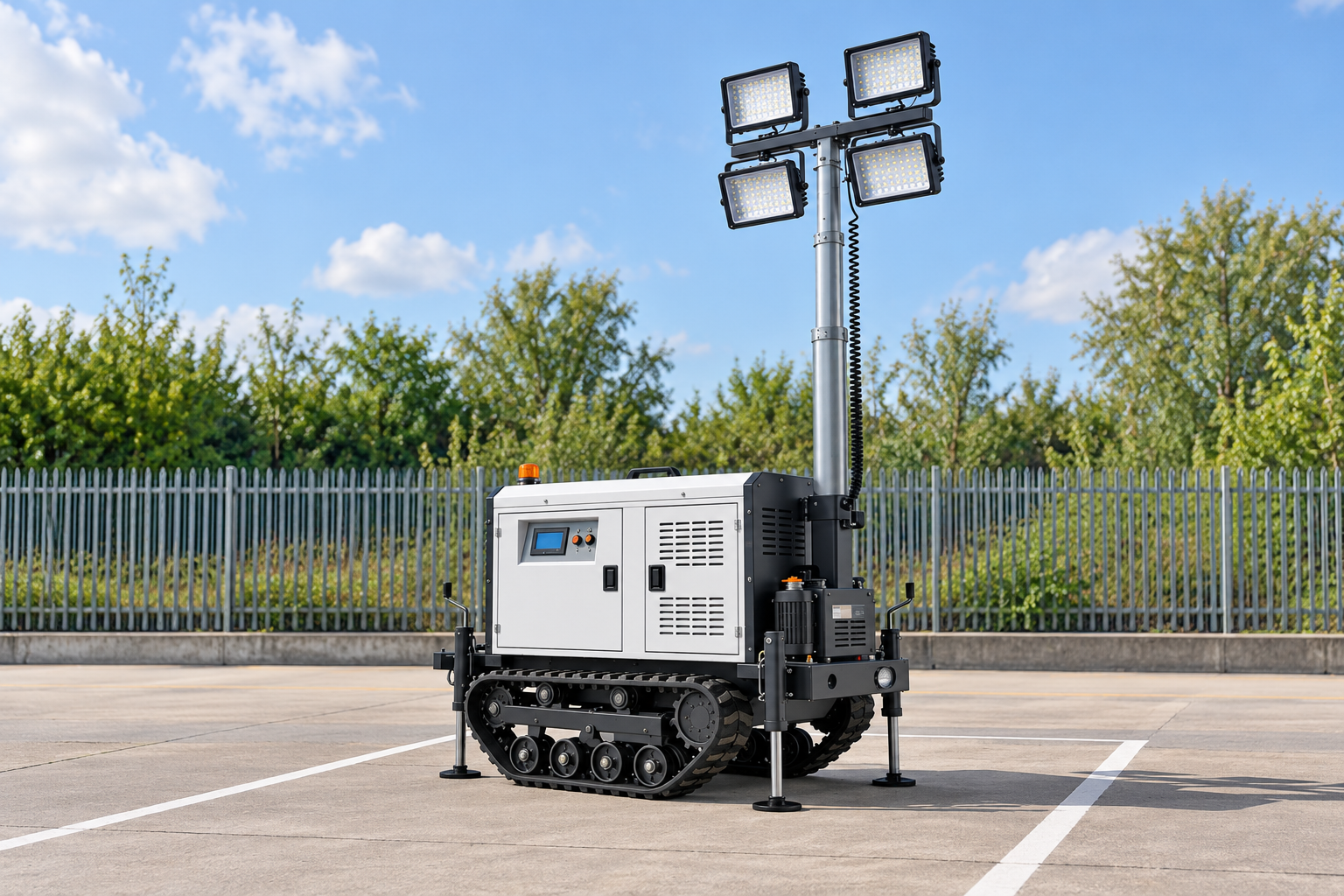
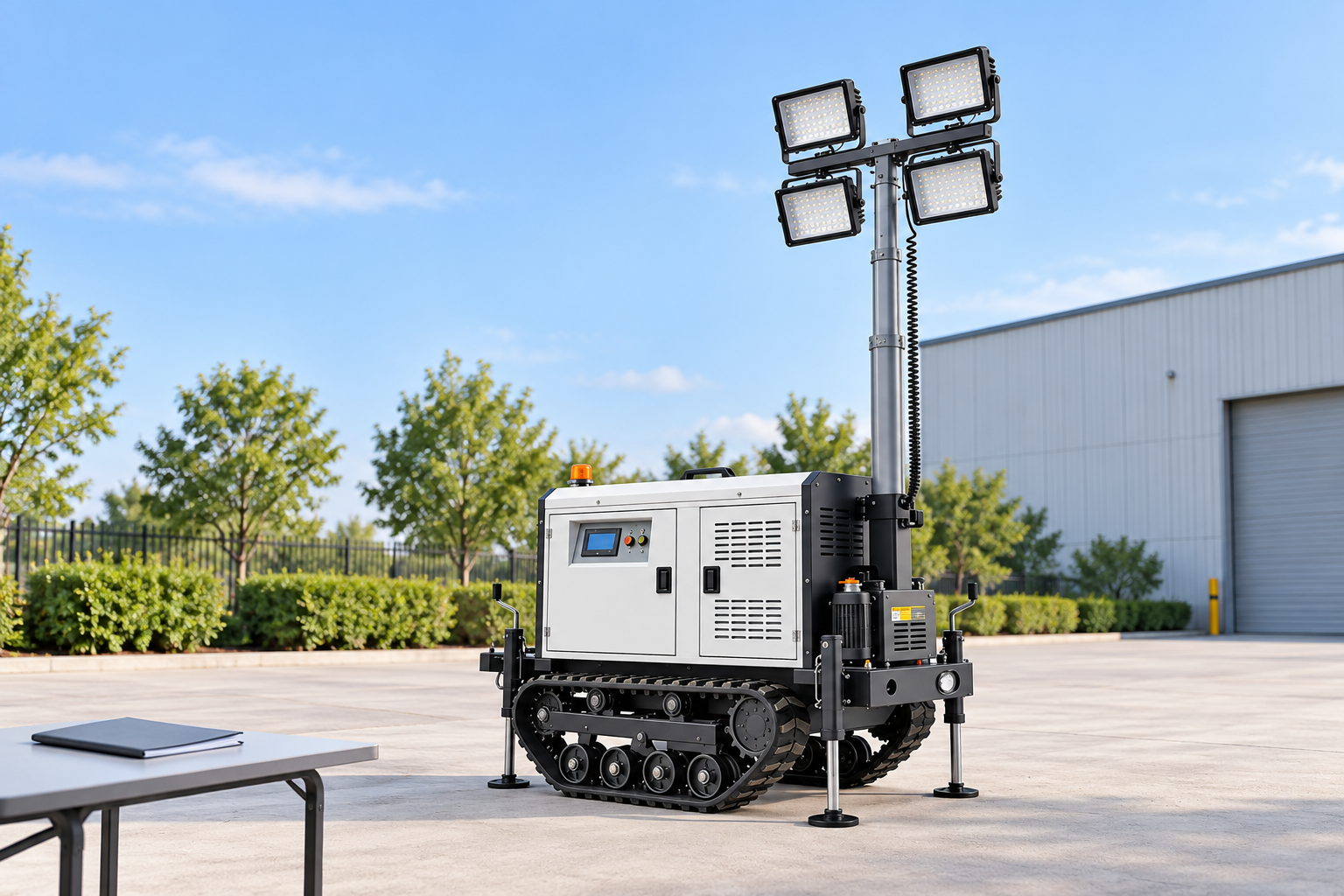
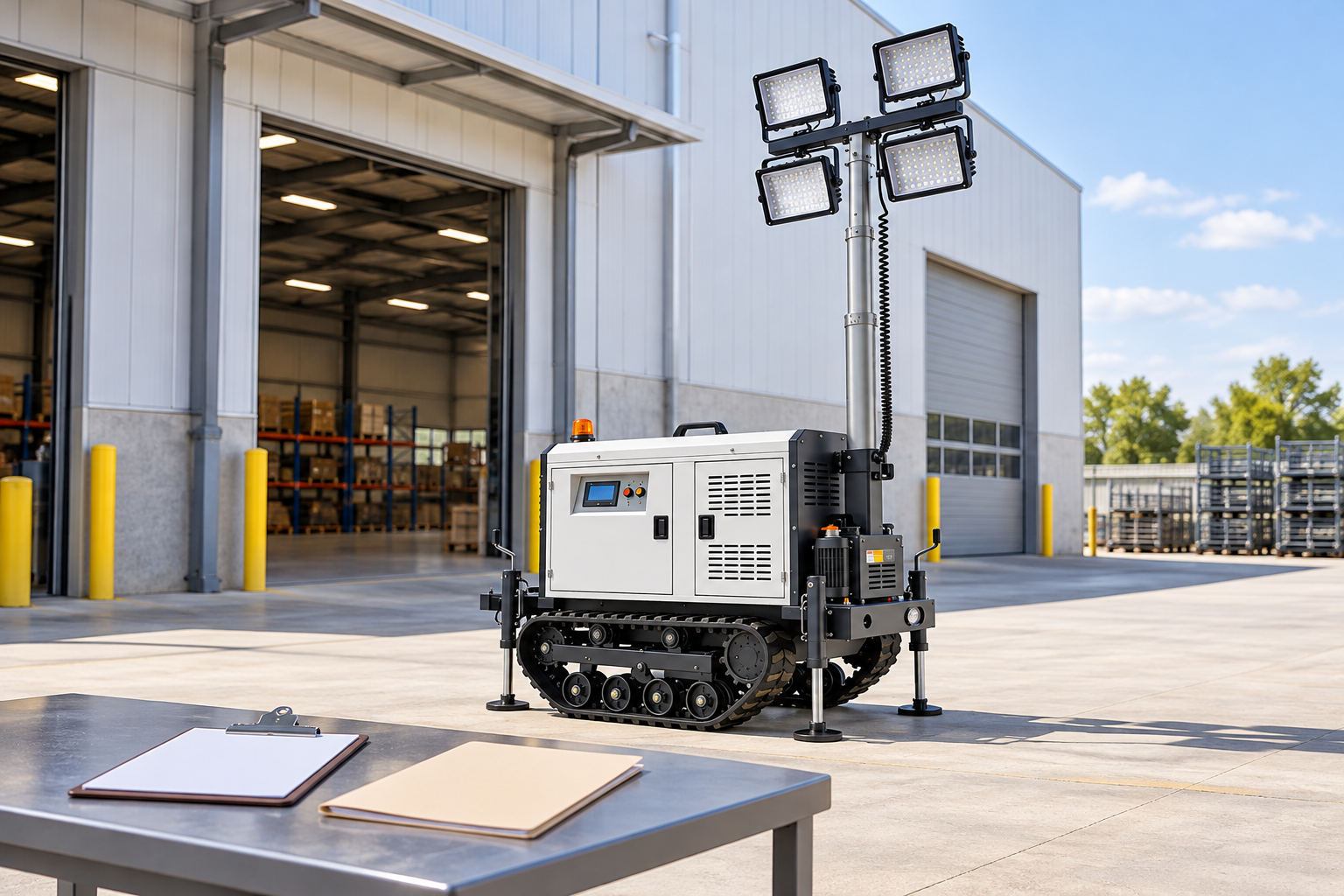
المصدر الرئيسي لـ Keyyou هو the referenced Keyyou mobile light tower product. تحدد الصورة عائلة المنتج؛ يجب الحصول على المقاسات والحدود النهائية من التكوين المرفق.
Generator exhaust and the power arrangement
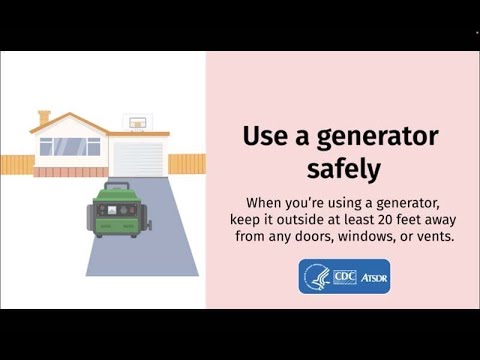
Where the lighting arrangement uses generator power, review exhaust, servicing, fuel handling, and the full operating window with the responsible site team. Keep exhaust from entering occupied spaces and follow the exact equipment instructions. The CDC video below explains carbon-monoxide precautions; its household examples do not specify this project installation. It does not demonstrate the construction or mining task, teach stored-energy isolation, or replace the relevant work procedure. If the offered tower uses another power source, obtain the appropriate charging or electrical-supply documentation instead of assuming that the generator example applies.
الأسئلة الشائعة
Can lane illumination leave the screed in shadow?
Map the paving operation’s feed, placement, screed, inspection, and access positions with the paving supervisor. Identify which details must be visible from each permitted crew location and from the material-delivery approach. A tower illuminating the lane may leave the screed or an inspection point shadowed by the paver.
Can a mobile tower advance with the paving train automatically?
Determine how the lighting will advance as the paving train moves. Reserve future deployment locations, a permitted travel route, and service access before the shift. Follow the exact model’s movement instructions and coordinate relocation with traffic and equipment control.
Whose views matter when checking paving glare?
Inspect lamp direction from material-delivery vehicles and any approved public-traffic approach. The driver needs to recognize the work-zone instructions and relevant vehicle movements without bright lamps directly obstructing the view. Coordinate the assessment with the traffic-control plan and the paving supervisor.
What changes require another paving lighting inspection?
Record the lighting layout for the actual paving stage, including crew observations, tower positions, mast configuration, aiming, and operating mode. Carry out required measurements under the project’s criteria and inspect shadows with representative equipment. Define the response to light failure during paving and who approves a changed setup.