
Aircraft Apron Maintenance Lighting With Mobile Towers
Plan aircraft apron maintenance lighting around airport work limits, aircraft and vehicle interfaces, task detail, glare, power, and recovery.
Aircraft apron maintenance lighting should serve an airport-approved repair or inspection zone while preserving the views, clearances, and access needed by adjacent operations. A mobile tower can supplement task lighting in an accepted maintenance arrangement; it does not authorize airside access or replace apron guidance and aircraft service procedures. Begin with the actual work stage, aircraft and vehicle interfaces, and the airport’s equipment restrictions. Then verify worker detail and operational glare after dark before relying on the setup.
Distinguish pavement work from aircraft servicing
An apron project might involve pavement repair, drainage inspection, equipment maintenance, or work on an aircraft. These are different lighting requests. Describe the named activity, its boundaries, the work window, and who controls the area. For aircraft maintenance, the operator’s approved task and maintenance requirements determine the detail to be seen. A general area tower should not be presented as adequate for every inspection merely because it illuminates the apron pavement.
For pavement or infrastructure work, obtain the current airport construction or maintenance arrangement. FAA’s operational safety guidance for airport construction is a United States reference, but the airport determines the applicable process and requirements. Keep the lighting proposal connected to the approved stage plan. Include the nearby apron areas that remain active and identify when the installation must be moved or removed.
Map the aircraft and vehicle interfaces
Show relevant aircraft envelopes, service equipment, vehicle routes, pedestrian access, and temporary barriers. The airport and operator should determine the restrictions applying to the work. Do not estimate an acceptable mast location from an empty-apron photograph. The configuration during actual operations can be materially different, with service vehicles and aircraft introducing both physical conflicts and large shadows.
The tower’s delivery and removal movements need review as well as its stationary position. Identify the transport configuration and approved route. If service equipment must pass the installation, check the full deployed support footprint against that route. Avoid making the work team responsible for improvising a route around a stabilizer during the night. Keep access to controls and recovery equipment available under the accepted arrangement.
Define useful task visibility
List the details personnel must recognize at each work position. Surface repair can require clear recognition of an edge, prepared area, joint, or tool position. An equipment inspection may involve labels or components that are shadowed by an enclosure. Separate general movement illumination from the detail needed for the task and identify where an approved task light is required.
Check the effect of the worker and equipment standing between the source and the job. An elevated area light may leave a low inspection position dark when a service vehicle parks nearby. More output from the same direction may not remove that obstruction. A useful assessment records the specific blocked view and an accepted remedy, rather than simply ordering a tower with a larger advertised lumen figure.
Review aircraft-related optical effects
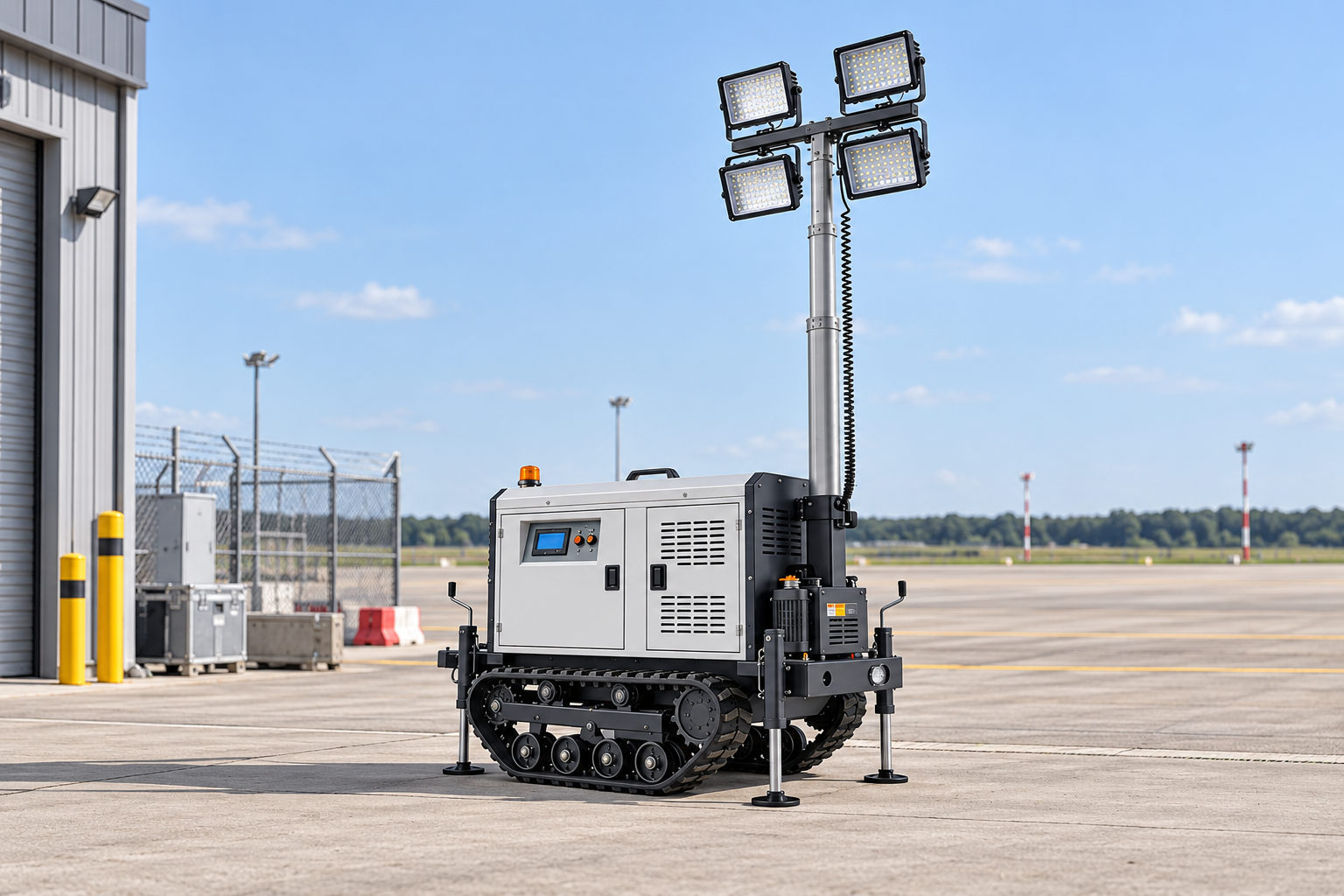
Ask airport operations and the relevant operator which views must be checked. These can include service-vehicle approaches, crew positions, and operational viewpoints beside the work. Direct glare, reflections from wet pavement, and reflections from smooth aircraft surfaces can differ substantially. Assess the relevant arrangement instead of assuming that downward aiming eliminates every conflict.
Temporary work lighting must not obscure or imitate airfield visual instructions. Keep its function distinct from the airport’s guidance systems. The accepted position, aiming, mast height, and output mode should be recorded together. When any of those changes, review the affected views. If a different aircraft or a changed service layout is introduced, determine whether the original check still describes the current work.
Submit exact equipment information
Provide documents for the delivered configuration: deployed dimensions, support footprint, transport state, mast and lamp arrangement, relevant operating limits, and service requirements. The airport determines whether the installation is acceptable. A supplier’s product category or maximum height is insufficient when the proposal depends on a particular position and setting.
Keep environmental and mechanical limits connected to the actual work conditions. The exact instructions govern deployment and movement. Do not relocate with an elevated mast unless the instructions and the airport’s approved process explicitly allow the proposed operation. Where the work has a short closure window, include setup and recovery times in the equipment comparison. Useful lighting that cannot be removed within the approved sequence may be unsuitable for the job.
An apron maintenance review table
This table organizes questions for the airport and maintenance team. It does not prescribe aircraft clearances or certify the illustrated equipment for airside use.
| Review area | Evidence to record | سؤال القبول |
|---|---|---|
| Work scope | Pavement, equipment or aircraft task | Is the tower serving a defined and approved function? |
| Operational interfaces | Aircraft, vehicle and pedestrian plan | Are access and movement restrictions respected? |
| Task detail | Actual work positions and obstructions | Is local approved task lighting needed? |
| Optical effects | Relevant observer and reflection checks | Does temporary lighting interfere with other views? |
| التعافي | Transport route and removal sequence | Can the installation be cleared as required? |
Choose power around airside logistics
Specify duration at the lamp mode expected for the job, including setup, work, testing, cleanup, and recovery. Ask for runtime information with the conditions stated. Reduced-output demonstrations should not be treated as evidence for a full-output period. Confirm how refueling, charging, or a replacement unit would reach the accepted position under airport access controls.
Review engine exhaust and service requirements independently of light coverage. Occupied buildings and vehicles, openings, and site instructions affect the proposed location. External supplies require the electrical team’s review of connections, protection, and cable routes. Battery and hybrid systems need their actual charging and engine-start behavior documented. A claim of quiet operation does not establish that the system can support the planned maintenance window without service.
Inspect with representative equipment present
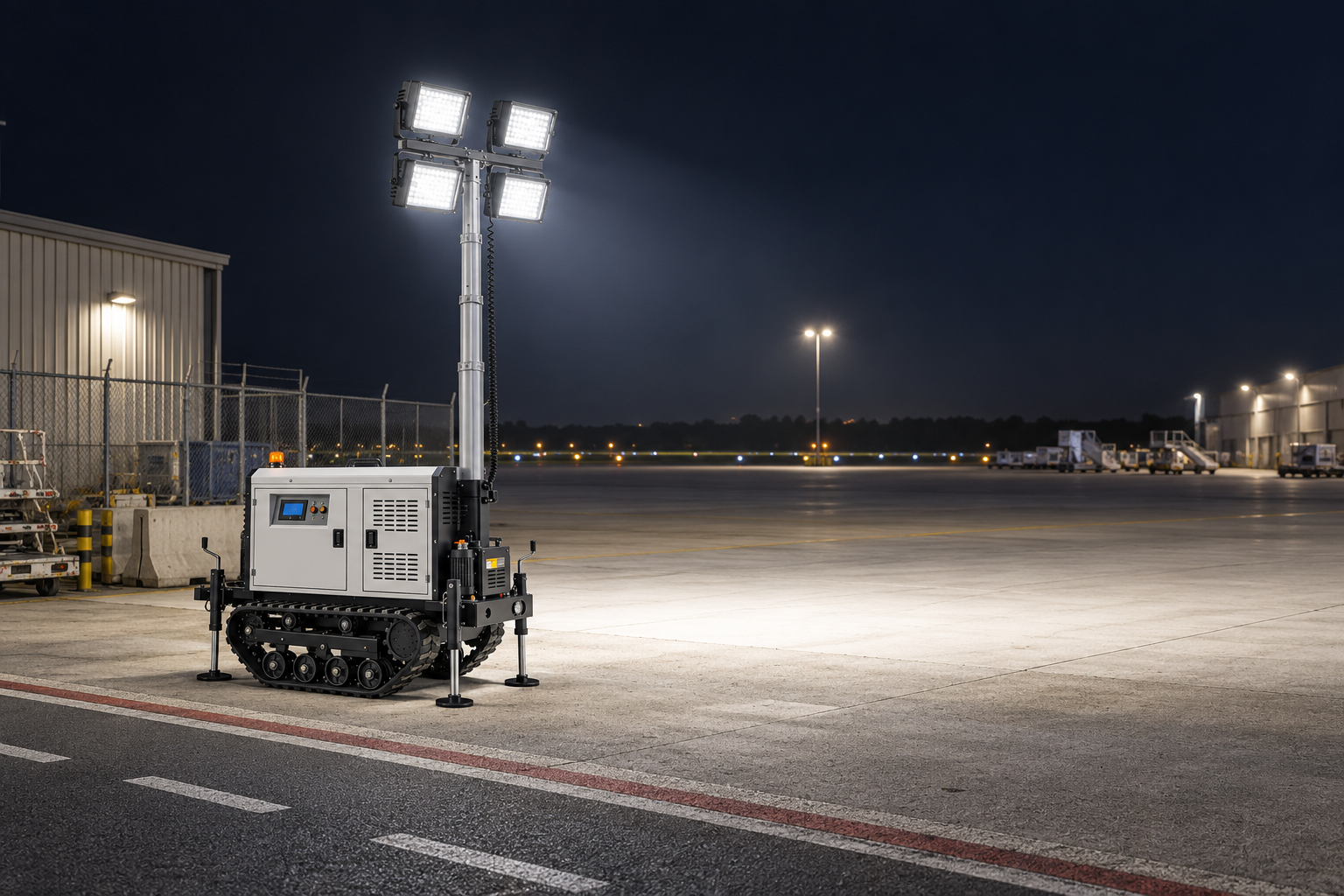
Perform the nighttime assessment with barriers, vehicles, and other relevant obstructions in their expected positions. Record task views and the additional views identified by operations. Where measurement is required, preserve the method, instrument, positions, measurement plane, criteria, and conditions. A long-exposure photograph cannot stand in for an accepted inspection result.
Resolve the observed issues before making the arrangement the standard for the shift. If a vehicle creates a shadow, review a different approved source or work sequence. If reflected glare affects another observer, change the accepted optical arrangement and repeat the check. The record should specify both what was assessed and what remains outside coverage. That distinction prevents a local pavement arrangement from being reused as unsupported aircraft-maintenance approval.
Coordinate failure and service interruptions
Agree on the response if the primary light or power source fails. The maintenance and operations teams should determine whether the task pauses, which backup function is needed, and how personnel use the accepted route. A spare unit elsewhere on the apron is useful only if its deployment and role are also approved.
Schedule service so it does not unexpectedly remove essential illumination. Record who may adjust or replace the system and which checks must follow. A replacement lamp array or different tower can change both the envelope and the optical result. Do not assume that equal wattage makes two configurations interchangeable. Keep the accepted installation visible in handover records rather than relying on a broad instruction to provide lighting.
Return the area through the airport process
Keep enough accepted illumination for clearing equipment, recovering cables, inspecting the completed work, and removing barriers according to the plan. The end of the repair is not necessarily the end of every illuminated task. Agree on the final sequence with the responsible airport team before the work begins.
Record installation changes and any unresolved condition requiring follow-up. The lighting team confirms its equipment status; airport operations determines operational release under the airport’s process. This division of responsibility keeps the temporary installation useful and accountable from delivery through final recovery without making unsupported claims about airside approval.
Equipment documentation for this application
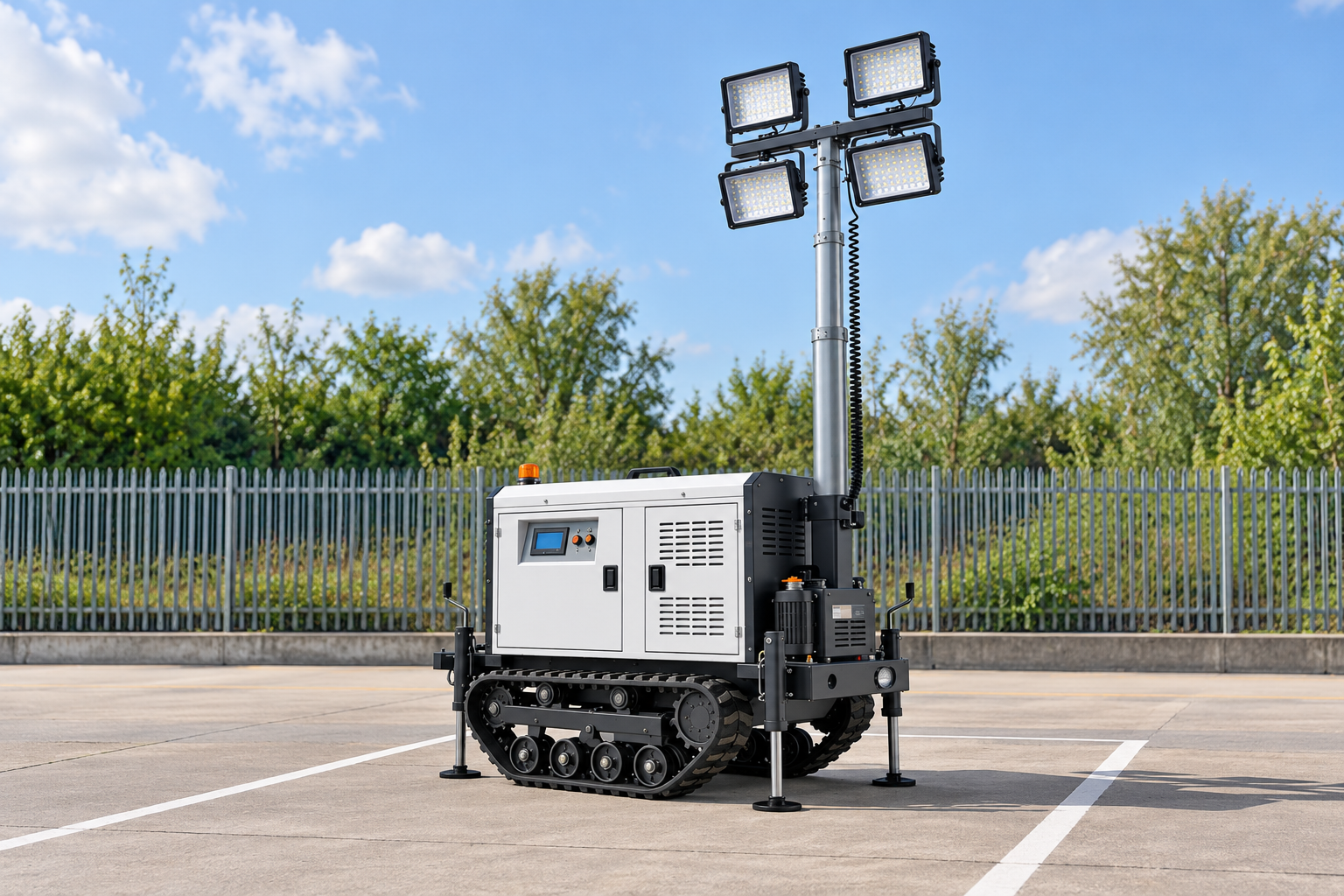
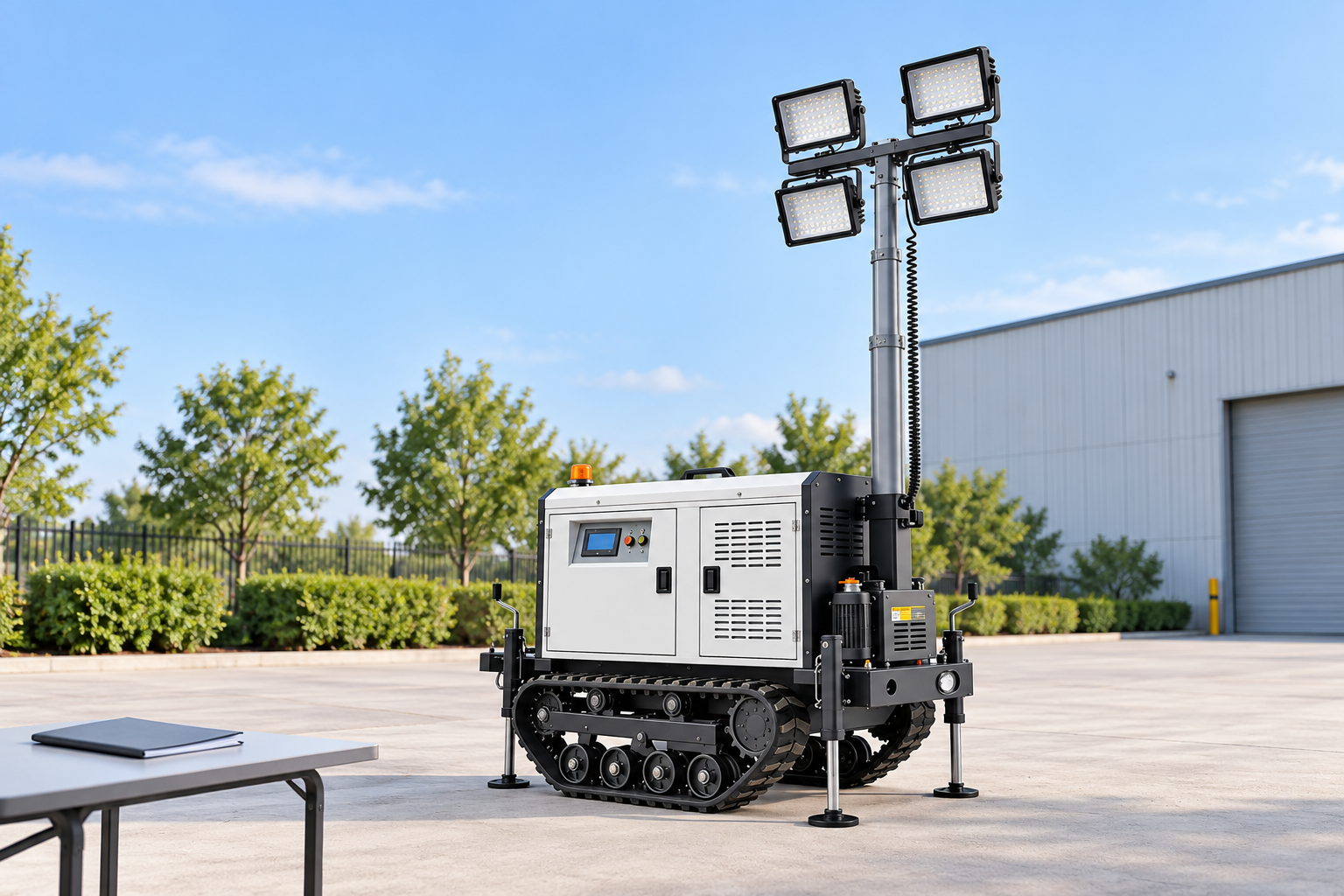
The pictured Keyyou tracked lifting light tower identifies the product category discussed here. Its appearance is not evidence of runtime, environmental certification, or suitability for every proposed work location. Request the current configuration-specific documents and compare them with the accepted task, deployed envelope, power arrangement, and service plan. If those records do not establish a match, resolve the configuration with the responsible team before relying on the installation.
For broader equipment planning, read the دليل برج الإضاءة المحمول. Use the separate glare-control guide when reviewing observer views, and the maintenance and troubleshooting guide when arranging inspection and service. These resources support their own tasks; they do not replace acceptance of the current site layout.
Generator safety education and reference scope
Where the selected power arrangement includes an engine, the CDC video below explains carbon-monoxide precautions. Its household examples provide introductory education, not a site installation approval. The responsible team must review the exact equipment, exhaust location, occupied spaces, fuel handling, and electrical arrangement. Battery-only operation has a different power scope, and hybrid engine-start conditions still require review.
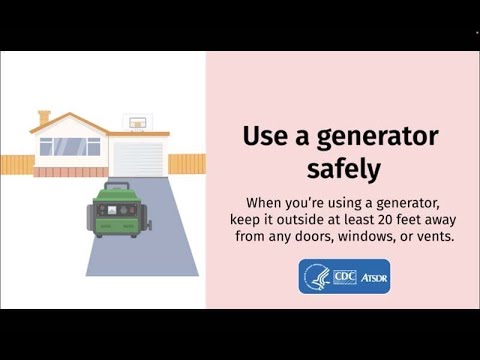
Watch Use a Generator Safely from the CDC.
الأسئلة الشائعة
Is pavement lighting sufficient for aircraft maintenance?
The aircraft operator and competent maintenance team determine the detail and accepted task arrangement for the work. A source that illuminates pavement may leave aircraft components in shadow. Keep the scopes separate and identify any approved task lights. General brightness or a nominal coverage claim does not establish suitability for a particular maintenance inspection.
What should an airport receive before deployment?
Provide the named work stage, proposed location, exact transport and deployed dimensions, support footprint, mast and lamp settings, power arrangement, and recovery sequence. The airport evaluates relevant interfaces and operational views. Confirm that the delivered equipment matches the accepted proposal rather than assuming that another unit with equal wattage can be substituted without review.
Why does recovery need a lighting plan?
Tool collection, cable removal, final inspection, and equipment withdrawal can continue after the repair itself ends. Agree on how those tasks remain illuminated and who confirms the equipment status. Airport operations controls operational release. A coordinated recovery prevents the main source being switched off before all approved maintenance and clearing activities are finished.