
Wet Stacking in Diesel Light Towers: Causes and Prevention
Understand diesel light tower wet stacking, recognize credible signs, separate it from other faults, and prevent chronic low-load operation with model-specific guidance.
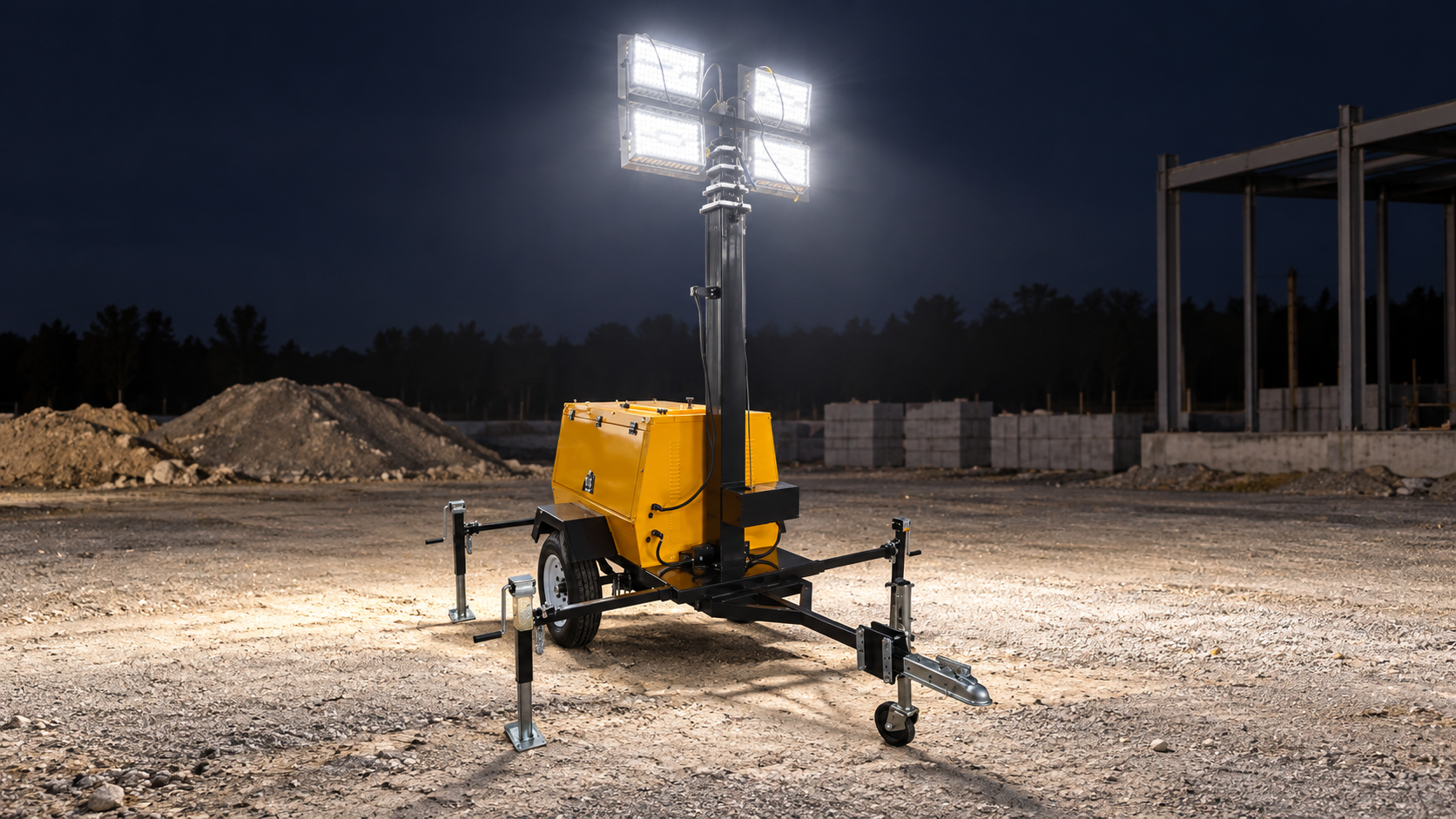
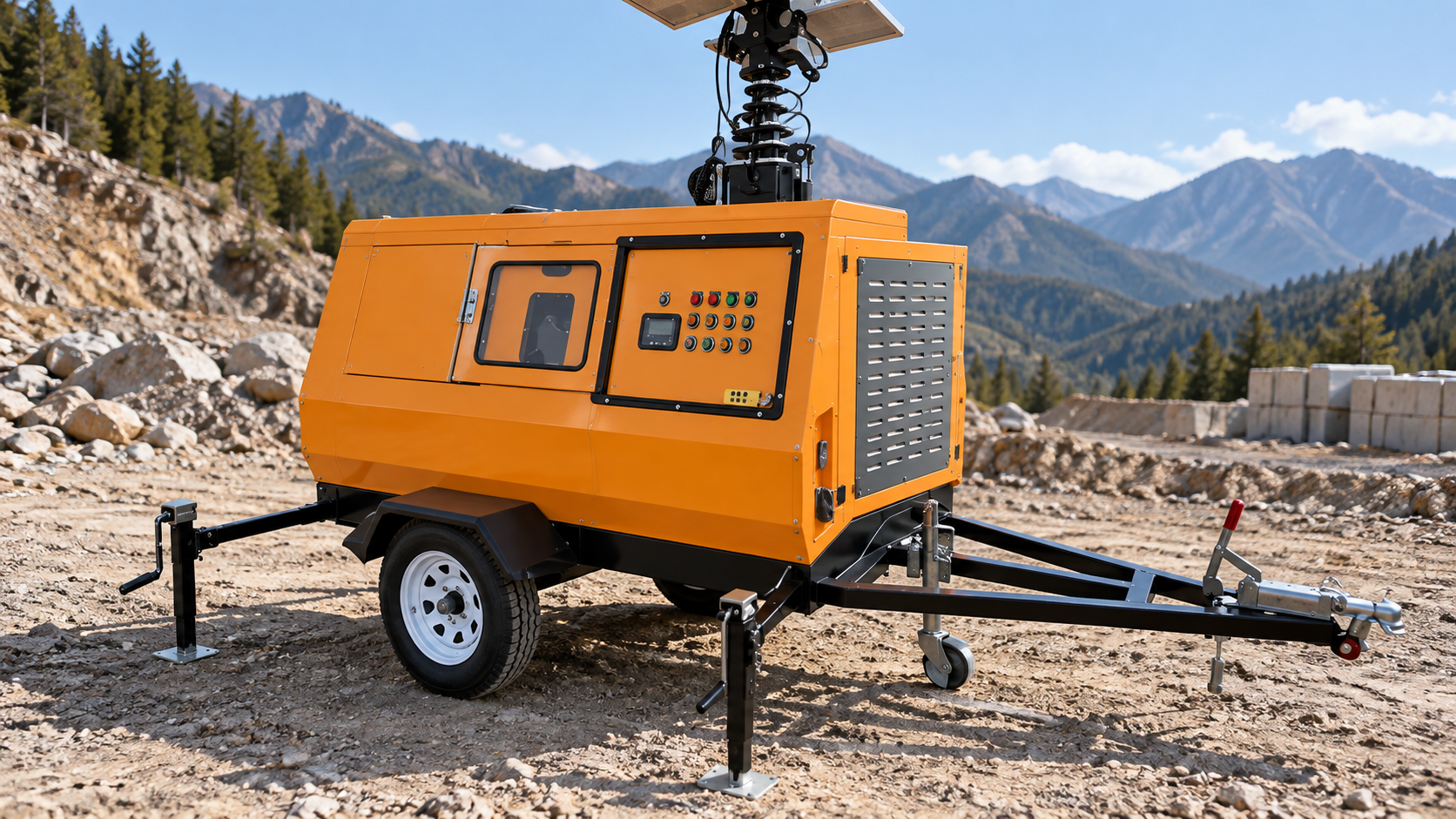
Light tower wet stacking is a condition associated with incomplete combustion during prolonged low-load diesel operation, where unburned fuel and carbonaceous residue can accumulate in the exhaust path. Dark, oily liquid at an exhaust joint may be a clue, but it is not a complete diagnosis: oil consumption, injector faults, coolant leaks and condensation require different responses. Preventive action begins with the exact engine maker’s minimum-load and operating-temperature guidance, a measured load history and proper maintenance. Do not apply a universal percentage or perform an improvised “burn-off” on the pictured Keyyou tower.
What wet stacking is—and what it is not
A compression-ignition engine needs adequate in-cylinder temperature for efficient combustion. When an engine runs lightly loaded for long periods, combustion and exhaust temperatures may remain below the range intended by its design. Unburned fuel, soot and moisture can collect in the exhaust system and sometimes appear as a black oily discharge. The term “stacking” refers to the exhaust stack, not liquid fuel literally filling the engine. Modern injection and aftertreatment systems differ, so the exact risk and response are model-specific.
Cummins’ generator application manual notes the importance of sufficient minimum load for normal temperature and fuel combustion. Its example guidance applies to equipment within that manual, not automatically to every diesel light tower. Obtain the supplied engine’s manual, rating, aftertreatment information and maintenance instructions. A low-load log supports investigation but does not prove the cause of visible residue.
| Observation | What it may indicate | Safe next check |
|---|---|---|
| Black oily exhaust residue | Possible unburned fuel/soot, but other fluids or faults are possible | Stop as required; qualified inspection and fluid identification |
| Long operation at low measured kW | A risk factor for some engines | Compare logs with exact maker guidance |
| Persistent abnormal smoke | Combustion, injector, air, fuel or oil problem | Use engine diagnostic procedure; do not guess by color alone |
| Falling performance or alarms | May be unrelated to wet stacking | Read controller codes and inspect by qualified personnel |
| Rising oil level or fuel odor in oil | Potential fuel dilution | Stop and follow engine manufacturer’s service direction |
| Water after a cold start | Could be condensation | Observe duration and seek diagnosis if persistent |
Why light towers can be exposed to low-load operation
Older light towers may have been sized around high-wattage lamps, while LED retrofits or dimmed operating modes can reduce real electrical demand. A generator retained at the original rating may then work at a small fraction of its capability. Auxiliary outlets may be unused, and the engine may run all night because the control strategy is simple. Oversizing for every hypothetical peak can create the same mismatch. The generator load-factor guide shows how to calculate the time-weighted percentage without hiding short peaks.
Ambient temperature, altitude, enclosure airflow, fuel quality and maintenance affect combustion behavior. Do not assume a tower at sea level and the same model at a cold high-altitude site have identical exhaust temperatures. Likewise, aftertreatment-equipped engines can have regeneration and sulfur requirements that older engines do not. The U.S. EPA’s nonroad engine regulations overview explains why engines may have different certified emissions systems; it does not prescribe a wet-stacking correction for a particular unit.
Visible exhaust smoke is not a reliable load meter. Measure generator kW, kVA and power factor, record lamp mode and compare the result with site-rated capacity. A controller hour meter alone shows duration, not demand. Fuel consumption can support the record when taken from a verified curve or measured procedure, but it should not replace electrical data. Keep load and maintenance logs together so a technician can reconstruct what happened before the symptom appeared.
A diagnostic sequence that avoids expensive guesses
- Make the area safe. Follow shutdown, cooldown and exhaust-area controls in the supplied manual; keep people away from hot components.
- Record the symptom. Note location, color, consistency, duration, alarms, ambient conditions and recent load history without touching unknown fluid.
- Verify the engine and fluids. Match model/serial, check approved fuel and oil records, and have qualified personnel assess levels and contamination.
- Measure the load. Capture kW, kVA, power factor and operating mode over a representative period.
- Inspect related systems. Air restriction, injectors, turbocharger, thermostat, cooling and aftertreatment may require model-specific tests.
- Apply only approved correction. Use a qualified technician, approved load bank or maintenance procedure if the manufacturer calls for one.
- Confirm the outcome. Recheck emissions appearance, fluid condition, alarms and load after the corrective work.
Do not simply run the engine at maximum load until smoke clears. A sudden load can exceed the set rating, overheat a damaged component or create unsafe exhaust conditions. Load-bank testing requires appropriately rated cables, ventilation, grounding and exclusion zones. The load bank dissipates electrical power as heat and is not a casual accessory. If fuel dilution is suspected, continued running can threaten lubrication; the engine maker or qualified service provider should decide whether oil and filters require service before testing.
Prevention through sizing, controls and operating practice
Specify the lighting load before choosing the generator. Include every LED mode, approved auxiliary and startup event, then apply altitude and temperature derating. Ask for the exact engine’s allowable low-load duration and maintenance response in writing. If normal demand is consistently below the recommended range, evaluate a smaller properly rated generator, staged generators, an engineered hybrid battery arrangement or an approved automatic start/stop strategy. Each option must still meet lighting continuity and transient requirements.
A scheduled load-bank exercise may be appropriate for some fleets, but frequency, target load and duration are not universal. Use the engine/generator-set manual and local safety controls. Cummins’ diesel generator low-load FAQ illustrates why load level matters on its products; it is evidence for asking the right question, not a specification for Keyyou’s optional engines.
Maintenance supports prevention: use the specified oil viscosity and fuel, keep air paths clear, address thermostat or injector faults, and observe service intervals. Do not remove aftertreatment, defeat alarms or alter fuel calibration. Record low-load hours after lamp changes, because an LED retrofit can materially shift the duty profile even when nighttime illumination improves. Recalculate the fuel plan when the generator or control strategy changes.
Product and RFQ questions
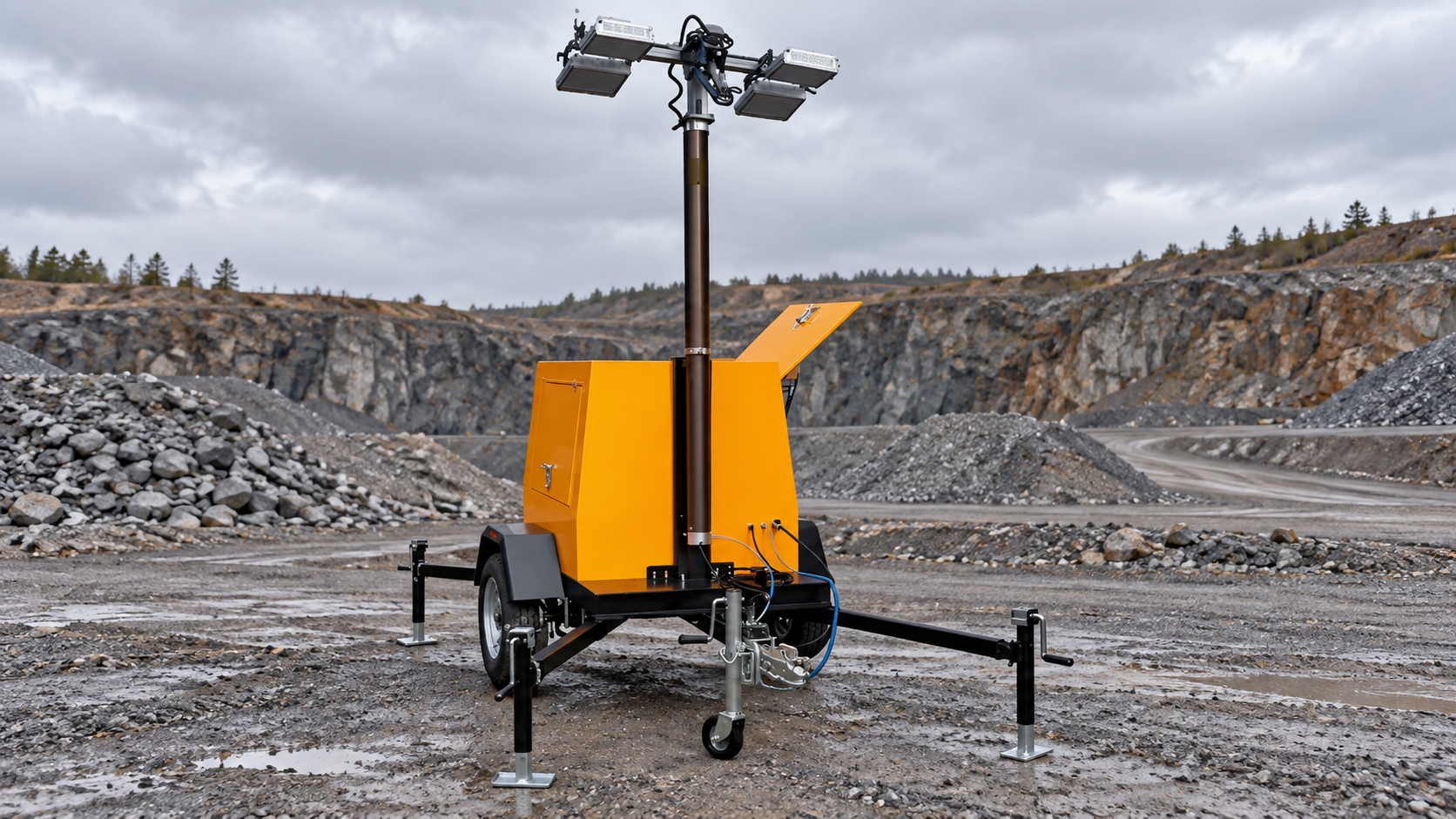
ال Keyyou pneumatic-pole trailer light tower visually provides a yellow angular enclosure, dark cylindrical mast, single axle, black stabilizers and four compact rectangular lamps. Product variants may use different power systems. The photograph does not prove that a diesel engine is installed or identify its wet-stacking threshold. For a diesel quote, request the engine model, duty rating, permissible loading range, aftertreatment type, fuel curve, cold-weather limits and approved corrective procedure.
Ask whether the proposed LED load keeps the exact engine within its intended long-duration range, including dimmed hours. Request the planned generator rating at project altitude and temperature, and confirm whether auxiliary loads are permitted. Define who will read controller logs, inspect exhaust residue and authorize a load-bank test. A complete submittal should make diagnosis traceable instead of depending on a generic internet symptom list.
For fleet management, trend events rather than treating every mark at the exhaust as a new incident. A useful record includes engine hours, time in each load band, fuel added, oil consumption, regeneration or alarm events, ambient temperature, photograph location and service action. Use the engine maker’s terminology so reports from different depots are comparable. If residue returns after a documented corrective procedure, escalate to the engine or generator-set supplier with the log instead of repeating the same high-load run indefinitely.
Storage and transport inspections matter too. Rainwater, wash water or spilled service fluids can create misleading stains. Photograph the outlet and enclosure before dispatch, after transport and after the shift. Keep exhaust components unobstructed and do not attach homemade extensions that change backpressure. Any approved extension must respect the generator-set manufacturer’s diameter, length, support and clearance requirements. These controls reduce false diagnoses and prevent an attempted cure from introducing a ventilation or fire hazard.
Preserve these inspection records. Use the altitude derating checklist when establishing the site’s available generator rating.
Safety video: carbon monoxide from generator exhaust
The U.S. Consumer Product Safety Commission video emphasizes the carbon-monoxide hazard from portable generator exhaust. Wet-stacking inspection or load testing must still follow the exact industrial engine manual and workplace controls.

Read the CPSC generator safety bulletin.
الأسئلة الشائعة
Is black liquid at the exhaust always wet stacking?
No. It is a possible sign, but fluid contamination, oil consumption, condensation and other faults require qualified diagnosis.
Can I prevent wet stacking by adding any convenient electrical load?
No. Use only approved loads and the engine/set manufacturer’s procedure. Improvised loads can create electrical, thermal and fire hazards.
Does every diesel engine use the same minimum-load percentage?
No. Thresholds, durations and corrective procedures depend on the exact engine, rating and aftertreatment configuration.
Will replacing lamps with LEDs always create wet stacking?
No. LEDs can reduce generator demand, which warrants recalculation, but wet stacking is a condition requiring operating history and diagnosis.