
Open-Pit Mine Haul Road Lighting With Mobile Towers
Plan mine haul road lighting for junctions, loading approaches, berm visibility, dust, driver sightlines, and separation between mobile towers and heavy trucks.
Mine haul road lighting should make intersections, loading approaches, road edges, and traffic instructions visible from the actual truck cab without directing bright lamps into the driver's eyes. Mobile towers are useful at changing work locations, but tower spacing must follow a site lighting assessment, vehicle movements, and the approved traffic plan. A lamp's wattage or advertised coverage area cannot establish a safe arrangement for an entire haul road. This guide addresses temporary lighting at surface mines; underground lighting and equipment approvals require a separate assessment. Mine operations should approve deployment, nighttime acceptance, and the response to a lighting failure before vehicles use the changed route.
Identify the driving decisions that need light
Start with the driver's decisions rather than drawing circles around prospective tower positions. At an intersection, a driver may need to recognize the junction, read an instruction, identify a waiting vehicle, and see which route remains open. At a loading approach, the driver needs a clear view of the permitted stopping position and the loading operation's traffic controls. Lighting priorities differ between these locations even if the same truck passes both.
Walk through the route with mine operations using approved access arrangements. Mark changes in grade, turns, crossings, maintenance access, and transitions between vehicle classes. Identify observations that must be possible before reaching each decision point. Do not place people on an operating haul road to perform a visibility test. Arrange an authorized inspection with traffic controlled and representative vehicle positions established by the mine.
NIOSH's haul-truck research roadmap identifies illumination as one of several interacting concerns in surface operations. That supports evaluating light together with roadway conditions and traffic controls. It does not establish a particular tower spacing, vehicle speed, or approval for any product. Keep those decisions within the mine's engineering and operating procedures.
Check light from the cab and each approach
A lamp aimed across an empty road can appear comfortable from ground level while producing glare from a high cab. Assess each approach direction, the driver's expected eye position, and views through the actual windscreen. Include representative loading and service vehicles where they can obstruct the view. The observer should be able to distinguish required objects and instructions, rather than simply confirm that the ground looks bright.
Compare the transition into and out of a lit location. A strongly illuminated junction beside a dark approach may complicate recognition of objects beyond the illuminated patch. Review the lighting distribution and aiming with the responsible lighting specialist. Do not solve every dark area by increasing output; additional light directed toward drivers can worsen the condition being investigated.
NIOSH research on machine-mounted area lighting examined illuminance and glare around mobile surface equipment. Its particular test results concern the studied luminaires and access systems. The useful principle for a tower assessment is to consider both visibility and discomfort from the relevant observer position. The study's measurements should not be copied into an unrelated haul-road specification.
Choose locations outside the complete traffic envelope
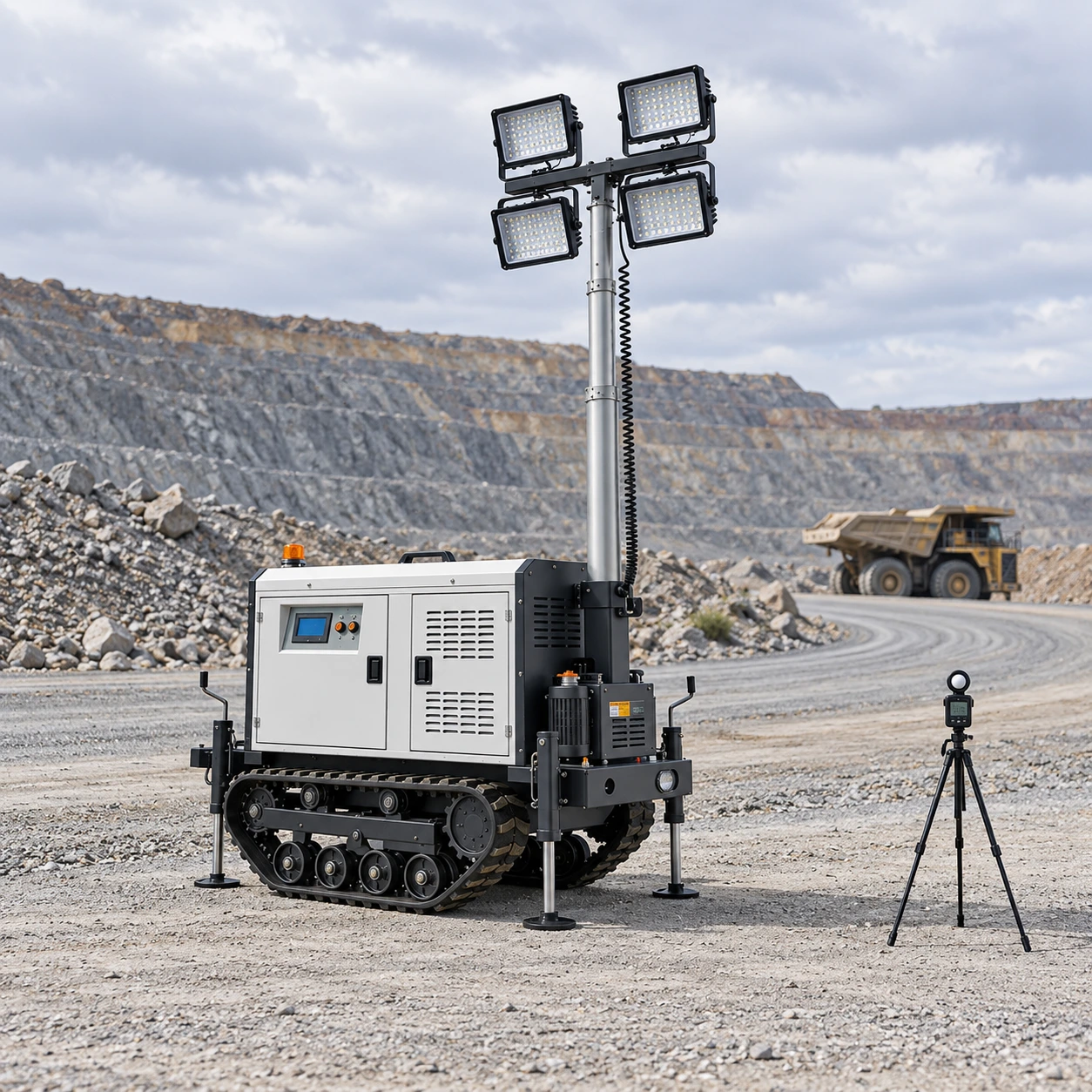
The tower footprint includes its deployed supports, mast, service access, and any cables or external supply arrangement. Reserve that whole area outside approved travel paths, turning movements, and road-maintenance activities. A point beside the carriageway may still be unsuitable if trucks sweep across it while turning or a grader needs the shoulder during maintenance.
Ask mine operations to identify permitted ground and access conditions before choosing equipment. A tracked chassis in a product photograph does not prove that the machine can climb a particular slope, work on loose fill, or resist overturning on an uneven shoulder. Obtain the exact model's deployment instructions, including ground requirements, support arrangement, wind limits, and transport restrictions.
Consider the installed mast envelope as well as the base. Overhead services, structures, nearby equipment movements, and approved separation requirements must be reviewed by the responsible site team. Establish a service route that does not require workers to cross an active heavy-vehicle path. If the location is safe only when traffic is stopped, include that dependency in the servicing procedure rather than treating it as ordinary access.
Specify visibility before tower quantity
The mine's applicable requirements and lighting design should define the observations and measurements needed at each location. For United States surface metal and nonmetal mines, the applicable MSHA rules and current interpretation should be checked by the responsible compliance team. Construction lighting tables should not automatically be used as the controlling standard for a mine.
Request photometric information for the proposed fixture, mounting height, and aiming arrangement. A lumen figure describes output, not how much light reaches an observer's task. A quoted coverage area also needs its stated measurement plane, boundary criterion, mounting arrangement, and assumptions. Without those details, coverage claims from different suppliers may describe different conditions.
Where measurements are required, record the instruments, locations, operating mode, and installed configuration. Confirm visibility at road edges and decision points in addition to numerical readings. Use representative equipment positions during acceptance because a truck body, stockpile, or berm can produce a shadow absent from an empty-site test. Document which changed conditions require another review.
| البند المخطط له | أدلة للاستعراض |
|---|---|
| Driving decisions | Mark junctions, loading approaches, instructions, and visibility from each truck approach. |
| Glare and shadows | Inspect from representative cab positions with approved equipment states. |
| Equipment footprint | Reserve supports, mast movement, service access, and clearance from traffic. |
| Measurements | Use the site lighting criteria and record fixture configuration and observation positions. |
| Changing route | Repeat affected checks after grading, moved berms, junction changes, or tower adjustment. |
Plan for dust, weather, and changing berms
Dust and weather can change what the driver sees and can affect the lighting equipment itself. Review the observed conditions during the mine's normal operations and identify circumstances requiring additional operating controls. Lighting does not replace dust suppression, an approved traffic restriction, or a decision to stop work when visibility becomes unsuitable.
Allow for cleaning and inspection under the equipment's maintenance instructions. Obtain the fixture's environmental documentation and the manufacturer's approved cleaning method. Do not infer ingress protection, resistance to mining chemicals, or vibration capability from an illustration. Ask the supplier to identify the rating and supporting documentation for the exact offered assembly.
Haul routes change as operations advance. Grading, a moved junction, a revised berm, and a new loading position can invalidate previous aiming and visibility checks. Put those changes into the lighting handover process. Identify who can authorize relocation, who verifies the new arrangement, and when the route can return to normal use. A dated location drawing is more useful than an undocumented claim that a tower was checked recently.
Match power and servicing to the operating window
Define the full operating period, including shift overlap, delayed loading, and road-maintenance activities. Confirm how the proposed unit supplies power and whether its stated runtime applies to the selected lamp mode and actual duty. A battery unit needs a reviewed charging arrangement; an externally supplied unit needs an approved electrical connection and cable route.
Where generator power is used, arrange exhaust, refuelling, and service access under the site's procedures and the manufacturer's instructions. The CDC generator-safety video below explains carbon-monoxide concerns. Its household examples do not specify a mining installation, but the warning about exhaust entering occupied spaces is relevant when a temporary power source is placed near an enclosed cab, shelter, or service building.
Plan the failure response with mine operations. A failed light at a junction may require traffic controls or a shutdown before a replacement is installed. The backup arrangement needs a permitted location and a verification process of its own. Keeping another unit nearby does not establish that it can be deployed quickly or safely while traffic continues.
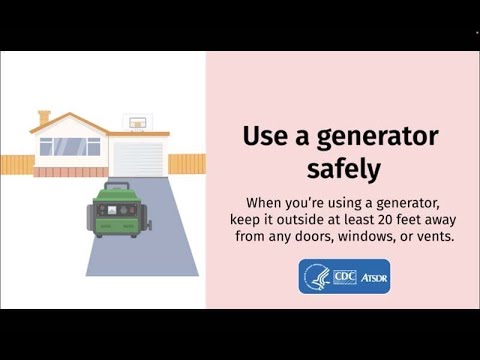
شاهد استخدام مولد كهربائي بأمان من قبل المركز الوطني لمكافحة الأمراض
Compare mobile equipment with a complete request
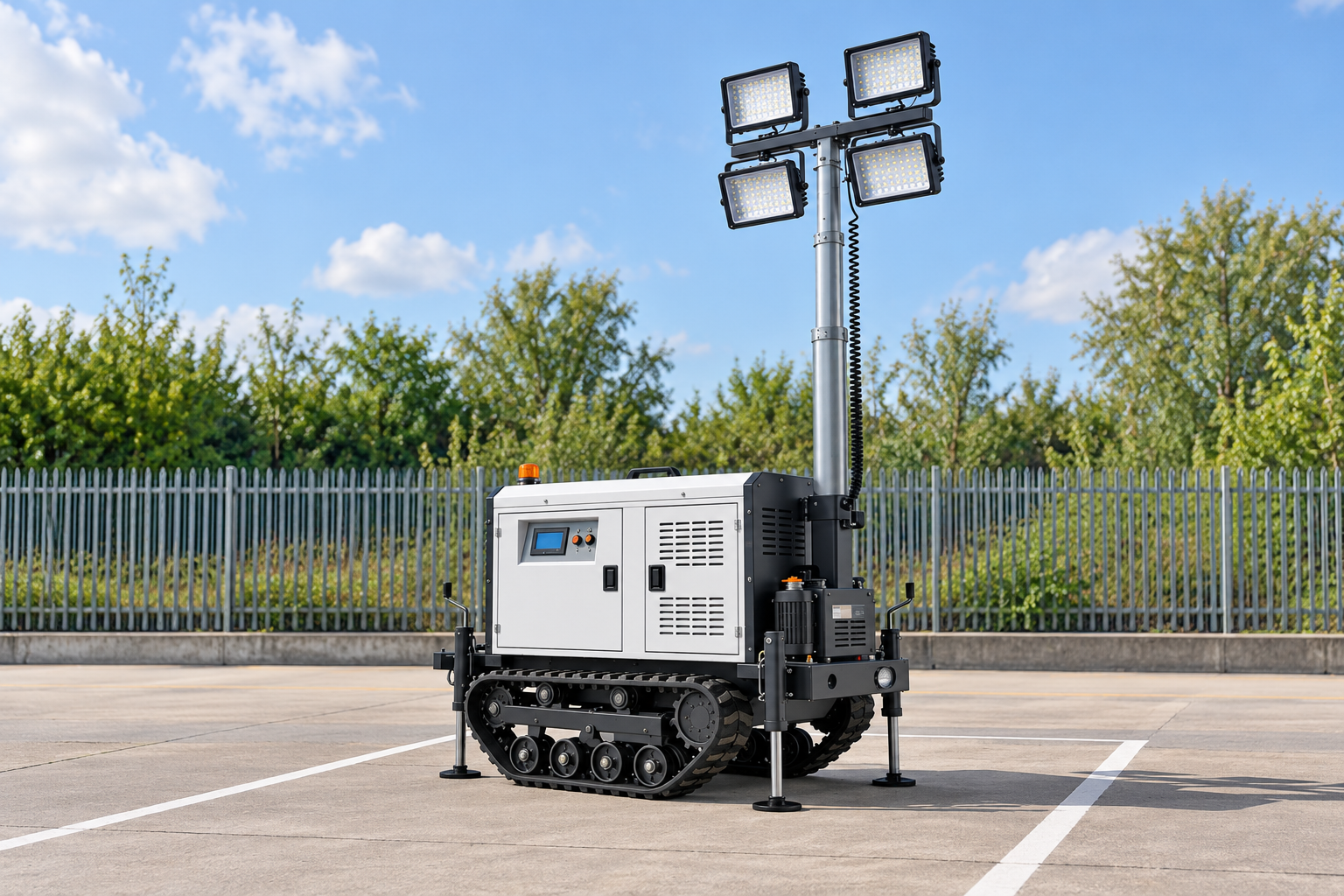
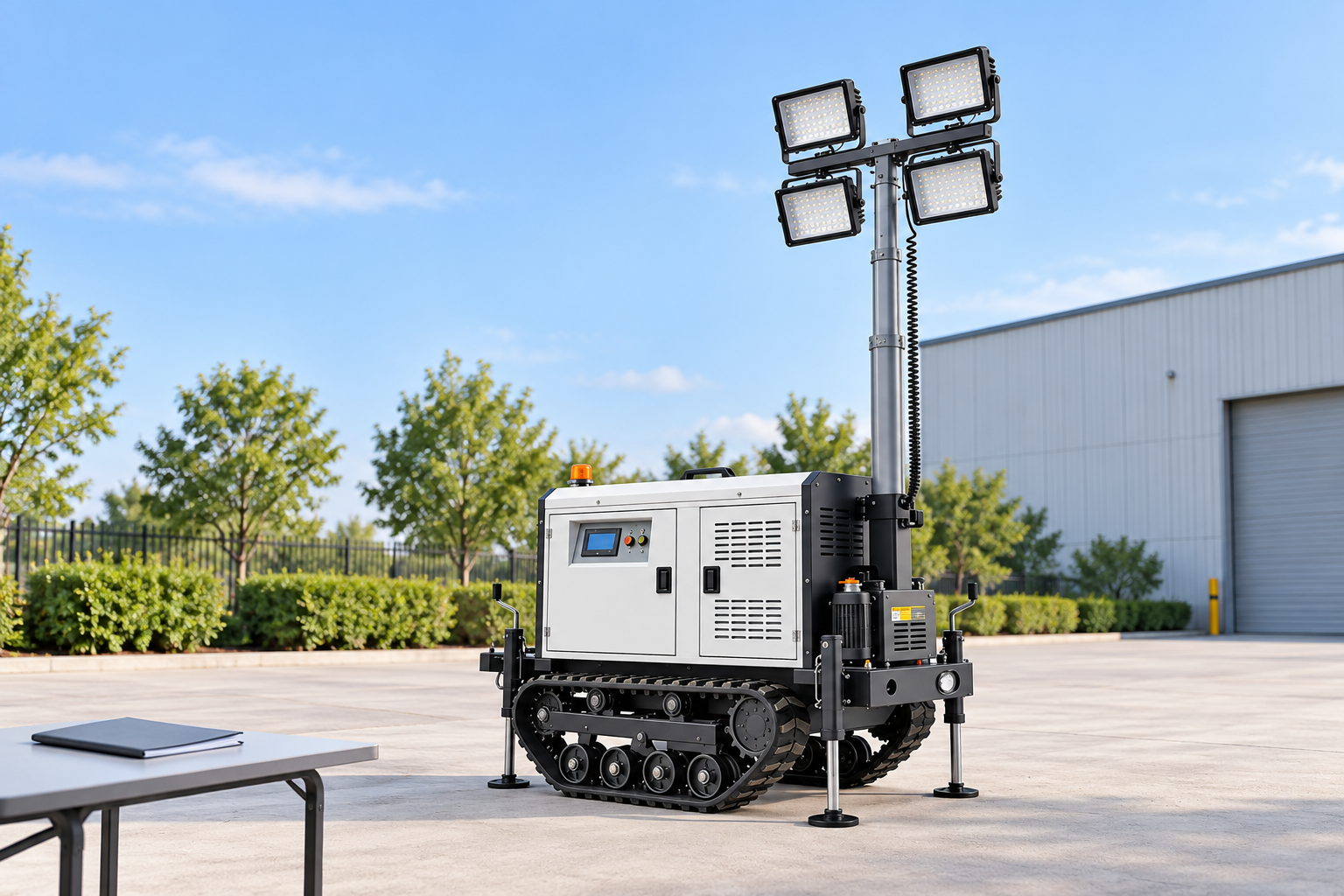
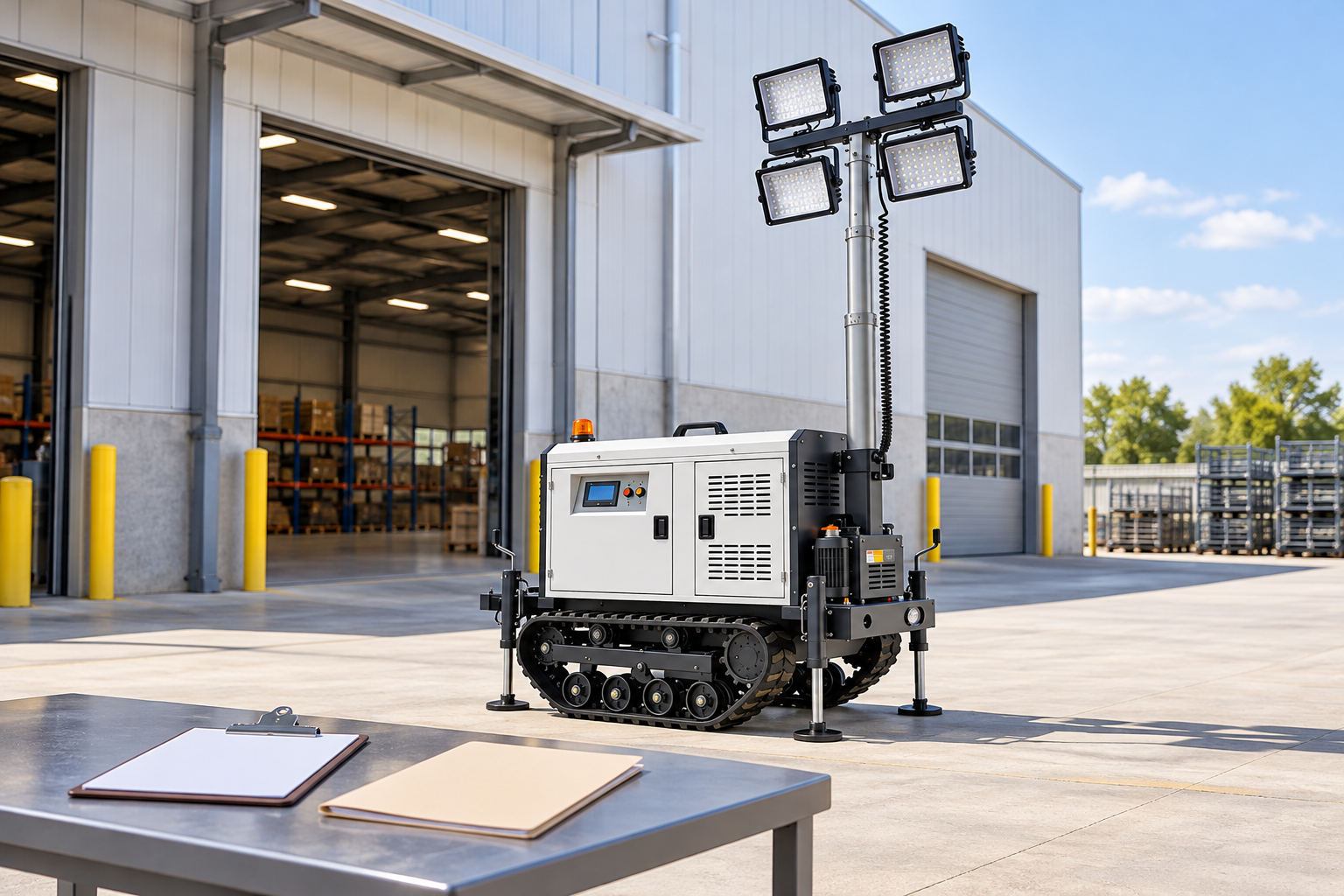
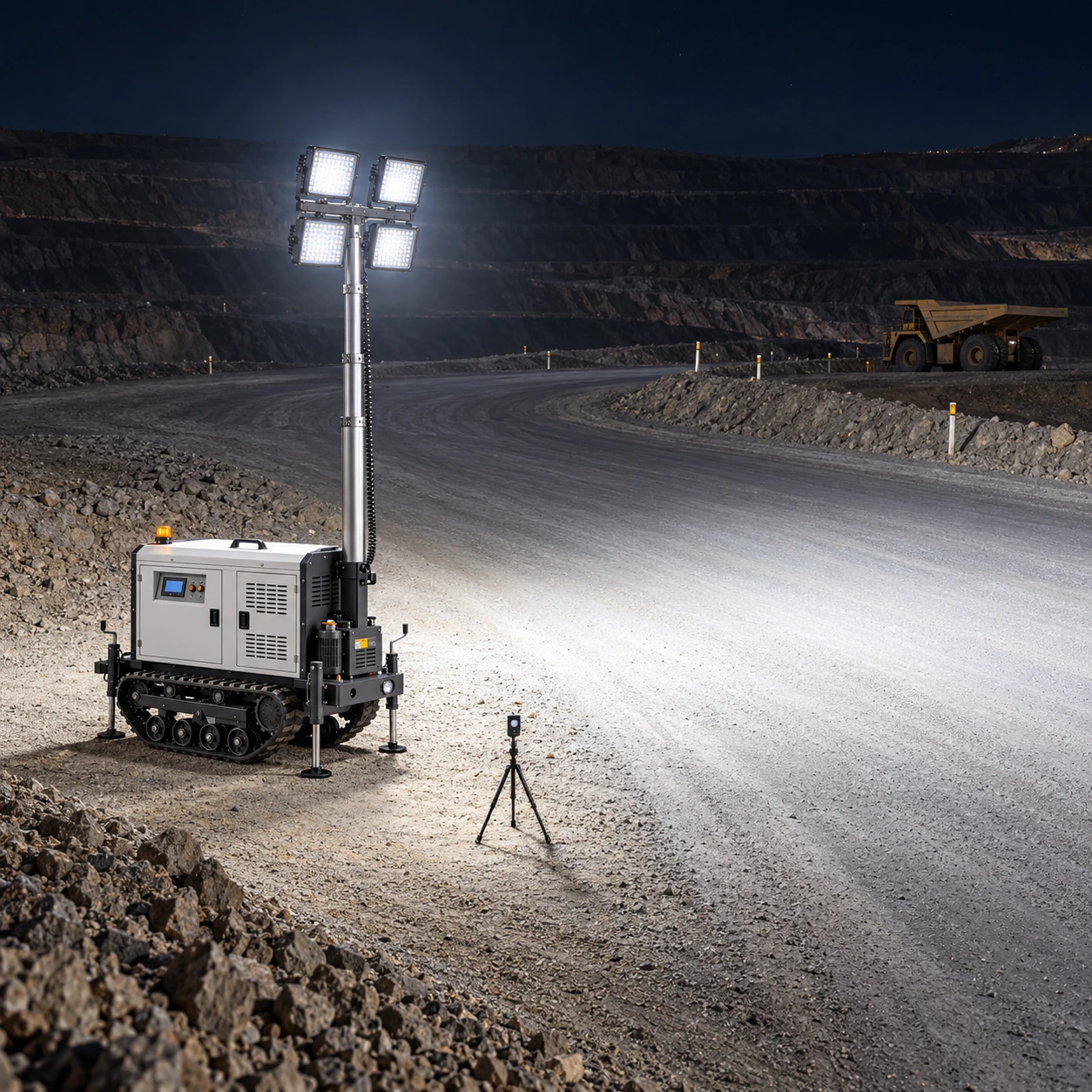
ال برج إضاءة رفع مجنزر provides a product family to discuss with the supplier. The images in this article illustrate that referenced structure; they do not certify the unit for a mine or prove a coverage pattern. Request the current offered configuration, fixture information, operating manual, deployed dimensions, and model-specific limits before comparing a quotation.
Give each supplier the same route drawing, observer locations, required operating period, approved equipment positions, and acceptance process. Ask which assumptions their proposal makes about dust, ground, wind, and power availability. A proposal that assumes an unavailable charging window or a tower position inside a truck turning area needs revision before price comparison.
Use the مواصفات برج الإضاءة المحمول for equipment families, the دليل الاختيار for broader procurement decisions, مواصفات المعدات for the documentation checklist, and the دليل السلامة for deployment questions. These supporting guides complement the route-specific assessment. They do not determine the mine's operating rules or replace its responsible engineering review.
Accept the arrangement and keep a shift record
Conduct acceptance under the authorized nighttime inspection procedure. Record tower identity, base location, support setup, mast arrangement, lamp direction, power mode, and the inspection conditions. Review each required observation from the relevant cab or work position. Keep photographs and measurements where the mine's documentation rules permit them, together with the person responsible for acceptance.
Hand over the limitations as clearly as the accepted layout. Identify visibility conditions requiring escalation, controls for a lighting failure, service windows, and the changes that invalidate the check. During subsequent shifts, inspect for damage, altered aiming, dirty lenses, changed ground, and new obstructions according to the maintenance and operating plan.
The practical result is an approved set of visible decision points supported by maintainable equipment. Tower count follows that result. If the assessment exposes a roadway, traffic-control, or ground problem, address it through the responsible mine process; placing another bright tower beside it is not evidence that the underlying problem has been resolved.
الأسئلة الشائعة
What spacing should be used between haul-road towers?
There is no defensible universal spacing for every mine. Use the site's lighting design, required observations, photometric data, approved equipment locations, and nighttime acceptance results. A straight approach, junction, and loading area can require different distributions even when they use the same fixture.
Can one powerful tower light an entire haul road?
A tower may illuminate a particular work location, but its output alone cannot establish visibility along a complete route. Road geometry, shadows, glare, dust, and driver positions determine what must be assessed. Compare the proposed arrangement with the mine's actual traffic plan and acceptance requirements.
Are tracked towers automatically suitable for mine roads?
No. A tracked chassis is a structural feature, not a mine approval or a deployment limit. Obtain the exact model's ground, support, wind, movement, and maintenance instructions, then have the mine review the proposed position and operating arrangement.
When should the lighting be checked again?
Follow the site's inspection procedure and review the arrangement after changes affecting visibility or deployment. Examples include a moved junction, road grading, changed berms, altered stockpiles, new equipment positions, lamp adjustment, damage, and a replacement tower. Record the new acceptance where required.