

اختبار القبول في مصنع برج الإضاءة: الأدلة والاستثناءات والإفراج
خطط لاختبار قبول برج الإنارة أثناء التسليم، مع تحديد هوية المعدات، والتحقق من صحتها، وتوثيق الأدلة، وإغلاق أي حالات عدم مطابقة، واتخاذ قرار واضح بشأن تسليم المعدات.
A light tower factory acceptance test is an agreed pre-delivery check that compares an identified machine with the purchase requirements and records the evidence needed for release. It should establish what was supplied, which authorized checks were completed, what remains unresolved, and who accepts each outstanding item. It does not prove that the tower will meet every lighting requirement at a future site. For a mobile tower, separate the equipment inspection from the site illumination assessment, transport preparation, and any electrical installation. The useful result is a traceable acceptance record with clear limits, rather than a photograph of a working lamp.
Define acceptance before equipment is presented
Start with the purchase specification and identify the exact configuration covered by the order. A broad description such as mobile lighting tower does not establish the energy source, mast arrangement, lamp configuration, transport method, auxiliary supply scope, or included accessories. Put the agreed items in the acceptance record before inspection day. Where the quotation, drawings, and purchase order disagree, obtain a controlled clarification rather than choosing whichever description happens to match the machine.
Define the proposed checks, responsible roles, evidence, and acceptance conditions in writing. Distinguish a supplier demonstration from a witnessed check and a document review from a measured result. A photograph can support an equipment identity record; it cannot establish insulation condition, protective operation, or illumination performance. If a numerical criterion is required, identify its contractual or applicable technical basis and the measurement method. This article provides no universal light output, wind, electrical, or transport acceptance limits.
Identify the exact machine and supplied documents
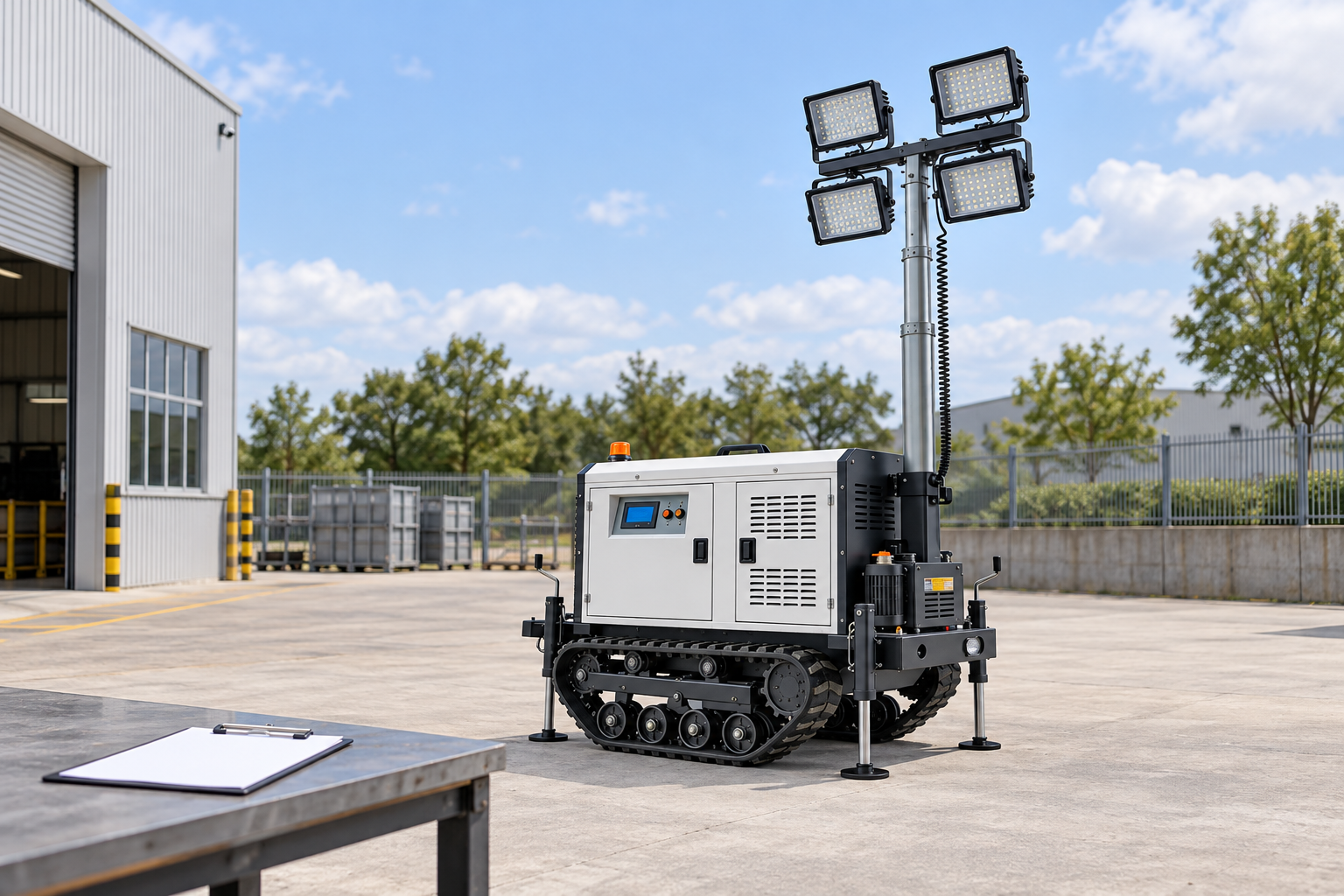
Record the equipment identifier, order reference, configuration revision, and presented accessories. Compare these with the supplied packing and equipment documents. Keep sensitive identifiers in the controlled inspection record rather than publishing them unnecessarily. If several similar towers are presented, keep each result associated with its own machine. A satisfactory check on one unit does not automatically release the rest of a shipment.
The Keyyou tracked product reference shown here establishes a visible equipment arrangement: a white enclosure, crawler chassis, mast, four square lamp heads, and deployed support legs. Those visible features help identify the relevant product family. They do not establish a hidden engine specification, electrical rating, certified stability limit, or an included remote monitoring function. Obtain the actual offered configuration and supplied documentation for the order before defining a corresponding acceptance check.
Inspect accessible condition without altering equipment
Use the supplied inspection instructions to examine accessible surfaces, enclosure condition, lamp assemblies, externally visible cables, controls, tracks, and supports. Record the location and description of damage or a discrepancy, together with a photograph where appropriate. A general comment such as looks good leaves the next reviewer unable to determine what was examined. Keep the observation factual: visible damage and documented configuration differences are different from a diagnosed internal fault.
Do not open an enclosure, loosen a connection, bypass an interlock, or improvise a movement test simply to produce evidence. The inspection plan must define authorized access and the responsible personnel. A component that cannot be inspected within the agreed safe scope should be recorded as not verified, with the required next action. It should not be assumed satisfactory because it was inaccessible or because a similar machine passed an earlier check.
Establish a controlled demonstration area
Any authorized operational demonstration needs the supplied operating procedure, a suitable area, responsible supervision, and arrangements appropriate to the actual energy sources. Separate observers from moving equipment and maintain the required access and exclusion areas. The responsible team must decide whether the proposed surface, support arrangement, weather conditions, and clearances meet the equipment instructions. A convenient factory parking space is not automatically a suitable mast deployment location.
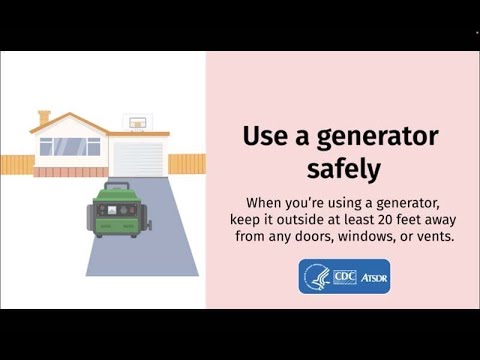
Where the supplied tower includes a combustion generator, exhaust safety is a separate requirement of an authorized running demonstration. CDC guidance warns about carbon monoxide from portable generators. Its educational material does not approve the placement of a particular industrial tower or establish its operating clearances. Follow the equipment instructions and applicable workplace requirements. The reference illustrations use closed cabinets and lamps off; they show planning contexts and do not document a completed running test.
Separate functional checks from electrical work
An agreed functional check may confirm an authorized control response or supplied operating function within the documented procedure. It should state the starting condition, requested function, observed response, and result. Do not add an auxiliary load, simulated fault, or emergency action unless the responsible team has approved the exact method and conditions. A supplier assertion that a tower has a feature is not the same as a witnessed record that the offered configuration includes it.
Electrical inspection and testing need the actual drawings, source arrangement, protection information, and appropriately qualified personnel. OSHA electrical work rules provide a basis for distinguishing qualified work and controlled energy conditions; they are not a factory test procedure for this product. This guide does not specify meter connections, test voltages, resistance thresholds, fault simulation, or live access. The acceptance file should contain the applicable authorized test record, with its scope and limitations clearly stated.
Treat lighting evidence as configuration specific
Record the presented lamp count and arrangement and compare them with the order. If output or coverage claims form part of acceptance, define what evidence is required and which exact equipment configuration it represents. A brochure image, camera exposure, or visibly bright demonstration cannot prove the illuminance at a buyer's future task plane. Ask for the agreed lighting data and identify any assumptions needed for its later use.
The factory and the deployment site usually have different geometry, surfaces, obstacles, background light, and operating constraints. A factory demonstration can establish an agreed function without completing a site lighting assessment. Keep the two decisions separate in the release record. If coverage is an important purchase requirement, name the later site verification activity and responsible reviewer instead of converting an undocumented factory observation into a guaranteed field result.
Use an evidence based acceptance checklist
The following qualitative checklist is a proposed record structure, not a standard test code or a statement that every listed activity is included with a Keyyou product. Adapt it to the purchase scope and supplied procedures. Where the contract requires a measured criterion, add its verified basis and method. The safety boundaries draw on the primary material linked below; no equipment performance thresholds are invented.
| Acceptance area | دليل للإبقاء | Decision when evidence is missing |
|---|---|---|
| تحديد هوية المعدات | Order reference, identifier and configuration comparison | Hold the identity item until the exact unit is confirmed |
| Accessible condition | Location specific observations and photographs | Record the discrepancy and authorized assessment needed |
| Documents and accessories | Controlled document list and packing comparison | Identify the missing item and delivery responsibility |
| Authorized function | Defined procedure, starting condition and observed response | Mark the function unverified; arrange the approved check |
| Electrical scope | Qualified record for the actual source and circuit arrangement | Refer to the responsible qualified reviewer |
| Lighting evidence | Configuration identified data and its stated assumptions | Keep field coverage verification open |
| Release and transport | Approved release decision and supplied preparation records | Do not treat an incomplete checklist as shipment approval |
Manage discrepancies without losing their history
Assign each discrepancy a unique record reference, description, owner, proposed action, and review status. Separate a missing document from a physical defect and an unperformed check from a failed check. They may have different release consequences. The acceptance authority must decide those consequences using the contract, technical scope, and applicable requirements; this article does not declare any category automatically acceptable for shipment.
After an authorized correction, retain the original observation and add the correction evidence and recheck result. Do not overwrite a failed result with a clean checklist that conceals the earlier condition. If a change affects a related function or configuration, ask the responsible reviewer which additional checks are necessary. A photograph of a replaced part alone does not demonstrate the performance of the complete affected system.
Record conditional acceptance explicitly
Where the contract permits a conditional decision, identify the unresolved items, restrictions, due actions, and party responsible for accepting closure. Avoid vague phrases such as minor issues or complete later without a named item and an agreed consequence. The buyer needs to understand whether the decision permits shipment, permits receipt only, or permits a defined next activity. These are separate decisions and should not share an ambiguous signature box.
Do not present a conditional record as an unconditional pass in the packing documents or project dashboard. Keep the acceptance status and the remaining work visible through delivery. When an outstanding item is closed, add the closure evidence and dated approval. If the responsible reviewer cannot determine whether a discrepancy affects safe use, retain the appropriate hold and obtain the required assessment rather than guessing from appearance.
Preserve the handover record through transport

Factory acceptance ends with a controlled record, but the equipment still needs the supplied transport and handling preparation. Keep the release decision separate from the packing and loading instructions. Track or support appearance in an inspection photograph does not determine the correct transport configuration, lifting points, tie-down method, or vehicle capacity. Those decisions need the actual equipment instructions and responsible transport planning.
Provide the receiving team with the accepted configuration, supplied document list, completed evidence, outstanding items, and contact path for discrepancies. On arrival, inspect and record the received condition using the applicable procedure. Transit damage or a changed configuration may require a new review even when the factory record was satisfactory. A later site acceptance record should refer to the factory evidence while recording the actual delivered unit and local conditions independently.
Questions to settle before requesting a witness visit
Ask which checks are included in the purchase scope, who performs them, who witnesses them, and what access or attendance is required. Confirm the evidence format, document revisions, proposed demonstration conditions, and method of recording exceptions. Resolve disagreements before scheduling the visit, especially if an absent instrument, incomplete document, or unavailable qualified person would prevent a planned check.
The buyer should also identify the information needed for later deployment: equipment instructions, configuration specific lighting evidence, source and electrical scope, maintenance documents, and any agreed limitations. Request only features that belong to the actual offered configuration. A disciplined factory acceptance process gives both parties a clear record of what was verified and what still needs a site or specialist decision. It does not replace those later decisions with a general declaration that the machine works.
المعدات والتخطيط التكميلي
استعراض Keyyou tracked lighting tower product for the relevant visible arrangement and use the دليل تخطيط برج إضاءة متحرك for selection context. Complement this acceptance record with mast cable condition inspection و maintenance documentation planning.
Exhaust safety during authorized running checks
CDC explains carbon-monoxide hazards during combustion-generator operation. The video supports the separate exhaust-safety discussion for an authorized factory running demonstration. It does not prescribe acceptance limits or replace supplied procedures; it applies only to a supplied combustion-powered configuration.
الأسئلة الشائعة
Does factory acceptance prove site lighting coverage?
No. The factory record covers the agreed equipment checks and their conditions. Site geometry, task planes, obstacles, placement, and operating constraints need a separate deployment assessment and verification.
Can the inspection team open electrical cabinets to complete the checklist?
Only within the authorized procedure and applicable qualified-work scope. An inaccessible item is unverified; it does not justify improvised access, energized work, or a guessed pass.
How should a corrected discrepancy be recorded?
Retain the original observation, then add the authorized correction, affected scope, recheck evidence, and approval. Do not replace the original failed entry with an unexplained clean checklist.
المصادر والنطاق
يدعم المادة الأساسية المذكورة المبادئ التخطيطية والسلامة المحددة التي تمت مناقشتها. روابط CFR السنوية هي تحديدا الطبعة لعام 2025؛ ويجب على الفريق المسؤول التحقق من المتطلبات السارية الحالية. جدول القرارات هو الأصلي ولا يحتوي على حدود معدات مستحدثة. التكوين المحدد المتاح والتعليمات المقدمة تحكم في إجراءات المعدات.