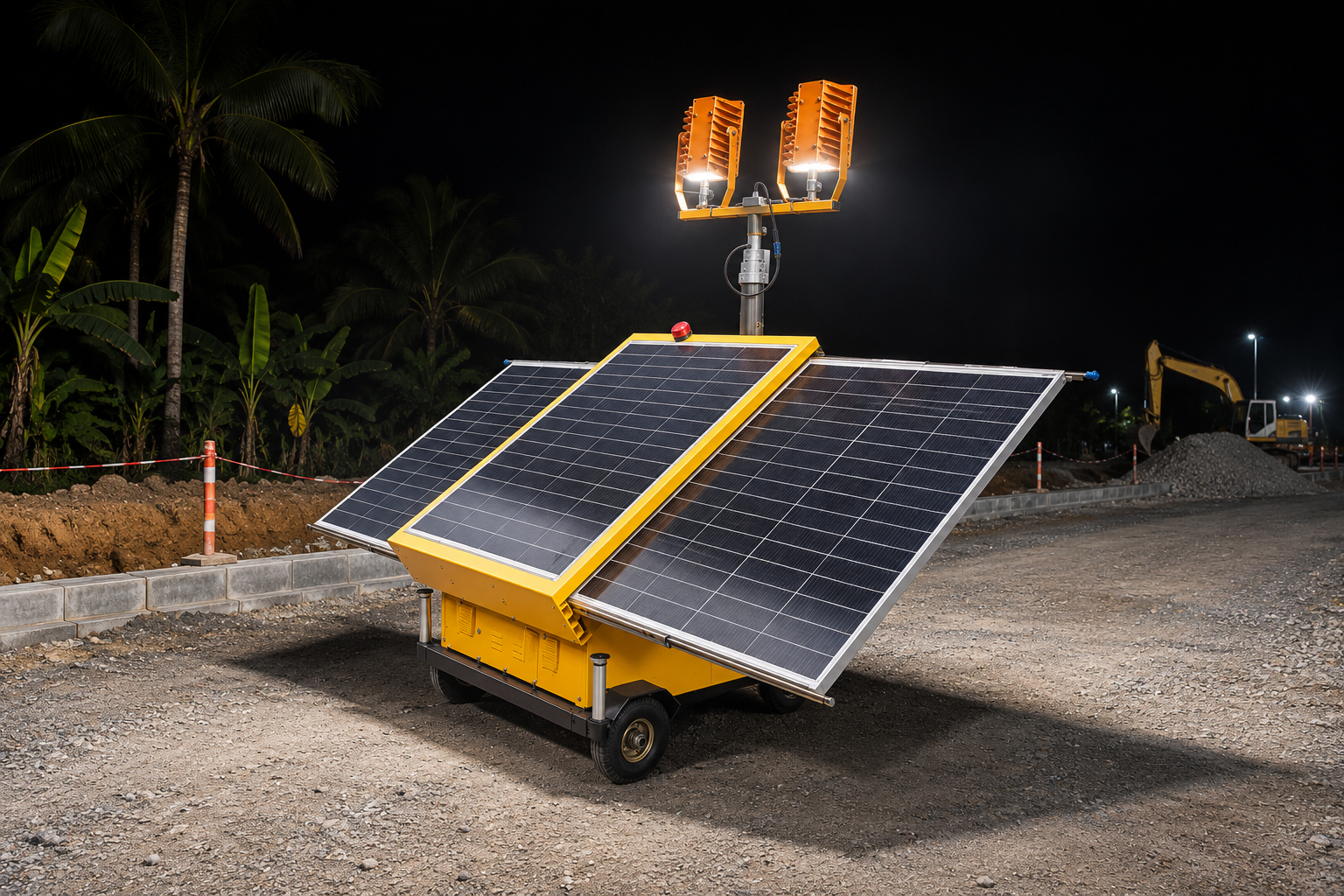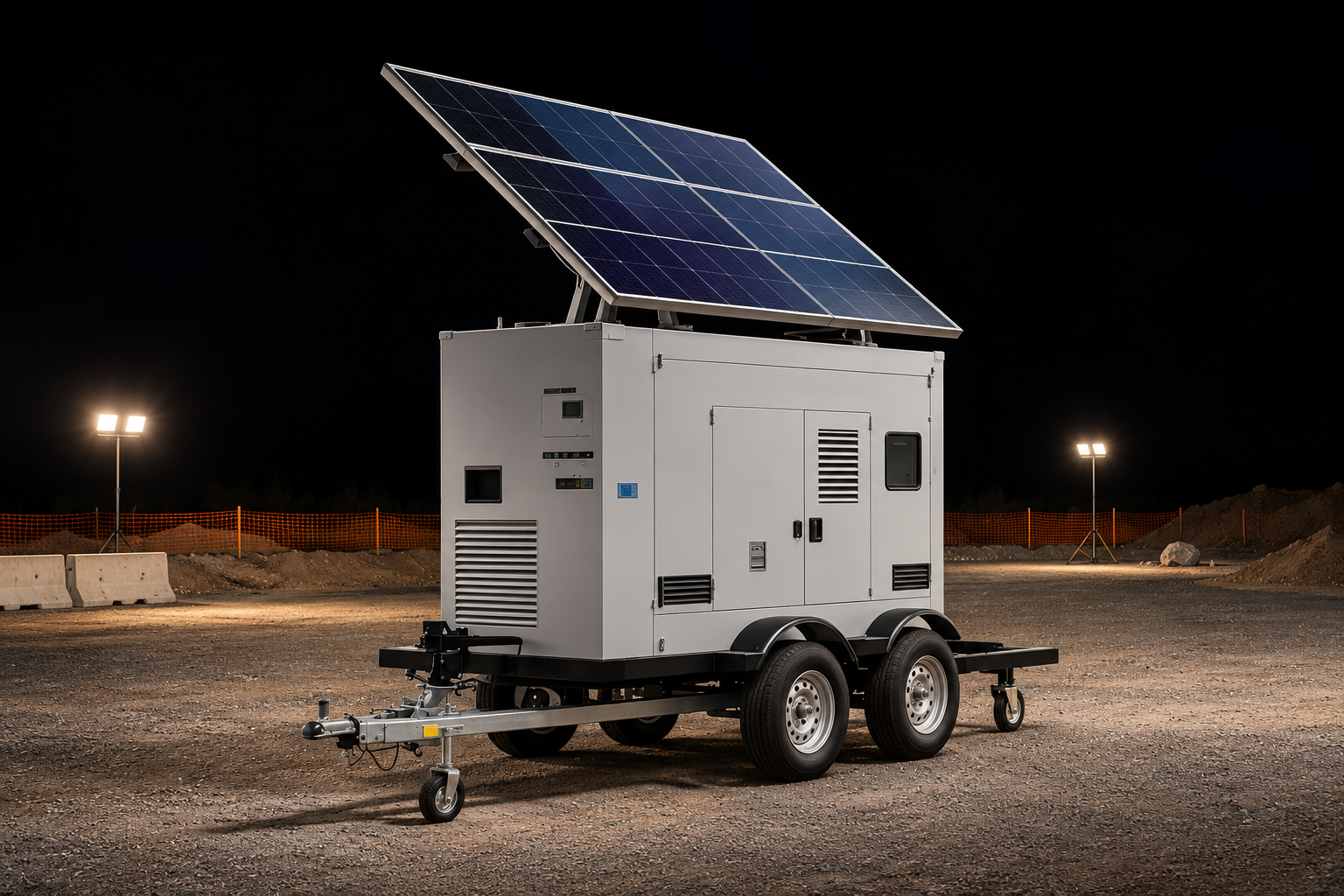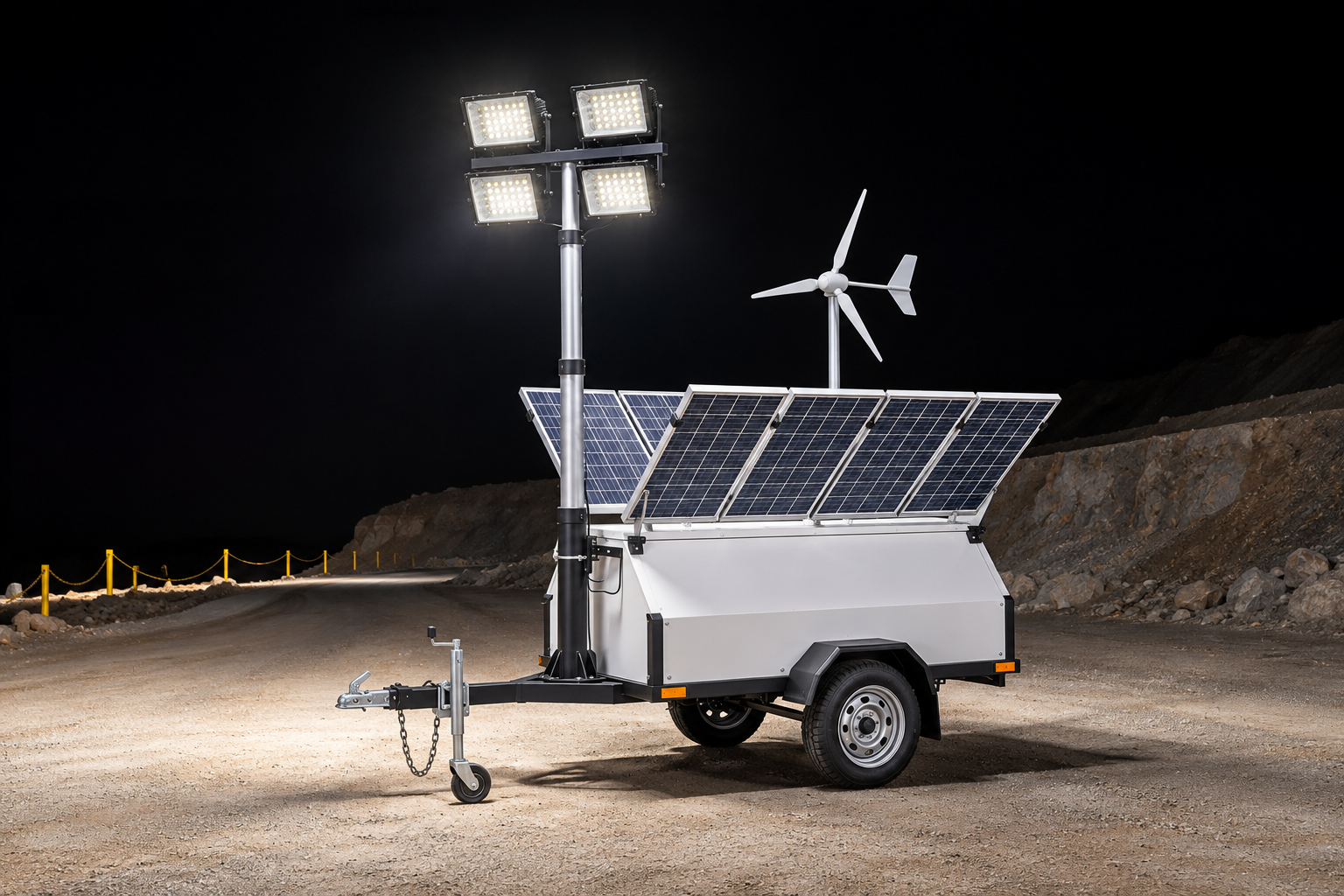

وضع برج الإضاءة حول مسارات المشاة والمركبات
يجب أن يأخذ وضع برج الإضاءة حول مسارات المشاة والمركبات في الاعتبار الجهاز الكامل المنشور، بما في ذلك الأرجل الداعمة وأي مسار كابل مصرح به.
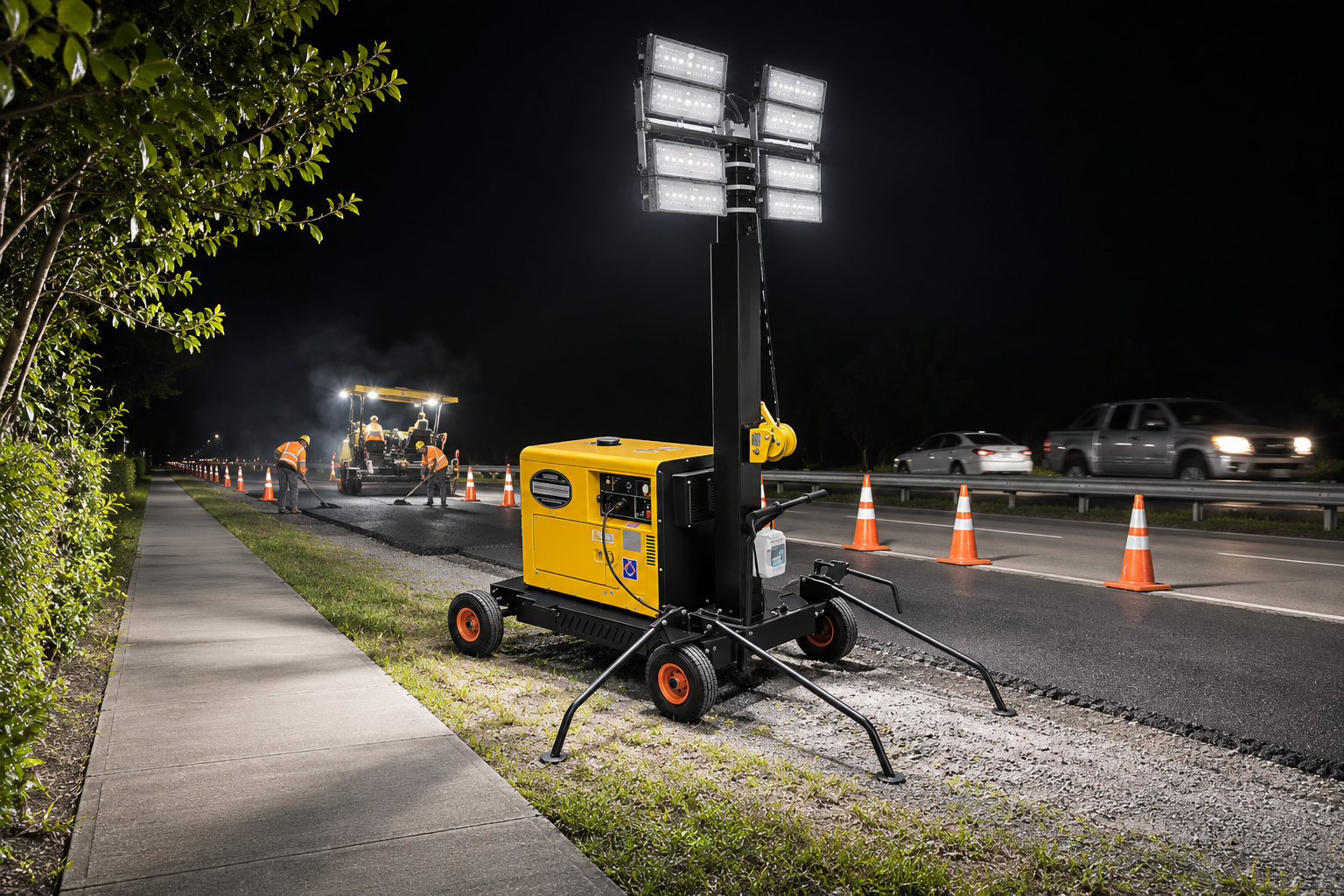
يجب أن يأخذ وضع برج الإضاءة حول مسارات المشاة والمركبات في الاعتبار الآلة الكاملة المستخدمة، بما في ذلك أرجل الدعم وأي مسار كابل مخول. ضع معدات الإضاءة خارج مساحة المشي والقيادة الواضحة، ثم وجه المصابيح نحو المهمة دون توجيه الوهج نحو حركة المرور القادمة. قد يناسب عربة يدوية مضغوطة ذات مقبض يدوي منطقة عمل محدودة، لكنها لا تزال بحاجة إلى سطح مناسب، ومساحة دعم، ووصول آمن. توفر العربة ذات الإطارات الهوائية الموضحة هنا مثالاً ملموسًا للمعدات. يركز هذا الدليل على تخطيط العمل الليلي العملي؛ يجب أن تأتي حماية المسار والأبعاد من خطة الموقع الفعلية وتعليمات الآلة.
قارن بصمة العمل بدلاً من عرض النقل
يمكن أن تبدو العربة صغيرة في الكتالوج بينما تتطلب مساحة أكبر بكثير عند نشر دعائمها. اطلب أبعاد النقل، وترتيب دعم العمل، وتعليمات إعداد المصنع. بالنسبة للمقطورة، أدرج اتصال السحب واحتياجات الوصول؛ بالنسبة للعربة، أدرج مقبضها ومسار حركتها. لا تختار منتجًا لأن خزانته المغلقة تتناسب مع فجوة بين الحواجز. تحقق مما إذا كان يمكن وضع موضع الدعم، والماس، وتجميع المصباح هناك كما هو مقصود. ضع المعدات على سطح مناسب مع الفراغات المطلوبة وفقًا لتعليماتها والموقع. إذا كانت المساحة المتاحة غير كافية، اختر موقعًا آخر أو تكوين منتج مناسب بدلاً من طي الدعم لجعل البرج يتناسب.
| العنصر للمقارنة | المعلومات المطلوب طلبها | فحص عملي للشراء |
|---|---|---|
| مساحة المعدات | بصمة الدعم الكاملة عند النشر | ابق خارج المسارات المحددة |
| وصول المشغل | مقاربة التحكم والخدمة | تجنب عبور حركة المرور النشطة |
| اتجاه الضوء | خطوط رؤية وجه العمل والسائق | تحقق من الضوء المفيد والوهج |
| تغير تخطيط الموقع | التسليمات، الحواجز والمواد | إعادة فحص المسار الفعلي الواضح |
حافظ على قابلية استخدام مسار المشاة طوال الليل
انظر كيف يدخل الناس منطقة العمل، ويسيرون إلى المرافق ويغادرون أثناء الانقطاع. يجب ألا يجبرهم البرج على الالتفاف حول رجل إلى مسار مركبة. حافظ على وصول التشغيل من الجانب المناسب من الحاجز بحيث لا يحتاج المستخدم المخول إلى عبور حركة المرور النشطة للوصول إلى أدوات التحكم. حيث يتطلب النموذج طاقة خارجية، خطط لحزمة الكابلات الخاصة به واحمِها للمسار الفعلي؛ تكوين البطارية أو المولد ليس إذنًا لتجاهل الخدمات الأخرى. تحقق من الترتيب بعد التسليمات، وتحريك الحواجز، أو تغييرات في وجه العمل. يمكن أن يصبح ممر المشاة الذي كان واضحًا قبل الوردية معرقلًا بسبب تخزين المواد حتى عندما لم يتحرك جهاز الإضاءة.
استخدم اختيار المنتج لتبسيط تخطيط إصلاح طريق قصير
لإجراء إصلاح ليلي محلي، قارن بين عربة يدوية أصلية ذات دفع يدوي مع مقطورة قابلة للسحب في نفس منطقة العمل وظروف الأرض. قد توفر العربة حزمة نقل أصغر وطريقة حركة مختلفة، بينما قد توفر المقطورة تكوين قوة أو سارية آخر. أكد التفاصيل الفعلية في العرض. أظهر للمورد لوحة المعدات المقترحة، ومسار الوصول وموقع الحواجز حتى يمكن أن تتناول التوصية الموقع بدلاً من تسمية تطبيق عام. بمجرد الإعداد، تحقق من أن المصابيح تخدم وجه العمل، وأن المشغل يمكنه الوصول إلى التحكمات وأن الدعائم تبقى داخل منطقة المعدات. يتطلب نقل آلة إيقاف التشغيل والإجراءات المقررة، وليس حركة مرتجلة مع رفع السارية.
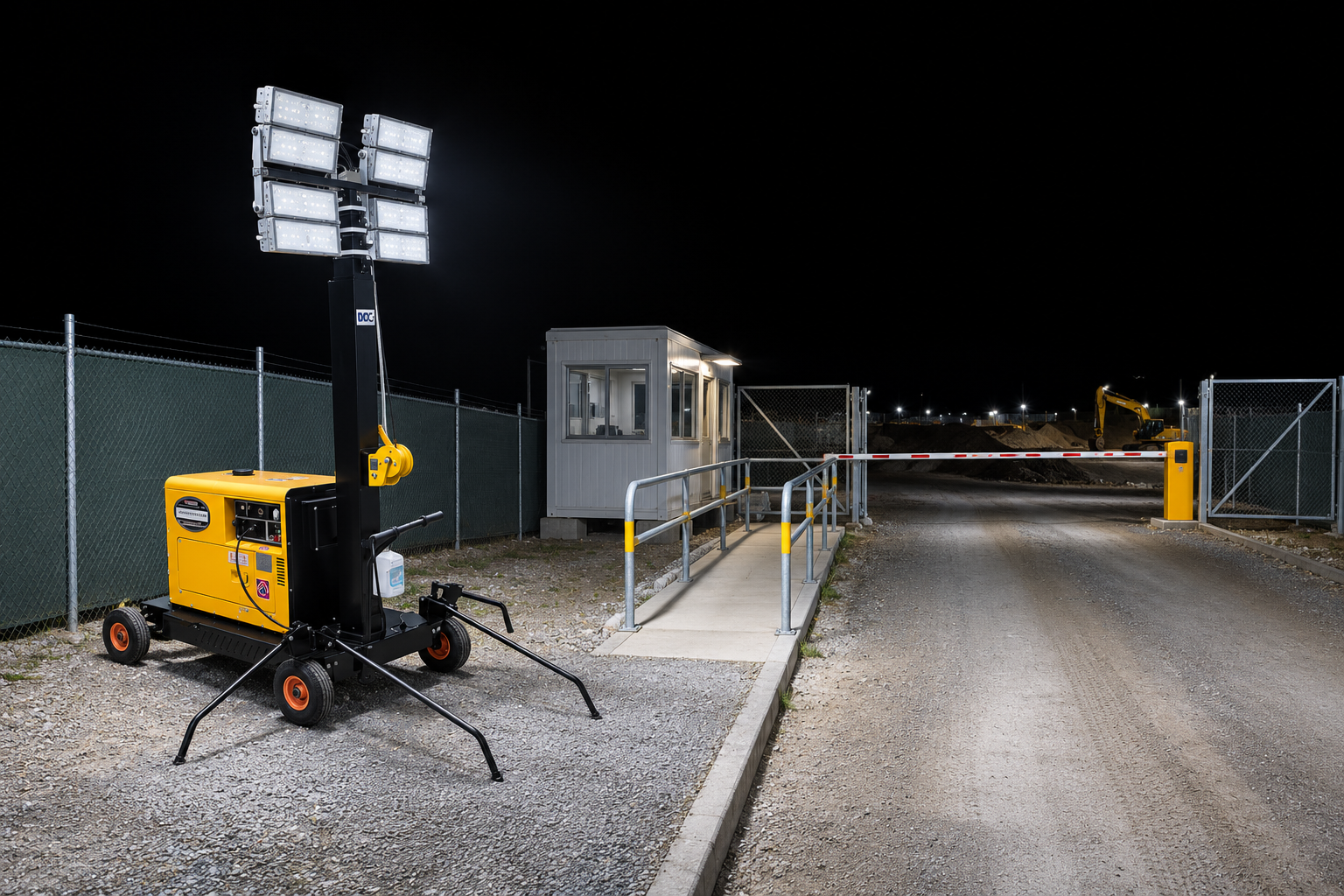
Define the equipment area before drawing the walkway
Begin with the actual delivered machine and the site traffic arrangement. A tracked light tower has a different ground footprint from a trailer unit, and the working footprint changes when supports are deployed. Obtain the applicable instructions and dimensions rather than scaling a brochure image. Include space needed for authorized inspection, access to controls and the planned movement into or out of the bay. The boundary should describe the complete activity area, not merely the rectangle occupied by the cabinet.
Record the destination of the pedestrian route as well as its alignment. A walkway serving a welfare cabin may experience a concentrated flow during breaks; a route to a stores entrance may include visitors carrying equipment. These patterns affect the crossings and access points that require review. Do not let a convenient tower position determine a route that people cannot realistically follow. Ask the route owner and people who use the area to inspect the proposed arrangement together.
Keep product capability and site control separate. The Keyyou tracked product provides a real equipment context for this discussion, but its appearance does not establish a safe separation distance, vehicle impact resistance or permission to operate beside a particular path. Those decisions require the actual machine information and the competent site’s assessment. If the available space cannot accommodate the necessary arrangements, review the equipment position or the work sequence before placing the tower.
Follow the whole pedestrian journey
Walk the route from the point where a person enters the work area to the final destination, under the site’s controlled inspection arrangements. Look for doors opening into a vehicle lane, corners hidden by stored materials and places where the route appears to end at a support leg. A route can look clear on a drawing while its entrance encourages people to approach the wrong side of the equipment. Mark these interfaces for the planner instead of accepting a series of disconnected clear sections.
HSE’s workplace transport guidance emphasizes separation and the visibility of crossings. Its walkway guidance also considers changes in pedestrian flows. Applied to a tower bay, these principles mean reviewing the route during normal shifts, service visits and planned layout changes. They do not supply a universal offset around every machine. The route should retain its intended accessibility and should not direct users into a different uncontrolled hazard merely to avoid the tower.
Consider what a pedestrian sees before reaching a decision point. A tower cabinet, barrier mesh, parked delivery vehicle or stack of materials may interrupt the view of an approaching machine. A sign at the final conflict point provides little opportunity to choose another route. The traffic planner should determine the approach and crossing arrangement. Do not move a protective barrier casually to improve visibility; its location may be part of a wider protective system.
Distinguish route guidance from protective barriers
Different devices perform different jobs. A line on the ground communicates a route. A pedestrian guardrail can guide access. A vehicle restraint system must be selected and installed for its intended protective function. Do not describe these as interchangeable simply because all create a visible boundary. Record the purpose of each device in the layout and obtain the required specification from the responsible planner. An illustration cannot prove that a pictured rail will resist an impact.
Check how the selected arrangement interacts with the tower. Stabilizers must not be trapped against a barrier or positioned across the approved walkway. Access gates should not open into support legs or compel workers to stand in the vehicle lane. Where a vehicle restraint system requires space behind it, the planner must preserve that space; the tower cannot be parked there just because the area is not used as a walking route. Apply the actual design requirements rather than an assumed clearance.
For projects affecting public routes, obtain the applicable authority’s approval and current traffic-control requirements. Caltrans guidance addresses temporary pedestrian access within its jurisdiction, including avoiding conflicts with work equipment. It is a useful example of how route continuity and accessibility are considered together, not a rulebook automatically applicable to every overseas yard. A private site traffic plan also does not authorize changes to a public sidewalk or road.
Plan service traffic before the first visit
Identify which vehicles will approach the tower, where they will stop and whether the service task requires access across the walking route. Include the less frequent visits, such as inspection, collection or a breakdown call. An arrangement that works during normal illumination may fail when a service vehicle parks across the route. Give contractors the current access instructions before arrival and identify the person responsible for coordinating the visit.
Where an unavoidable crossing is permitted by the approved arrangement, establish how pedestrians and equipment are kept separated during the movement. Define who can close the route, what alternative is available and what evidence allows reopening. The details should come from the site’s competent traffic planning process. Do not turn a generic article into instructions for a worker to stand in front of a moving vehicle or direct traffic without the required competence and authority.
Account for the service task after the vehicle has stopped. Doors, hoses, tools and work materials may occupy a different area from the vehicle itself. The pedestrian route should not become a convenient temporary storage strip. If the authorized task cannot fit within the planned service area, stop and coordinate a revised arrangement. Leaving a narrow gap through active servicing creates uncertainty about whether pedestrians are expected to enter the work area.
Planning table: apply the qualitative principles in HSE: separating pedestrians and vehicles; HSE: pedestrian walkways and cycleways; Caltrans: traffic and temporary pedestrian arrangements. No universal numerical acceptance limits are implied.
Check cables, lighting and changing conditions together
cURL Too many subrequests by single Worker invocation. To configure this limit, refer to https://developers.cloudflare.com/workers/wrangler/configuration/#limits.
cURL Too many subrequests by single Worker invocation. To configure this limit, refer to https://developers.cloudflare.com/workers/wrangler/configuration/#limits.
cURL Too many subrequests by single Worker invocation. To configure this limit, refer to https://developers.cloudflare.com/workers/wrangler/configuration/#limits.
مرجع المنتج والأدلة ذات الصلة بالشراء
لأي استفسار خاص بالنموذج، ابدأ بـ برج إضاءة متنقل متحرك يدوي باليد (ذو إطارات هوائية). وصف مهمتك الفعلية واطلب التكوين المعروض، التعليمات السارية والمعلومات الداعمة ذات الصلة.
- كيفية اختيار برج الإضاءة
- كيف ينبغي للفرق التخطيط لوضع أبراج الإضاءة عبر منطقة العمل؟
- طباعة بصمات تثبيت برج الإضاءة: تخطيط المساحة والتركيب
- تحكم في سطوع برج الإضاءة لمشغلي المعدات
التعلم الإضافي
WorkSafeBC: تشغيل المعدات المتنقلة: ما لا يمكنك رؤيته | WorkSafeBC. يشرح هذا المورد التعليمي المفاهيم الأساسية؛ لا يحدد أداء أو شهادة الآلة المصورة.
الأسئلة الشائعة
هل يمكن لعربة مدمجة أن تقف في ممر ضيق؟
استخدم فقط موقعًا يتسع لنشر التوزيع المعتمد بالكامل ويحافظ على مسارات المرور المطلوبة خالية. عرض الخزانة وحده لا يحدد مدى الملاءمة.
هل يمكن طي أرجل الدعم للحفاظ على مسار مفتوح؟
لا تبتعد عن ترتيب الدعم المطلوب لجعل الموقع مناسبًا. اختر موقعًا مناسبًا أو ترتيب منتج مدعوم آخر.
متى يجب فحص التخطيط مرة أخرى؟
إعادة التحقق بعد النقل، تغييرات الحواجز، التسليمات أو تغييرات أخرى تؤثر على المسارات الفعلية ومنطقة العمل، وفقًا لمتطلبات الموقع والآلة.
المصادر
استخدم تعليمات الآلة السارية لاتخاذ القرارات الخاصة بالمنتج. تدعم المصادر التالية المبادئ العامة ضمن نطاقها المعلن.