
How Much Does a Light Tower Weigh? Transport Classes and Payload Planning
Light tower weight depends on the exact trailer, mast, power system, fluids and options. Learn how to calculate transport mass and verify axle, hitch, lifting and shipping limits.
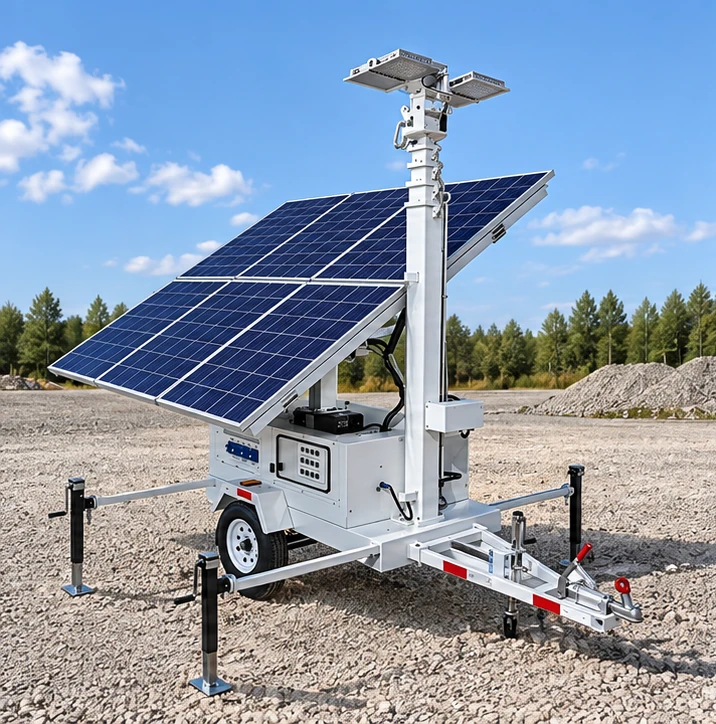
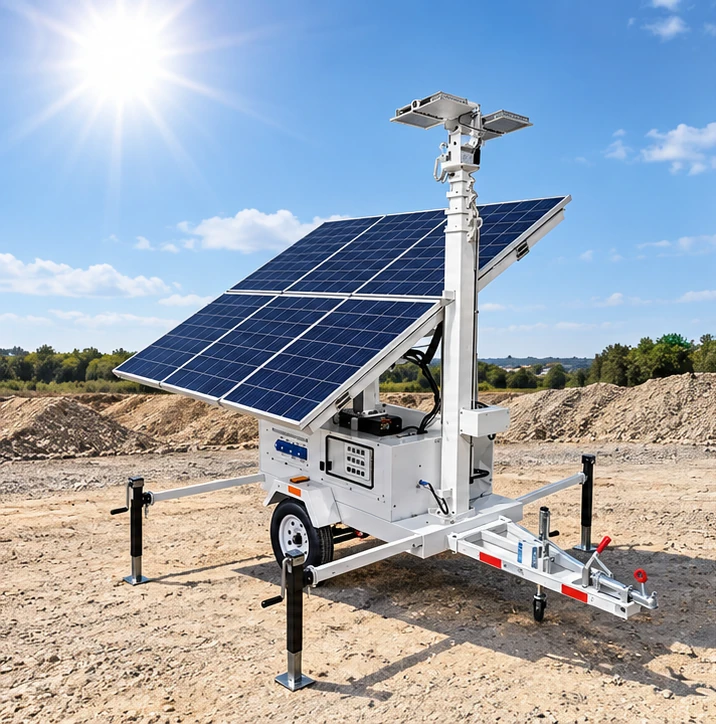
Light tower weight can range widely because a hand-moved battery tower, a solar trailer, and a diesel generator tower are different machines. Do not select a tow vehicle, forklift, crane, container, or tie-down system from a generic category average. Use the exact model’s rated mass, then add fuel, batteries, fluids, luminaires, cables, spare parts, packaging, and installed options to determine the real transport weight. Verify axle load, hitch load, vehicle payload, combined rating, lifting points, and legal requirements for the route.
This guide explains how contractors, rental fleets, distributors, and importers should use light tower weight in transport planning. It does not provide a universal weight for every tower. The manufacturer’s current data, the delivered machine’s identification plate, a certified scale where required, and the rules that apply to the vehicle and route remain controlling.
Quick answer: which light tower weight should you use?
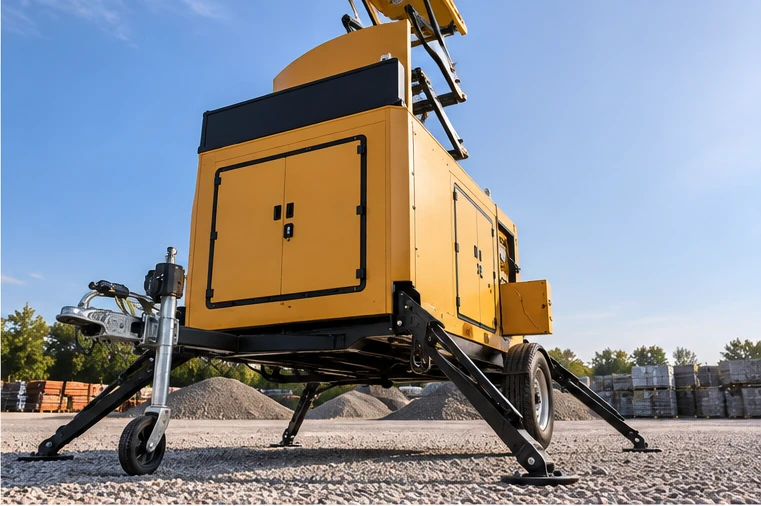
Use the fully equipped weight for the condition you will actually move. A published dry mass is useful for comparing base models, but it may not include fuel, engine fluids, optional batteries, cable reels, spare wheel, fire extinguisher, stabilizers, chargers, toolboxes, towing accessories, or packaging. A shipping mass may include a crate or pallet but exclude items sent separately. A gross vehicle weight rating is a structural limit, not the tower’s measured operating mass.
Before accepting a quotation, ask the supplier to state the definition behind every weight value. Record whether the mast is lowered, panels are folded, fuel tank is empty or full, loose accessories are installed or separately packed, and the stated value is calculated, measured, or a maximum rating. If the delivered configuration changes, repeat the review.
Five weight terms that must not be confused
| Term | What it describes | How it is used |
|---|---|---|
| Dry weight | Base machine under the maker’s stated exclusions | Early model comparison only |
| Operating weight | Machine with required fluids, energy source, and installed equipment | Jobsite movement and lifting plan |
| Shipping weight | Equipment plus stated packing and shipping accessories | Freight quote, container, and handling plan |
| Gross trailer weight | Actual loaded trailer and everything carried on it | Tow vehicle and road-transport checks |
| GVWR or axle rating | Maximum permitted loaded rating stated by the manufacturer | Limit check; never treat as measured mass |
The terminology in a supplier document may differ, especially across markets. Require plain definitions and units next to the value. Do not convert a maximum rating into an assumed operating weight or subtract an estimated payload from a rating to invent a missing measurement.
Build a complete transport-weight calculation
A practical estimate starts with the verified base-machine mass and adds every item that will travel with it. The basic relationship is:
Loaded transport mass = base machine + fuel and fluids + installed options + loose accessories carried on the unit + packaging or transport frame.
Keep all terms in one unit system. Fuel mass must be based on the actual fuel type and the planned fill level, not the tank’s volume alone. Battery changes can be significant because chemistry, capacity, enclosure, thermal system, and mounting hardware all contribute. A retrofit from metal-halide fixtures to LED can change fixture mass, brackets, drivers, cables, and wind area, so the mechanical review should not focus on kilograms alone.
Add a controlled allowance for items that are not finalized, but do not use an arbitrary percentage to certify a vehicle or lifting operation. Replace allowances with measured values before dispatch. Where route permits, taxes, inspections, or commercial-vehicle rules depend on weight, use the required weighing and documentation method.
Check axle load and weight distribution
Total weight does not reveal how the load is shared. For a towable tower, the axle, tires, wheels, coupling, safety chains, jack, brakes, and tow vehicle each have limits. The actual hitch load also becomes part of the tow vehicle’s payload and affects its rear axle. A unit can remain below total trailer rating yet overload a tire, axle, coupling, or tow vehicle when accessories are placed poorly.
Measure the complete configuration on level ground using suitable scales and the procedure required by the vehicle or trailer manufacturer. Record total trailer mass, individual axle loads where needed, and hitch load. Compare each measured value with the applicable ratings without mixing pounds and kilograms. Position only approved accessories in approved locations; do not move batteries, fuel tanks, or counterweights to correct balance without manufacturer review.
The U.S. National Highway Traffic Safety Administration warns buyers to check that trailers comply with applicable federal safety standards. Registration, braking, lighting, licensing, and towing rules also vary by jurisdiction, so the destination requirements must be confirmed before import or use.
Select the towing vehicle from ratings and real payload
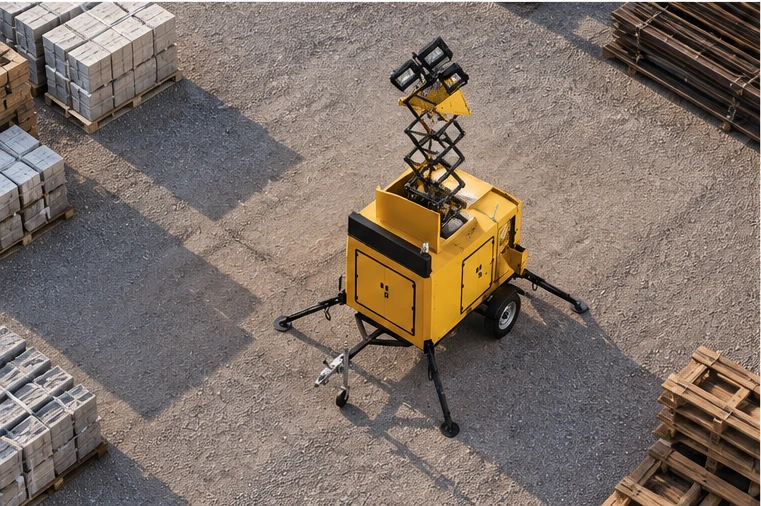
Check the tow vehicle’s maximum trailer rating, gross combined rating, vehicle gross rating, front and rear axle ratings, tire ratings, hitch and ball or pintle rating, and permitted tongue load. Then account for the driver, passengers, tools, fuel, cargo, and any equipment already in the vehicle. A headline towing capacity can be reduced by vehicle configuration, options, payload, altitude, temperature, grade, or manufacturer instructions.
Match the coupling type and height, electrical connector, lighting, breakaway device, chains, and braking system. Confirm that the trailer is level in its loaded condition and that the tow vehicle remains within every rating. A road test cannot prove that an overloaded combination is acceptable. Use the tow vehicle manual and the tower manufacturer’s transport instructions together.
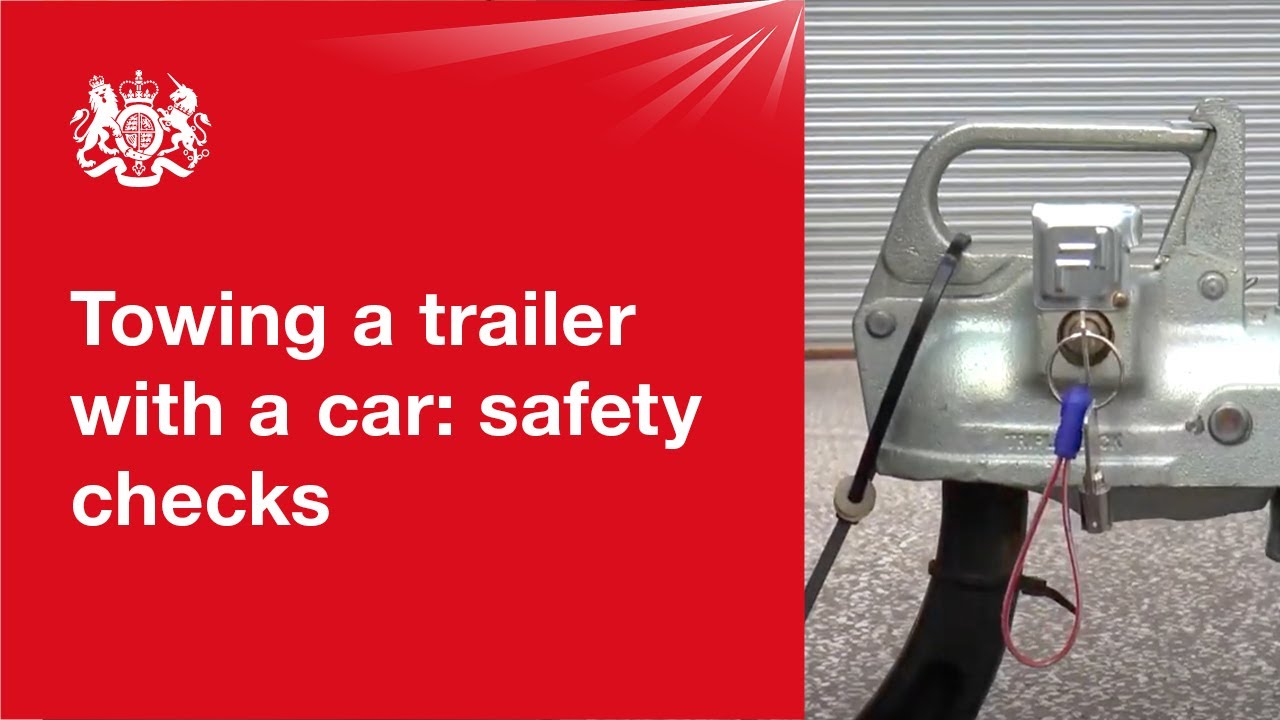
The UK Driver and Vehicle Standards Agency’s trailer safety checks provide a useful explanation of checking coupling, tires, lights, load, and weight limits. Local rules control, but the same disciplined pre-departure approach is useful for industrial light tower fleets.
Plan lifting and loading separately from towing
A forklift or crane plan needs more than total weight. Confirm approved lifting points, center of gravity, lifting-point capacity, required spreader or sling arrangement, fork-pocket dimensions, minimum fork length, and whether batteries, fuel, or accessories must be removed. The mast must be fully lowered and locked in the approved transport position. Stabilizers, solar panels, doors, light heads, cables, and loose parts must be secured against movement.
Never lift from a mast, tow bar, axle, tie-down point, or enclosure feature unless the current manufacturer instructions identify it as a lifting point for that configuration. Tie-down points and lifting points serve different load cases. Check the capacity and condition of the forklift or crane at the required load center and working radius, and use trained personnel under the site lifting plan.
Container and flatbed payload planning
For export shipping, record the packed length, width, height, weight, center of gravity, stacking restriction, lifting method, and packing orientation for each unit. Compare the total with the container or vehicle payload and verify concentrated floor loading. A container’s internal volume may fit several towers while its payload, door opening, lashing points, or unloading method does not.
Design blocking, bracing, chocking, and tie-downs for the equipment and transport mode. Protect solar panels, luminaires, controllers, connectors, and mast sections from impact and vibration. Drain or isolate fluids only as permitted by the product instructions and transport rules. Document removed components so the receiving team can reinstall them correctly.
For U.S. interstate commercial transport, the Federal Motor Carrier Safety Administration cargo-securement rules describe performance and working-load requirements for securement systems. The correct method depends on the machine, carrier, route, and applicable regulations; a supplier packing photograph is not a substitute for the carrier’s securement plan.
Pre-dispatch light tower weight checklist
| Check | Evidence | Release condition |
|---|---|---|
| Identity | Model, serial number, option list | Matches shipping documents |
| Mass | Defined dry, operating, and shipping values | Correct configuration and units |
| Distribution | Axle and hitch measurements where required | Every component remains within rating |
| Tow combination | Vehicle, hitch, brake, tire, and combined ratings | Actual payload included |
| Transport state | Mast lock, folded panels, secured fixtures and accessories | Manufacturer instructions completed |
| Securement | Rated points, devices, blocking, and inspection | Carrier and route requirements met |
| Documents | Manuals, scale ticket, permits, customs and handover records | Available before departure |
Video: basic trailer safety checks
The UK Driver and Vehicle Standards Agency demonstrates routine trailer checks for the coupling, breakaway cable, tires, lights, load, and weight limits. Use it as general education; the light tower and tow vehicle manufacturers’ instructions and local law remain controlling.
Common mistakes when comparing light tower weight
- Using a dry mass for a fueled and fully equipped road movement.
- Treating GVWR as the tower’s actual weight.
- Checking total weight but ignoring tire, axle, coupling, and hitch loads.
- Assuming every unit in a model family has the same generator, batteries, mast, or trailer.
- Adding a toolbox, cable reel, spare parts, or larger battery without reviewing weight distribution.
- Using tie-down eyes as lifting points or lifting points as road-securement points.
- Planning by container volume while ignoring payload and floor loading.
- Leaving the receiving site without equipment capable of unloading the documented shipping mass.
How light tower weight affects procurement cost
Weight influences freight class, container quantity, crane and forklift selection, tow vehicle size, driver licensing, permits, tires, brakes, fuel consumption, yard handling, and delivery access. A lighter unit is not automatically better: reducing mass must not compromise stability, structural strength, runtime, battery reserve, fuel capacity, or service access. Compare complete configurations against the same operating requirement.
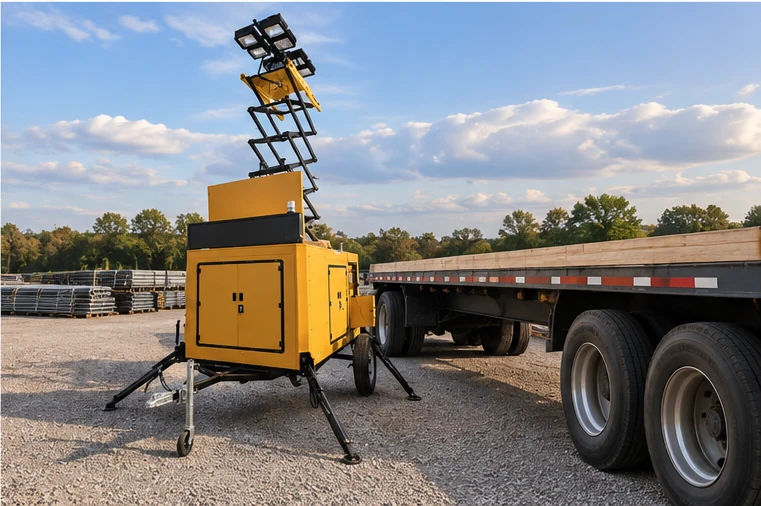
Ask suppliers to quote the exact transport package, including dimensions, mass, loading method, packing, documentation, and items shipped separately. For the telescopic trailer-mounted mobile lighting tower, buyers should request configuration-specific weight and transport information rather than inferring values from photographs. See the broader trailer light tower guide, the transport checklist, and the towable lighting tower buyer guide for complementary selection and operating questions.
Frequently asked questions
How much does a portable light tower weigh?
There is no single standard weight. Compact battery units, trailer-mounted solar towers, and engine-driven towers can differ greatly. Use the exact model plate, data sheet, and a verified scale ticket for the delivered configuration.
Is light tower dry weight enough for towing decisions?
No. Dry weight can exclude fuel, batteries, fluids, spare tire, cables, accessories, tools, and other installed options. Calculate the fully loaded operating and transport condition.
Does light tower weight include tongue weight?
Tongue weight is the portion of the loaded trailer weight carried at the hitch. It is not an extra item added to total trailer weight, but it does count against the tow vehicle’s payload and axle limits.
Can several light towers be shipped in one container?
Only after verifying individual packed dimensions and masses, total payload, floor loading, center of gravity, blocking and bracing, lifting method, and destination transport requirements.
When should a light tower be weighed again?
Reweigh or recalculate after major options, larger batteries, a different generator, retrofit luminaires, added toolboxes, repair modifications, or any change that affects mass distribution.
Final takeaway
A reliable light tower weight decision starts with the exact delivered configuration. Define each weight term, calculate the loaded condition, measure axle and hitch loads where required, compare every component with its rating, and document the lifting and securement method. Recheck the plan after options or retrofits change. That record protects the equipment, carrier, receiving site, and future fleet decisions far better than a generic weight range.