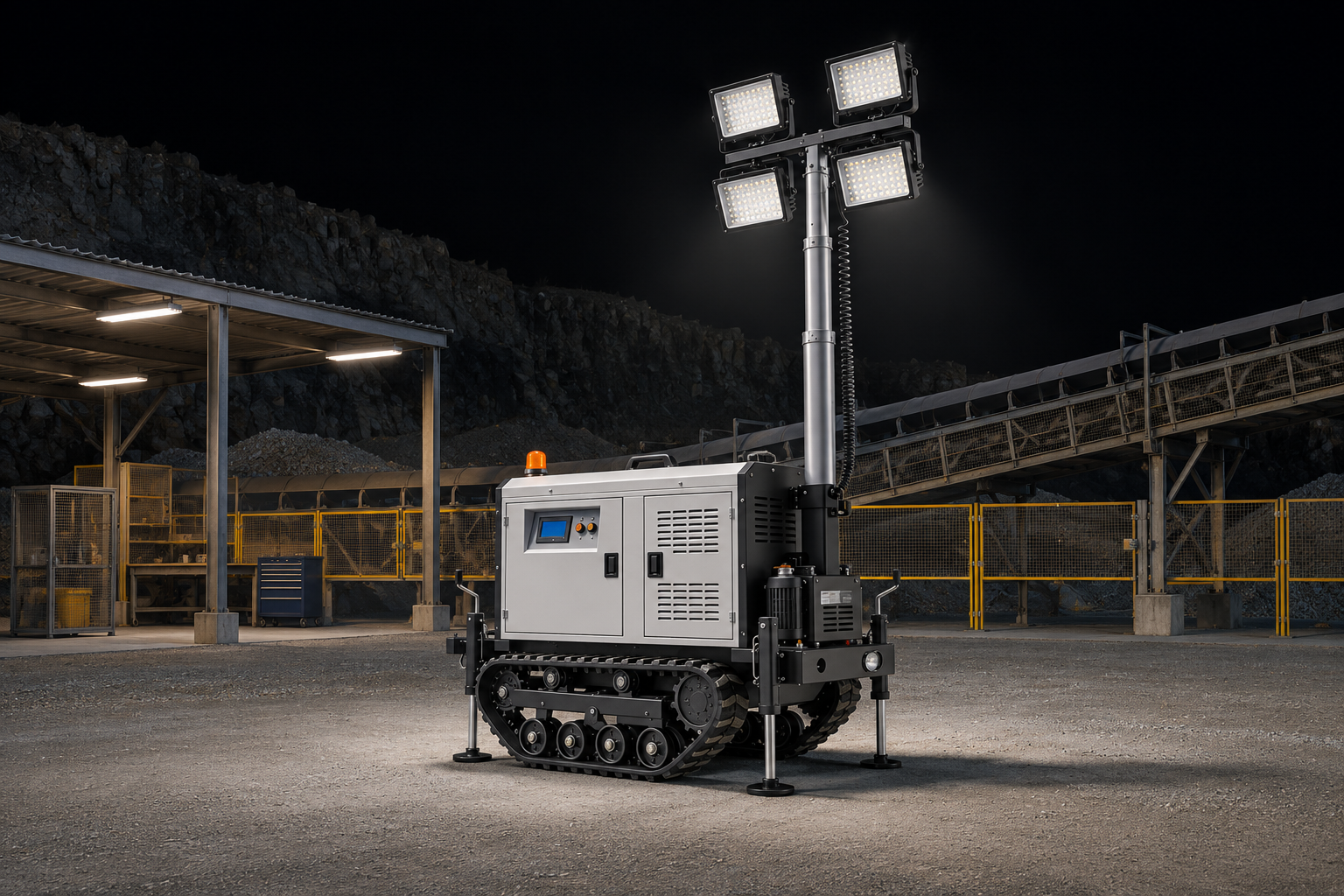
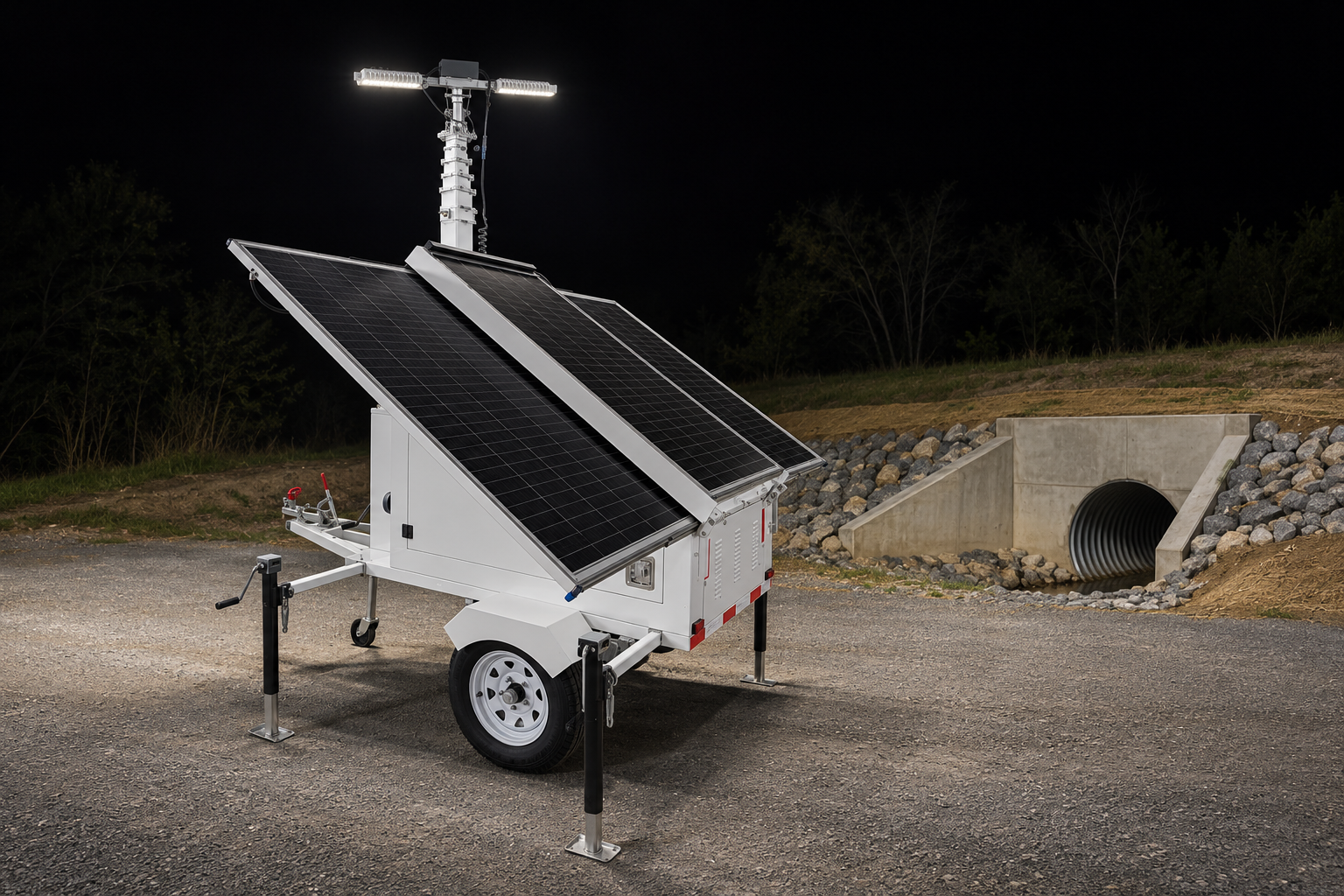
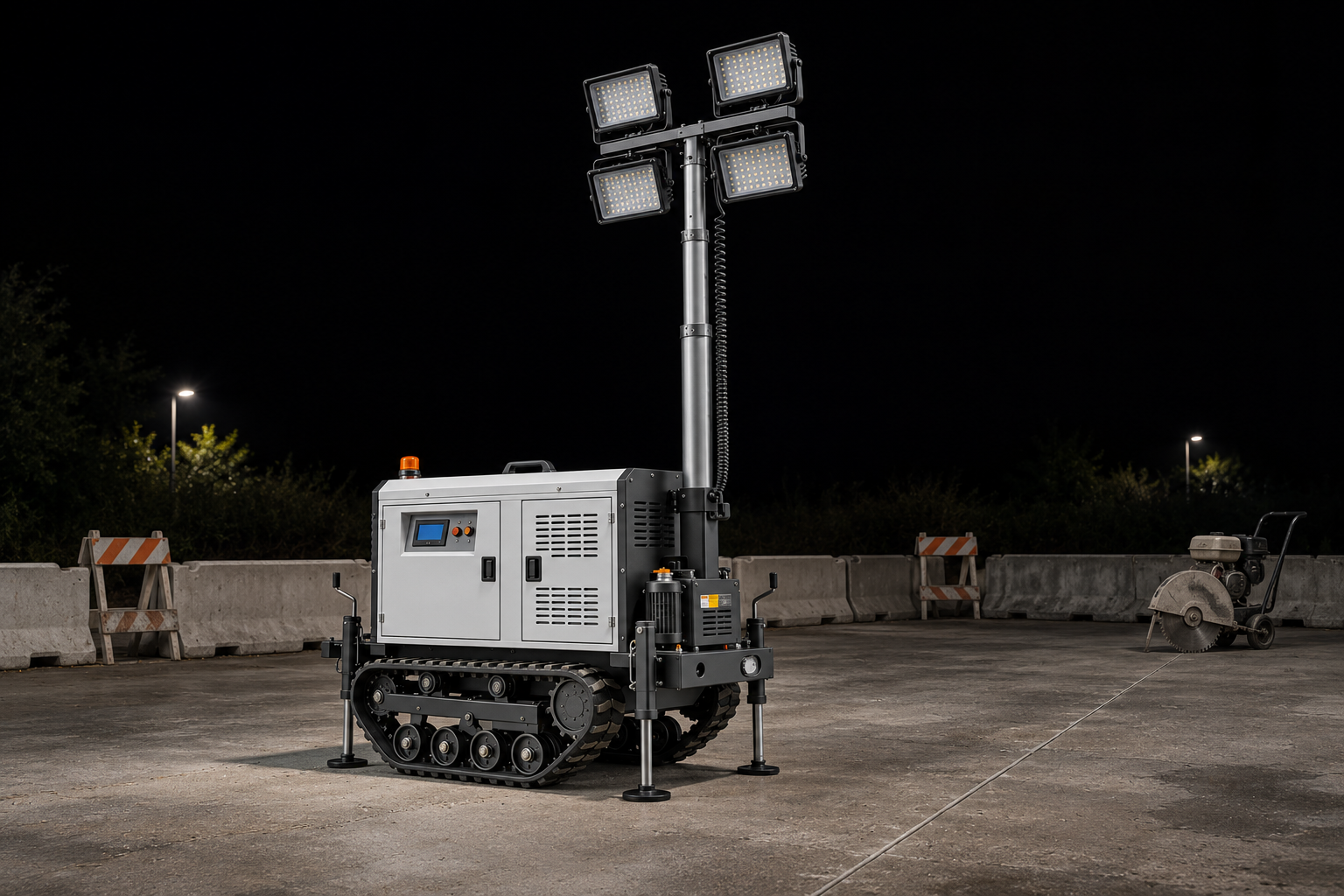
Wie wählt man einen Notbeleuchtungsmast aus? Die Beschaffung für Lagerbestände ist nicht dasselbe wie die projektbezogene Beschaffung.
Notbeleuchtungsmasten gehören zu einer besonderen Beschaffungskategorie: Sie stehen auf Notfallmaterial- und Lagerbestandslisten auf allen Verwaltungsebenen, und die Beschaffungslogik ist.
Emergency lighting towers are a special procurement category: they appear on emergency material stockpile lists at every level, and the purchasing logic is exactly the reverse of buying lights for a construction site — project lights spend more time in use than in storage, while stockpile lights spend more time in storage than in use.
Stored for six months or a year without being touched, it must light up the moment it is pulled out. By that standard, selection comes down to four indicators.
1. Storage reliability: can it still fire up after long storage
This is the first indicator for a stockpile light, and the one most easily overlooked.
Diesel models: with the engine in long-term storage, the fuel circuit and the battery are both risk points. At selection, ask clearly: what measures guarantee starting after six months in storage, does the battery have an offline storage design, and does the manufacturer provide storage and maintenance procedures.
Battery energy storage models: lithium batteries stored at full charge for a long period degrade faster, and long-term storage at low charge is even more harmful. What you need to ask is: what state of charge is recommended for storage, is there a storage mode, and how often does it need topping up. A manufacturer who cannot answer these has never thought about stockpile scenarios.
2. Deployment speed: emergency scenarios are measured in minutes
None of the situations in which a stockpile light is deployed comes with time to spare. From unloading off the truck to lighting up, only a unit that can be brought into service within a few minutes qualifies.
At selection, look at three actions: whether outrigger deployment requires tools, whether the mast is raised by hand crank or by electro-hydraulic drive, and how many steps start-up takes. Hand-crank mechanisms are highly reliable but slow, while hydraulic systems are fast but depend on system condition — for emergency use we recommend electro-hydraulic as the primary means with a hand crank as backup, so that both paths work and a single failure does not leave you stranded.
3. Transport fit: can it keep up with the team
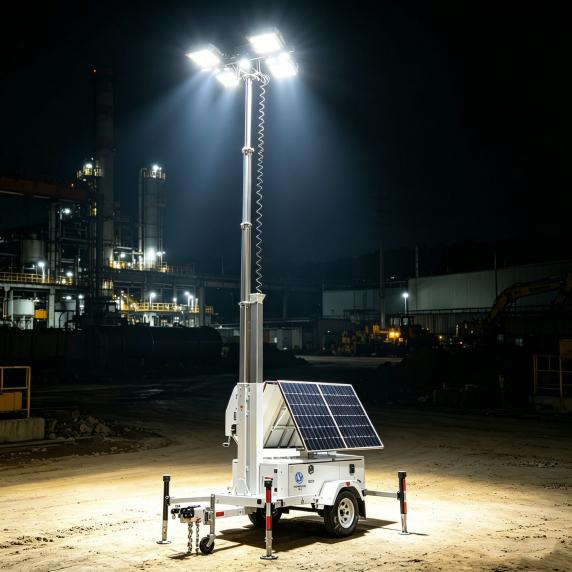
The key to emergency materials is mobility. Look at three points: whether the unit has a trailer chassis, whether it can be loaded directly onto an ordinary truck, and what its total weight is (which determines what vehicle can pull it and whether special transport is needed).
For models with mast heights from 4.5 m to 12 m, the stowed dimensions differ considerably. Before purchasing, check them against your organization's transport vehicles, so you don't buy something you cannot move.
4. Low-maintenance design: nobody tends it every day while it sits in storage
Project lights are handled daily on site, while stockpile lights sit in the warehouse for months. So look at: how many consumable parts there are, how long the maintenance intervals are, and whether there is a self-test function. Among models with a lighting distance of 50 m to 120 m, the simpler the structure, the less trouble there is during the storage period.
One more detail: whether the technical documents supplied with the unit are complete. Staff at stockpile units rotate, so the manual, the operating procedures and the maintenance schedules must travel with the equipment, so that the next person taking over can understand it.
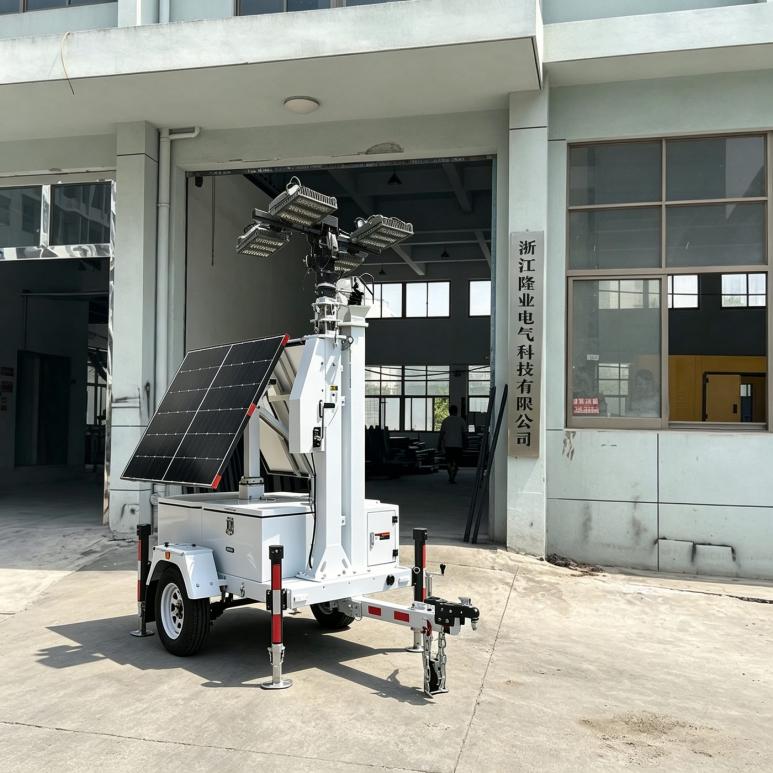
Our Emergency Line
Wenzhou Keyou Trade Co., Ltd. specializes in complete mobile lighting tower units. For emergency applications we configure to stockpile scenarios: storage and maintenance procedures supplied with the goods, trailer chassis optional, and technical documents bound to handover standards. Models with mast heights from 4.5 m to 12 m and lighting distances from 50 m to 120 m are in production. Get in touch with your stockpile quantity and storage conditions: mobile 0086-15068426563; factory address: No. 185 Jingba Road, Yueqing Economic Development Zone, Zhejiang Province, China; website: www.keyyoutrade.com.
Disclaimer: The parameters in this article are typical industry ranges; specific values vary with model configuration and are subject to the manufacturer's technical documents and actual measurements.