
Diesel Light Tower Fuel Tank Sizing for Multi-Shift Work
Estimate usable diesel fuel for multiple light-tower shifts from duty-hour consumption, reserve and refueling windows, with a worked example and safe operations checklist.
Light tower fuel tank sizing for multi-shift work is a question of usable fuel, real fuel consumption at the chosen lighting load and a safe refueling window. A large-looking yellow cabinet is not a fuel-volume measurement, and a generator’s full-load liters-per-hour figure may not represent a dimmed night shift. Estimate each shift’s fuel use from a manufacturer-approved load-specific curve or field measurement, add a documented contingency, and compare it with usable—not simply nominal—tank capacity. This guide gives a transparent worked example, an operations table and a checklist for the exact diesel option.
Start with a fuel balance, not a tank shape
The basic relationship is fuel needed (L) = sum of operating hours in each load mode × fuel rate at that load (L/h) + reserve. If the supplier gives a constant verified rate for the entire planned duty cycle, the sum reduces to hours × that rate. An actual tower may have a different rate while all LED heads are on, when they are dimmed, and when authorized auxiliary electrical loads are used. If a hybrid option shuts the engine off for part of a shift, count those hours separately rather than applying a diesel rate to them. Ask for a generator-set fuel curve tied to the exact engine and operating configuration.
Distinguish rated tank capacity from fuel that can safely be used before the engine’s pickup or low-fuel cutoff. The operator may intentionally leave a reserve to avoid running dry, permit an orderly shutdown and accommodate schedule changes. Expansion space and filling limits must follow the supplied manual; never equate nominal tank volume with permission to fill to the neck. Fuel quality, ground slope and the sensor’s accuracy may affect available fuel. Do not invent a universal “unusable fuel” percentage for a product that has not supplied its tank data.
| Input for the plan | Unit | How to obtain it |
|---|---|---|
| Hours per shift and shifts between refuels | h | Site schedule, including handover delays |
| Fuel rate in each lighting mode | L/h or gal/h | Exact generator fuel curve or measured log |
| Usable tank capacity | L | Supplier’s model-specific operating documentation |
| Starting fuel available | L | Verified fill or calibrated gauge, not visual guess |
| Contingency reserve | L or h equivalent | Site risk, weather and approved operating policy |
| Safe refueling window | Time and location | Work plan and generator shutdown/cooldown procedure |
Worked example: two shifts with different lighting loads
Consider a hypothetical two-shift night operation, with each shift lasting eight hours. During the first eight hours the generator’s manufacturer curve, in this example only, indicates 1.4 liters per hour at the selected load. During the next eight hours a verified lower lighting setting indicates 1.1 liters per hour. The predicted consumption is (8 × 1.4) + (8 × 1.1) = 11.2 + 8.8 = 20.0 liters. If the team’s documented contingency is an additional 20% of this predicted use, the planning requirement is 24.0 liters of usable starting fuel before those two shifts. The 1.4, 1.1 and 20% values are illustrative choices, not fuel-rate or tank specifications for the pictured Keyyou model.
Now suppose a hypothetical tank is listed at 30 liters nominal but the supplier specifies only 26 liters as usable under the relevant operating conditions. Beginning with that verified usable quantity would leave 2 liters above the illustrative 24-liter planning requirement. That arithmetic margin is slim, and it is not enough to conclude the plan is safe without considering a missed refueling window, a changed work-lighting mode, cold starts and actual meter accuracy. If only 22 usable liters are available at shift start, the plan fails the reserve criterion even though the nominal tank says 30. Refuel before work at an approved time or revise the operating plan with the operator and supplier.
For a three-day job, carry the fuel balance forward: start of day + safely added fuel − actual measured consumption = next start. A tank-size answer by itself does not tell the site where and when the crew may refuel. This is why a multi-shift table should have a row for every change in load or shift, with an owner for checking the level. Use one unit system consistently: if a datasheet quotes U.S. gallons per hour and the tank is in liters, convert correctly before the comparison.
Why a published runtime figure may not fit your shift
A brochure runtime often assumes a specified tank fill, lamp setting, engine and reference environment. The exact test basis is important. When the load changes, hourly fuel use generally changes, but it should not be scaled linearly from full load without the actual engine curve. Idling and fixed mechanical demand mean half the electrical load does not necessarily mean half the fuel consumption. Engine condition and maintenance also affect field results. Request the supplier’s rates at the light tower’s real operating points and, when possible, test the delivered unit with a measured starting and ending fuel quantity.
At high altitude or high ambient temperature, the generator may have a reduced available output. The altitude derating guide addresses that power limit. Do not infer a new fuel-rate curve merely by multiplying rated output by a derating factor; seek the manufacturer’s site-specific data. Likewise, changing lamp mode for economy must preserve the required work-area illuminance. A lower fuel number that compromises safe lighting is not a valid optimization.
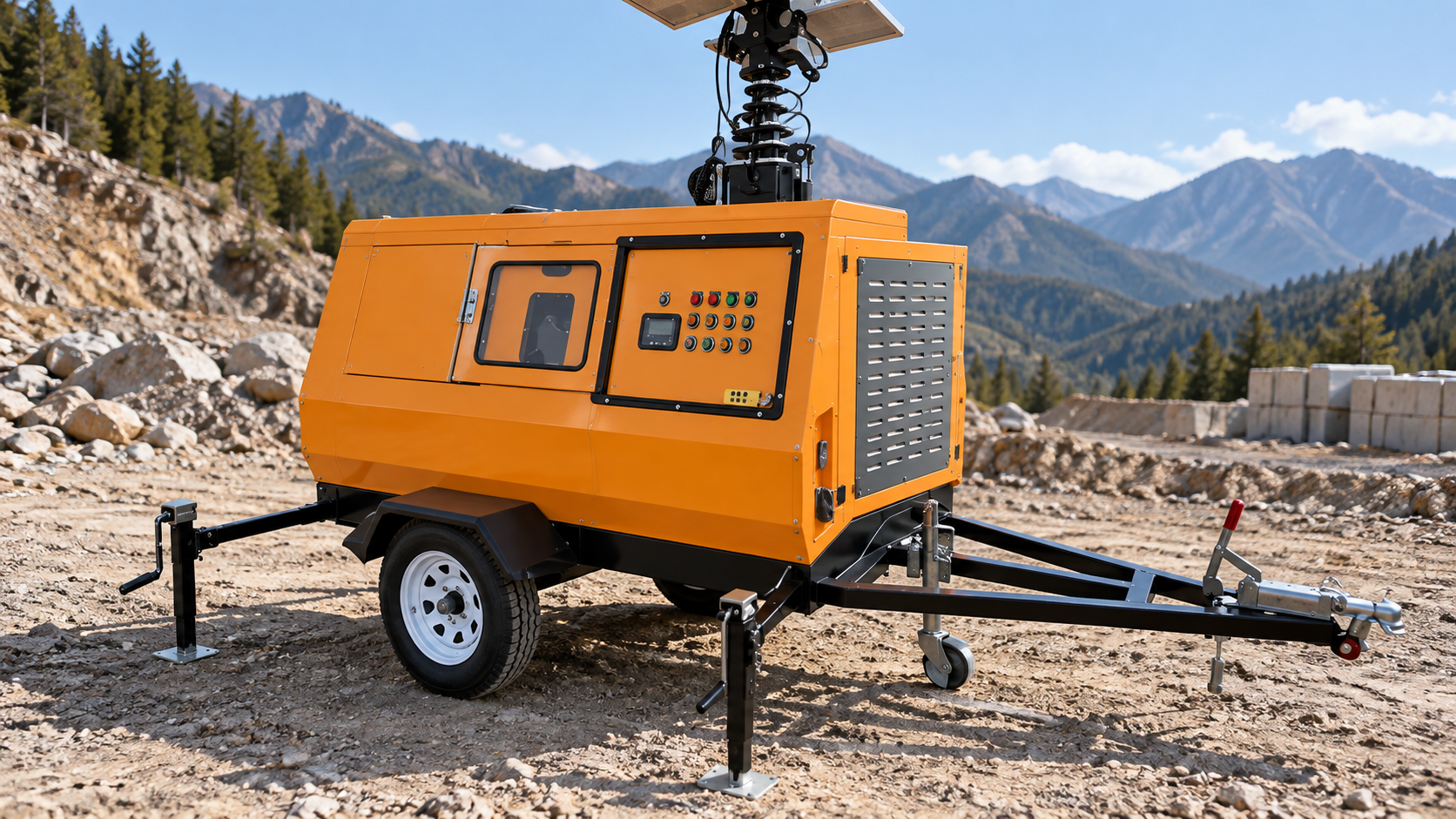
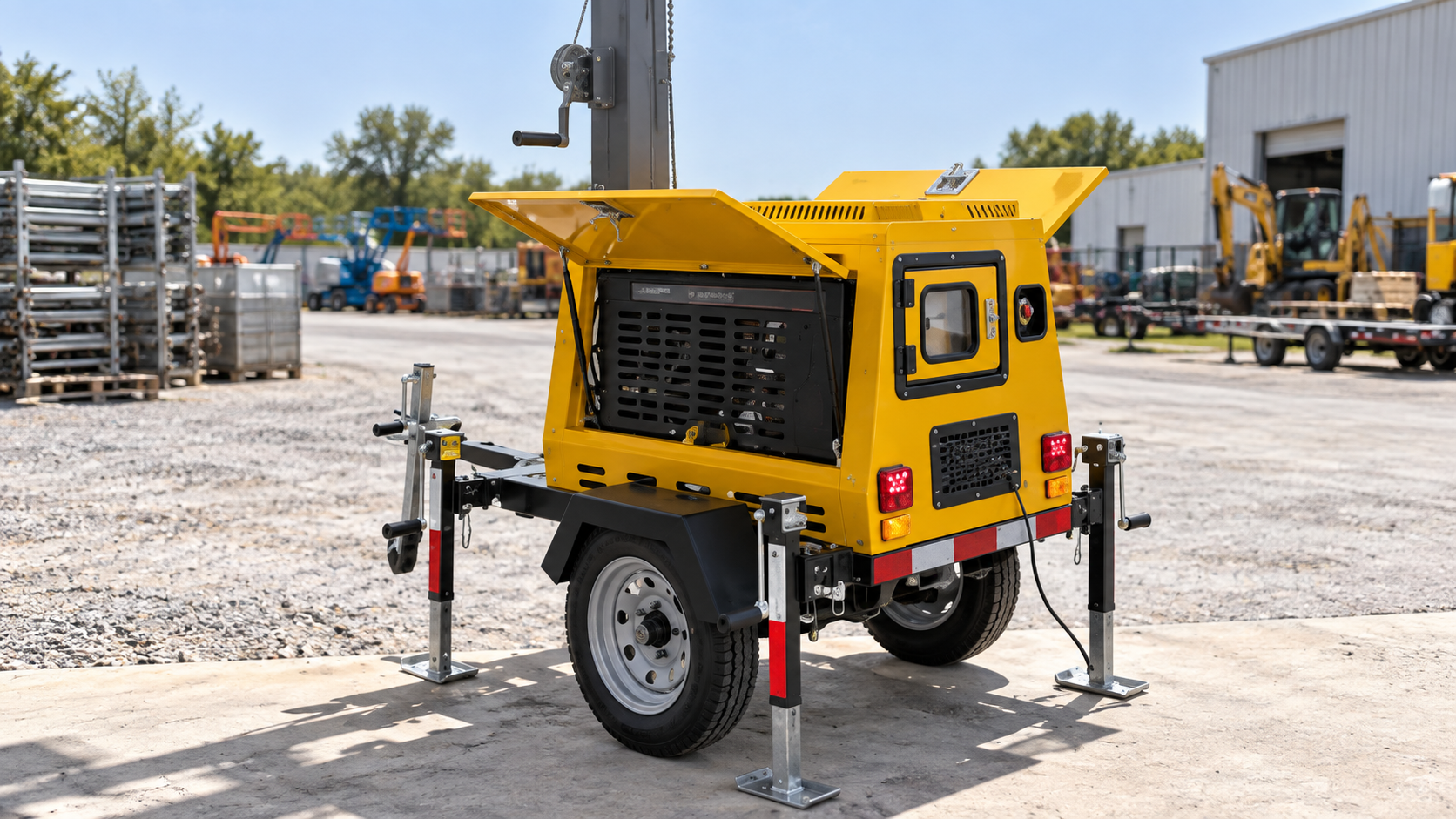
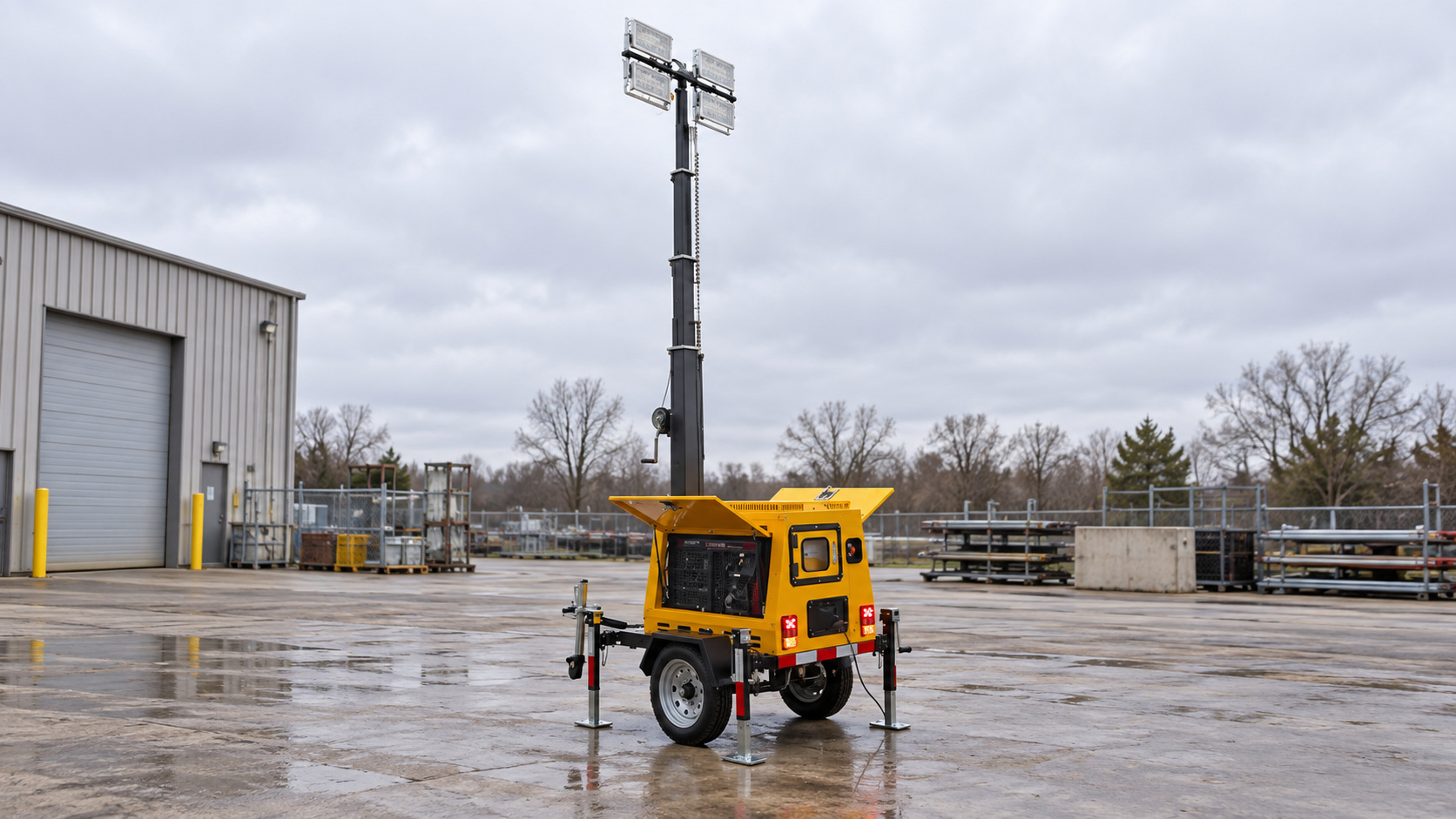
For the Keyyou hand-cranked trailer light tower, the product page discusses optional diesel generator and battery power configurations. The visual reference has a compact yellow enclosure, two wheels, stabilizer legs, a manual mast crank and four rectangular light heads on a tall gray telescopic mast. Those details guide the photographs, not the calculation. Confirm that the delivered quote is actually the diesel option, then request its tank nominal/usable capacity and generator fuel curve. A battery-powered variant would need the separate electric runtime calculation, not a fuel-tank formula.
Build a refueling plan around a real shutdown
The mathematical reserve exists to buy time for a safe operational decision. OSHA’s portable-generator safety sheet directs users to shut down a generator and allow it to cool before refueling, and to keep fuel containers away from heat and ignition sources. Construction work may also be subject to applicable flammable-liquid rules. Confirm the specific equipment, site and jurisdictional requirements with the responsible safety team; the general article is not a permit or an instruction to refuel a running tower. Arrange alternate lighting if the tower must go dark for a scheduled stop.
Choose a designated level location away from traffic and ignition sources, and keep the access route clear for the approved refueling equipment. Check that the engine is stopped and cooled according to its manual, control the work area and handle spills under the site procedure before restarting. Do not leave containers beside a hot exhaust or place a generator near an occupied structure’s air intake. A larger tank may reduce stop frequency, but it can add transport weight and still requires safe storage, spill planning and vehicle limits. Ask the supplier about approved larger-tank options rather than retrofitting an unverified external fuel system.
Use a shift handover log with timestamp, verified gauge or measured added volume, selected lamp mode, remaining fuel estimate and next planned refuel. If a gauge is uncalibrated, flag the uncertainty. A reserve plan that exists only in a procurement spreadsheet can fail when a work crew extends the operation by two hours without telling the next shift. The log should make the change visible before the tank reaches the low-fuel threshold.
A simple procurement and commissioning checklist
- Choose the exact power variant. Confirm engine model, rated duty, lamps and any auxiliary outlet loads in the contract.
- Request the consumption curve. Obtain fuel rates at the planned lighting settings, with units and test conditions clearly stated.
- Confirm usable tank quantity. Distinguish nominal volume, filling instructions, low-fuel cutoff and minimum reserve.
- Map every shift. Add hours by mode and identify who checks the tank before handover.
- Set a reserve and safe stop. Make the contingency explicit and provide alternate light if required during shutdown and cooldown.
- Measure in the field. Compare logged fuel use with the prediction over a representative full shift and adjust the plan.
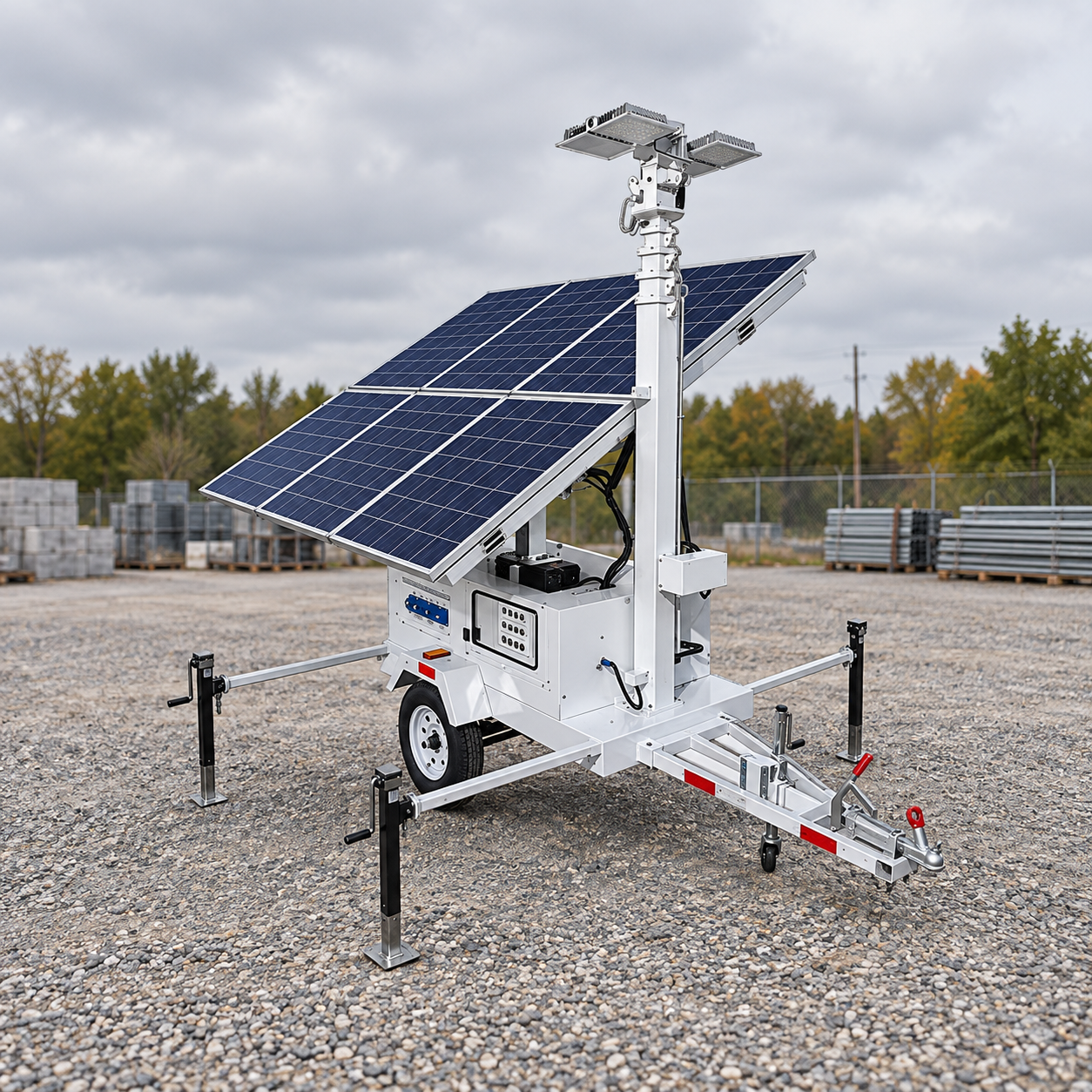
Do not order solely on a headline “hours of runtime” figure. Ask for enough supporting data to recreate the calculation under your load, weather and schedule. A verification test is especially worthwhile for remote sites where a missed delivery interrupts essential lighting. The diesel-versus-solar comparison can help decide whether refueling logistics are preferable to charging logistics for the project, but both options need a reserve against uncertainty.
Safety video: portable generator practices
The U.S. Consumer Product Safety Commission’s educational video below focuses on carbon-monoxide risk from portable generators. It is background safety training, not a refueling procedure or a substitute for the exact tower’s manual and site rules.

Read the CPSC generator safety bulletin and video link.
Foire aux questions
Is nominal tank capacity the amount I can use for a shift?
Not necessarily. Confirm usable volume and the low-fuel cutoff for the exact model, and retain the agreed contingency rather than planning to run dry.
Can I estimate half-load fuel use as half the full-load rate?
No. Fuel consumption is not guaranteed to scale linearly with electrical demand. Use the exact generator’s fuel curve or a measured operating log.
Should I refuel while the tower keeps operating to cover two shifts?
Do not assume that is allowed. Plan a controlled shutdown and cooldown under the manufacturer’s procedure and applicable site safety rules, with alternate illumination if needed.
Does this calculation apply to a battery-powered trailer?
No. Use an energy-capacity, load and charging balance for a battery configuration. First verify which power variant is actually supplied.