
Light Tower Wind Load Calculation: Inputs Buyers Must Provide
Light tower wind load calculation starts with the complete deployed geometry, not mast height alone. The fixture area, solar panels, mast sections, outrigg
Light tower wind load calculation starts with the complete deployed geometry, not mast height alone. The fixture area, solar panels, mast sections, outriggers, center of pressure, exposure, gust basis, surface, slope, and permitted operating state all affect stability. Suppliers need a defined site wind criterion and the exact configuration before they can provide useful evidence.
This guide is for contractors, fleet managers, distributors, and procurement teams comparing light tower wind load calculation. It separates measurable requirements from sales labels and identifies where the current manufacturer manual, a qualified technician, or a site-specific engineering and safety review must control the decision.
Réponse rapide et périmètre de décision
Light tower wind load calculation starts with the complete deployed geometry, not mast height alone. The fixture area, solar panels, mast sections, outriggers, center of pressure, exposure, gust basis, surface, slope, and permitted operating state all affect stability. Suppliers need a defined site wind criterion and the exact configuration before they can provide useful evidence.
Commencez par les zones de travail prévues, les horaires, la fréquence des mouvements, l'accès à l'énergie, l'environnement, les capacités de l'équipe et la méthode de réception. Un devis n'est comparable que lorsque ces intrants sont partagés. Tout chiffre concernant la production, la durée de fonctionnement, la hauteur, le poids, le bruit, le carburant, la capacité de la batterie ou la couverture doit identifier ses unités, sa configuration, son mode de fonctionnement et ses conditions d'essai.
Les cinq problèmes qui régissent la décision
| Zone de décision | Que vérifier |
|---|---|
| Projected area | Record the frontal area and orientation of lamps, panels, mast, cabinet, cables, and other attachments. |
| Geometry and height | Use the deployed mast sections, fixture center, pivot points, support spacing, and center of gravity for the exact state. |
| Wind basis | State basic wind speed, gust or mean basis, terrain, exposure, importance, return period, and any site rule. |
| Stability resistance | Check ballast, wheel loads, outriggers, anchors, friction, slope, ground bearing, and overturning or sliding limits. |
| Operating states | Separate transport, stowed, partially raised, fully raised, maintenance, and emergency-lowering conditions. |
1. Projected area
Record the frontal area and orientation of lamps, panels, mast, cabinet, cables, and other attachments. Ask the supplier to state the applicable configuration, test condition, limit, and inspection method so the claim can be checked during bid review and handover.
2. Geometry and height
Use the deployed mast sections, fixture center, pivot points, support spacing, and center of gravity for the exact state. Ask the supplier to state the applicable configuration, test condition, limit, and inspection method so the claim can be checked during bid review and handover.
3. Wind basis
State basic wind speed, gust or mean basis, terrain, exposure, importance, return period, and any site rule. Ask the supplier to state the applicable configuration, test condition, limit, and inspection method so the claim can be checked during bid review and handover.
4. Stability resistance
Check ballast, wheel loads, outriggers, anchors, friction, slope, ground bearing, and overturning or sliding limits. Ask the supplier to state the applicable configuration, test condition, limit, and inspection method so the claim can be checked during bid review and handover.
5. Operating states
Separate transport, stowed, partially raised, fully raised, maintenance, and emergency-lowering conditions. Ask the supplier to state the applicable configuration, test condition, limit, and inspection method so the claim can be checked during bid review and handover.
Un flux de travail d'évaluation pratique
- Give the supplier the site wind criterion and terrain information.
- Freeze the mast, fixtures, panels, supports, and attachments.
- Request the calculation basis, assumptions, and operating limits.
- Verify ground, slope, supports, and weather monitoring at deployment.
- Lower and secure the mast when conditions approach the stated limit.
Enregistrez les hypothèses et les exceptions à côté de la proposition. Si un soumissionnaire modifie le moteur, la batterie, le luminaire, l'optique, le mât, les commandes, la remorque ou l'ensemble d'accessoires, répétez l'évaluation concernée. La maîtrise de la configuration est particulièrement importante lorsque des échantillons, des fiches techniques et des machines livrées sont produits à des moments différents.
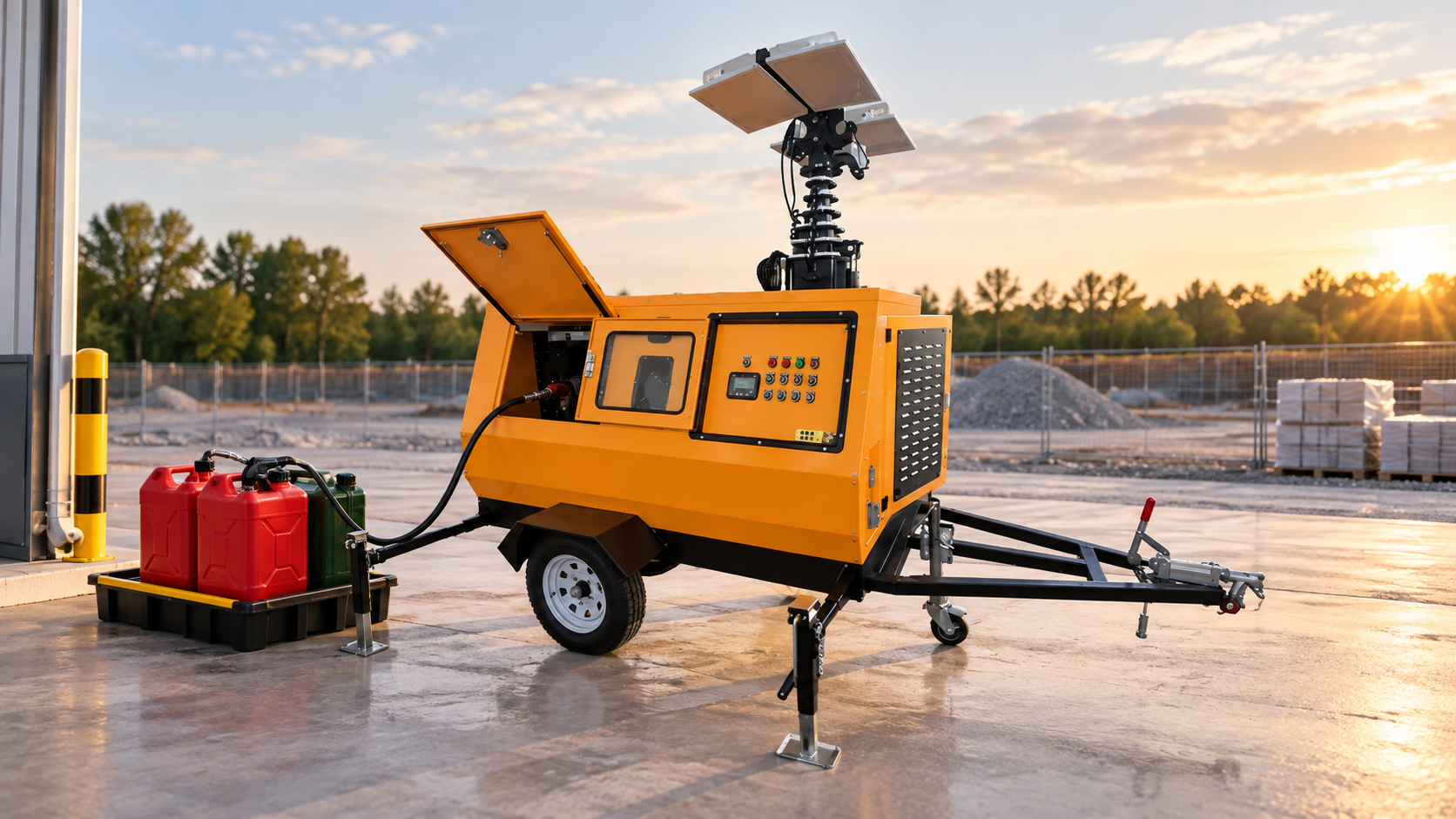
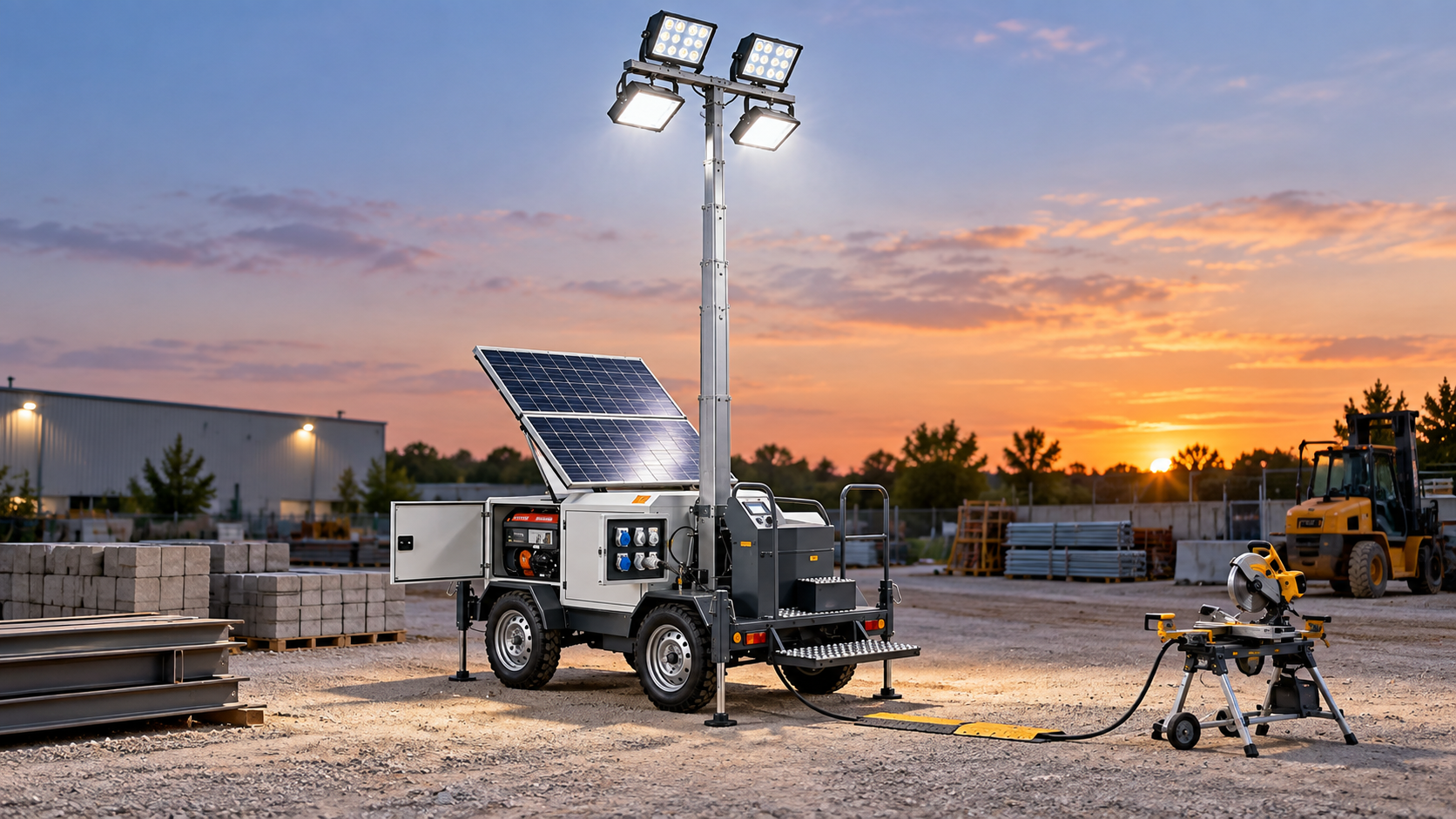
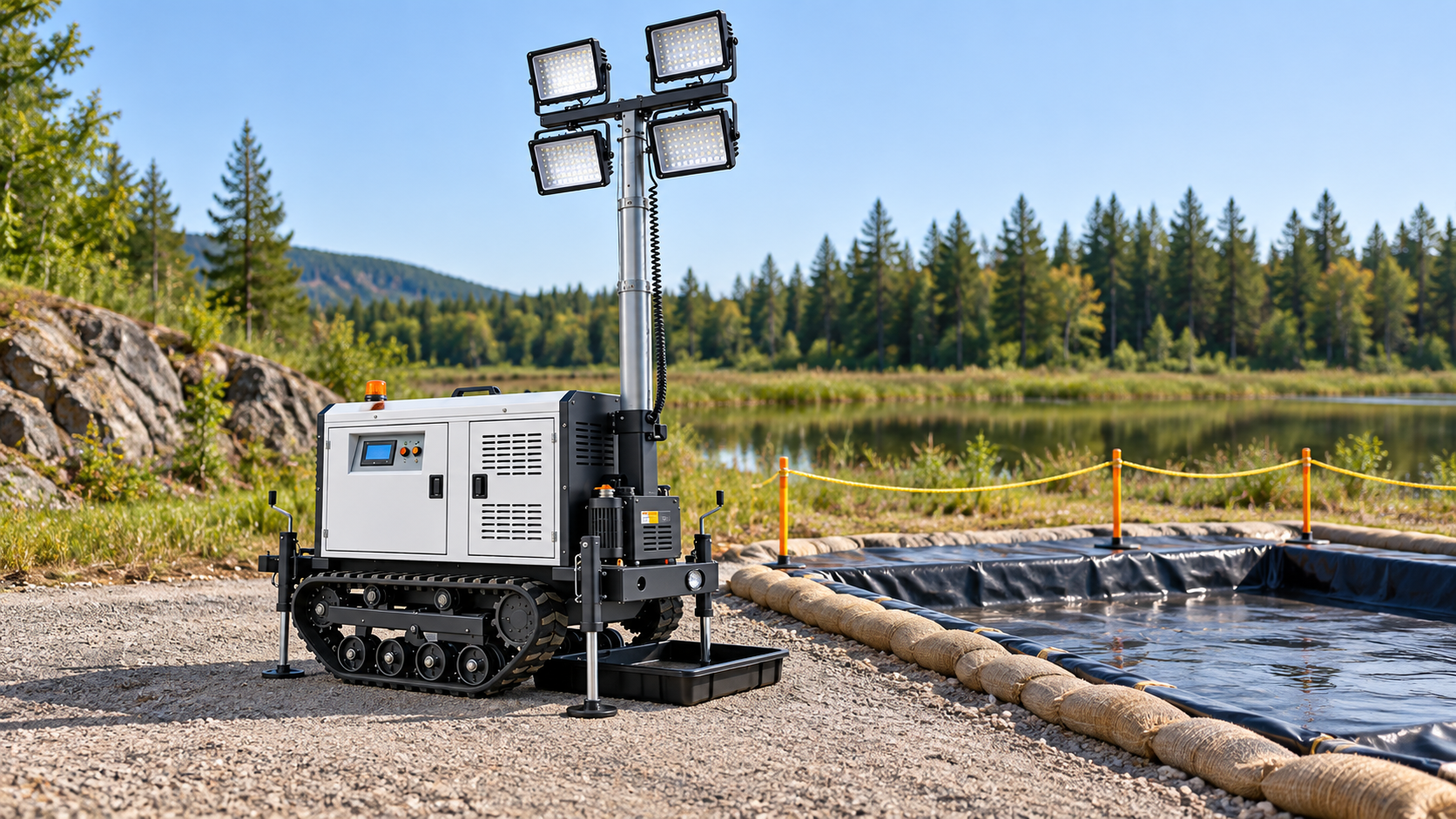
The relevant Keyyou product reference is the Light Tower Wind Load Calculation. Product photographs identify the physical form only; request the exact configuration, rating and operating limits for procurement.
Éléments de preuve à demander avant l'achat ou le déploiement
- Fiche technique spécifique à la configuration et plan d'ensemble
- Fichier photométrique de luminaire complet ou plan d'implantation d'éclairage avec les hypothèses formulées
- Données de puissance, d'autonomie ou de carburant à la charge de fonctionnement proposée
- Instructions relatives au mât, à la stabilité, au vent, au transport, à l'installation, à l'inspection et aux urgences
- Informations électriques, étiquettes de sécurité, manuels et documents de destination
- Étendue de la garantie, intervalles d'entretien, pièces de rechange recommandées, délais de livraison des pièces et contacts pour l'escalade
- Procédure de réception en usine ou à la livraison liée à la configuration finale
Pour les fondamentaux de l'éclairage, le Directives du ministère de l'Énergie des États-Unis concernant les LED explique pourquoi les performances complètes du luminaire, la distribution optique et la conversion de puissance ont de l'importance. Pour les travaux de construction aux États-Unis, OSHA 29 CFR 1926.56 énumère les exigences d'éclairage pour les zones de travail spécifiées. Les règles du projet et l'évaluation des risques du site peuvent en exiger davantage.
Configuration, vérification et gestion des modifications
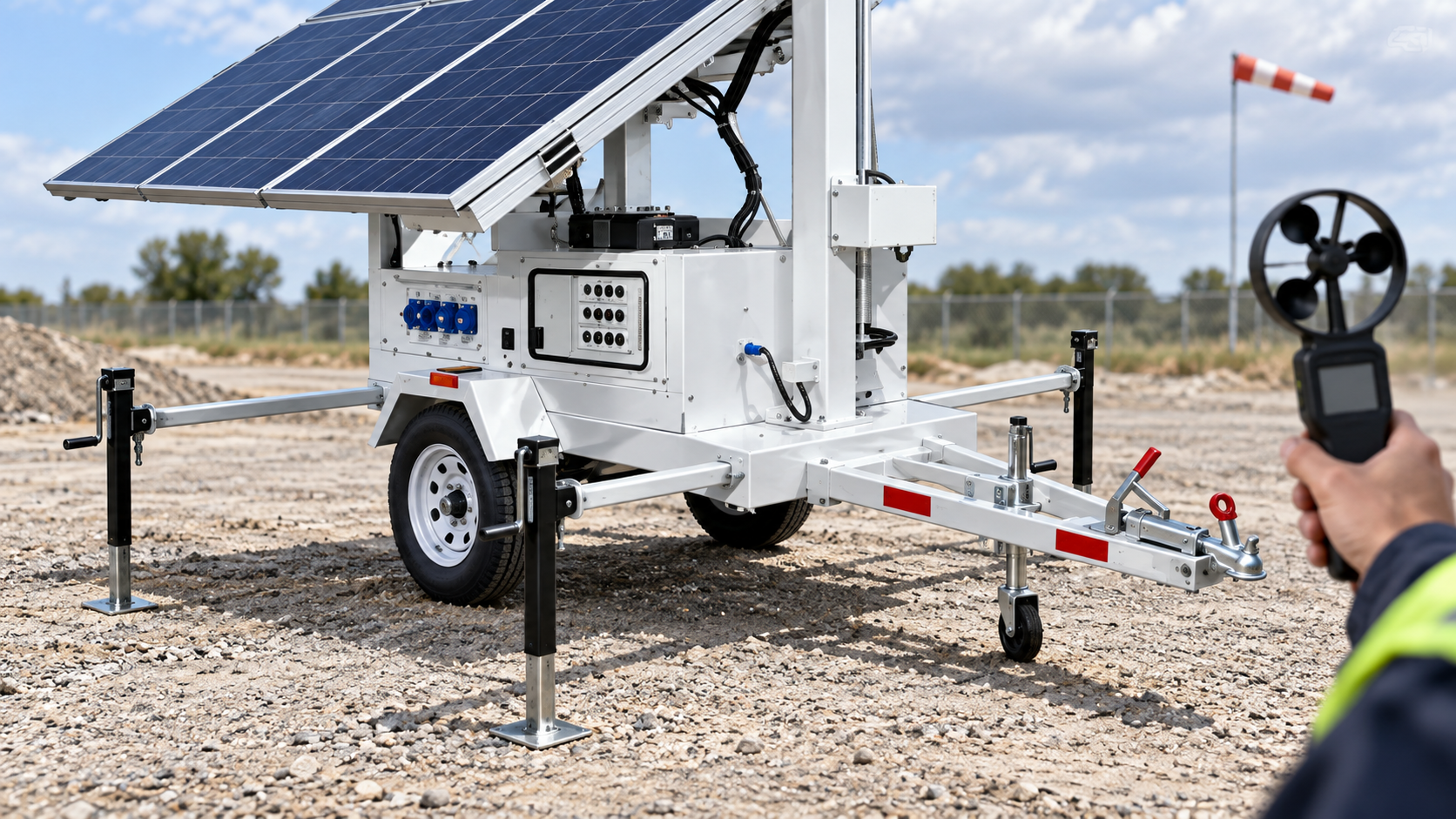
Avant le déploiement, inspectez le sol, la pente, les risques aériens, la circulation, les interfaces publiques, la météo et l'accès d'urgence. Positionnez et stabilisez la base en suivant les instructions actuelles du fabricant. Orientez les luminaires avant de lever le mât lorsque cela est possible, maintenez le personnel hors des zones de pincement et de chute, et protégez l'équipement contre les collisions avec des véhicules.
Vérifier l'éclairage aux points représentatifs de tâche, de bord, de transition et d'ombre en utilisant le plan de mesure requis par le projet. Observer également l'éblouissement du point de vue des travailleurs, des conducteurs et des propriétés voisines. Recommandations du NIOSH sur plans de circulation interne promeut la séparation des travailleurs et des véhicules et équipements de chantier dans toute la mesure du possible.
Réévaluer après un déménagement, des intempéries, une maintenance, le remplacement d'un équipement, de nouvelles structures ou de nouveaux stocks, des modifications d'itinéraires de circulation ou une phase de travail différente. Le plan approuvé, les résultats mesurés, les défauts, les actions correctives et les réglages finaux doivent être conservés avec le dossier de l'équipement ou du projet.
Coût du cycle de vie et soutien
Comparez le prix de livraison ainsi que le transport, la main-d'œuvre d'installation, le carburant ou l'électricité, l'infrastructure de recharge, les inspections de routine, l'entretien planifié, les consommables, les batteries ou les composants du moteur, les pneus et les travaux sur remorque le cas échéant, les luminaires de remplacement, les temps d'arrêt, la formation et la valeur résiduelle. Utilisez les mêmes heures et les mêmes prix de l'énergie pour chaque option.
La qualité du support est mesurable. Demandez qui diagnostique les pannes, quelles pièces sont stockées, les temps de réponse typiques, quelles informations à distance sont requises et quels travaux doivent être effectués par du personnel autorisé. Un faible prix d'achat peut être effacé par des manuels manquants, de longs délais pour les pièces, une responsabilité de garantie peu claire ou une configuration qui ne peut pas être réparée localement.
Erreurs courantes en matière d'achats
- Achat basé sur un seul chiffre tel que les lumens, les watts, l'autonomie, la hauteur du mât ou le prix
- Comparaison de devis utilisant des charges, environnements, accessoires et exclusions différents
- Confondre les dimensions de transport avec l'encombrement opérationnel déployé
- Accepter des brochures de familles de modèles au lieu de preuves spécifiques à la configuration
- Omission des mesures sur site, de la formation des opérateurs et de la clôture des défauts
- Ne pas définir les pièces de rechange, la réponse à la garantie et la responsabilité des modifications
Guides sur les tours d'éclairage associés
- guide du mât d'éclairage diesel
- guide du groupe électrogène d'éclairage
- guide du générateur de mât d'éclairage OEM
- guide des plantes lumineuses
Foire aux questions
Can buyers calculate wind load from mast height only?
No. Projected area, pressure, lever arm, gust basis, supports, ground, and configuration are also required.
Do solar panels change the calculation?
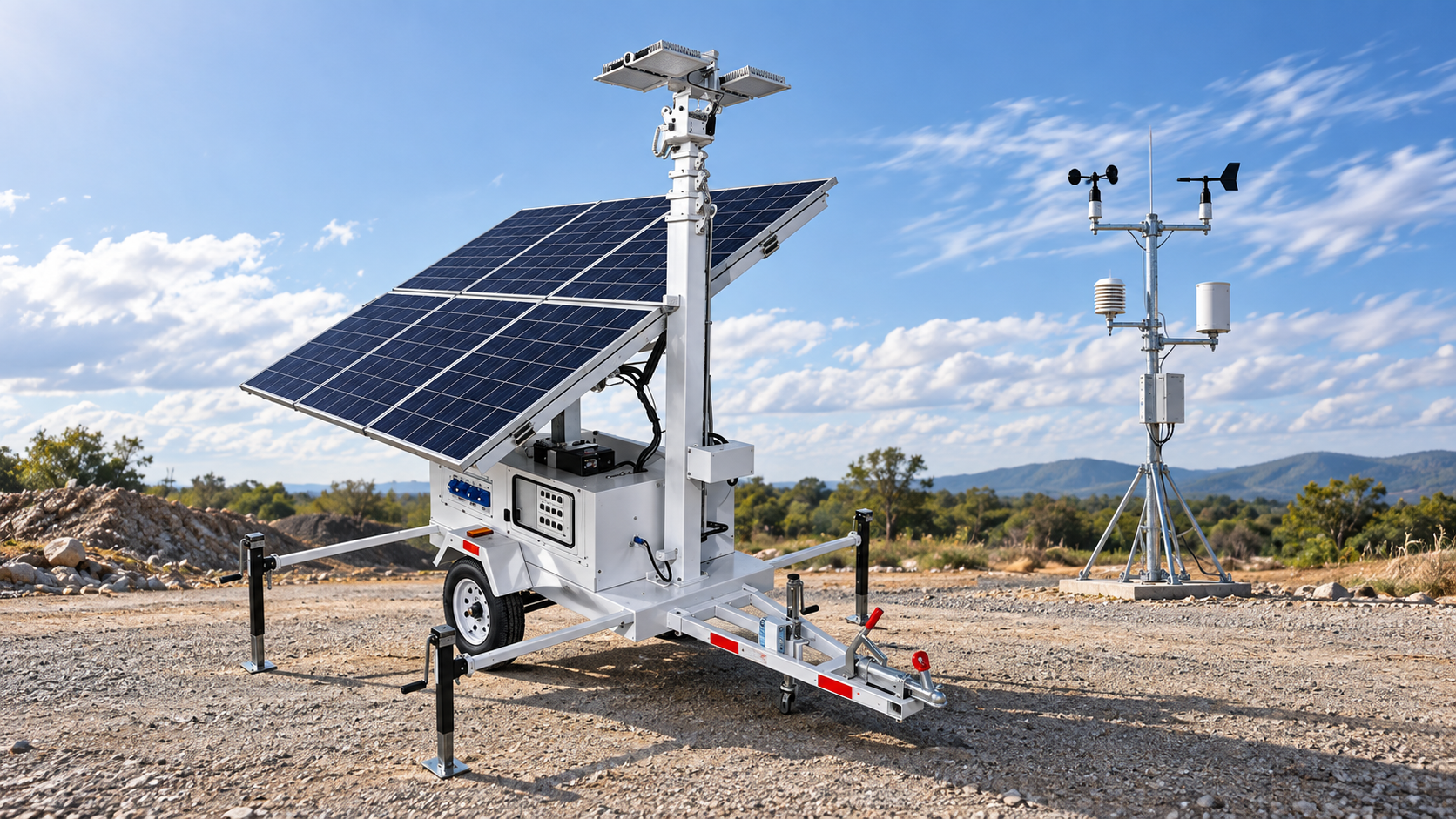
Yes. Their area, tilt, orientation, frame, and position can materially change wind force and overturning moment.
What wind speed should be used?
Use the project, jurisdiction, and manufacturer-approved basis. Do not substitute a generic internet number for the site criterion.
Can a tower stay raised during a storm warning?
Follow the exact lowering and operating limit. If conditions approach the limit, isolate the area and lower the mast using the approved procedure.
Neutral safety reference
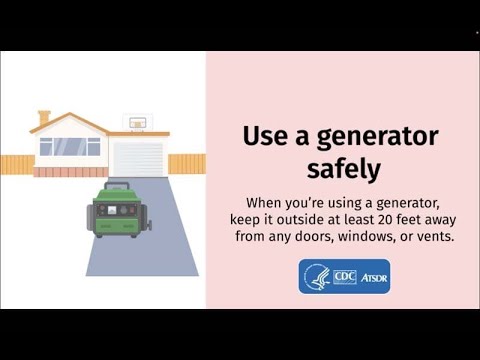
This neutral video explains safe portable-generator practice. It is not a substitute for the applicable engine, electrical, environmental or wind instructions.
Foire aux questions
Can buyers calculate wind load from mast height only?
No. Projected area, pressure, lever arm, gust basis, supports, ground, and configuration are also required.
Do solar panels change the calculation?
Yes. Their area, tilt, orientation, frame, and position can materially change wind force and overturning moment.
What wind speed should be used?
Use the project, jurisdiction, and manufacturer-approved basis. Do not substitute a generic internet number for the site criterion.
Can a tower stay raised during a storm warning?
Follow the exact lowering and operating limit. If conditions approach the limit, isolate the area and lower the mast using the approved procedure.
FAQ summary
Can buyers calculate wind load from mast height only?
No. Projected area, pressure, lever arm, gust basis, supports, ground, and configuration are also required.
Do solar panels change the calculation?
Yes. Their area, tilt, orientation, frame, and position can materially change wind force and overturning moment.
What wind speed should be used?
Use the project, jurisdiction, and manufacturer-approved basis. Do not substitute a generic internet number for the site criterion.
Can a tower stay raised during a storm warning?
Follow the exact lowering and operating limit. If conditions approach the limit, isolate the area and lower the mast using the approved procedure.
Conclusion principale
A reliable decision about light tower wind load calculation is traceable from a real operating requirement to verified evidence and an acceptance test. Define the task and constraints, compare complete configurations under common assumptions, inspect safe deployment, and retain the records needed for service and future procurement.
Recordkeeping and review
Keep the approved requirement, supplier response, calculation or test method, measurement record, deviation log, and acceptance result together. The person who checks a light tower after delivery should be able to identify the serial number, configuration revision, environmental conditions, operating mode, instruments, and any limitation that was accepted. When the tower moves to a new project, repeat the site-specific review instead of copying an old assumption. Fuel, sound, emissions, electrical outlet, spill, and wind conditions can all change with the location and attachments. A short documented review before each deployment is less costly than discovering a mismatch after a shutdown, complaint, release, or severe-weather event. Escalate any value that is outside the manufacturer’s instruction to a qualified technical contact and keep the written disposition with the asset record.
For fleet buyers, use the same evidence fields across every quotation and every delivered unit. This makes differences visible and protects the purchasing team from a model-family brochure being treated as a configuration certificate. It also gives operators a usable handover: what the unit can do, what it must not do, which checks are required, and who can authorize a change. The resulting record supports maintenance planning, training, environmental reporting, and a defensible comparison when the next project is scoped.