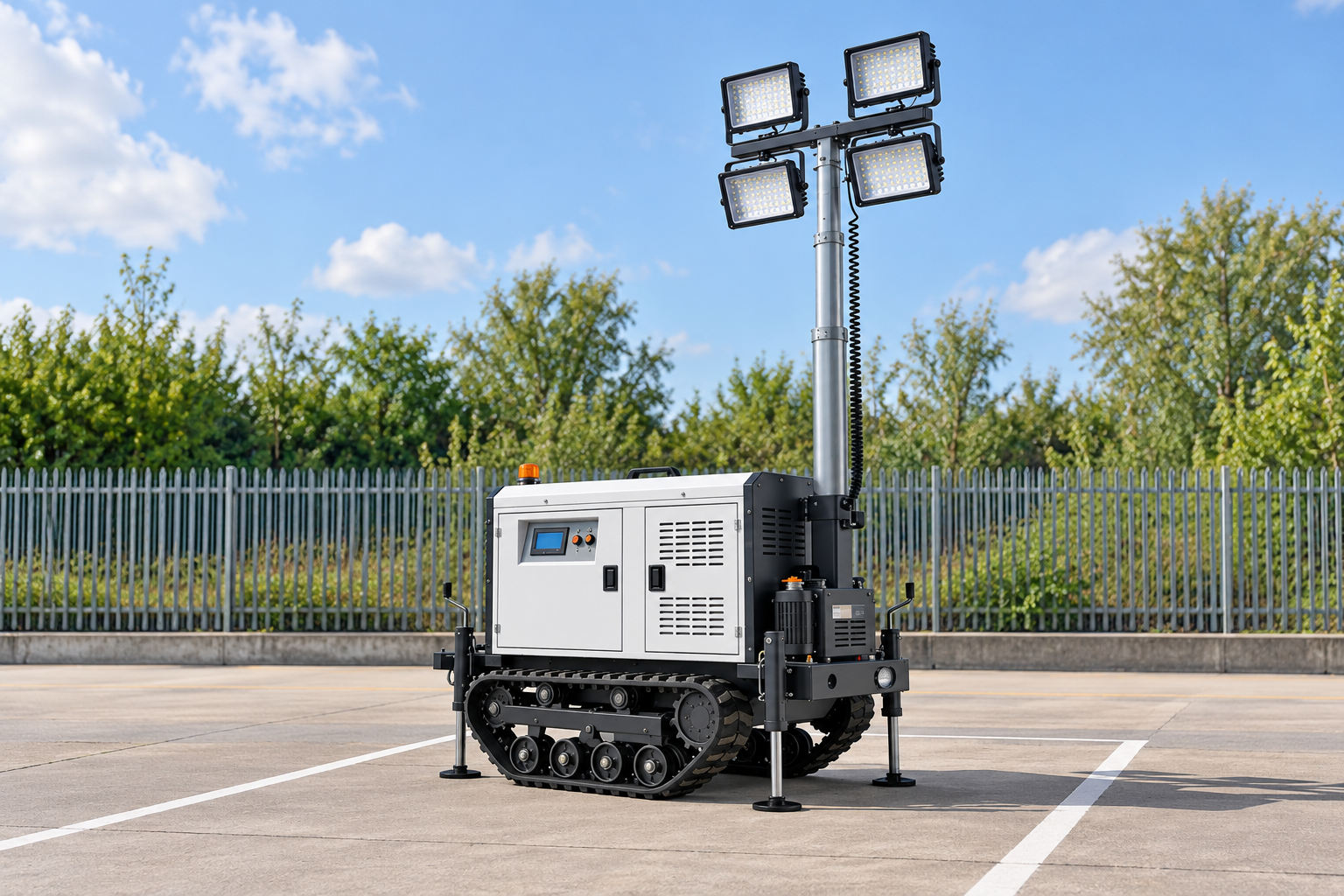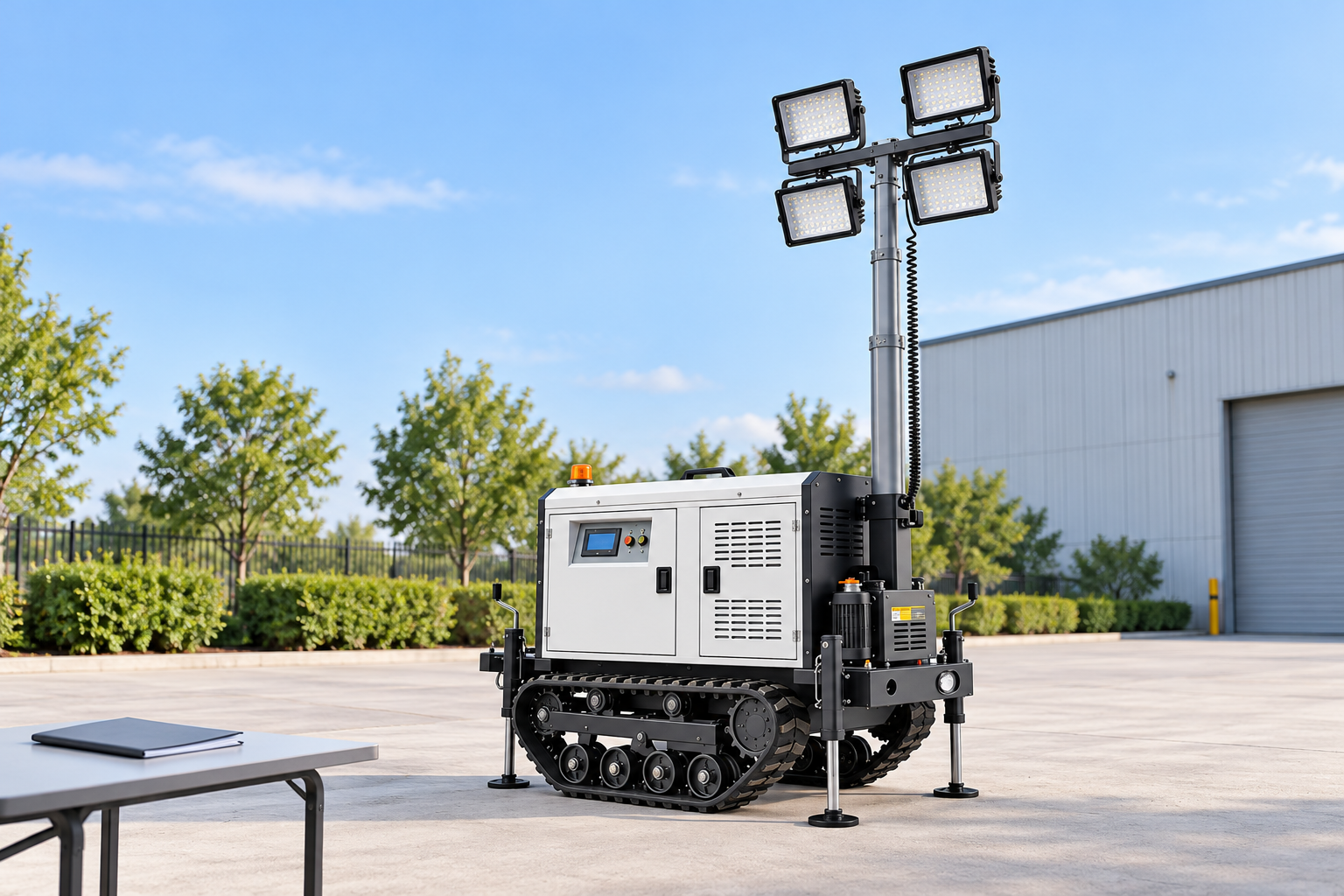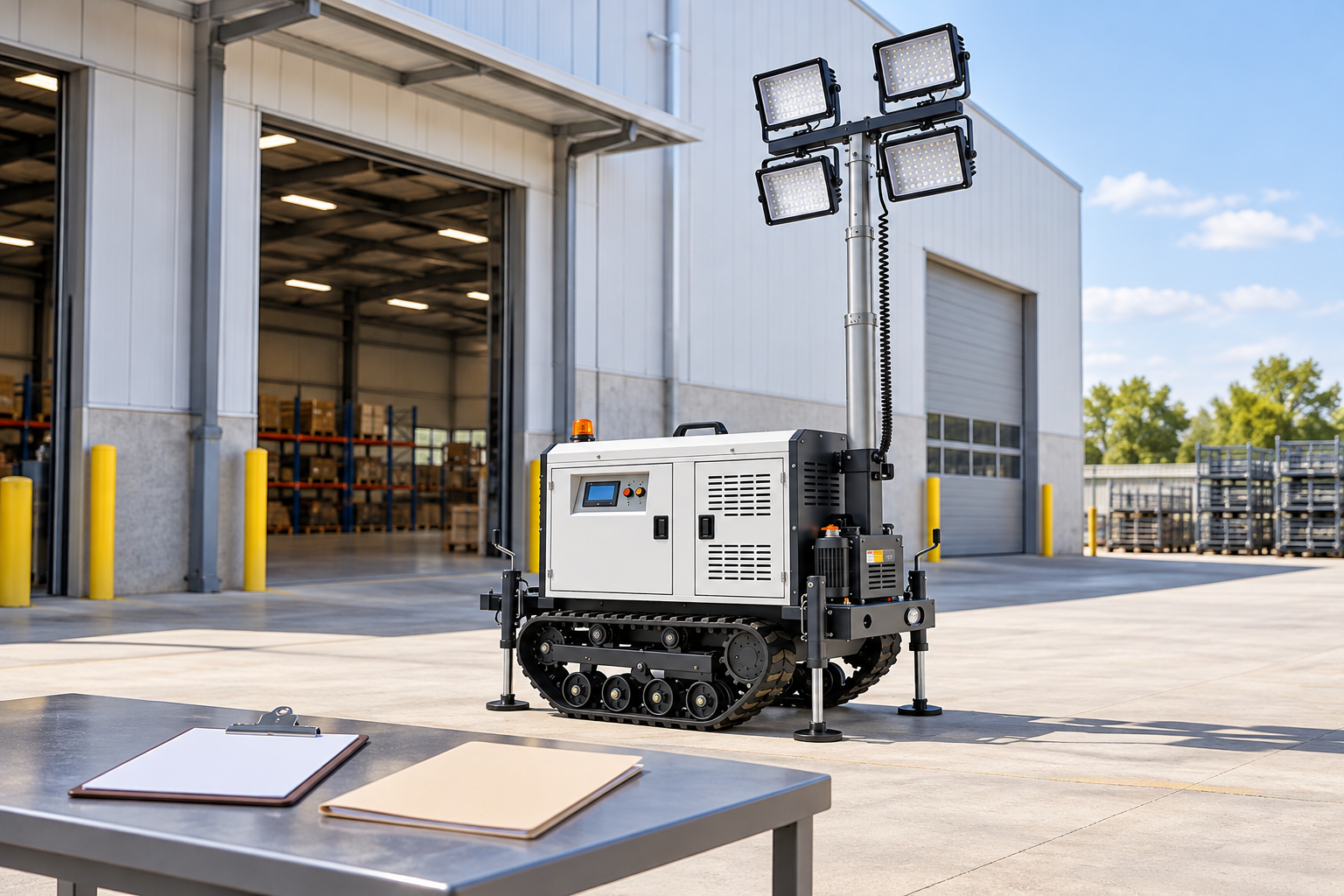

How to Choose a Crawler Type Light Tower for Mining and Construction Sites
How to evaluate crawler type light towers for mining and construction: stability, mast height, LED output, deployment, and OEM options from Keyyou factory.
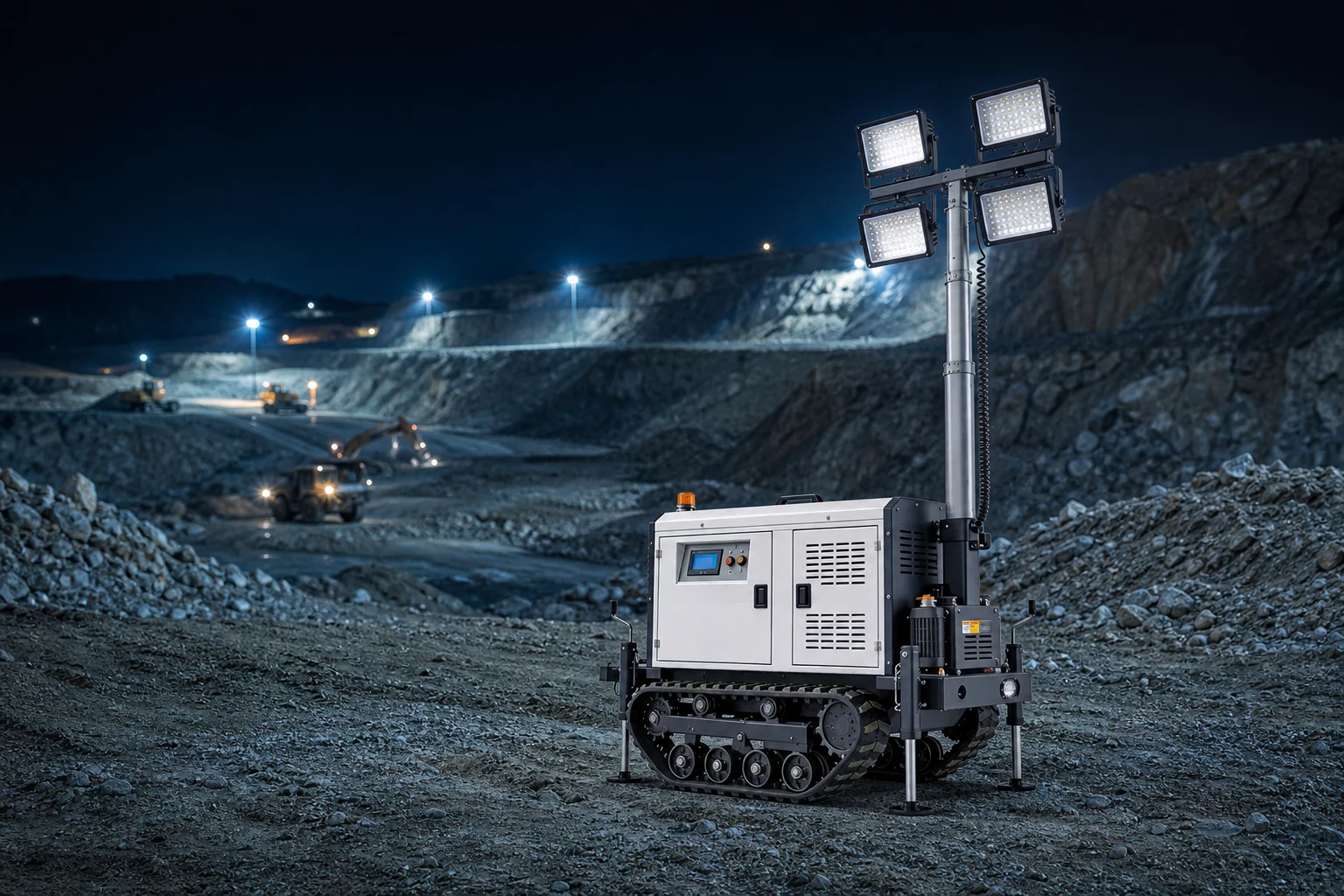
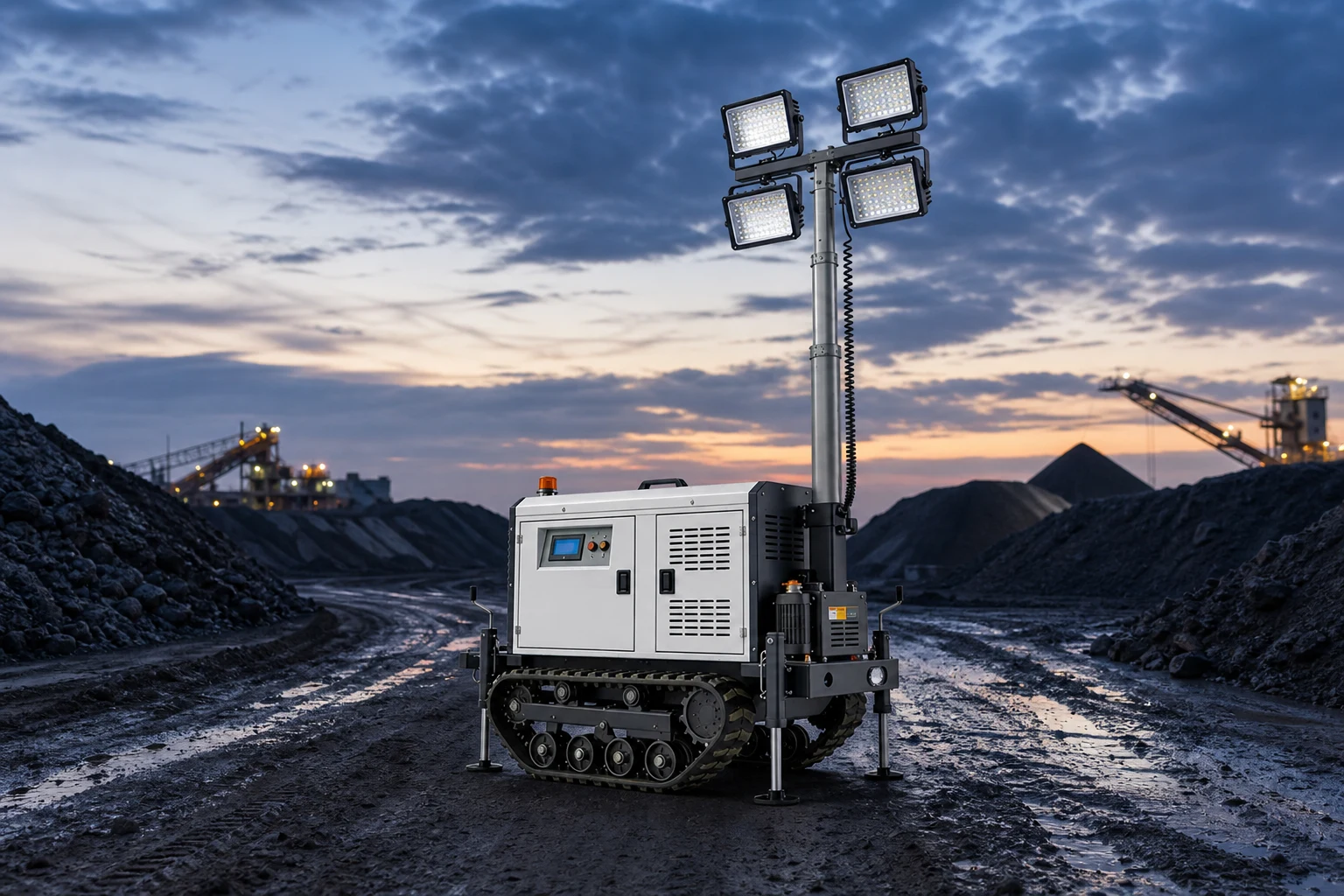
Crawler type light towers are built for uneven ground where wheeled trailer units lose traction or tip during relocation. Buyers on mining benches, demolition pads, and remote construction zones often need tracked undercarriages, hydraulic masts, and LED arrays that stay aimed after the machine moves. This guide focuses on practical evaluation steps for industrial and commercial buyers—coverage, runtime, mobility, and lifecycle support—not generic marketing claims. Where equipment selection is involved, cross-check public specifications on keyyoutrade.com and confirm project-specific limits with your safety officer or lighting consultant. Section checklists can be reused as RFQ attachments and commissioning handover outlines.
Part 1. When a Crawler Light Tower Beats a Trailer Unit
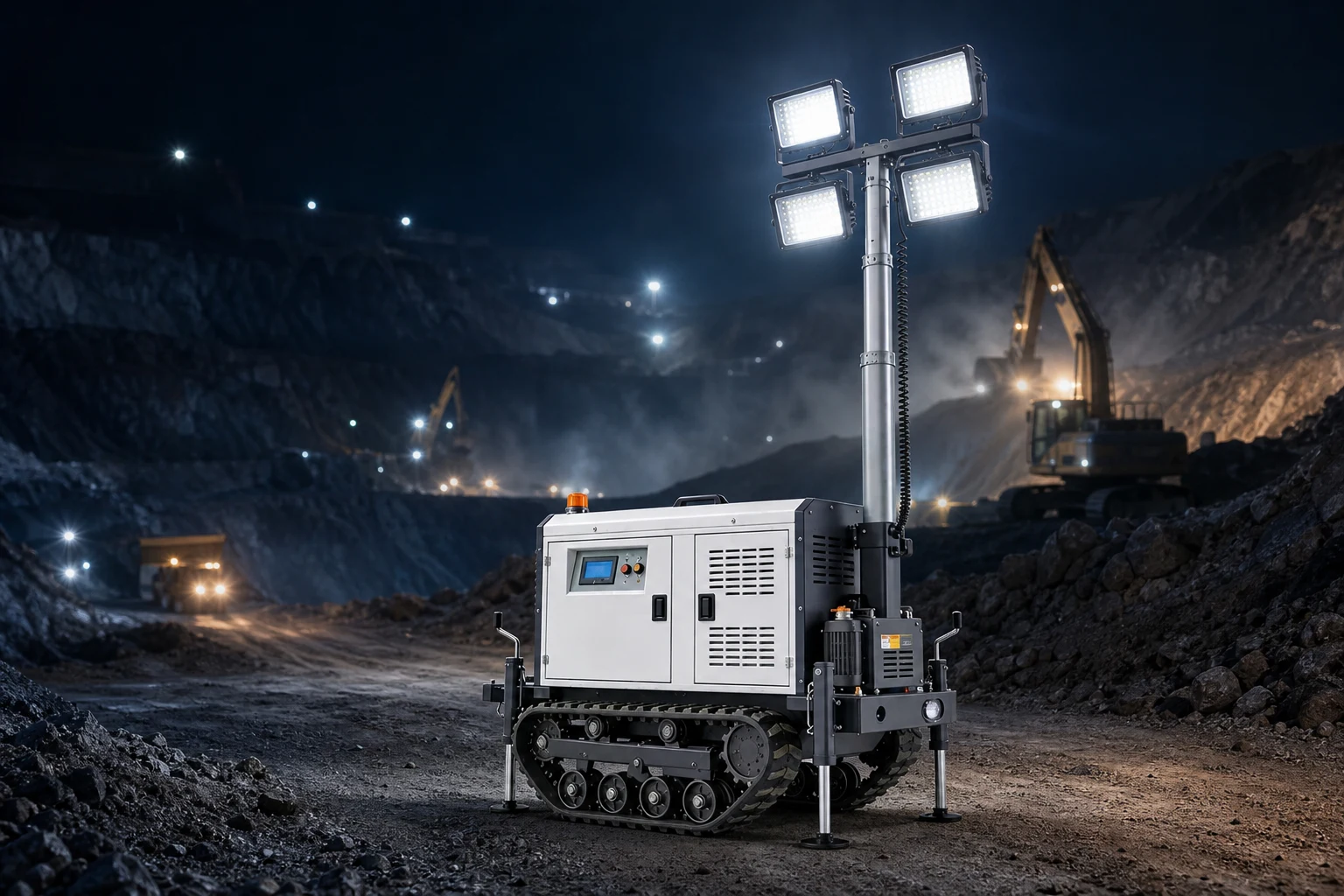
Soft soil, steep ramps, and narrow haul roads punish wheeled light plants. A crawler undercarriage spreads load across tracks, improving stability while operators reposition lighting without waiting for a tow vehicle.
Mining contractors also value dynamic levelling on articulated masts so lamp heads remain targeted when the base is not perfectly level.
For buyers comparing options, start with site mobility requirements, nightly runtime, and whether diesel, hybrid, or solar-hybrid power fits the location.
Mobile light tower projects succeed when illumination targets, runtime, and repositioning frequency are defined before SKU selection.
Document ambient temperature, wind exposure, and ground bearing capacity—they affect trailer ballast and mast stability.
Use conservative performance claims until photometric review confirms coverage on your actual site plan.
Capture site layout, required lux levels, and refuel or recharge access in the RFQ so suppliers can propose realistic mast height and power type.
Compare total cost of ownership—fuel, maintenance, transport, and downtime—not catalog lumens alone when shortlisting towers.
Define acceptance tests before shipment: mast raise/lower, rotation, light output at agreed load, and stability in wind per manufacturer data.
| Site condition | Trailer light tower | Crawler light tower |
|---|---|---|
| Soft or uneven ground | May need extra blocking | Tracks improve footprint |
| Frequent repositioning | Requires tow vehicle | Self-propelled options available |
| Steep ramp access | Higher rollover risk | Lower center of gravity with tracks |
| Confined bench work | Turning radius limits placement | Short-track models fit tighter pads |
Part 2. Key Technical Specifications to Compare
Lumen output alone does not define usable light on a bench. Evaluate mast height, beam spread, rotation range, wind rating, and engine or battery runtime together.
LED modules with adjustable heads reduce shadows around excavators and haul trucks. Hydraulic foldable masts shorten transport height but add maintenance checkpoints.
Noise limits may apply near residential buffers or underground mine ventilation zones—confirm dB(A) at 7 m.
Compare installed cost including transport, commissioning, and first-year consumables—not list price alone.
Link readers to mobile light tower product line and application-specific guides on keyyoutrade.com rather than duplicating every spec inline.
Lead times vary by mast type and export crating; confirm in quotation for overseas shipments.
Capture site layout, required lux levels, and refuel or recharge access in the RFQ so suppliers can propose realistic mast height and power type.
Compare total cost of ownership—fuel, maintenance, transport, and downtime—not catalog lumens alone when shortlisting towers.
Define acceptance tests before shipment: mast raise/lower, rotation, light output at agreed load, and stability in wind per manufacturer data.
| Specification | Why it matters | Typical buyer question |
|---|---|---|
| Mast height | Coverage radius and glare angle | Will it clear equipment overhead? |
| LED wattage / lumens | Brightness vs fuel or battery load | Is output certified after stabilisation? |
| Track width & weight | Flotation on soft ground | Can it cross our haul road? |
| Runtime per tank/charge | Night shift continuity | How many nights between refuel? |
| Wind speed rating | Safety during storms | What is the auto-lowering trigger? |
Part 3. Procurement Checklist for OEM and Export Buyers
Factory-direct procurement should cover electrical standards, spare parts, warranty scope, and pre-shipment functional tests—not only catalog photos.
OEM buyers often need logo placement, paint codes, multilingual manuals, and export crating suitable for long ocean transits.
Align delivery schedules with project mobilisation dates; crawler towers are heavier than cart units and may affect freight class.
After deployment, log lux readings at critical work zones and refuel/recharge intervals for future job estimates.
Maintain spare lamps, fuses, and filters based on site dust and continuous-run duty.
Use Keyyou engineering contact for OEM customization when standard catalog masts do not meet clearance or weight limits.
Capture site layout, required lux levels, and refuel or recharge access in the RFQ so suppliers can propose realistic mast height and power type.
Compare total cost of ownership—fuel, maintenance, transport, and downtime—not catalog lumens alone when shortlisting towers.
Define acceptance tests before shipment: mast raise/lower, rotation, light output at agreed load, and stability in wind per manufacturer data.
| RFQ item | Purpose | When to confirm |
|---|---|---|
| Stabilisation / levelling method | Safe deployment on slope | Before PO |
| Engine emissions tier | Site environmental rules | Design phase |
| Spare LED modules & controller | Reduce downtime | Contract negotiation |
| Pre-shipment lighting test | Verify mast, rotation, tracks | Before dispatch |
Part 4. Documentation and Handover Checklist
Site acceptance should include light output checks at agreed points—not only a visual walk-through at dusk.
Use the tables below as a starting RFQ checklist; your EPC or rental contract may require additional items.
Cross-check related Keyyou product pages for datasheets missing from the initial quote.
Align factory tests with insurer or agency requirements when towers operate on public roads or airports.
When comparing quotations, normalize transport, commissioning, and spare parts bundles before ranking suppliers.
| Document / item | Purpose | When to request |
|---|---|---|
| Photometric / IES file | Verify coverage and glare on site layout | Before purchase order |
| Mast wind rating & stability data | Safe deployment in open yards | Design / safety review |
| Engine or battery datasheet | Runtime and refuel/recharge planning | RFQ comparison |
| Spare parts list (LED, fuses, filters) | Lifecycle and downtime planning | Contract negotiation |
| Pre-shipment functional test report | Acceptance at delivery | Before energization on site |
| Project stage | Key action | Owner |
|---|---|---|
| Concept | Define coverage, runtime, noise, and mobility | Project manager |
| Design | Layout mast positions, glare, and cable routes | Site engineer |
| Procurement | Compare photometrics, warranty, and spares | Buyer |
| Commissioning | Functional light test and handover docs | Site supervisor |
Part 5. Commissioning, Monitoring, and Long-Term Operations
Commissioning should verify lux or foot-candle levels at critical work zones, mast stability, and control functions at full extension.
Functional tests typically include raise/lower cycles, rotation stops, light output at rated load, and fuel or battery runtime spot checks.
Monitoring after deployment helps catch vibration loosening, LED degradation, or battery capacity loss before they affect night shifts.
Train operators on wind limits, outrigger deployment, and lockout/tagout for mast maintenance per manufacturer manuals.
Schedule a post-warranty review when site loads change—new haul routes or extended shifts often require different tower positioning.
Fleet managers should track hours per unit to balance maintenance across rental pools and avoid overworking single assets.
Keep a critical spares list (LED modules, fuses, filters, battery packs) based on lead time and production impact.
Recommended Keyyou Products
For project support, explore our related product line, solution options, and OEM/ODM capabilities on keyyoutrade.com.
FAQ
What is a crawler type light tower?
It is a mobile lighting tower mounted on a tracked undercarriage so the unit can move and stay stable on soft, uneven, or sloped ground where wheeled trailers struggle.
When should I choose a crawler instead of a trailer light tower?
Choose a crawler when the site has poor flotation, steep ramps, frequent repositioning without tow vehicles, or confined benches where stability matters more than highway towing speed.
How do I size mast height for a mining bench?
Match mast height to equipment clearance and the area you must illuminate; request photometric data and verify rotation range so light reaches the active work face without excessive glare.
Are crawler light towers always self-propelled?
Not every model is self-propelled; confirm drive type, ground pressure, and whether your crew will reposition units with auxiliary equipment.
What power sources are common?
Diesel-driven LED towers are common for long runtime; hybrid or solar-hybrid options suit sites with noise or emissions limits—validate runtime against your shift length.
What should I verify before shipment?
Functional tests for mast lift, rotation, track drive, lighting output, and controller operation; plus spare parts list, warranty scope, and export documentation if applicable.
Can Keyyou provide OEM customization?
Keyyou supports OEM/ODM options including branding and specification adjustments—confirm technical requirements in RFQ before production.
References
- OSHA 1926.56 — Illumination
- MSHA — Mine Illumination
- U.S. Department of Energy — LED industrial applications
- International Mining — Trime X-Mine Monster coverage
Ready to discuss your project? Contact Keyyou engineering support with your project parameters and technical requirements.