
Jobsite Emergency Light Tower – Portable & Reliable
It is expected that the expenditure on global infrastructure will rise by 3.2% every year till 2030 while extreme weather phenomena have forced emergency services to work tougher than ever. In this situation, light towers used for emergency purposes have become essential for site security and ongoing operation. The mobile lighting tower market worldwide was estimated at about USD 1.8 billion in 2023 and it is estimated to grow at the rate of 4.6% per annum till 2030. The fact that metal halide technology is being replaced by LED technology, and the ever-increasing emission standards are the main propulsion factors of this growth. The main trouble for the buyers is to find the equipment that gives maximum value for money that can be used for both buying costs and reliability.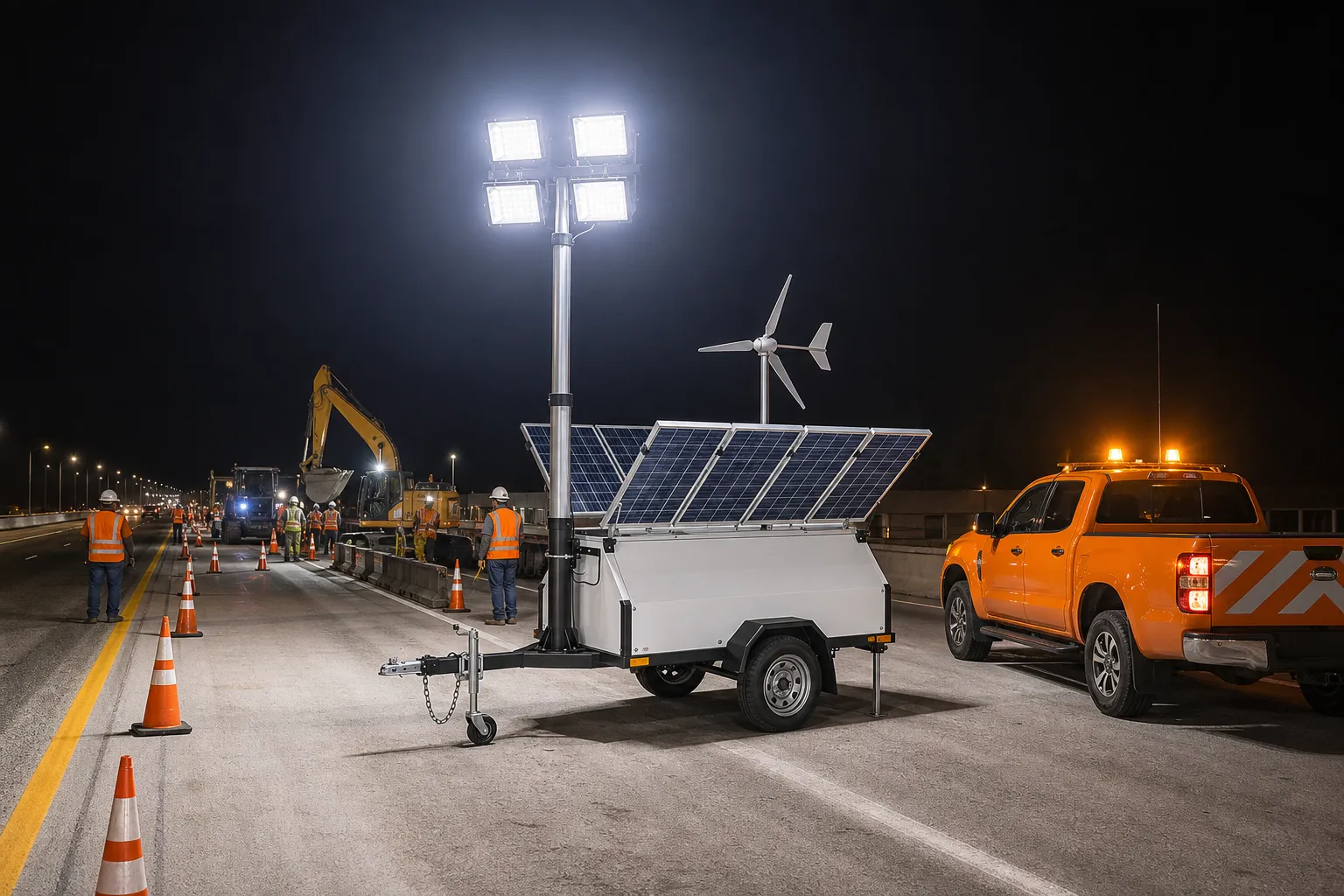
Understanding the Modern Emergency Light Tower
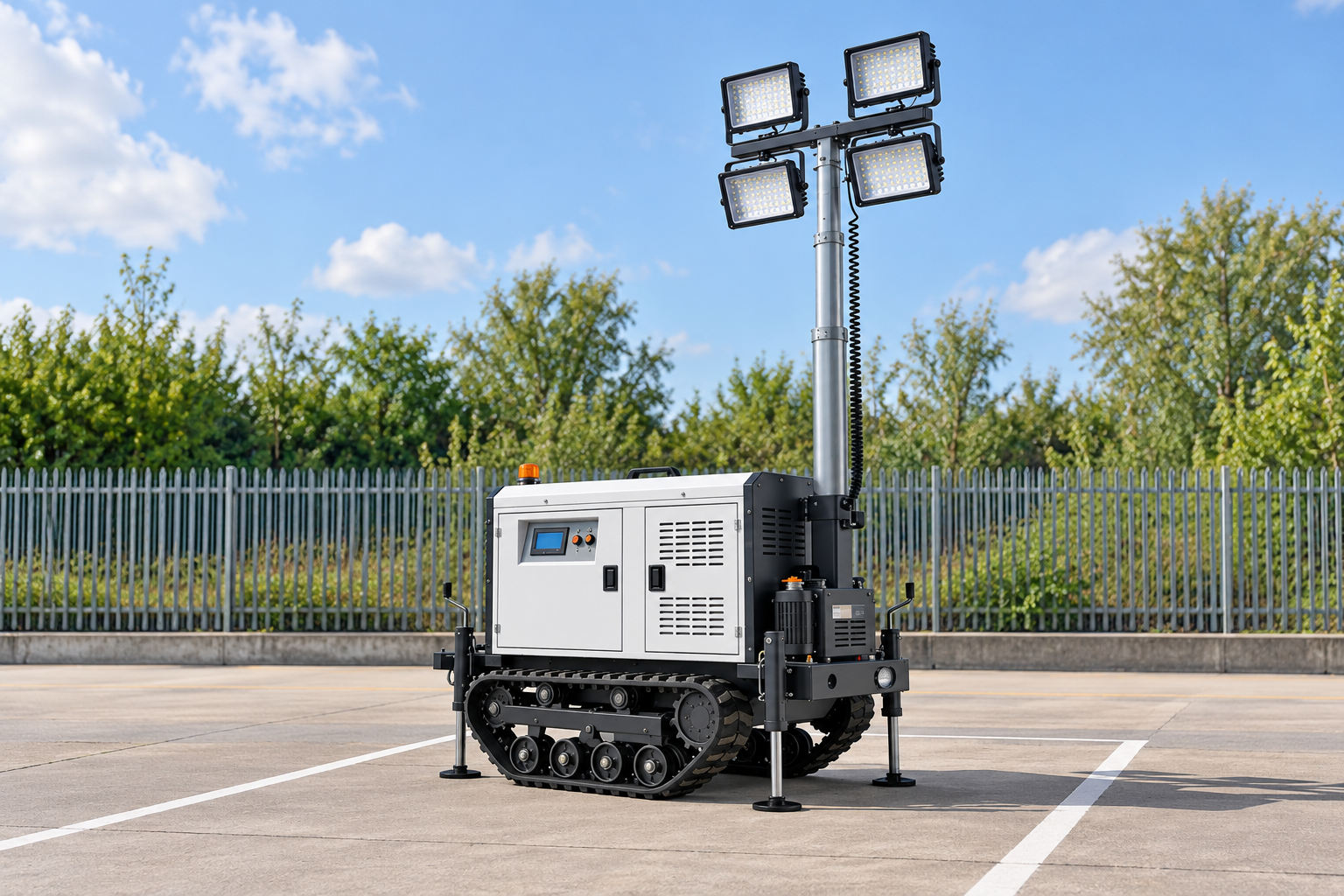
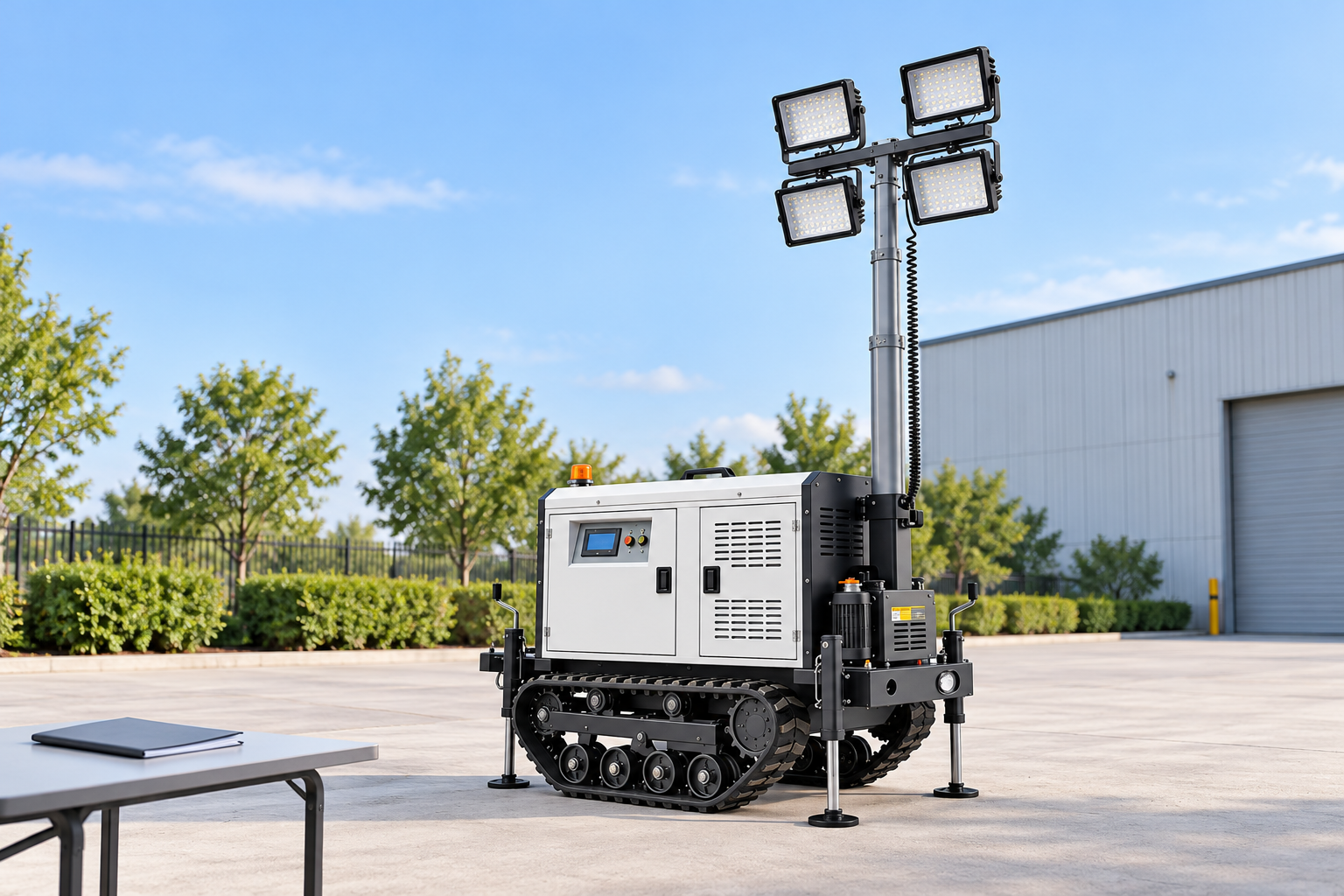
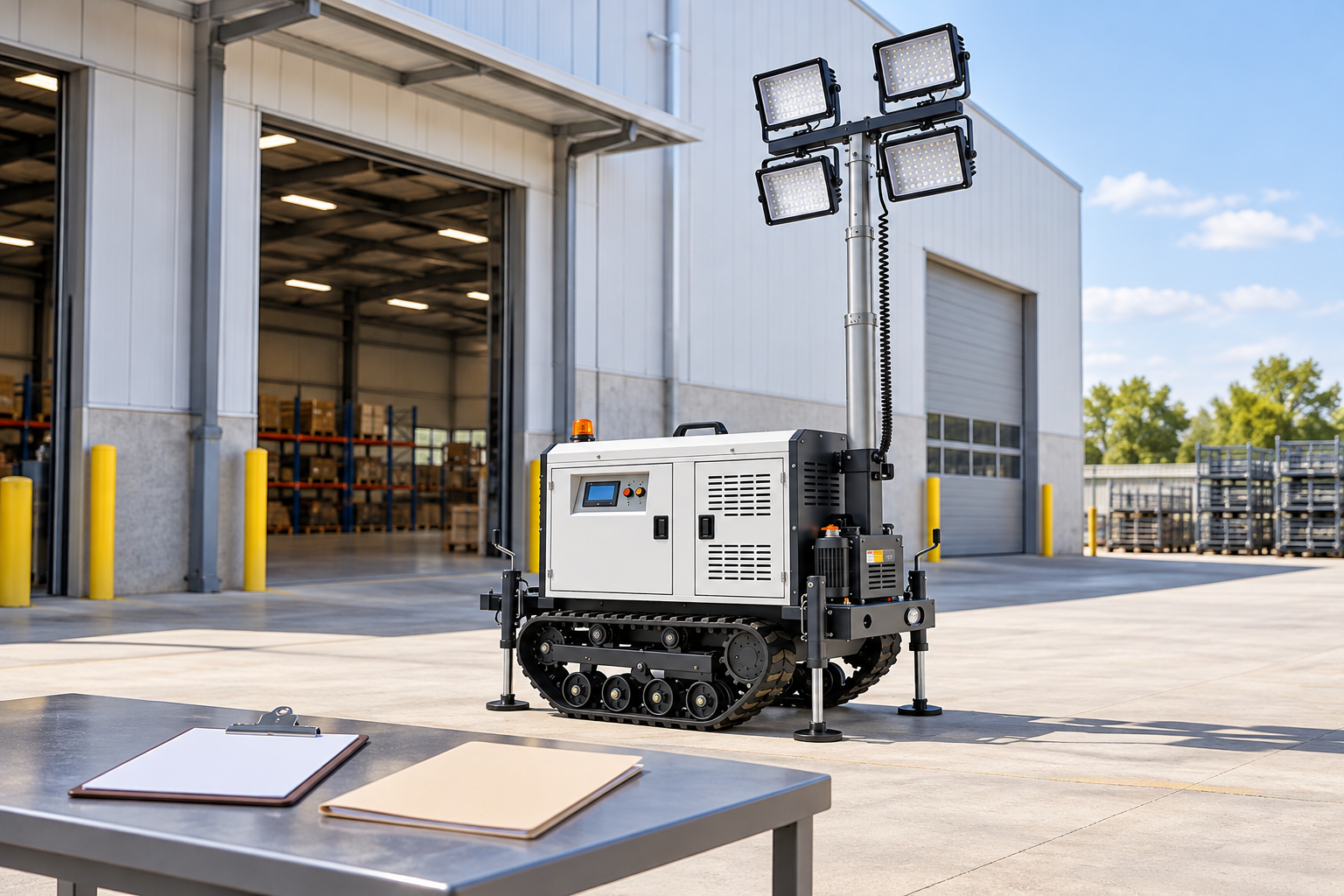
Modern emergency light towers comprise a prime mover, alternator, a telescopic mast, and powerful fixtures. Switch to LED technology has been groundbreaking—whereas the 1,000-watt metal halide lamp needed a few seconds of warm-up and restrike time, the 480-watt LED module produces light at more than 180,000 lumens instantly, eliminating dangerous black-out periods during roadside missions, thereby fulfilling the needs of users of tow truck emergency light equipment and tow truck emergency strobe light systems. The table below shows the differences between the two technologies.
LED vs. Metal Halide Light Tower – Key Performance Comparison
| Parameter | Metal Halide (1000W) | LED (4×480W) | Advantage |
|---|---|---|---|
| System Lumen Output | ~110,000 lm | 180,000–240,000 lm | LED |
| Instant Restrike | No (10–15 min delay) | Yes | LED |
| Lamp Life (to L70) | 6,000–10,000 h | 50,000+ h | LED |
| Fuel Consumption (8‑h cycle) | ~8.5 L | ~5.0 L | LED |
| Typical Mast Working Height | 7–9 m | 7–9 m | Equal |
| Typical Wind Survival Rating | 80 km/h | 80 km/h (engineered) | Depends on mast design |
The primary difference between area illumination and warning lights on vehicles is that a tow truck light bar emits directional signals, whereas a full emergency light tower offers flood lighting to assist with tasks at hand. Municipalities sometimes purchase both varieties of illumination together.
Market Demand and Regulatory Trends
There are two regulatory factors which are transforming procurement. In this context, the Tier 4 Final legislation introduced by the U.S. EPA and the Stage V legislation brought in by the EU force substantial reductions in particulate matter and NOx emissions of non-road diesel engines. Therefore, it turns out that many new diesel light towers should comply with the engines of such automotive manufacturers as Kubota Perkins and Yanmar. Several crucial infrastructure projects, including the recently adopted U.S. Infrastructure Investment and Jobs Act and the Trans-European Transport Network, also promote the demand for mobile light towers rental parks since they demand a 24/7 operation.
In recent times, hybrid models and solar-powered systems have become increasingly popular. With solar-powered light towers generating low levels of noise and no emissions, it is a suitable product for use in urban areas with restrictions on nighttime noise levels. Notably, fixed products, such as the blue light emergency tower have been developed, combining call stations and area lighting for university campuses and parking lots.
Core Components and Technical Specifications
A towable light tower of commercial type is determined by its various subsystems. Acquiring knowledge on them will help one tell the difference between heavy-duty equipment and light-duty imported goods.
- Prime Mover: Usually powered with a three-cylinder water-cooled diesel engine (0.7 to 1.5 L) and allowing oil change intervals of 500 hours. The most common options include Kubota D902 and Perkins 403, which have a well-developed global supply of spare parts. They can drive a brushless standby AC generator rated for 6–8 kVA for a system with 4 incandescent light bulbs.
- Luminaire Assembly: Lumileds or Osram are used for high-quality LED chips mounted on aluminum substrates and encapsulated individually with IP65/66 rating3. As a result, if one of the fixtures fails, the entire mast will stay illuminated.
- Mast and Chassis: Galvanized telescopic masts can withstand wind flows up to 80 km/h in heights of 7 – 9 m. The trailer features a collapsible drawbar with brake mechanisms and a 13‑pin road lighting plug, so it complies with laws on road travel. For the fleets showing light truck vehicle lights, the trailer lights make sure that the highway compliance of the tower is ensured.
Typical Specifications of a 4×480W LED Towable Light Tower
| Specification | Value | Notes |
|---|---|---|
| Engine Model | Kubota D902 (Tier 4 Final / Stage V) | Or equivalent Perkins 403‑series |
| Prime Power | 7.2 kVA | Brushless, self‑exciting alternator |
| LED Luminaires | 4 × 480 W | Osram/Lumileds chips, IP65 |
| Total Luminous Flux | 192,000 lm | Initial, per IEC 62717 |
| Mast Height | 8.5 m (28 ft) | 5‑section telescopic, galvanized |
| Fuel Tank Capacity | 112 L | Polyethylene, lockable cap |
| Run Time (100% load) | ~90 hours | At ~1.2 L/h fuel consumption |
| Corrosion Protection | C5‑M (ISO 12944) | Tri‑coat: epoxy zinc, PU, polyester powder |
| Trailer Weight (dry) | 1,100 kg | With folding drawbar and jockey wheel |
Source: Industry OEM specification sheets and ISO 8528‑5 protocols.
The Manufacturing Process: From Raw Steel to Validated Asset
A quality emergency lighting tower is made in gradual stages which directly reflect its reliability in the field. Founded in 2017 and dedicated exclusively to emergency lighting towers, Zhejiang Longye Electric Technology is an example of how a rigorous process can achieve consistency.
The methodology of manufacturing begins with laser-cut steel substrates (±0.2 mm tolerance) and robotic welding of the frame outriggers. Random sampling of the welds for destructive testing proves the integrity of the weld penetration. The next step is sand blasting the frame parts to SA 2.5 quality level4 followed by three coats of paint: Zinc-rich epoxy primer, high-build polyurethane intermediate, and UV-stabilized polyester powder coating. All of these steps provide more than 1000 hours of salt spray corrosion resistance according to ASTM B117 standard of C5-M category (ISO 12944-2 standard for coastal and industrial environments).
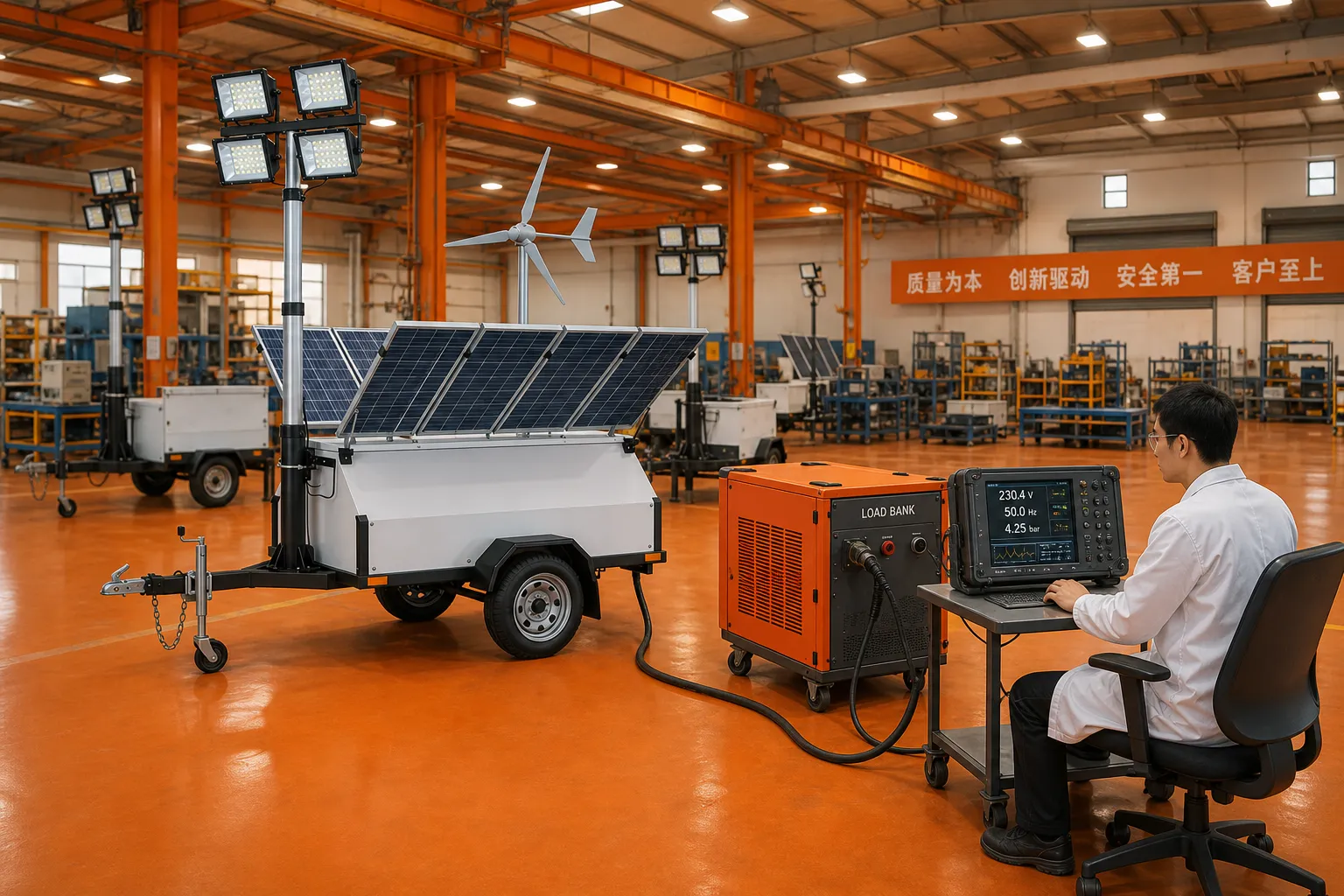
At the same time, alternator windings are automatically produced for voltage regulation within ±1.5%. CNC machining is used for control panels, and closed-barrel terminals are crimped by machine. Final assembly is controlled by gates: every generator has to be tested for 6 hours at 100% load and data loggers are used to record frequency, THD, oil pressure, and temperature of cooling liquid. LEDs undergo a 12-hour burn-in and water spray tests. Certificates of conformity are issued only when all parameters are within the limits of statistical process control. Developing all of these processes in accordance with ISO 9001:2015 system helps to maintain low rate of failures in the field and practically eliminate warranty claims.
OEM Customization: Engineering Flexibility
For importers and distributors, real equipment manufacturer capability means changing performance, not just slapping on logos. Wenzhou Keyyou Trading, Longye’s export arm, helps facilitate such changes in world markets. Standard engineering-level modifications include:
- Voltage/Frequency: Alternators rewound for 50 Hz (230V) or 60 Hz (120V/240V).
- Cold‑Weather Packages: Block heaters, battery warmers, and hydraulic oil rated to −40°C, plus silicone‑sealed controls.
- Chassis/Mast Modifications: Subframes that are compact to stay true to busy narrow streets in cities, stainless steel mast sections that are appropriate for marine environments, and custom RAL and Pantone paint with message decals.
- Telematics Integration: Wireless connectors for GPS/GSM modems pre-installed at the time of manufacturing, providing the opportunity of remote monitoring of the motor’s operating time and fuel level as well as geofencing.
In particular, Longye has built a self-standing light tower that levels itself automatically on uneven surfaces, as well as intends to integrate drone payload capabilities – positioning these light towers as drone charging and launch points. This research and development investment gives wholesalers access to distinct product offerings.
All OEM variations implement the standard procedure of an engineering change notification and have a design history file, which is essential to pass CE, UKCA, or ANSI certification. For clients needing both area illumination and vehicle alerts, combining shipments of emergency light towers with emergency vehicle lights can simplify logistics.
A Buyer’s Guide to Total Cost of Ownership
Assessing an emergency light tower solely with respect to its purchase price can result in expensive mistakes. A long-term “total cost of ownership” (TCO) analysis for the next five years should include:
- Fuel Economy: Load-sensing engines provide the option of stretching a 112-Liter fuel tank up to 90+ hours while fixed-speed engines can work up to 55 hours. The savings can be more than $3,500 per unit at current industrial diesel rates.
- Lumen Maintenance: Ask for LM-80 test information. High-quality LEDs (Lumileds, Cree) stay above 90% brightness at the 50,000-hour mark, while lower-quality chips will drop to 70%, thus reducing coverage by almost a third in effectiveness.
- Corrosion Resistance: Always demand ISO 12944 C5-M certification instead of trusting only words. The certification predicts if the chassis will rust in two years or be intact even after ten years. Corrosion repairs may cost 40-60% of the purchase of a new unit.
- Parts Commonality: The use of a single engine brand results in lower spare parts stock and training costs for technicians since they need to be trained only to service one engine type. Engine with 500 hours between oil replacement and sets of filters available for purchase worldwide lessen the burden of maintenance.
- Regulatory Compliance: Ask for a certificate of conformity from the manufacturer for the full assembly and not merely for the engine itself in order to ease resale and cross-border transportation.
It is imperative to give greater importance to process-related data as opposed to promotional brochures when conducting supplier assessment. Reliable partners provide data regarding quality control failures, timeliness in delivery, and changes in engineering processes. Factories that have direct access and control of manufacturing such as Longye, which is functioning through Keyyou, usually offer competitive pricing due to absence of intermediaries in the entire supply chain.
Related light tower resources
Frequently Asked Questions
- Q1: Can a single emergency light tower illuminate an entire highway work zone?
- One 4×480W LED tower typically covers 3,000–5,000 m² at 20 lux. For multi‑lane highways, two or three units in a longitudinal pattern are standard.
- Q2: What is the difference between a diesel and a solar‑hybrid light tower?
- A diesel light tower delivers continuous high output regardless of weather, ideal for overnight construction. A solar‑hybrid unit reduces fuel and noise but suits surveillance or auxiliary loads with fewer fixtures.
- Q3: Are these units road‑towable, and what license is required?
- Yes, they feature torsion‑axle suspension and highway‑rated tires. In North America, most fall under 3,500 lb gross weight, towable by a standard pickup without a CDL; local regulations should be verified.
- Q4: How does a blue light emergency tower differ from a mobile light tower?
- A blue light emergency tower is a fixed security product with a blue beacon, call box, and often a PTZ camera, designed for campuses and lots—not high‑lumen work‑area lighting.
- Q5: What testing does a quality unit undergo before shipping?
- Rigorous QA includes a 6‑hour full‑load generator test, 12‑hour LED burn‑in, IP65 rain spray test, insulation resistance test, and functional checks of all mast limit switches.
- Q6: Can I order custom color and branding for a fleet order?
- Yes, custom powder coat (RAL/Pantone) and branded decals are available for orders typically as low as 10 units, with a pre‑production sample for approval.
- Q7: What are the critical accessories to consider?
- Essential accessories: secondary manual winch handle, cold‑weather battery heating kit (below −10°C), external battery isolator for storage, and a set of replacement intake and fuel filters for the first service.
References
[1] Grand View Research, “Mobile Light Tower Market Size, Share & Trends Analysis Report, 2024–2030.” https://www.grandviewresearch.com/industry-analysis/mobile-light-tower-market
[2] ISO, “ISO 9001:2015 Quality management systems – Requirements.” https://www.iso.org/standard/62085.html
[3] U.S. Energy Information Administration, “Gasoline and Diesel Fuel Update,” weekly averages, 2024. https://www.eia.gov/petroleum/gasdiesel/