
Compact Light Tower: Space, Mobility, and Runtime Guide
A compact light tower reduces transport and storage space, but buyers must check what was traded away: mast height, deployed stability, fuel or battery...
This guide is for contractors, fleet managers, distributors, and procurement teams comparing compact light tower. It separates measurable requirements from sales labels and identifies where the current manufacturer manual, a qualified technician, or a site-specific engineering and safety review must control the decision.

Quick answer and decision scope
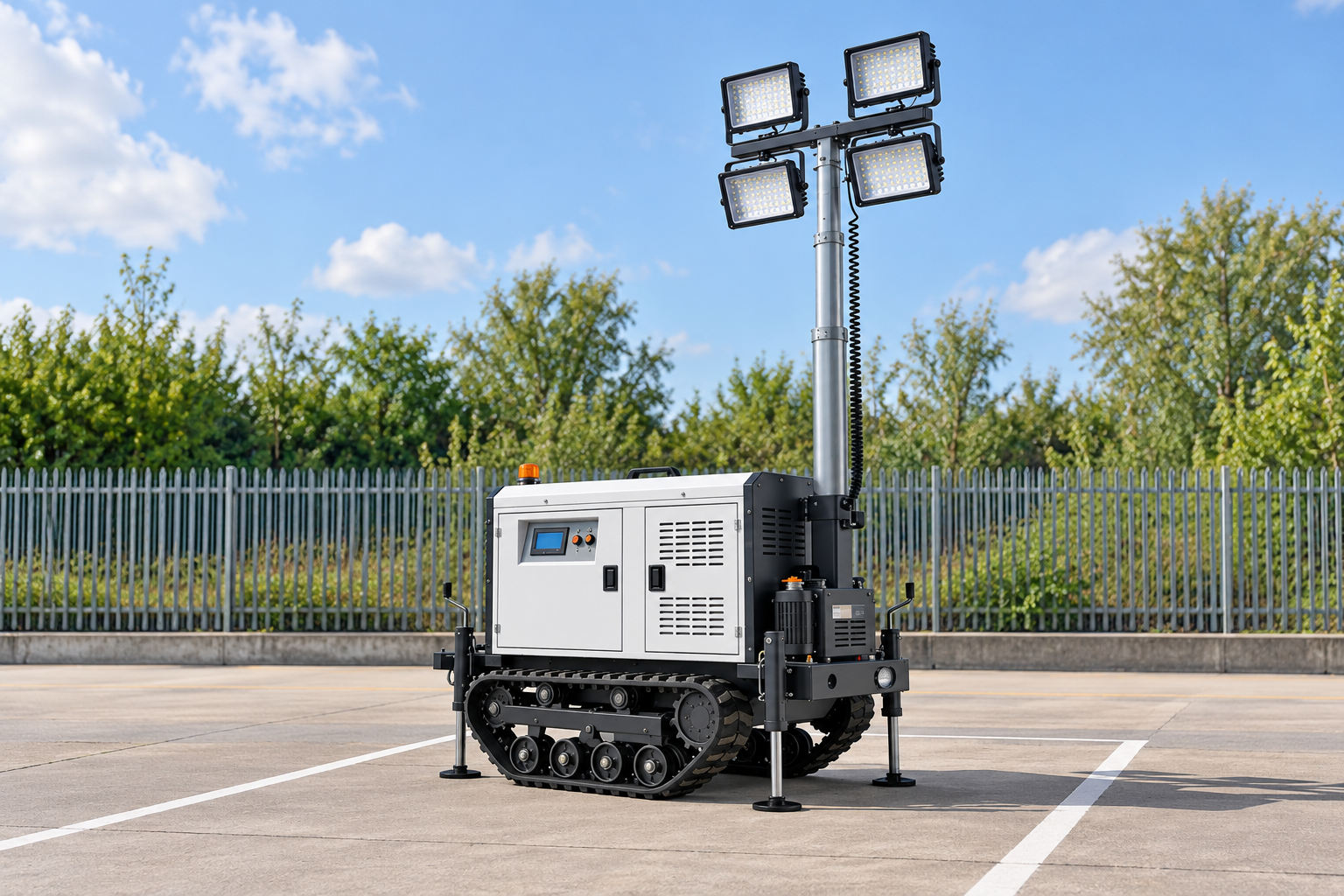
A compact light tower reduces transport and storage space, but buyers must check what was traded away: mast height, deployed stability, fuel or battery capacity, runtime, fixture aiming, service access, wheel size, towing or lifting method, and cooling. Compare folded density and operating performance together.
Begin with the intended work zones, hours, movement frequency, energy access, environment, crew capability, and acceptance method. A quotation is comparable only when those inputs are shared. Any number for output, runtime, height, weight, sound, fuel, battery capacity, or coverage should identify its units, configuration, operating mode, and test conditions.
The five issues that control the decision
| Decision area | What to verify |
|---|---|
| Transport density | Record folded length, width, height, mass, stacking or container plan, tie-downs, forklift pockets, and units per vehicle. |
| Site mobility | Check wheel size, ground clearance, handle force, tow or lift method, slope, soft ground, doors, turns, and crew limits. |
| Deployed stability | Compact stowage may still require wide legs or outriggers; verify footprint, wind, mast positions, surface, and impact protection. |
| Energy capacity | Smaller tanks or batteries can shorten autonomy. Compare usable runtime at the proposed light output and environment. |
| Maintenance space | Ensure filters, battery, charger, controls, mast components, connectors, cooling paths, and common parts remain accessible. |
1. Transport density
Record folded length, width, height, mass, stacking or container plan, tie-downs, forklift pockets, and units per vehicle. Ask the supplier to state the applicable configuration, test condition, limit, and inspection method so the claim can be checked during bid review and handover.
2. Site mobility
Check wheel size, ground clearance, handle force, tow or lift method, slope, soft ground, doors, turns, and crew limits. Ask the supplier to state the applicable configuration, test condition, limit, and inspection method so the claim can be checked during bid review and handover.
3. Deployed stability
Compact stowage may still require wide legs or outriggers; verify footprint, wind, mast positions, surface, and impact protection. Ask the supplier to state the applicable configuration, test condition, limit, and inspection method so the claim can be checked during bid review and handover.
4. Energy capacity
Smaller tanks or batteries can shorten autonomy. Compare usable runtime at the proposed light output and environment. Ask the supplier to state the applicable configuration, test condition, limit, and inspection method so the claim can be checked during bid review and handover.
5. Maintenance space
Ensure filters, battery, charger, controls, mast components, connectors, cooling paths, and common parts remain accessible. Ask the supplier to state the applicable configuration, test condition, limit, and inspection method so the claim can be checked during bid review and handover.

A practical evaluation workflow
- Map the narrowest transport, storage, and site constraints.
- Set lighting, height, runtime, and environmental requirements.
- Compare both folded and deployed dimensions.
- Trial movement, setup, service access, and field lighting with the intended crew.
- Calculate logistics savings against any extra moves, charging, refueling, or downtime.
Record assumptions and exceptions next to the proposal. If a bidder changes the engine, battery, luminaire, optics, mast, controls, trailer, or accessory package, repeat the affected review. Configuration control is especially important when samples, data sheets, and delivered machines are produced at different times.
Evidence to request before purchase or deployment
- Configuration-specific data sheet and general arrangement drawing
- Complete-luminaire photometric file or lighting layout with stated assumptions
- Power, runtime or fuel data at the proposed operating load
- Mast, stability, wind, transport, setup, inspection, and emergency instructions
- Electrical information, safety labels, manuals, and destination documents
- Warranty scope, service intervals, recommended spares, parts lead times, and escalation contacts
- Factory or delivery acceptance procedure tied to the final configuration
For lighting fundamentals, the U.S. Department of Energy’s LED guidance explains why complete fixture performance, optical distribution, and power conversion matter. For U.S. construction work, OSHA 29 CFR 1926.56 lists illumination requirements for specified work areas. Project rules and the site risk assessment may require more.
Setup, verification, and change control

Before deployment, inspect ground, slope, overhead hazards, traffic, public interfaces, weather, and emergency access. Position and stabilize the base using the current manufacturer instructions. Aim fixtures before raising the mast where practicable, keep personnel outside pinch and fall zones, and protect the equipment from vehicle impact.
Verify lighting at representative task, edge, transition, and shadow points using the measurement plane required by the project. Also observe glare from worker, driver, and neighboring-property viewpoints. NIOSH guidance on internal traffic control plans supports separating workers from construction vehicles and equipment as far as practicable.
Reassess after relocation, severe weather, maintenance, fixture replacement, new structures or stockpiles, changed traffic routes, or a different work phase. The approved drawing, measured results, defects, corrective actions, and final settings should stay with the asset or project record.
Lifecycle cost and support
Compare delivered price together with transport, setup labor, fuel or electricity, charging infrastructure, routine inspections, scheduled service, consumables, batteries or engine components, tires and trailer work where applicable, replacement luminaires, downtime, training, and residual value. Use the same hours and energy prices for every option.
Support quality is measurable. Ask who diagnoses faults, which parts are stocked, typical response times, what remote information is required, and which work must be completed by authorized personnel. A low purchase price can be erased by missing manuals, long parts delays, unclear warranty responsibility, or a configuration that cannot be serviced locally.
Common procurement mistakes
- Buying from one number such as lumens, watts, runtime, mast height, or price
- Comparing quotations that use different loads, environments, accessories, and exclusions
- Confusing transport dimensions with the deployed operating footprint
- Accepting model-family brochures instead of configuration-specific evidence
- Skipping field measurement, operator training, and defect closeout
- Leaving spare parts, warranty response, and responsibility for modifications undefined
Related light tower guides
Frequently asked questions
Does compact mean hand portable?
No. Obtain mass, wheel and handle data, movement limits, lifting points, and the required crew or vehicle.
Are compact towers less stable?
Not necessarily, but stability must be verified for the exact mast height, support layout, ground, slope, wind, and fixture configuration.
How should transport efficiency be compared?
Use units per truck or container, loading equipment, restraints, damage risk, turnaround time, and total logistics cost.
What is often overlooked?
Deployed footprint, service-door clearance, cooling, small-wheel performance, limited energy capacity, and accessory storage.
Bid evaluation record
Keep a decision register showing each requirement, the supplier response, the evidence reviewed, every deviation, the responsible reviewer, and the final disposition. Link that register to the approved configuration, inspection report, training record, and acceptance measurements. This prevents a commercial revision or late component change from silently altering the technical basis of the purchase, and it gives operations and maintenance teams a clear reference after delivery.
Final takeaway
A reliable decision about compact light tower is traceable from a real operating requirement to verified evidence and an acceptance test. Define the task and constraints, compare complete configurations under common assumptions, inspect safe deployment, and retain the records needed for service and future procurement.