
Wildfire Base Camp Lighting: Deployment and Fuel Planning
Plan wildfire base camp lighting for crew access, logistics, sleeping-area glare, charging, fuel support, service continuity, and incident changes.
Wildfire base camp lighting should support the incident’s approved logistics, access, and service functions while protecting sleeping areas from glare and keeping power equipment within the camp plan. Start with the camp manager and the current layout rather than assigning towers uniformly across a map. An equipment yard, dining approach, wash facility, and sleeping zone have different operating patterns. Mobile lighting can support selected outdoor functions, but it does not automatically provide building emergency lighting or make an evacuation route acceptable.
Work from the incident logistics arrangement
Identify whether the facility is an incident base, a camp, or another support location under the current incident organization. Use the layout and responsibilities approved for that facility. NWCG’s incident-base definition and Base/Camp Manager qualification materials provide a United States reference for this organizational context. The lighting plan should be coordinated with the person responsible for the facility and the applicable incident safety arrangements.
Map accommodation, food service, sanitation, equipment stores, vehicle access, servicing, and any separately controlled aviation support. Record which functions operate through the night and which change with crew rotations. Do not assume that every camp activity ends when field work stops. The accepted illumination should support the actual flow of people and supplies without introducing unnecessary glare into spaces used for rest.
Prioritize routes used by tired crews
Walk the route between accommodation and the facilities people use during the night. Identify steps, uneven ground, tent lines, doors, vehicle crossings, and changes in surface. A central tower can make a compound look well lit while leaving a turn behind a trailer or supply stack difficult to recognize. Observe the route from the user’s height and direction of travel.
Check both normal access and the routes identified in the incident’s emergency arrangements. Lighting is an input to those plans rather than a substitute for them. Ask the responsible team which visibility criteria apply. Do not label a route safe solely because a lamp reaches it. Where an obstruction hides the next step or entrance, review a specific remedy and repeat the walk-through with the accepted layout in place.
Protect rest areas from direct glare
Camps can serve crews on different schedules, so sleeping space may be occupied whenever a logistics area is active. Observe lamp direction from tent entrances, trailer windows, and the pathways around accommodation. A lamp aimed to reveal a delivery area can shine directly into a sleeping space. Record those interfaces instead of treating noise and light intrusion as complaints to address only after deployment.
Use the permitted aiming and position to limit the conflict. Do not attach makeshift covers to lamp heads or modify supports without approval. Any timed or reduced-output arrangement needs the camp team’s acceptance for the functions that remain active. The decision should identify which route and facility stay usable during reduced activity rather than simply lowering every tower at an arbitrary hour.
Separate fuel and power decisions from coverage
Engine-powered equipment needs an accepted location for exhaust, fueling, maintenance, and access. Review nearby tents, trailers, occupied buildings, and ventilation openings. CDC guidance explains the carbon-monoxide hazard from combustion equipment; an outdoor position alone does not demonstrate that exhaust cannot reach occupied space. Follow the exact equipment instructions and the camp’s approved arrangements.
A battery tower avoids local combustion during battery operation, but the base still needs a realistic charging source and schedule. A hybrid may start its engine automatically under specified conditions. Include those conditions in the location and rest-area review. Compare the complete power system across the camp’s operating pattern, including service availability, rather than choosing solely by a headline runtime or quiet-operation claim.
Keep deliveries and service routes usable
The camp layout changes as supplies arrive and vehicles are assigned different locations. Include the full support footprint, mast envelope, controls, and service space in the lighting drawing. The logistics team should review it against the accepted vehicle routes and any separation of pedestrians and vehicles. A tower should not narrow an access route that becomes busy at crew change.
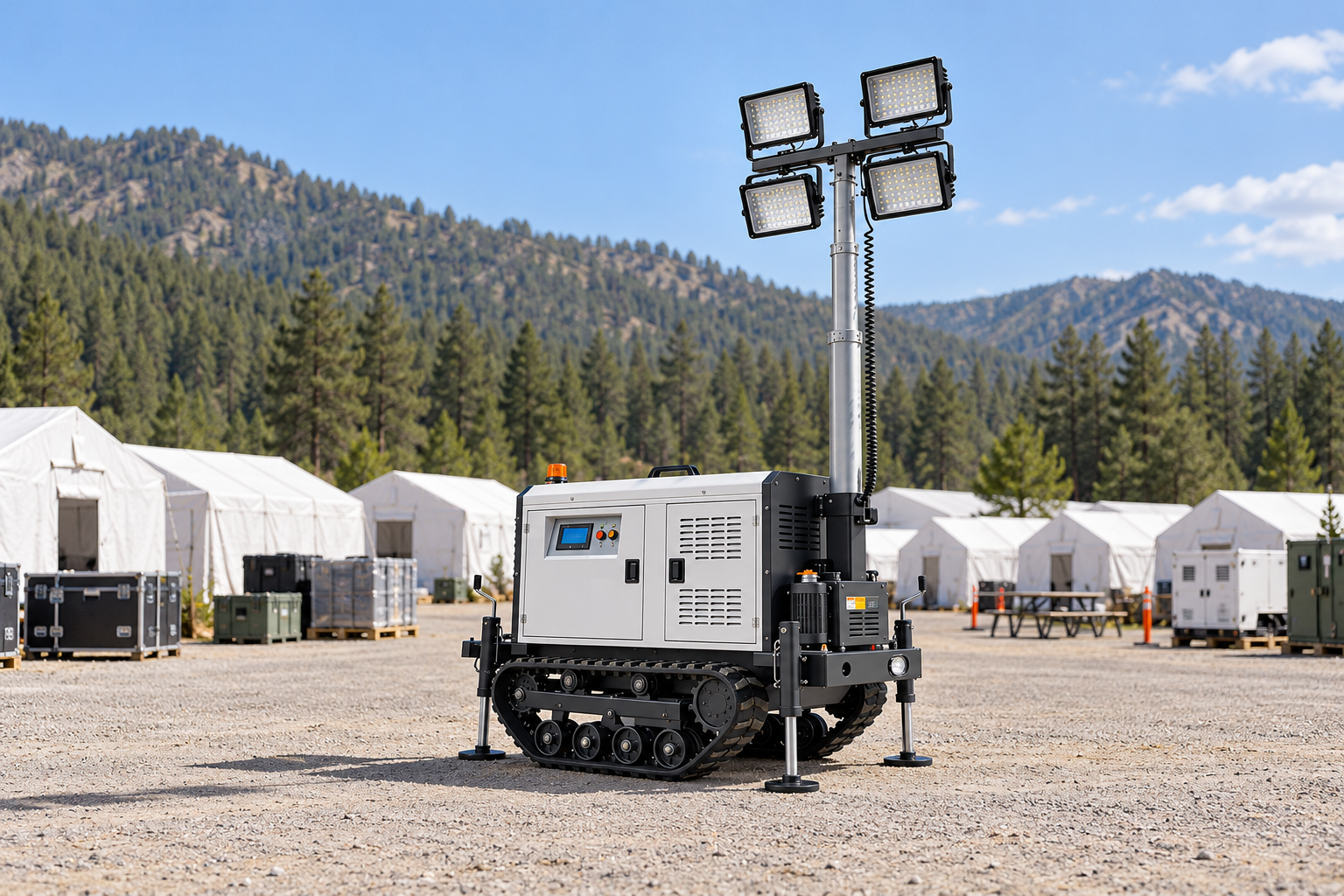
Identify how the tower arrives, is deployed, serviced, and removed. Ground conditions may change with rain, repeated vehicle use, or an expanding compound. The responsible team approves the surface and support arrangement under the equipment instructions. Track mobility does not establish suitability for every soft or uneven camp location. If a position cannot accommodate the complete installation, select another accepted arrangement instead of relying on the small transport footprint.
A camp-function decision table
The table records practical decisions for the current camp. It does not prescribe incident layout distances, electrical ratings, or certification for the pictured equipment.
| Camp function | Visibility or service issue | Evidence to record |
|---|---|---|
| Crew access | Steps, turns, tent lines and crossings | Night route review with current accommodation layout |
| Equipment yard | Tools, vehicle approaches and loading | Task views and accepted movement boundaries |
| Rest areas | Direct glare and engine operation | Window and entrance observations; power-mode plan |
| Continuous services | Charging, fueling and interruptions | Service owner, schedule and backup function |
| Changing camp | New trailers, supplies or routes | Events that trigger another lighting check |
Specify runtime around camp use
Record which functions require light throughout the operating period and which can follow a specific schedule. Include delayed arrivals, cleanup, service interruptions, and the next crew rotation. Ask for runtime evidence at the intended lamp setting and conditions. A demonstration at reduced output should not become the basis for an all-night full-output requirement.
Compare available charging, fuel, maintenance support, and replacement capacity. The camp may have limited supply or competing loads, so a charging plan must fit the actual infrastructure. If external power is proposed, the electrical team reviews supply, protection, and cable routes. Avoid routing cables informally across high-use paths. Make the service arrangement part of the lighting decision rather than a separate issue left for the crew after dark.
Check the setup with camp users
Inspect after dark with the current tents, trailers, equipment, and storage in place. Ask representatives of the functions being illuminated to identify what remains difficult to see. The observer beside the tower may have a very different view from a crew member approaching a wash facility or a driver arriving at the equipment yard.
Document the accepted mast configuration, lamp aiming, output setting, power mode, and relevant conditions. If the responsible team requires measurements, record the instrument, locations, plane, and criteria. Use specific findings: an obscured doorway, a reflected glare problem, or a service route in shadow. Correct the issue and recheck it. A broad adequate-lighting statement is difficult to use when the camp expands or another crew takes over.
Plan continuity without making the camp dependent on one tower
Identify what happens when the primary light stops or has to be serviced. The camp’s approved response should distinguish essential access, the work task, and other functions. Backup illumination must be available for its stated purpose. A second tower parked at the far end of the compound is not automatically a backup for a route if its delivery and position have not been planned.
Keep communication clear about who can change the system. An adjustment made for one delivery could affect a resting crew or another route. Record service times, accepted settings, and changes during handover. Where the incident grows quickly, appoint responsibility for revisiting the arrangement as accommodation and logistics areas change, rather than waiting for an access problem to be reported.
Keep aviation support separately approved
An incident may include helicopter support, but lighting for a helibase or landing-related function requires the relevant aviation team’s process. Do not extend a camp tower into that role merely because the equipment is already available. Raised structures and beam direction have to be considered within the accepted aviation arrangement.
Maintain separate scope descriptions for camp access, logistics work, and aviation support. This helps procurement and deployment teams ask the right questions and prevents a general outdoor tower from becoming an unsupported promise about emergency or aviation lighting. A practical camp plan stays connected to current users, service capacity, and the incident’s organization throughout deployment and recovery.
Equipment documentation for this application
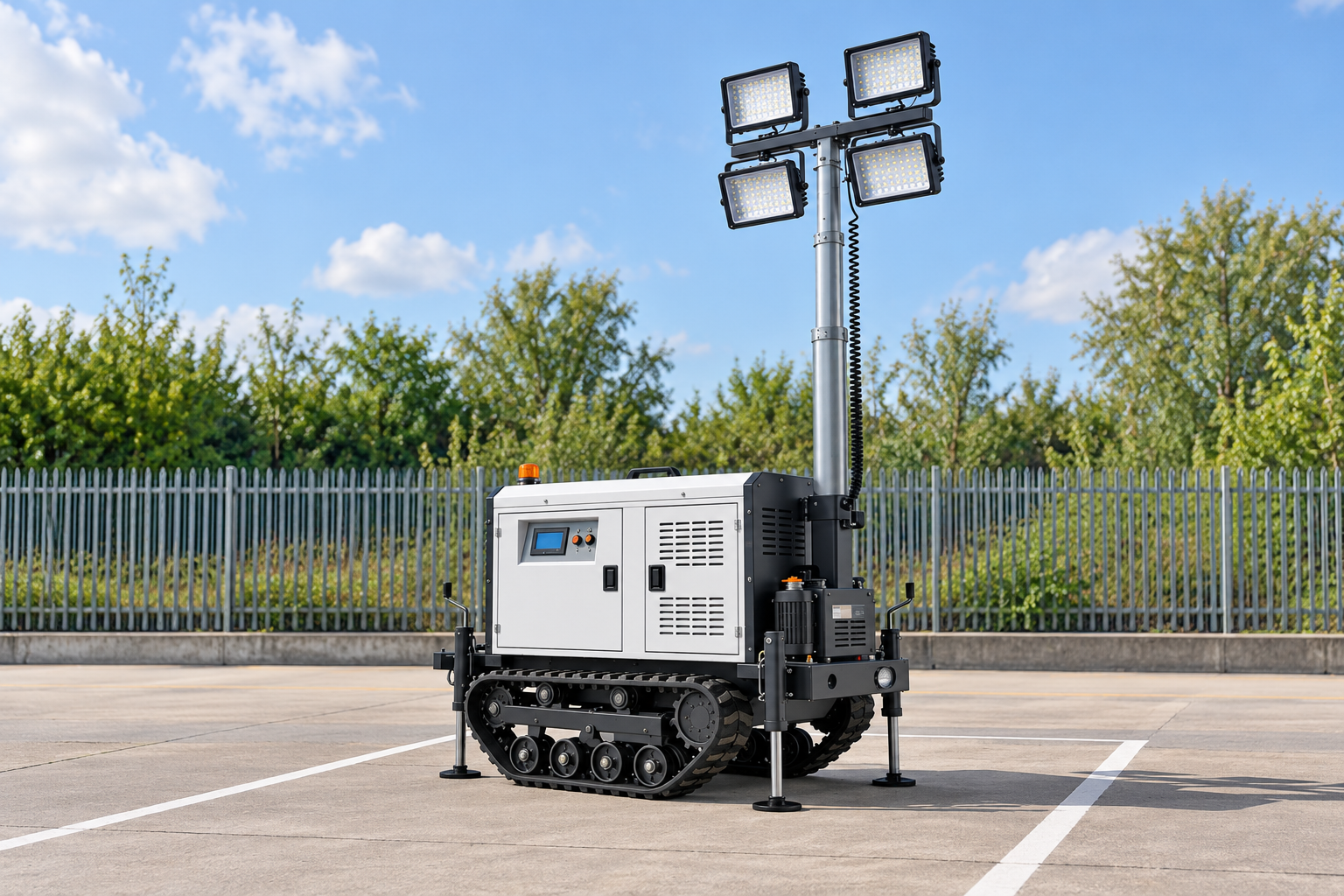
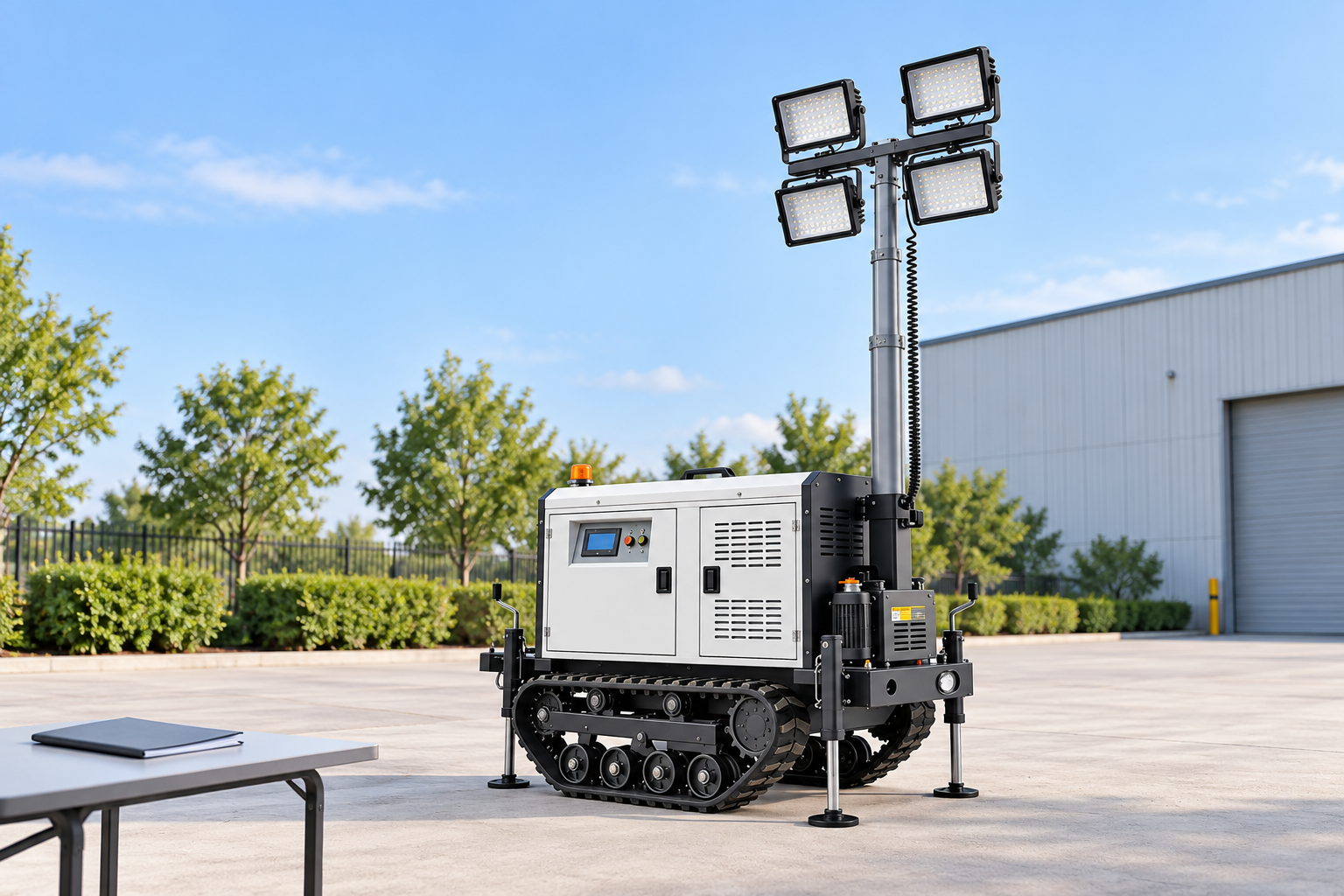
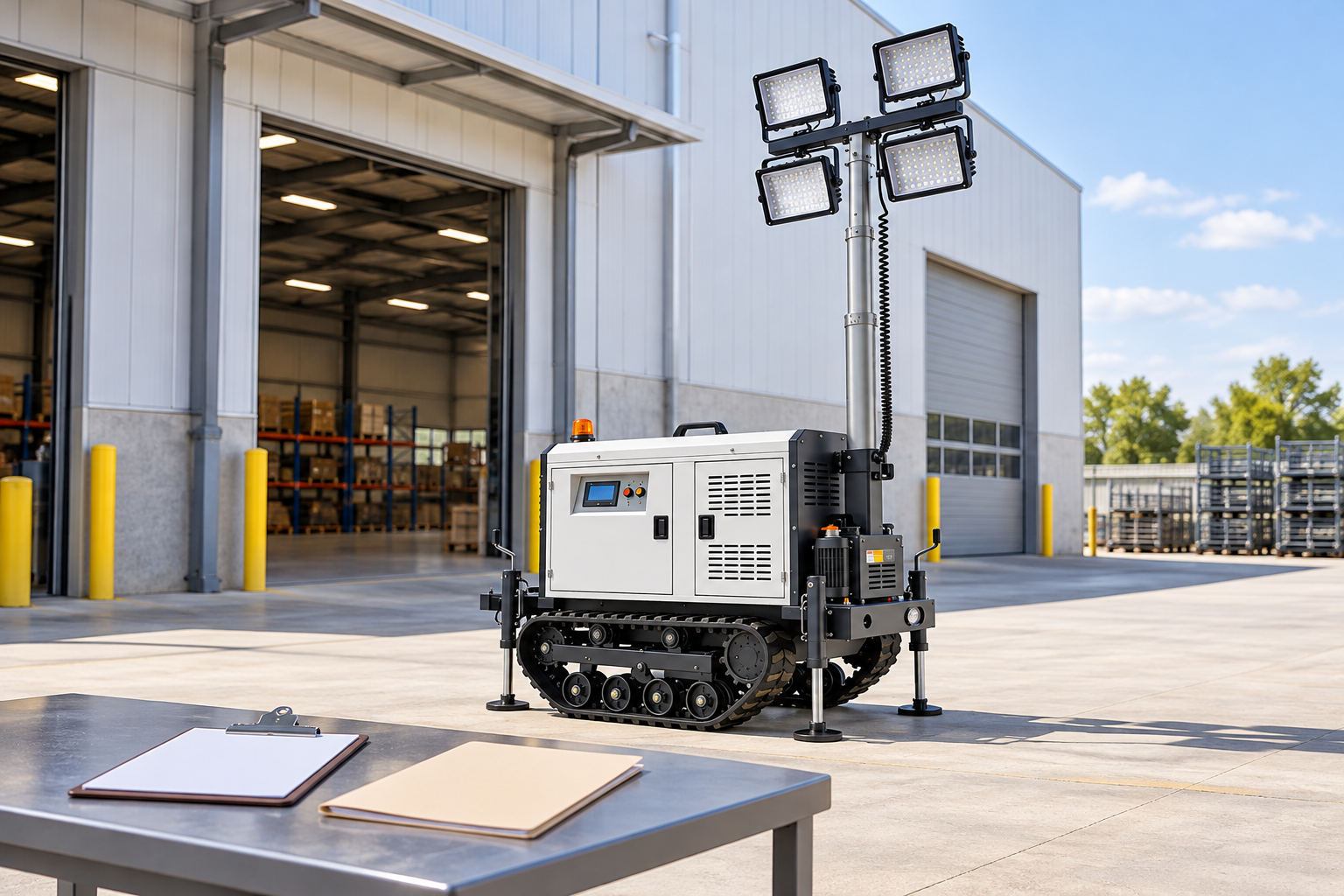
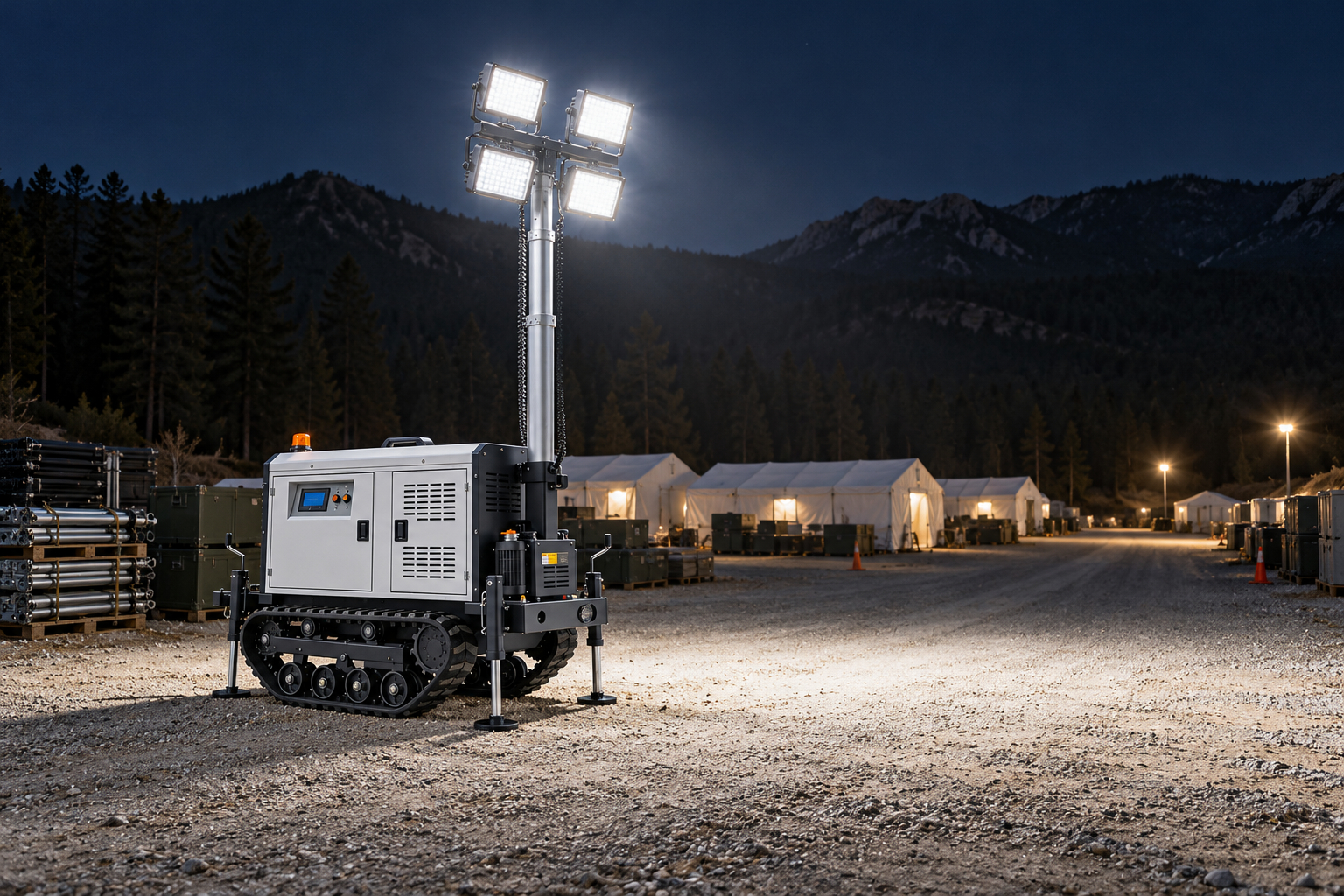
The pictured Keyyou tracked lifting light tower identifies the product category discussed here. Its appearance is not evidence of runtime, environmental certification, or suitability for every proposed work location. Request the current configuration-specific documents and compare them with the accepted task, deployed envelope, power arrangement, and service plan. If those records do not establish a match, resolve the configuration with the responsible team before relying on the installation.
For broader equipment planning, read the mobile light tower guide. Use the separate glare-control guide when reviewing observer views, and the maintenance and troubleshooting guide when arranging inspection and service. These resources support their own tasks; they do not replace acceptance of the current site layout.
Generator safety education and reference scope
Where the selected power arrangement includes an engine, the CDC video below explains carbon-monoxide precautions. Its household examples provide introductory education, not a site installation approval. The responsible team must review the exact equipment, exhaust location, occupied spaces, fuel handling, and electrical arrangement. Battery-only operation has a different power scope, and hybrid engine-start conditions still require review.
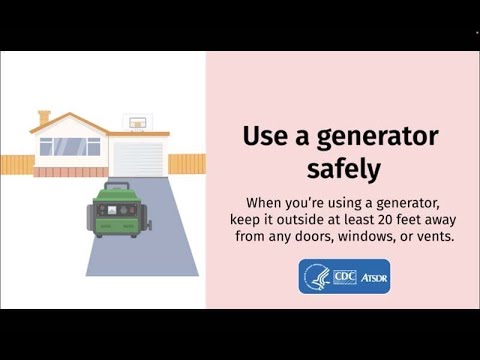
Watch Use a Generator Safely from the CDC.
Frequently asked questions
Should every camp area use the same light setting?
The camp manager and responsible teams should define the functions and operating schedule. Equipment service, crew access, and sleeping areas have different needs and interfaces. Any reduced or timed setting must preserve the accepted functions that remain active. Record the arrangement by camp area rather than applying one output level or shutdown time without review.
Is battery lighting automatically suitable for an entire night?
It still needs runtime evidence at the intended output and conditions, plus a credible charging or replacement plan. Include delayed arrivals, cleanup, and crew changes in the operating window. Compare the available camp infrastructure with replenishment needs. Quiet stored-energy operation is useful only when the accepted lighting functions remain supported through the required period.
Can camp towers be used for helicopter operations?
Aviation support requires its own competent approval of the physical and optical arrangement. Do not extend ordinary camp lighting into landing-related functions because a tower is already available. Keep the incident logistics and aviation scopes distinct, identify their responsible teams, and review changes within the appropriate process before relying on the installation.