
Earthquake Response Lighting for Temporary Outdoor Operations
Plan earthquake response lighting for accepted outdoor support areas, equipment preparation, access routes, glare, power interruptions, and shift handover.
Earthquake response lighting should support work in an outdoor area that the incident organization has already accepted for use. Start with the resource receiving point, equipment preparation space, communications position, and routes between them. Then assess tower placement, shadows, glare, and power continuity against those functions. A light tower cannot establish that a damaged building or ground surface is safe. This guide concerns temporary outdoor support operations; it does not authorize entry into unstable structures, prescribe urban search and rescue methods, or claim that a mobile tower is earthquake certified.
Define the accepted operating area
After an earthquake, a convenient open space may be close to damaged walls, fallen lines, or restricted access. Obtain the current boundaries from the responsible incident team before requesting a lighting layout. Record the entry point, permitted working space, prohibited areas, and the person who can approve changes. A tower position chosen from an aerial photograph needs confirmation against actual conditions.
Map the work that will continue after sunset. Resource check-in, tool issue, battery charging, and vehicle dispatch may occupy different places. Describe each function in observable terms: personnel must read the dispatch board, identify the next accepted route, or inspect returned equipment. This creates a usable brief for lighting suppliers without inventing an illumination requirement for the entire response area.
Separate support lighting from rescue authorization
Mobile area lighting can help crews prepare equipment outside the affected area. It does not replace task-specific rescue lights or the assessment required before entry. Brightening a building entrance may make it appear inviting even when that entrance remains prohibited. Keep the accepted boundary recognizable and review any light falling beyond it with the incident organization.
Avoid describing a tower as suitable for every earthquake task. The delivered equipment, operator training, site restrictions, and intended function must agree. Personnel working inside a confined space, unstable structure, or classified environment require separately accepted arrangements. The distinction should appear in procurement documents as well as the shift briefing, so another team does not infer an expanded approval from the presence of a tower.
Inspect the support footprint and approach
A tracked chassis does not prove that a surface can carry the unit or its deployed supports. Pavement can conceal voids, recent utility damage, or an unstable edge. Ask the responsible site team to assess the proposed equipment position and approach route. Use configuration-specific drawings to identify the full support envelope and the space needed for recovery.
The tower must also remain serviceable. Locate controls, access panels, and any charging or fuel connection outside active pedestrian paths. Plan how an operator reaches them when supplies or vehicles fill the compound. A position that works in an empty yard may become inaccessible after resources arrive. Reassess it against the developed layout rather than assuming that the first accepted footprint remains adequate throughout the response.
Illuminate equipment preparation from useful directions
Tool cases, worktables, open vehicle doors, and stored equipment can cast shadows across preparation tasks. Evaluate the arrangement with those objects in place. Ask personnel to perform the actual inspection or assembly check they expect to undertake, under the supervision appropriate to that work. Judge visibility at the task rather than from the appearance of the surrounding ground.
Where a case lid or a person's body blocks the light, consider an accepted change in position or suitable local task lighting. Raising output alone may leave the hidden point unchanged. Record which tasks the tower covers and which require another lighting arrangement. This avoids treating general area illumination as evidence that small labels, connectors, or defects can be assessed equally well everywhere.
Preserve recognizable circulation routes
Response compounds mix unfamiliar personnel, deliveries, and returning vehicles. Determine the accepted circulation plan before placing supports or routing power connections. Keep the full tower envelope outside those routes, including space needed when an operator lowers or services the equipment. Marking a support leg makes it visible but does not turn an obstructed route into a usable one.
Inspect the view from each normal approach direction after dark. A person leaving a bright task position may encounter a darker transition toward the reporting point. Vehicles can interrupt light that seemed continuous during setup. Correct the specific transition or obstruction within the accepted layout, and keep the traffic arrangements distinct from the lighting assessment. Illumination supplements access control; it does not authorize movement outside the plan.
Review glare at communications and reporting points
Communications staff may face screens, paperwork, or people approaching for instructions. A lamp aimed into that view can make a nominally bright position difficult to use. Assess the direction of the light relative to staff, drivers, and visitors. Consider reflective boards and shiny vehicle surfaces as well as direct views of the lamp heads.
Make adjustments with the people using the position, then record the accepted aiming and equipment settings. Revisit the decision if the reporting desk moves or another vehicle parks nearby. The issue is the interaction between light and task, not simply the brightness of the compound. A supplier's photograph or an output figure cannot establish that staff can read a particular display under the proposed arrangement.
Use a function-specific acceptance record
The following qualitative checklist is an original planning aid. FEMA's incident-management material provides coordination context, and Ready.gov provides earthquake preparedness context. Neither source supplies a tower rating or an acceptance limit for this table. The responsible site team must define the criteria for each function.
| Support function | Inspect in the actual layout | Record before handover |
|---|---|---|
| Resource check-in | Faces, forms, and signs from the accepted approach | Reporting position and lamp aiming |
| Tool preparation | Shadows from lids, cases, and personnel | Tasks covered and additional task lights |
| Communications | Screen reflections and direct lamp views | Desk orientation and accepted settings |
| Vehicle dispatch | Turning view and pedestrian crossings | Route boundaries and reassessment triggers |
| Tower servicing | Clear access with resources present | Service window and authorized operator |
Verify available power as a separate site input
Do not assume that a familiar outlet or an apparently intact cable indicates an accepted supply after an earthquake. The responsible electrical team determines whether the source, protection, connection, and route are appropriate. Document the approved arrangement and the loads it supports. A change of source or connection requires review rather than an informal substitution during a busy shift.
Compare runtime evidence with the intended lighting setting, operating period, and service opportunity. Include setup and recovery in the duty rather than counting only the main working hours. If a battery or generating system is part of the offer, request information for that exact configuration. General statements about all-night operation do not resolve the relationship between duty, conditions, and available support.
Plan for interruption and controlled recovery
Identify which functions must continue if a tower requires service or the accepted operating area changes. A backup plan should specify the function that remains usable, the equipment that supports it, and who may authorize the change. It should not encourage personnel to enter another area simply because that area has light. The incident organization controls the operating boundary.
Agree the sequence for stopping work, recovering the mast, and clearing the equipment position when directed. Follow the manufacturer's instructions and the incident restrictions. Continued shaking, new ground damage, falling material, or revised access information can invalidate an earlier setup decision. Operators need a clear contact and a defined response to changed conditions; the lighting supplier cannot approve those decisions remotely from a product description.
Keep combustion equipment outside occupied spaces
An outdoor support compound may contain trailers, tents, or partially enclosed loading areas. If portable generators support the proposed lighting, review their location against CDC generator-safety guidance and the exact equipment instructions. Carbon monoxide cannot be judged from smell, visible smoke, or the apparent normal operation of the engine. Keep this assessment separate from whether the light itself appears to work.
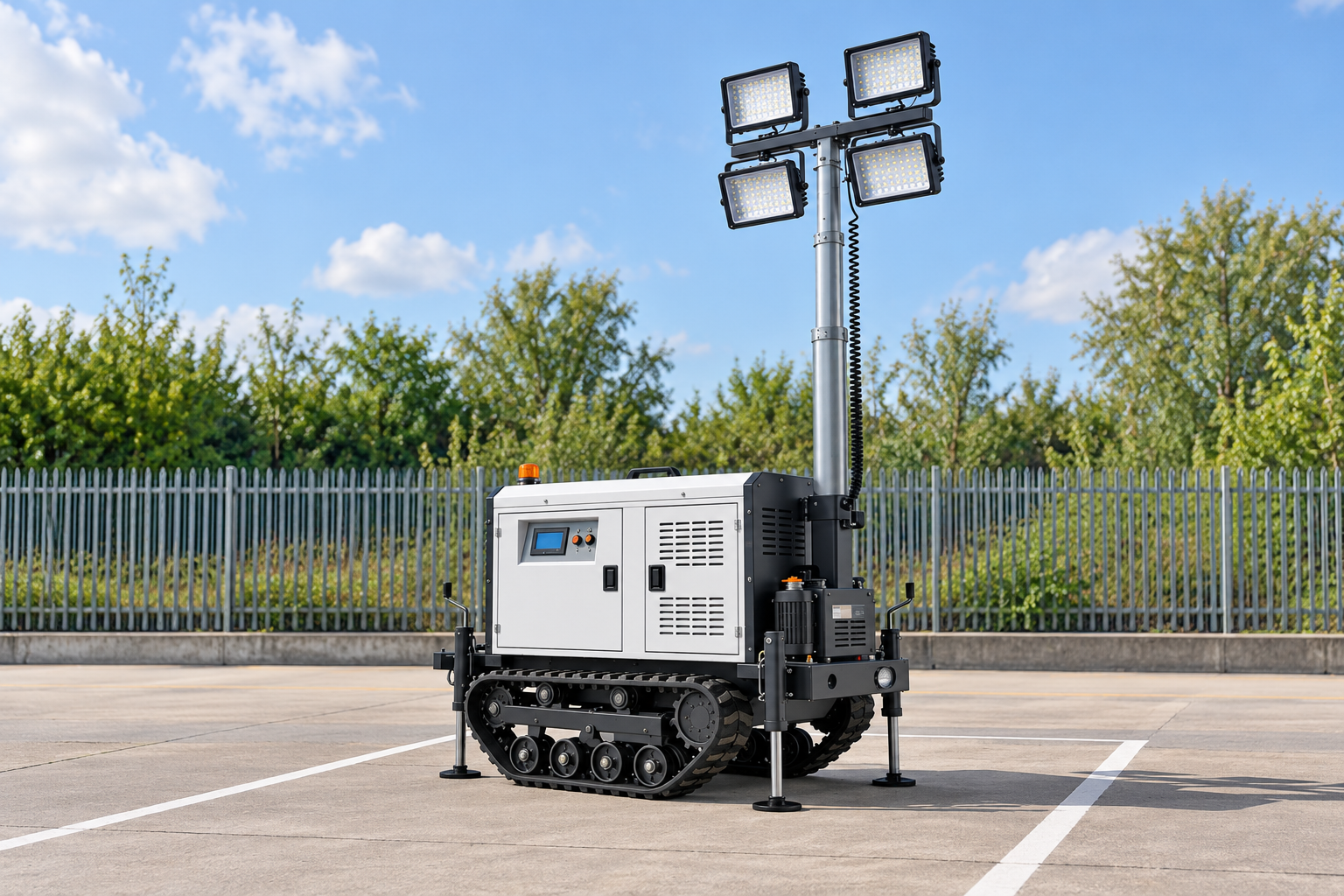
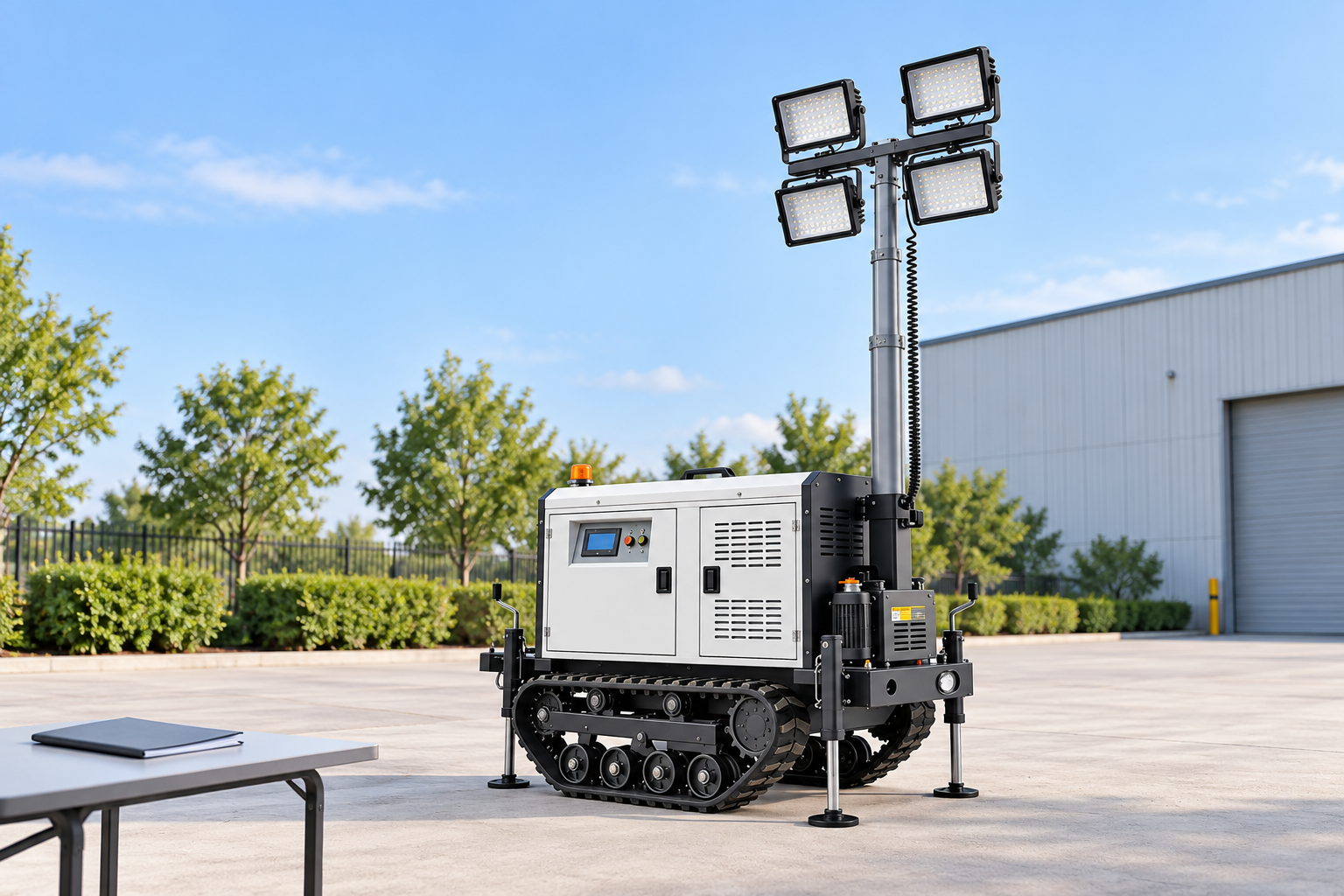
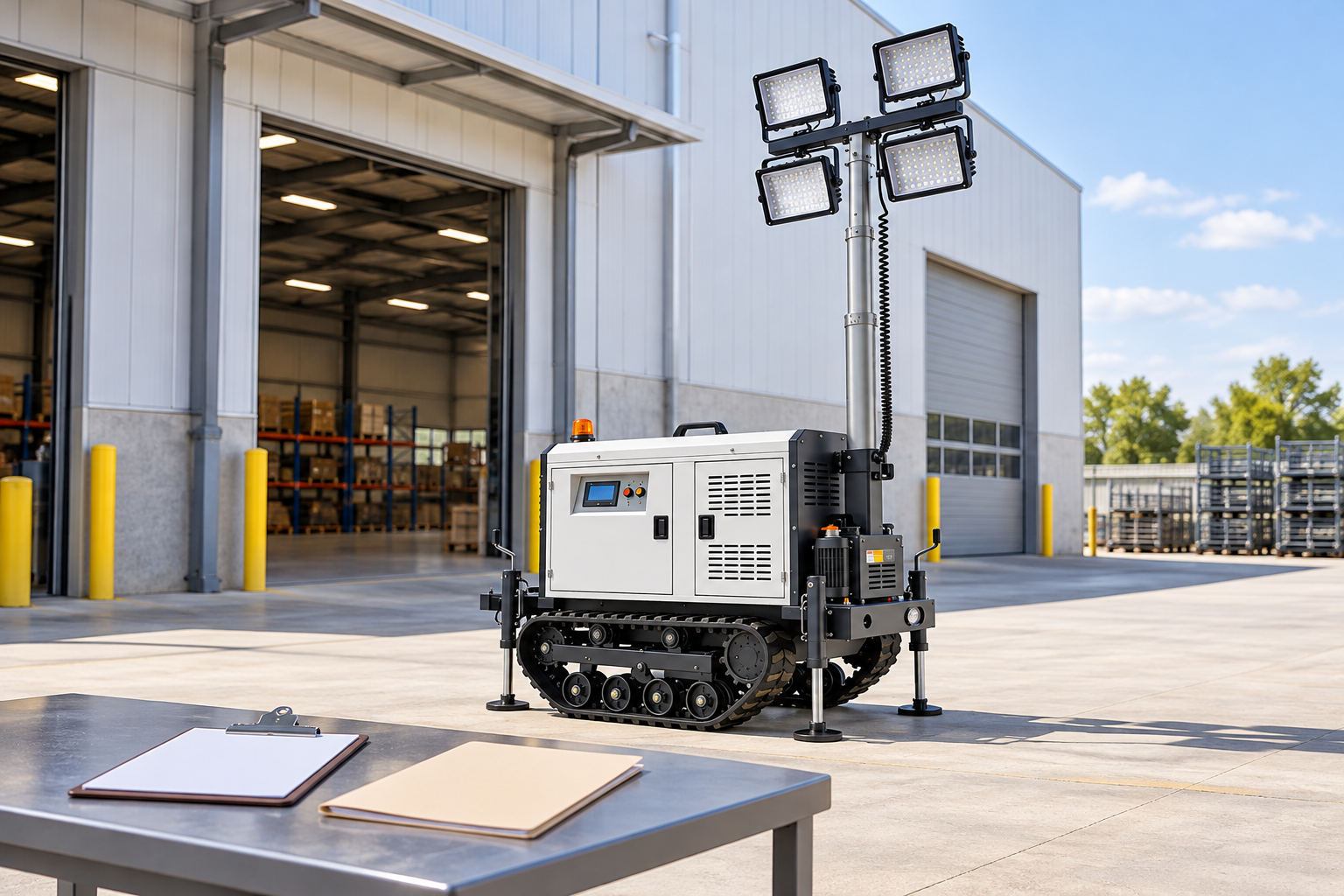
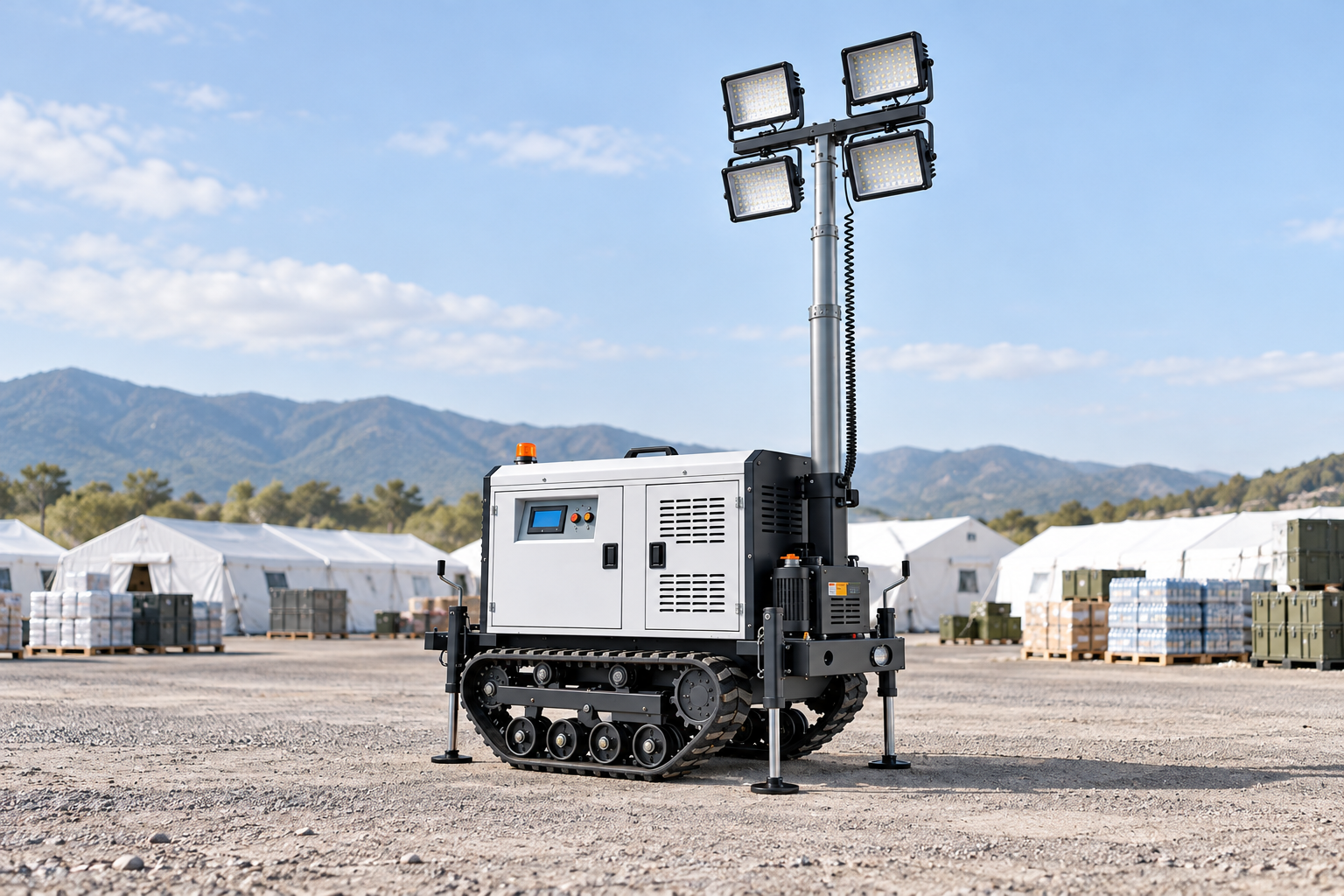
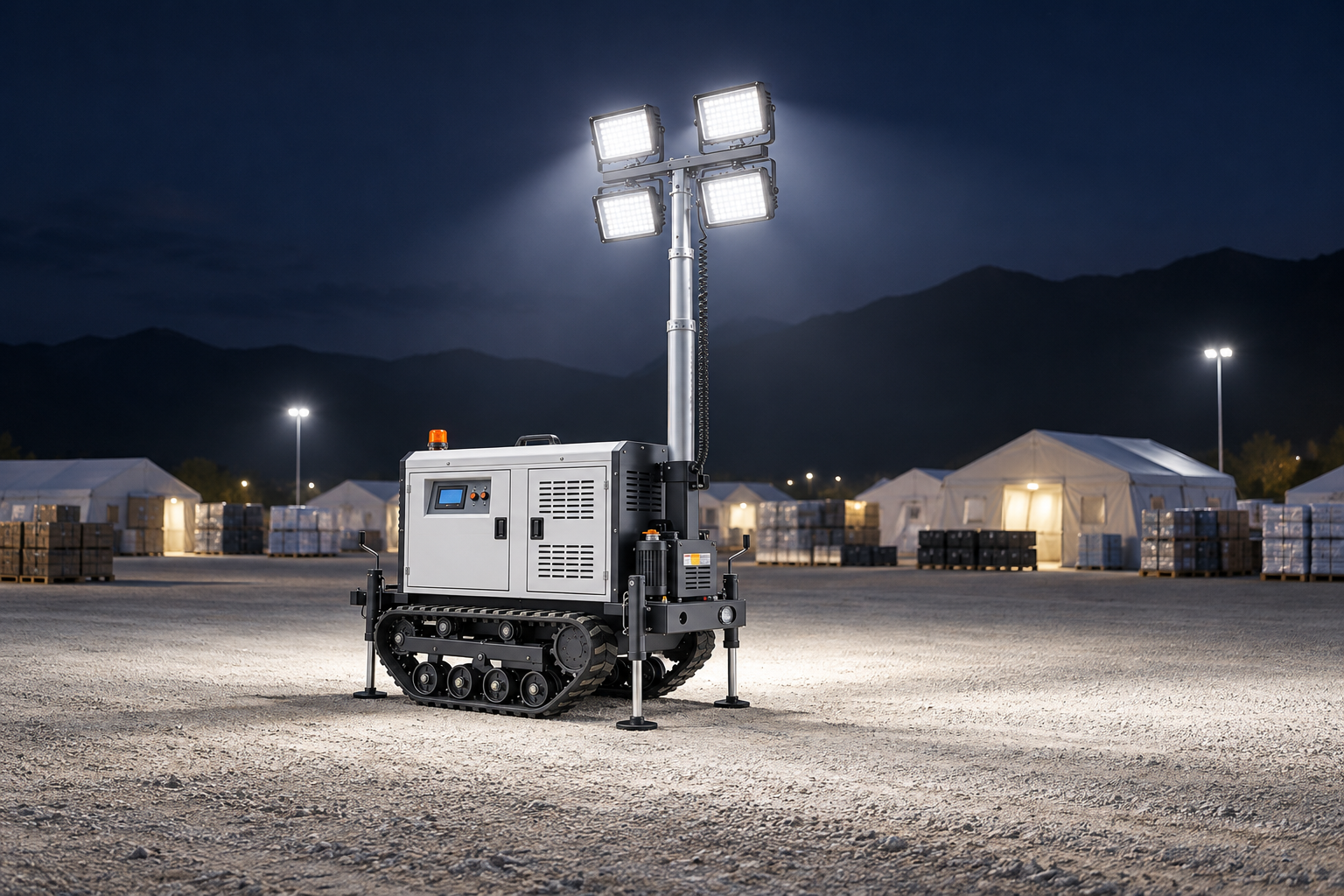
Do not place a running generator inside a tent, trailer, or building to simplify the connection. The competent team must assess the actual installation, nearby openings, and occupied areas. Integrated generating equipment also needs configuration-specific review. Where the proposed arrangement cannot be accepted, reassess the power plan. The tracked tower illustrations identify an equipment format; they do not certify an exhaust arrangement or show the delivered power specification.
Inspect the developed layout after dark
Complete the check when representative equipment and vehicles are present. Walk the accepted routes with the responsible team and observe preparation, reporting, and communications tasks. Where measurements are required, the team defines the instrument, measurement plane, positions, and acceptance criteria. A bright photograph of the yard cannot replace those observations or prove that conditions remain acceptable beyond the checked area.
Record defects precisely: a parked response vehicle obscures the check-in sign, a table edge remains in shadow, or a support occupies the service approach. Correct the individual issue and repeat the affected check. Include mast position, lamp aiming, power mode, and the surrounding layout in the record. That makes a later change identifiable without requiring the incoming shift to reconstruct what was accepted from memory.
Prepare a configuration-specific supplier brief
Describe the accepted site, outdoor support functions, expected duty, approach restrictions, and available service arrangements. Request drawings, operator instructions, relevant photometric information, maintenance access details, and documented operating limitations for the delivered configuration. State the evidence the site team will review at acceptance. Keep unverified certifications, rescue capability, and structural suitability out of the specification.
Use the Keyyou tracked mobile tower product page to discuss the visible equipment format, then confirm the offered unit directly. The product reference and article illustrations do not establish light output, runtime, wind limits, or seismic performance. The procurement decision should connect the site functions with documentation and an actual acceptance check. This supports a useful outdoor operation while keeping its boundaries explicit for suppliers and incoming crews.
Equipment planning and complementary guides
Discuss the exact offered configuration with the Keyyou tracked mobile tower product team. Use the mobile light tower guide for the wider equipment context, then consult glare-control planning and light tower maintenance for complementary decisions.
Generator safety education
This CDC video explains carbon-monoxide precautions for portable generators. It supports the power-planning discussion above and does not certify the illustrated tower, establish its power specification, or approve the proposed installation. Apply the exact equipment instructions and responsible site review to any integrated generating system.
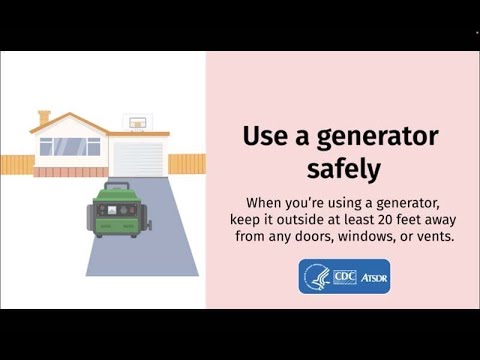
Watch CDC: Use a Generator Safely.
Frequently asked questions
Does an illuminated building become safe to enter?
No. Lighting does not establish structural safety or permission to enter a damaged building. The responsible incident organization controls access and accepted working boundaries. This guide concerns an outdoor support compound; any rescue, confined-space, or clinical task needs its own assessment and equipment.
Do tracks establish an acceptable tower footprint?
No. A tracked chassis identifies a mobility format, not the bearing capacity of a particular surface. The responsible site team must assess the approach and full support envelope using the exact equipment instructions. Reassess after changed ground conditions, access information, or compound layout.
What belongs in the next shift’s lighting record?
Record the accepted functions, boundaries, tower position, mast setting, aiming, power mode, service arrangements, and changes that require another check. Include any task requiring separate local lighting. The incoming shift should be able to identify a changed condition without treating the earlier arrangement as unlimited approval.
Reference sources and scope
These references support the specific organizational, task, access, or generator-safety context described above. They do not endorse Keyyou equipment or establish its output, runtime, certification, or site acceptance. The decision table is an original qualitative planning tool; exact criteria must come from the responsible team.