
Light Tower LED Replacement Compatibility: Drivers, Mounts and Evidence
Verify light tower LED replacement compatibility across the driver, supply, controls, mounting, environmental interfaces and required light distribution.
Light tower LED replacement compatibility depends on the complete lamp, driver, supply, control, mounting and environmental arrangement. Matching wattage or finding a housing that fits the bracket is not enough. Before ordering a replacement, identify the delivered lighting assembly and obtain a manufacturer-approved replacement or a properly assessed change. This guide helps fleet buyers collect the information needed for that decision. It does not provide wiring instructions, authorize a retrofit or assign compatibility to an unverified part. It focuses on replacement evidence for an existing LED assembly, rather than comparing LED conversion kits for older lighting technologies.
Identify the assembly before searching for a part
Record the tower asset identification and the lamp assembly's accessible identification. Obtain the relevant parts list, drawing revision and service instructions. Where different lamp options were supplied on otherwise similar towers, identify which option is actually installed. A photograph can help a service team find the right document, but it does not establish internal electrical characteristics or a complete bill of materials.
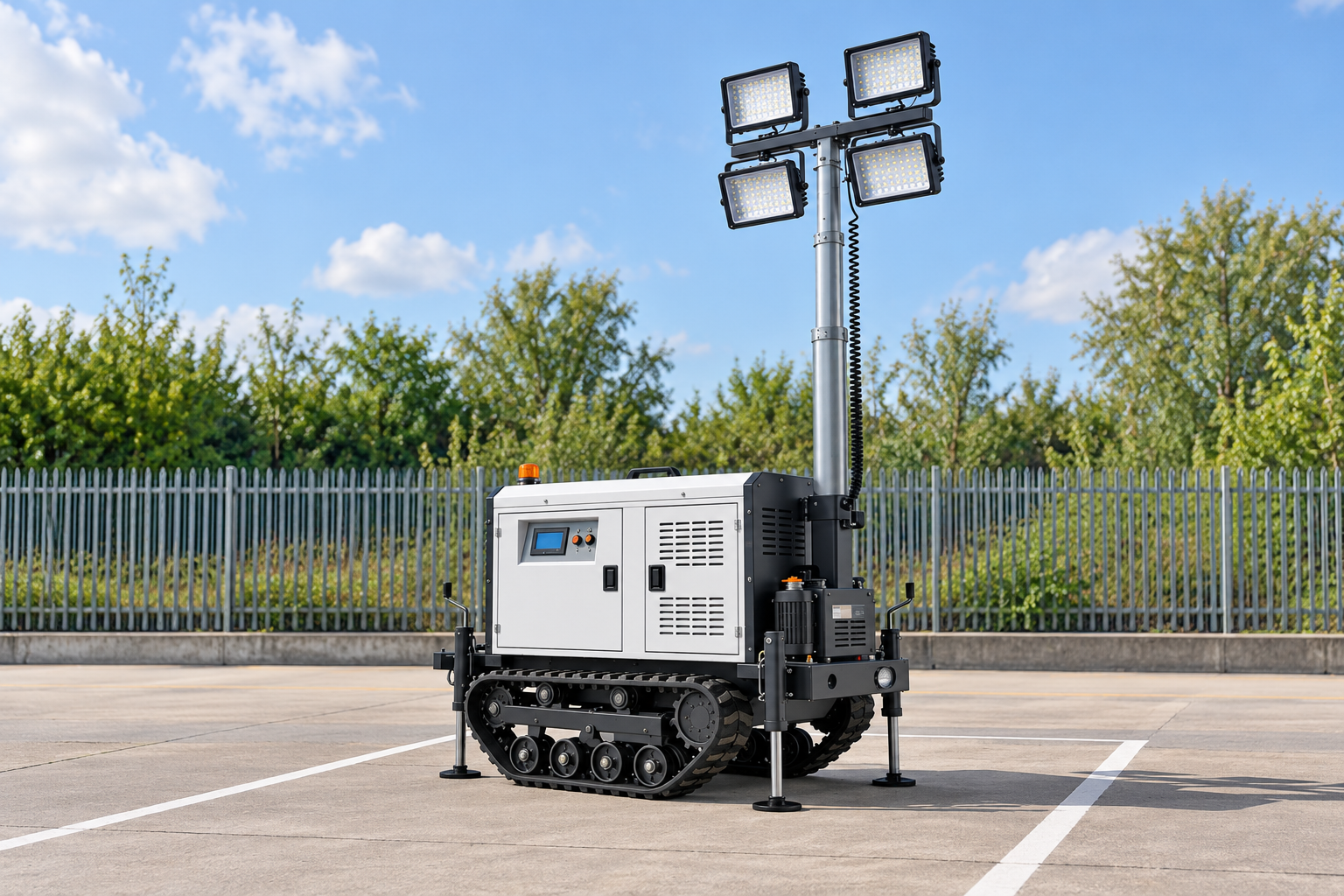
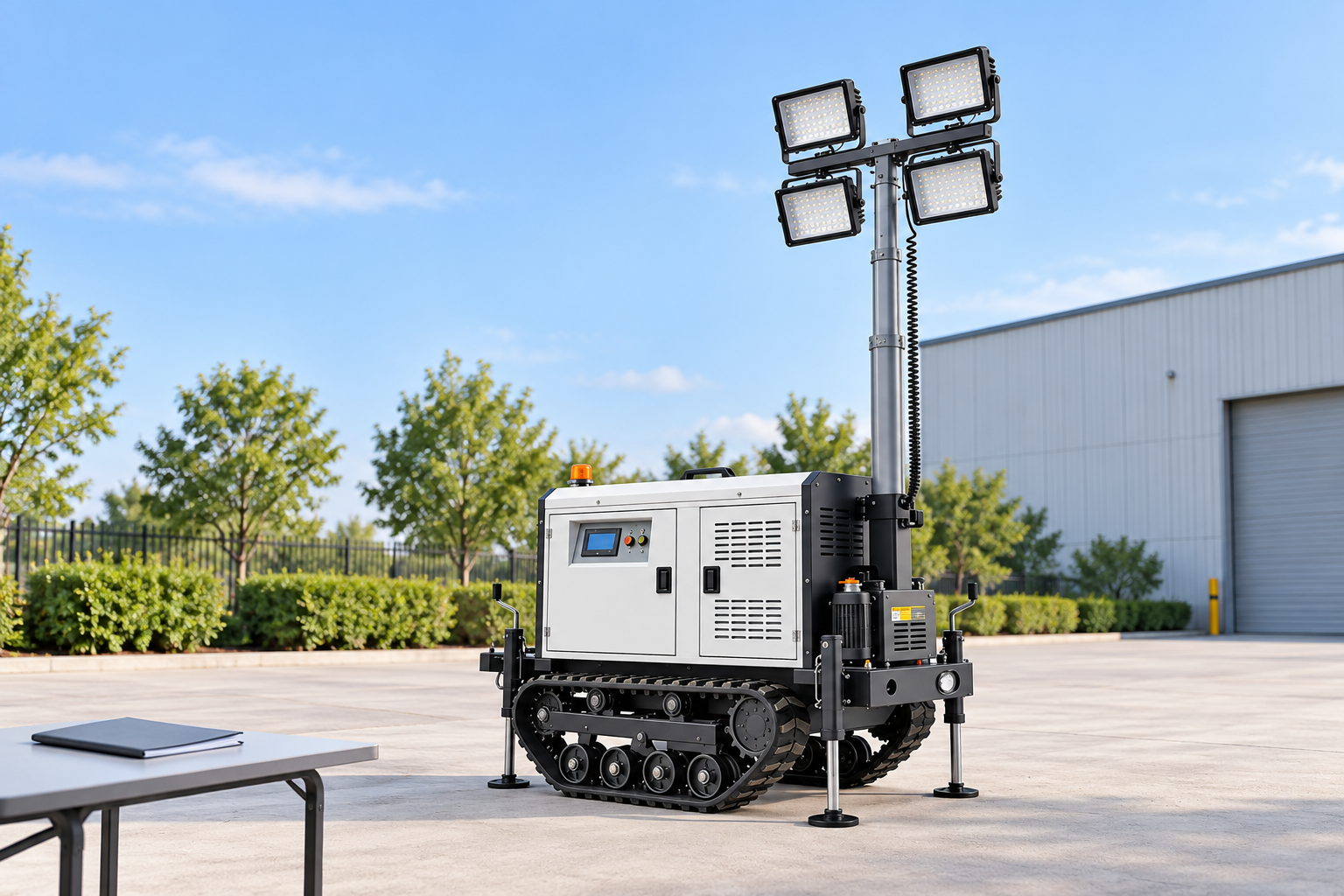
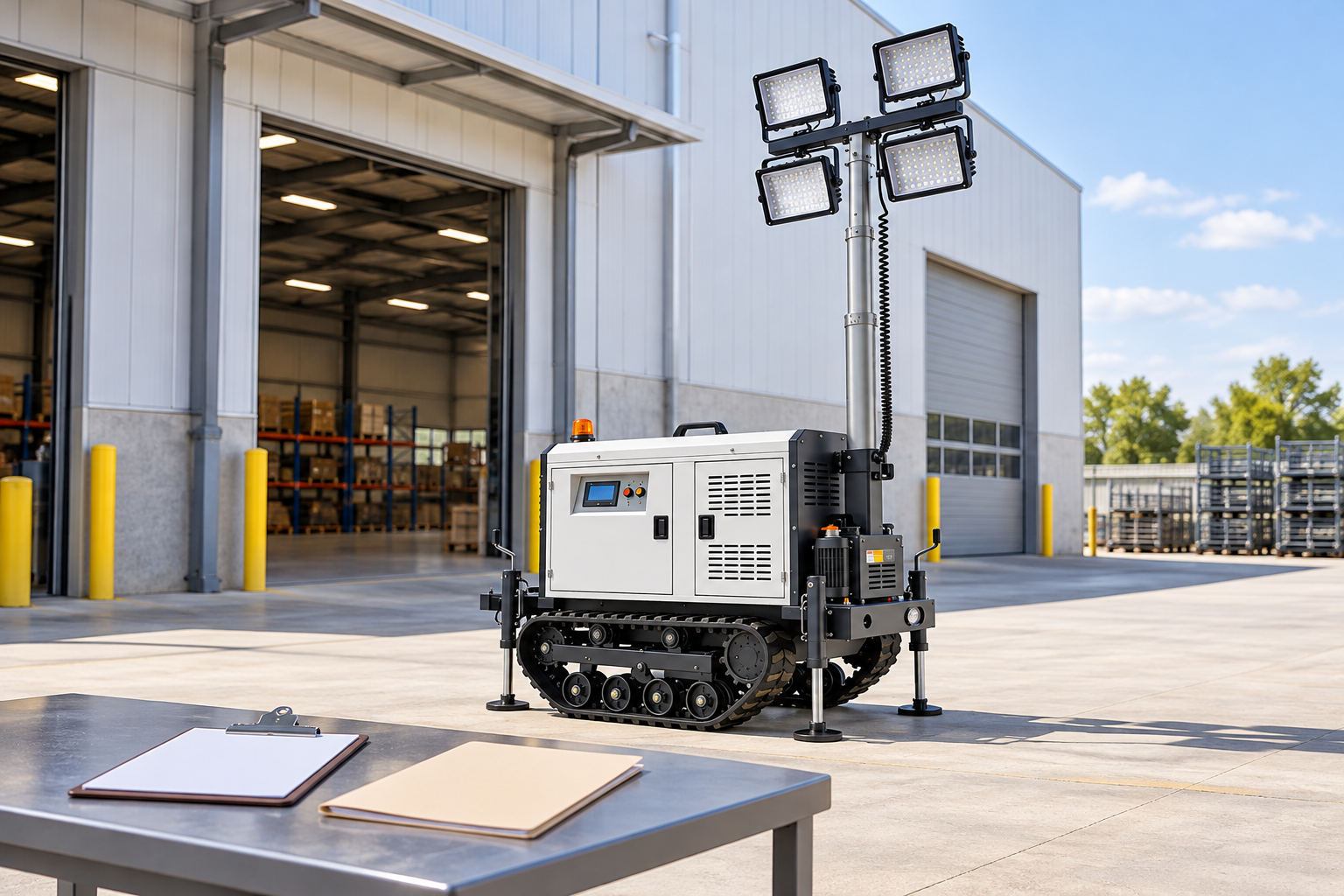
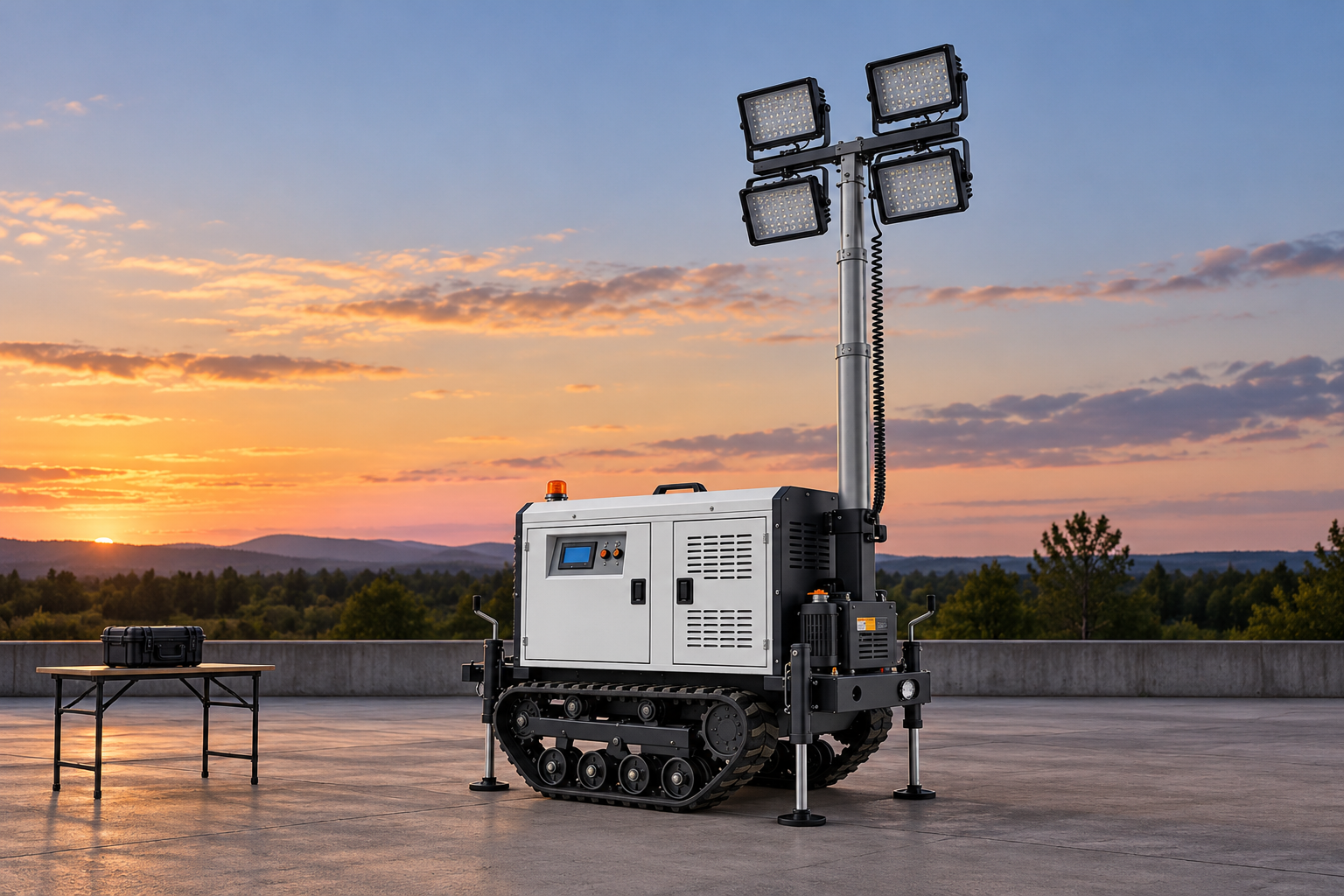
The illustrated Keyyou crawler tower has four rectangular floodlight heads in a two-by-two arrangement. These reference-based images identify the visible equipment family. They do not show a replacement lamp, driver specification, connector pinout or approved modification. For a real enquiry, provide the actual unit's identification and safely obtained lamp information rather than treating the illustration as an interchangeability chart.
Decide whether the task is replacement or redesign
A like-for-like replacement follows the approved part identification and service process for the installed assembly. A proposed substitute may change electrical load, controls, mass, wind area or light distribution even if the advertised power looks similar. Treat that change as an assessment task. Do not describe an alternative as a direct replacement until the responsible manufacturer or competent assessor has established the applicable basis.
Clarify what is being replaced: a complete luminaire, a driver, an LED module, a connector or a mechanical bracket. These are different work scopes. Replacing a complete approved assembly may preserve a documented system relationship that a component substitution would change. Ask which parts are serviceable and which must be replaced as an assembly. Do not assume every sealed lamp is intended for site repair.
Match the supply and driver arrangement
Determine whether the installed lamp receives an AC supply, a DC supply or an output from a separate driver. Obtain the actual input and output requirements from reliable documents. Constant-current and constant-voltage arrangements are not interchangeable descriptions. A connector that mates physically can still be electrically unsuitable. Do not test compatibility by energizing an unidentified component.
The US Department of Energy's LED driver and system reliability material explains the importance of selecting drivers for their intended application. Use that principle to request a documented compatibility statement for the specific assembly. This article deliberately gives no generic voltage, current or pin assignment. Those values must come from the delivered equipment information and the approved replacement part's documentation.
Include controls and start behavior
Record any dimming interface, control signal and operating modes used by the supplied tower. A replacement may illuminate at one setting while failing to respond correctly to dimming, timing or source transitions. Ask the supplier which functions must be checked after the authorized work. The verification should reflect the actual installed control arrangement rather than a bench test that exercises only full output.
Also consider the supply source and documented load behavior. The electrical system may include a generator, storage or another approved arrangement. A replacement that changes input characteristics may require assessment beyond a simple comparison of nominal watts. The responsible person should define the necessary evidence and checks. Do not infer generator compatibility from a lamp seller's general statement that a product is suitable for outdoor use.
Check the mechanical interface and mast implications
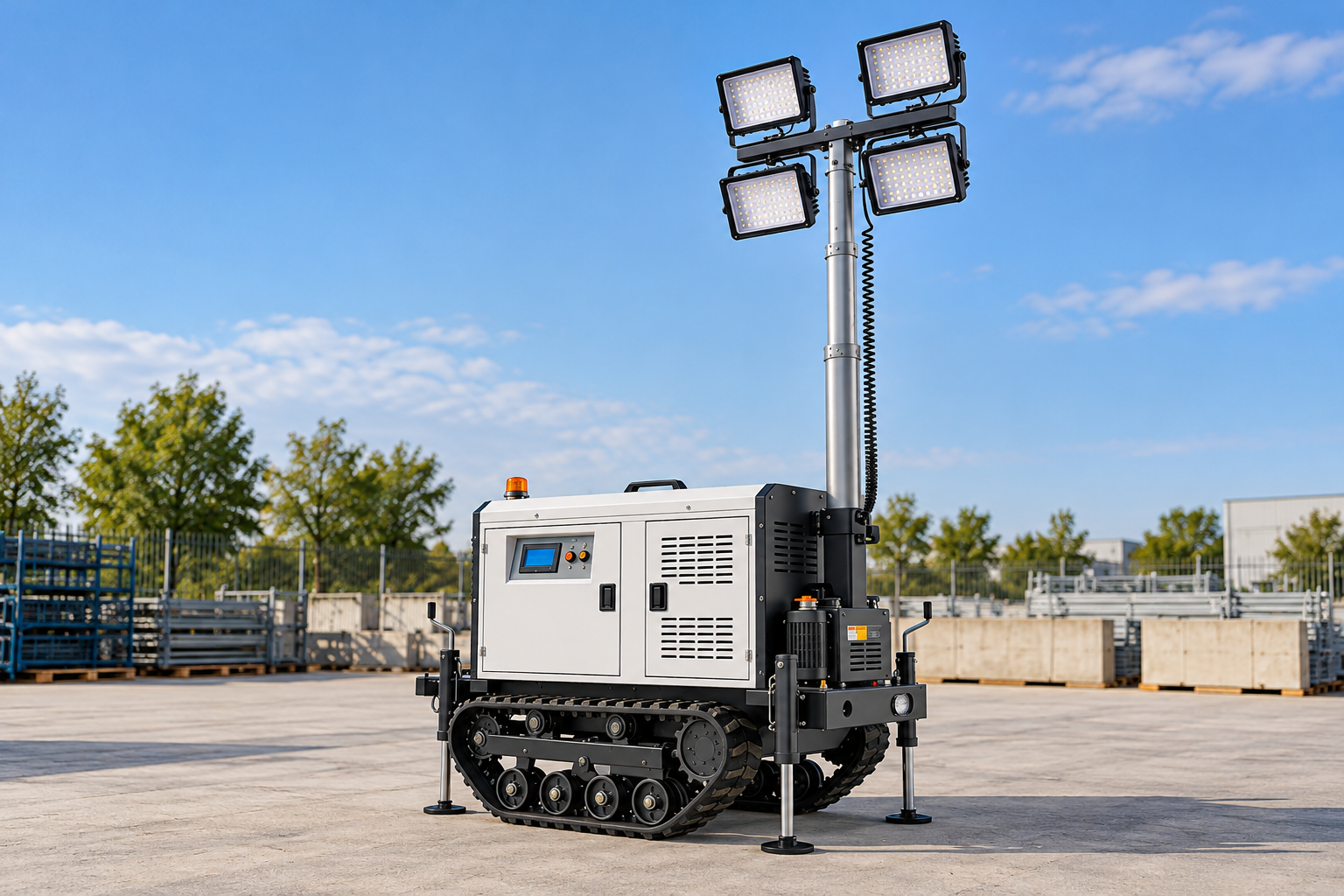
Compare the approved bracket, fasteners, adjustment range, mass and relevant external dimensions. A physically larger housing can affect clearances, aiming or transport arrangements. A different mass or projected area may affect loads on the mast or mounting assembly. Ask the tower manufacturer to assess any change that falls outside the approved parts arrangement. Do not drill new holes or alter a bracket merely to make a substitute fit.
The four-head configuration should remain identifiable in the asset file after service. Record changes to lamp orientation or mounting as required by the approved instructions. If a proposed assembly cannot achieve the planned aiming without interference, return to the selection decision. Mechanical fit must support the required operating and transport states, not only the position used for an attractive product photograph.
Verify environmental suitability as an assembly
Outdoor exposure involves more than the lamp enclosure alone. Cable entries, connectors, seals, mounting interfaces and service access can influence the completed arrangement. Obtain the relevant environmental and temperature information for the replacement assembly and check the conditions under which it applies. Do not transfer an enclosure rating from one component to the complete tower without supporting evidence.
DOE research on multi-source LED products describes how packages, optics, electronics and controls contribute to long-term performance. The practical procurement lesson is to assess the system relationship rather than treating an LED chip rating as the life of the complete light. This source does not certify a Keyyou configuration or establish a replacement interval. Keep the supplier's actual instructions and verified component information as the decision basis.
Use a compatibility evidence table
| Compatibility item | Information to obtain | Why wattage alone is insufficient | Release condition |
|---|---|---|---|
| Installed assembly | Tower and lamp identification with document revision | Similar cabinets can contain different lamp options | Correct original configuration identified |
| Electrical interface | Approved supply, driver and connector documentation | Equal power can use different electrical arrangements | Documented part or assessed substitute approved |
| Control functions | Dimming and operating-mode requirements | A lamp may light without responding correctly | Defined functions verified under an approved plan |
| Mechanical arrangement | Bracket, mass, dimensions and permitted aiming | A fitting may fit but change loads or clearances | Manufacturer-approved interface retained or assessed |
| Optical service | Relevant photometric evidence and layout assumptions | Equal watts do not establish equal distribution | Required lighting service checked after work |
| Environment and records | Applicable enclosure and temperature information | One component rating does not cover all interfaces | Assembly evidence and asset record updated |
This is an original enquiry and review table. The DOE sources explain driver selection and system-level reliability; the equipment manufacturer's documentation decides the actual approved part and service method. Values and certification claims must be supplied for the specific assembly rather than copied from a similar-looking lamp.
Preserve the required light distribution
A replacement with a different beam pattern may brighten one area while leaving the work task or access route inadequately illuminated. Obtain appropriate photometric information for the proposed assembly where needed. Check the lamp orientation, mounting height and assessment area used in any comparison. Total light output and electrical power are useful inputs, but neither describes the complete distribution at the site.
After authorized service, use the agreed lighting verification plan for the actual task. The existing guides on IES files and lux-meter testing explain those distinct activities. This compatibility article does not invent target illumination values or claim that a new lamp arrangement passes a particular project. The project criteria, measurement method and result should be recorded together so that the decision can be reviewed.
Plan safe service before the part arrives
HSE guidance explains the need for competent maintenance, adequate information and control of unexpected starting. Apply the equipment instructions and site procedures to the actual task. Work on the electrical system or lamp assembly may require suitable isolation, access and verification arrangements. Do not use this article as a substitute for those instructions or as a reason to perform work beyond the team's competence.
A raised mast or an apparently stopped engine does not establish safe access or electrical isolation. The service plan should identify the approved machine state, responsible person and checks before work begins. If the instructions are missing or the unit has been modified without records, stop and resolve those uncertainties. Ordering a part quickly does not justify starting an undefined repair.
Verify the result and retain traceability
Record the approved replacement identification, work authorization, person performing the task and the checks completed. Keep the removed part associated with the case where investigation or warranty assessment requires it. Update the asset file if the approved configuration changes. A later technician should be able to identify what was fitted and why, without reconstructing the decision from unrelated messages.
Verification should cover the functions and lighting service relevant to the work scope, as specified in the approved instructions. A brief visual observation that all lamps illuminate may be only one check among several. Record any remaining restriction and obtain the required release. The result is a documented return to an approved configuration, not an unsupported claim that every lamp with the same power rating is interchangeable.
Send a focused replacement enquiry
Provide the actual tower and lamp identification, a safe overview photograph, the relevant parts-list reference and a clear description of the replacement need. State whether the objective is restoring the original assembly or proposing a different specification. Include site conditions and required control functions that could affect selection. Mark missing information so the supplier can request it before recommending a part.
Ask for the proposed part number, compatibility basis, service instructions, any configuration changes and the verification required after installation. Keep price and lead time alongside these technical answers rather than allowing them to replace the evidence. An approved, traceable choice supports future maintenance and helps the buyer avoid a cycle of visually similar but undocumented substitutions.
Equipment and complementary planning
Identify the illustrated equipment on the Keyyou crawler lighting tower product page. Read the Light Tower Maintenance and Troubleshooting, then consult How to Read an IES File for a Mobile Light Tower and Lux Meter Testing for Light Tower Commissioning.
Further learning: How Digital Drivers are Changing LED Lighting Webinar
This DesignLights Consortium educational webinar explains LED driver developments and their role in lighting systems. It supports checking driver and control interfaces before selecting a substitute. It is not a Keyyou wiring guide or an approval of a replacement component.

Watch How Digital Drivers are Changing LED Lighting Webinar.
Frequently asked questions
Is matching wattage enough to select a replacement?
No. Verify the approved electrical, control, mechanical, optical and environmental relationships.
Does a matching connector prove compatibility?
No. Physical fit does not establish the required voltage, current, interface or protection arrangement.
Does this guide authorize an LED retrofit?
No. Obtain the manufacturer-approved replacement or an appropriately assessed and authorized change.
Sources and scope
DOE material supports driver application and system-level reliability; HSE supports safe maintenance planning. None establishes compatibility with an individual Keyyou part. Obtain the actual manufacturer-approved component and service instructions.