
Light Tower Lifting Plan: Load Evidence, Roles and Landing Controls
Build a light tower lifting plan from verified load data, approved lifting instructions, site conditions and a competent contractor’s reviewed method.
A light tower lifting plan must identify the exact machine, its verified mass and centre of gravity, the manufacturer's approved lifting arrangement, the selected lifting equipment and the complete travel and landing area. A competent lifting planner must resolve those inputs before the tower leaves the ground. Do not assume that a mast, support leg, carrying handle or convenient chassis opening is a lifting point. A product photograph cannot establish lifting capacity or approve a sling arrangement.
This guide concerns lifting the complete tower during loading, unloading or site transfer. Raising the tower's own lighting mast is a different operation. The planning record described here is an information package for the responsible lifting specialist; it does not replace an engineered lift plan, the manufacturer's instructions or applicable local requirements.
Start with the exact load rather than the crane
Identify the machine by serial number, model and delivered configuration. Record accessories that travel with it, retained fluids and any separate shipping frame. Ask the manufacturer for the mass in the intended lifting configuration and the relevant centre-of-gravity information. A catalogue figure from another variant is insufficient when the actual machine has different equipment or an undocumented modification.
Keep the load description separate from the lifting appliance selection. Naming a large crane does not resolve uncertainty about the tower's attachment points or balance. Give the lifting contractor the machine evidence first, together with the required pick-up and landing locations. If essential information is missing, record a hold and obtain clarification before booking an execution time.
Obtain an approved lifting drawing
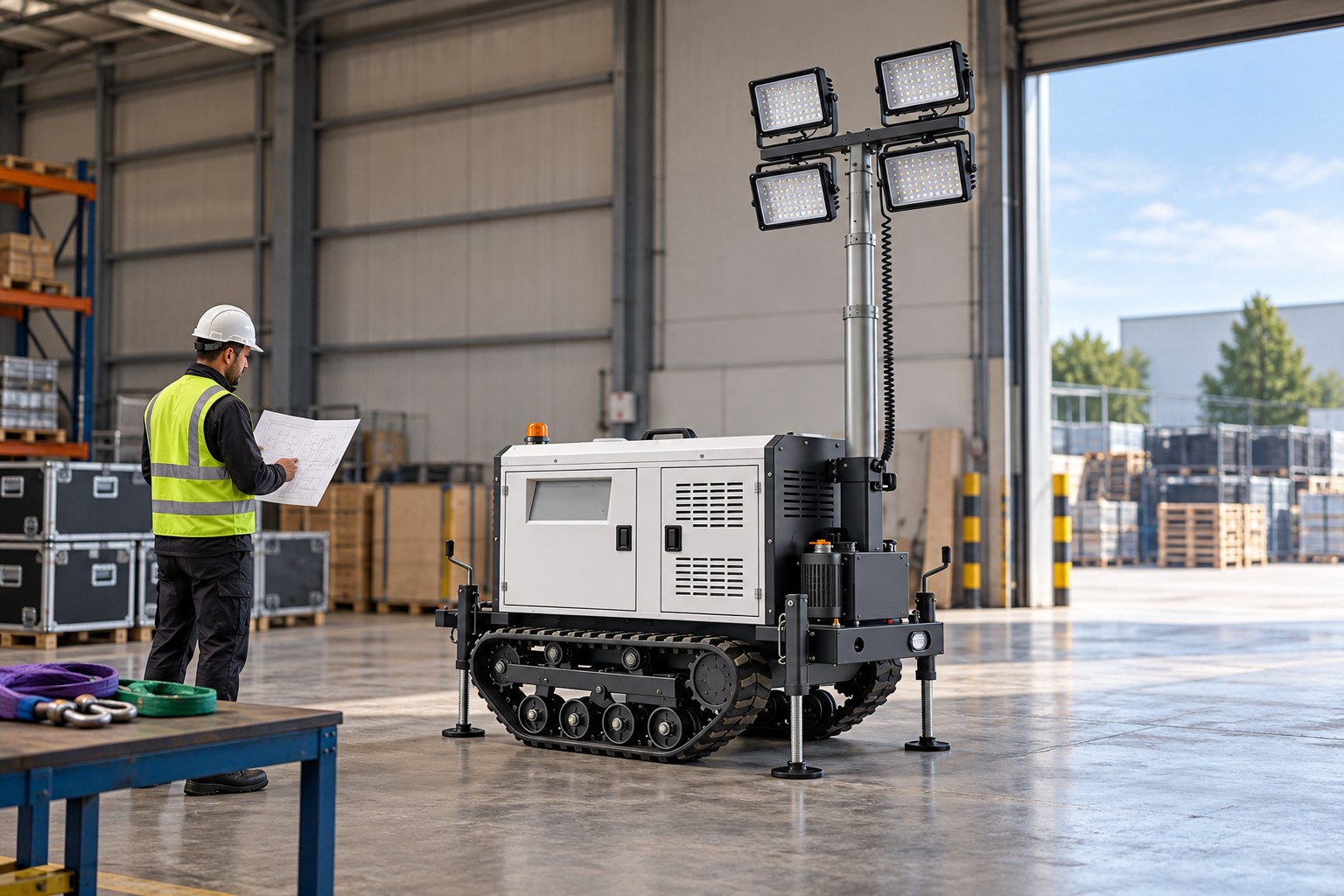
Request a drawing or instruction that identifies the permitted lifting points, their intended use and the required configuration of the complete machine. It should resolve which parts must be secured, lowered or removed before lifting. Ask whether a dedicated frame or spreader is required. Never infer these details from an eye-shaped feature or from a photograph of a similar tower.
Lifting points and transport restraint points may differ. A point approved for restraining the tower on a truck is not automatically approved to support the suspended machine. Likewise, the mast mechanism raises a lamp assembly and should not be treated as a whole-machine lifting system. If the documentation uses ambiguous terms, return the drawing to the manufacturer for a written explanation.
Keep the revision and its applicability with the plan. An old drawing can appear persuasive while covering a different chassis. Compare serial applicability, attachments and visible configuration before it enters the contractor's planning package. An unresolved difference is a reason to stop preparation, rather than an invitation to select the more convenient instruction.
Give the lifting specialist usable site information
Provide a sketch showing the collection position, intended equipment location, load path and receiving position. Include buildings, traffic routes, overhead services, excavations and access restrictions. The lifting planner determines which dimensions and surveys are necessary. A satellite image or verbal statement that there is plenty of space should not be the sole site input.
Distinguish the tower's support requirements after landing from the ground support needed by the lifting appliance. A crane, loading platform and crawler tower impose different actions on the site. The responsible specialists must assess the relevant bearing and stability conditions. An acceptable tower parking position does not establish that a crane can stand alongside it or reach it safely.
Consider both the arrival and departure routes of the lifting equipment. A plan can fail before the lift when a vehicle cannot enter, position or leave the site. Identify temporary storage, delivery timing and who controls access. Where other contractors occupy the same area, agree a coordinated work window and ensure changes reach the lifting supervisor.
Separate engineering calculations from procurement assumptions
The lifting specialist selects suitable lifting equipment and accessories using verified load information, the planned geometry and the applicable equipment data. Sling angles, unequal loading, reach and configuration can affect suitability. Do not calculate a complete rigging arrangement by dividing the tower mass by a guessed number of sling legs.
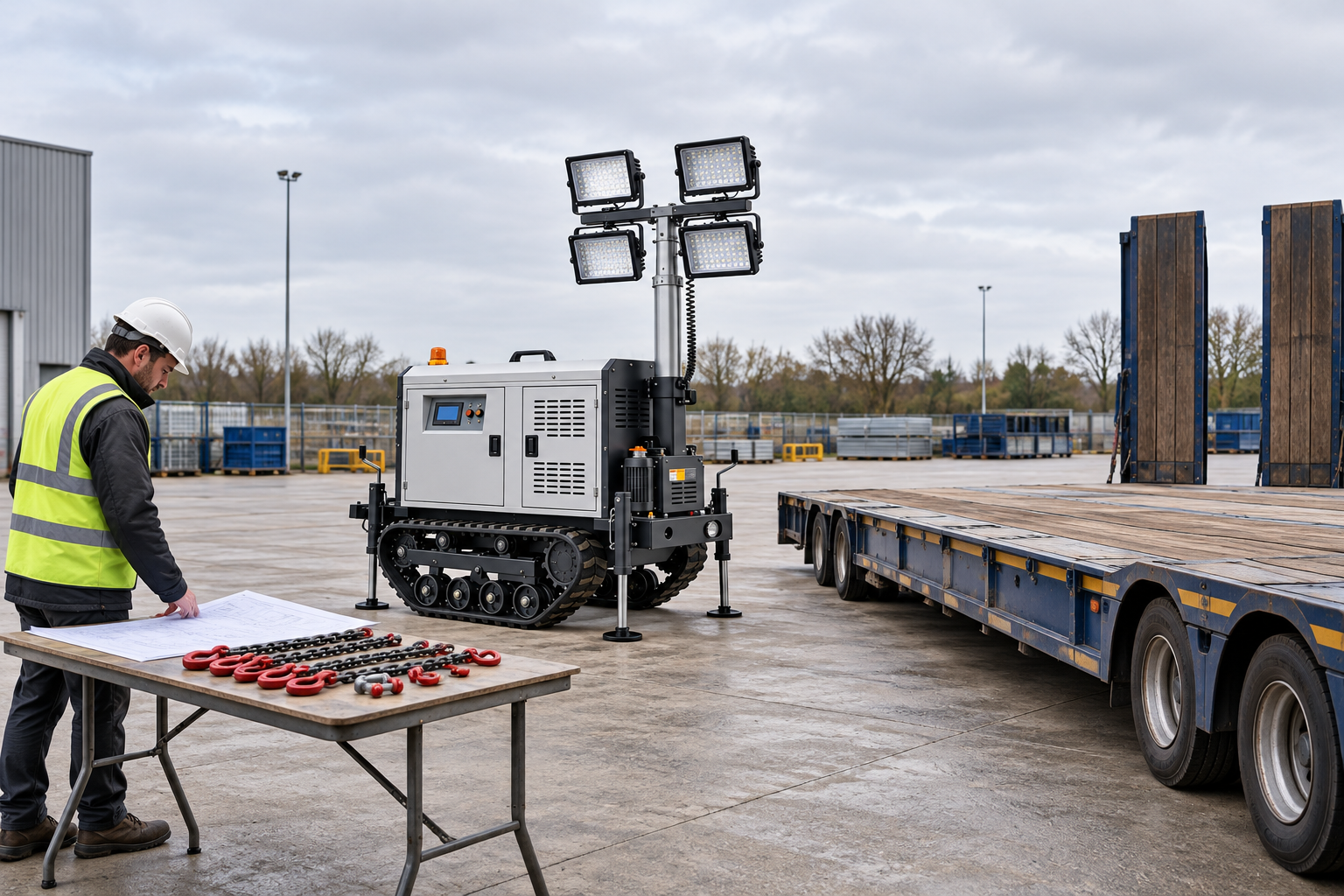
Check that the proposed accessories are identifiable and that the required inspection or examination records are available. A certificate attached to an email must correspond to the actual item presented on site. Where the planner requires additional protection or a specific lifting frame, substitutions require review. Similar appearance or a higher headline rating does not establish equivalent suitability.
The table is a document-control aid for the planning discussion. It supplies no universal lifting limits. Its purpose is to expose missing evidence before the contractor arrives. HSE's guidance on planning lifting operations describes the need to consider the load, location, equipment and foreseeable risks; apply the rules and manufacturer instructions relevant to the actual destination.
| Condition or task | Decision or assessment | دليل للإبقاء |
|---|---|---|
| Unverified machine mass | Hold selection of lifting arrangement | Obtain configured mass and centre-of-gravity information |
| Ambiguous attachment point | Do not attach lifting accessories | Manufacturer instruction matching the actual chassis |
| Changed lifting position | Return the arrangement for review | Revised load path and lifting equipment assessment |
| Unavailable landing space | Keep the lift on hold | Supervisor confirms controlled receiving area |
Define people, communication and stop authority
Name the person responsible for planning, the lifting supervisor and the people assigned to operate the equipment, attach the load and communicate movement. Determine competence for the actual roles and local requirements. A tower operator's familiarization does not itself qualify that person to rig a suspended load or direct a crane.
Agree a communication method suitable for visibility, distance, site noise and the people involved. Identify who gives movement instructions and how a stop is communicated. Where radios are used, check their availability and the agreed protocol before work. A shared language or a translated briefing must allow the team to understand the sequence and limitations, rather than merely acknowledge attendance.
Include a response to interrupted visibility, loss of communication, an unexpected obstacle or changed weather. The plan should give the supervisor a clear route to pause and obtain reassessment. Schedule pressure is not evidence that conditions remain acceptable. Record who can approve a revised arrangement and how the revised instruction reaches everyone involved.
Control the load path and landing area
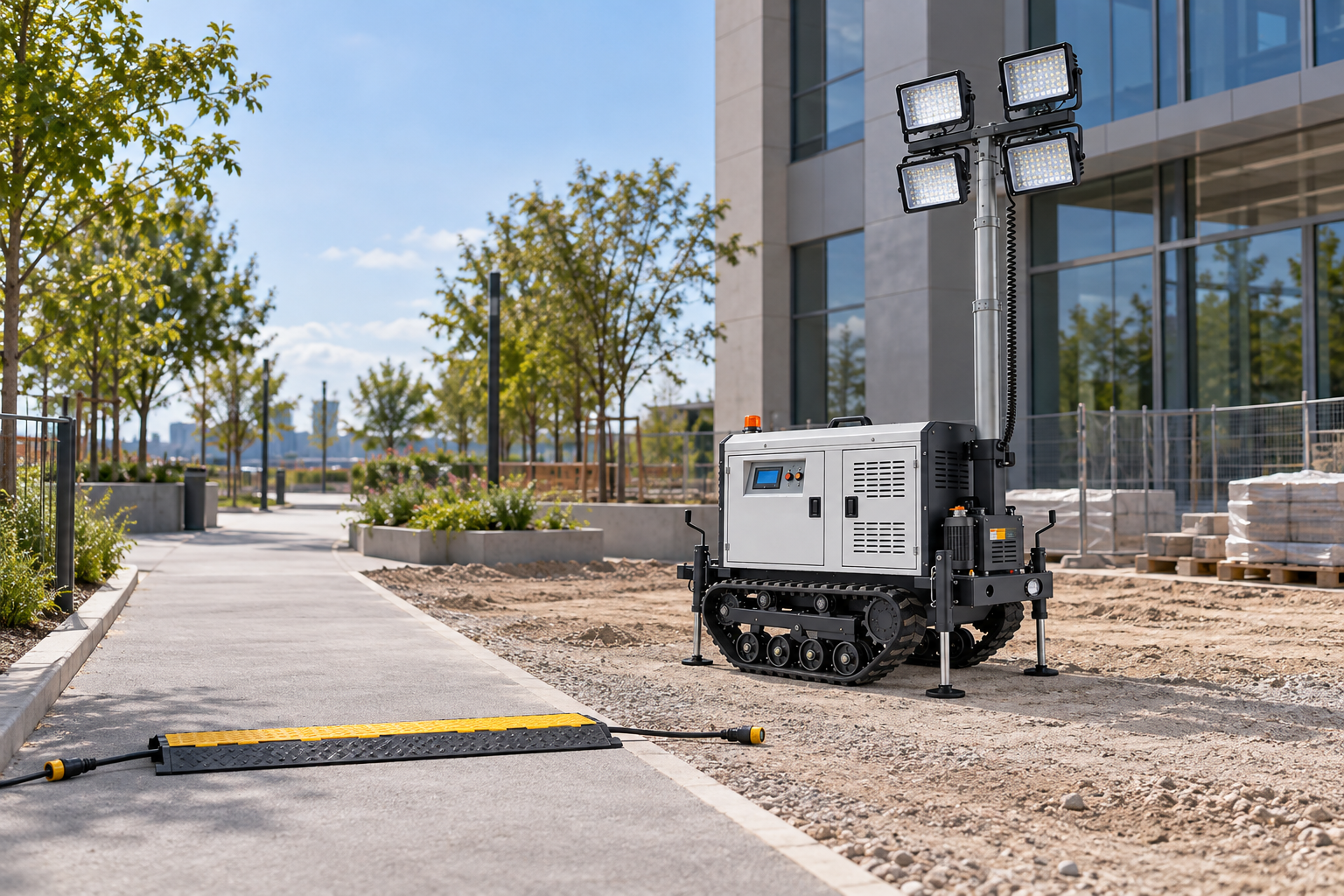
Plan to keep people clear of the suspended load and moving equipment. Establish the exclusion arrangements before attachment begins and maintain them through landing and release. Identify nearby pedestrian access and vehicle movements, including those belonging to other employers. Cones alone do not guarantee effective control where a public route or busy loading bay remains open.
The receiving position needs attention before the tower is airborne. Confirm the approved machine configuration after landing, clearance for removing lifting accessories and the method for securing the tower against unintended movement. Do not send a person into a trapping space to solve an avoidable access problem. The lifting planner should resolve how the final position will be achieved and checked.
Overhead electrical services deserve a specific review of the lifting equipment and the complete load path. Do not use the light tower's mast height as the only envelope. The crane or other lifting appliance can extend further and move differently. Obtain the competent site and utility input needed for the operation; no universal separation distance is supplied here.

Hold a briefing against the actual configuration
Before execution, compare the plan with the machine, lifting equipment, site and people present. Ask the team to identify changes since planning: a different accessory, moved barrier, altered crane position or unavailable landing space. Where a change affects the arrangement, return it to the responsible planner. Crossing out a drawing in the field without approval is not a controlled revision.
The supervisor should verify that required documents and checks are complete, and that the team understands the sequence. This article does not prescribe an improvised test lift or allow trial-and-error attachment selection. Any staged checks, movements or confirmation steps must belong to the approved method and be performed by the competent lifting team.
Prepare the tower only as its instructions require. Record the condition of accessible features without dismantling guards or modifying the machine to make the lift easier. If damage, an unidentified attachment or a configuration mismatch is discovered, preserve the evidence and hold the lift. Getting the contractor on site does not remove the need to resolve a machine defect.
Record landing, handover and unresolved defects
After the approved lift is complete, record the receiving location and any observed damage or unusual event. The person accepting the tower should confirm that it remains on hold until the required post-handling checks are complete. Removing slings and signing a delivery note should not be confused with authorizing lighting operation.
Keep a concise evidence package: machine identification, applicable lifting instructions, approved plan revision, accessory identification, required examination records, briefing record and completion notes. Give each unresolved item an owner and a release condition. If the next movement uses a different site or method, have the responsible planner determine what must be reviewed rather than copying the previous approval.
For procurement, ask who provides the lifting documentation and who is responsible for planning each interface between factory, carrier and receiving site. Confirm that the supplied machine can be handled using a documented method available to the intended contractors. The linked product image identifies the reference equipment; it provides no proof of certified lifting points or a particular lifting capacity.
Equipment and related planning
Check the delivered configuration against the Keyyou tracked lifting light tower product reference. Continue with the دليل أبراج الإضاءة القابلة للقطر والمقطورة, plus transport load securement, ground bearing evidence.
Neutral safety education
WorkSafeBC illustrates a crane truck contacting an overhead power line. It supports the lift-plan review of the lifting appliance and load path near electrical services; it does not approve rigging or provide tower-specific lifting instructions.

Watch the educational video on YouTube.
الأسئلة الشائعة
Is raising the light tower mast the same as lifting the machine?
No. Raising the lamp assembly uses the mast system. Lifting the whole machine requires its own approved handling method and competent planning.
Can a transport tie-down point be used for lifting?
Only when the manufacturer explicitly approves that point for the proposed lifting use. Restraint approval alone does not establish lifting suitability.
Can this guide determine sling capacity?
No. A competent lifting specialist must use the verified load, geometry, approved attachment arrangement and applicable equipment data.
Does a larger crane solve missing lifting information?
No. Crane capacity does not establish the tower’s approved attachment points, actual balance or safe handling configuration.
المصادر والنطاق
The following HSE sources explain relevant principles in Great Britain. Apply the manufacturer instructions and the rules for the destination; these references do not certify the pictured tower or supply a machine-specific procedure.