
Light Tower Operating Manual Translation: Meaning, Review and Revision Control
Control light tower operating manual translation with verified source revisions, technical terminology, user comprehension checks and managed updates.
Light tower operating manual translation should preserve the meaning, warnings and sequence of the approved instructions for the exact delivered machine. Start with a controlled source document, use a technically competent translator, check the translation against the equipment and have representative users demonstrate understanding. A translated brochure or an automatically translated control list is not a substitute for the applicable operating instructions. Keep the source revision, translated revision, reviewer and distribution record together so the next update reaches everyone who uses the tower.
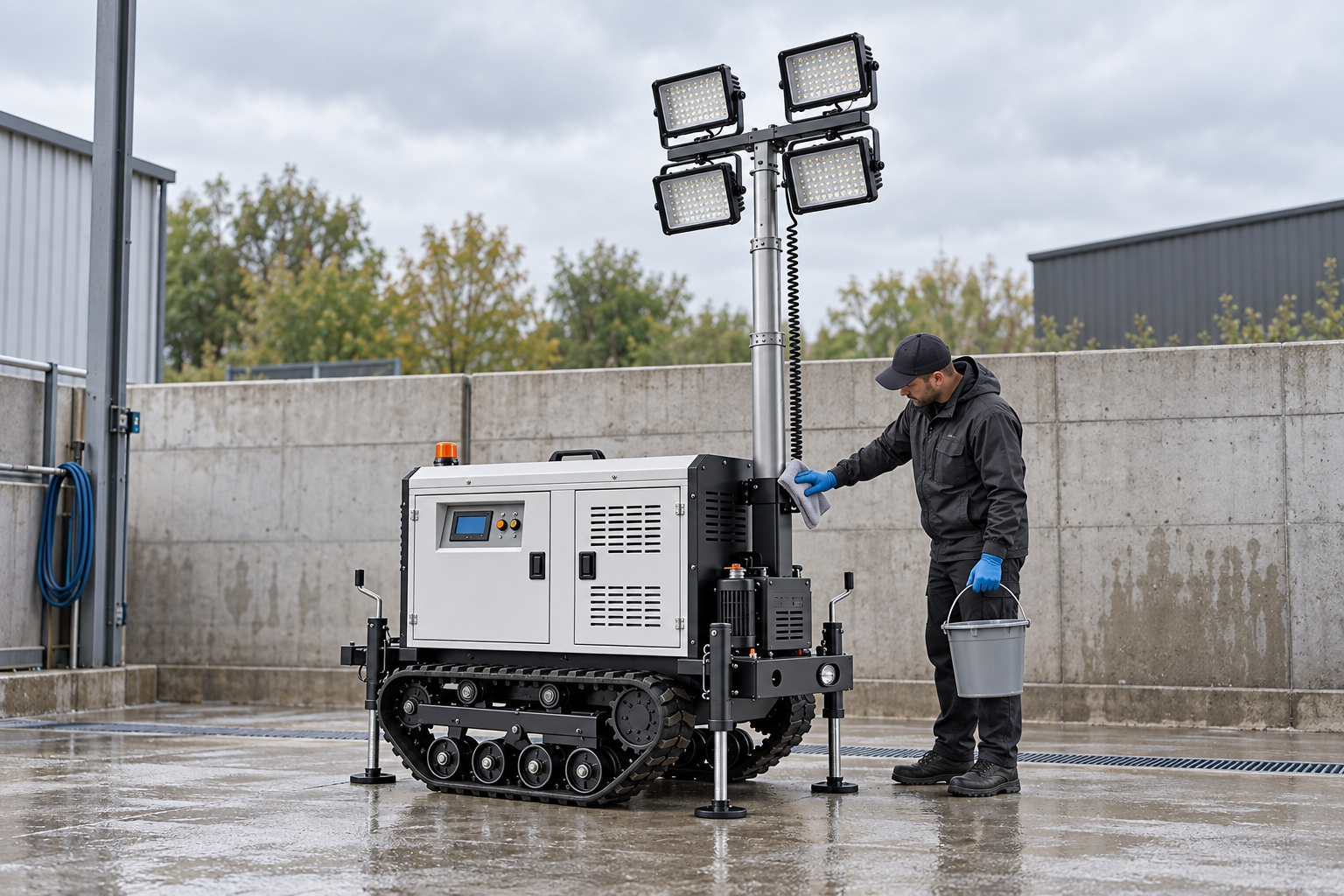
This guide concerns document control and language comprehension for buyers, rental fleets and site supervisors. It does not provide a translated Keyyou manual, authorize changes to instructions or establish that a particular language satisfies every destination's legal requirements. The pictured tracked tower provides physical context only. Obtain the actual manufacturer's documents and clarify translation authority before issuing any instruction for operation.
Establish exactly which document is being translated
Record the manufacturer's document number, issue date, revision, applicable model and delivered options. Compare that information with the machine identification and the order record. A document that describes a different chassis or controller can be linguistically excellent and operationally wrong. If the equipment has been modified, obtain an approved instruction update rather than asking the translator to infer how the changed machine works.
Define the deliverable before commissioning the work. A complete operating manual, a quick reference card, a familiarization handout and a purchasing summary have different purposes. Specify which one is required and identify its relationship to the full instructions. A short card should direct users to the complete approved information; it must not silently remove warnings, limitations or checks needed to perform the task safely.
Keep copies of the source pages supplied to the translator. When an instruction is ambiguous, record the question and the manufacturer's answer against the page and revision. This creates an auditable decision instead of leaving a translator to choose between technically different meanings. Resolve gaps before translation approval, including missing diagrams, unclear legends and references to accessories that were not delivered.
Choose languages from the people and work involved
Identify the languages used by the people who position, operate, inspect and supervise the equipment. Do not infer comprehension from nationality, job title or an employee's ability to have a social conversation. Technical vocabulary, warning phrases and unfamiliar unit notation can create difficulties that ordinary conversation does not reveal. Discuss reading ability and the practical way instructions will be used on the site.
Distinguish operator information from specialist service information. A worker authorized for normal controls does not gain maintenance competence because a service chapter is available in their language. Label access and responsibility clearly. Where a task requires a specialist, the translated document should preserve that requirement rather than turning it into an apparently routine operator action.
Decide how people obtain assistance if the translated instruction is unclear. Name the supervisor or technical contact and define a stop-and-ask route. Urgent work must not turn an unresolved language issue into improvised operation. Temporary arrangements, if justified by the responsible organization, need their own assessed controls; they should not be described as a finished translation.
Control terminology before translating full pages
Create a glossary using the manufacturer's component names, actual control labels, warning terms and approved abbreviations. Link terms to identifiable diagrams or photographs where possible. Keep the distinction between machine movement, mast movement and movement of the whole unit: collapsing several actions into one convenient word can obscure different hazards and permissions.
Ask a reviewer familiar with the equipment to examine phrases that carry technical meaning. Examples include a prerequisite, an exception, a prohibition and a condition for restarting. Literal word substitution can change the relationship between these statements. The review should preserve what must happen before the next action, who may perform it and which condition requires the work to stop.
Retain units and symbols accurately. Where an approved conversion is necessary, identify the original value and the controlled converted value together, with the appropriate review. Do not round a limit casually or translate a unit abbreviation into a different quantity. No operating limit is supplied in this article; values must come from the applicable manufacturer information.
Preserve warnings, illustrations and task sequence
Treat a warning and the action it qualifies as a connected unit. Page layout should keep them together when a user follows the instructions. If a translated sentence expands, reflow the page rather than moving a critical warning into a distant appendix. Check figure references, table labels and cross-references after layout, because a correct text file can become misleading in the final document.
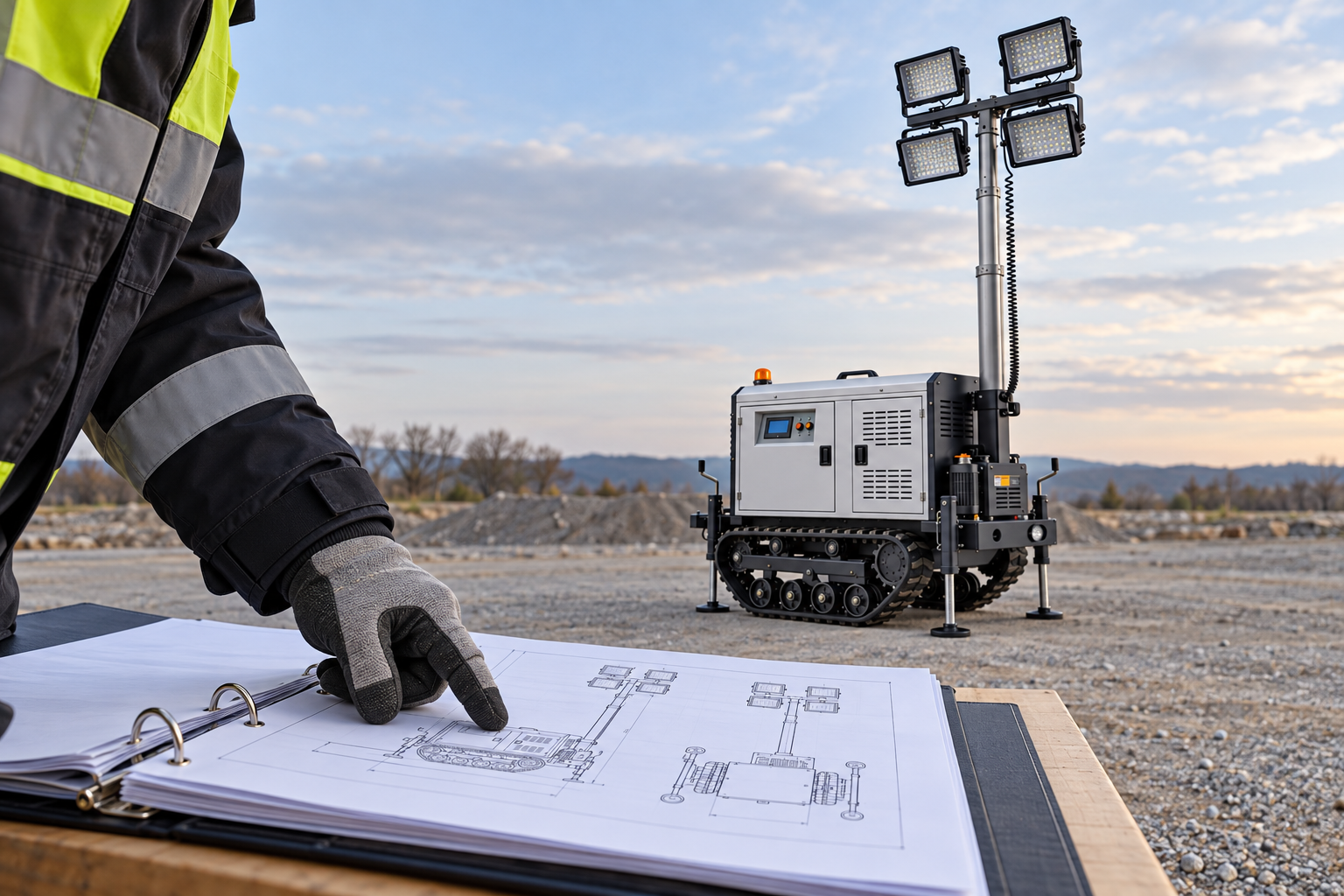
Review diagrams for correspondence with the delivered machine. An image from another configuration should not be substituted simply because its labels are easier to edit. If the source illustration is unclear, ask the manufacturer for approved artwork or clarification. Generated editorial photographs, including the images in this article, are contextual illustrations and must never be used to establish a control sequence or attachment point.
Keep emergency and abnormal-condition instructions discoverable. A reader should be able to locate the applicable stop, report and escalation information without interpreting marketing headings. Test navigation in the issued format, including a printed copy or an offline file if that is what users will have. Searchable digital text does not help when the job is performed without a working device or connection.
| Observed condition | قرار | Evidence or responsibility |
|---|---|---|
| Source model or revision unclear | Hold translation approval | Manufacturer identifies the applicable document |
| Different terms for one control | Resolve glossary before issue | Technical reviewer confirms consistent wording |
| User cannot explain a prerequisite | Review language and navigation | Record the revised passage and comprehension check |
| Source manual updated | Assess every translated extract | Withdraw obsolete copies and record distribution |
Review meaning independently and resolve disagreements
Arrange a technical review separate from the initial translation where practical. The reviewer should understand both the language and the equipment-related task. Compare source and target passages for omitted conditions, softened prohibitions, changed responsibility and inconsistent terms. Keep a query log so that decisions are traceable and recurring terminology problems can be corrected throughout the document.
Back translation can expose some discrepancies, but it does not by itself establish correctness. A second translation may reproduce an ambiguous interpretation or miss a misleading diagram. Combine language review with technical review and examination of the final layout. The responsible organization should decide what evidence is sufficient for its equipment, risks and destination requirements.
Record how each material query was closed. A manufacturer's clarification should remain attached to the relevant source revision. If a decision changes a safety-related statement, confirm the approved wording before release. Do not resolve disagreements by selecting whichever version is shorter or more convenient for a training slide. The aim is faithful usable instructions, not a smooth-looking document at any cost.
Verify understanding without improvising operation
Use representative users to test whether the information is understandable in its intended setting. Ask them to locate a warning, explain a prerequisite and identify when they must stop and seek help. This is a comprehension check on the document. It complements, and does not replace, the separate practical training and competence assessment required for assigned tasks.
Use paper scenarios for abnormal conditions. A reviewer can ask what the user would do if the manual and control label appear inconsistent, without creating a real fault or exposing anyone to machinery movement. Record the answer and where in the document it was found. Difficulties can indicate poor translation, poor navigation or a training gap; investigate the cause instead of blaming the reader.
Any equipment demonstration must follow the approved machine instructions, an appropriate training arrangement and the site's controls. Do not operate the tower merely to prove that a translation reads well. Keep observation results specific: a person explaining a warning has not demonstrated competence in lifting, electrical work or every operating condition.

Issue, replace and retain controlled copies
Assign a revision identifier to the translated document and state which source revision it follows. Identify the approving person and the release date. Make the approved copy accessible where the equipment is used, including rental handover arrangements and shifts that do not share the same office. A link in a purchasing email is not reliable distribution if users cannot access it at the work location.
When a source revision changes, assess all affected translated material, including quick cards and training extracts. Withdraw obsolete copies through a documented process. A new manual in a central folder does not automatically replace an old printed sheet stored with the machine. Confirm receipt with the people responsible for local copies and keep the superseded version in the controlled archive rather than in active use.
For a purchasing enquiry, request the available languages, applicable manual revision, process for technical questions and responsibility for future translation updates. Ask how optional equipment and field modifications are covered. These questions establish a document delivery process; they do not assume that any language, certification or translation service is already included in the product price.
Equipment and related guidance
Use the Keyyou tracked lifting light tower product reference to identify the product context; obtain the actual delivered unit documentation for operational decisions. Continue with سلامة وتشغيل برج الإضاءة, plus operator competence assessment, equipment receiving and handover.
Further learning: The Supervisor | WorkSafeBC
WorkSafeBC’s dramatized film The Supervisor illustrates the consequences of inadequate instruction and supervision. It supports the document-comprehension and supervisory-responsibility discussion, not a translation method or machine-specific operating procedure. It includes a fatal workplace incident scenario.

Watch the educational video on YouTube.
الأسئلة الشائعة
Can automatic translation be issued directly as the manual?
Do not treat unchecked output as approved operating instructions. Verify technical meaning, applicability, layout and user understanding through the responsible review process.
Does translating a manual establish operator competence?
No. Document comprehension is one input; assigned tasks still need suitable training, assessment and authorization.
Should a quick card replace the full manual?
No. A limited card must remain consistent with and direct users to the complete applicable instructions without omitting essential conditions.
Who should resolve an ambiguous source instruction?
Seek an authoritative clarification from the manufacturer or responsible technical source and retain it against the applicable revision.
المصادر والنطاق
These authorities provide general principles within their respective jurisdictions. Apply the current destination rules and manufacturer instructions; these sources do not certify the pictured tower or establish machine-specific operating limits.