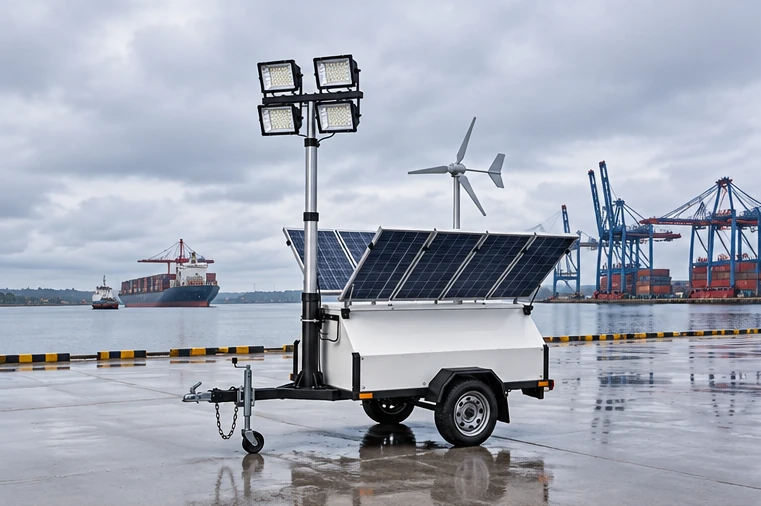

LiFePO4 vs Lead-Acid Batteries for Light Towers
LiFePO4 batteries usually offer deeper usable energy, higher cycle efficiency, lower mass per usable kilowatt-hour and longer cycle potential, while lead-acid systems can have lower initial cost and established service channels. Selection must compar
LiFePO4 batteries usually offer deeper usable energy, higher cycle efficiency, lower mass per usable kilowatt-hour and longer cycle potential, while lead-acid systems can have lower initial cost and established service channels. Selection must compare complete packs under the same usable energy, temperature, charging, protection, warranty, transport, replacement and end-of-life assumptions.
This guide helps contractors, rental fleets, distributors and procurement teams evaluate lifepo4 vs lead acid light tower. It provides a calculation and evidence workflow rather than a universal product claim. The current equipment manual, destination rules and a competent site review remain controlling.
Quick answer
LiFePO4 batteries usually offer deeper usable energy, higher cycle efficiency, lower mass per usable kilowatt-hour and longer cycle potential, while lead-acid systems can have lower initial cost and established service channels. Selection must compare complete packs under the same usable energy, temperature, charging, protection, warranty, transport, replacement and end-of-life assumptions.
Start by defining the exact machine, operating state, location, season, working hours, movement method and acceptance criterion. Do not mix nominal ratings with usable performance. Record whether every input is measured, calculated, guaranteed or assumed, because that distinction determines how much margin and verification are needed.
Five factors that control lifepo4 vs lead acid light tower
| Decision factor | What to verify |
|---|---|
| Usable energy | Nominal amp-hours are not comparable until voltage, permitted depth of discharge, rate and temperature are included. |
| Cycle and calendar life | Duty cycle, state of charge, heat, charge rate and storage conditions affect both chemistries. |
| Cold operation | Lead-acid and LiFePO4 behave differently; lithium charging may be restricted at low temperature without heating. |
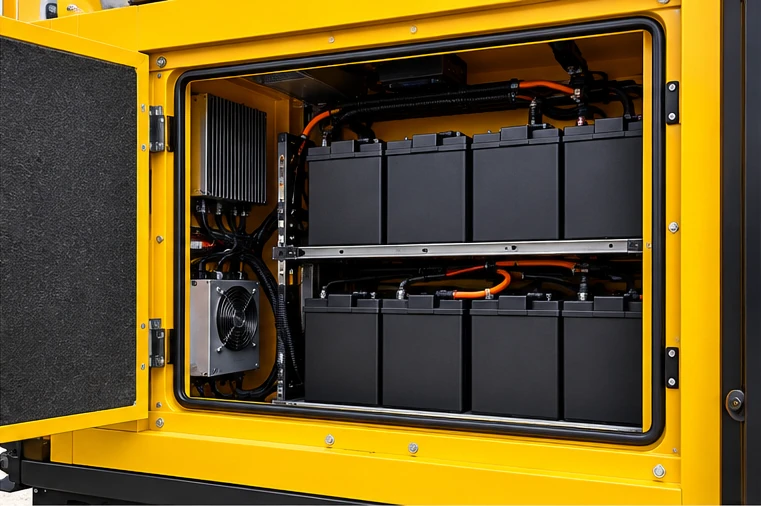
| Protection | Lithium packs require compatible battery management, contactors, sensing, charger settings and fault handling. |
| Lifecycle support | Compare warranty threshold, diagnostics, replacement modules, shipping, recycling and technician competence. |
1. Usable energy
Nominal amp-hours are not comparable until voltage, permitted depth of discharge, rate and temperature are included. Write the assumption, unit, configuration and evidence beside the decision. Compare the proposed value with the manufacturer’s operating limits and the project’s acceptance requirement. If the equipment, location, weather or duty cycle changes, repeat this check rather than carrying the old conclusion forward.
2. Cycle and calendar life
Duty cycle, state of charge, heat, charge rate and storage conditions affect both chemistries. Write the assumption, unit, configuration and evidence beside the decision. Compare the proposed value with the manufacturer’s operating limits and the project’s acceptance requirement. If the equipment, location, weather or duty cycle changes, repeat this check rather than carrying the old conclusion forward.
3. Cold operation
Lead-acid and LiFePO4 behave differently; lithium charging may be restricted at low temperature without heating. Write the assumption, unit, configuration and evidence beside the decision. Compare the proposed value with the manufacturer’s operating limits and the project’s acceptance requirement. If the equipment, location, weather or duty cycle changes, repeat this check rather than carrying the old conclusion forward.
4. Protection
Lithium packs require compatible battery management, contactors, sensing, charger settings and fault handling. Write the assumption, unit, configuration and evidence beside the decision. Compare the proposed value with the manufacturer’s operating limits and the project’s acceptance requirement. If the equipment, location, weather or duty cycle changes, repeat this check rather than carrying the old conclusion forward.
5. Lifecycle support
Compare warranty threshold, diagnostics, replacement modules, shipping, recycling and technician competence. Write the assumption, unit, configuration and evidence beside the decision. Compare the proposed value with the manufacturer’s operating limits and the project’s acceptance requirement. If the equipment, location, weather or duty cycle changes, repeat this check rather than carrying the old conclusion forward.
A calculation and evaluation workflow
- Freeze the requirement. List the work zones, hours, required output, route or weather assumptions, energy access, crew capability and consequence of interruption.
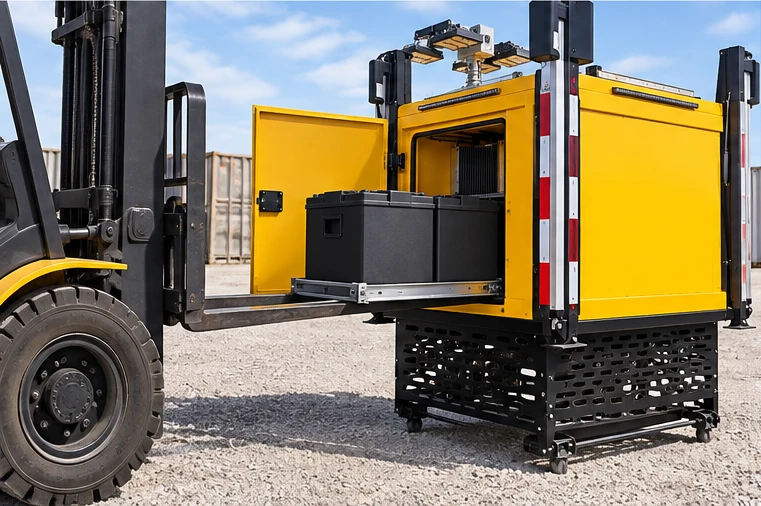
- Identify the configuration. Record model, serial range, batteries, panels, controller, luminaires, mast, trailer and all installed options.
- Build the model. Keep inputs in one unit system, show equations, separate nominal ratings from usable values, and state all losses and limits.
- Test sensitivity. Change the most uncertain inputs—temperature, weather, loading, aging, shading, route or operating mode—and identify the failure boundary.
- Verify evidence. Request drawings, manuals, test conditions, logs and configuration-specific declarations. Reject unexplained headline values.
- Commission the unit. Inspect, measure and operate a representative cycle under documented conditions, then close every defect before acceptance.
Evidence to request from a supplier
- Configuration-specific data sheet, general arrangement drawing and serial identification
- Definitions, units, test conditions and tolerances for every quoted performance value
- Operating, transport, inspection, maintenance and emergency instructions
- Electrical architecture, battery or trailer ratings, control settings and protection information relevant to the decision
- Environmental limits for temperature, wind, water, dust, slope, storage and transport
- Warranty conditions, required logs, service intervals, replacement parts and response responsibility
- A factory or delivery acceptance procedure tied to the final purchase configuration
Official references for the engineering review
- U.S. Department of Energy energy storage research — use the current official guidance and confirm which parts apply to the destination and configuration.
- OSHA lithium-ion battery safety — use the current official guidance and confirm which parts apply to the destination and configuration.
- PHMSA lithium battery safety resources — use the current official guidance and confirm which parts apply to the destination and configuration.
These references explain general principles; they do not certify a particular light tower. Apply the current manufacturer instructions and local regulatory requirements, and obtain specialist review where transport, structural, electrical or battery safety decisions exceed the team’s competence.
Acceptance test and operating record
Agree the pass criteria before the equipment arrives. Record ambient conditions, configuration, instruments, starting condition, operator actions, measured values, alarms and the final operating state. A short demonstration without stable conditions cannot prove a multi-hour, seasonal or transport requirement.
| Stage | Record | Pass condition |
|---|---|---|
| Identity | Model, serial, options and software or controller settings | Matches approved documents |
| Pre-check | Damage, connections, locks, tires or battery condition as applicable | No unresolved safety defect |
| Controlled run | Load, energy or transport measurements under stated conditions | Within all agreed limits |
| Fault response | Alarms, derating, shutdown and recovery | Safe and documented behavior |
| Handover | Manuals, training, spares, records and open items | Complete and accepted |
Video: an official technical overview
U.S. Department of Energy provides this educational overview. Use it for background and retain the product-specific documents for the actual decision.

Common mistakes
- Using a category average as a guarantee for an unknown configuration
- Comparing nominal ratings while ignoring usable limits, losses, temperature and aging
- Assuming a similar model, photo or old data sheet represents the delivered unit
- Checking only normal operation and omitting recovery, fault and worst-case conditions
- Changing accessories, settings, batteries, panels, tires or controls without repeating the affected review
- Accepting a calculation without the input source, units, date and responsible reviewer
- Skipping the receiving site’s unloading, setup, charging, service or emergency capability
Procurement and lifecycle implications
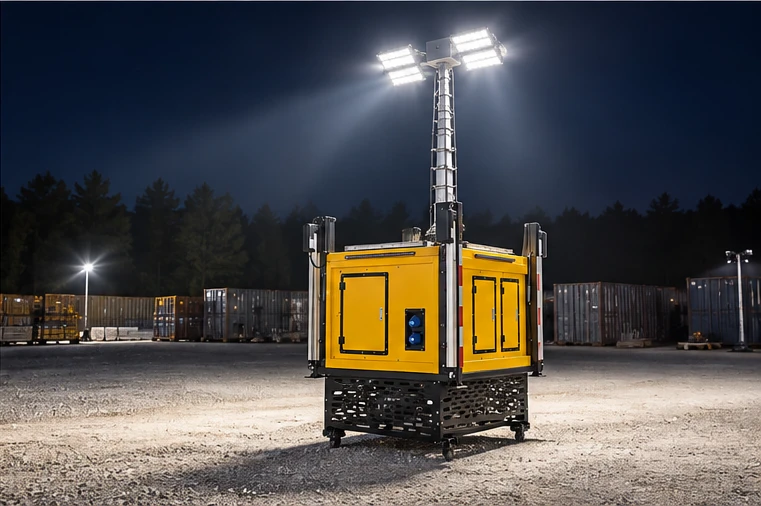
The technically largest option is not always the best value. Compare delivered price with freight, setup, charging or fuel, inspection, cleaning, tires or batteries, scheduled service, replacement components, downtime, training and end-of-life handling. Use the same operating profile for every bidder and price the backup plan explicitly.
Ask the supplier to identify exclusions and substitutions in writing. For a relevant product configuration, review the Keyyou light tower product page, then request project-specific drawings and ratings. Continue with these related planning resources:
- battery-powered light tower guide
- portable battery light tower guide
- battery capacity estimation guide
How to keep the decision valid after deployment
Assign an owner for the approved configuration and operating limits. The asset record should show the current batteries, panels, tires, luminaires, controller settings, firmware, accessories and maintenance state as applicable. Operators need a short pre-use check and a clear response to warnings, abnormal measurements and weather changes. Maintenance teams should compare new readings with the commissioning baseline instead of relying only on a pass or fail indicator. Review the decision after a repair, retrofit, relocation to a different climate, change in shift length, repeated low-state or high-temperature alarms, unusual transport event, or unexplained performance decline. This change-control step prevents an initially correct calculation from becoming obsolete while the label and model name remain unchanged.
Frequently asked questions
Does LiFePO4 last longer than lead-acid?
It often offers greater cycle life under suitable conditions, but the verified duty, temperature, charge control and warranty determine the result.
Can lead-acid chargers charge LiFePO4 batteries?
Do not assume compatibility. Charging voltage, stages, temperature compensation and battery-management communication must match.
Which battery is lighter?
LiFePO4 commonly provides lower mass for the same usable energy, but compare complete certified packs and enclosures.
Which works better in cold weather?
Performance depends on discharge and charging temperature limits, heating and control; review exact product data.
Can chemistry be changed as a retrofit?
Only after electrical, mechanical, thermal, control, certification, warranty and transport review of the complete system.
Final takeaway
A defensible lifepo4 vs lead acid light tower decision connects a defined duty to configuration-specific evidence, a transparent calculation, worst-case checks and an acceptance test. Keep the assumptions and operating record with the asset, and repeat the review whenever the equipment or conditions change.