
Light Tower Electrical Safety: Arc Flash, Work Scope, and Isolation
Define electrical work around a mobile tower using exact diagrams, task scope, qualified assessment, controlled isolation, alternate lighting, and release evidence.
Light tower electrical safety requires the actual equipment configuration, intended connections, and work activity to be assessed together. Keep normal operation separate from electrical inspection or maintenance, and use qualified personnel and the applicable safe-work process for tasks involving electrical components. An arc-flash assessment cannot be replaced by a lamp wattage, a closed door, or a generic protective-clothing recommendation. This guide helps buyers and site managers define the information, responsibilities, and evidence needed around a mobile tower. It does not calculate incident energy, prescribe a protection boundary, select personal protective equipment, or authorize energized work on any particular installation.
Identify the equipment and work activity
Record the tower model, supplied power system, control arrangement, lamps, batteries where fitted, and accessories involved. Obtain the electrical documents for the exact configuration. State whether the activity is normal external operation, a permitted operator observation, connection of an approved load, or work requiring electrical access. Those activities should not be collapsed into one generic use of the tower.
A maintenance request also needs a clear scope. Identify the reported condition and what has actually been observed, rather than declaring a component faulty without diagnosis. Keep available alarms, recent changes, and the asset's operating status in the record. The responsible electrical person needs the installation and task information before deciding the required work method and protection.
Distinguish shock and arc-flash concerns
Electrical hazards are not limited to whether a person touches a live conductor. An arc event can release hazardous energy during a fault, and the relevant risk depends on the system and task. Do not assume that a low lamp load makes every electrical-access activity harmless. The power supply, protective equipment, available fault conditions, and work arrangement require the proper assessment.
NIOSH's arc-flash awareness material explains the workplace concern and supports addressing it in an electrical-safety program. The NIOSH awareness video below supports understanding the hazard. Neither source calculates a result for the pictured tower. Do not transfer a boundary or protective-clothing figure from another machine, a video example, or an unrelated electrical panel to the actual installation.
Establish who may perform each task
Define the operator's permitted actions through the supplied instructions and site authorization. Make clear which tasks require a qualified electrical person and the appropriate procedure. A dispatcher or operator can record an external fault indication without being authorized to open a cabinet or investigate an electrical connection. Avoid assigning technical troubleshooting by convenience during a night shift.
Keep contractor responsibilities and access restrictions explicit. A person may be competent for one activity while still needing the specific equipment information and authorization for another. The handover should identify who receives a report, who controls the asset's status, and who releases it after work. This prevents a request to restore lighting from becoming informal permission to work on unfamiliar energized equipment.
Use the applicable isolation and verification process
The safe-work process must account for the actual energy sources and installation. Identify the supplied electrical arrangement, any connected external source, batteries where fitted, and other relevant stored energy through the technical documents. Do not infer an isolated condition solely because the lamp switch is off or the engine has stopped.
The cited 2025 U.S. selection-of-work-practices regulation distinguishes controlling and verifying the required condition from merely removing power at a switch. Apply those requirements through the responsible personnel and applicable jurisdiction. This article supplies no testing steps, instrument instructions, or energized-work exception. The appropriate process, competence, verification, and controls must be established for the actual task before electrical access occurs.
Keep emergency restoration from overriding the work plan
A failed tower can interrupt a critical route or work area. Plan an alternate lighting arrangement and notification process so the pressure to restore service does not drive an unapproved electrical intervention. State who authorizes the interruption response and what functions remain unavailable while the equipment is assessed.
Do not repeatedly reset protection, bypass a device, or reconnect a suspect load to see whether the problem disappears. Record the condition and follow the applicable withdrawal and diagnosis process. A cleared warning or temporarily working lamp is not independent proof that the original issue was resolved. The return-to-service decision should connect the finding, completed action, required verification, and responsible acceptance.
Review auxiliary electrical supply separately
A tower offered for lighting may also have an approved outlet or external supply function, but that capability must be confirmed for the exact configuration. Specify the intended load, connection arrangement, and installation responsibility. A generator or lamp rating alone does not establish that any external distribution equipment or building connection is permitted.
Coordinate the grounding, bonding, protective devices, and installation review with the responsible electrical person. Do not add an adapter, change a neutral arrangement, or use an unknown distribution circuit based on an apparent voltage match. Keep the supplier's scope and the site installation scope clear. A correct lighting setup does not independently approve every other electrical service that a user might request from the machine.
Electrical-safety evidence table
| Work decision | Evidence to obtain | Unsupported assumption |
|---|---|---|
| Equipment identity | Exact configuration and electrical documents | Another visually similar tower has the same arrangement |
| Task scope | Normal operation, observation, connection, or electrical access | Any operator may investigate a cabinet fault |
| Energy sources | Supplied diagram and relevant connected sources | Lamps off means every component is isolated |
| Hazard assessment | Qualified evaluation for the system and activity | Lamp wattage determines the arc-flash result |
| Work controls | Applicable process, authorization, and verification | A generic video supplies permission to work live |
| Protection | Task-specific selection by responsible personnel | One clothing category suits every installation |
| Release | Confirmed action, required checks, and acceptance | Resetting a warning proves the problem is repaired |
This original qualitative table organizes the questions and evidence. It supplies no incident-energy value, approach distance, protective-equipment category, or wiring procedure. OSHA and NIOSH sources support hazard awareness and work-process principles; the actual system and task require the applicable qualified assessment.
Inspect accessible condition within operator limits
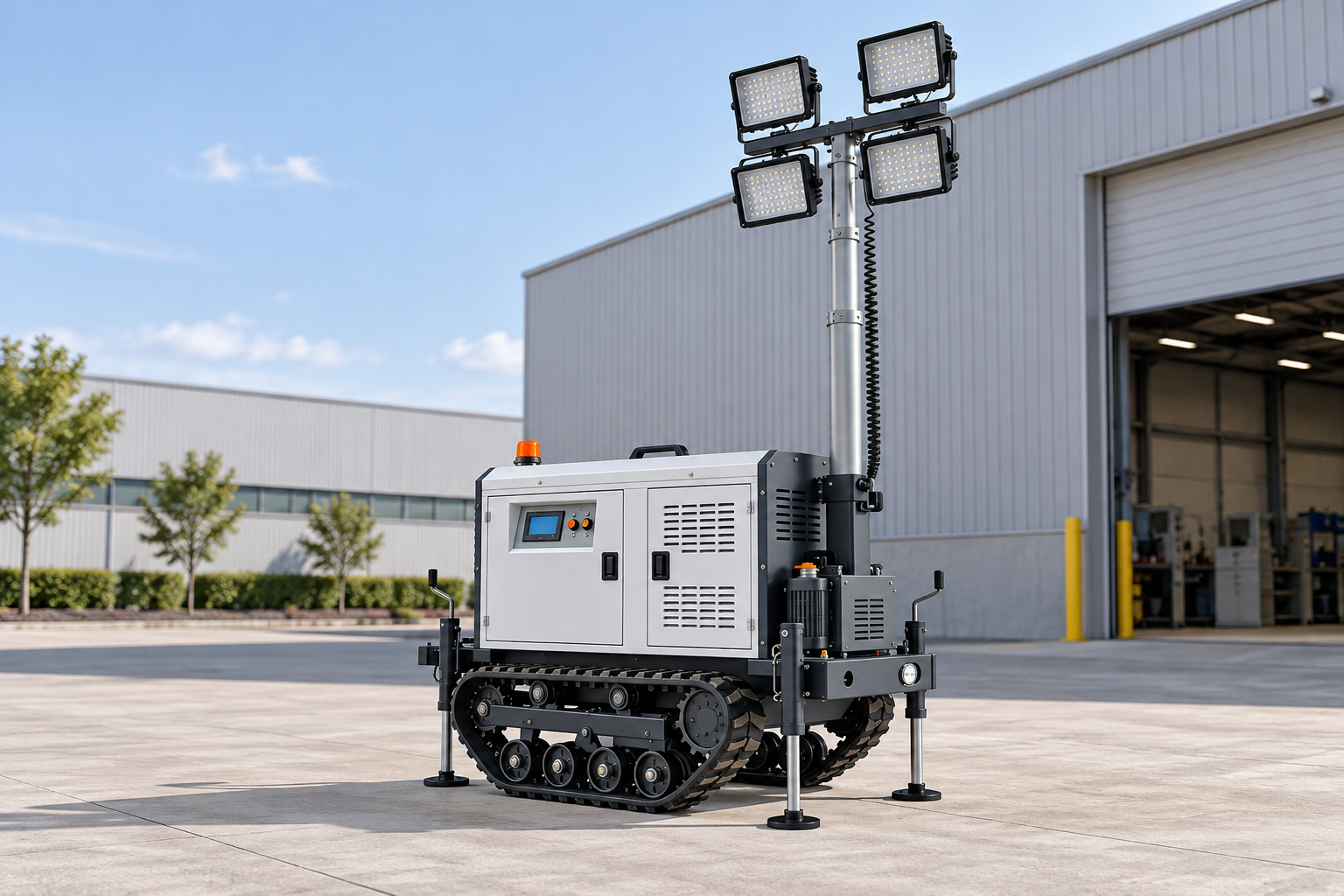
An operator's permitted checks may include visible condition and supplied indications described in the instructions. Record damage, missing covers, affected cables, or an abnormal warning through the site process without touching suspected unsafe components. The specific observation and required response should remain clear in the asset record.
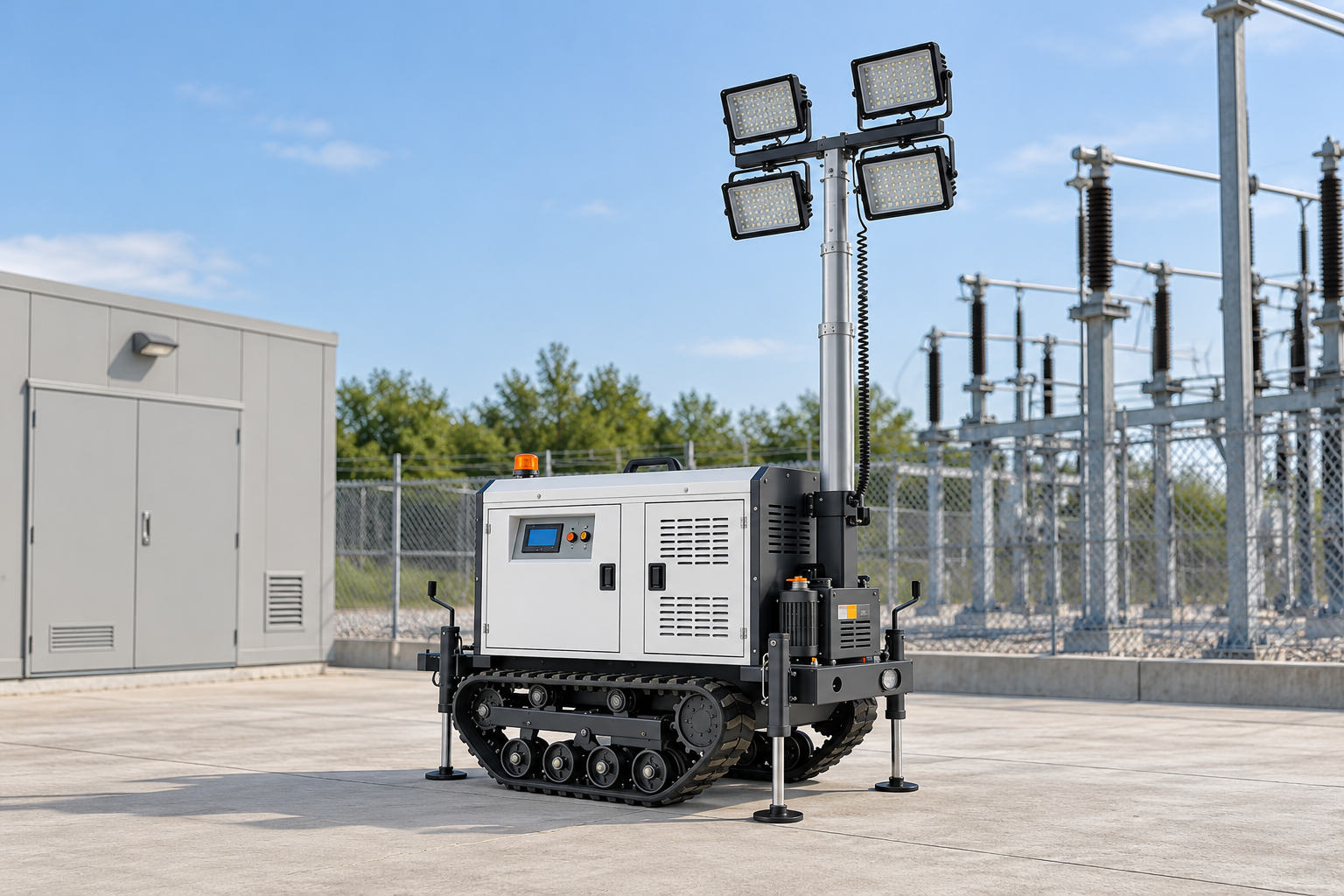
Do not treat an external visual review as an electrical test. A closed cabinet can be useful as part of an intact configuration, but it does not independently establish every internal condition or eliminate every hazard during an interaction. Where the task requires access, stop at the authorization boundary and arrange the responsible work. The equipment's outward appearance is supporting context rather than a substitute for the required technical evidence.
Preserve configuration and change records
An approved replacement, new accessory, altered supply arrangement, or control change can affect the electrical-safety assessment. Retain the updated diagram, instructions, and applicable review. The next team should be able to identify what is actually fitted and what changes were made, including the required verification and release decision.
Do not assume that matching a component's nominal rating establishes equivalent protection or compatibility. A change needs assessment for the complete system and intended activity. Keep unresolved questions separate from commercial delivery status. Receiving a replacement part is not evidence that it was correctly installed or that all affected safety decisions remain valid after the work.
Plan training around the actual responsibilities
Use hazard-awareness material to help staff recognize when an electrical task exceeds their role. The NIOSH video explains arc-flash concerns and consequences; it is not an instruction to reproduce an event, approach energized equipment, or select protection for a tower. Connect the training to reporting, withdrawal, access control, and the actual site procedure.
Identify how new staff and contractors receive the current equipment and task information. Keep completion of awareness training separate from authorization or qualification for technical work. A useful training record names the material, date, scope, and remaining role limits. It should make staff more likely to seek the proper assessment, rather than encourage them to infer competence from watching a demonstration.
Request documentation before the equipment arrives
Provide the supplier with the intended service, external connection requirements where applicable, jurisdiction, and maintenance responsibilities. Request the configuration-specific electrical diagram, operating and service instructions, supplied protective features, and necessary verification information. Resolve the division between supplier commissioning and site installation before the tower is needed for an overnight task.
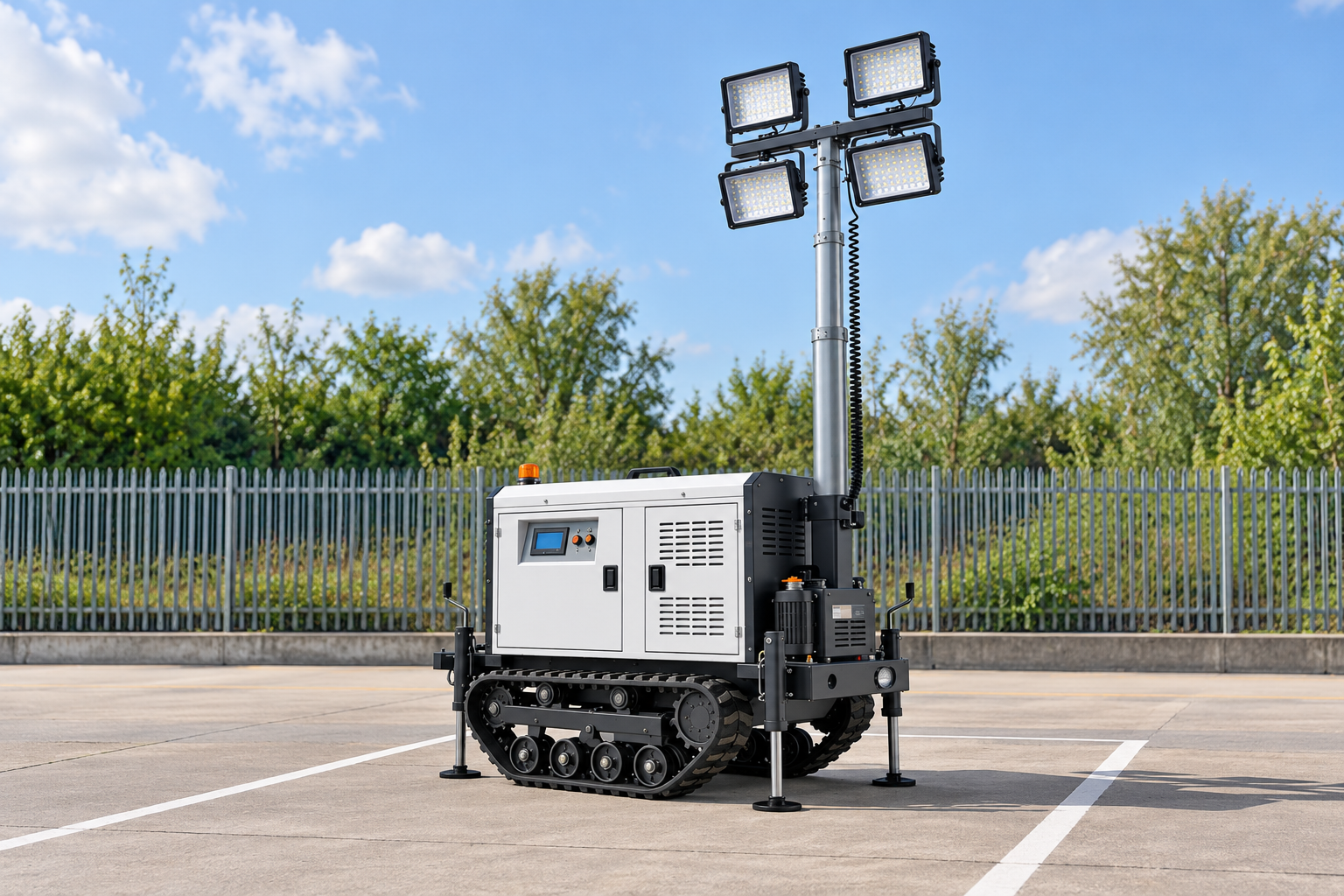
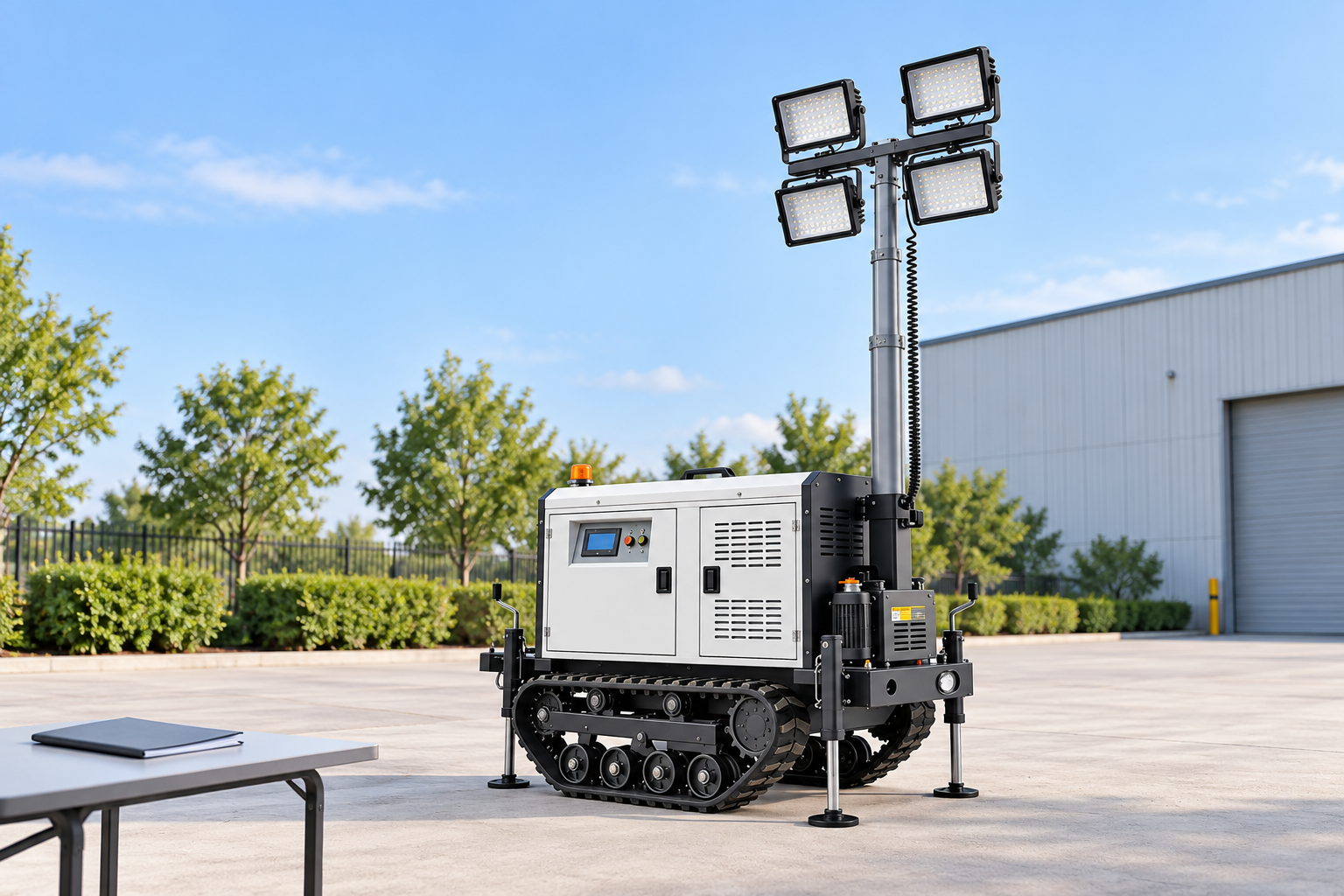
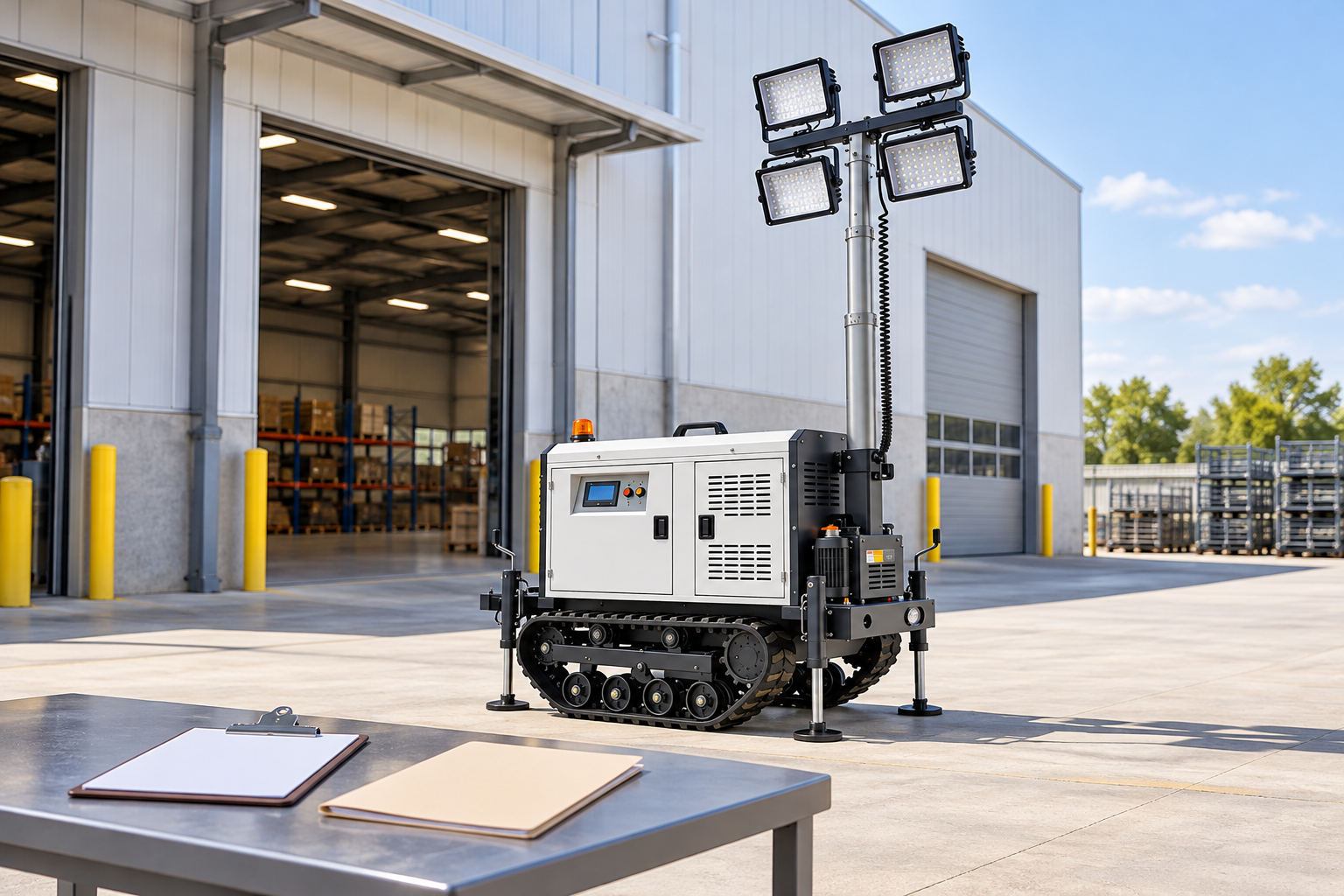
The reference-based illustrations show the current Keyyou tracked lighting tower with its white enclosure, crawler chassis, four square lamps, mast, and stabilizers. All covers remain closed, no electrical work is depicted, and the machine is shown as stationary assessment equipment. These images identify the product family; they are not proof of an arc-flash assessment or permission to perform work at a particular panel.
Release only the service that has been assessed
At handover, confirm the actual supplied configuration, completed work, documentation, operating limits, and responsible acceptance. Record the permitted service and any remaining installation or task restrictions. Keep the alternate lighting response available while an unresolved electrical issue prevents release.
A well-defined result allows an operator to use the equipment within the supplied instructions and know where to stop when a problem occurs. It also gives the qualified team the evidence needed for the next task. Do not describe a tower as electrically risk-free; document what has been assessed, which conditions apply, and how access, changes, and abnormal events are controlled through the project.
Equipment and complementary planning
Confirm the offered configuration on the Keyyou tracked lighting tower product page and use the mobile light tower planning guide for the wider selection context. Review complementary subjects in light tower condition and maintenance and can a light tower be used as a generator.
Arc-flash awareness for the work boundary
NIOSH provides Arc Flash Awareness through the CDC channel and current Mining tools page. This educational video explains the hazard; it is not an incident-energy calculation, protective-equipment selection, or authorization for electrical work on a lighting tower.

Frequently asked questions
Can lamp wattage determine an arc-flash result?
No. The relevant assessment depends on the actual electrical system, fault conditions, protection, work activity, and other applicable inputs. A lamp load or a video example does not determine incident energy or a protection boundary for the installation.
Does switching the lamps off authorize cabinet access?
No. Use the applicable authorized process to account for the actual energy sources, control the work, and verify the required condition. This article does not provide electrical testing steps or permission for energized access.
Does awareness training qualify an operator for electrical work?
Awareness material helps identify hazards and role limits. It does not replace task-specific qualification, authorization, equipment information, or the required safe-work process. Keep the reporting and qualified-work responsibilities separate.
Sources and scope
The cited primary material supports the specific planning and safety principles discussed. Annual CFR links are explicitly the 2025 edition; the responsible team must verify current applicable requirements. The decision table is original and contains no invented equipment limits. The exact offered configuration and supplied instructions govern equipment actions.