
Light Tower Emergency Stop Testing: Scope, Evidence, and Safe Release
Plan light tower emergency stop testing around the delivered control system, approved procedure, observed response, reset behavior, and documented release.
Light tower emergency stop testing must follow the instructions and approved test procedure for the actual supplied machine. First establish that the control is an emergency stop and identify the functions it is intended to stop. Then plan a controlled check with the responsible competent person, protect the surrounding area, record the expected response, and assess the actual response before release. A red button, a power switch, or a product-page reference to a stop control does not by itself establish the machine's complete safety function. Never invent a universal test sequence from a photograph.
Identify the actual control and safety function
Start with the delivered equipment documents, control identification, and any relevant safety-function information. Determine whether the control is an emergency stop, normal stop, engine stop, isolating device, or another function. Those terms should not be treated as interchangeable. Ask the supplier to resolve unclear labels or translations. In particular, an online option list does not establish the function, wiring architecture, performance, or validation of the control fitted to a particular machine.
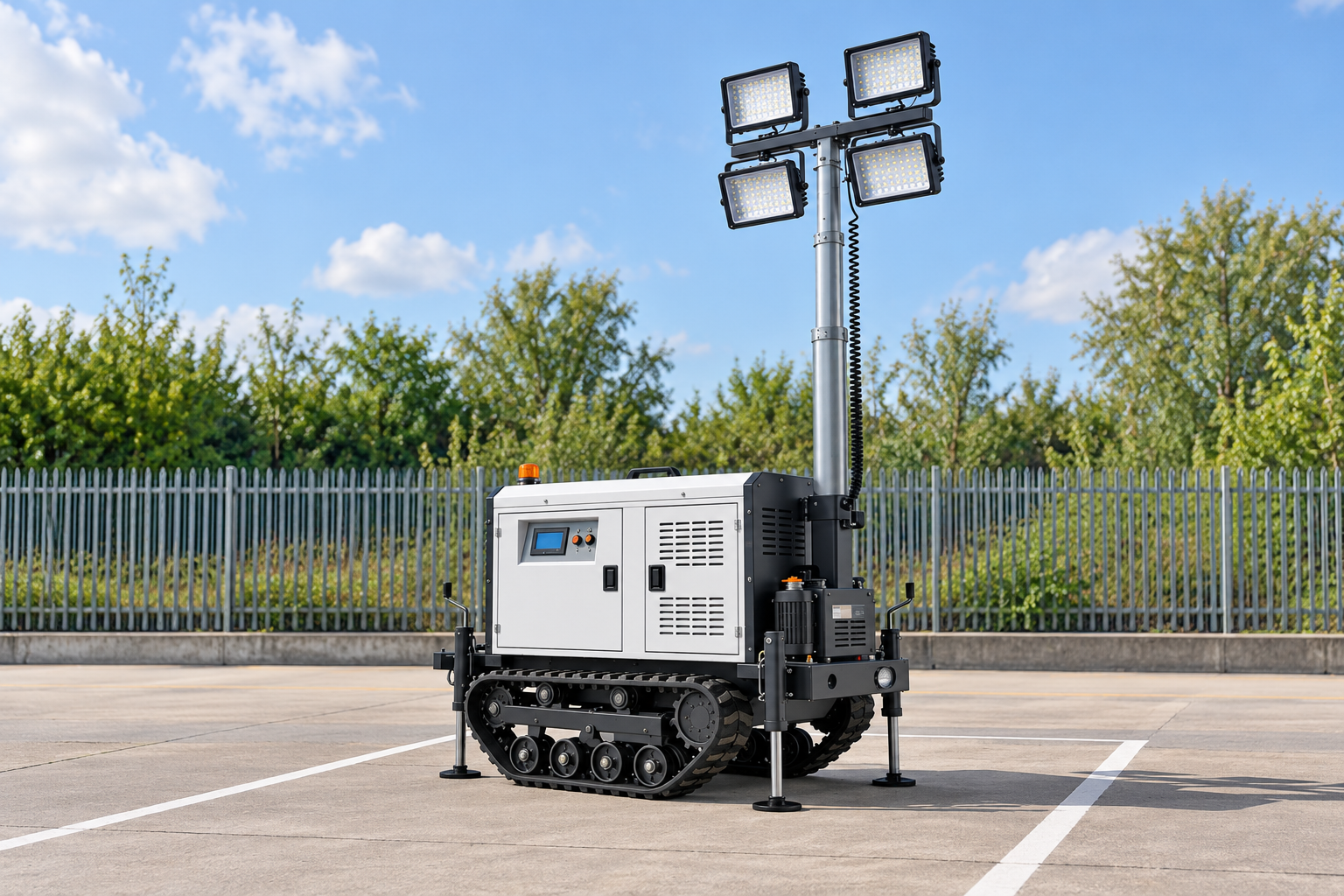
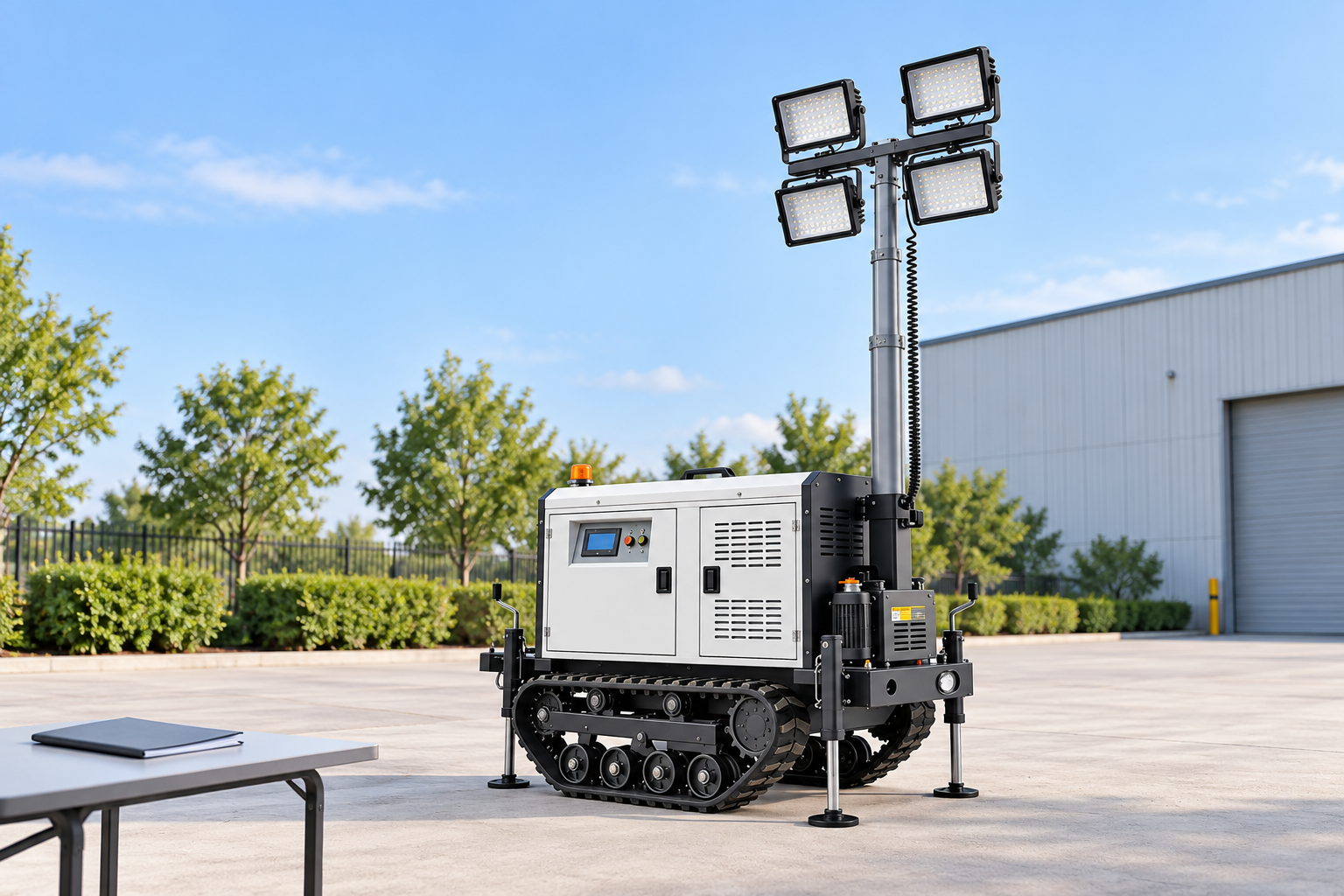
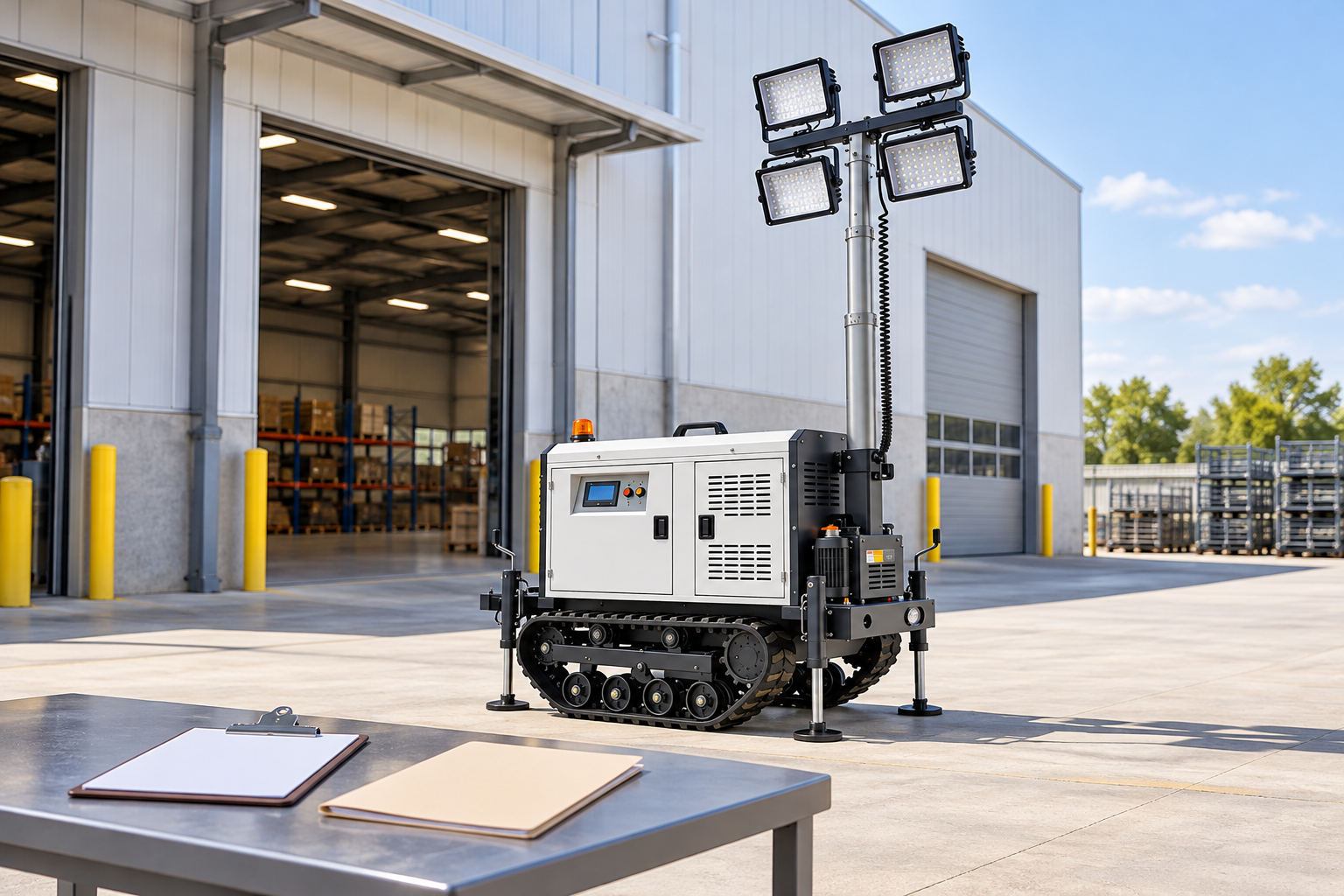
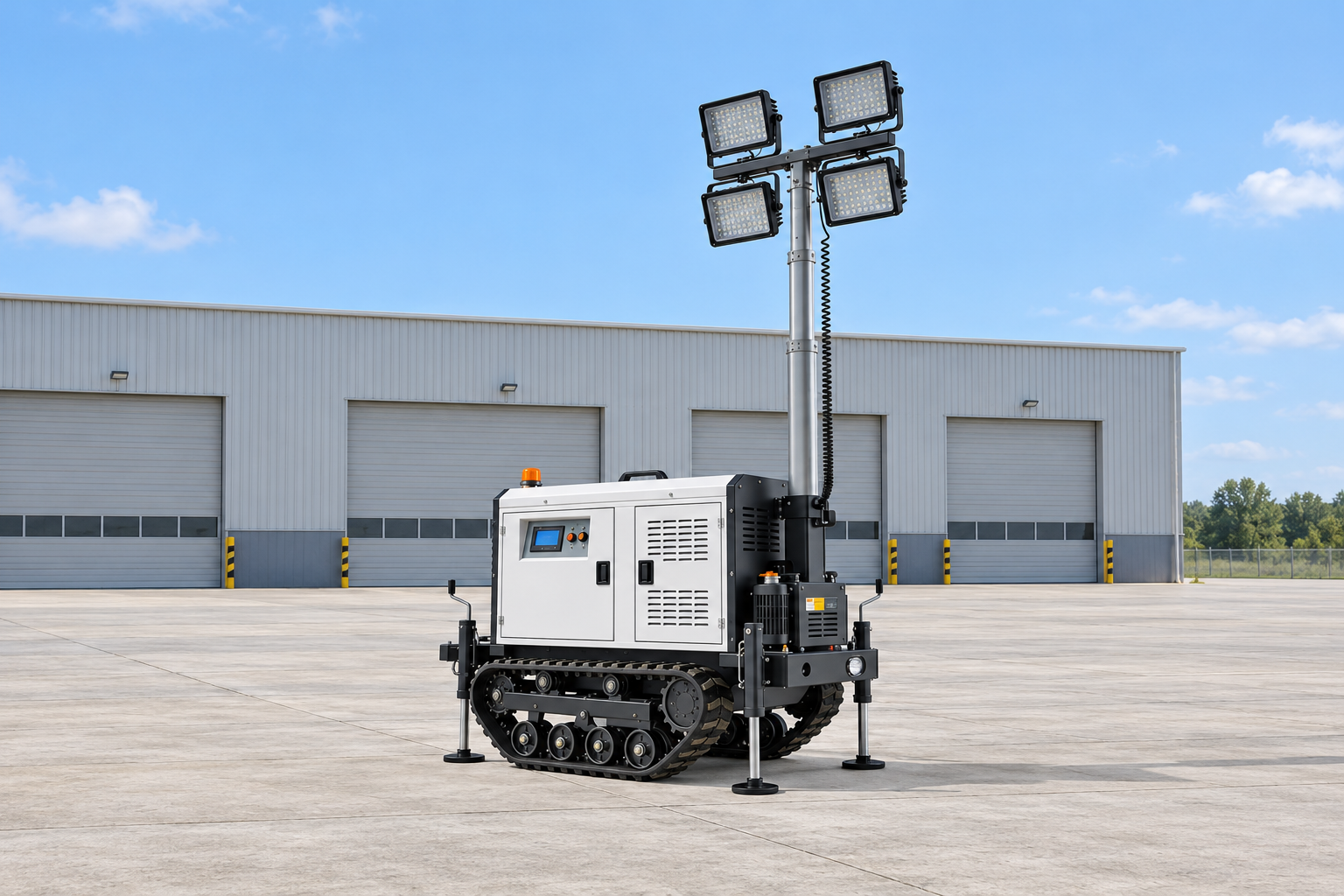
The crawler product illustration shows the external equipment arrangement. It is not a wiring diagram or proof of a safety-rated circuit. Use it only to identify the visible platform and access arrangement. The procurement record should specify the actual delivered control system and instructions. If these are missing, record the test as awaiting documentation and keep any affected activity within the restrictions set by the responsible person. Guessing which button to press is not a meaningful acceptance method.
Define what should stop and what may remain energized
List the functions relevant to the approved test: these might include lamp operation, an installed generation source, powered mast movement, or a drive function where supplied. Do not assume all are present or that one control has the same effect on each. The intended response must come from the actual machine's documents and competent assessment. Record any permitted residual energy and the conditions that still require separate isolation before work.
An emergency stop is not automatically an isolating device. Stopping a visible movement or extinguishing lamps does not prove every electrical source has been disconnected or stored energy removed. Battery systems, hydraulic arrangements, and external supplies may need separate consideration. The official isolation and electrical-work sources below support that distinction. They do not define a particular Keyyou circuit, and they do not authorize dismantling the machine as part of an operator-level functional check.
Prepare a controlled inspection area
Use the actual supplied instructions to establish the condition in which the check is permitted. Select an appropriate area, manage access, and ensure the test will not endanger workers who depend on the lighting. Where a shutdown could leave a route or task unsafe, arrange an approved alternative before starting. The point of planning is to make the expected interruption controllable, not to create a dramatic demonstration during live operations.
Assign the people involved and the communication method. Identify who operates the control, who observes the defined response, and who decides whether the result is acceptable. Confirm that everyone understands the test boundary and how an unexpected condition will be handled. Do not place a person under a mast, near moving machinery, or in another hazardous position merely to watch a response. The approved procedure should determine observation and access arrangements.
Inspect the control before functional testing
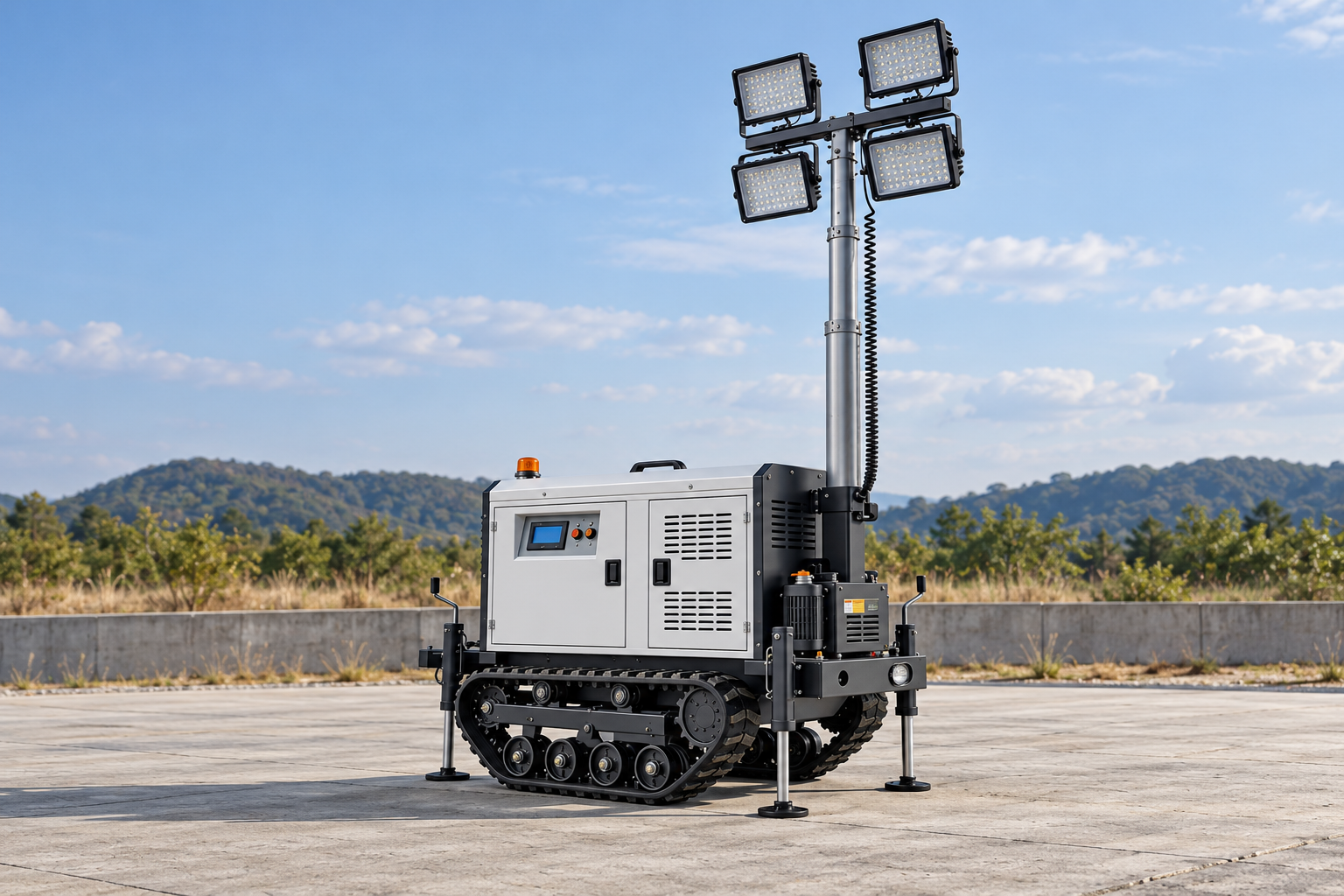
Perform the authorized external checks for damage, access, identification, and obvious obstruction. Confirm that the control can be located and reached as intended in the actual operating arrangement. Look for missing labels or damage requiring attention, but avoid assuming an intact appearance proves correct function. Record defects specifically so the maintenance or supplier response addresses the actual problem rather than a vague statement that the stop button feels different.
Do not alter wiring, bridge contacts, defeat interlocks, or substitute a component to make a check succeed. If internal investigation is required, it belongs within qualified work using the appropriate isolation arrangements and approved documentation. Keep photographs and observations separate from a functional pass. A clear picture can support the condition record, but it does not establish response time, control architecture, or any claimed performance level of the safety-related system.
Record the authorized expected response
Before the test begins, write down the functions being checked and the response required by the approved procedure. Include the relevant operating condition and any limits on how the test may be conducted. Avoid adding numerical stop times or categories without evidence from the applicable design and assessment. A site checklist should reference the governing procedure instead of quietly inventing its own technical acceptance criteria.
Record which functions are outside the check. For example, an inspection limited to lamp shutdown does not establish the behavior of powered travel or mast movement where those functions exist. Likewise, a check conducted without an external supply does not automatically validate every approved supply arrangement. Scope matters because a short checklist often survives longer than the conversation in which its limits were originally understood. Make those limits visible on the permanent record.
Compare observation with the defined response
Conduct only the authorized procedure, then record what was actually observed. Distinguish a direct observation from an assumption. If lamps extinguish, that is evidence about the visible lighting response; it is not proof that all terminals are dead. If another expected response cannot be safely observed or confirmed within the procedure, record it as unverified and refer it to the responsible person. Do not fill a blank with a pass merely because no obvious fault occurred.
An unexpected response requires a controlled stop to the checking activity and a documented decision about restrictions, investigation, and retesting. Preserve the evidence and avoid repeated improvised attempts to see whether the fault disappears. A result that changes between attempts is itself relevant information. The goal is reliable operation within the intended function, not a single successful demonstration after unexplained failures. Apply the site's defect and release arrangements before returning the unit to the affected service.
Emergency stop verification decision table
| Finding | What it does and does not establish | Appropriate next step |
|---|---|---|
| A red control is visible | Identifies an external control, not its validated function | Match it to delivered instructions and identification |
| The lamps extinguish during an approved check | Establishes the observed lamp response only | Compare every scoped function with its defined response |
| The reset releases the control | Does not itself authorize restart or prove isolation | Follow the approved reset and restart arrangements |
| A function responds unexpectedly | Indicates a discrepancy needing assessment | Restrict affected use and obtain competent investigation |
| The online option list differs from the unit | The purchased configuration remains unclear | Resolve the configuration with the supplier |
| Documentation or an acceptance criterion is missing | A reliable pass decision cannot yet be made | Keep the item open rather than invent a test |
The table is a qualitative decision aid. It is not a replacement test procedure, a wiring instruction, or a declaration of compliance. Apply it only within the actual equipment's authorized operating and maintenance arrangements. It helps the team communicate why a check is complete, limited, or awaiting further evidence.
Treat reset and restart as separate decisions
The approved procedure must address how the machine is returned to a safe operating condition after the check. Do not assume releasing a latched control should start the equipment. Verify the relevant expected behavior against the delivered documents and competent assessment. Confirm that people are clear, the operating area is suitable, and any temporary alternative lighting arrangement is managed before the machine resumes the intended service.
Keep corrective work separate from the original result. If a fault is repaired, record the repair and perform the required reinspection and retest under the approved arrangements. Do not rewrite the original failed observation as though it never occurred. A clear history helps identify recurring problems and demonstrates which evidence supports the final release. It also prevents a supplier or maintenance handover from losing the connection between a reported discrepancy and its verified resolution.
Keep a useful record for the next shift
Retain the unit identity, actual configuration, governing procedure, date, people involved, scoped functions, observations, exceptions, and release decision. Add photographs where useful for identification or defects, without presenting them as proof of internal circuit performance. Link the record to maintenance work and supplier clarification when applicable. Avoid recording only a generic tick beside emergency stop checked; that tells the next operator little about what was actually established.
The inspection frequency and triggers should come from the supplied instructions, relevant assessment, and applicable site requirements. This guide does not invent a universal daily interval. Changes, repairs, transport damage, unclear behavior, or configuration changes can require review through the responsible process. Give the next shift a clear statement of any open restriction. A defensible record supports continuity because it connects the actual machine and required safety function with observable evidence and an accountable release decision.
Equipment and complementary planning
Identify the illustrated platform on the Keyyou crawler lighting tower product page. Start with the mobile light tower planning guide, then use the pre-operation inspection guide and shift handover checklist for complementary operational records.
Why stopping and hazardous-energy isolation are different
National Safety Compliance provides general lockout/tagout training. This supports the isolation boundary discussed above; it is not a light tower emergency-stop procedure or a substitute for current requirements and the actual supplied instructions. The channel teaches workplace safety and does not sell competing lighting towers.
Frequently asked questions
Is a red stop button proof of a validated emergency stop function?
No. Identify the actual control, delivered documentation, intended function, and applicable approved procedure before making a pass decision.
Does an emergency stop establish safe electrical isolation?
No. A stopped machine can retain energized sources or stored energy. Apply the actual approved isolation arrangements before relevant work.
Should releasing an emergency stop restart the machine?
Do not assume a restart response. Verify reset and restart behavior against the delivered documentation and competent assessment within the approved procedure.
Sources and scope
The sources support equipment safety and the distinction between stopping and hazardous-energy isolation. They do not establish a Keyyou safety circuit, stop time, performance level, or model-specific test sequence. Use the delivered instructions and approved procedure.